

All spots information
13 spots
 landmark1
Go to Hase-dera official website
landmark1
 Open
Open
Please push the button below to the official website of Sohonzan Hase-dera. ※You can check it in the app. ※Go to your device's browser.
 Unnamed Category
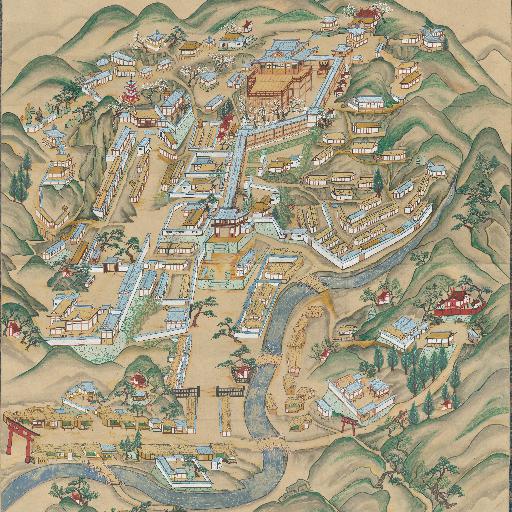
Honbo There are a large auditorium and a shrine, which are the main dojos of the minister and the minister of education. It was erected by the donation of General Tokugawa in 1667, but burned in 1964. The current building was rebuilt in 1913. This is a large cypress-made main hall that was registered as a tangible cultural property designated by Nara Prefecture on March 30, 2004.
Darani hall
Unnamed Category
OpenDarani hall Pagoda temple of Hase-dera Temple. the shodo hall (Kokyo Daishido) and the raido hall (Darani hall) are collectively called Bodhi-in. Every month on the 5th, the honorary monk Masako is turned, and on the 12th, Kokyo Daishi is turned.
Five-storied pagoda
Unnamed Category
OpenFive-storied pagoda It was the first five-storied pagoda built in Japan after the war in 1929, and is called the "Showa Famous Tower". The tower is a well-shaped tower with a pure Japanese style. The tan color of the tower body, the golden color of the rim, and the light brown cypress-roofed roof are in harmony with the background.
Moto Hase-dera Temple
Unnamed Category
OpenMoto Hase-dera Temple This temple is called Hon-Hase-dera Temple, because Doumyōshōnin built a shrine here at the request of Emperor Tenmu. In 686, Domyojojin was cast as a bronze statue of the Buddha Plate for the healing of the illness of Emperor Tenmu and was enshrined as the main god.
Kobo Daishi Miedo
Unnamed Category
OpenKobo Daishi Miedo It was erected in 1984 with a total cypress to commemorate the 1150 memorial memorial service of Sokoho Daishi. On both sides of the Daishi, a fine print "Hase-dera Copperplate Ryokai Mandala" is enshrined. On the 21st of every month, the memorial service of Kobo Daishi is held. * "Kobo Daishi Mikagedo" is currently located at the location of the building drawn in the picture.
Kaizando Enshrine Hase-dera temple, worshiping Tokumichi Kaminin. At the same time, the sacred place of the sacred grounds of the 33 sacred places in western Japan is worshiped. On the second day of every month, the law is enshrined in the religion of Tokumichi. * "Kaizando" is currently located at the location of the building drawn on the picture.
Daikokudo One of Yamato Shichifukujin Hachiba Sacred Grounds. Daikokuten was introduced to Japan along with esoteric esoterics from India, and was acquainted with Shinto's sovereign power. This approximately 171 cm statue is handed down to Kobo Daishi. Benefit from flourishing your business, protecting your kitchen, filling your food, and giving your treasure to people.
Main hall This is the southern main hall that was built on the precipitous cliff on the hillside of Mt. The front (inside) is about 16.36m between the columns of the girder (frontage), about 9m in length on the beam (depth), and the roof is made of iris, and the hall (outside) is slightly lower than the main hall, and the girder is about 16.36m. Approximately 7.3m on the beam surface, front roof truss house book tiled.
Corridor It was built in 1039 during the Heian era by Kasuga Taisha's chief of the ceremony, Nobumi Kiyoshi, to thank him for healing the sickness. The lower and middle corridors were rebuilt in 27 of the Meiji era, and hung elegant Hase-dera lanterns.
Souhozo One of Rokubo Hase-dera Temples is located on the site of the Kiyoin Temple. Opening the doors in spring and autumn, the treasures such as national treasures and important cultural properties that are transmitted to Hase-dera Temple are open to the public.
Hase-dera front
Unnamed Category
OpenHase-dera front The general receptionist is used as a resting place for worshipers, and worships "Akiha Gongen" to keep out fires in Yamauchi. Aside from the reception, there is a shrine enshrined as Ishi Kannon.
Nio-mon Gate (Gate of Deva)
Unnamed Category
OpenNio-mon Gate (Gate of Deva) This is the main gate of Hase-dera Temple. On both sides, a statue of Nio and a statue of Shaka Sanroku 16 Arhat on the roof are enshrined. The current building was rebuilt in 1894. "Hase-dera" is the emblem of Emperor Goyosei.