
西会津古建築MAP
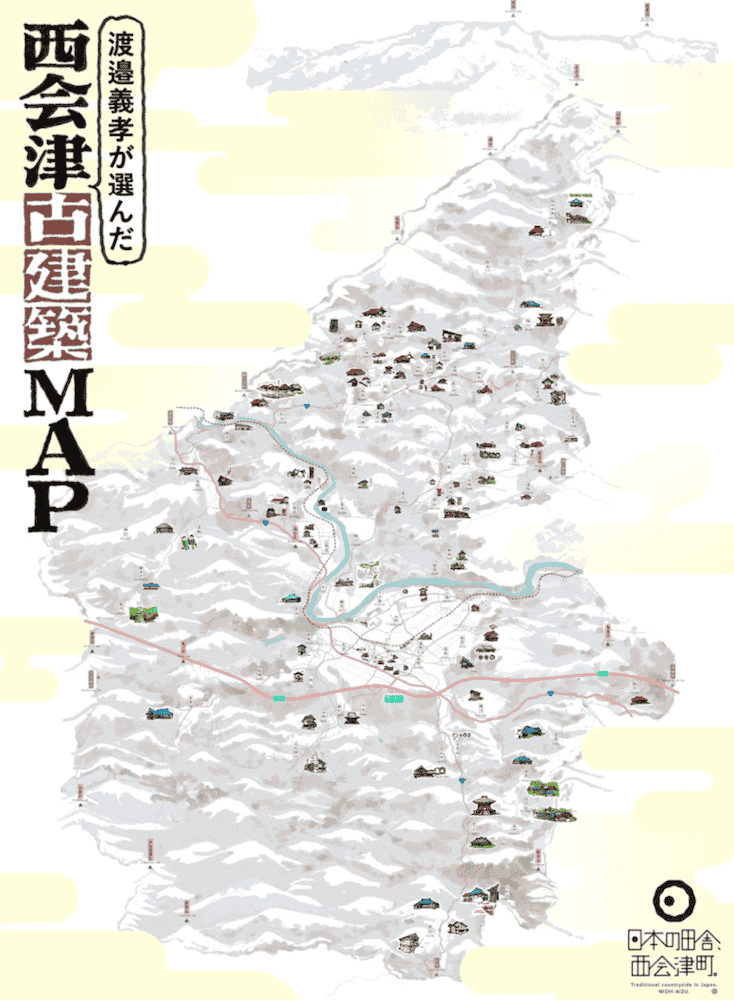
西会津古建築MAPは、西会津町に点在する魅力的な古民家や歴史的建造物を、ユニークなイラストとともに紹介するデジタルマップです。町内各地に残る伝統的な建築、歴史ある家屋、文化的価値の高い建物を、建築家・渡邉義孝氏が独自の視点で選定し、一点一点描き下ろしました。 観光やまち歩き、地域の歴史探訪に役立つコンテンツとして、西会津町の文化遺産や景観の魅力をわかりやすく発信しています。西会津の古建築巡り、歴史散策、文化体験を楽しみたい方におすすめのガイドマップです。
 Posted by西会津古建築MAPUpdated:
 All spots information
195 spots
 Yoshitaka Watanabe
YOSHITAKA WATANABE
Yoshitaka Watanabe
 Open
Open
Born in 1966. Licensed first-class architect and principal of Kazegumi Watanabe Design Studio. Part-time lecturer at Onomichi City University. Vice Director of the Onomichi Vacant House Regeneration Project. Alongside his practice in residential design, vernacular farmhouse restoration, and cultural property surveys, he sketches historic buildings and landscapes across Japan, and has produced Suteki-na Tatemono (Wonderful Buildings) maps for Jōhana in Nanto City, Tachibana in Nagoya, Onomichi, and Nishiaizu. His publications include Tabi no Kenchiku Field Note-jutsu (Gakugei Shuppansha), Taiwan Nisshiki Kenchiku Kikō (KADOKAWA), and Kaze wo Tabeta Hibi: Asia Ōdan Tabi Nikki (Nikkei BP). Address Google Map Check with Google Maps Access Parking Business Hours Admission Fee Regular Holiday Phone Number URL SNS
 Heritage Architecture
OSAKAYA Inn
Heritage Architecture
Open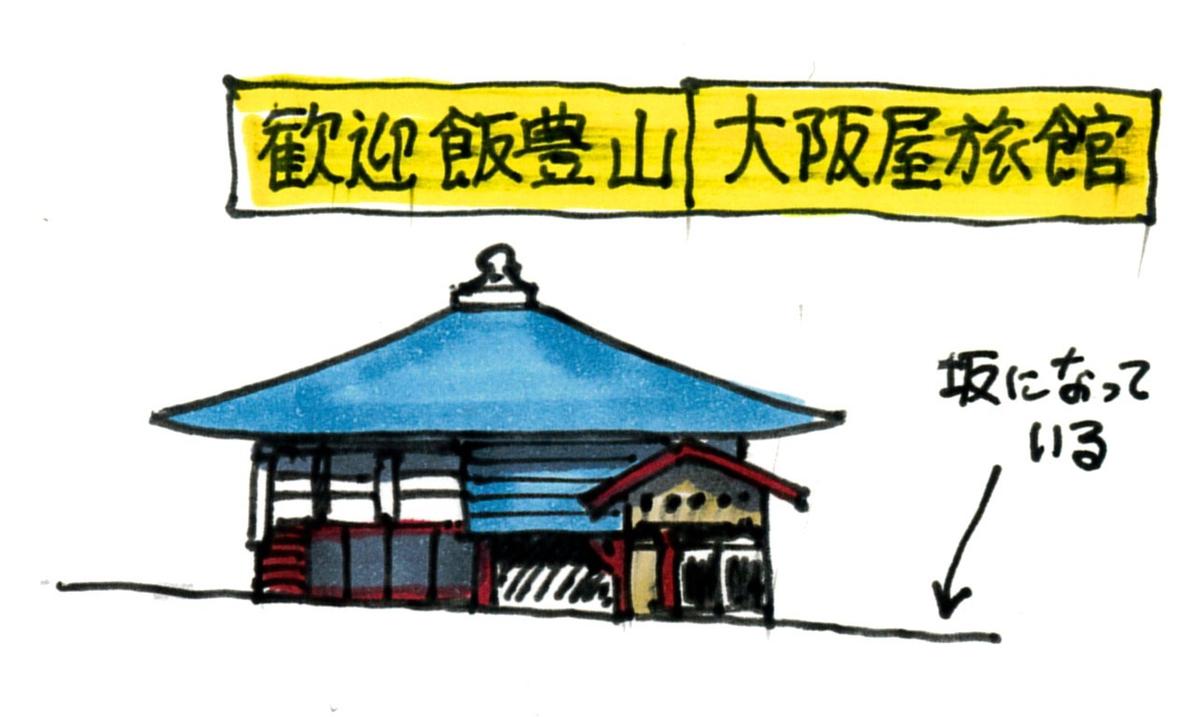
YAHEISHIRO, which served as a base for pilgrimages to Mt. IIDE, was once home to many thriving inns. OSAKAYA, one of them, is a hip-roofed, gable-entry vernacular house. Along the slope heading north, several other former inn buildings still line the road. Address Google Map Check with Google Maps Access Parking Business Hours Admission Fee Regular Holiday Phone Number URL SNS
Hip-Roofed Farmhouse in YAHEISHIRO
Heritage Architecture
Open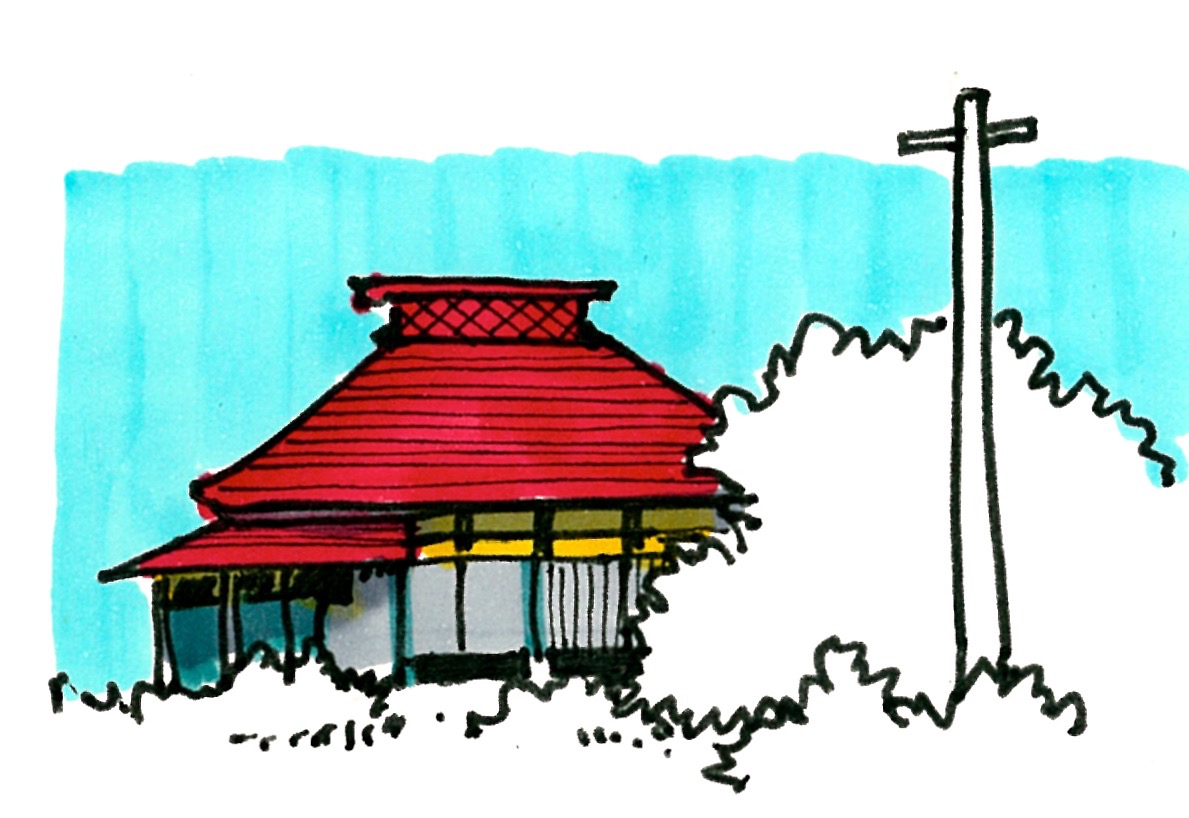
A thatched single-story house nestled slightly off the road to the west. The plan follows the straight SUGOYA layout and is modest in scale, but its columns and tie beams retain an archaic character. In YAHEISHIRO, where dual-purpose inn residences were common, this is a rare example of a pure farmhouse. *SUGOYA Sugoya (直屋) is a traditional Japanese house type in which the main living quarters and earthen-floor workspace are integrated into a single, continuous structure without separating ridgelines. It is characterized by the seamless connection of domestic and working spaces, where functions coexist within one linear form. Address Google Map Check with Google Maps Access Parking Business Hours Admission Fee Regular Holiday Phone Number URL SNS
Former OKUGAWA Elementary School, YAHEISHIRO Branch Gymnasium
Heritage Architecture
Open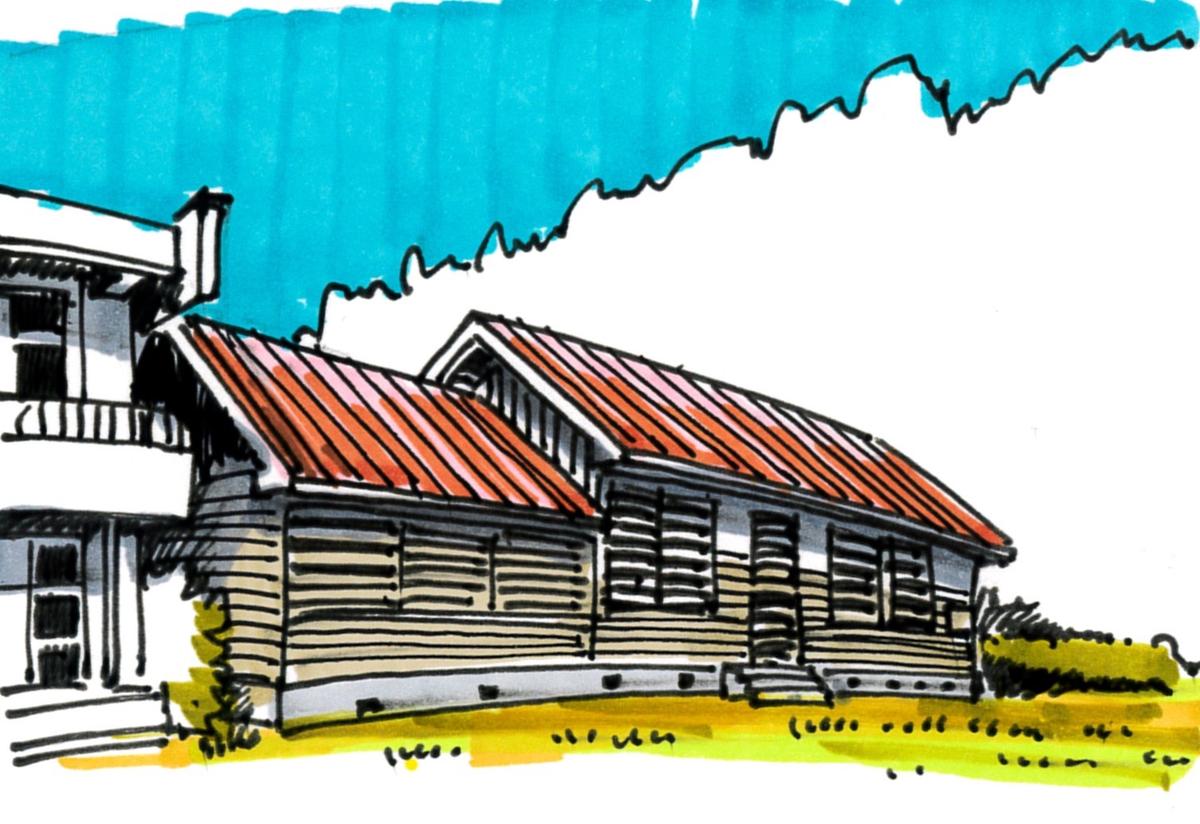
Established in 1949, closed in 1986. The single-story wooden building east of the reinforced concrete school building likely served as an auditorium and gymnasium. Its gable roofs are stacked in a row and the exterior walls are clad in clapboard siding. Though an unremarkable design, this style was the archetypal image of Japanese school architecture. Address Google Map Check with Google Maps Access Parking Business Hours Admission Fee Regular Holiday Phone Number URL SNS
KABUTO-ZUKURI CHUMON in GOKUNYU
Heritage Architecture
Open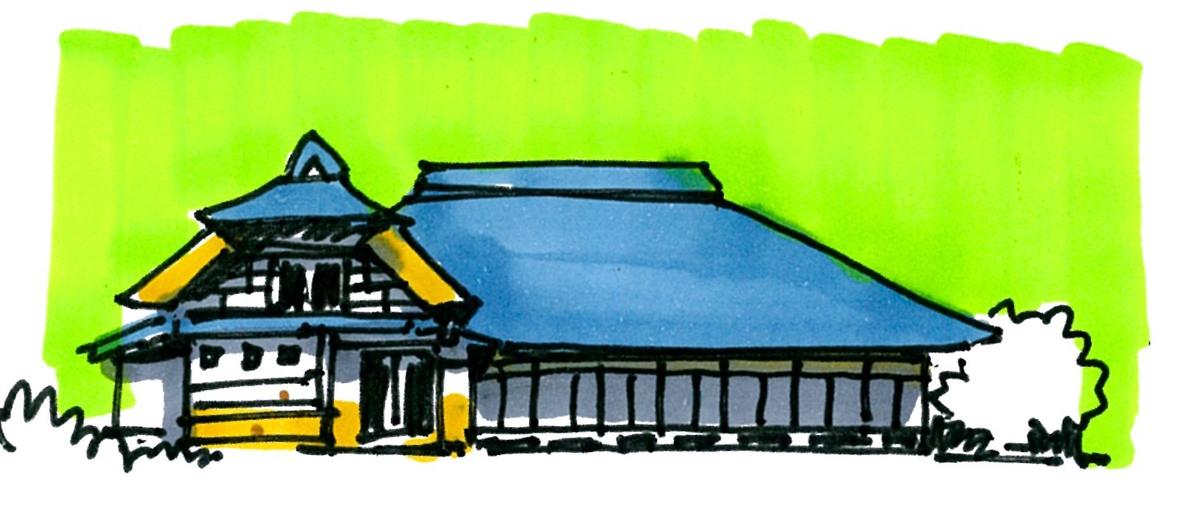
A left-hand CHUMON-ZUKURI farmhouse. Though the roof has been neatly finished in sheet metal, its thickness clearly reveals the original depth of the thatched roof beneath. While the entrance area has been modified, the gable wall of the protruding section retains horizontal tie beams that preserve traces of the building's original appearance. *CHUMON-ZUKURI A farmhouse form distinctive to the Aizu region and the Sea of Japan side of northern Japan, in which a roofed wing — originally housing livestock — projects from the main house in an L-shape, connected via a long enclosed corridor (the nakamon). This configuration allowed people and animals to move between spaces without exposure to heavy snow. *KABUTO-ZUKURI A roof form in which the upper portion of a gable end is steeply pitched and then curves outward at the eaves — resembling the silhouette of a samurai helmet (kabuto). Common in the Aizu and Nishiaizu region, it is often used for the protruding nakamon section or outbuildings, and was originally designed to shed heavy snow loads efficiently while giving the building a distinctive, imposing presence. Address Google Map Check with Google Maps Access Parking Business Hours Admission Fee Regular Holiday Phone Number URL SNS
TAISHŌKANKITEN Temple
Heritage Architecture
Open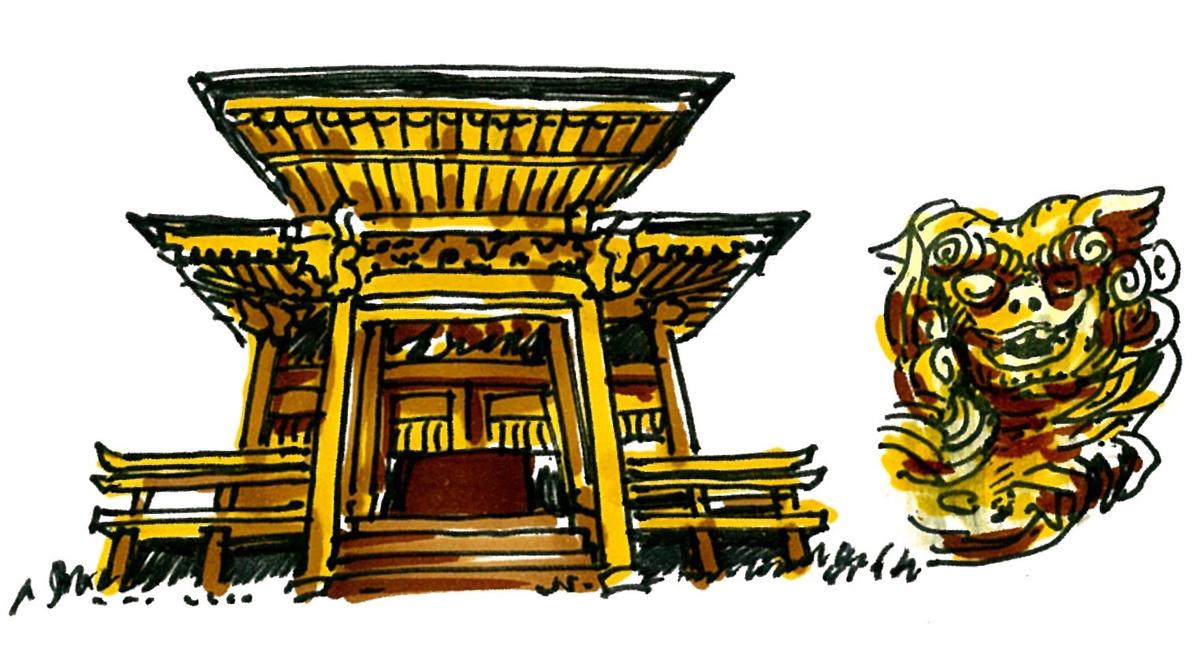
The KANKITEN of KONZOJI Temple, known locally as 'GOKUNYU's OSHŌTEN-SAMA,' is a NAGARE-ZUKURI style building. The powerful efficacy of the secret Buddha enshrined within has drawn devotees from throughout the AIZU region. In August 2016, the TAISHŌKANKITEN Festival was revived for the first time in 50 years. The wooden carvings of a lion on the KIBANA-decorative beam end and a dragon on the rainbow beam are magnificent. Address Google Map Check with Google Maps Access Parking Business Hours Admission Fee Regular Holiday Phone Number URL SNS
Blue OKIYANE-Roof KURA-earthen Storehouse in GOKUNYU Hamlet
Heritage Architecture
Open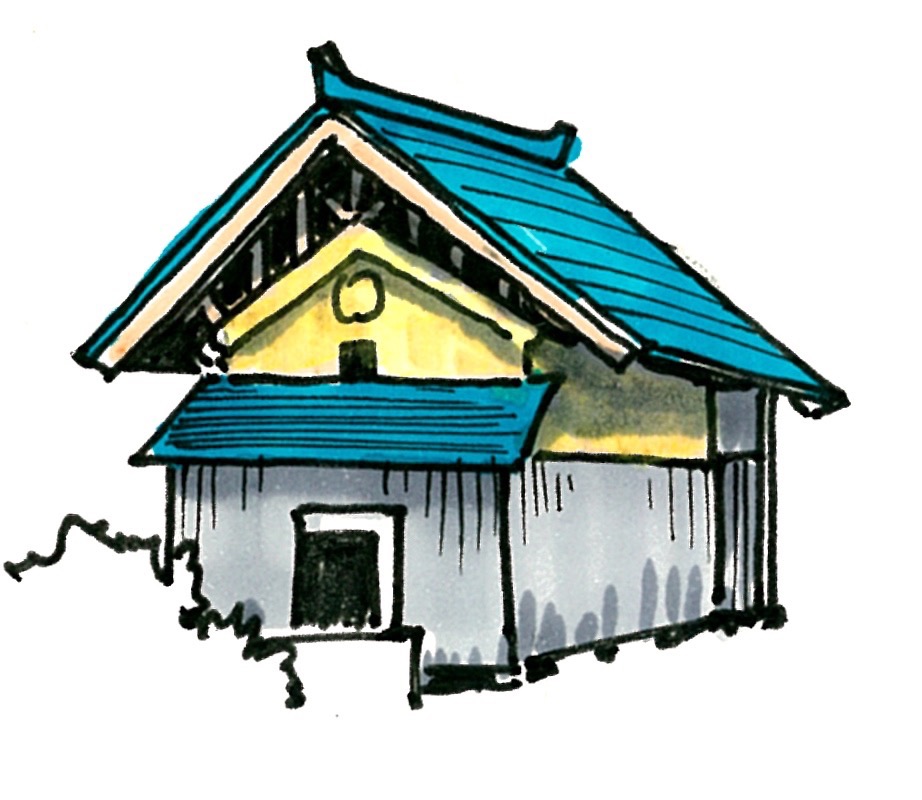
A KURA-earthen storehouse with a NAKANURI clay-plastered finish, standing against the mountain backdrop. The forehead-motif KURA-JIRUSHI (emblem) bears only a disk-shaped protrusion, but this simplicity evokes a primordial structural beauty—proof that a thick ridge beam lies within. *OKIYANE An earthen storehouse roof type in which a separate wooden roof structure is set on top of the clay body, rather than being integrated with it — protecting the walls from rain while allowing early detection of leaks, and often surviving fires intact even when the outer roof burns away. Address Google Map Check with Google Maps Access Parking Business Hours Admission Fee Regular Holiday Phone Number URL SNS
Farmhouse with Outbuilding and KURA-storehouse in KOYA
Heritage Architecture
Open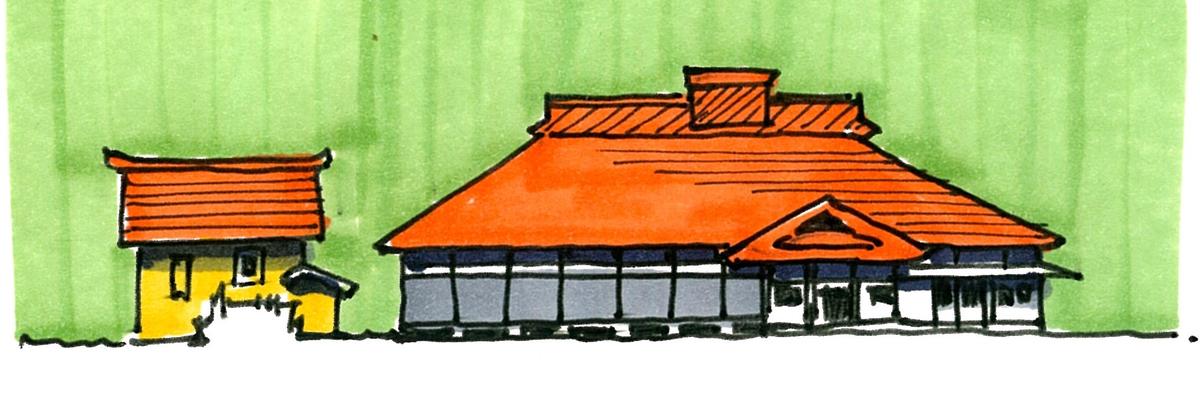
A house of notable presence in a small settlement. The main structure, finished in vivid red-orange, follows a hip-roofed SUGOYA plan, and the earthen storehouse beside it once appears to have been coated in white plaster. Unaffected and blending naturally into the landscape, this is a farmhouse of understated beauty. *SUGOYA Sugoya (直屋) is a traditional Japanese house type in which the main living quarters and earthen-floor workspace are integrated into a single, continuous structure without separating ridgelines. It is characterized by the seamless connection of domestic and working spaces, where functions coexist within one linear form. Address Google Map Check with Google Maps Access Parking Business Hours Admission Fee Regular Holiday Phone Number URL SNS
Red Roof in MATSUMINE
Heritage Architecture
Open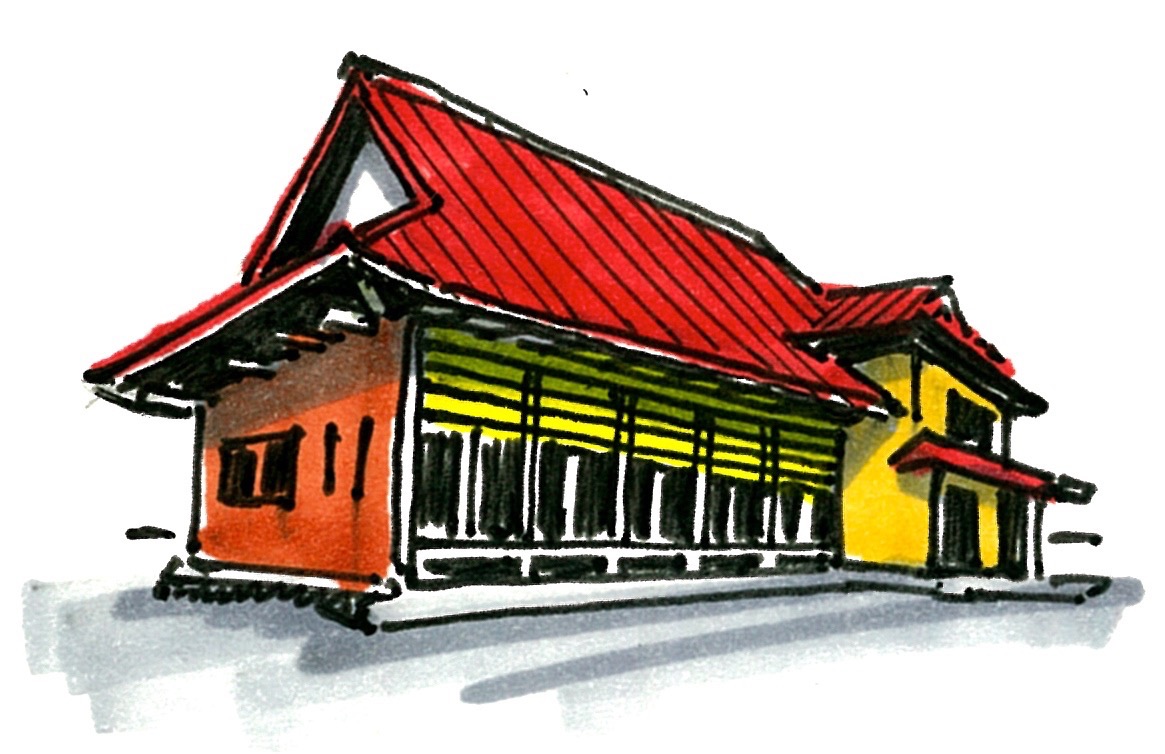
Though MATSUMINЕ is a deep-mountain settlement, it lies along an important road connecting the YAMASAN-GO/KITAKATA area with the TSUGAWA river port and was once a route of considerable traffic. Ancient road markers—memorial stone towers for itinerant pilgrims and stones known as 'TŌBA-SAMA'—still remain along the old trail. Address Google Map Check with Google Maps Access Parking Business Hours Admission Fee Regular Holiday Phone Number URL SNS
NIPPONIA NARAYAMA Village's KURA-Earthen Storehouse
Heritage Architecture
Open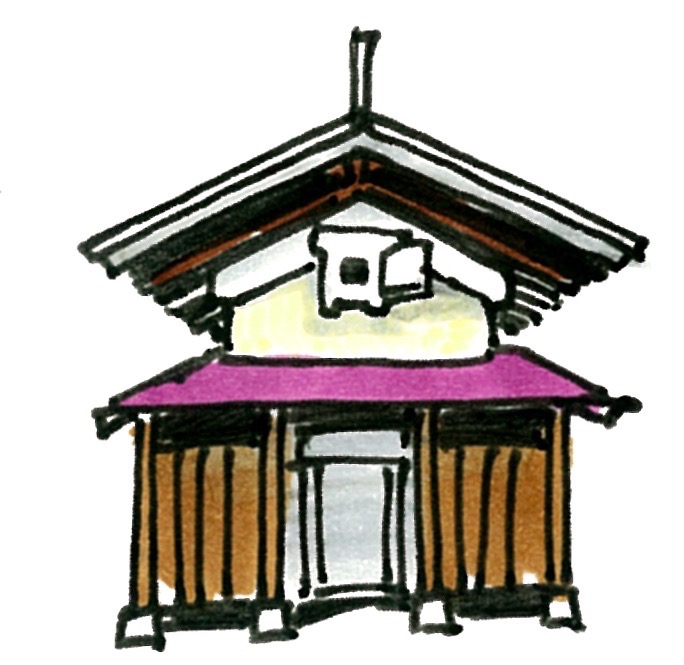
Within the NAKANOSAWA hamlet lies NARAYAMA—a smaller settlement home to 'NIPPONIA NARAYAMA Village,' an accommodation facility regenerating old farmhouses and storehouses. This storehouse is one of its facilities—an OKIYANE-roof earthen storehouse with a lower eave and a TOMAE (front structure). The small window in the gable is fitted with a hanging door with a KOUSHI (sliding panel), a fire-prevention device. Storehouses maintain constant temperature and humidity and have excellent soundproofing—their conversion into lodging is entirely rational. *OKIYANE An earthen storehouse roof type in which a separate wooden roof structure is set on top of the clay body, rather than being integrated with it — protecting the walls from rain while allowing early detection of leaks, and often surviving fires intact even when the outer roof burns away. Address Google Map Check with Google Maps Access Parking Business Hours Admission Fee Regular Holiday Phone Number URL SNS
‘MAGO(孫)’ KURA-JIRUSHI (emblem) on a KURA-storehouse in NAKANOSAWA
Heritage Architecture
Open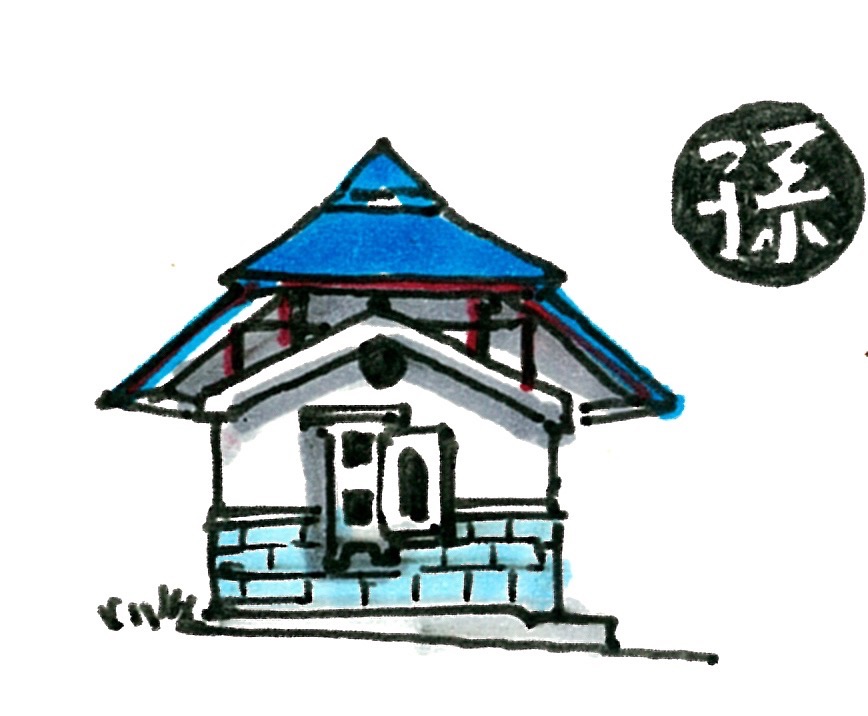
A KURA storehouse of wide proportions relative to its height, giving a solid, stable impression. Formerly thatched and now covered in corrugated iron, the large KABUTO-ZUKURI roof and the KURA-JIRUSHI(emblem) on KURA storehouse bearing the character for 'grandchild' (孫) are its defining features. Address Google Map Check with Google Maps Access Parking Business Hours Admission Fee Regular Holiday Phone Number URL SNS
CHUMON-ZUKURI Farmhouse in NAKANOSAWA
Heritage Architecture
Open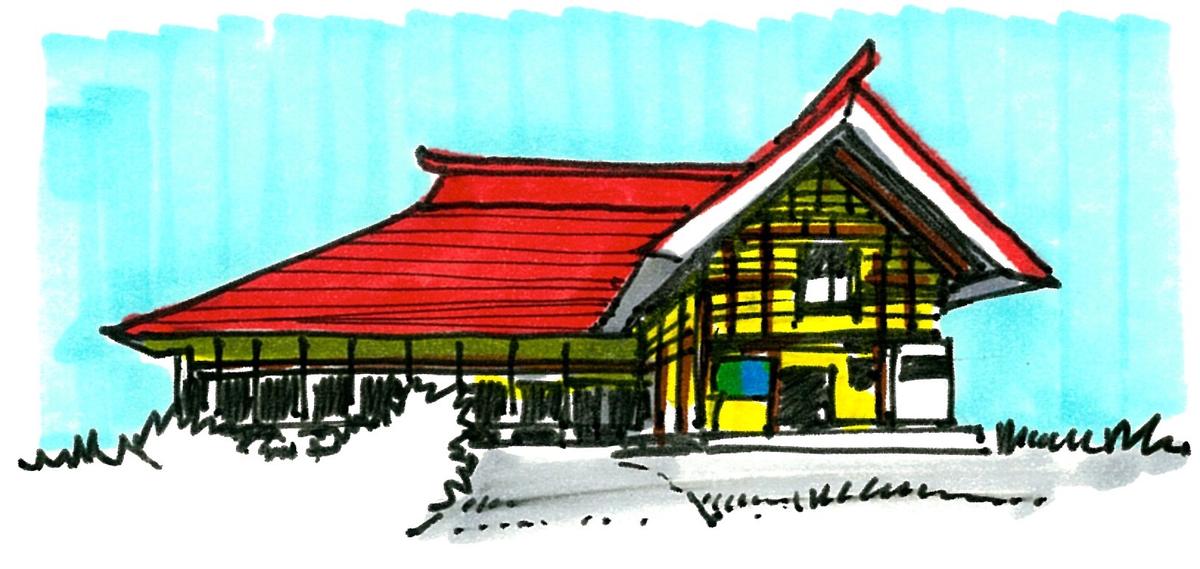
Among the many CHUMON-ZUKURI farmhouses, this one stands out for its exceptional size—the UMAYA (stable) section rises to nearly three stories. The DOMA (earthen-floor area) has no ceiling, exposing the dynamic roof framework overhead. Craftsmanship is concentrated throughout: surface-bark-trimmed NAGESHI (decorative beams), delicate OSARAMMA (reed lattice) transoms, and more. *CHUMON-ZUKURI A farmhouse form distinctive to the Aizu region and the Sea of Japan side of northern Japan, in which a roofed wing — originally housing livestock — projects from the main house in an L-shape, connected via a long enclosed corridor (the nakamon). This configuration allowed people and animals to move between spaces without exposure to heavy snow. Address Google Map Check with Google Maps Access Parking Business Hours Admission Fee Regular Holiday Phone Number URL SNS
CHUMON-ZUKURI Farmhouse in IDETO
Heritage Architecture
Open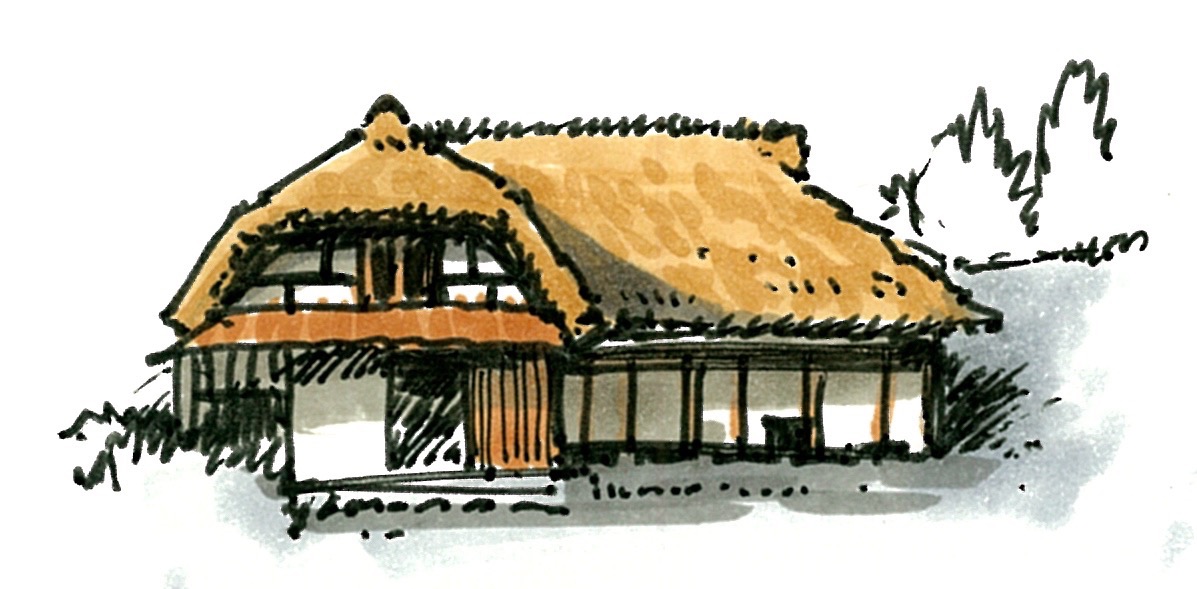
A typical AIZU's CHUMON-ZUKURI farmhouse connecting the main HON'YA to a stable through a CHUMON. Though now covered in corrugated iron, the town history records a photograph from the thatched-roof era. Accordingly, the illustration was drawn as it appeared in those days. [Recorded in town history *CHUMON-ZUKURI A farmhouse form distinctive to the Aizu region and the Sea of Japan side of northern Japan, in which a roofed wing — originally housing livestock — projects from the main house in an L-shape, connected via a long enclosed corridor (the nakamon). This configuration allowed people and animals to move between spaces without exposure to heavy snow. Address Google Map Check with Google Maps Access Parking Business Hours Admission Fee Regular Holiday Phone Number URL SNS
Distant View of the Settlement in IDETO
Heritage Architecture
Open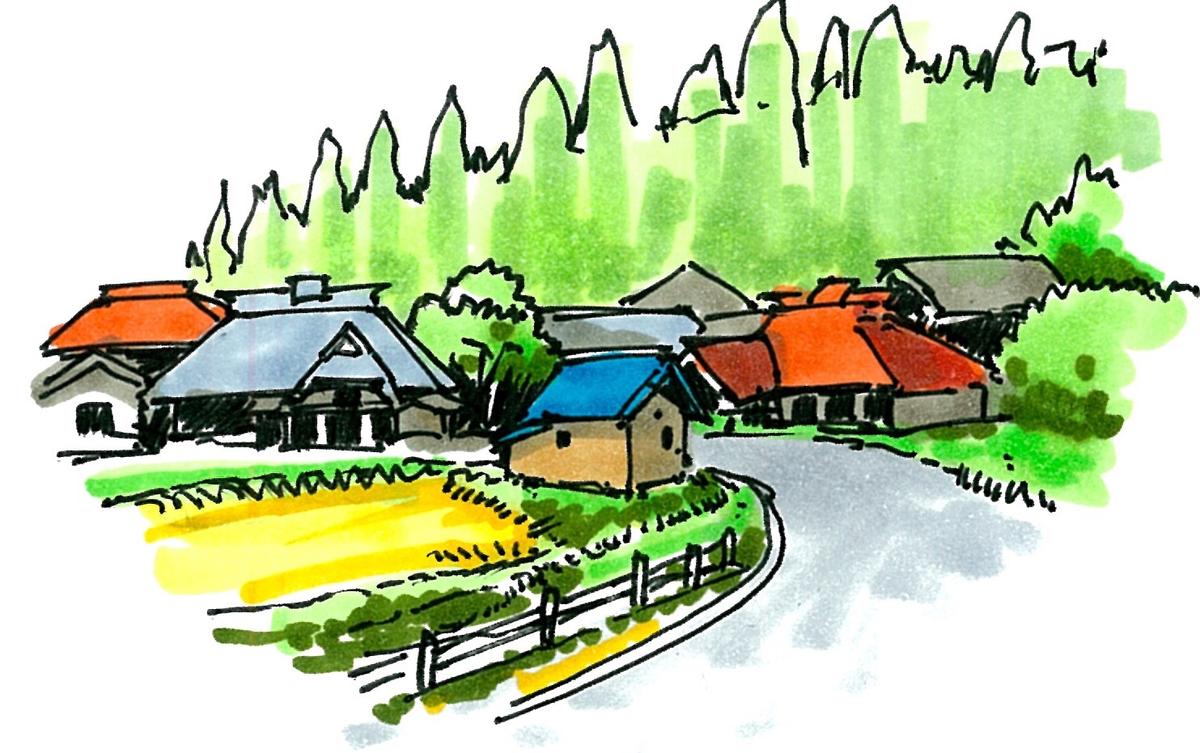
The central part of the IDETO settlement, which forms a sweeping arc. CHUMON-ZUKURI farmhouses, earthen storehouses, and outbuildings stand at subtly varying angles against a backdrop of cedar groves, forming a distinctive settlement landscape. The panorama seen beyond the saddle looks like a landscape from paradise. Address Google Map Check with Google Maps Access Parking Business Hours Admission Fee Regular Holiday Phone Number URL SNS
FURUMINE Shrine in IDETO
Heritage Architecture
Open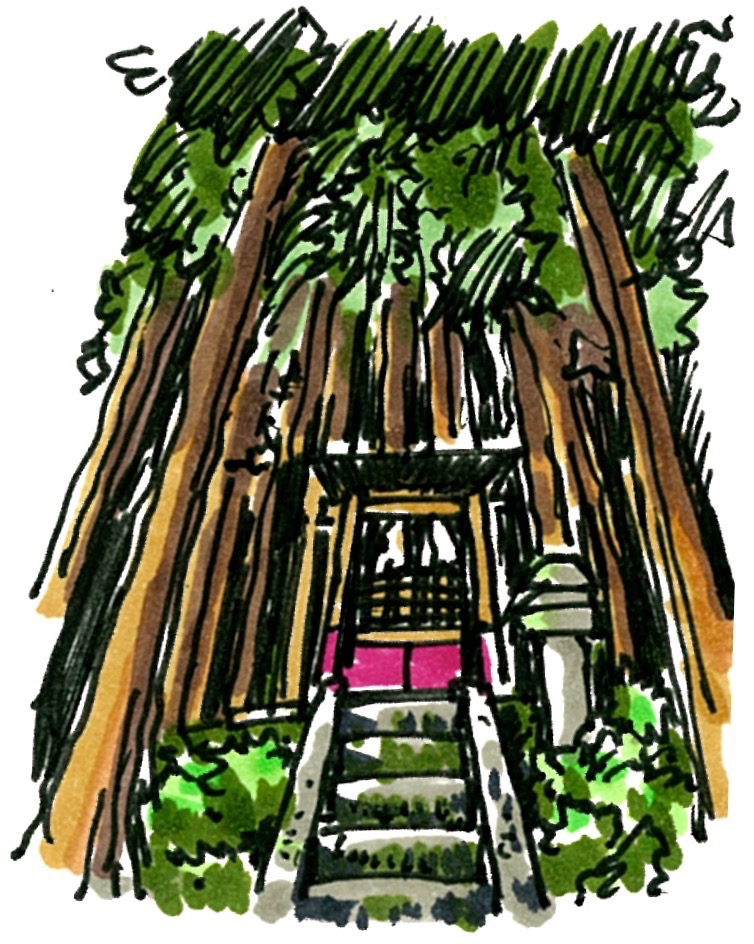
Many settlements in NISHIAIZU have a FURUMINE Shrine. Among them, this one—integrated with the surrounding mountain nature and exuding a quietly secluded atmosphere—is especially compelling. The HAIDEN (worship hall) is a NAGARE-ZUKURI ikkenshа style, with pure white shide (paper streamers) hanging from the rainbow beam of the KOHAI (front porch). Address Google Map Check with Google Maps Access Parking Business Hours Admission Fee Regular Holiday Phone Number URL SNS
Green OKUGAWA (Farmstay)
Heritage Architecture
Open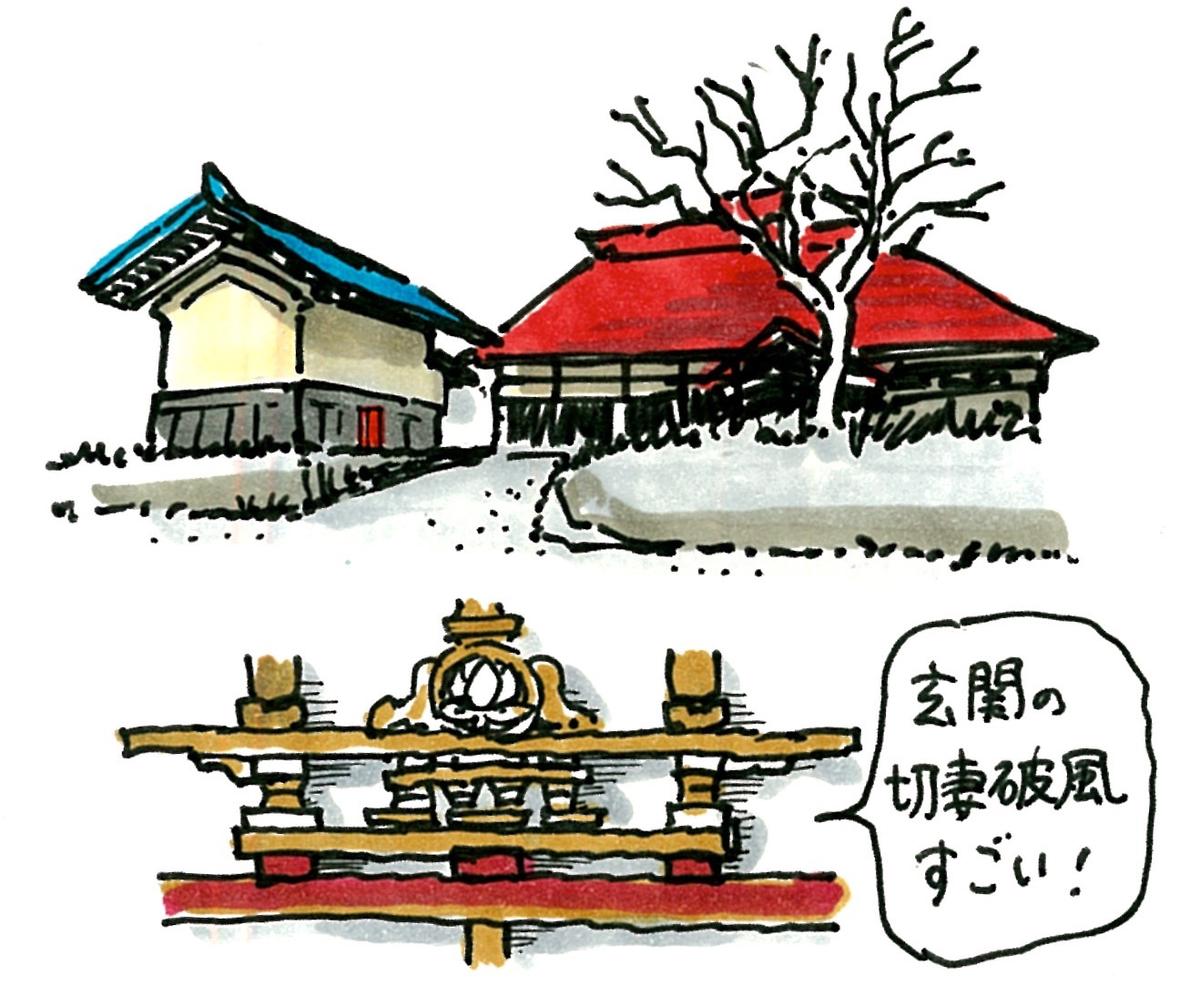
The house has a history of 400 years and the building is said to date from the late EDO period—a popular farmstay accommodation. The 7-meter-high attic space is breathtaking. The highlight is above the transoms on the projecting entrance, where a KAERUMATA (frog-leg brace) with a family crest is layered with multiple tiers of bracket complexes normally seen only in temples and shrines. Address Google Map Check with Google Maps Access Parking Business Hours Admission Fee Regular Holiday Phone Number URL SNS
SHIO JIZŌDŌ (Jizo Hall)
Heritage Architecture
Open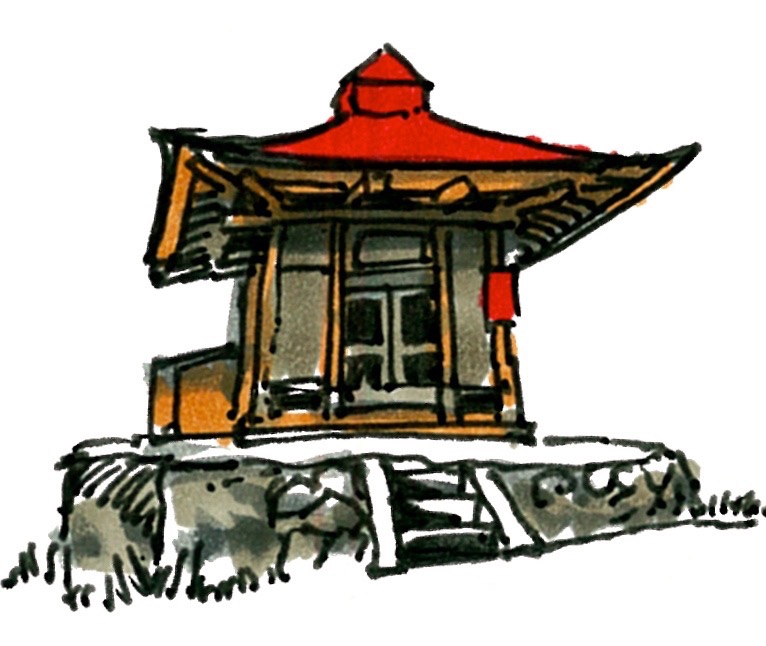
"Many small JIZŌDŌ and KANNONDŌ halls are scattered throughout the town. In an era when medicine and sanitation were limited, people offered fervent prayers for the lives and health of the vulnerable. The SHIO JIZŌDŌ has a HŌGYŌ (pyramidal) roof and SEGAI (projecting rafter) detailing running around all four sides—a carefully crafted building. *SEGAI-ZUKURI A traditional eave construction in which projecting rafters extend outward beyond the wall, creating deep, overhanging eaves that run around the building — both a functional rain defense and a mark of architectural prestige, often seen on high-status farmhouses and storehouses. " Address Google Map Check with Google Maps Access Parking Business Hours Admission Fee Regular Holiday Phone Number URL SNS
KABUTO-ZUKURI Farmhouse in SHIO
Heritage Architecture
Open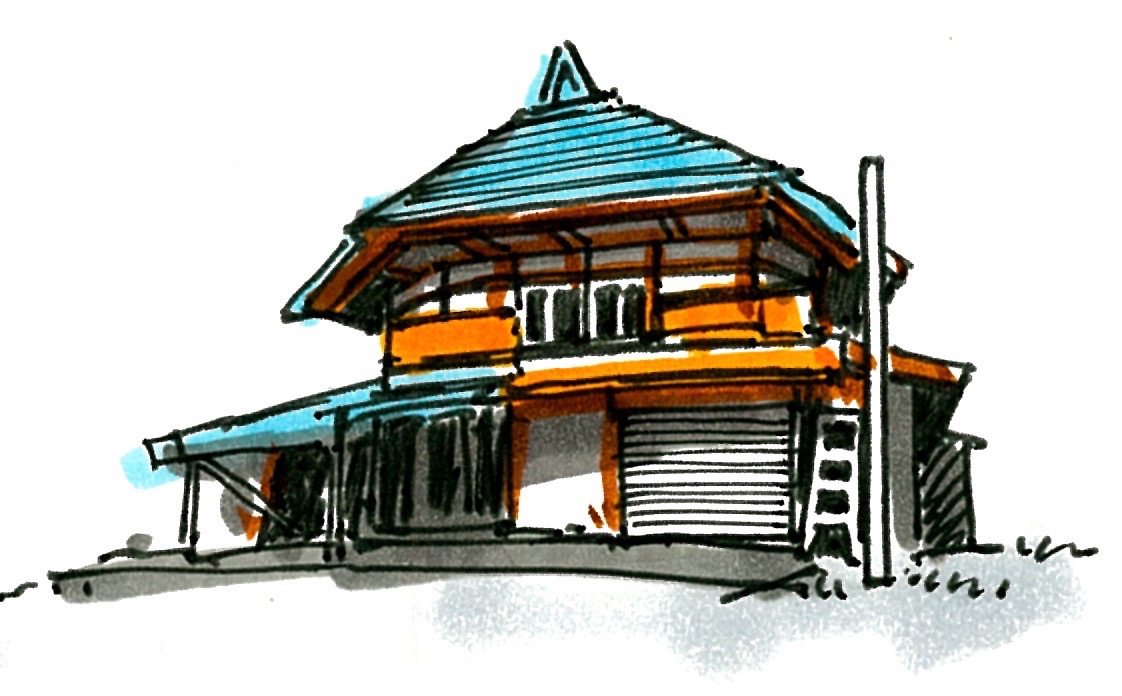
A KABUTO-ZUKURI farmhouse showing its gable end to the road, once thatched. While the openings have been replaced with aluminum sash windows and shutters, the powerful structural beauty remains and continues to captivate us. *KABUTO-ZUKURI A roof form in which the upper portion of a gable end is steeply pitched and then curves outward at the eaves — resembling the silhouette of a samurai helmet (kabuto). Common in the Aizu and Nishiaizu region, it is often used for the protruding nakamon section or outbuildings, and was originally designed to shed heavy snow loads efficiently while giving the building a distinctive, imposing presence. Address Google Map Check with Google Maps Access Parking Business Hours Admission Fee Regular Holiday Phone Number URL SNS
CHUMON-ZUKURI Farmhouse in KOYAMA
Heritage Architecture
Open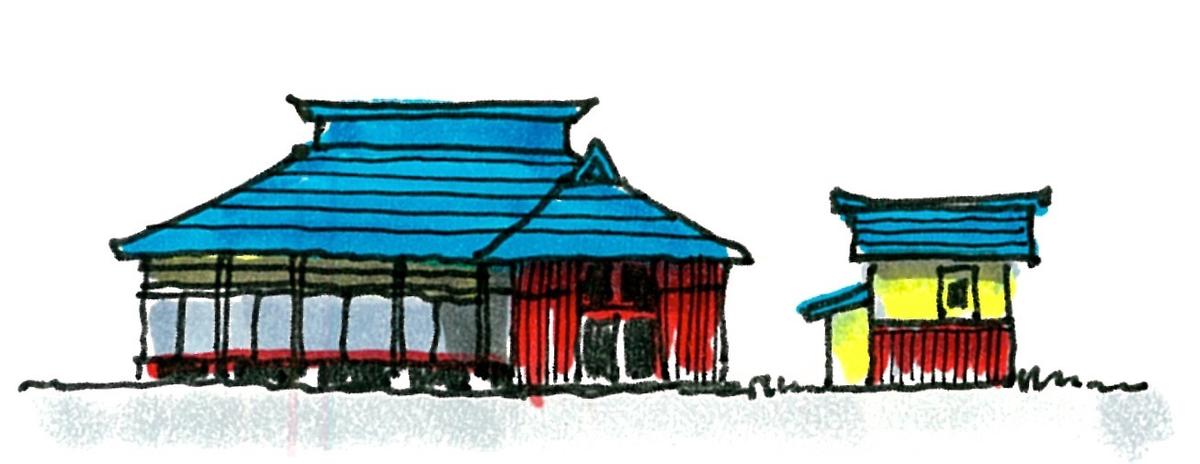
Climbing the slope in KOYAMA settlement, this house stands backed by a cedar grove. On a narrow north-south lot, the CHUMON-ZUKURI main house and an OKIYANE-roof storehouse are aligned in a straight line. The storehouse, showing the subdued color of bare earth, appears to have once had a TOMAE (front structure). This picture was drawn imagining the original appearance. *CHUMON-ZUKURI A farmhouse form distinctive to the Aizu region and the Sea of Japan side of northern Japan, in which a roofed wing — originally housing livestock — projects from the main house in an L-shape, connected via a long enclosed corridor (the nakamon). This configuration allowed people and animals to move between spaces without exposure to heavy snow. Address Google Map Check with Google Maps Access Parking Business Hours Admission Fee Regular Holiday Phone Number URL SNS
Farmstay NOBARA
Heritage Architecture
Open
Said to have been built immediately after a fire in MEIJI 23 (1890). A typical CHUMON-ZUKURI farmhouse with a SHINКABE KIRIZUMA wall rising on the right front side. The protruding section housed farm horses until the 1930s, and breeding bulls through the 1970s. The second floor of the CHUMON stored dried hay as fodder. At the eastern end, a stream was channeled indoors for domestic water use. The family cultivated paulownia in a 'KIRI-BATAKE' grove. *CHUMON-ZUKURI A farmhouse form distinctive to the Aizu region and the Sea of Japan side of northern Japan, in which a roofed wing — originally housing livestock — projects from the main house in an L-shape, connected via a long enclosed corridor (the nakamon). This configuration allowed people and animals to move between spaces without exposure to heavy snow. Address Google Map Check with Google Maps Access Parking Business Hours Admission Fee Regular Holiday Phone Number URL SNS
SAKAYA Restaurant and Former YABE Sake Brewery
Heritage Architecture
Open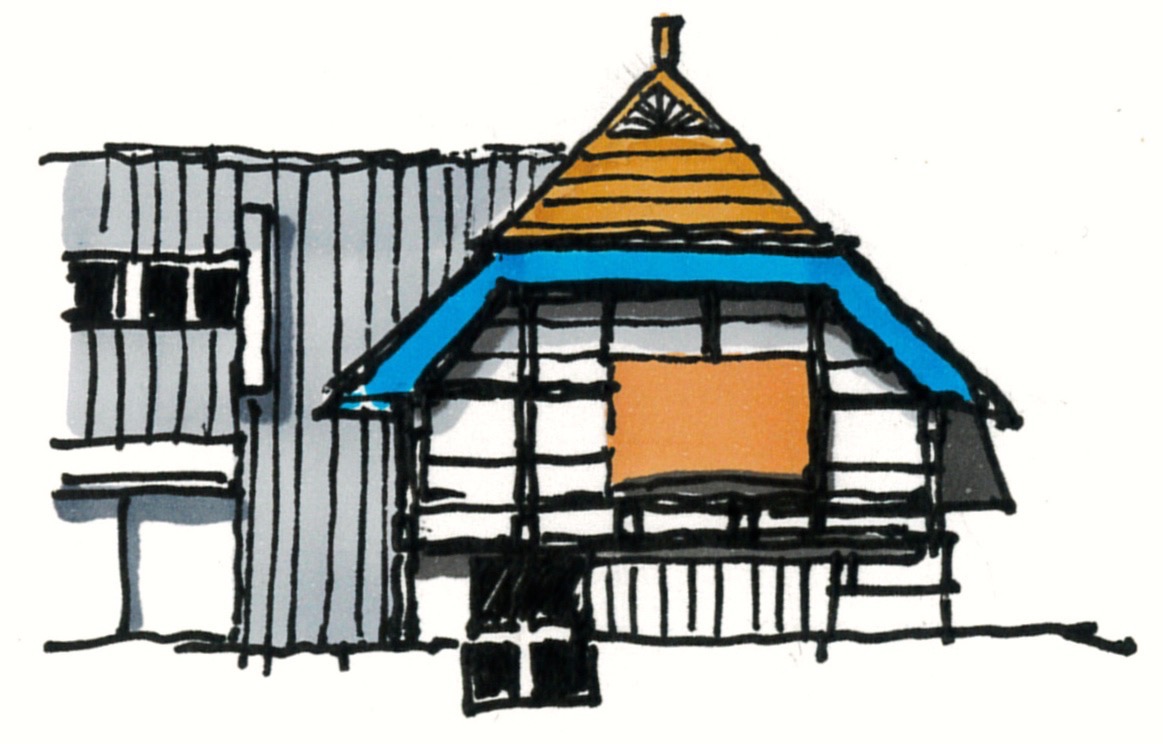
A sake brewery that produced 'AZUMA NOBORI' and 'OKUNO KAWA' until the 1960s. It is the largest earthen storehouse in the area and serves as a local landmark. The SAKAYA restaurant closed in 1989 but reopened in 2006, and has many fans of its ramen and fried rice. Address Google Map Check with Google Maps Access Parking Business Hours Admission Fee Regular Holiday Phone Number URL SNS
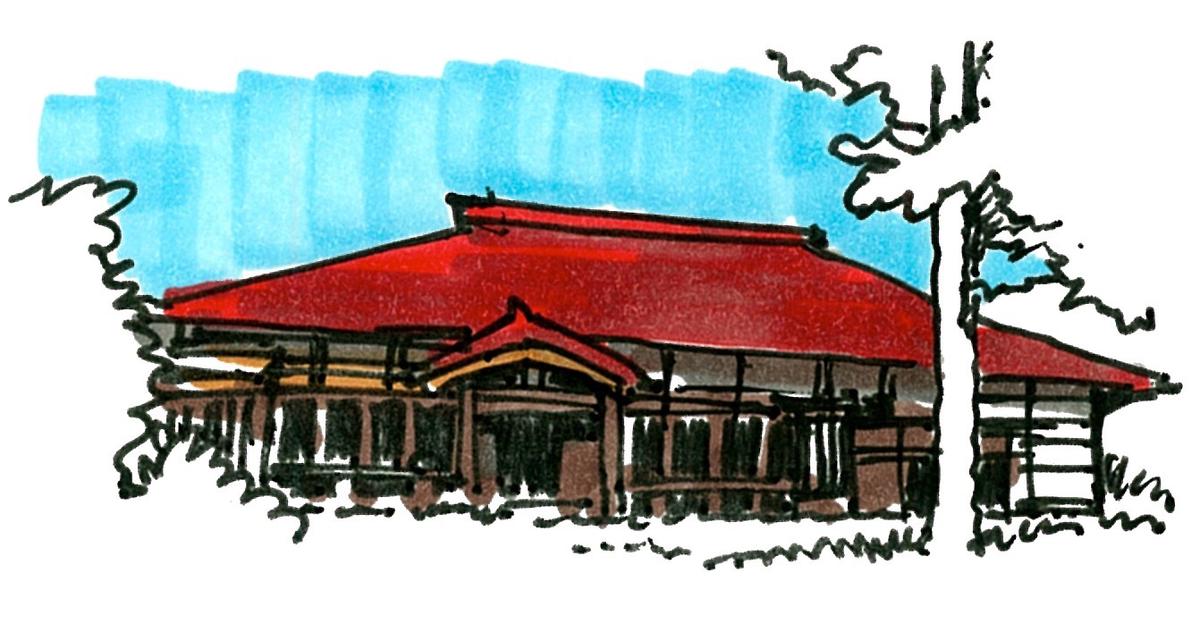
"A SUGOYA farmhouse making generous use of zelkova, said to be 200 years old. It is used as a farmstay accommodation, offering guests experiences such as SOBA-making, local cuisine, and farm work. *SUGOYA Sugoya (直屋) is a traditional Japanese house type in which the main living quarters and earthen-floor workspace are integrated into a single, continuous structure without separating ridgelines. It is characterized by the seamless connection of domestic and working spaces, where functions coexist within one linear form." Address Google Map Check with Google Maps Access Parking Business Hours Admission Fee Regular Holiday Phone Number URL SNS
NISHIAIZU International Art Village
Heritage Architecture
Open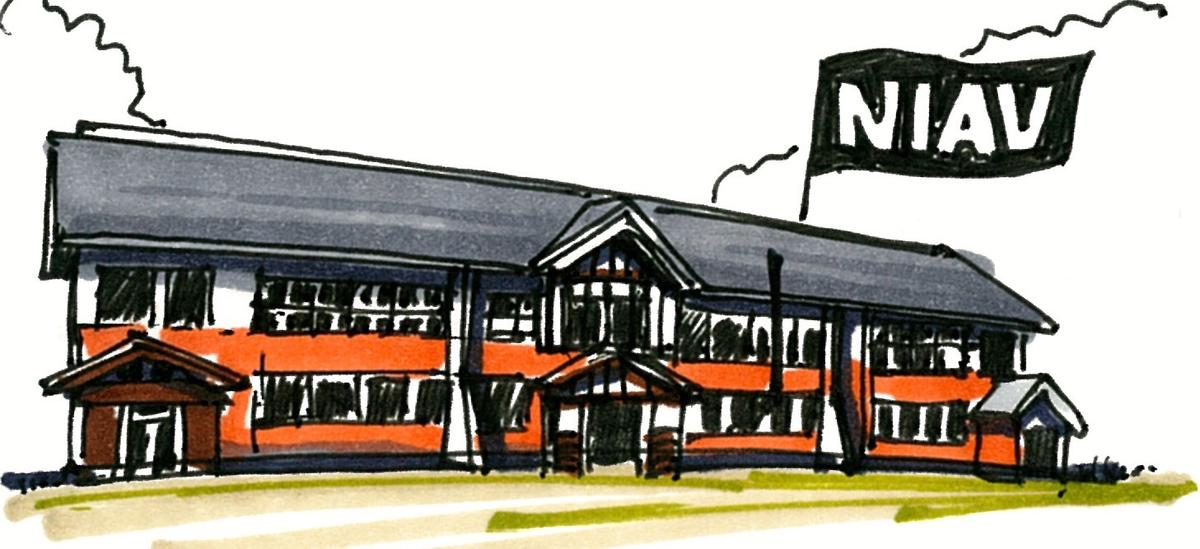
A regeneration of the closed SHINGŌ Junior High School. Opened in 2004 as a facility that fuses history, local climate, folklore, culture, and traditional techniques with the creative power of design and art. The nostalgic two-story gable-roofed school building retains the atmosphere of each classroom. It is also noted as a base for Artist-in-Residence programs in which artists from Japan and abroad stay and create. Address Google Map Check with Google Maps Access Parking Business Hours Admission Fee Regular Holiday Phone Number URL SNS
ONOMOTO Old Elementary School Auditorium
Heritage Architecture
Open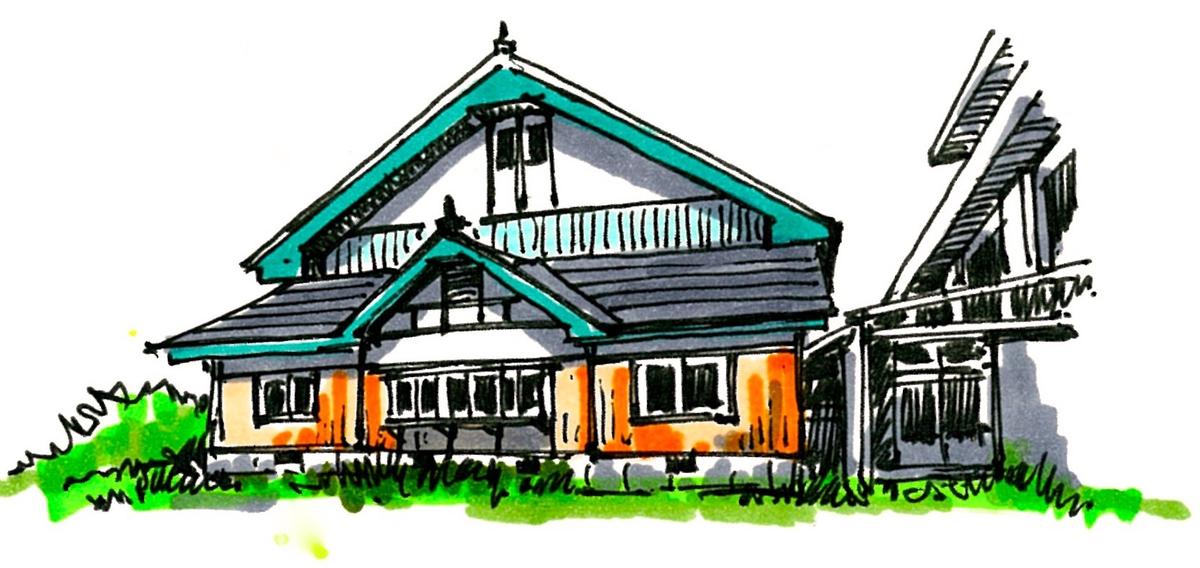
The wooden auditorium of ONOMOTO Old Elementary School, which closed in March 2012. Said to have been built in the 1950s. A KIRIZUMA-roofed building with finials shaped like horns at both ridge ends. The elevated coffered ceiling (ORIAGE GŌTENJŌ) interior is a dignified space beloved by many residents. With good acoustics, it has served as a venue for TAIKO drumming and classical music festivals. A precious cultural asset of the community, its future use is eagerly anticipated. Address Google Map Check with Google Maps Access Parking Business Hours Admission Fee Regular Holiday Phone Number URL SNS
ENMANJI KANNONDŌ (Kannon Hall)
Heritage Architecture
Open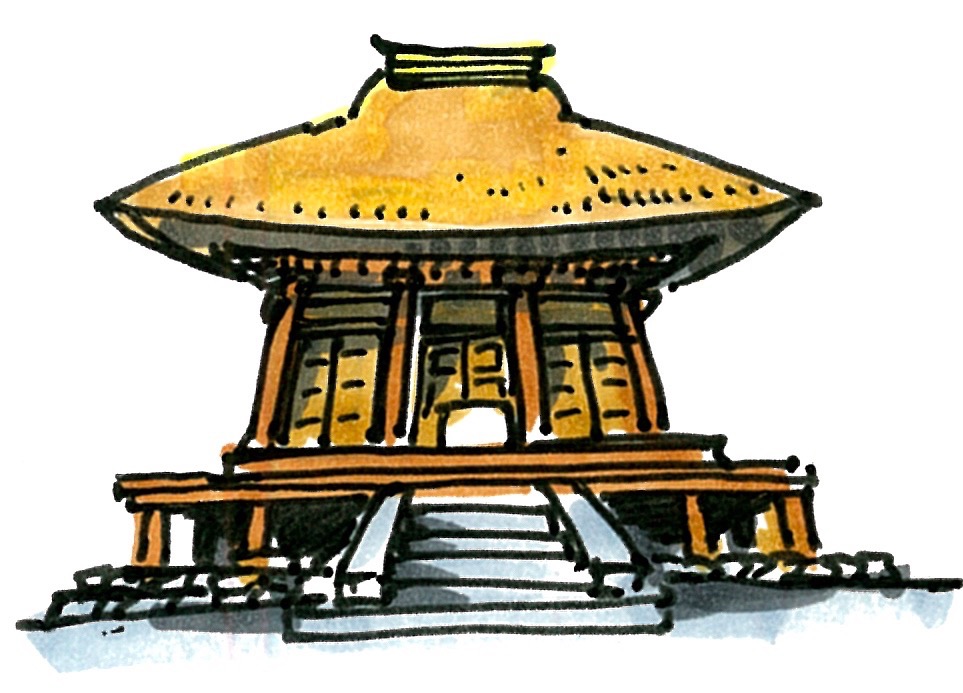
A three-bay square, thatched IRIMOYA (hip-and-gable) all-cypress structure from the late MUROMACHI period in the Zen style, designated as a National Important Cultural Property. During the 1970 dismantling and restoration, it was relocated and reconstructed from the center of the settlement. Address Google Map Check with Google Maps Access Parking Business Hours Admission Fee Regular Holiday Phone Number URL SNS
FURUSATO JIMAN-KAN and TSUMA-IRI Farmhouse
Heritage Architecture
Open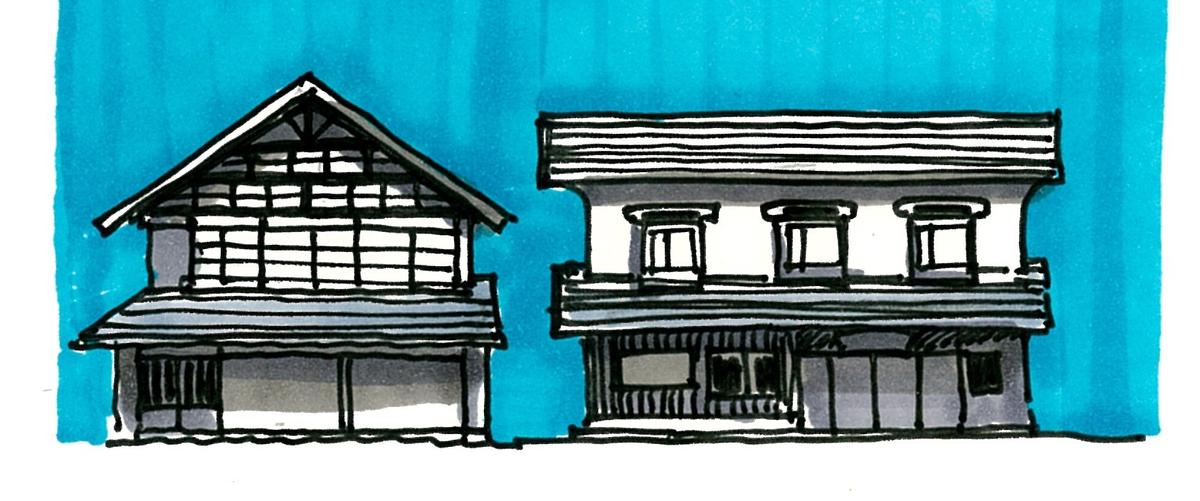
Along the central area that flourished as a post-town on the ECHIGO KAIDŌ (historic mail road), many townhouses (MACHIYA) stand in rows. In particular, HARAMACHI district was the site of the main inn (HONJIN). The flat-entry earthen storehouse on the right is the 'FURUSATO JIMAN-KAN,' displaying materials on the bustle of the post-town and notable figures who grew up in the KENKI-DŌ academy. Address Google Map Check with Google Maps Access Parking Business Hours Admission Fee Regular Holiday Phone Number URL SNS
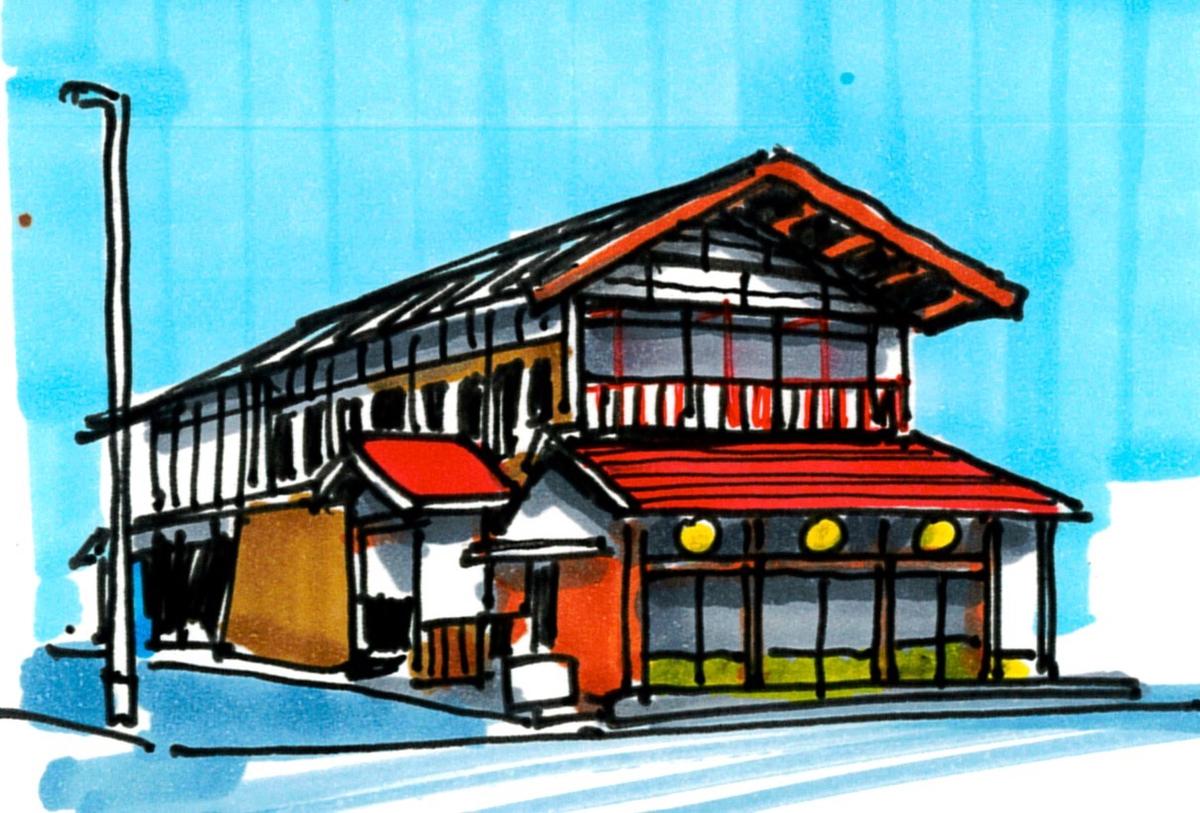
An Italian restaurant renovated through collaboration between the owner—a native of NISHIAIZU who returned—and the NISHIAIZU International Arts Village. At the time of renovation, the building had already surpassed 110 years of age. Originally a travelers' inn building; upon hearing it would be 'demolished to make a parking lot,' the owner purchased it and relocated the restaurant. Address Google Map Check with Google Maps Access Parking Business Hours Admission Fee Regular Holiday Phone Number URL SNS
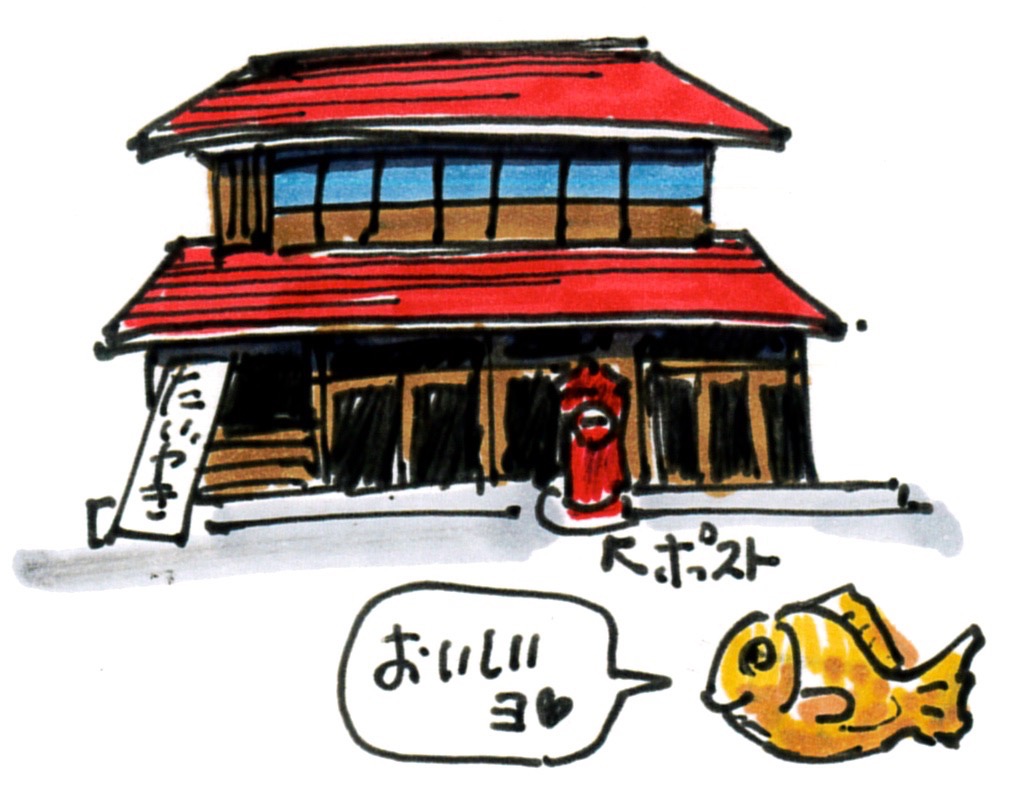
A guesthouse created by the KURA. restaulant owner by regenerating an adjacent vacant building. A TAIYAKI (fish-shaped pancake) shop occupies the first floor. I savored the crispy, piping-hot TAIYAKI while relishing the unchanged interior of the shop as it once was. Address Google Map Check with Google Maps Access Parking Business Hours Admission Fee Regular Holiday Phone Number URL SNS
NIGIWAI BANSHO PRATTO
Heritage Architecture
Open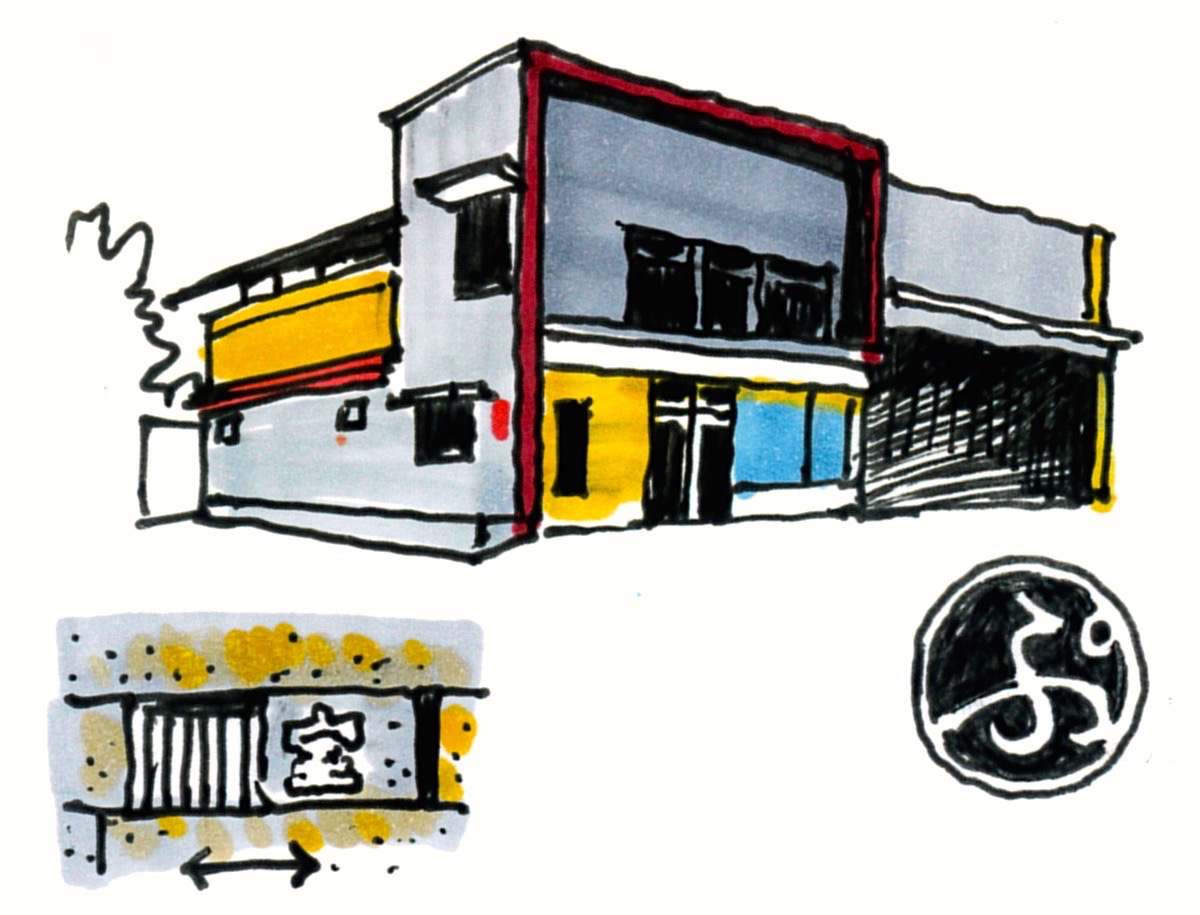
A community space created by renovating a vacant shop—available for workshops, salon activities, events, and seminars. Elderly visitors come for digital consultation. In fact, the rear section is a former earthen storehouse; the movable vent cover beneath the floor bears a deeply carved character for 'treasure' (宝). Address Google Map Check with Google Maps Access Parking Business Hours Admission Fee Regular Holiday Phone Number URL SNS
ISHIKAWA Sake Shop
Heritage Architecture
Open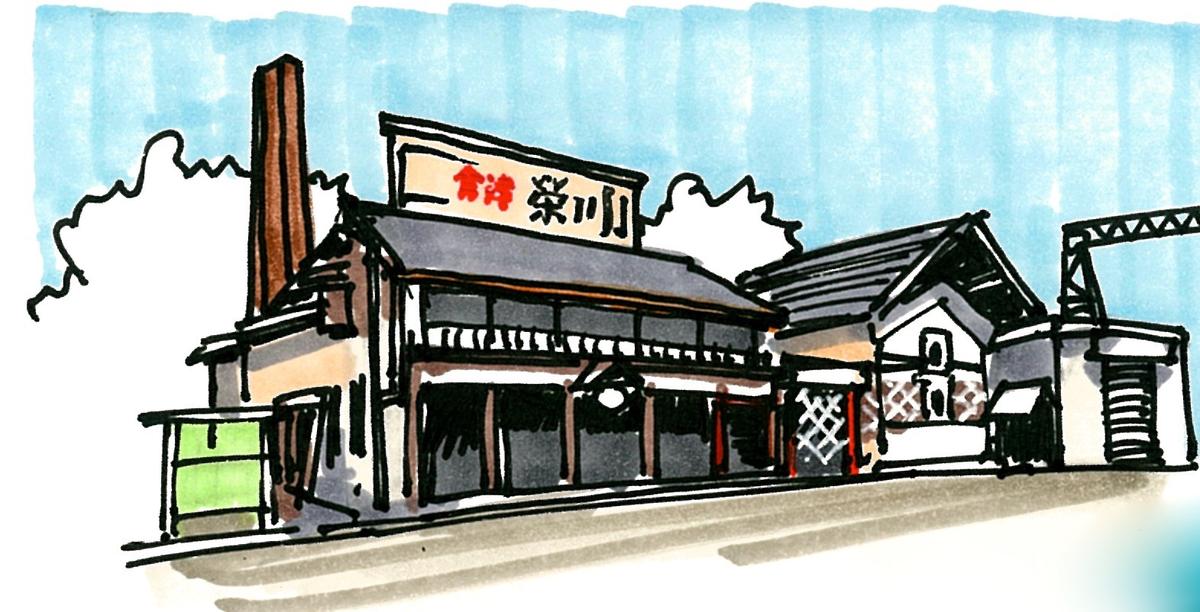
A sake brewery at the eastern edge of NOZAWA-JUKU, founded in BUNKA 4 (1807). The founder was ISHIDA YOICHIZAEMON SSHIGETOMO, a refugee from the Osaka Summer Campaign who came via ECHIGO Province to settle in AIZU NOZAWA; the third generation changed the family name from ISHIDA to ISHIKAWA out of deference to the AIZU MATSUDAIRA clan. The NAMAKO-KABE (sea-cucumber pattern plaster) earthen storehouse is impressive, and the window door on the gable face is fitted with a careful wooden sheath (cover). The octagonal brick chimney is a rarity. Address Google Map Check with Google Maps Access Parking Business Hours Admission Fee Regular Holiday Phone Number URL SNS
INISHIE Café UDAKI
Heritage Architecture
Open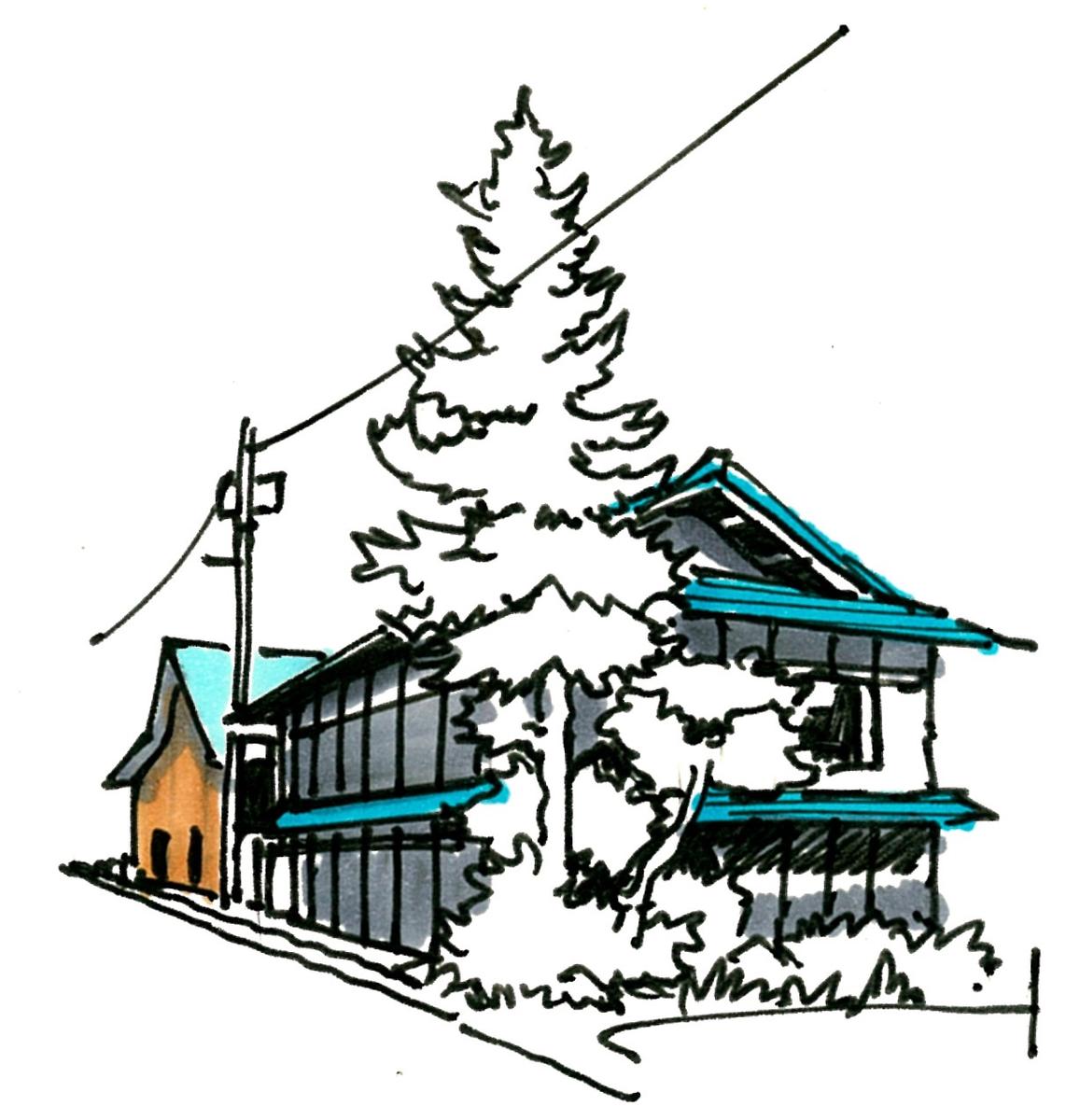
NISHIAIZU has long been busy with visitors to the OYAMAZUMI Shrine, and one of the inn buildings that stood at its gate has been renovated as a café. The road-facing side has a fully open design with a great sense of openness. Address Google Map Check with Google Maps Access Parking Business Hours Admission Fee Regular Holiday Phone Number URL SNS
TORIOI KANNON Temple
Heritage Architecture
Open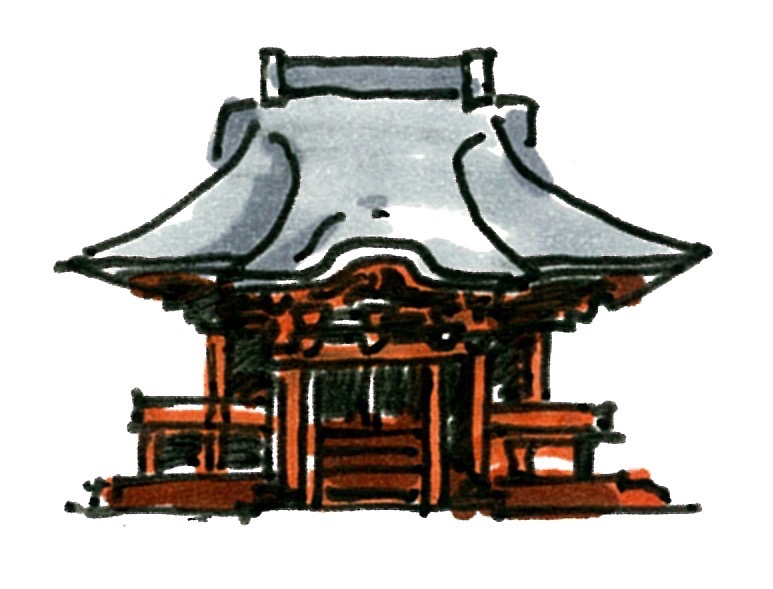
The official name is NYŌHŌJI KANNONDŌ, a prefectural Important Cultural Property. Believed to date from 1613, the upper section above the platform features closely spaced bracket complexes (TSUME-GUMI) with the volume of a pineapple cluster. Since they are placed even where there are no columns, they are called TSUME-GUMI. Together with fan rafters, these are characteristic of the Zen style. The east-west double entrance (kōhai) is also unusual. The hidden 'three monkeys' carving attributed to HIDARI JINGORŌ (Japanese legendary sculptor )is also a highlight. Address Google Map Check with Google Maps Access Parking Business Hours Admission Fee Regular Holiday Phone Number URL SNS
TATEKURUMI House in NASHIDAIRA
Heritage Architecture
Open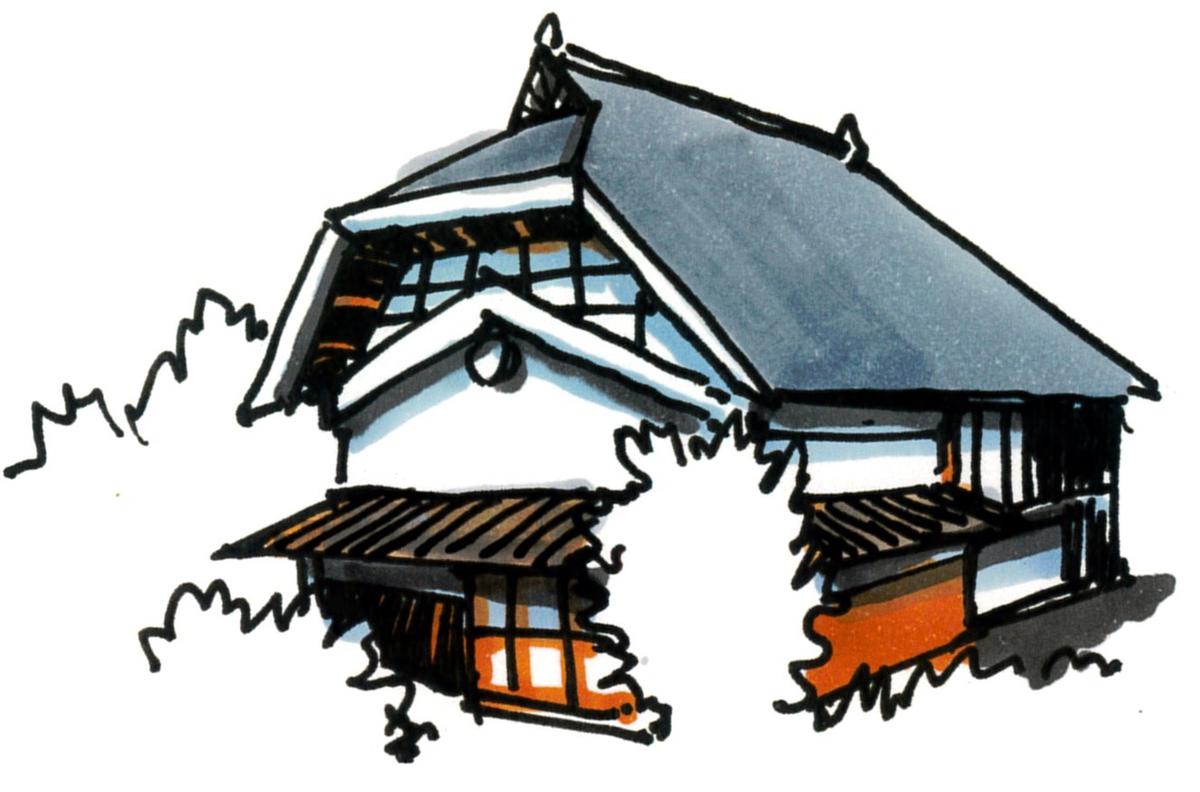
A house in which a wooden structure is built entirely around a storehouse is called TATEKURUMI. An unusual farmhouse form in which a half-hipped plus KABUTO-ZUKURI roof is completely covered by a thatched roof. The main house on the right is said to be 150 years old, and the KURA-ZASHIKI dates from the late EDO to early MEIJI period. *TATEKURUMI A detail in which a structural post is enclosed with vertical cladding to protect it and create a refined exterior finish. Address Google Map Check with Google Maps Access Parking Business Hours Admission Fee Regular Holiday Phone Number URL SNS
Storehouse with Four-Tier KAKEGO Panels in NASHIDAIRA
Heritage Architecture
Open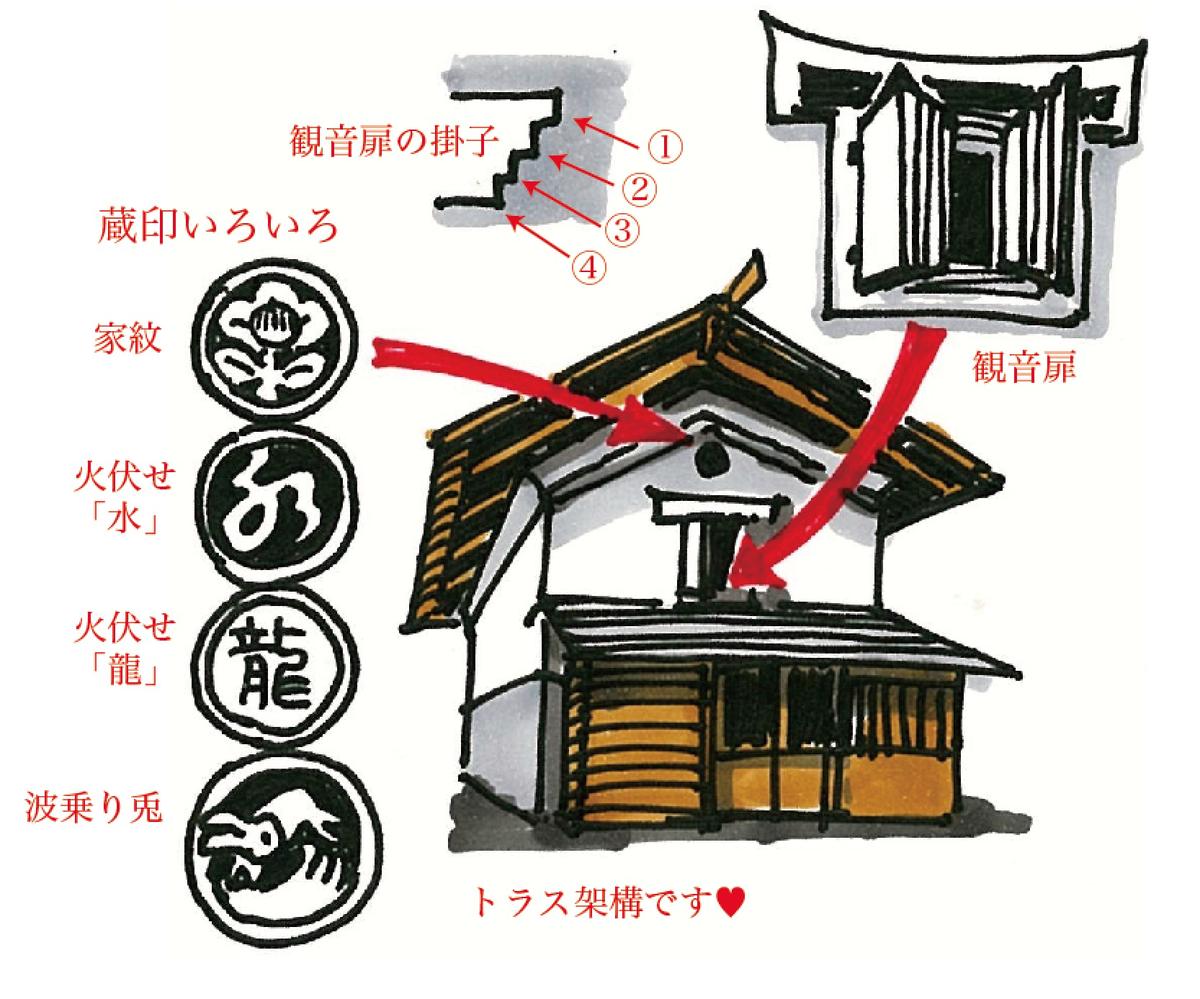
A TAISHO-era storehouse with lavish four-tier KAKEGO double-leaf windows(KANNON-TOBIRA). The forehead mark is a KURA-JIRUSHI(emblem) bearing the family crest. *KAKEGO (掛子) is a traditional protective outer frame or cover attached to the openings of a Japanese storehouse (kura), such as doors or windows. It enhances fire resistance and weather protection, working together with thick earthen walls and shutters to safeguard the interior. Address Google Map Check with Google Maps Access Parking Business Hours Admission Fee Regular Holiday Phone Number URL SNS
BĒHA (Tobacco Drying) Shed in NASHIDAIRA
Heritage Architecture
Open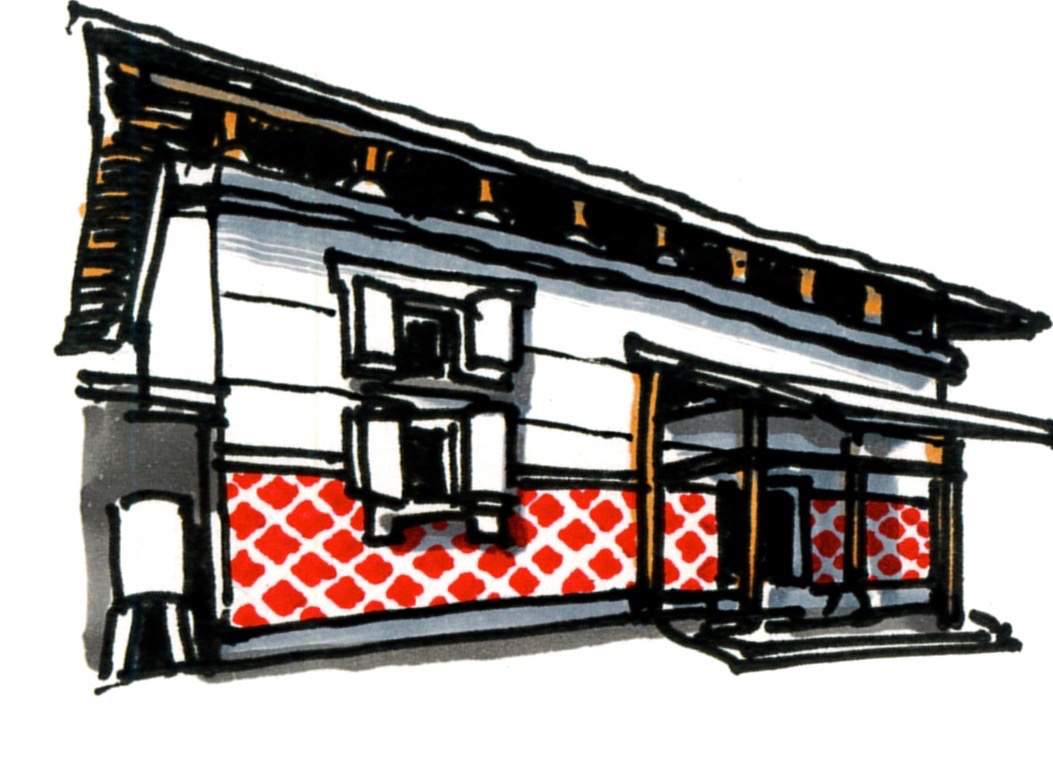
The house on the hill prospered through sericulture, leaf tobacco production, and horse trading. The remaining tobacco drying shed (BĒHA KOYA) is rare. It was equipped with MUSŌ-MADO (louver windows) for temperature control. Address Google Map Check with Google Maps Access Parking Business Hours Admission Fee Regular Holiday Phone Number URL SNS
Earthen Storehouse and CHUMON-ZUKURI in NASHIDAIRA
Heritage Architecture
Open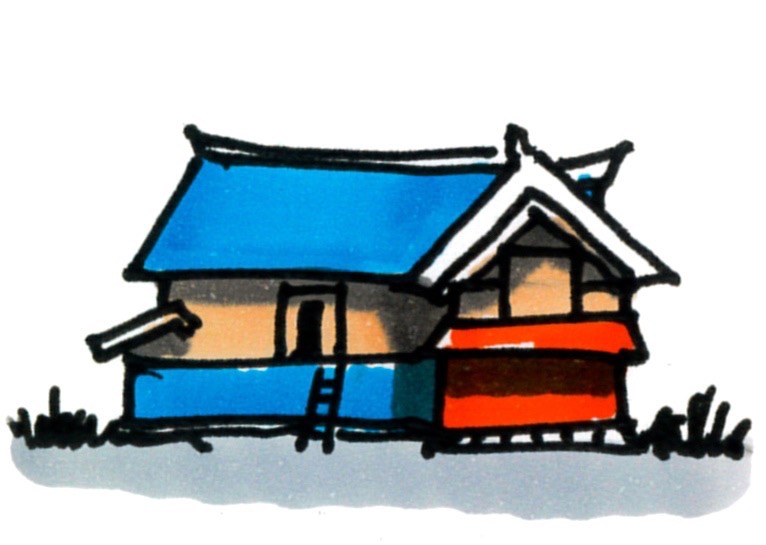
An unusual CHUMON-ZUKURI form with a projecting section added to a KIRITSUMA (gable-roofed) earthen storehouse. It stands beside a rice paddy, forming a beautiful landscape together with the mountain range in the background. *CHUMON-ZUKURI A farmhouse form distinctive to the Aizu region and the Sea of Japan side of northern Japan, in which a roofed wing — originally housing livestock — projects from the main house in an L-shape, connected via a long enclosed corridor (the nakamon). This configuration allowed people and animals to move between spaces without exposure to heavy snow. Address Google Map Check with Google Maps Access Parking Business Hours Admission Fee Regular Holiday Phone Number URL SNS
CHUMON-ZUKURI Farmhouse in MAKAZAWA
Heritage Architecture
Open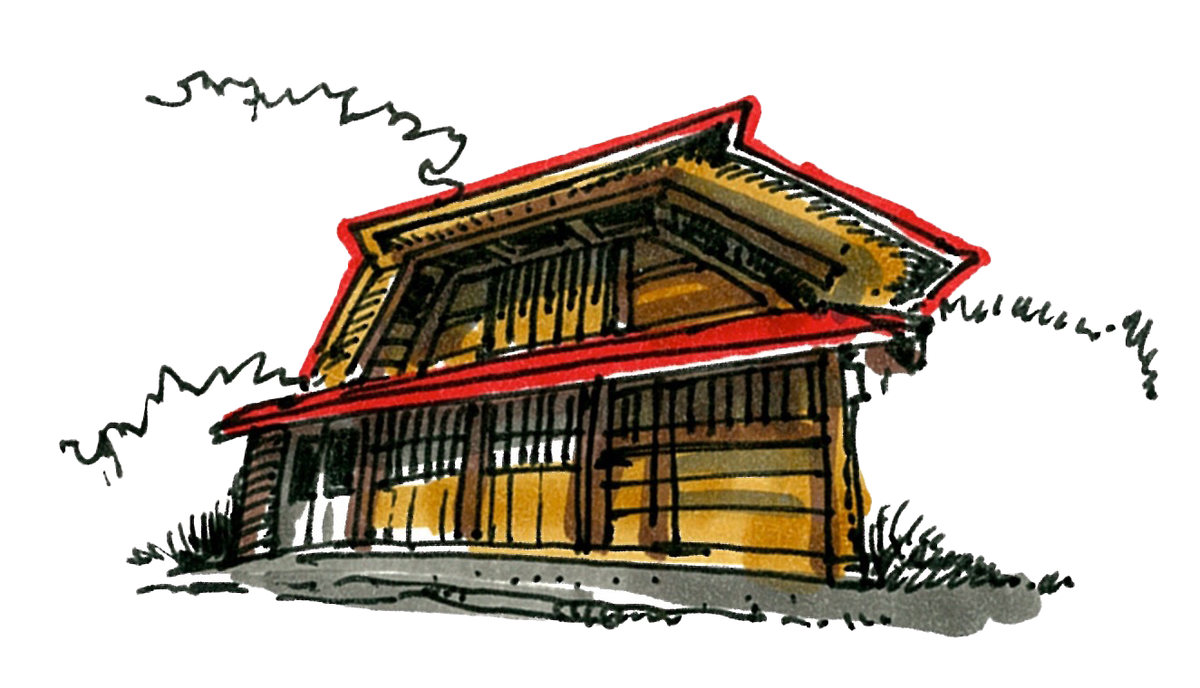
A property recorded in the town history. A right-hand L-shaped NAKAMON-ZUKURI, presenting the KABUTO-ZUKURI gable face to the road. The floor plan at the time of survey showed the UMAYA section used as a shop (MISE), with a large earthen-floor area in the northeast corner. *CHUMON-ZUKURI A farmhouse form distinctive to the Aizu region and the Sea of Japan side of northern Japan, in which a roofed wing — originally housing livestock — projects from the main house in an L-shape, connected via a long enclosed corridor (the nakamon). This configuration allowed people and animals to move between spaces without exposure to heavy snow. Address Google Map Check with Google Maps Access Parking Business Hours Admission Fee Regular Holiday Phone Number URL SNS
NOU TO KURASHI -Agriculture and Life Gallery
Heritage Architecture
Open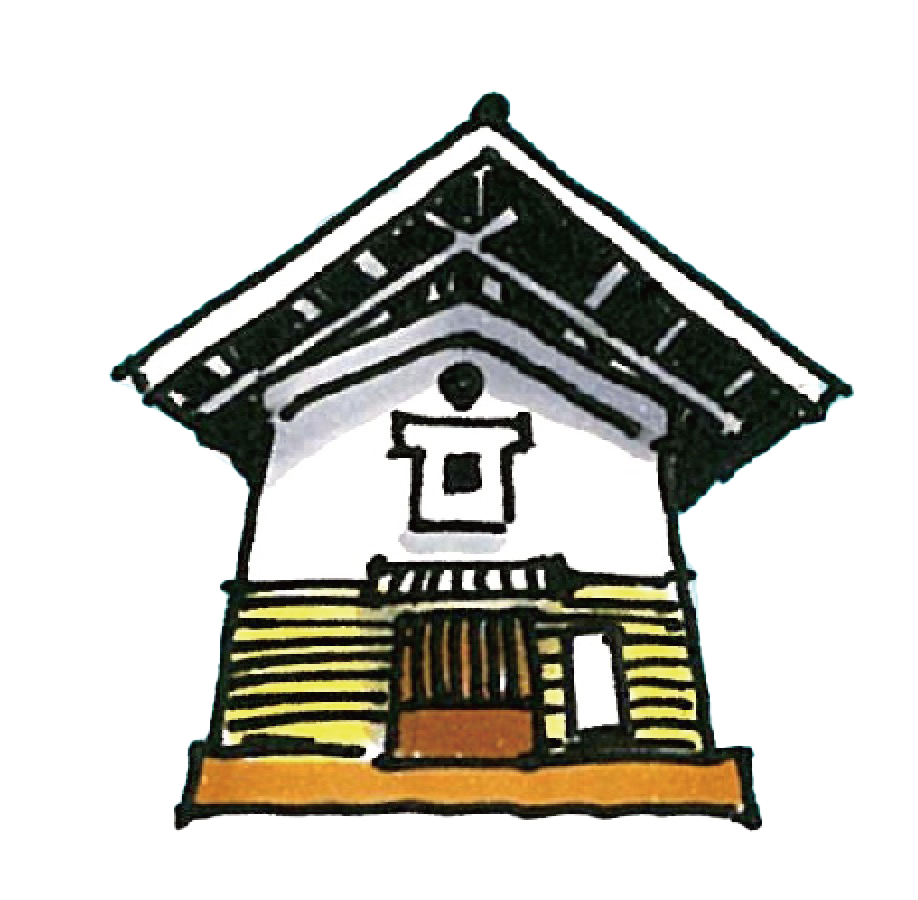
A small museum displaying works by TOSHII FURUKAWA—teacher, author, and local historian—as well as contemporary art. An art space created by regenerating an OKIYANE-roof earthen storehouse. *OKIYANE An earthen storehouse roof type in which a separate wooden roof structure is set on top of the clay body, rather than being integrated with it — protecting the walls from rain while allowing early detection of leaks, and often surviving fires intact even when the outer roof burns away. Address Google Map Check with Google Maps Access Parking Business Hours Admission Fee Regular Holiday Phone Number URL SNS
ŌFUNASAWA: OKIYANE-Roof Earthen Storehouse
Heritage Architecture
Open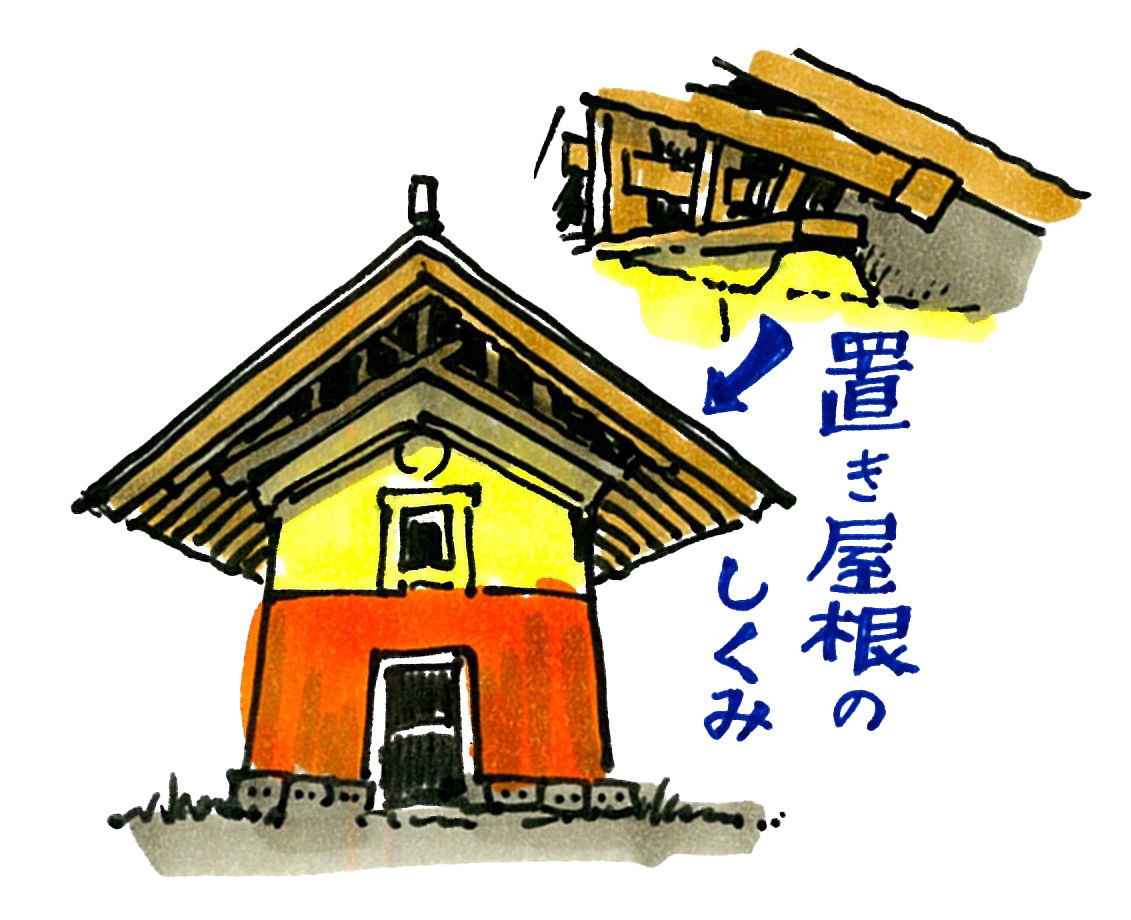
A storehouse that commanded a strong presence along the roadside while walking through ŌFUNASAWA. The deep-eaved OKIYANE roof is impressive, clearly illustrating how a roof sits atop a storehouse. A flat base is placed on an earth 'pillow' in the shape of Mt. Fuji, and an angled strut stands upon it. This is sculptural beauty born from local climate and human ingenuity. *OKIYANE An earthen storehouse roof type in which a separate wooden roof structure is set on top of the clay body, rather than being integrated with it — protecting the walls from rain while allowing early detection of leaks, and often surviving fires intact even when the outer roof burns away. Address Google Map Check with Google Maps Access Parking Business Hours Admission Fee Regular Holiday Phone Number URL SNS
Stone Storehouse in ŌFUNASAWA
Heritage Architecture
Open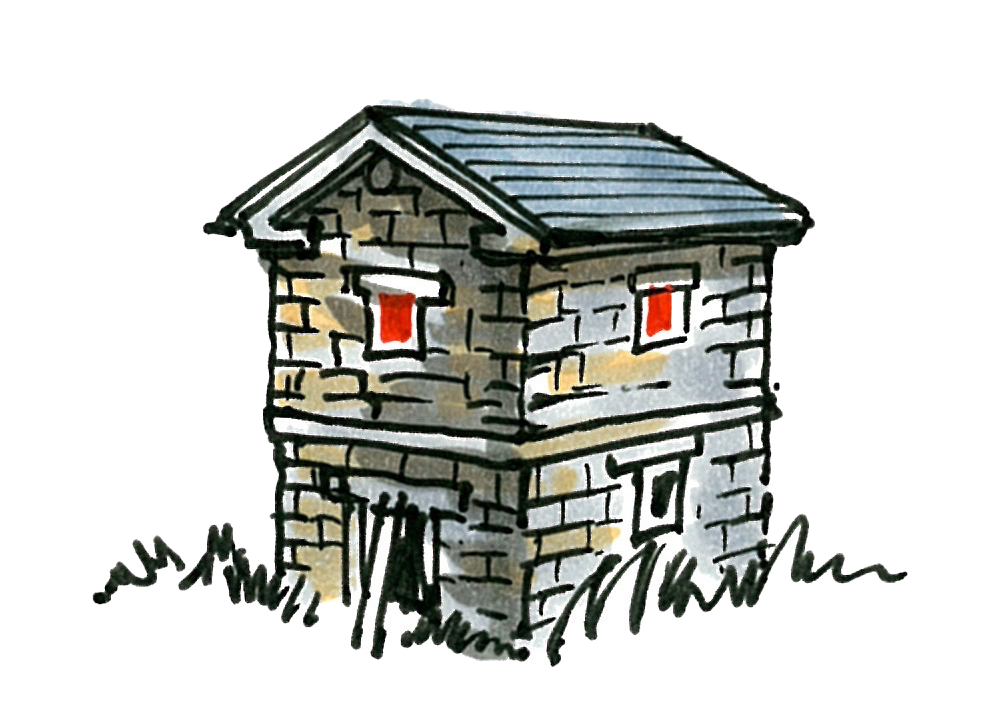
A rough surface finish known as NOMI-KIRI or KO-TATAKI, with small windows fitted with red-painted iron doors. This stone storehouse is built of tuff similar to ŌYA stone, and also bears a KURA-JIRUSHI(emblem) carved with the character for 'water.' It is likely postwar construction. The culture and technique to build such a substantial stone storehouse once existed in this community. *NOMI-KIRI & KO-TATAKI Stone surface finishing techniques: nomi-kiri (chisel-cut) leaves parallel grooves from a single-edged chisel, while ko-tataki (fine bush-hammering) produces an evenly textured, roughened surface using a toothed hammer. Both are hand-worked finishes that give stone walls and foundations a rugged, tactile quality — and are often seen on the stonework of storehouses and gate piers. Address Google Map Check with Google Maps Access Parking Business Hours Admission Fee Regular Holiday Phone Number URL SNS
TAKAHASHI House in KOTSUNAGI
Heritage Architecture
Open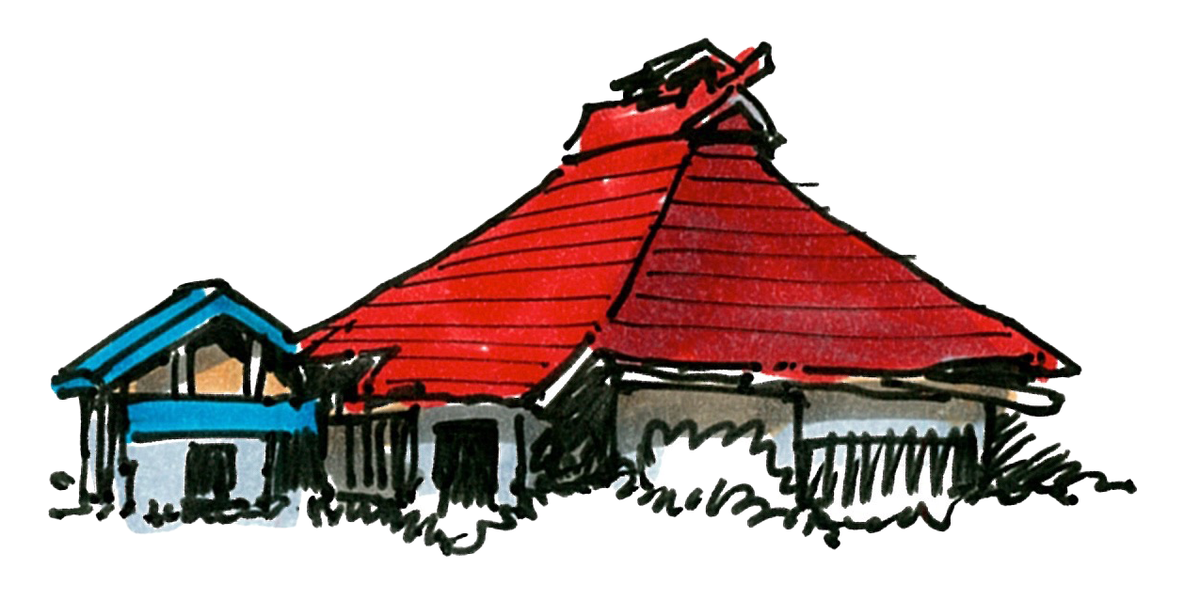
The TAKAHASHI family, who served as SHUGENDŌ (mountain asceticism) for the former KOTSUNAGI village, was called 'FUKUJUIN' since the medieval period and gathered deep faith from inside and outside the village. Even after the abolition of SHUGENDŌ in the MEIJI era, they preserved important relics including a statue of FUDŌMYŌŌ (1860) and the FUDŌ GOMA SHIDAI ritual manual (1617). Materials from the family were exhibited at FUKUSHIMA Prefectural Museum in 2020–21 under the title 'SHUGENDŌ in AIZU.' Address Google Map Check with Google Maps Access Parking Business Hours Admission Fee Regular Holiday Phone Number URL SNS
NAKAMACHI JIZŌDŌ and JIZŌ-KŌ
Heritage Architecture
Open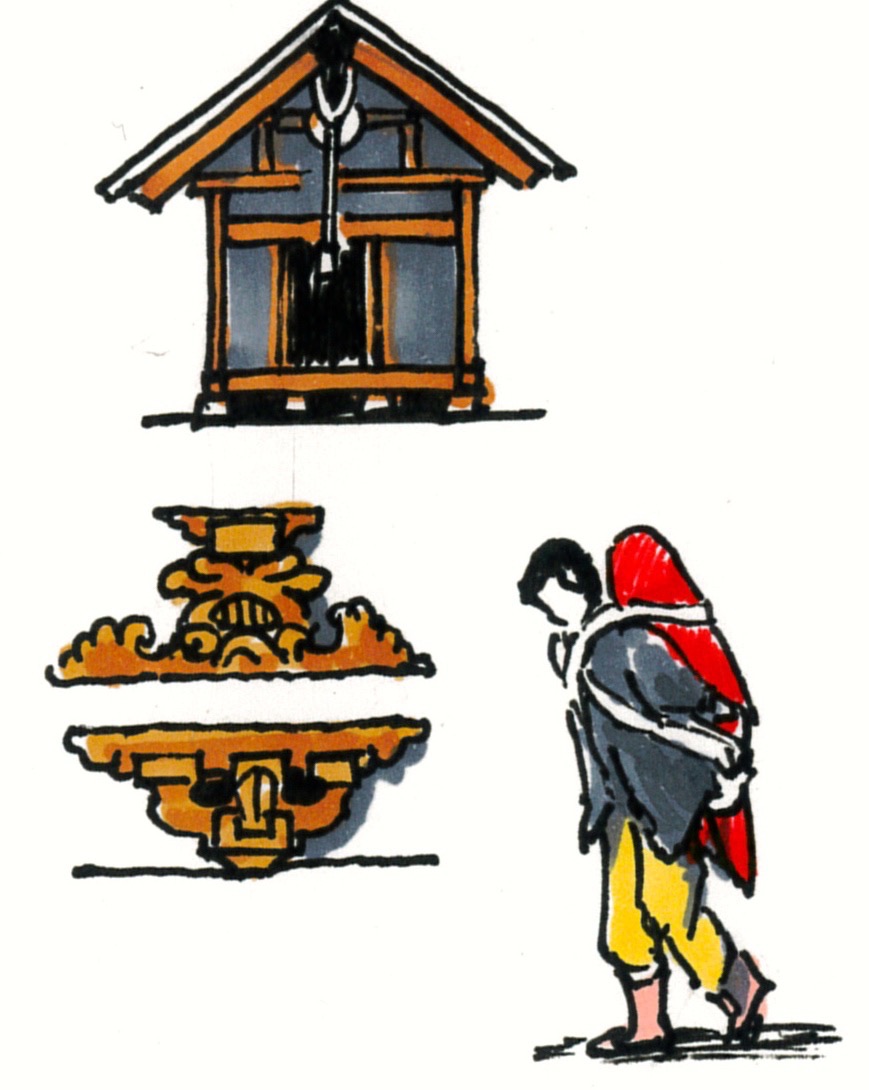
A small gable-roofed, HIRA-IRI (side-entry) hall at the center of the settlement, enshrining a stone standing Jizō statue. The interior makes generous use of zelkova wood. Since hand-forged Japanese nails (WA-KUGI) are used, it may date from before the mid-MEIJI period. ▶ A 'MAWARI-JIZŌ' ritual in which a 50kg stone statue said to have been made in the 18th century is carried home for one day by the family on duty. The 'JIZŌ-KŌ' ceremony on August 23 continues as a women-only observance. The chosen housewife carries the parent-and-child Jizō figures on her back. ▶ There is also a custom in which offerings to the Jizō are shared as 'okaraku,' a treat children once looked forward to. Address Google Map Check with Google Maps Access Parking Business Hours Admission Fee Regular Holiday Phone Number URL SNS
HŌIN Residence in NAKAMACHI
Heritage Architecture
Open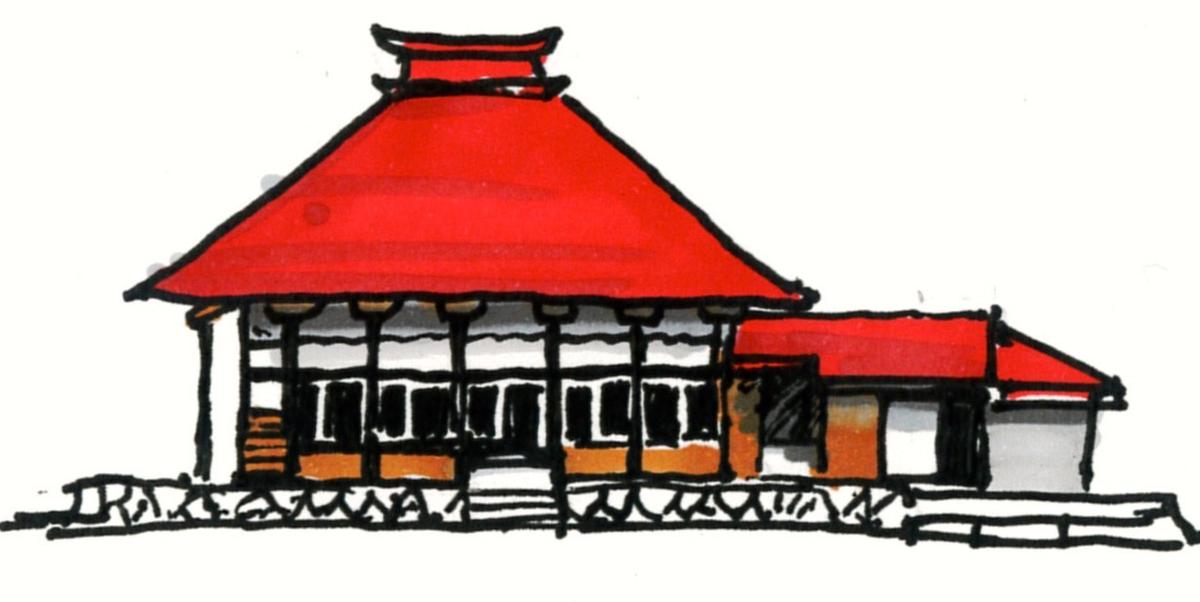
A hip-roofed, HIRA-IRI SUGOYA with the thatched roof covered in corrugated iron. Column tops carry FUNAHIJIKI (boat-shaped brackets) in a temple-style design. As a family of SHUGENDŌ spiritual guides (OSHI), they led Iide Mountain pilgrimages along the rear route until the anti-Buddhist iconoclasm of early MEIJI. ▶ It is said that there were four OSHI households in OKUGAWA alone. *SUGOYA Sugoya (直屋) is a traditional Japanese house type in which the main living quarters and earthen-floor workspace are integrated into a single, continuous structure without separating ridgelines. It is characterized by the seamless connection of domestic and working spaces, where functions coexist within one linear form. Address Google Map Check with Google Maps Access Parking Business Hours Admission Fee Regular Holiday Phone Number URL SNS
TOBUKURO (Shutter Box) in NAKAMACHI
Heritage Architecture
Open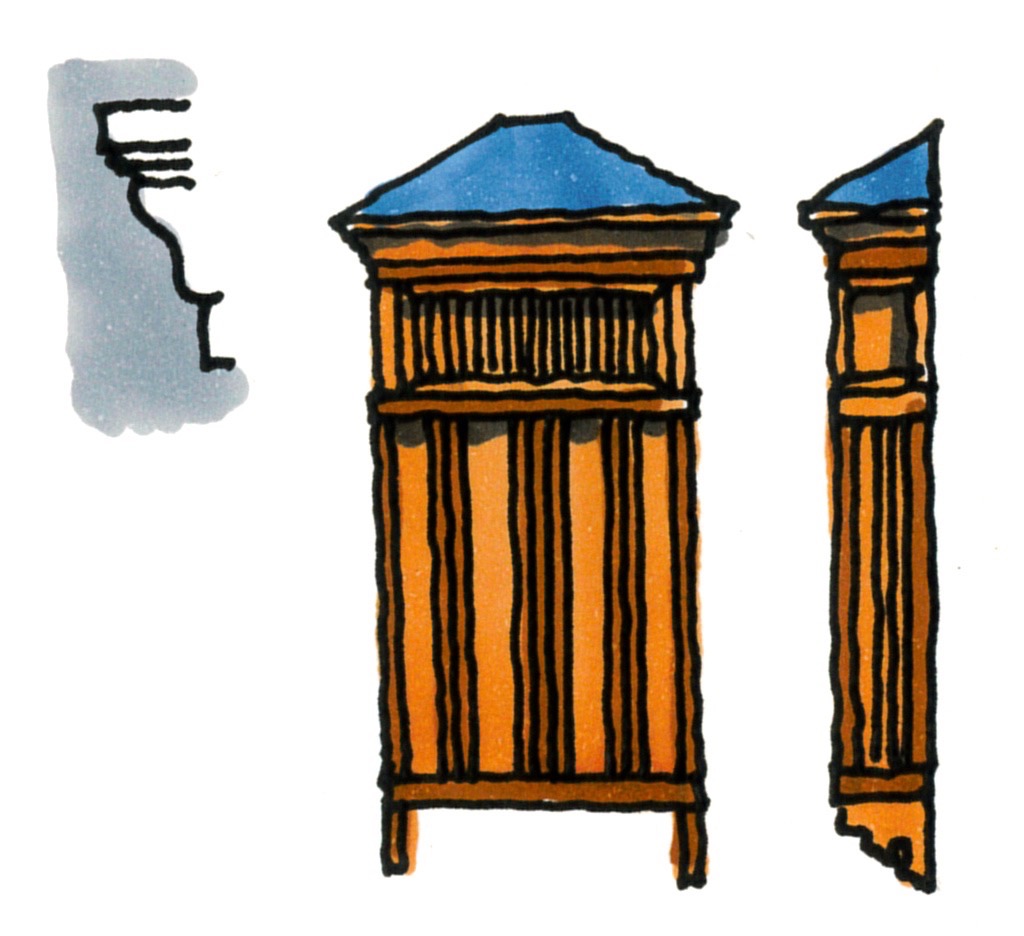
Take note of this farmhouse's TOBUKURO (shutter box). It features an OSARAMMA (reed lattice transom), a extrerior board cladding technique (FUKI-YOSE OSHI-BUCHI SHITAMI-ITA), a Western-style ornament, and arabesque (KARAKUSA) brackets. Don't miss it! *FUKI-YOSE OSHI-BUCHI SHITAMI-ITA An exterior wall cladding technique in which vertical boards are secured by thin wooden battens (oshibuchi) applied over the joints — arranged in pairs set close together (fukiyose, literally "gathered by the wind"), alternating with wider gaps. The result is a rhythmic pattern of shadow and light across the wall surface that is both structurally functional and visually refined. Address Google Map Check with Google Maps Access Parking Business Hours Admission Fee Regular Holiday Phone Number URL SNS
KURA-earthen Storehouse in NAKAMACHI
Heritage Architecture
Open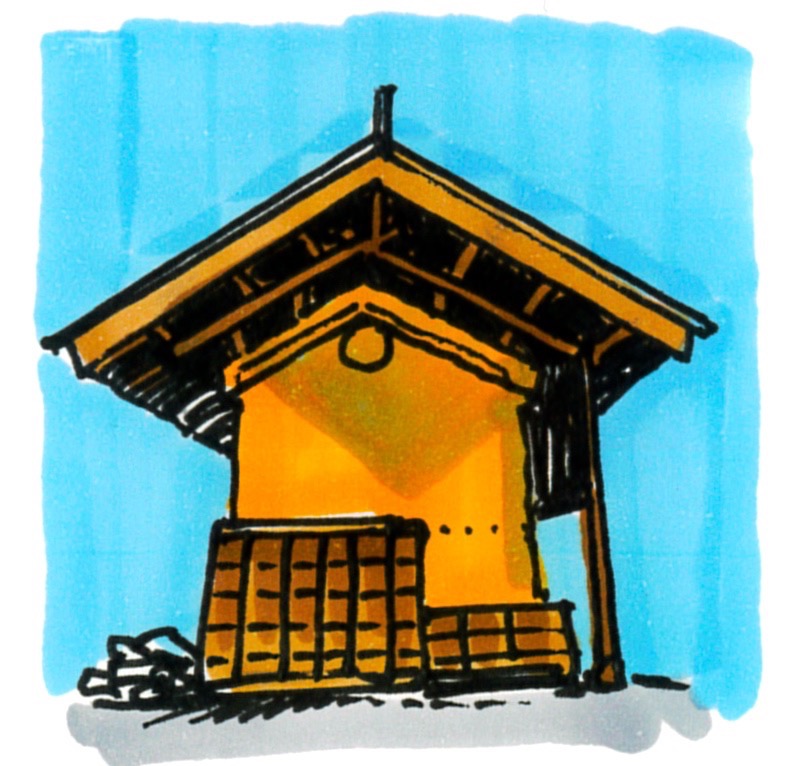
An earthen storehouse without plaster, or with plaster stripped away, reveals the NAKANURI-TSUCHI finish. The color of the soil extracted from that land appears as-is, forming a vernacular landscape. Cedar boards serve as a lower wainscot to protect the base from rain. *NAKANURI-TSUCHI (intermediate plaster layer) A middle coat of earthen plaster applied over the base layer in traditional kura (storehouse) walls, used to build thickness, strength, and surface evenness. It serves as the substrate for the final lime plaster finish, helping prevent cracking and improving fire resistance and durability. Address Google Map Check with Google Maps Access Parking Business Hours Admission Fee Regular Holiday Phone Number URL SNS
KURA-Earthen Storehouse in SHINMACHI
Heritage Architecture
Open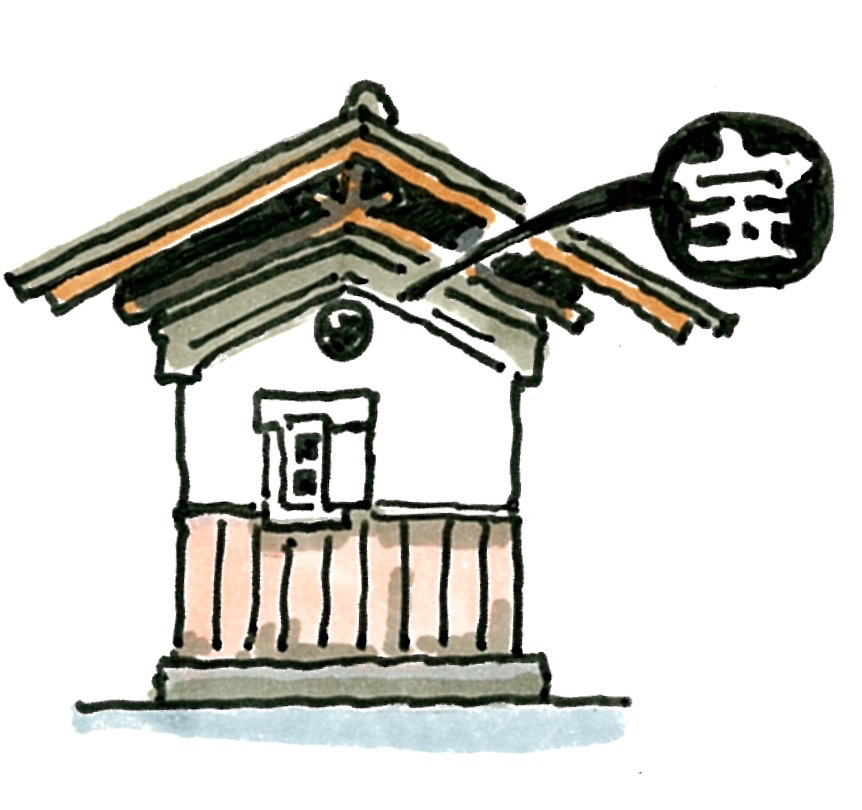
Earthen storehouses bearing a KOTE-E (trowel painting) of the character for 'treasure' (宝) on the forehead can be seen throughout NISHIAIZU. This storehouse is one such example, with a large, wide OKIYANE roof protecting the treasure from rain. Although the window is offset from center, this is likely a rational consideration to avoid moving the column and strut supporting the ridge beam. The washed-pebble finish on the lower section is also fine. *OKIYANE An earthen storehouse roof type in which a separate wooden roof structure is set on top of the clay body, rather than being integrated with it — protecting the walls from rain while allowing early detection of leaks, and often surviving fires intact even when the outer roof burns away. Address Google Map Check with Google Maps Access Parking Business Hours Admission Fee Regular Holiday Phone Number URL SNS
KURA-Earthen Storehouse in DŌME
Heritage Architecture
Open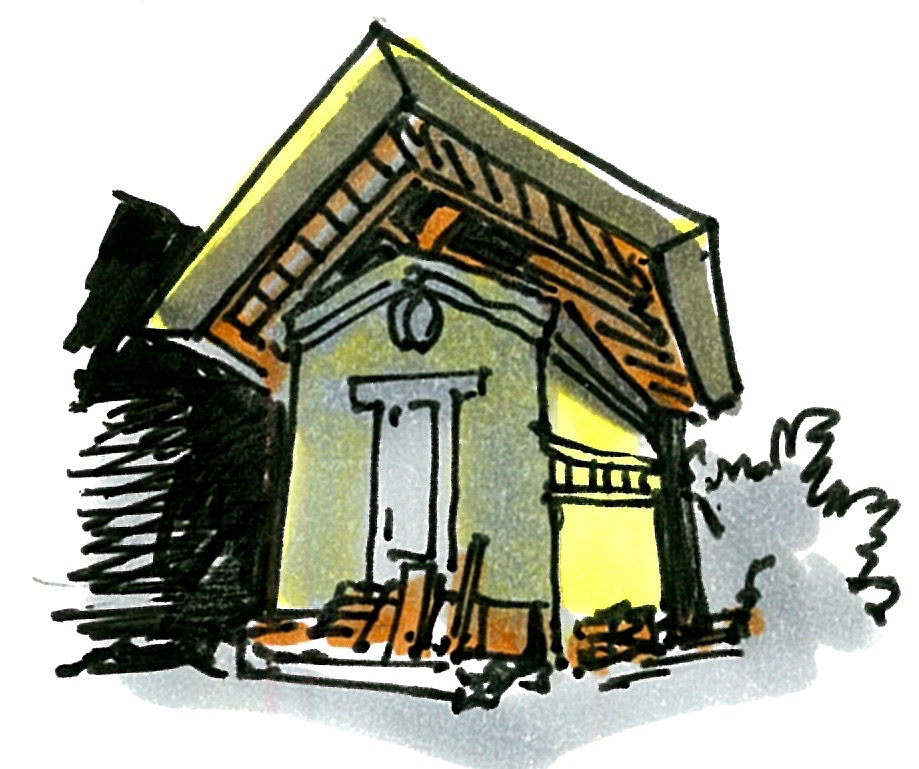
DŌME hamlet is the site where Western forces advanced during the Boshin War, sparking the Battle of OKUGAWA. This storehouse along the road stands in place with a corrugated iron sheet covering the thatched OKIYANE roof. Though single-story, its TACHI (height) is great, making it a particularly conspicuous presence. *OKIYANE An earthen storehouse roof type in which a separate wooden roof structure is set on top of the clay body, rather than being integrated with it — protecting the walls from rain while allowing early detection of leaks, and often surviving fires intact even when the outer roof burns away. Address Google Map Check with Google Maps Access Parking Business Hours Admission Fee Regular Holiday Phone Number URL SNS
TATEKURUMI House in SHIMOMATSU
Heritage Architecture
Open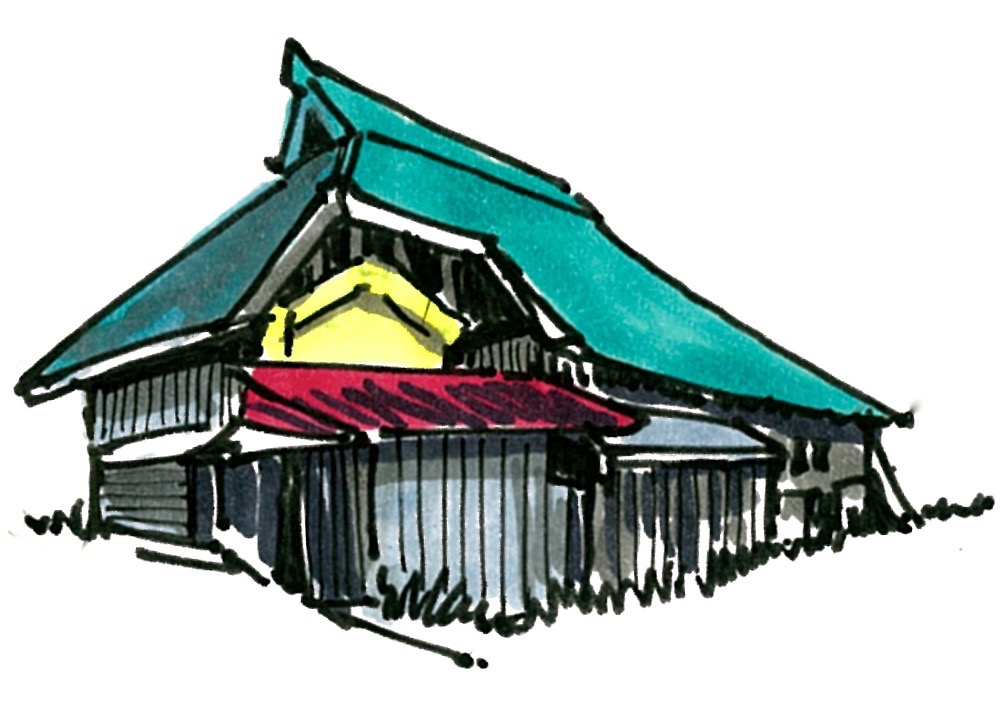
Whatever the circumstances that led to this form… A farmhouse in which a hip-roofed storehouse and main house are completely enveloped under a thatched (now corrugated iron) roof. Perhaps the storehouse had always been there, and the adjacent main house was rebuilt and connected to it. The imagination runs freely. *TATEKURUMI A detail in which a structural post is enclosed with vertical cladding to protect it and create a refined exterior finish. Address Google Map Check with Google Maps Access Parking Business Hours Admission Fee Regular Holiday Phone Number URL SNS
Full Two-Story Hip-Roofed House in SHIMOMATSU
Heritage Architecture
Open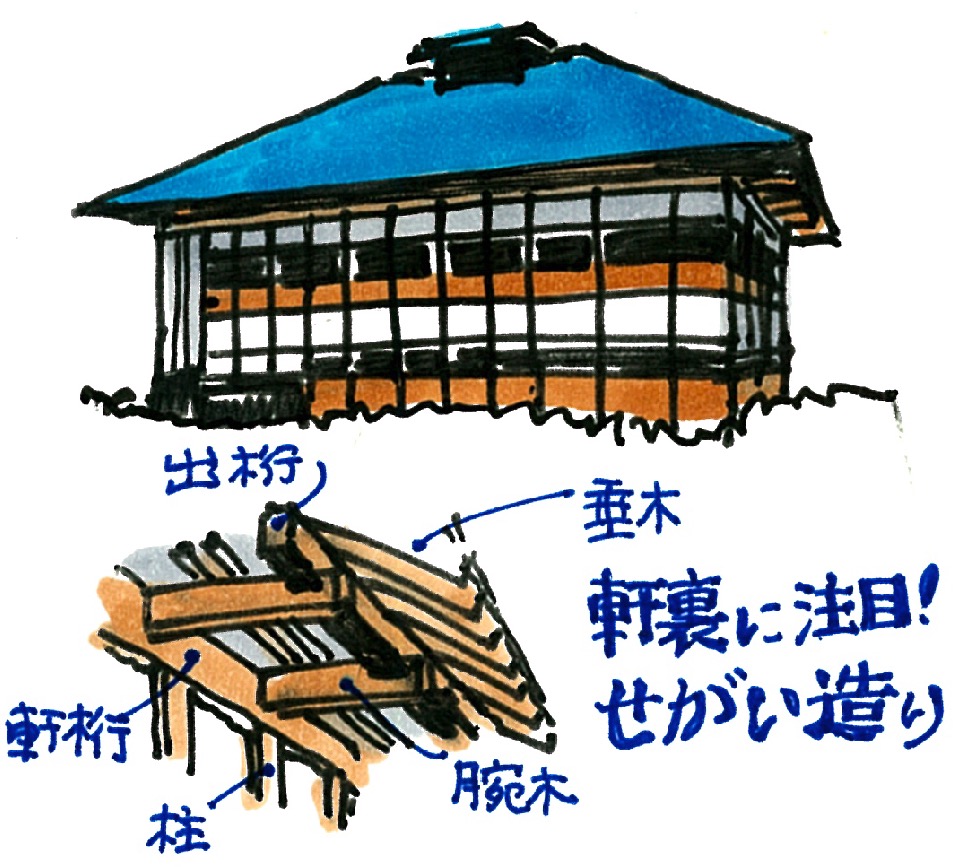
"A full two-story hip-roofed farmhouse is unusual. Projecting rafter SEGAI detailing runs all the way around the eaves, and the fully open east facade must offer an extraordinary sense of openness. It almost looks like a RYOKAN or school building. The small ridged dormer (KOSHI-YA-NE) on top is also charming. *SEGAI-ZUKURI A traditional eave construction in which projecting rafters extend outward beyond the wall, creating deep, overhanging eaves that run around the building — both a functional rain defense and a mark of architectural prestige, often seen on high-status farmhouses and storehouses." Address Google Map Check with Google Maps Access Parking Business Hours Admission Fee Regular Holiday Phone Number URL SNS
CHUMON-ZUKURI Farmhouse in MUKAIHARA (YOSHIDA)
Heritage Architecture
Open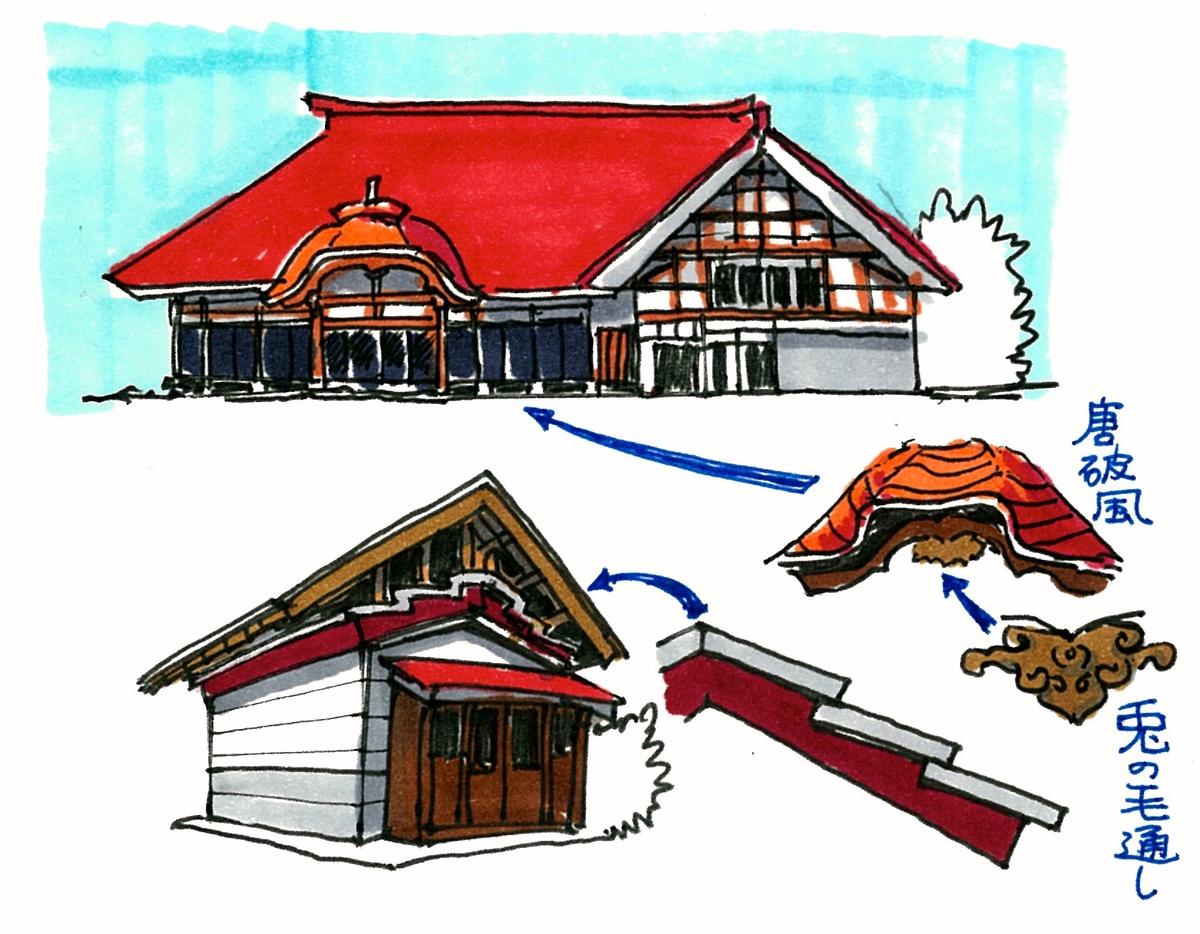
A large CHUMON-ZUKURI farmhouse with a feature found nowhere else: a KARA-HAFU (cusped gable) entrance as seen in temples and shrines. This is likely a design motif indicating long-established family status. Furthermore, a stone storehouse in the garden to the east is unique—beneath its OKINE roof, stone slabs approximately 6 cm thick are laid as roofing. *CHUMON-ZUKURI A farmhouse form distinctive to the Aizu region and the Sea of Japan side of northern Japan, in which a roofed wing — originally housing livestock — projects from the main house in an L-shape, connected via a long enclosed corridor (the nakamon). This configuration allowed people and animals to move between spaces without exposure to heavy snow. Address Google Map Check with Google Maps Access Parking Business Hours Admission Fee Regular Holiday Phone Number URL SNS
Distant View of the Settlement in SUGIYAMA
Heritage Architecture
Open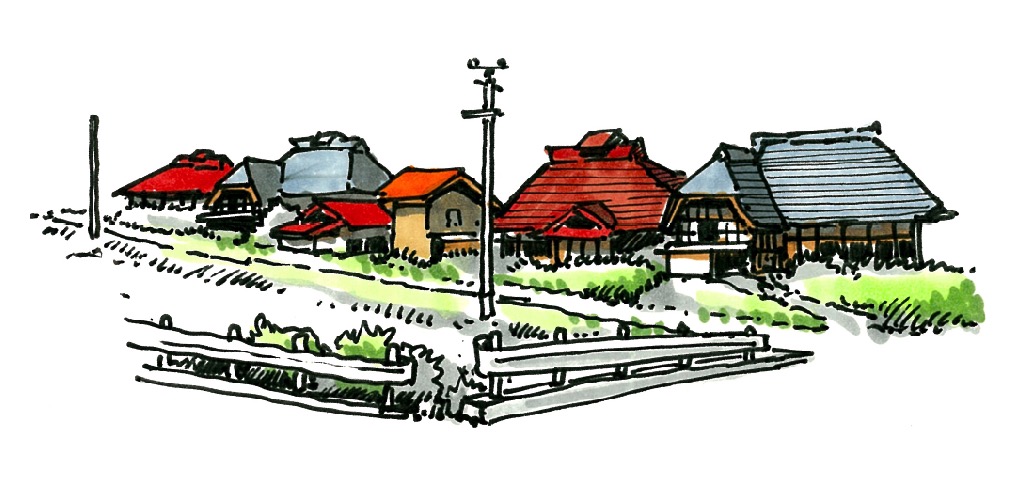
Standing on Route 459 and looking from the opposite bank of the river, a landscape of remarkable beauty unfolds. SUGOYA, CHUMON-ZUKURI farmhouses, earthen storehouses, and the mountain forest as backdrop are all present; every house is of high quality with well-maintained roofs and exterior walls; and every road and riverbank is carefully tended. This scenery alone makes SUGIYAMA hamlet worth visiting. *CHUMON-ZUKURI A farmhouse form distinctive to the Aizu region and the Sea of Japan side of northern Japan, in which a roofed wing — originally housing livestock — projects from the main house in an L-shape, connected via a long enclosed corridor (the nakamon). This configuration allowed people and animals to move between spaces without exposure to heavy snow. Address Google Map Check with Google Maps Access Parking Business Hours Admission Fee Regular Holiday Phone Number URL SNS
CHUMON-ZUKURI Farmhouse in SUGIYAMA
Heritage Architecture
Open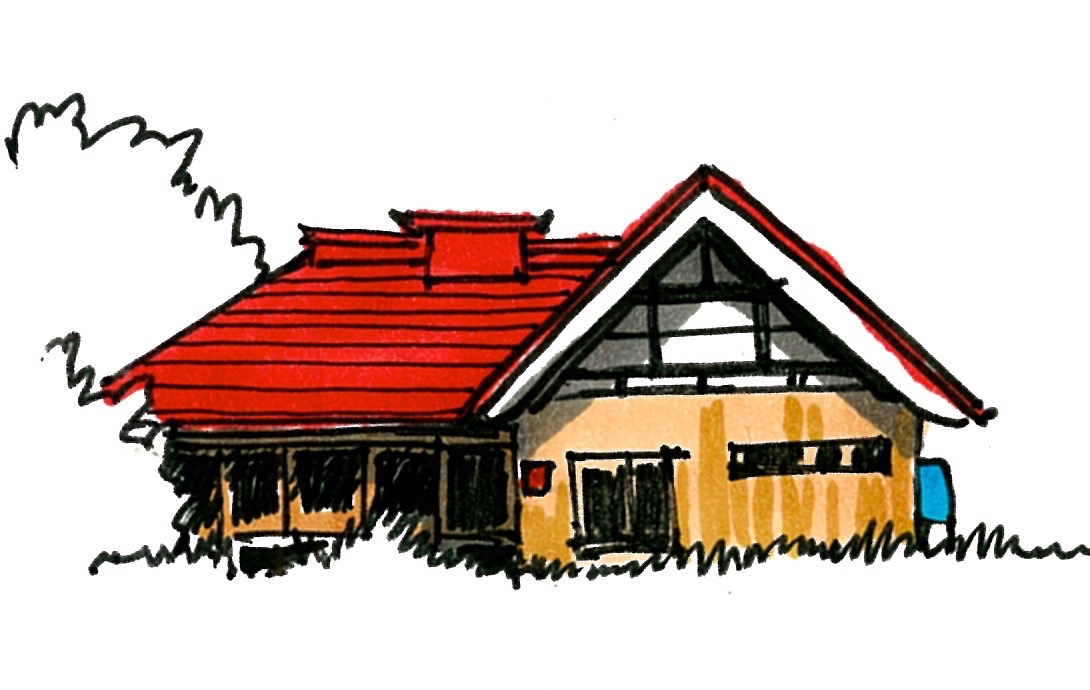
An old NAKAMON-ZUKURI farmhouse recorded in the town history as 'built in BUNKA 4 (1807).' During the latter SHOWA period, the UMAYA (horse barn)was converted to TATAMI rooms and a veranda was added. The house continued to live on, transforming its appearance in step with changing lifestyles. [Recorded in town history] *CHUMON-ZUKURI A farmhouse form distinctive to the Aizu region and the Sea of Japan side of northern Japan, in which a roofed wing — originally housing livestock — projects from the main house in an L-shape, connected via a long enclosed corridor (the nakamon). This configuration allowed people and animals to move between spaces without exposure to heavy snow. Address Google Map Check with Google Maps Access Parking Business Hours Admission Fee Regular Holiday Phone Number URL SNS
KURA-Earthen Storehouse in TAKISAKA
Heritage Architecture
Open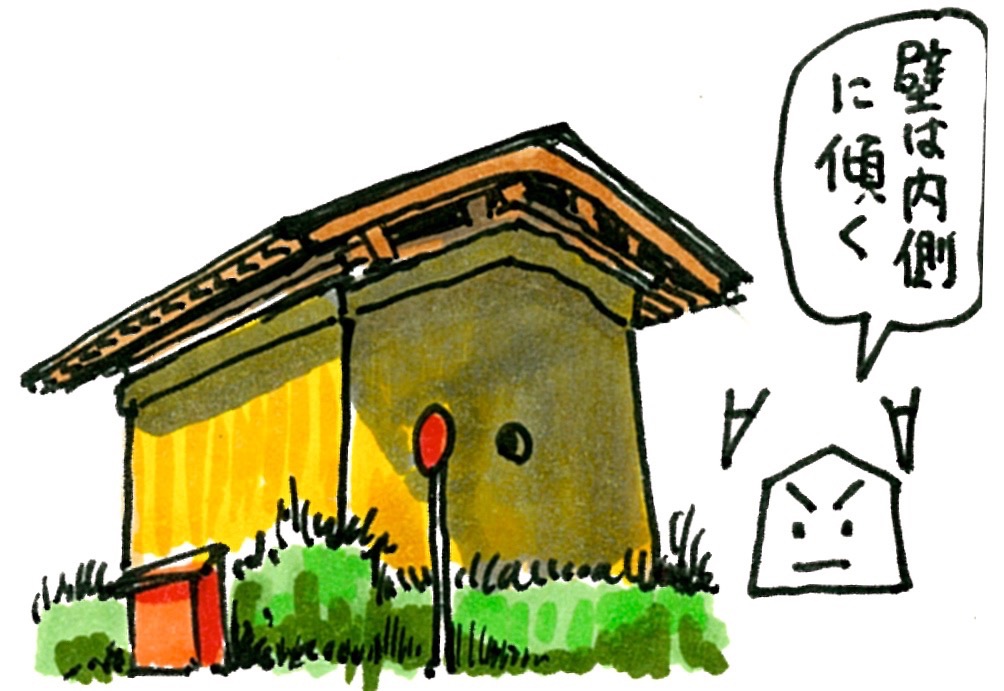
A simple NAKANURI earthen storehouse. Looking closely, the width of the building narrows from bottom to top. This is not an optical illusion, but a technique called 'TATSU-KADO NO KOROBI' (corner taper), in which the top is finished a few centimeters narrower than the vertical line. It is structurally stable and also appears more settled to the eye. *NAKANURI-TSUCHI (intermediate plaster layer) A middle coat of earthen plaster applied over the base layer in traditional kura (storehouse) walls, used to build thickness, strength, and surface evenness. It serves as the substrate for the final lime plaster finish, helping prevent cracking and improving fire resistance and durability. Address Google Map Check with Google Maps Access Parking Business Hours Admission Fee Regular Holiday Phone Number URL SNS
KURA-Earthen Storehouse in NAMEZAWA
Heritage Architecture
Open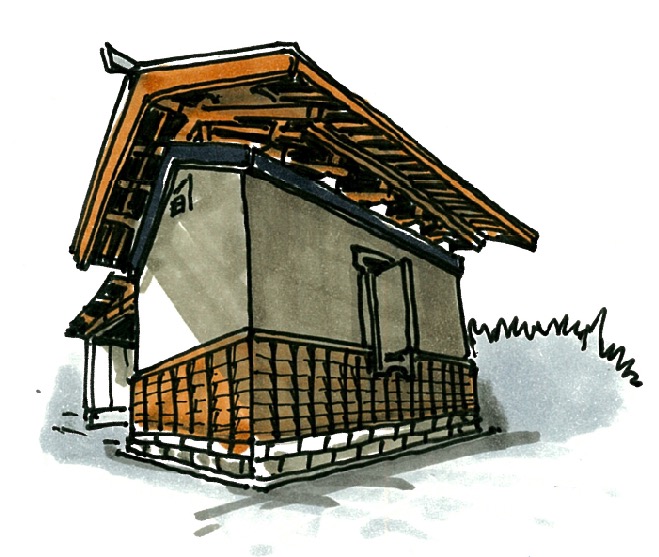
Pure white plaster walls, SASARA-OSHIBUCHI SHITAMI-ITA wainscot, split-face foundation stones, and a sharp black-plaster HACHIMAKI (brow band). This is what a Japanese storehouse should look like—an upright, dignified figure. Many passersby must surely feel the same. *SASARA-OSHIBUCHI SHITAMI-ITA An exterior wall finish in which horizontal clapboards (shitami-ita) are overlapped from bottom to top — similar to weatherboard siding — and secured by thin battens (oshibuchi) notched at intervals (sasara). The notching prevents water from pooling behind the batten, ensuring good drainage and ventilation. The result is a clean, horizontal-striped facade of quiet elegance. Address Google Map Check with Google Maps Access Parking Business Hours Admission Fee Regular Holiday Phone Number URL SNS
SEGAI-ZUKURI Farmhouse in HARA
Heritage Architecture
Open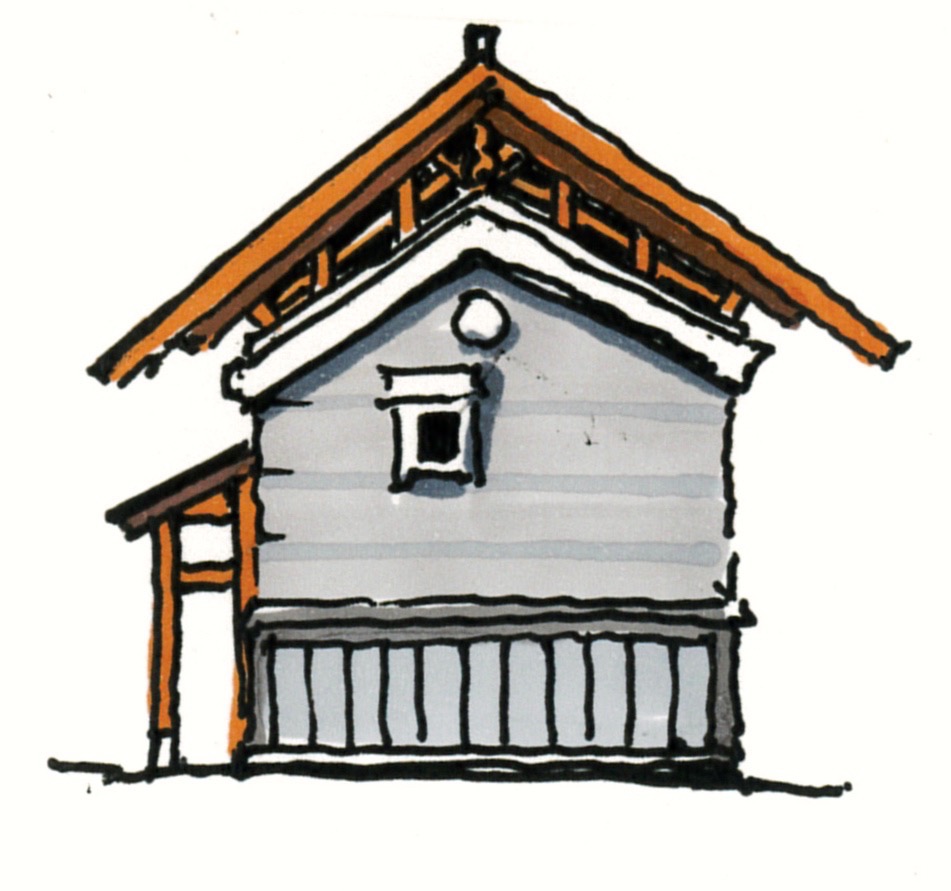
A farmhouse and storehouse on a detached parcel in HARA. The SEGAI-ZUKURI eaves are elaborate, and the entrance section is two stories. Three horizontal NUKI (tie beams) run across the exterior wall. But the greatest charm point is the TOBUKURO (shutter box) with pine needle and arrow feather patterns. This house has been regenerated by the hands of migrants. *SEGAI-ZUKURI A traditional eave construction in which projecting rafters extend outward beyond the wall, creating deep, overhanging eaves that run around the building — both a functional rain defense and a mark of architectural prestige, often seen on high-status farmhouses and storehouses. Address Google Map Check with Google Maps Access Parking Business Hours Admission Fee Regular Holiday Phone Number URL SNS
Cluster of KURA-Earthen Storehouses in YOBARUKA
Heritage Architecture
Open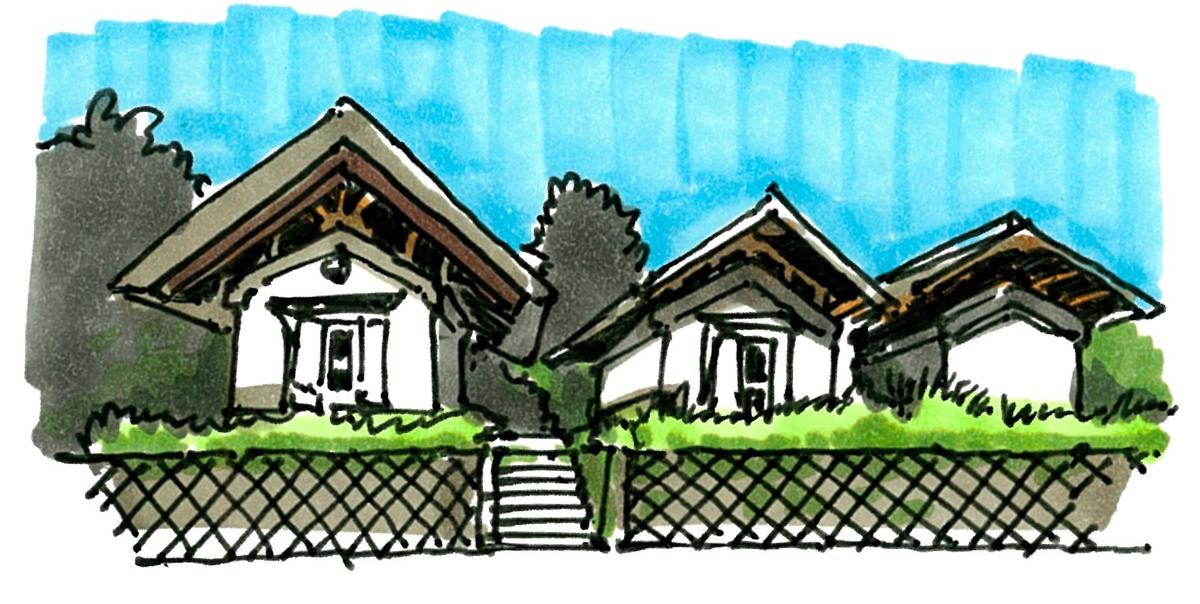
According to 'NISHIAIZU Narratives: 100 Selections,' YOBARUKA's name comes from the fact that people could call out to each other by name across to nearby TAIRA-MURA village. Perhaps because it was fertile land, there are a particularly large number of storehouses here. A row of fine earthen storehouses lines a stone retaining wall. I would like to name this place 'Dozo Ginza' (Storehouse Ginza). Address Google Map Check with Google Maps Access Parking Business Hours Admission Fee Regular Holiday Phone Number URL SNS
SUGOYA on a Slope in ARAGI
Heritage Architecture
Open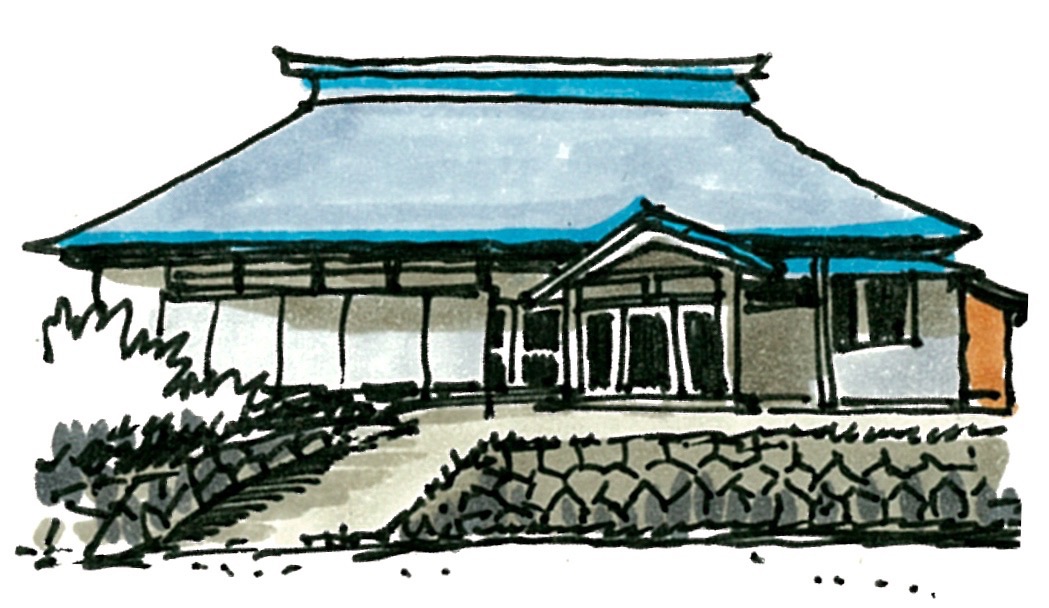
"In ARAKI, graves of KIJISHI (wood-turning craftspeople) remain. A settlement sits on a hillside with a sweeping view of the AIZU basin, and the highest-placed building among them was this *SUGOYA. *SUGOYA Sugoya (直屋) is a traditional Japanese house type in which the main living quarters and earthen-floor workspace are integrated into a single, continuous structure without separating ridgelines. It is characterized by the seamless connection of domestic and working spaces, where functions coexist within one linear form." Address Google Map Check with Google Maps Access Parking Business Hours Admission Fee Regular Holiday Phone Number URL SNS
CHUMON-ZUKURI Farmhouse in KOSHIMIZU
Heritage Architecture
Open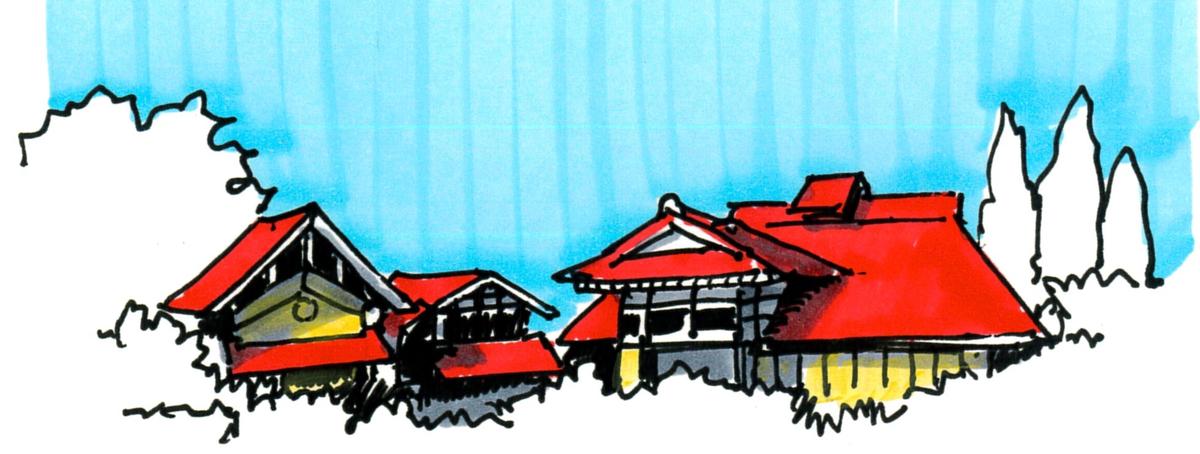
Located at the easternmost point of the SHINGŌ district, this area lies at the foot of a local Mt. Fuji and is a water-rich paddy land with a history of KIJISHI craftspeople and Christians. This house is a NAKAMON-ZUKURI farmhouse and KURA-storehouse with a KOYA-storehouse, set on a spacious lot at the KOSHIMIZU intersection. The OKIYANE-roof earthen storehouse on the left is elegant despite having no ornamentation. *OKIYANE An earthen storehouse roof type in which a separate wooden roof structure is set on top of the clay body, rather than being integrated with it — protecting the walls from rain while allowing early detection of leaks, and often surviving fires intact even when the outer roof burns away. Address Google Map Check with Google Maps Access Parking Business Hours Admission Fee Regular Holiday Phone Number URL SNS
KIJISHI Graves in KOSHIMIZU
Heritage Architecture
Open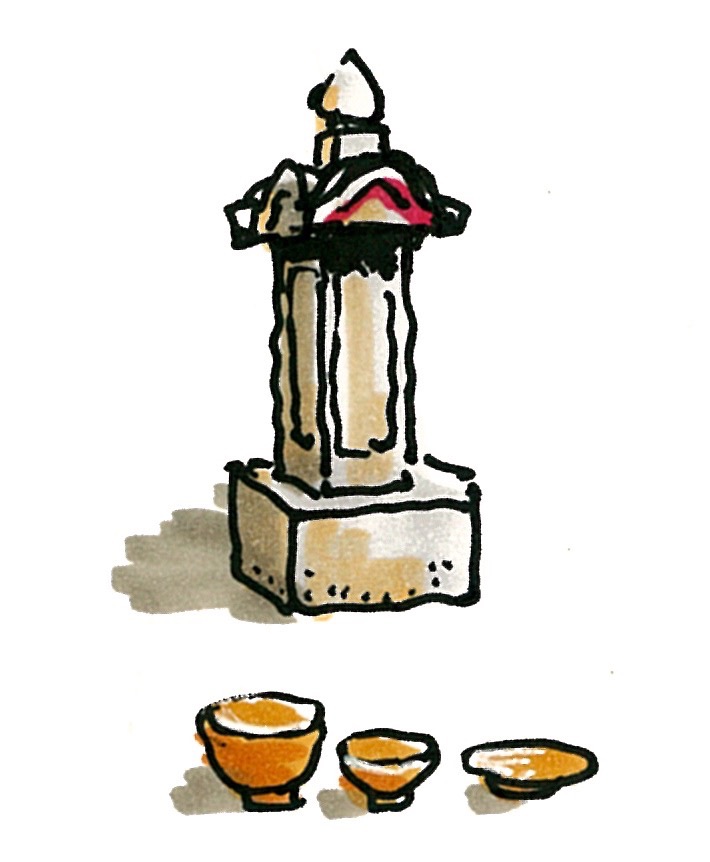
The cluster of gravestones in a corner of HANAMIYAMA Park belong to KIJISHI (wood-turners) who lived by processing the MITSU-WAN (three-bowl set: rice bowl, soup bowl, and dish) known as TAKAME-WAN. They were relocated from ARAKI, TAKAME, and URUSHIKUBO. The KIJISHI—who shaped and finished broad-leaved trees such as beech—continued their trade here, invited by the local headman, as written on the signboard. Address Google Map Check with Google Maps Access Parking Business Hours Admission Fee Regular Holiday Phone Number URL SNS
Farmhouse with FURUMINE Shrine Stone in HEIMEI
Heritage Architecture
Open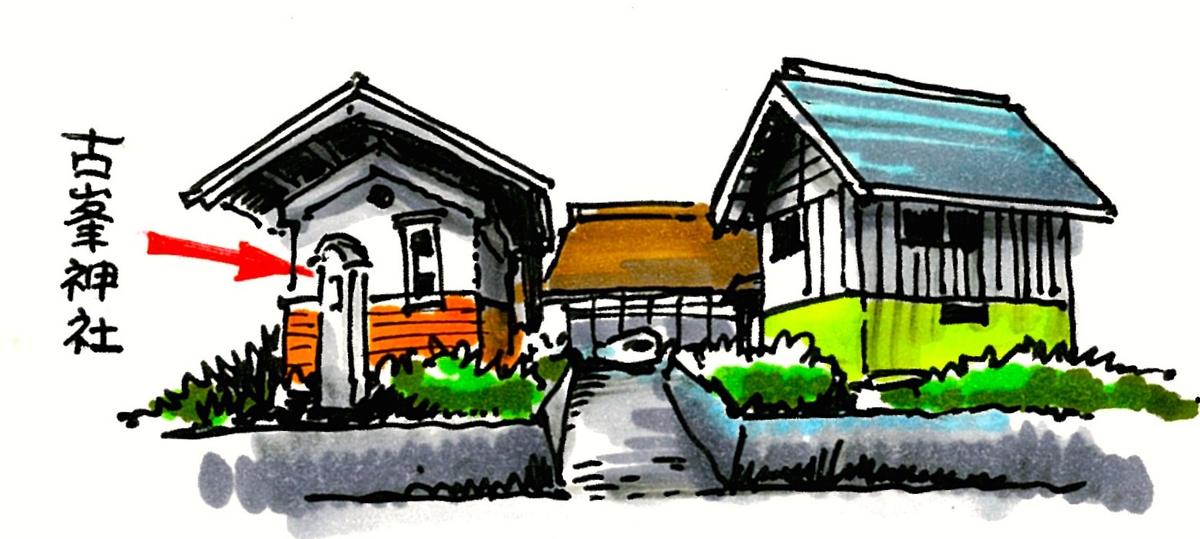
A farmhouse with a brick-tile clad KURA-earthen storehouse on the left and a KOYA-storehouse on the right. I noticed a FURUMINE Shrine stone tower of the cusped gable, cap-topped square pillar type standing at the roadside and stopped to sketch it. Inscribed with the date of MEIJI 34 (1901), it has already been standing for 125 years and remains in good condition—testament to the fine quality of the young-grass stone and the people who have cared for it over the years. Address Google Map Check with Google Maps Access Parking Business Hours Admission Fee Regular Holiday Phone Number URL SNS
Hybrid Storehouse in SHINMURA
Heritage Architecture
Open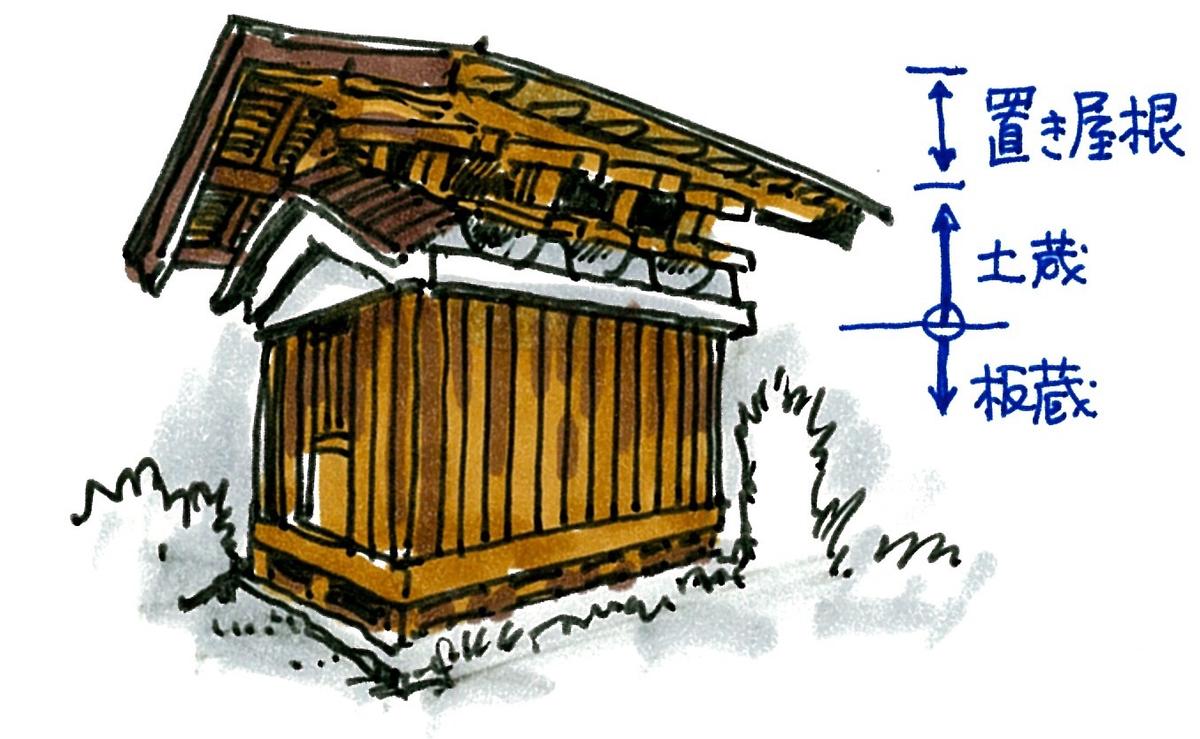
"A small storehouse of unusual hybrid construction. The body is a board storehouse (ITA-GURA) with vertical planks applied. The upper section is plastered solid in white plaster. Above that sits a large wooden OKIYANE roof typical of AIZU, with small board eaves placed at the verge to deflect rain. Adapting to the climate while combining uniqueness and sculptural beauty—this is a remarkable piece. *OKIYANE An earthen storehouse roof type in which a separate wooden roof structure is set on top of the clay body, rather than being integrated with it — protecting the walls from rain while allowing early detection of leaks, and often surviving fires intact even when the outer roof burns away." Address Google Map Check with Google Maps Access Parking Business Hours Admission Fee Regular Holiday Phone Number URL SNS
CHUMON with ITO-YA Lattice in SHINMURA
Heritage Architecture
Open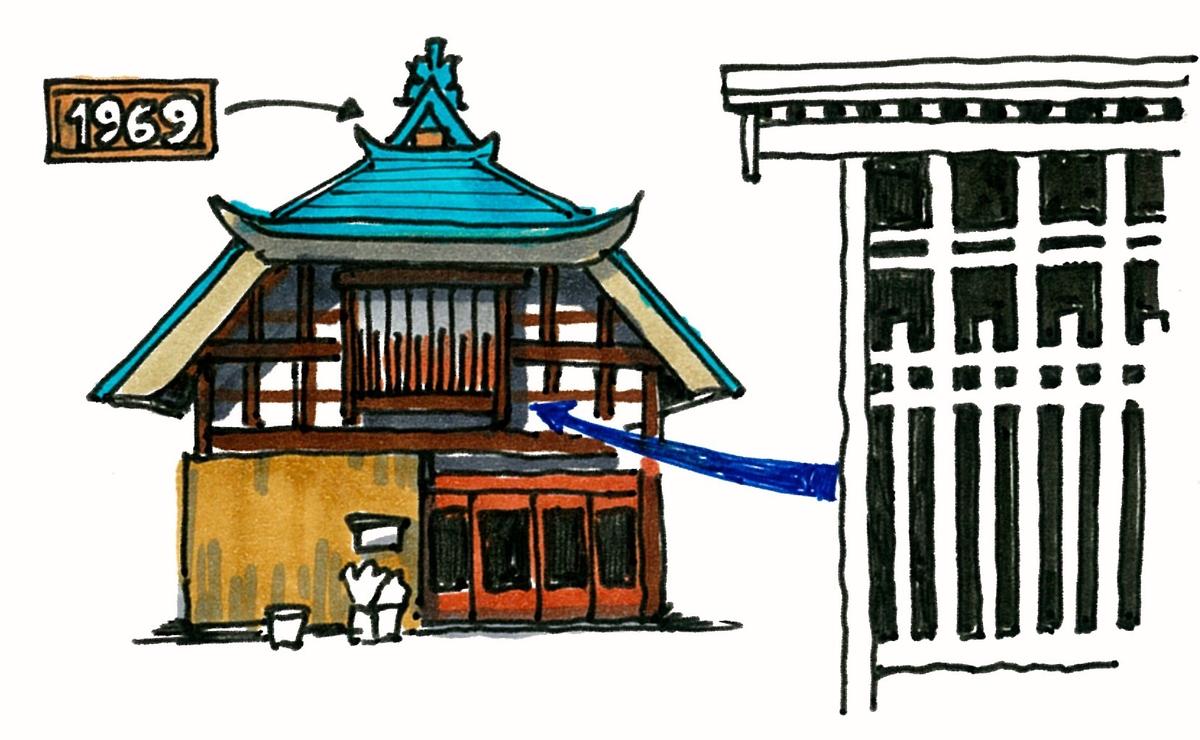
"Though the hip-roofed body is hidden by the building in front, the CHUMON section facing the road draws the eye. The KABUTO-ZUKURI sheet metal roof curves up sharply at the eave. The second-floor center window features a continuous ITO-YA KŌSHI (thread-shop lattice of alternating long and short members), and the columns, beams, and every part of the exterior wall have a crisp, clean quality. *KABUTO-ZUKURI A roof form in which the upper portion of a gable end is steeply pitched and then curves outward at the eaves — resembling the silhouette of a samurai helmet (kabuto). Common in the Aizu and Nishiaizu region, it is often used for the protruding nakamon section or outbuildings, and was originally designed to shed heavy snow loads efficiently while giving the building a distinctive, imposing presence." Address Google Map Check with Google Maps Access Parking Business Hours Admission Fee Regular Holiday Phone Number URL SNS
IRIMOYA-Roofed Farmhouse in KUNUGIYAMA
Heritage Architecture
Open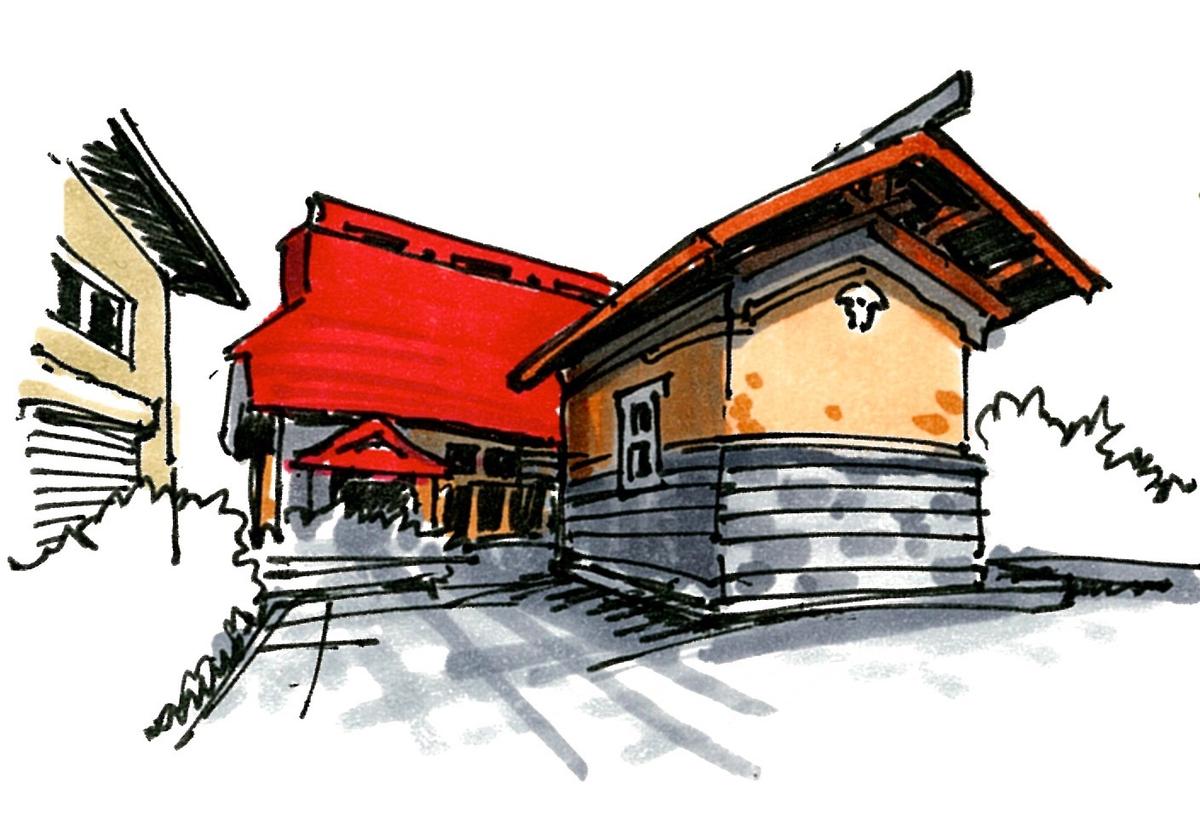
"Among the many hip-roofed SUGOYA and CHUMON-ZUKURI farmhouses, there stands an imposing IRIMOYA (hip-and-gable) thatched (sheet metal covered) farmhouse. Equivalent in height to a standard three-story building, yet single-story. The protruding entrance section on the left is also IRIMOYA. The storehouse features a pseudo-stone lower section. An awe-inspiring dignity. *SUGOYA Sugoya (直屋) is a traditional Japanese house type in which the main living quarters and earthen-floor workspace are integrated into a single, continuous structure without separating ridgelines. It is characterized by the seamless connection of domestic and working spaces, where functions coexist within one linear form. *IRIMOYA IRIMOYA is a traditional Japanese roof style combining a gabled upper section with a hipped lower roof. It is commonly used in temples and prestigious buildings, expressing both stability and architectural dignity." Address Google Map Check with Google Maps Access Parking Business Hours Admission Fee Regular Holiday Phone Number URL SNS
KURA-Earthen Storehouse in IDANI
Heritage Architecture
Open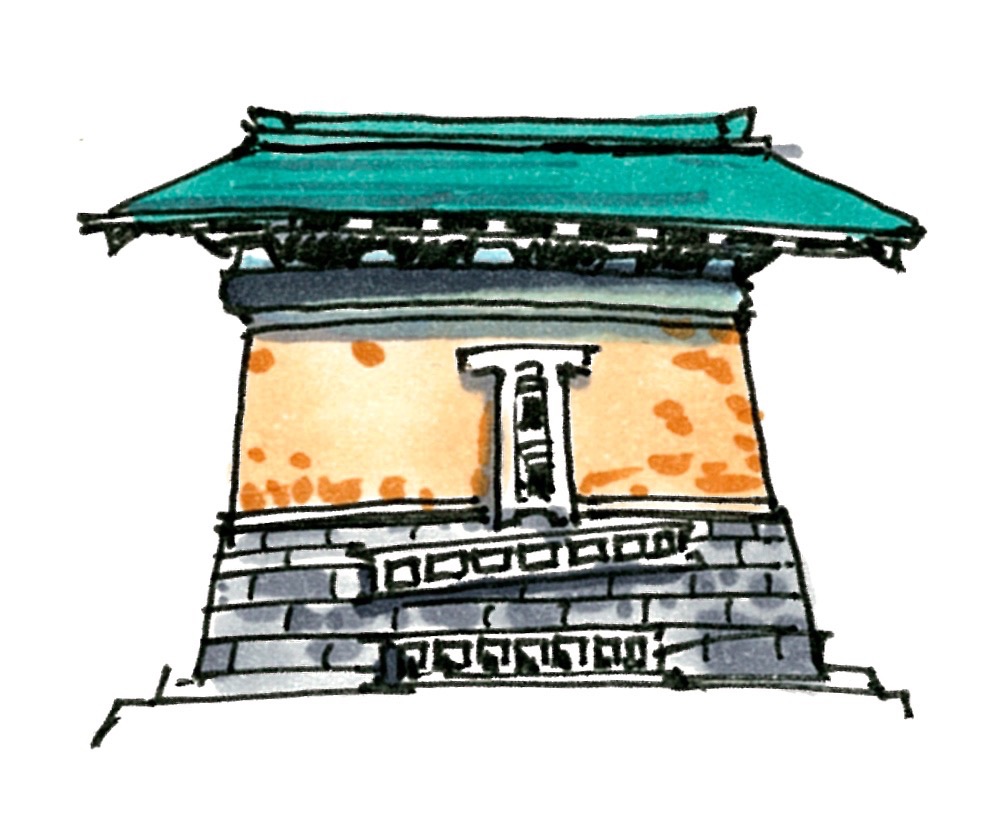
"In IDANI hamlet stands the AKIHA Shrine, known for its fire-prevention faith and five strength stones (CHIKARA-ISHI). People also gathered to pray at the JIZŌDŌ. This storehouse embodies that same simplicity and aesthetic sensibility: a NAKANURI-TSUCHI (intermediate plaster layer) body yet with white plaster around the windows alone—like a face with emphasized eye liner. *NAKANURI-TSUCHI (intermediate plaster layer) A middle coat of earthen plaster applied over the base layer in traditional kura (storehouse) walls, used to build thickness, strength, and surface evenness. It serves as the substrate for the final lime plaster finish, helping prevent cracking and improving fire resistance and durability." Address Google Map Check with Google Maps Access Parking Business Hours Admission Fee Regular Holiday Phone Number URL SNS
KOYA storehouse in YAEKUBO
Heritage Architecture
Open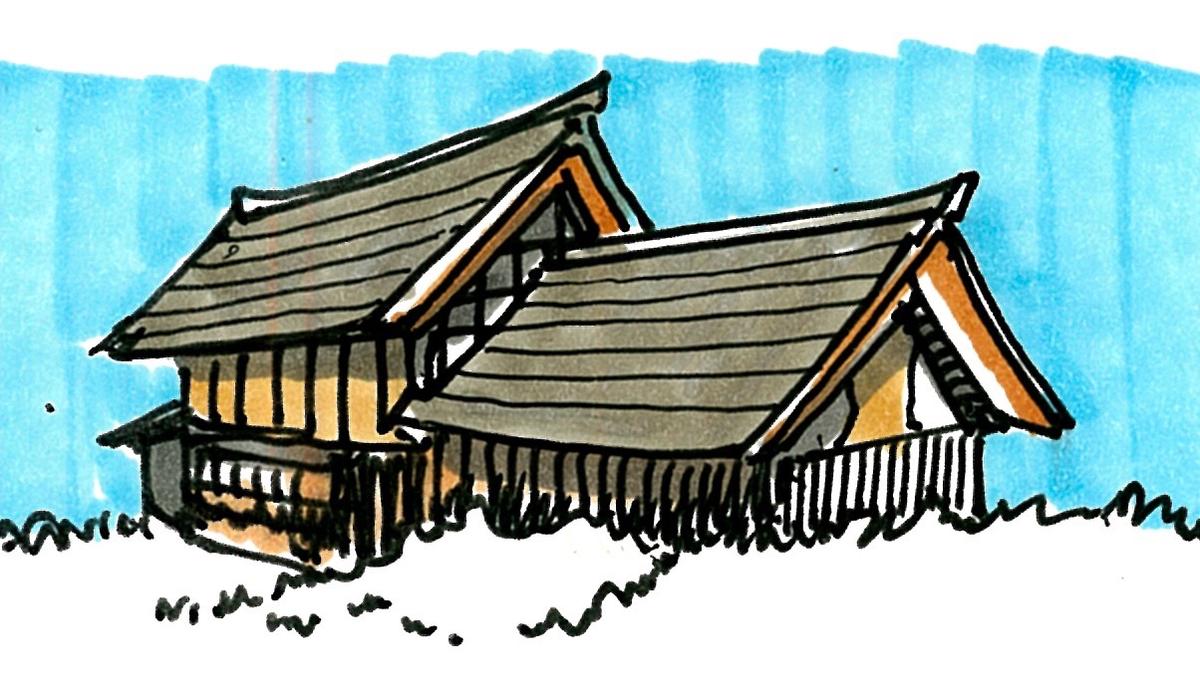
Two gable roofs stacked in two tiers. Despite the large size of this building, it is not a main house but an KOYA-storehose for storing farm equipment and harvested goods. Within the settlement are several simple and beautiful storehouses with corrugated iron-covered thatched roofs. Address Google Map Check with Google Maps Access Parking Business Hours Admission Fee Regular Holiday Phone Number URL SNS
KIRITSUMA-Roofed Farmhouse in SHIBASAKI
Heritage Architecture
Open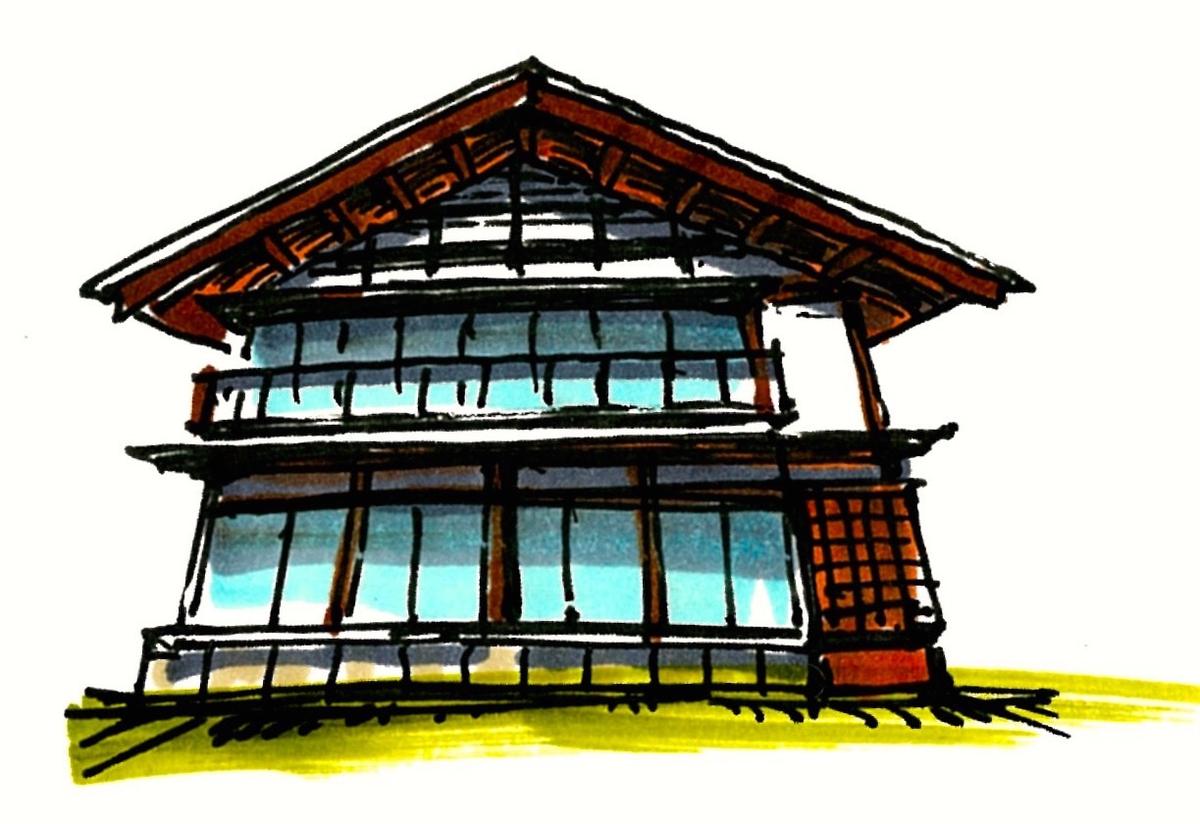
"A KIRITSUMA (gable) style house of nearly full two stories, with delicate KŌRAN (balcony railing) details lining the fully open gable face, supported by charming KAERUMATA (frog-leg braces). The second floor features fan-shaped windows, evoking a festive quality beyond the everyday. SHIBASAKI was once a settlement where two *ECHIGO URA-KAIDŌ routes converged. Perhaps the inns that soothed weary travelers once appeared just like this. *ECHIGO URA-KAIDŌ The ECHIGO URA-KAIDŌ was an informal mountain route connecting Shinshu and Echigo, used for daily life, trade, and sometimes to bypass official checkpoints. Unlike official highways, it was a flexible, locally developed network shaped by practical needs and regional knowledge." Address Google Map Check with Google Maps Access Parking Business Hours Admission Fee Regular Holiday Phone Number URL SNS
Turtle Spitting Water (KOTE-E Trowel Painting) in SHIBASAKI
Heritage Architecture
Open
The turtle has been revered since ancient times as a divine messenger and as an auspicious creature governing water that protects buildings from fire. What it spits from its mouth is a variant character for 'water.' Similar designs can be found in various places, but this is a well-preserved KOTE-E on an earthen storehouse in SHIBAZAKI. Address Google Map Check with Google Maps Access Parking Business Hours Admission Fee Regular Holiday Phone Number URL SNS
Extended CHUMON in TOCHU
Heritage Architecture
Open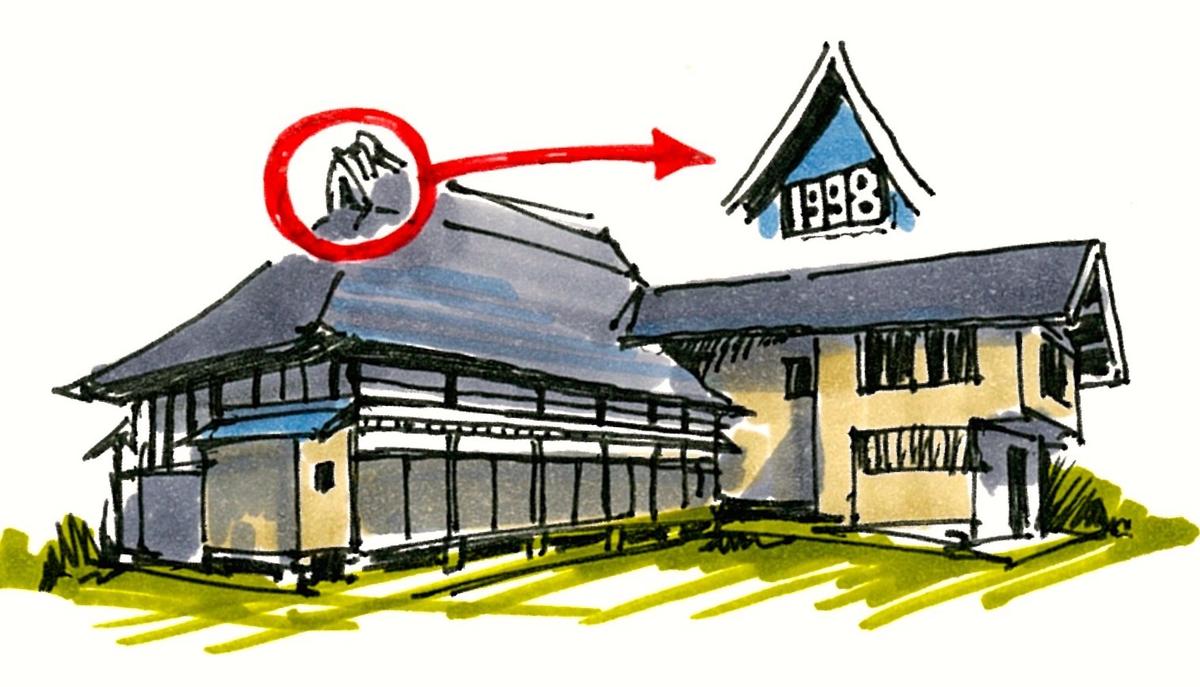
A hip-roofed farmhouse with a CHUMON protruding to the right front. The entrance section extends forward in two stories—this part may be an addition. One farmhouse that continues to live, adapted to modern needs. The '1998' marked at the end of the ridge is likely the year the corrugated iron roofing was replaced. Address Google Map Check with Google Maps Access Parking Business Hours Admission Fee Regular Holiday Phone Number URL SNS
Former Thatching Grassland and Cemetery in HASHIYA
Heritage Architecture
Open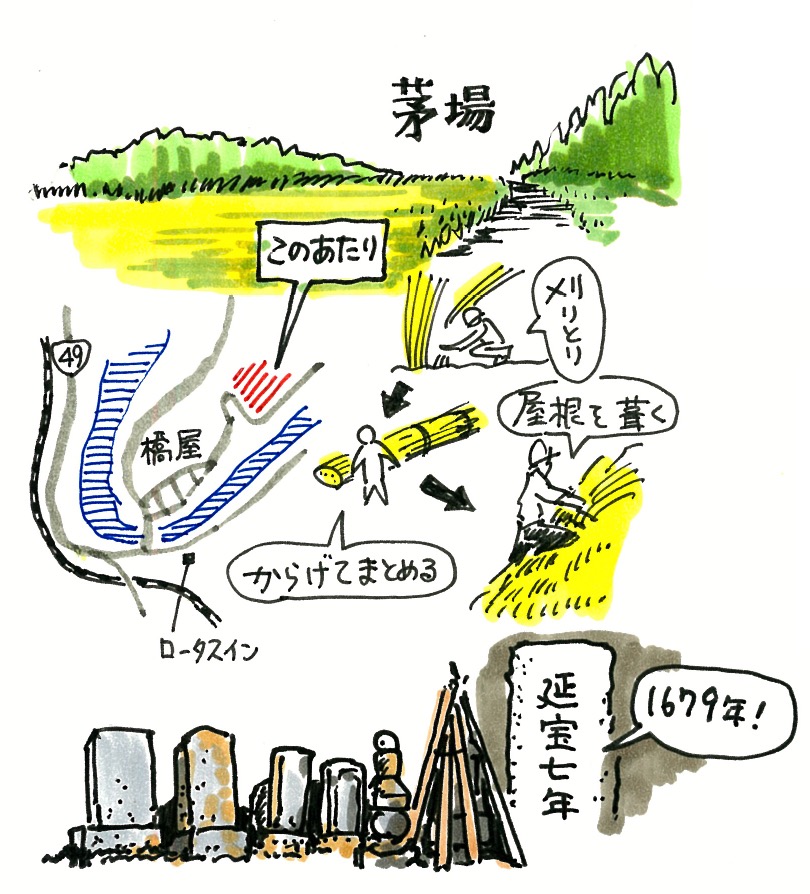
Thatched farmhouses are found everywhere in NISHIAIZU. To maintain roofs of this scale, thatching grasslands (KAYABA) had to exist throughout the area. NITTA KAZUTOSHI, the master carpenter who also worked on the restoration of *ENMANJI KANNONDŌ, told me that this was once a SUSUKI (A perennial grass native to Japan) grassland for thatching. Now, it used as a buckwheat filed, and its flowers sway quietly. *ENMANJI KANNONDŌ A historic wooden hall in Nishiaizu, long preserved as a center of local Buddhist devotion. Its simple yet robust structure reflects regional craftsmanship and enduring cultural traditions. Address Google Map Check with Google Maps Access Parking Business Hours Admission Fee Regular Holiday Phone Number URL SNS
'ISE-KAME' KURA-JIRUSHI Storehouse in SHIMO OJIMA
Heritage Architecture
Open
A robust OKIYANE-roof style storehouse of three-KEN frontage, with a beautiful wooden glass-panel sliding door in the lower eave TOMA, a high-prestige black-plastered HAFU (gable end) with arabesque decoration on both ends, and the KURA-IN reading 'Ise-kame.' In terms of dignity and playfulness combined, it is in a class of its own. *OKIYANE An earthen storehouse roof type in which a separate wooden roof structure is set on top of the clay body, rather than being integrated with it — protecting the walls from rain while allowing early detection of leaks, and often surviving fires intact even when the outer roof burns away. *KEN KEN is a traditional Japanese unit of measurement based on the distance between structural columns, used to define spatial proportions in architecture. Although it varies by region and period, it is typically around 1.8 meters and serves as a fundamental module for building design. Address Google Map Check with Google Maps Access Parking Business Hours Admission Fee Regular Holiday Phone Number URL SNS
KURA-Storehouse in KAMIOJIMA
Heritage Architecture
Open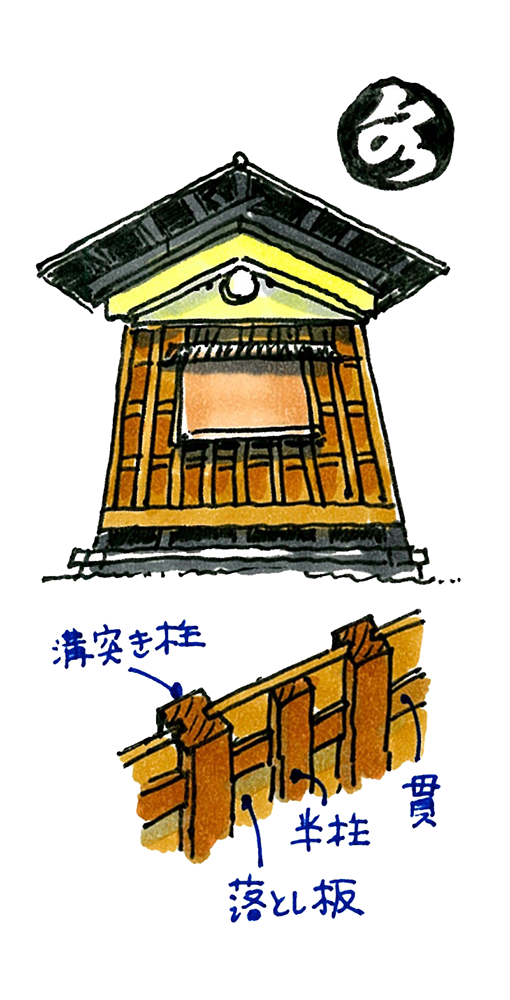
A unique hybrid of board storehouse (ITA-GURA) and earthen storehouse. A body of grooved columns fitted with drop-in boards, a head section of clay plaster finished in white, topped with a wooden OKIYANE roof. The character on the KOTE-E (forehead motif) reads 'water' (水)—a form of prayer for fire prevention. *OKIYANE An earthen storehouse roof type in which a separate wooden roof structure is set on top of the clay body, rather than being integrated with it — protecting the walls from rain while allowing early detection of leaks, and often surviving fires intact even when the outer roof burns away." Address Google Map Check with Google Maps Access Parking Business Hours Admission Fee Regular Holiday Phone Number URL SNS
KOYA-storehouse in KAMIOJIMA
Heritage Architecture
Open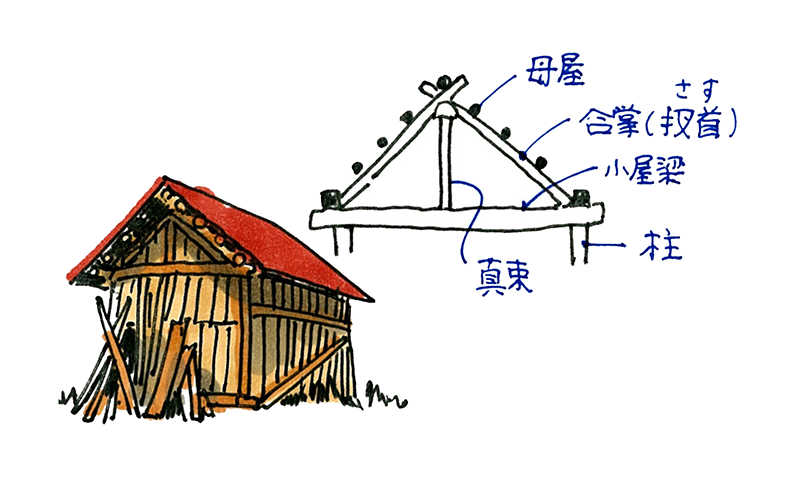
An understated roadside shed, but the gable wall reveals a robust GASSHŌ-style roof structure. SASU (diagonal V-shaped rafters) pierce a horizontal beam, with the ridgepole directly below the intersection. This is, so to speak, the DNA of Japan's traditional vernacular architecture, alive here. *GASSHŌ-style roof a steeply pitched roof form shaped like hands pressed together in prayer, characteristic of traditional Japanese architecture. Address Google Map Check with Google Maps Access Parking Business Hours Admission Fee Regular Holiday Phone Number URL SNS
CHUMON-ZUKURI Farmhouse in MATSUO
Heritage Architecture
Open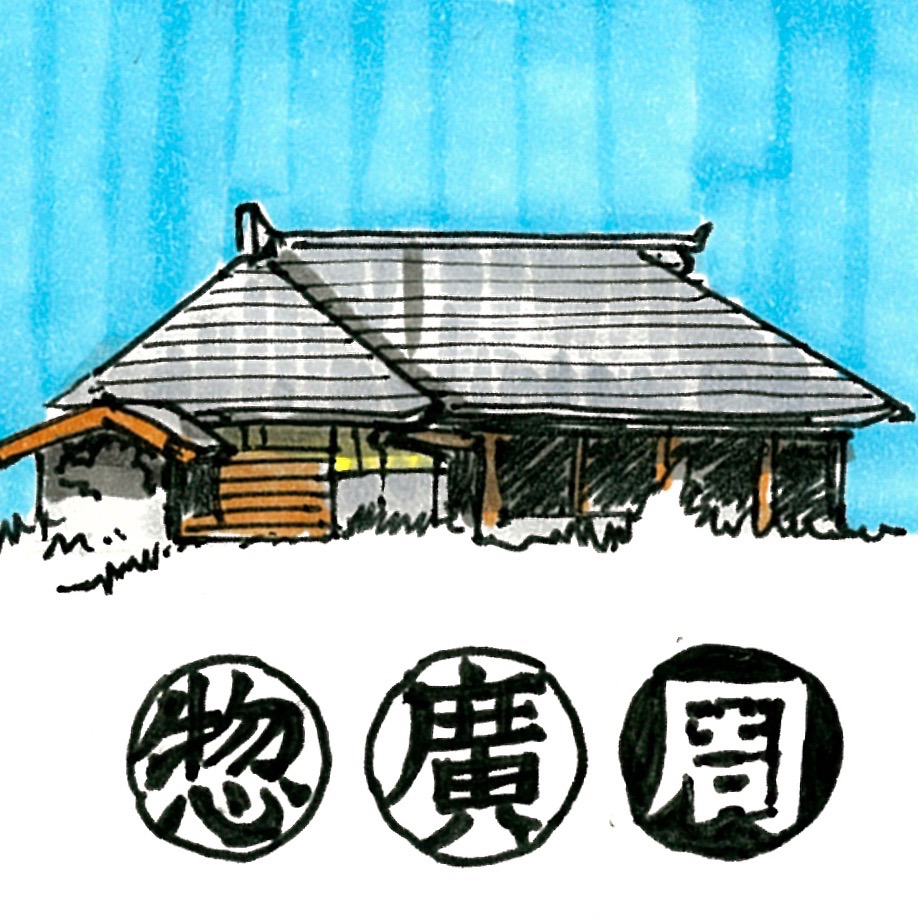
Considered the oldest CHUMON-ZUKURI farmhouse in the MATSUO hamlet. The stable protrudes to the left (left-hand plan), and the rooms—KITAZASHIKI, MAEZASHIKI, CHANOMA, HEYA, and KURUMEII—are arranged in neat order. Address Google Map Check with Google Maps Access Parking Business Hours Admission Fee Regular Holiday Phone Number URL SNS
Barn in KAYAMOTO
Heritage Architecture
Open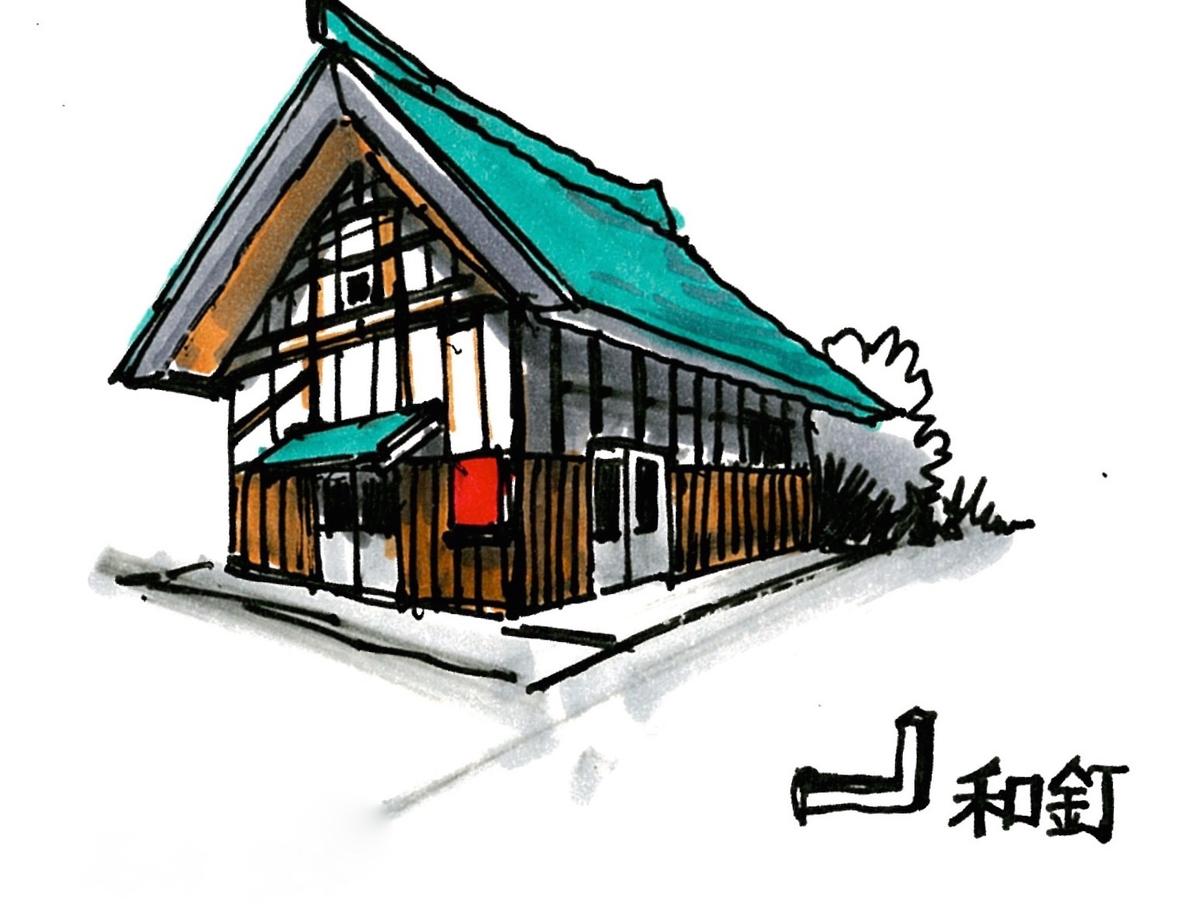
A large gable-roofed, HIRA-IRI (side-entry) barn with a corrugated iron sheet over the thatched roof. Many of the farmhouses in this area are old, and hand-forged square-cut nails (WA-KUGI, made until around the mid-MEIJI period) and L-shaped shell-fold nails can be spotted on the exterior walls. Address Google Map Check with Google Maps Access Parking Business Hours Admission Fee Regular Holiday Phone Number URL SNS
Stone Storehouse in TSUNAZAWA
Heritage Architecture
Open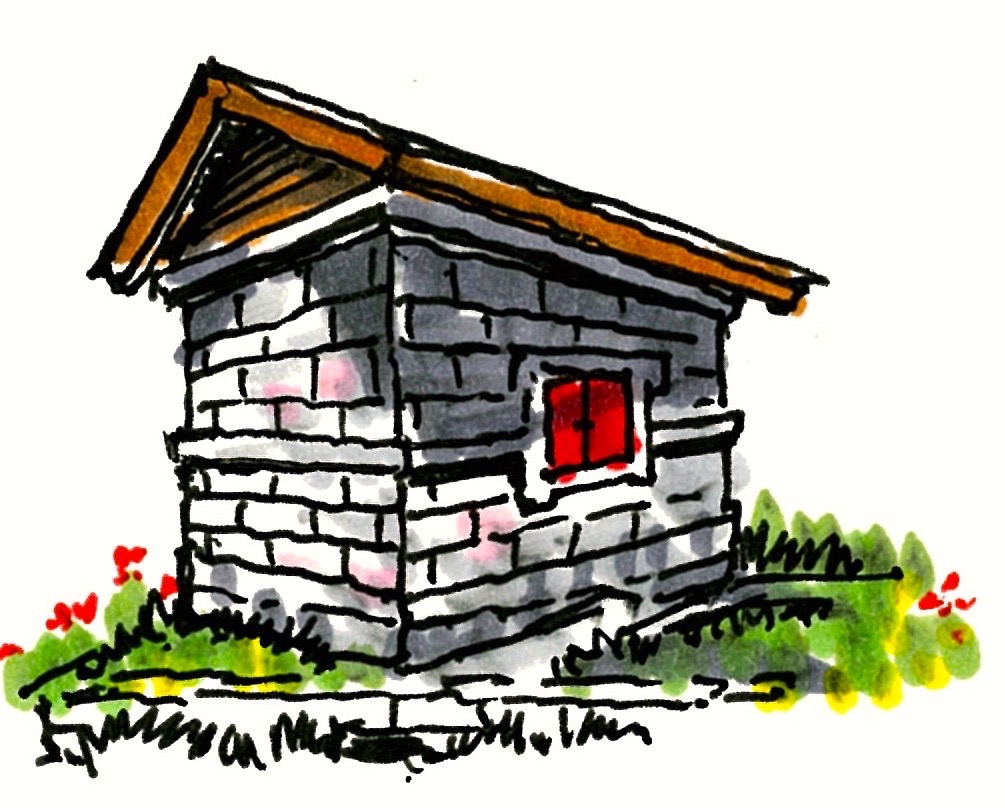
What makes this stone storehouse unique is its division of wall treatment: the lower section below a cornice (DŌ JABARA) is rough split-face, the upper section is smooth, and the lowest course of foundation stones shows diagonal chisel marks. A window spanning both sections is fitted with a red-painted iron door. Address Google Map Check with Google Maps Access Parking Business Hours Admission Fee Regular Holiday Phone Number URL SNS
Hip-Roofed Farmhouse in KARUSAWA
Heritage Architecture
Open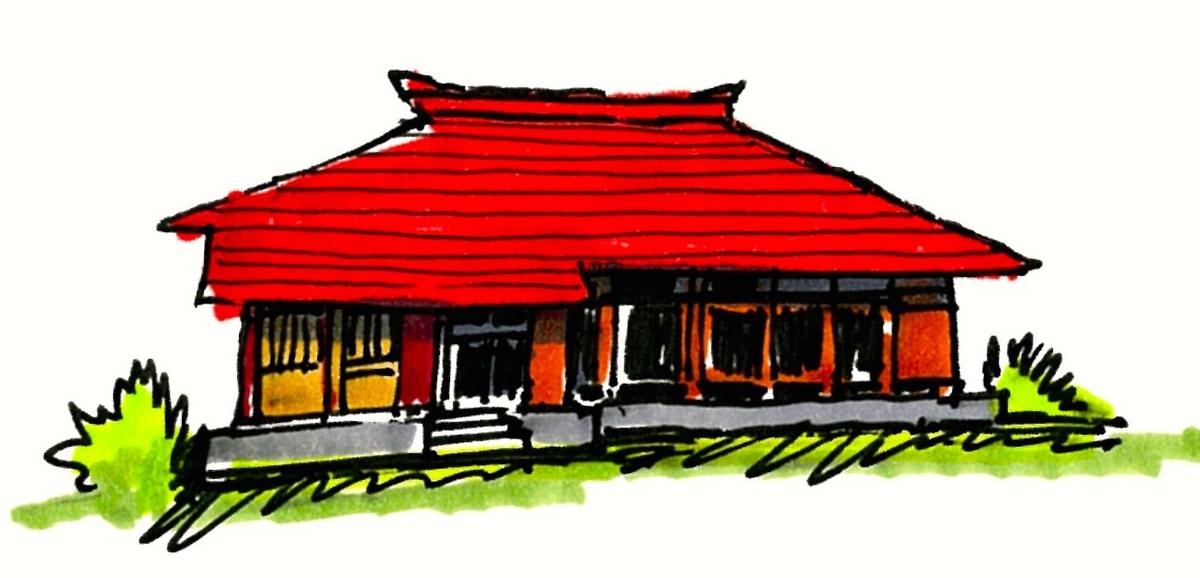
A settlement formed along the main route of the ECHIGO KAIDŌ(historic road). A simple SUGOYA: viewed from the front, the right side is hip-roofed and the left side is a KIBUTO-ZUKURI lowered gable. The left side has horizontal board exterior cladding—also unusual. Address Google Map Check with Google Maps Access Parking Business Hours Admission Fee Regular Holiday Phone Number URL SNS
CHUMON-ZUKURI Farmhouse in AOSAKA
Heritage Architecture
Open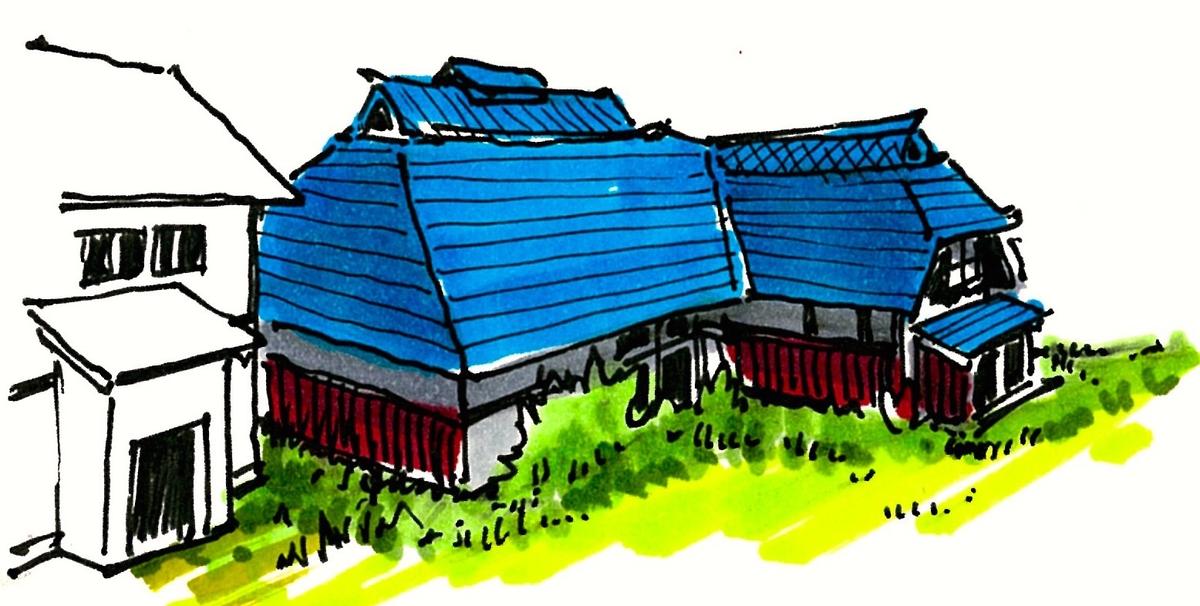
With a slope running through the settlement, one can look down from roof height. Some say the name 'Ao' (blue) comes from indigo dyeing done here, and the corrugated iron roofs are also mostly blue. The form of settlement—where houses cluster closely and neatly, separated from the fields—is rare. Every house is imposing and powerful. Address Google Map Check with Google Maps Access Parking Business Hours Admission Fee Regular Holiday Phone Number URL SNS
CHUMON-ZUKURI Farmhouse in HODOKUBO
Heritage Architecture
Open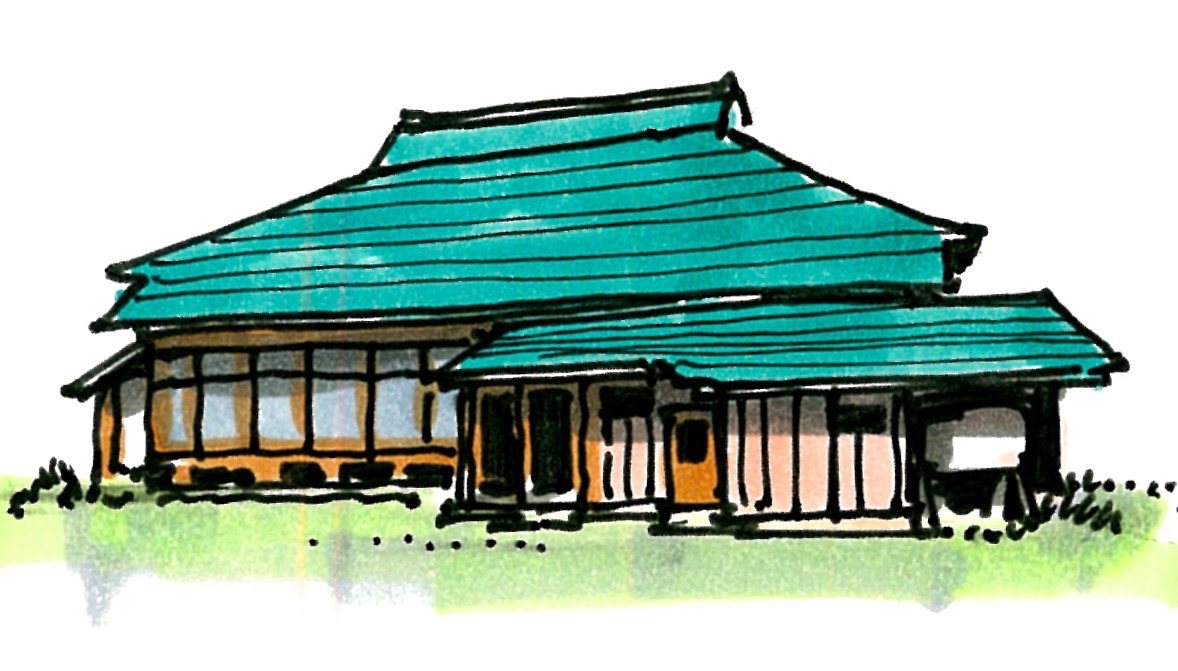
A CHUMON-ZUKURI in which the projection of the stable section is shallow. The NIWA (earthen floor area) has a boarded floor, but it was formerly a paper-making space. The arrangement of two small dark rooms to the north—'KURUMEĒ' and 'HEYA'—is also considered archaic. [Recorded in town history] Address Google Map Check with Google Maps Access Parking Business Hours Admission Fee Regular Holiday Phone Number URL SNS
Distant View of the DOROBUYAMA
Heritage Architecture
Open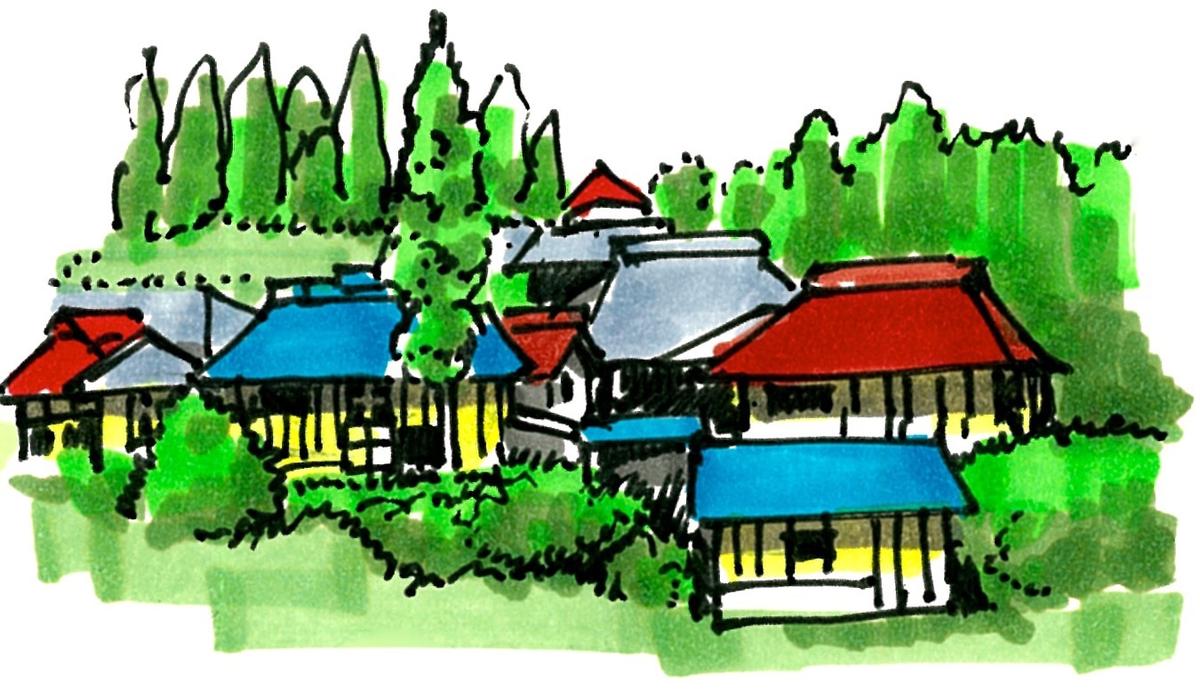
The DOROBUYAMA hamlet, clinging to a deep mountain slope, is truly a 'village in the sky.' CHUMON-ZUKURI main houses, gable-roofed storehouses, and sheds stand in various orientations to match the subtle terrain, coloring the landscape. Overall the walls are high and buildings are two stories, suggesting adaptation to heavy snowfall. Address Google Map Check with Google Maps Access Parking Business Hours Admission Fee Regular Holiday Phone Number URL SNS
Distant View of the NAGAZAKURA
Heritage Architecture
Open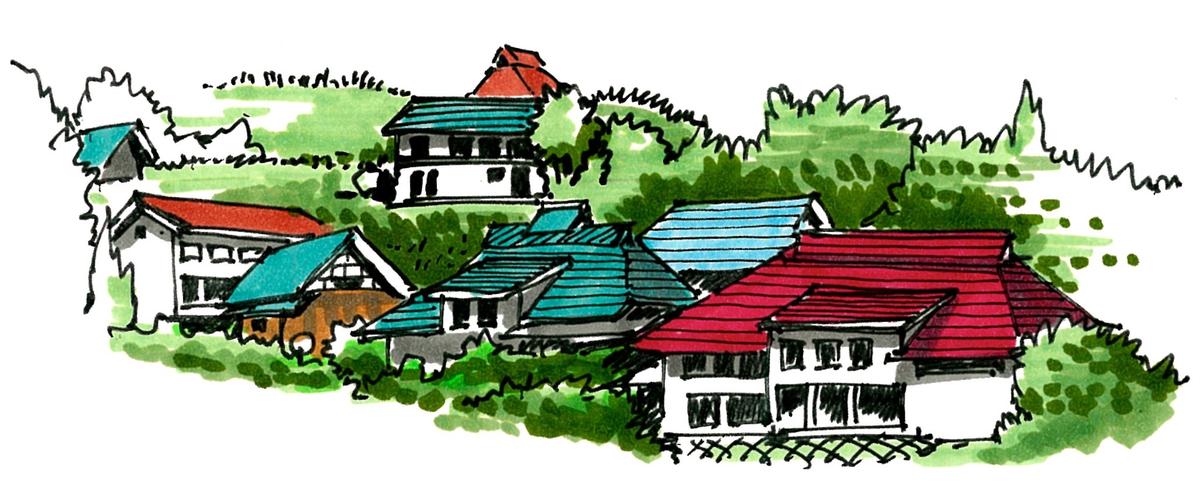
A settlement formed along a ridge, rather than a valley. One of the 'sky villages,' with multiple houses featuring HANE-AGE-YANE (raised roof) forms in which part of the hip roof is lifted up. Address Google Map Check with Google Maps Access Parking Business Hours Admission Fee Regular Holiday Phone Number URL SNS
KURA-JIRUSHI (Storehouse emblem) in USHIO
Heritage Architecture
Open
In the past there was a lake called USHIUMI spanning NOZAWA and ONOMOTO area. One of its landing places is said to have been built here at USHIO hamlet. This too is a settlement rich in storehouses, and I collected some of their unique KURA-JIRUSHI designs. Address Google Map Check with Google Maps Access Parking Business Hours Admission Fee Regular Holiday Phone Number URL SNS
SUGOYA in IZUGAHARA
Heritage Architecture
Open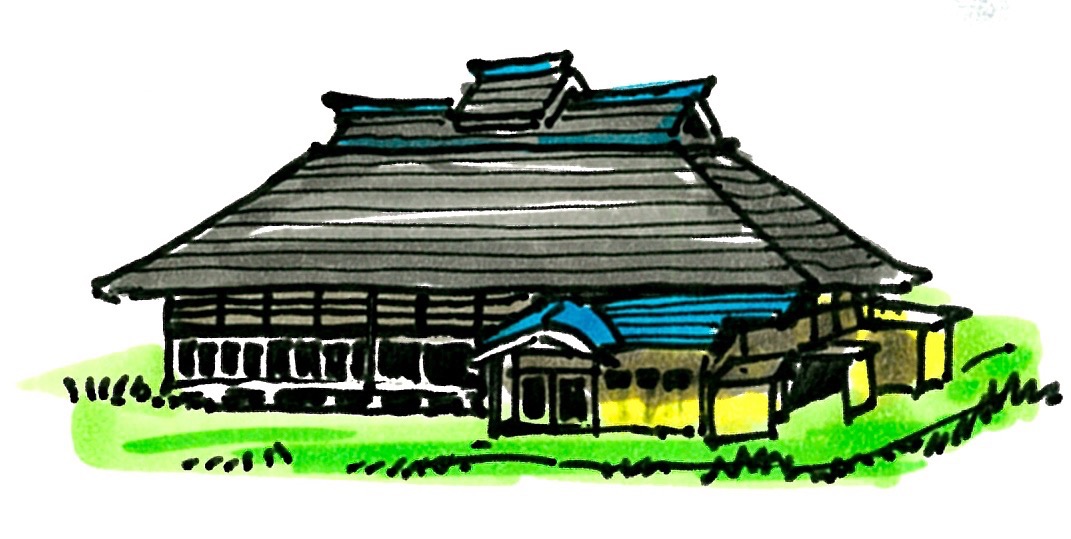
A settlement known for IZUGAHARA paper (楮-based WASHI). The technique is said to have been passed down by WASHI papermakers who came from IZU(The present-day IZU Peninsula). This house also had a paper-making space of about one TSUBO. A SUGOYA, hip-roofed, corrugated iron roofed. The town history records it as built in MEIJI 10 (1877). *SUGOYA Sugoya (直屋) is a traditional Japanese house type in which the main living quarters and earthen-floor workspace are integrated into a single, continuous structure without separating ridgelines. It is characterized by the seamless connection of domestic and working spaces, where functions coexist within one linear form. Address Google Map Check with Google Maps Access Parking Business Hours Admission Fee Regular Holiday Phone Number URL SNS
CHUMON-ZUKURI Farmhouse in YAMAGUCHI
Heritage Architecture
Open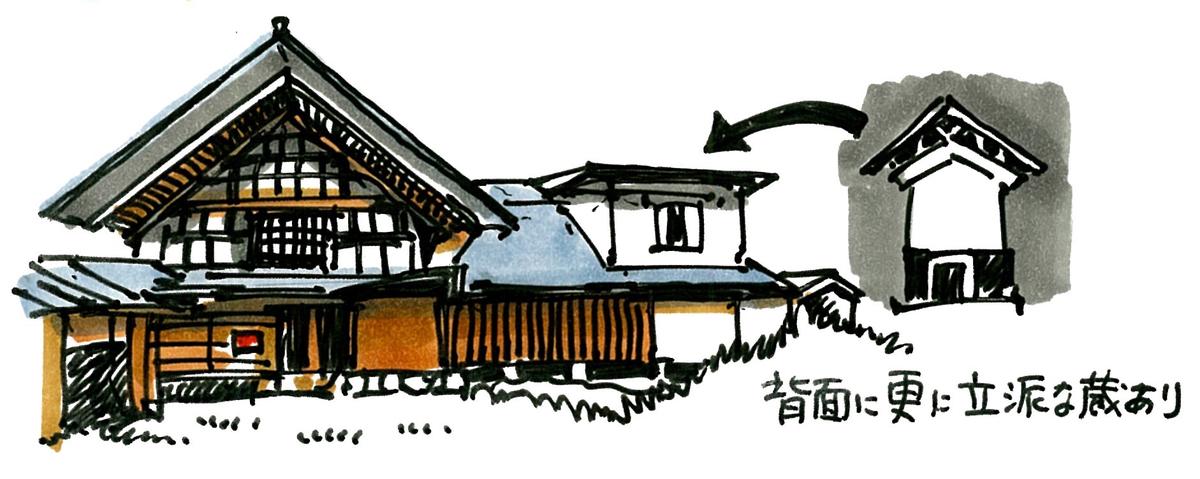
A house that prospered through farming and civil engineering work, incorporating an earthen storehouse within the right side of a left-hand CHUMON-ZUKURI. A high-quality plastered storehouse also stands at the rear, and a KOYA-storehouse stands at the front left. Incidentally, this hamlet is said to have no YA-GO (house names/titles). Address Google Map Check with Google Maps Access Parking Business Hours Admission Fee Regular Holiday Phone Number URL SNS
Branch School in KOSUGIYAMA
Heritage Architecture
Open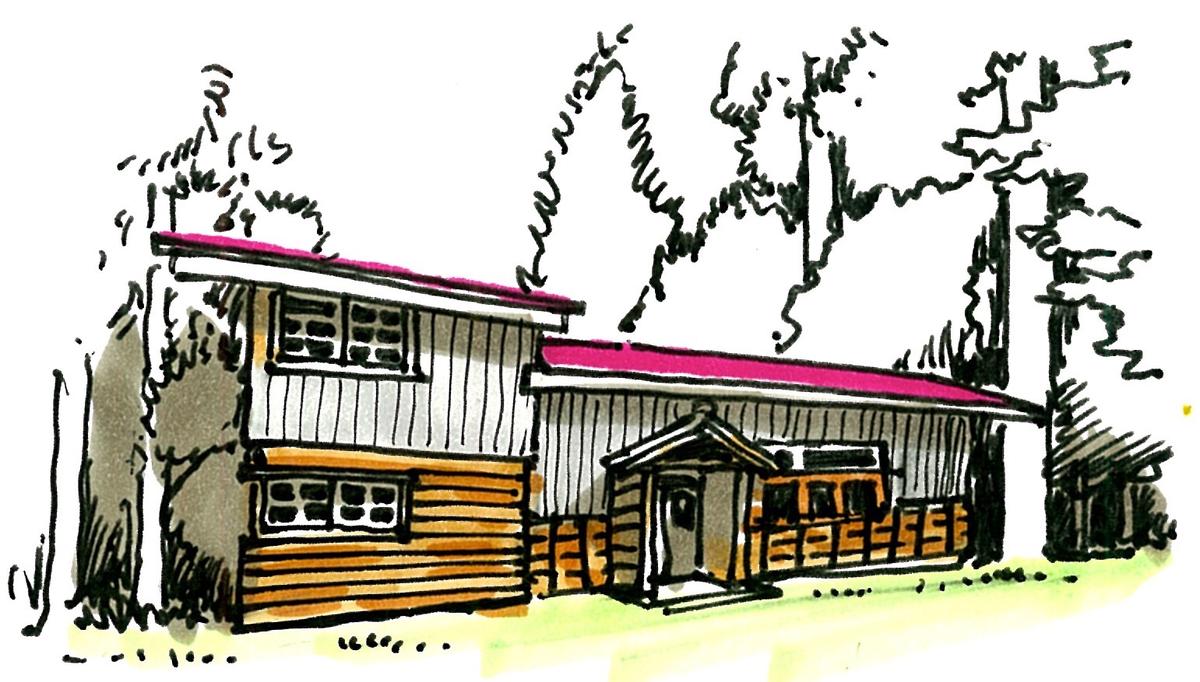
This was an outlying hamlet of ŌSUGIYAMA settlement, destroyed in the KEICHŌ Earthquake landslide. In the snowy winter of course, but year-round, elementary school children attended this charming school building as a branch school. The teacher lived on the second floor. The people here lived by forestry, particularly cultivating paulownia. Address Google Map Check with Google Maps Access Parking Business Hours Admission Fee Regular Holiday Phone Number URL SNS
SUGOYA Farmhouse in KOSUGIYAMA
Heritage Architecture
Open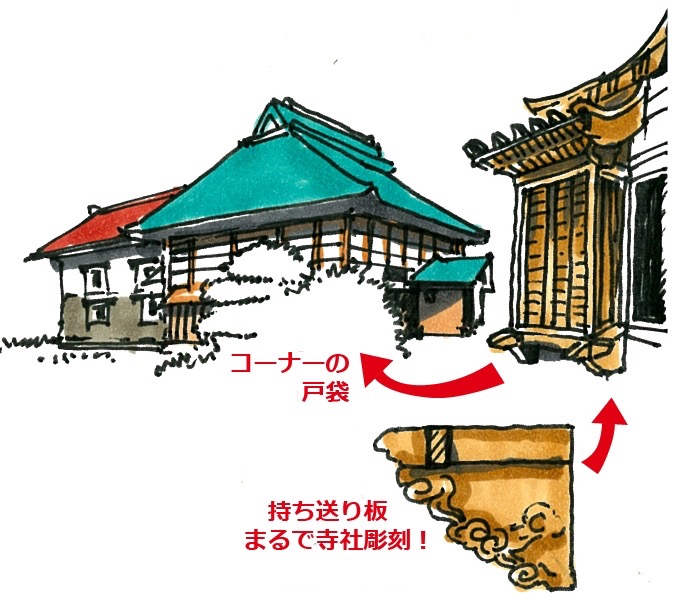
The SUGOYA main house at the innermost end of the settlement stands tall, approaching three stories in height. Hip-roofed, with a gable-end entrance projecting on the east side and a two-story earthen storehouse at the rear. The charm point is the TOBUKURO (shutter box), where the roof curves dramatically and the projecting rafter tips resemble a dragon's mouth. The cloud-shaped bracket carvings at the lower edge are magnificent. *SUGOYA Sugoya (直屋) is a traditional Japanese house type in which the main living quarters and earthen-floor workspace are integrated into a single, continuous structure without separating ridgelines. It is characterized by the seamless connection of domestic and working spaces, where functions coexist within one linear form. Address Google Map Check with Google Maps Access Parking Business Hours Admission Fee Regular Holiday Phone Number URL SNS
Stone Storehouse in KUROSAWA
Heritage Architecture
Open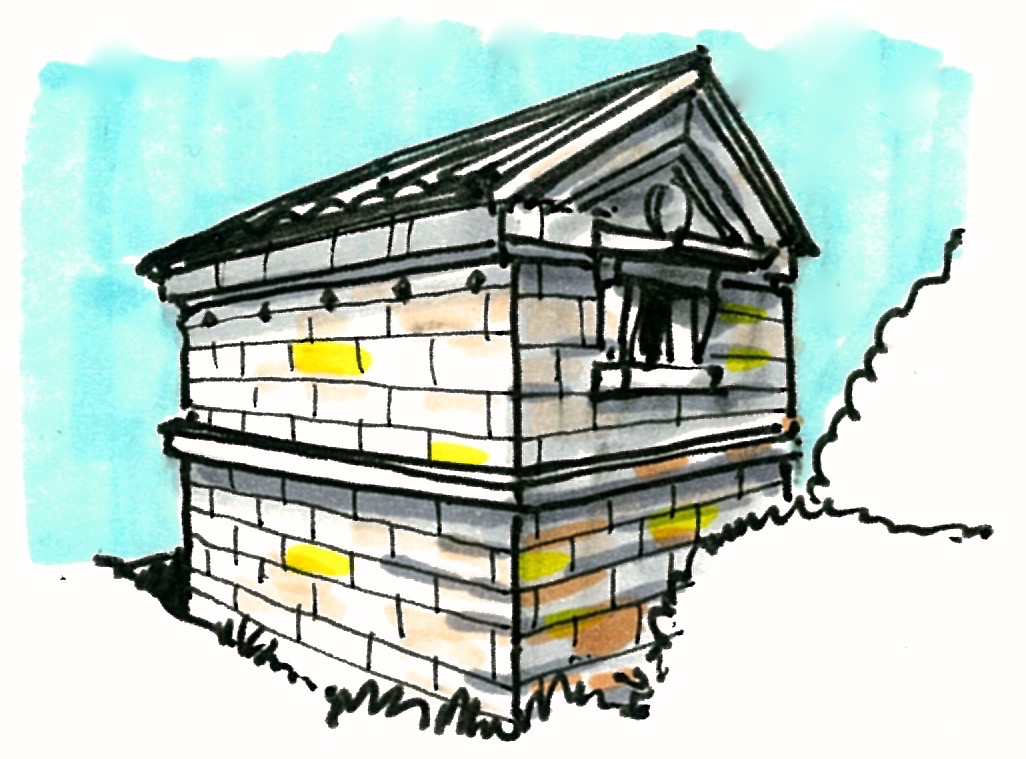
Stone storehouses are less common in NISHIAIZU compared to earthen or board storehouses, but one can be encountered here in the innermost part of ONOMOTO. A two-story *KIRITSUMA (gable-roofed) with a belt-like cornice (JABARA) around the middle. The window's real columns and eaves in the gable wall are also made of stone. The subtle color variations in the natural stone create rich shadows and hues. Address Google Map Check with Google Maps Access Parking Business Hours Admission Fee Regular Holiday Phone Number URL SNS
KUROSAWA Community Hall
Heritage Architecture
Open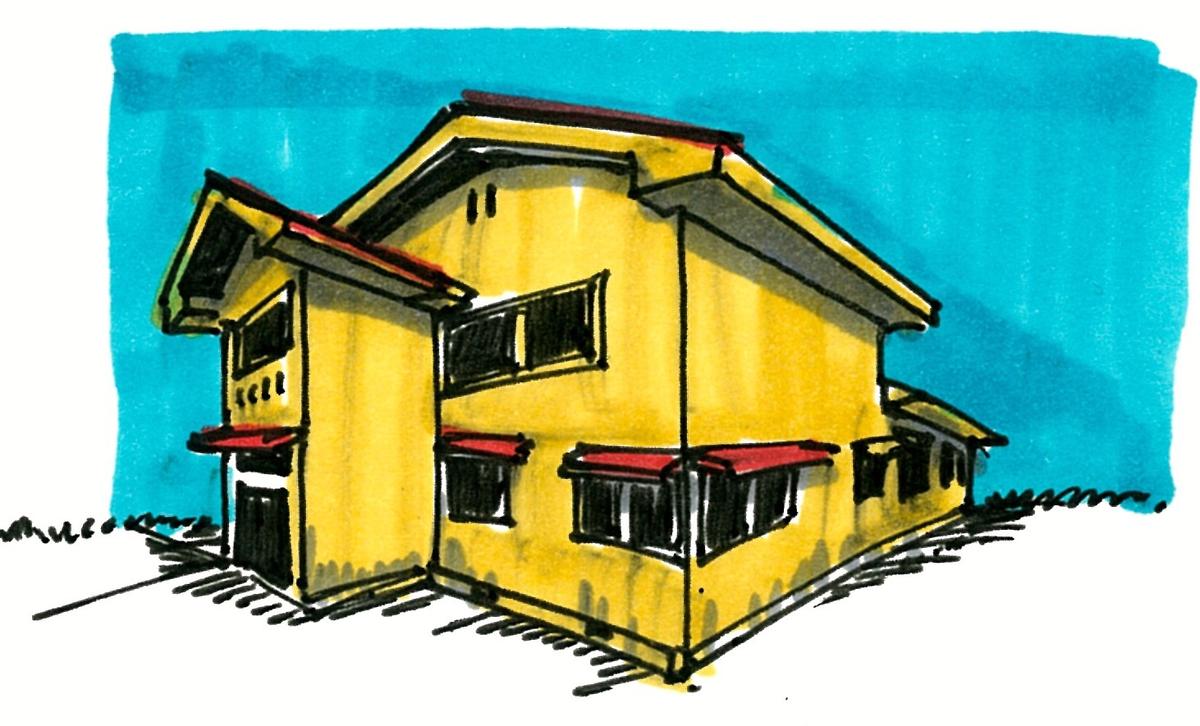
A communal facility for the settlement, standing on a small ridge. The KUROSAWA settlement suffered damage from a landslide disaster in the 1950s, and a number of people left their homeland as emigrants to Brazil. Address Google Map Check with Google Maps Access Parking Business Hours Admission Fee Regular Holiday Phone Number URL SNS
CHUMON-ZUKURI Farmhouse in KUROSAWA
Heritage Architecture
Open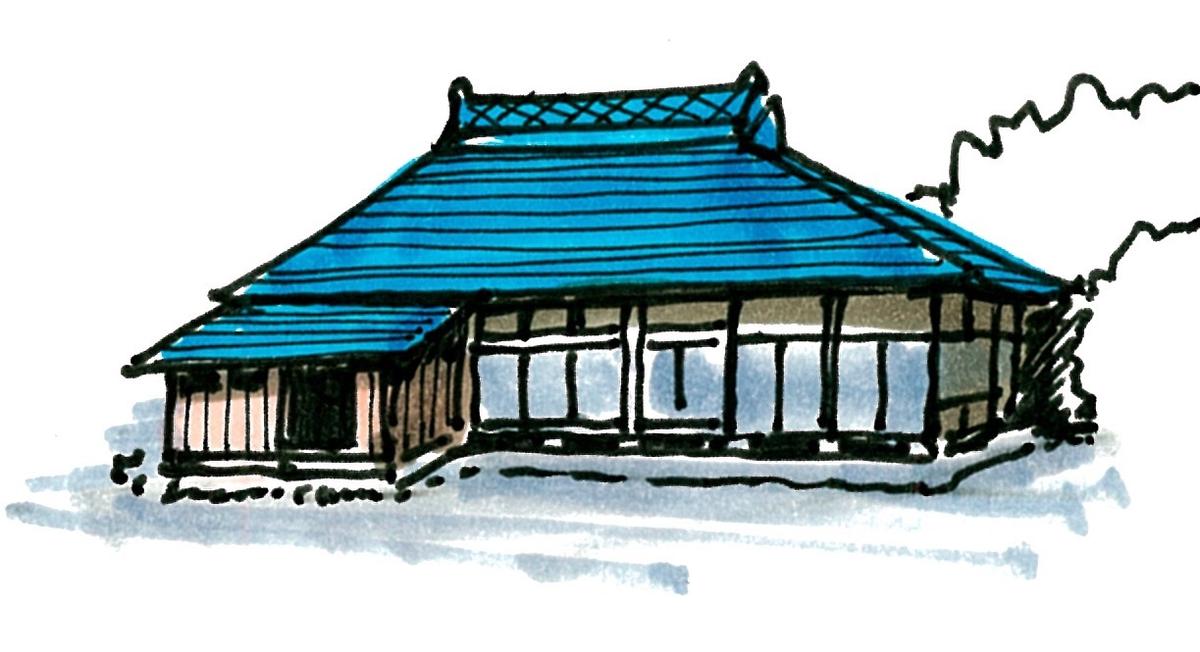
A farmhouse recorded in the 'Town History,' said to date back to before the mid-EDO period. The L-shaped protrusion is short but typical of CHUMON-ZUKURI, with an UMAYA (horse barn). Behind the CHANOMA (living space) is a KŪMEĒ room, and the house stands against the mountain. The residents are said to have engaged in small-scale farming and charcoal making. Address Google Map Check with Google Maps Access Parking Business Hours Admission Fee Regular Holiday Phone Number URL SNS
TSUMA-IRI Farmhouse in HARAMACHI
Heritage Architecture
Open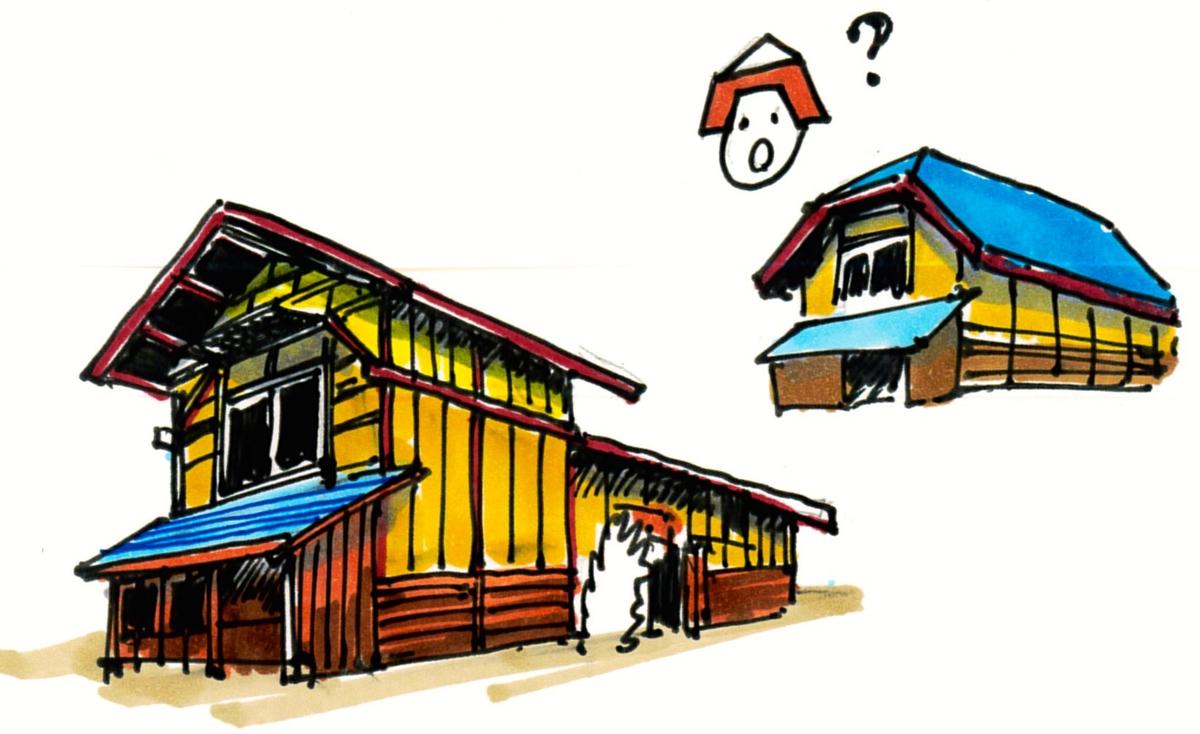
"A house on a slope near the town hall. Looking closely at the gable wall, the upper portion shows a difference in the color of timber and plaster. A trapezoidal timber surrounds the second-floor window, forming a 'boundary.' This form is the shape of a KABUTO-ZUKURI roof. The current building is a two-story KIRITSUMA (gable-roofed) , but perhaps it had a different form when first built—imagining this is also enjoyable. *KABUTO-ZUKURI A roof form in which the upper portion of a gable end is steeply pitched and then curves outward at the eaves — resembling the silhouette of a samurai helmet (kabuto). Common in the Aizu and Nishiaizu region, it is often used for the protruding nakamon section or outbuildings, and was originally designed to shed heavy snow loads efficiently while giving the building a distinctive, imposing presence. Address Google Map Check with Google Maps Access Parking Business Hours Admission Fee Regular Holiday Phone Number URL SNS
KONAYA Store
Heritage Architecture
Open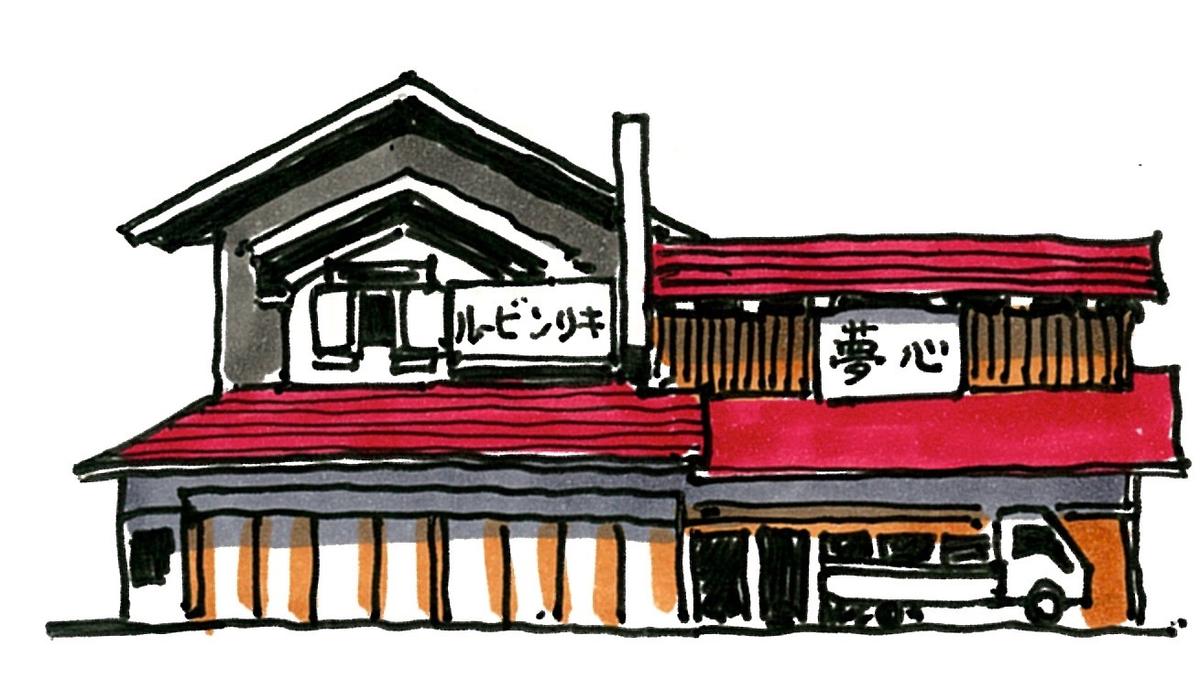
A sake shop in the central shopping street that once thrived as NOZAWA-JUKU on the ECHIGO KAIDŌ. The prominently displayed right-to-left reading sign 'RŪBIN RIKI' hangs on the gable face of a TSUMA-IRI OKIYANE-roof KURA-earthen storehouse, while the flat-entry shop on the right bears the name 'Yumegokoro.' A sacred place not only for drinkers but also for architecture enthusiasts. Address Google Map Check with Google Maps Access Parking Business Hours Admission Fee Regular Holiday Phone Number URL SNS
HIRA-IRI KURA-Earthen Storehouse in HARAMACHI
Heritage Architecture
Open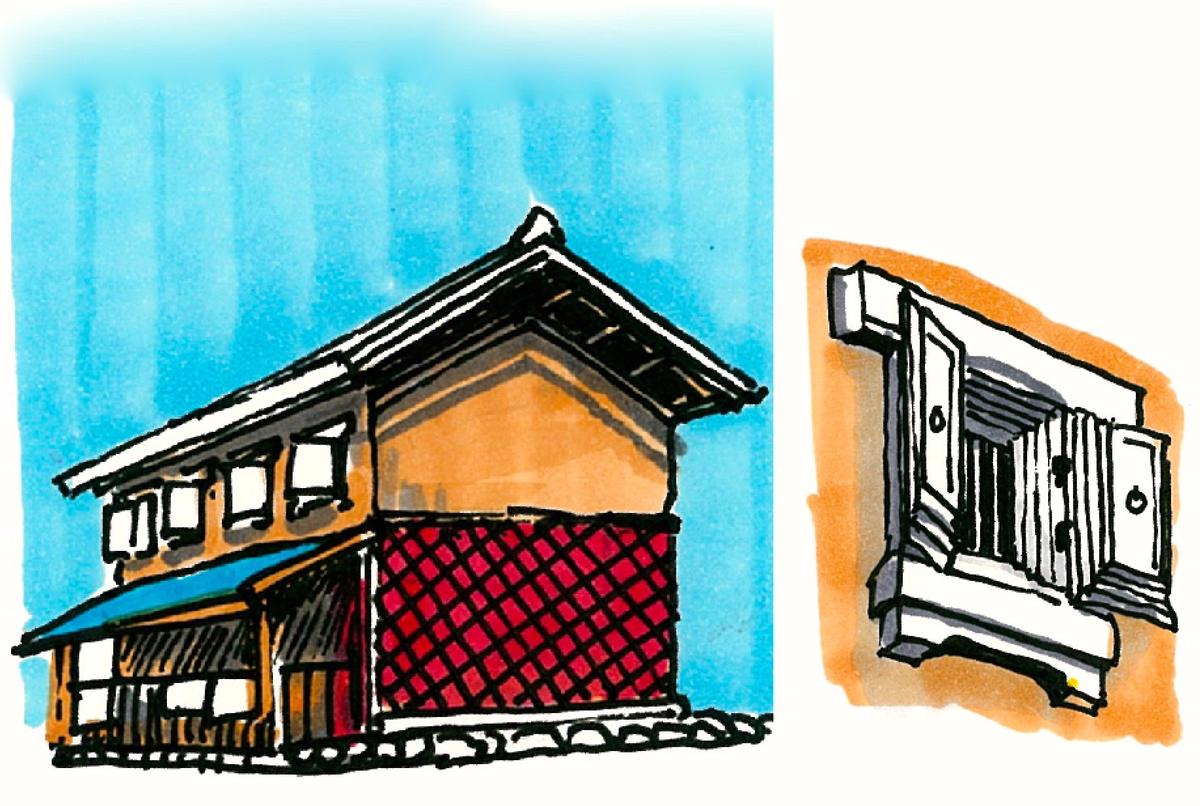
A large and tall storehouse standing parallel to the road. In the 'HIRA-IRI' style, a lower eave runs along the road side and the entrance is from there. The lower section is clad in sheet metal diamond-pattern (HISHI-BUKI), resembling fish scales. The highlight is the second-floor window, whose four-tier KAKUKO (layered panel) doors are of a weight that sets them apart from storehouses in the vicinity. Address Google Map Check with Google Maps Access Parking Business Hours Admission Fee Regular Holiday Phone Number URL SNS
KIRITSUMA-IRI Stone Storehouse in MOTOMACHI
Heritage Architecture
Open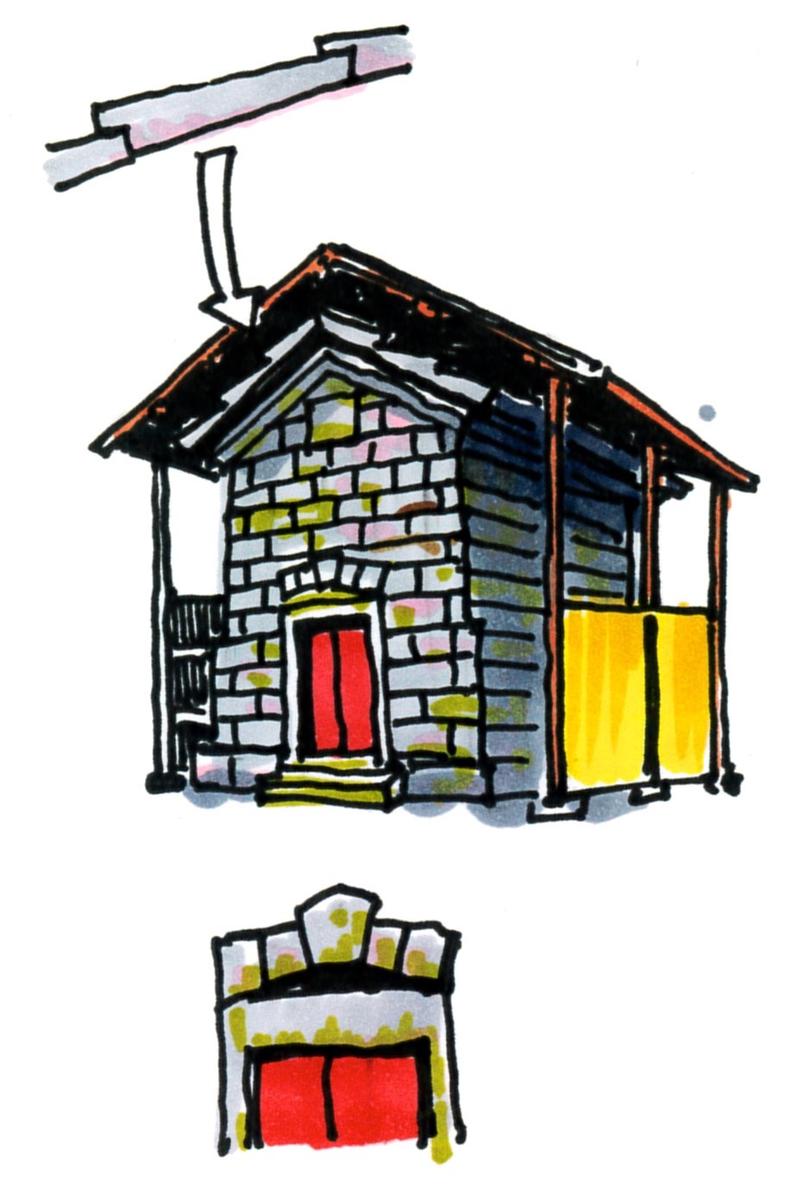
Located set back from the road, it may once have been hidden by the main house. The roof too has stone laid like tiles, with soil on top, and a wooden-framed tile roof set upon an A-frame structure—fire-resistant and rain-resistant at once. The gable face features an arch with a keystone at the center. The 'forehead' bears a lightly carved family crest of three combined oak (kashiwa) leaves. Support posts stand at the eave to protect the structure like a canopy—which is why it remains in such good condition. Address Google Map Check with Google Maps Access Parking Business Hours Admission Fee Regular Holiday Phone Number URL SNS
YOSEMUNE-Hip-Roofed House in SHIBAKUSA
Heritage Architecture
Open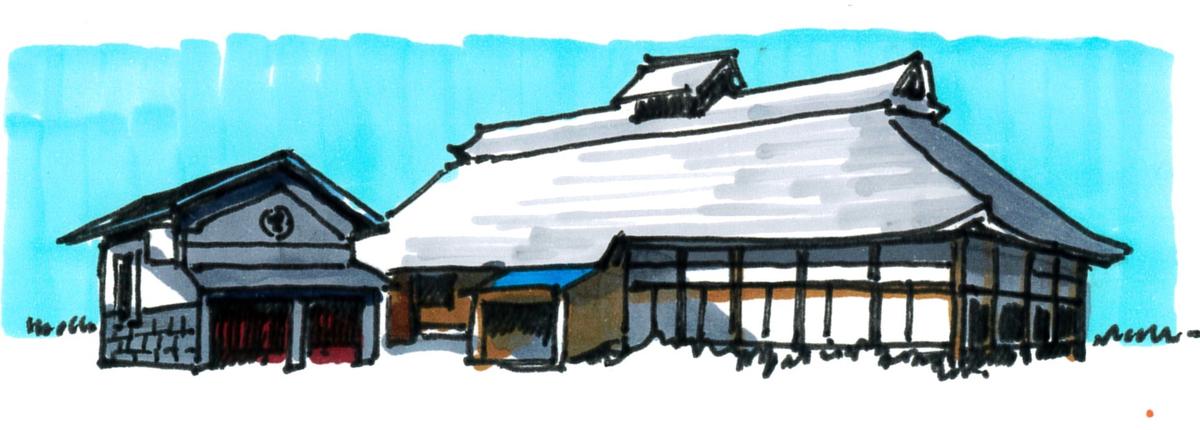
Though close to HARAMACHI district where the main inn was located, the atmosphere changes completely. Hip-roofed farmhouses are neatly lined on long narrow lots. This house faces east with an earthen storehouse in the garden. The silver sheet metal was gleaming. Address Google Map Check with Google Maps Access Parking Business Hours Admission Fee Regular Holiday Phone Number URL SNS
IRIMOYA-Roofed House in SERINUMA
Heritage Architecture
Open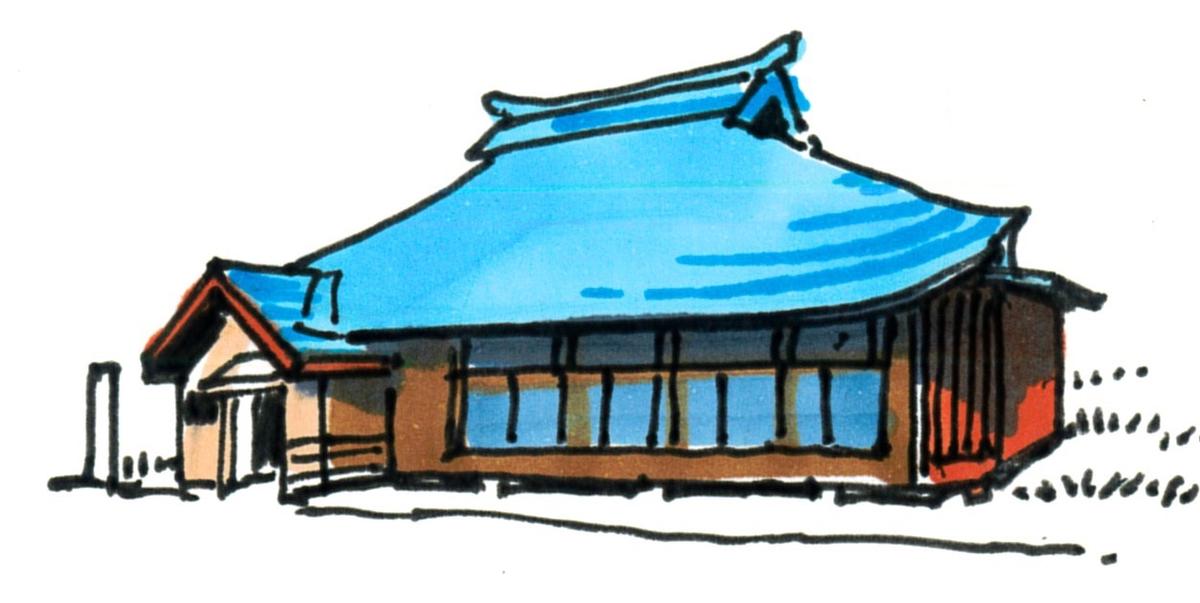
Old farmhouses line the road running parallel to the railway. The well-proportioned IRIMOYA (hip-and-gable) roof is clad in sheet metal yet retains vestiges of the thatched roof. The entrance projects as a KIRIZUMA on the right end. Its unaffected proportions radiate a quiet dignity. Address Google Map Check with Google Maps Access Parking Business Hours Admission Fee Regular Holiday Phone Number URL SNS
KURA-Earthen Storehouse in HORIGOSHI
Heritage Architecture
Open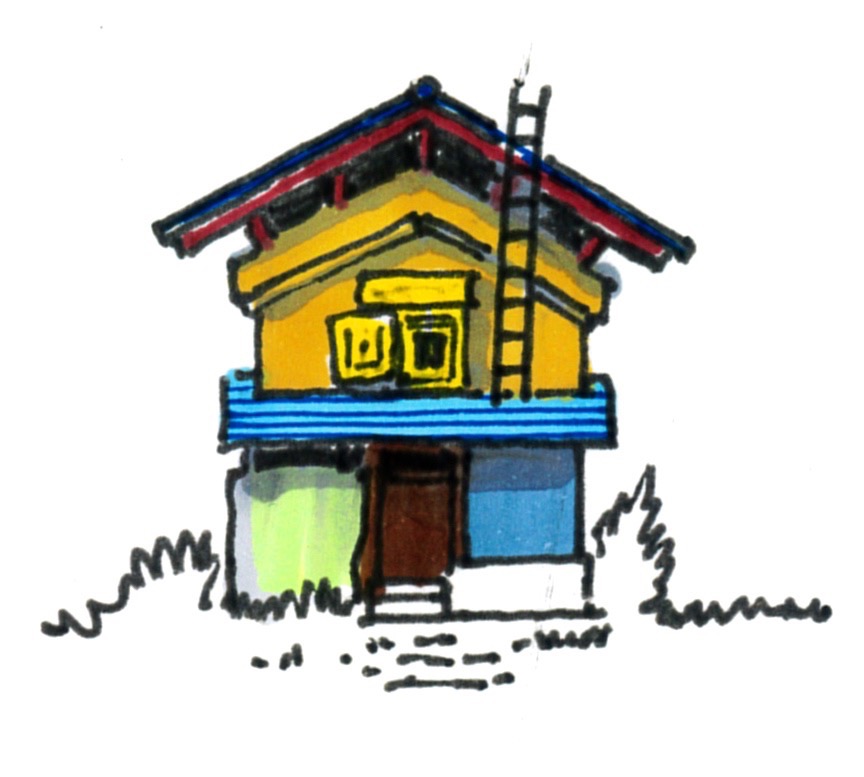
A storehouse with a ladder standing on the lower eave of the TOMAE (front structure). It shows the NAKANURI-TSUCHI color as-is with a rustic texture, yet the clay doors on the gable window are full four-tier KAKUKO (layered panels). The eyebrow-like HACHIMAKI detailing is also crisp and dignified. *NAKANURI-TSUCHI (intermediate plaster layer) A middle coat of earthen plaster applied over the base layer in traditional kura (storehouse) walls, used to build thickness, strength, and surface evenness. It serves as the substrate for the final lime plaster finish, helping prevent cracking and improving fire resistance and durability. Address Google Map Check with Google Maps Access Parking Business Hours Admission Fee Regular Holiday Phone Number URL SNS
KURA-Earthen Storehouse in MAGI
Heritage Architecture
Open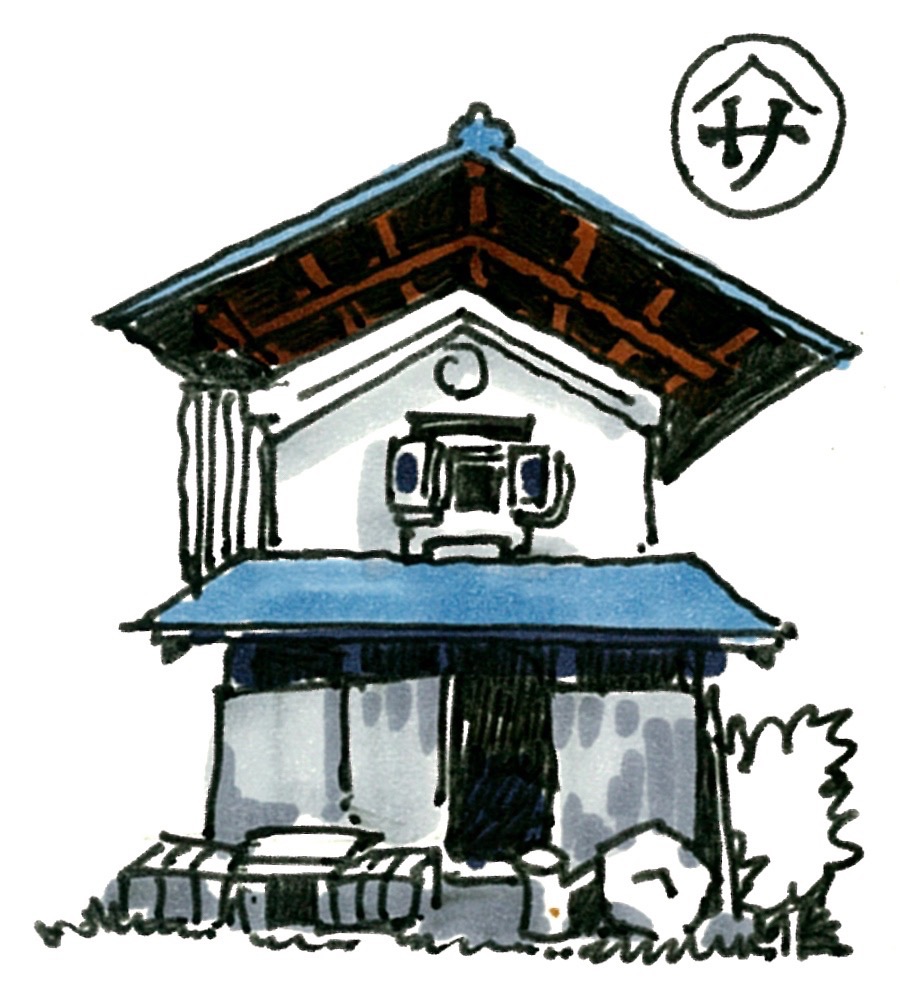
Magi also has many high-quality storehouses. The greater the number of *KAKEGO tiers on a small window, the more the thickness of the doors is emphasized. This storehouse is a good example in which the shadows of the *KAKEGO indicate the prestige of the household. The KURA-JIRUSHI (emblem) on the forehead reads 'YAMA(山) + Sa. (サ)' The OKIYANE roof is large and imposing. *KAKEGO (掛子) is a traditional protective outer frame or cover attached to the openings of a Japanese storehouse (kura), such as doors or windows. It enhances fire resistance and weather protection, working together with thick earthen walls and shutters to safeguard the interior." Address Google Map Check with Google Maps Access Parking Business Hours Admission Fee Regular Holiday Phone Number URL SNS
KURA-Earthen Storehouse in NAKANO
Heritage Architecture
Open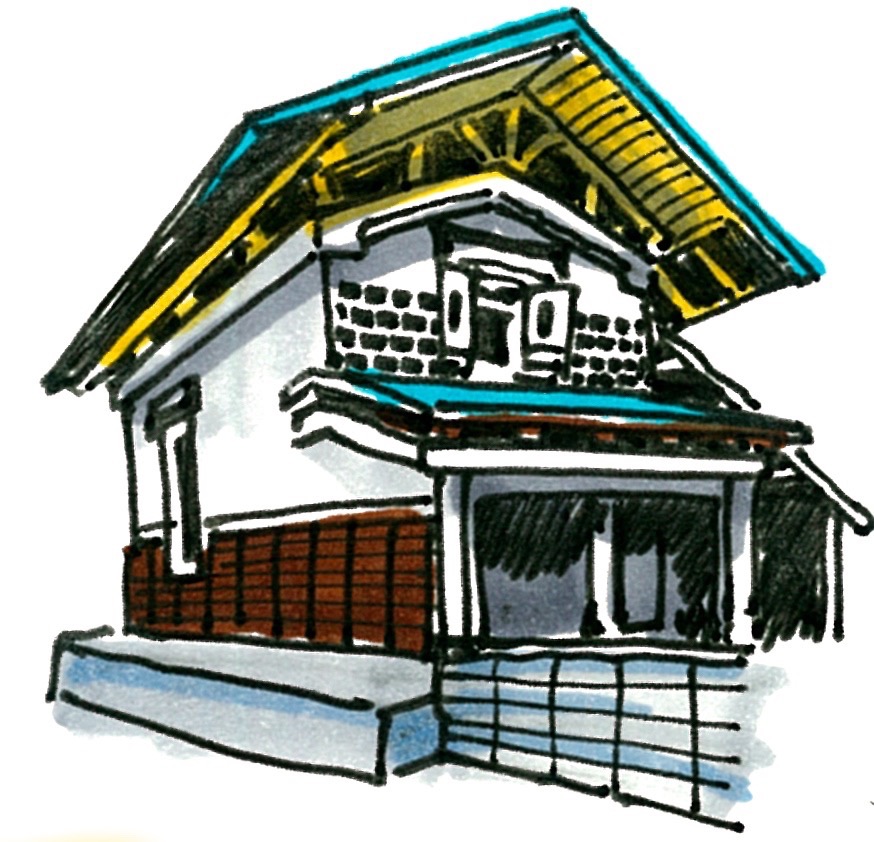
This storehouse is unique in three ways: not only the main roof but even the lower eave of the TOMAE is an OKIYANE roof; the underside of the main roof is sealed with boards; and the second-floor gable wall features a NAMAKO-KABE (sea-cucumber plaster) finish—rare in NISHIAIZU—albeit painted. Combined with the vertical long windows on the flat face, it cuts a crisp figure. Address Google Map Check with Google Maps Access Parking Business Hours Admission Fee Regular Holiday Phone Number URL SNS
CHUMON-ZUKURI Farmhouse in AZA
Heritage Architecture
Open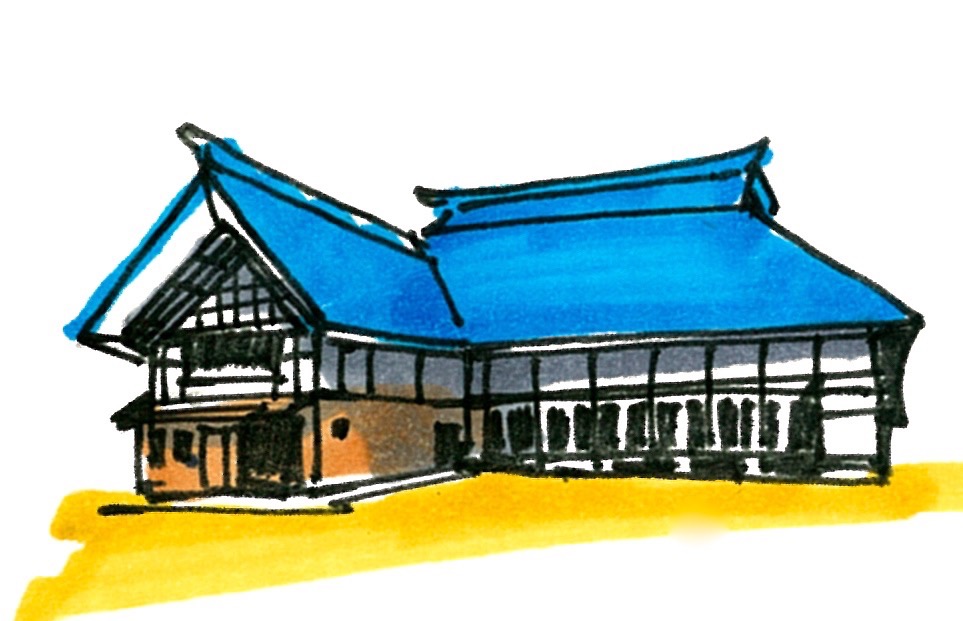
AZA hamlet is home to a colony of 'otome yuri' (maiden lily), the town flower—a native Japanese species that blooms in pink in June. This is a CHUMON-ZUKURI in KAMI-AZA hamlet. Though modified for modern living—corrugated iron roofing, tin-clad protruding walls, aluminum sash windows—it retains its original form well and is a valuable farmhouse. Address Google Map Check with Google Maps Access Parking Business Hours Admission Fee Regular Holiday Phone Number URL SNS
KIRITSUMA-IRI(gabled-entrance) House in KAMINOJIRI
Heritage Architecture
Open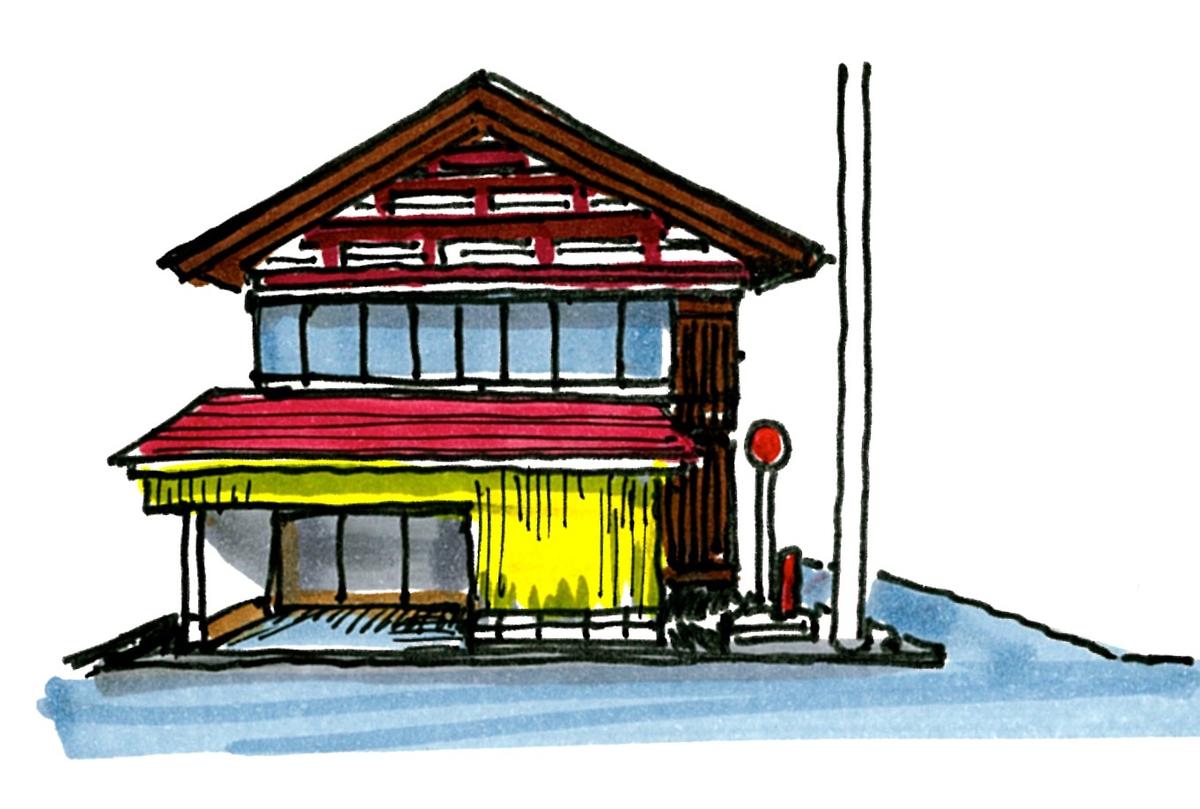
Heading west from KAMINOJIRI Station and meeting the ECHIGO KAIDŌ (historic main road), this house stands at the eyestop. The triangular gable face—with its neatly arranged beams, struts, and tie beams—harbors a beauty like a single painting. The eight original wooden windows filling the second floor remain intact, literally fulfilling the role of 'the face of KAMINOJIRI.' Address Google Map Check with Google Maps Access Parking Business Hours Admission Fee Regular Holiday Phone Number URL SNS
CHUMON-ZUKURI Farmhouse in KAMINOJIRI
Heritage Architecture
Open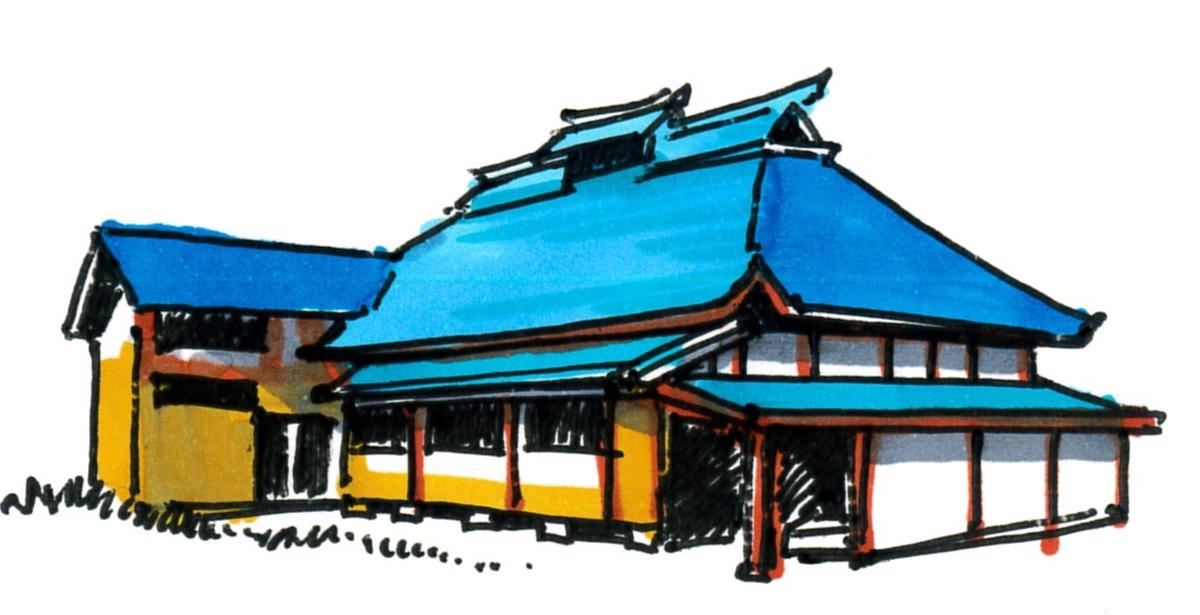
A CHUMON-ZUKURI farmhouse facing the national road, built facing south. Under the eaves, on the surface of the lintel (KETA), numerous amulets and prayer tablets are attached. Since ancient times people have visited shrines at the new year and other occasions to receive new tablets, attaching them here with prayers for peace and prosperity. Address Google Map Check with Google Maps Access Parking Business Hours Admission Fee Regular Holiday Phone Number URL SNS
KIRITSUMA MACHIYA and KURA-Earthen Storehouse in KAMINOJIRI
Heritage Architecture
Open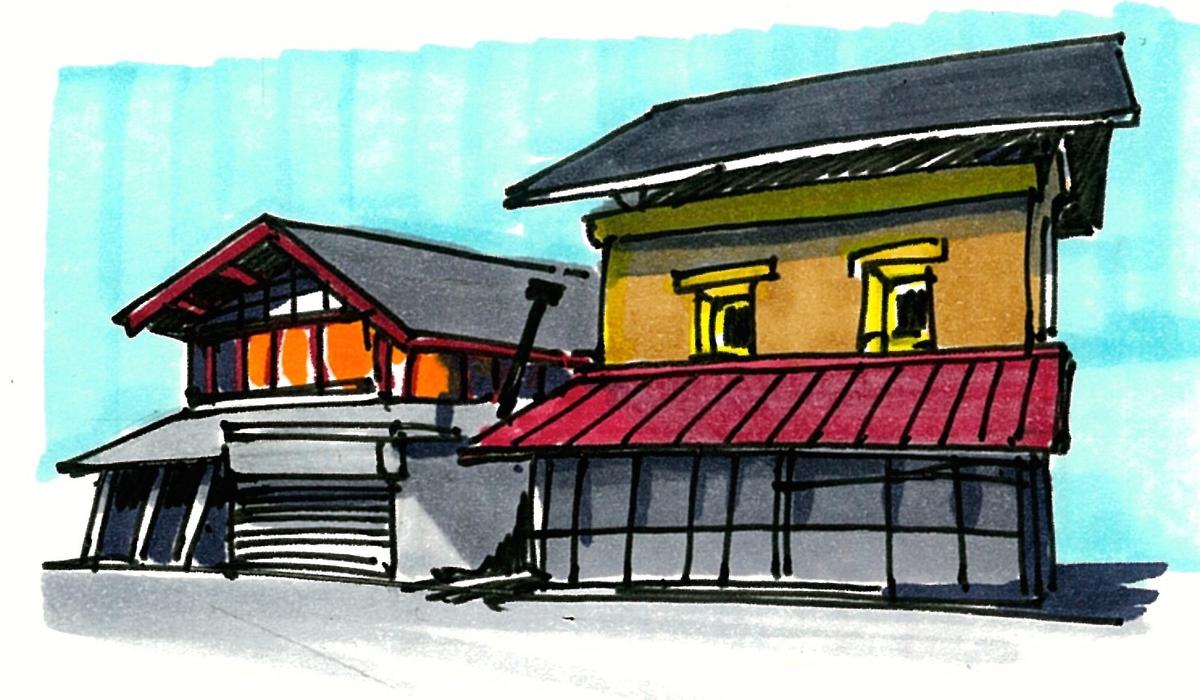
A KIRITSUMA(gabled-roof) MACHIYA (townhouse) restored by a young architect, whose original wooden joinery blends harmoniously into the streetscape. Together with the adjacent nakanuri (bare-clay-finished) earthen storehouse, it forms part of a fine ensemble of vernacular architecture along the old post road. Address Google Map Check with Google Maps Access Parking Business Hours Admission Fee Regular Holiday Phone Number URL SNS
KURA-Earthen Storehouse with Wall in SHIMONOJIRI
Heritage Architecture
Open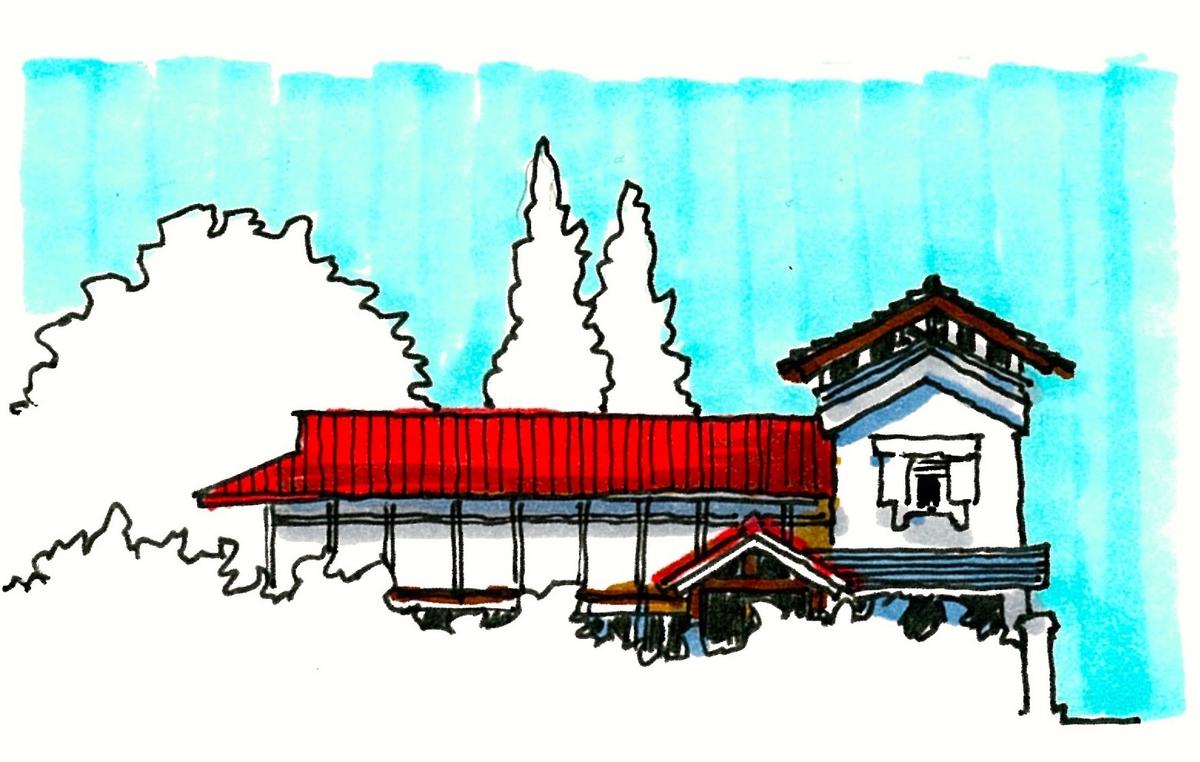
The prestige of a storehouse is expressed by the thickness of the clay-plastered doors on its windows. In this sense, these thick tofu-like KANNON TOBIRA (double-leaf) doors are themselves a highlight. Another point of interest is the board fence facing the path—the white stone 'pillows' lined up on the foundation create a light, rhythmic effect. Address Google Map Check with Google Maps Access Parking Business Hours Admission Fee Regular Holiday Phone Number URL SNS
CHUMON-ZUKURI TOBUKURO in HAMURA
Heritage Architecture
Open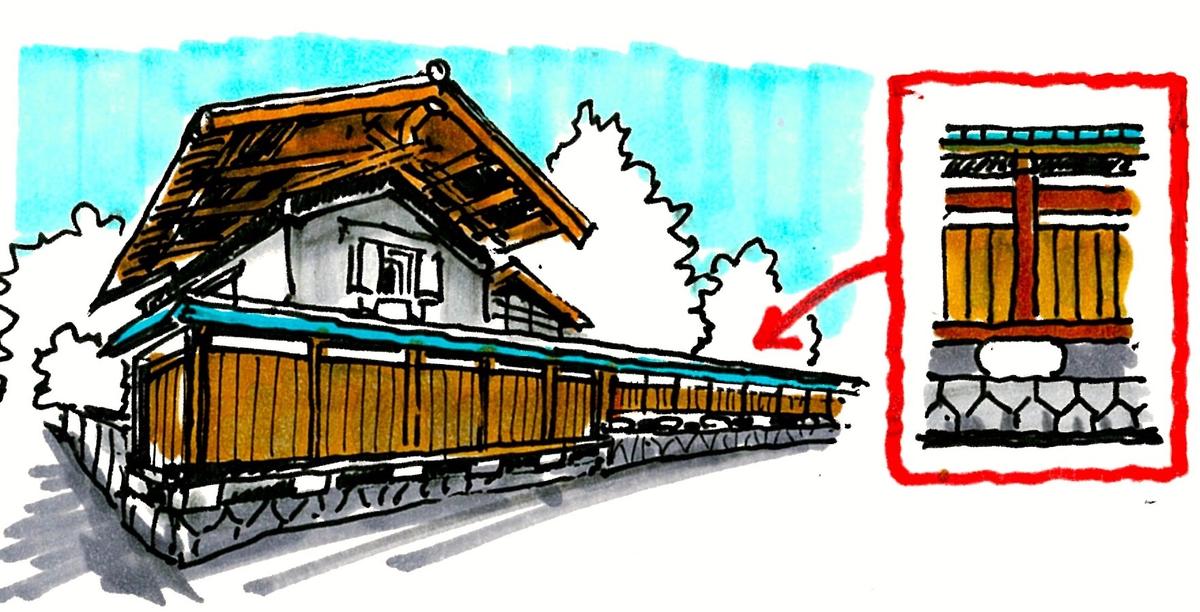
HAMURA hamulet was once a riverside port settlement where rice and other cargo were unloaded overland to bypass the treacherous rapids on the AGAKAWA River. In the late EDO period, that role shifted to KAMINOJIRI and SHIBAZAKI. This large CHUMON-ZUKURI house has columns resting directly on boulders—'ISHIBA-DATE' (stone base) construction. The TOBUKURO (shutter box) design is superb. Address Google Map Check with Google Maps Access Parking Business Hours Admission Fee Regular Holiday Phone Number URL SNS
CHUMON-ZUKURI TOBUKURO in HAMURA
Heritage Architecture
Open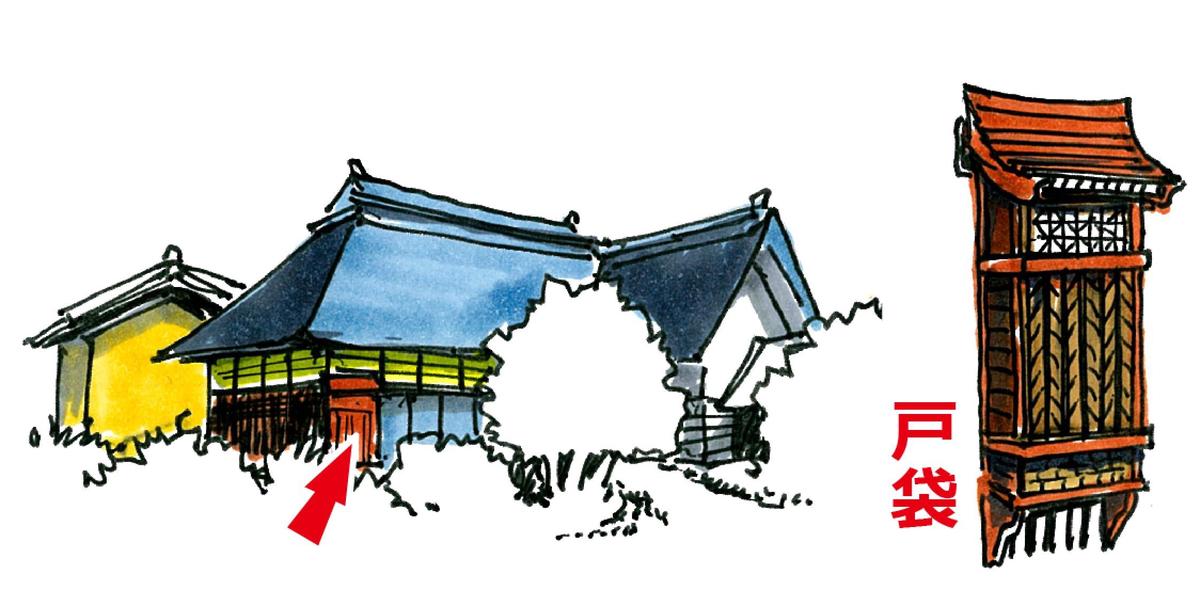
HAMURA hamulet was once a riverside port settlement where rice and other cargo were unloaded overland to bypass the treacherous rapids on the AGAKAWA River. In the late EDO period, that role shifted to KAMINOJIRI and SHIBAZAKI. This large CHUMON-ZUKURI house has columns resting directly on boulders—'ISHIBA-DATE' (stone base) construction. The TOBUKURO (shutter box) design is superb. Address Google Map Check with Google Maps Access Parking Business Hours Admission Fee Regular Holiday Phone Number URL SNS
KURA-Earthen Storehouse in HAMURA
Heritage Architecture
Open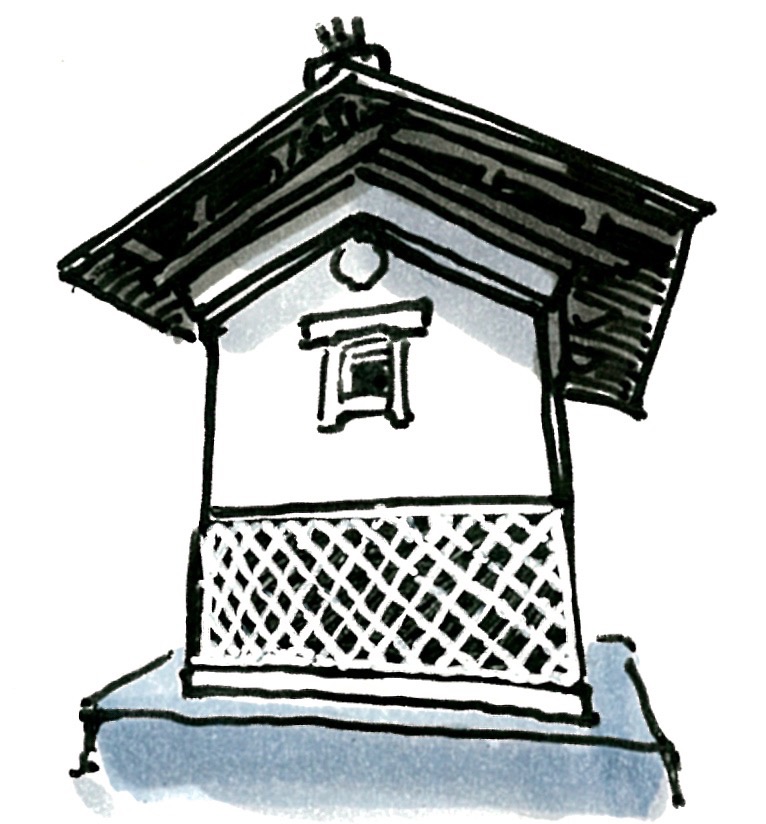
Close to the river's treacherous rapids, this was an intermediate river port where cargo was unloaded from boats before the role was later ceded to KAMINOJIRI and others. A small settlement, but fine and beautiful buildings remain. The NAMAKO-KABE (sea-cucumber plaster) storehouse is rare in NISHIAIZU. Address Google Map Check with Google Maps Access Parking Business Hours Admission Fee Regular Holiday Phone Number URL SNS
YAMAGATAYA Inn
Heritage Architecture
Open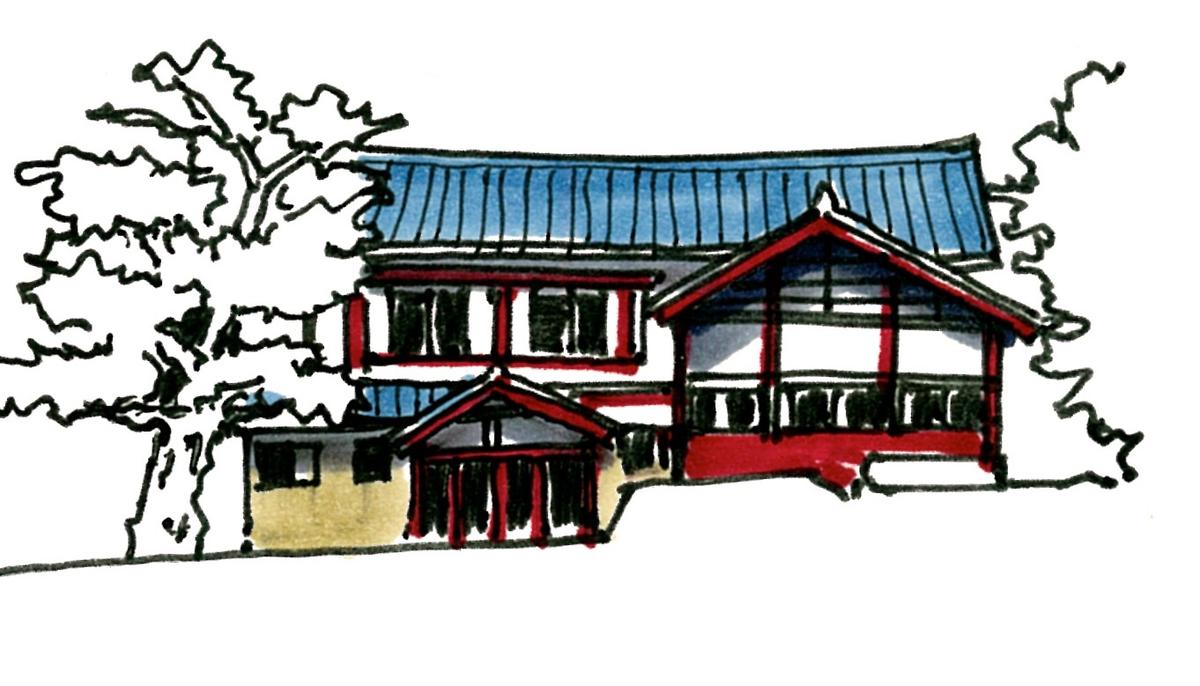
TOKUSAWA hamlet flourished as a post-station even before the railway was built. A precious wooden inn preserving its original appearance to this day. It stands facing south, fronting the ECHIGO KAIDŌ (historic main road) as it gently descends to the west. Address Google Map Check with Google Maps Access Parking Business Hours Admission Fee Regular Holiday Phone Number URL SNS
Small Stone Storehouse in TOKUSAWA
Heritage Architecture
Open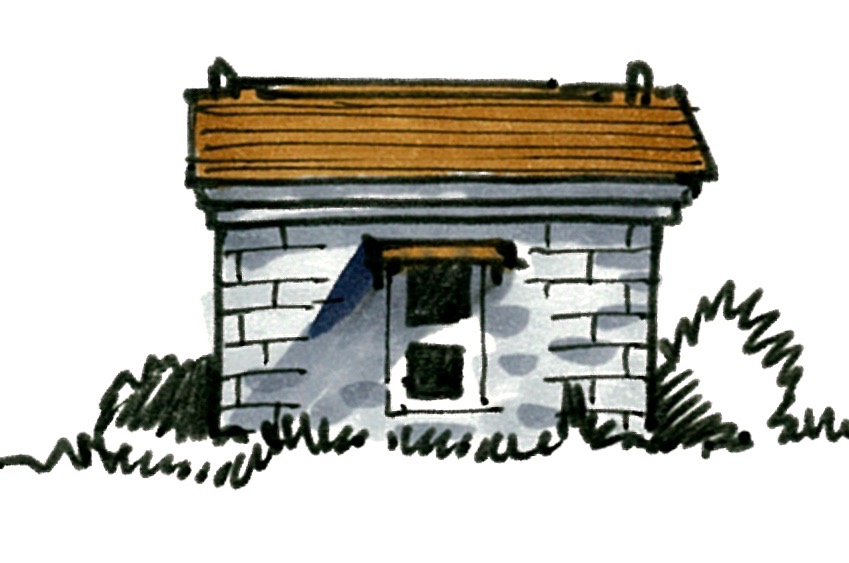
This charming small stone storehouse may be made of WAKAKUSA-ISHI (local green tuff stone), as the stone has a bluish-green hue mixed in. It is fitted with iron doors and sheet metal roofing above the cornice. Address Google Map Check with Google Maps Access Parking Business Hours Admission Fee Regular Holiday Phone Number URL SNS
TAKASAGOYA Inn
Heritage Architecture
Open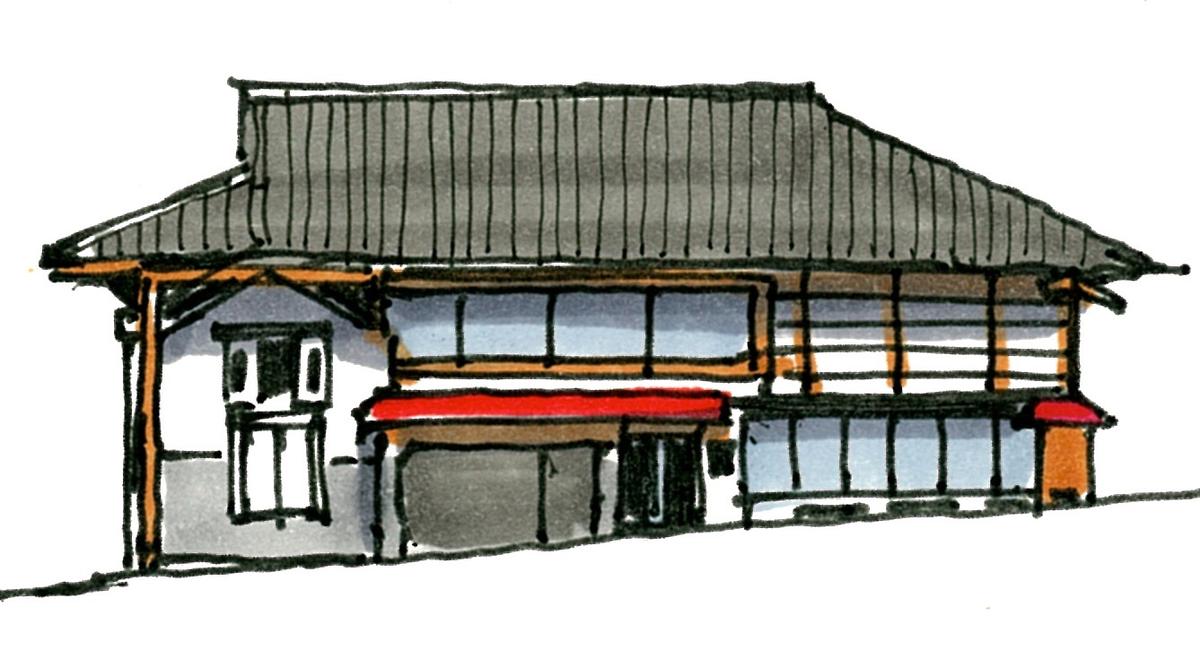
"A relay station on the border with ECHIGO (present Niigata Pref. area), where inns once lined the straight road. Takasagoya is one of them—a unique 'TATEKURUMI' form in which a white plaster earthen storehouse is joined to the main house under a single large roof. *TATEKURUMI A detail in which a structural post is enclosed with vertical cladding to protect it and create a refined exterior finish." Address Google Map Check with Google Maps Access Parking Business Hours Admission Fee Regular Holiday Phone Number URL SNS
House with Railing in SHIRASAKA
Heritage Architecture
Open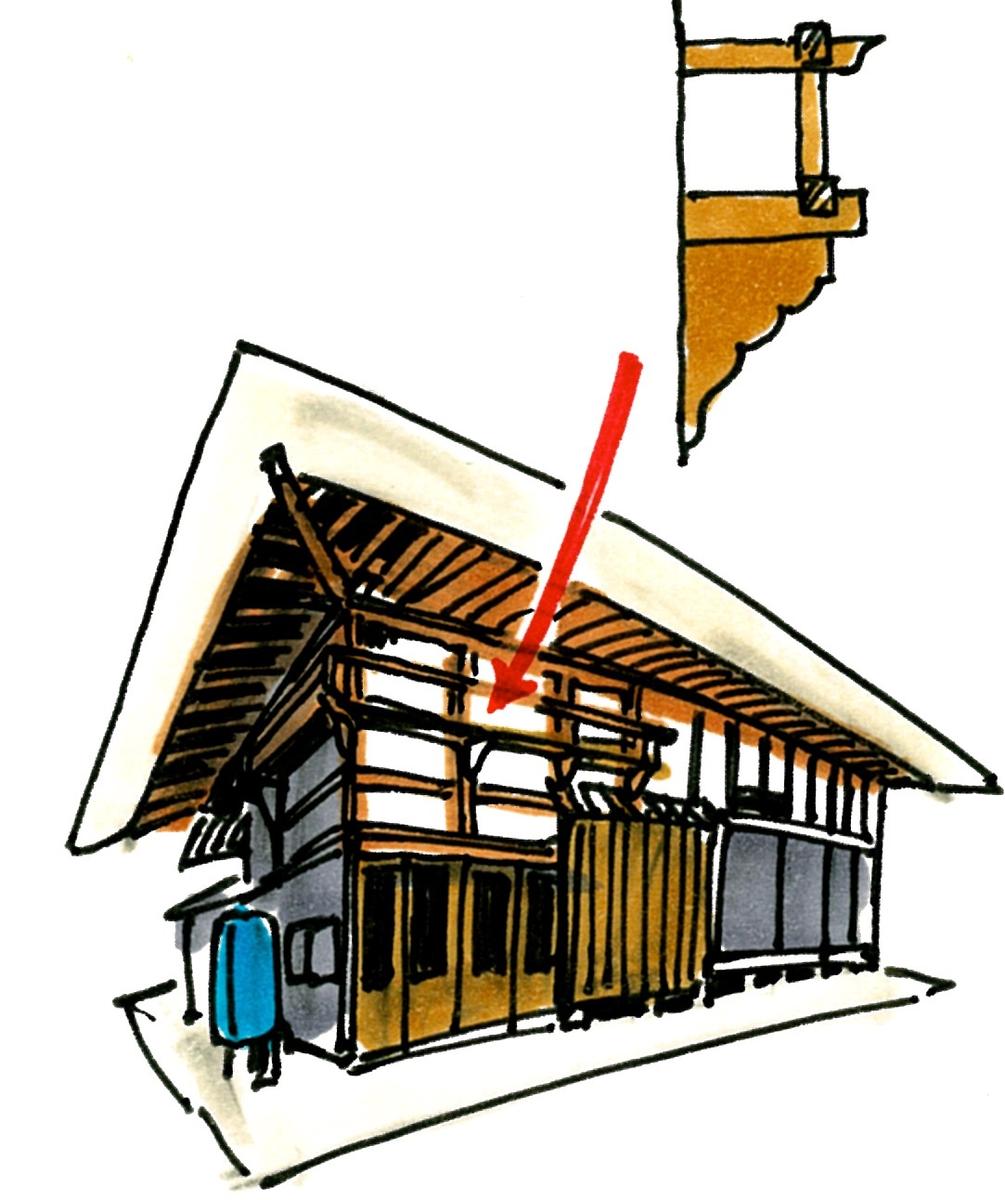
A house with a small window and a charming railing above the entrance, facing west. There may be a TSUSHI-NIKAI (half-story mezzanine) above the earthen-floor entrance. The handrail forms an L-shape and extends around to the north side—this can only be called a charm point. Address Google Map Check with Google Maps Access Parking Business Hours Admission Fee Regular Holiday Phone Number URL SNS
House with Mailbox in YASHIKI
Heritage Architecture
Open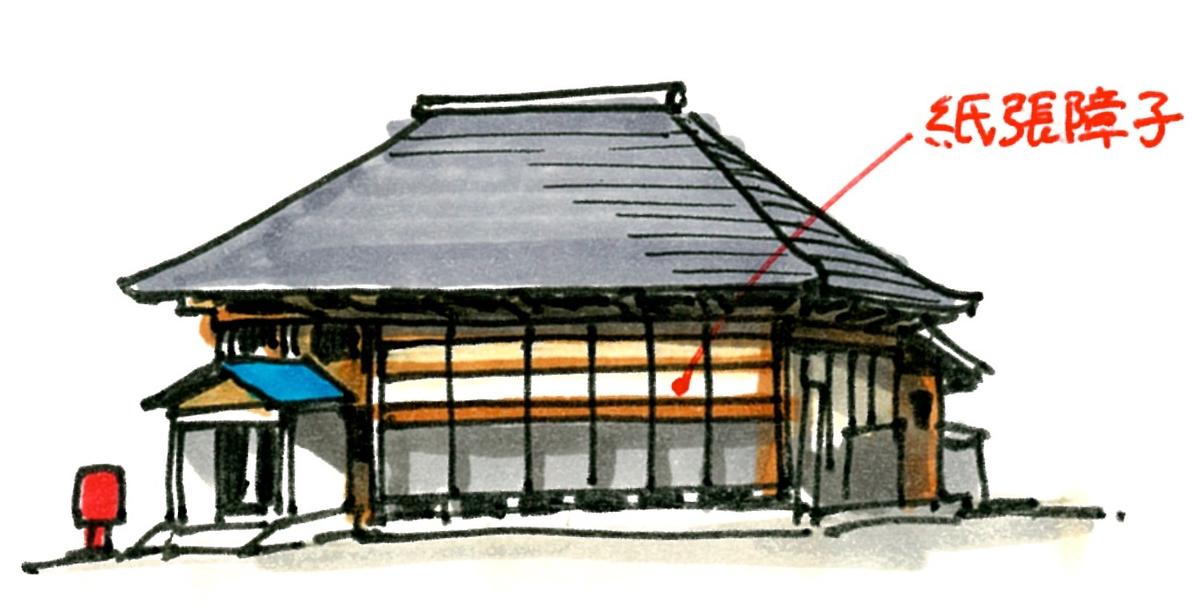
In the deep-snow YASHIKI hamlet, children were said to board at near by MURAOKA elementary and junior-high school to attend school during winter. This house in front of the mailbox is a single-story hip-roofed building but stands tall, and judging by the SHOJI-screened transoms, it appears to be an old farmhouse. Address Google Map Check with Google Maps Access Parking Business Hours Admission Fee Regular Holiday Phone Number URL SNS
YASHIKI NINGYO-Traditional Puppet in YASHIKI
Heritage Architecture
Open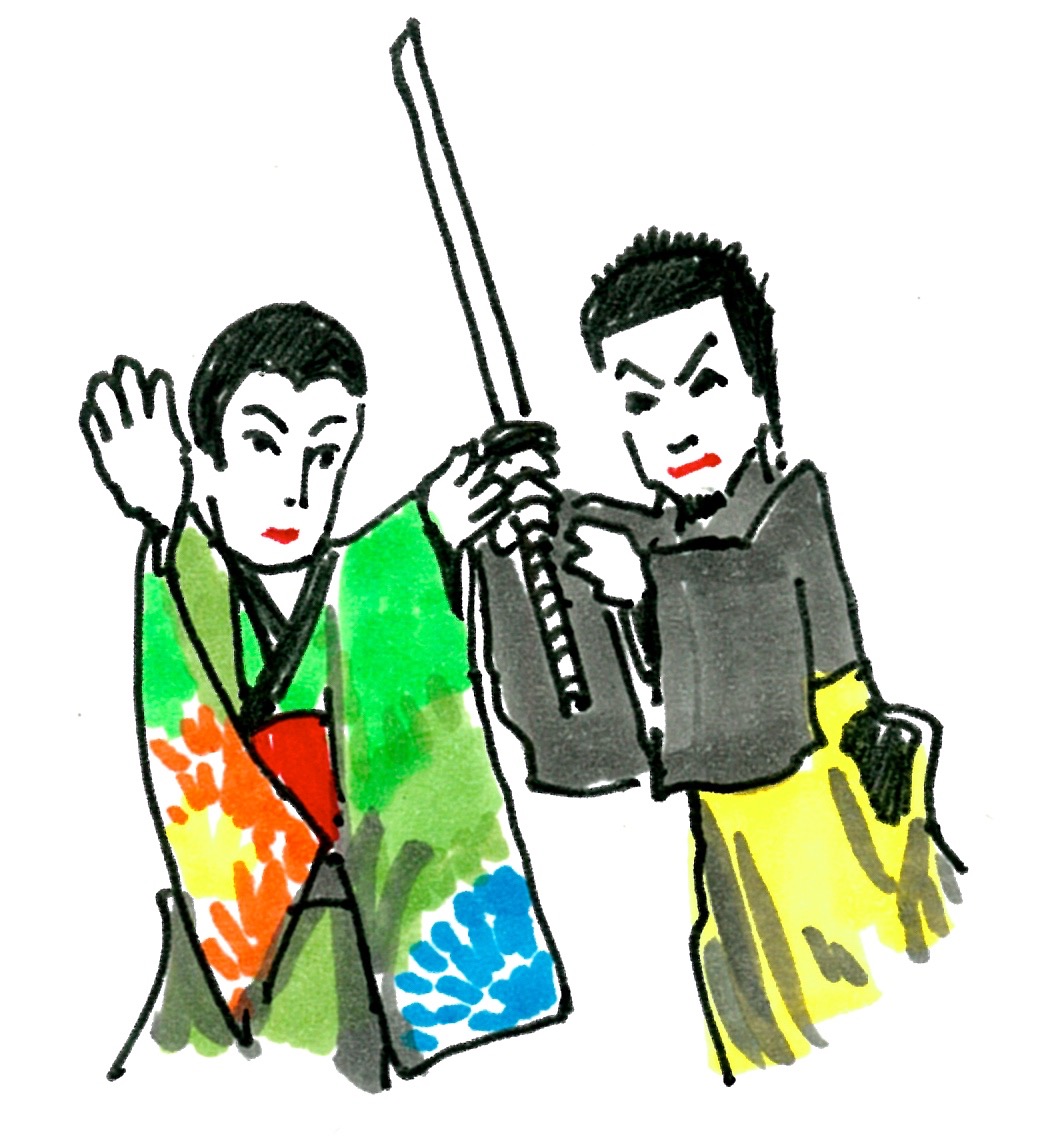
The area headman I met during my fieldwork told me about the traditional performing arts of YASHIKI hamlet. Unique performing arts flourished here: 'YASHIKI MANZAI' (celebratory performance) in which local people also performed, and 'NINGYŌ SHIBAI' (puppet theater), which apparently toured to NIIGATA, TOCHIGI, and CHIBA during the agricultural off-season. Address Google Map Check with Google Maps Access Parking Business Hours Admission Fee Regular Holiday Phone Number URL SNS
House with Aligned Studs in NARANOKIDAIRA
Heritage Architecture
Open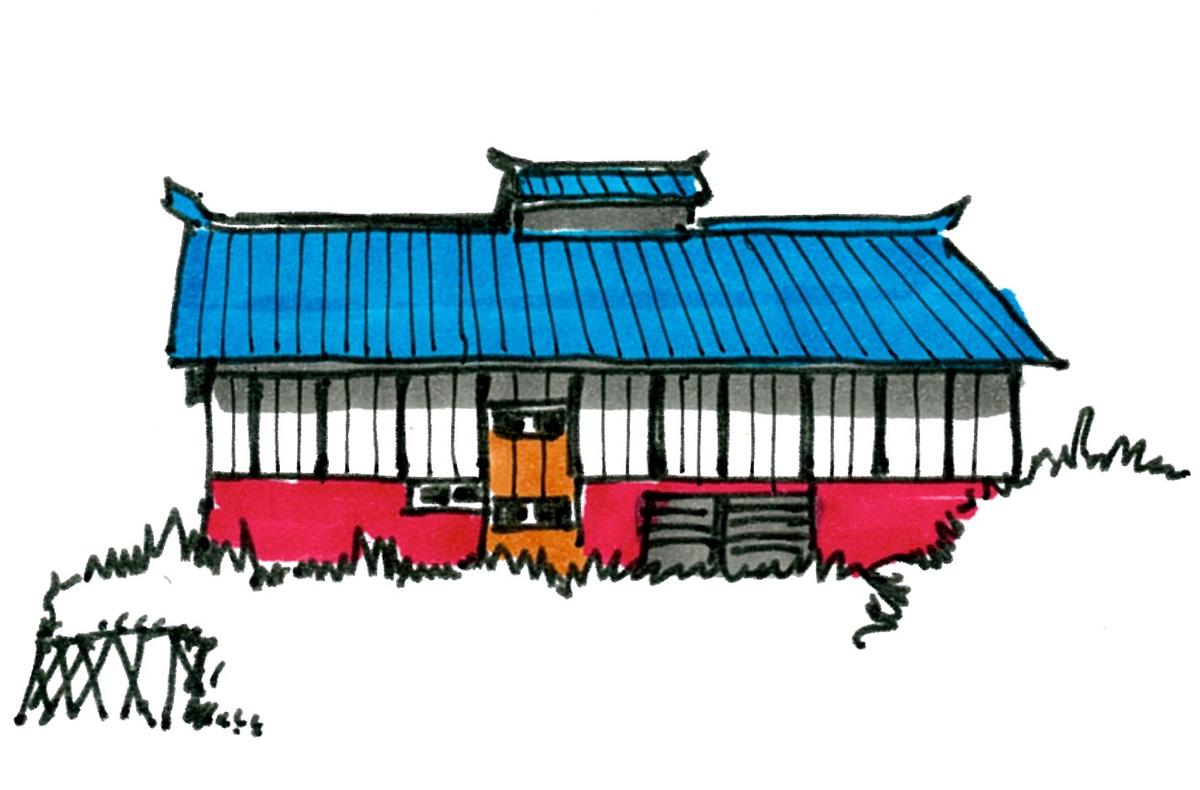
A small settlement spread across a terrace on the left bank of the river, with diverse styles of farmhouses remaining. This house—with columns, studs, and tie beams arranged neatly in a SHINКABE (exposed post construction) exterior wall—is a typical SUGOYA, with a ridged dormer (KOSHI-YA-NE) mounted above a KIRITSUMA-gable roof. Address Google Map Check with Google Maps Access Parking Business Hours Admission Fee Regular Holiday Phone Number URL SNS
View from the Shrine of KUMAZAWA
Heritage Architecture
Open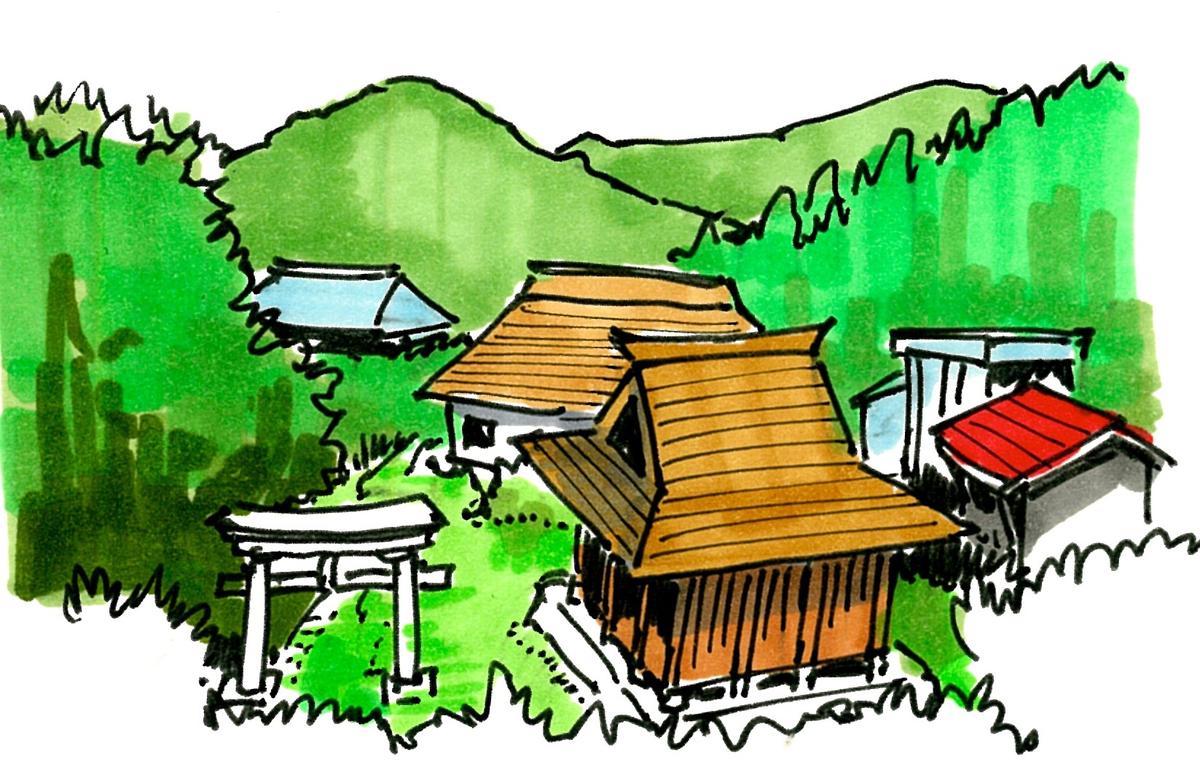
When I came to this settlement, reached by going up the KIKŌZU River, I thought 'this too is a sky village.' On the western mountain is the HAKUSAN Shrine. Looking back from above the TORII gate, several hip roofs stand against the mountain backdrop in a row. Address Google Map Check with Google Maps Access Parking Business Hours Admission Fee Regular Holiday Phone Number URL SNS
SUGOYA in URUSHIKUBO
Heritage Architecture
Open
"URUSHIKUBO, known as a trailhead for the local Mt. Fuji (509m), is a settlement facing the *ECHIGO URA-KAIDŌ (JINGAMINE Road). This house stands in DEIUKE, at the end of a mountain path heading south. When visited at the end of November, the snow screens had already been put up, awaiting the coming of winter. *SUGOYA Sugoya (直屋) is a traditional Japanese house type in which the main living quarters and earthen-floor workspace are integrated into a single, continuous structure without separating ridgelines. It is characterized by the seamless connection of domestic and working spaces, where functions coexist within one linear form. *ECHIGO URA-KAIDŌ The ECHIGO URA-KAIDŌ was an informal mountain route connecting Shinshu and Echigo, used for daily life, trade, and sometimes to bypass official checkpoints. Unlike official highways, it was a flexible, locally developed network shaped by practical needs and regional knowledge." Address Google Map Check with Google Maps Access Parking Business Hours Admission Fee Regular Holiday Phone Number URL SNS
KURA-Earthen Storehouse in MATSUO
Heritage Architecture
Open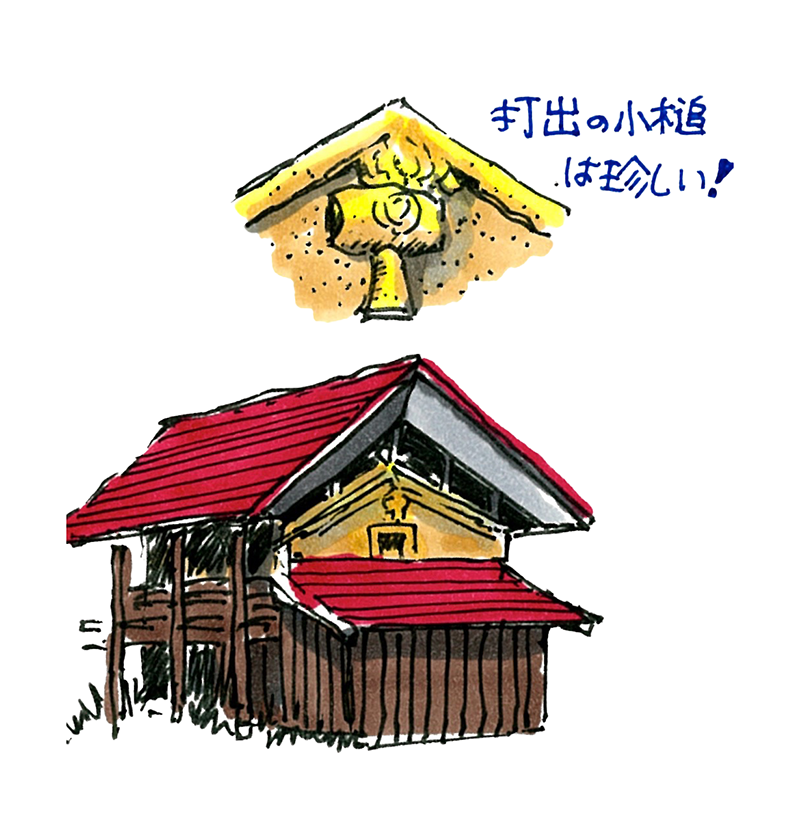
The KURA-JIRUSHI(emblem) motifs on the forehead of KURA-earthen storehouses are typically fire-prevention prayers such as 'water' or 'dragon,' or family crests, 'treasure' characters. This one is unusual: a small mallet of fortune (UCHI-DE-NO-KOZUCHI). The wish for prosperity was entrusted to this charming sculptural form. Address Google Map Check with Google Maps Access Parking Business Hours Admission Fee Regular Holiday Phone Number URL SNS
Row of KIRIZUMA TSUMA-IRI Houses in MOTOMACHI
Heritage Architecture
Open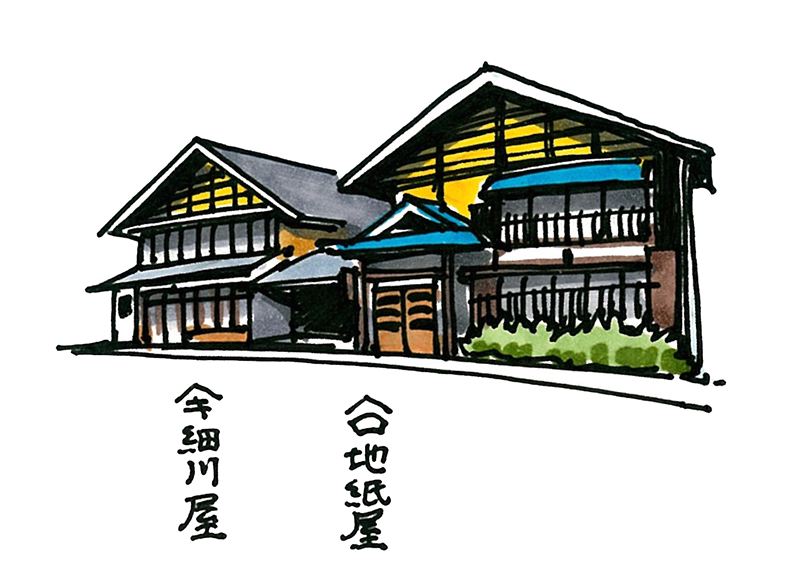
NOZAWA-JUKU, one of the three great post-towns on the ECHIGO KAIDŌ. East of JŌRAKUJI Temple is MOTOMACHI. The road occasionally cranks as it continues. I found farmhouses displaying their house-name (YA-GO) signs. Like brothers, the tie beams and transoms of the gable walls beat a steady rhythm. Address Google Map Check with Google Maps Access Parking Business Hours Admission Fee Regular Holiday Phone Number URL SNS
Board Storehouse in forefront area of KAMINOJIRI
Heritage Architecture
Open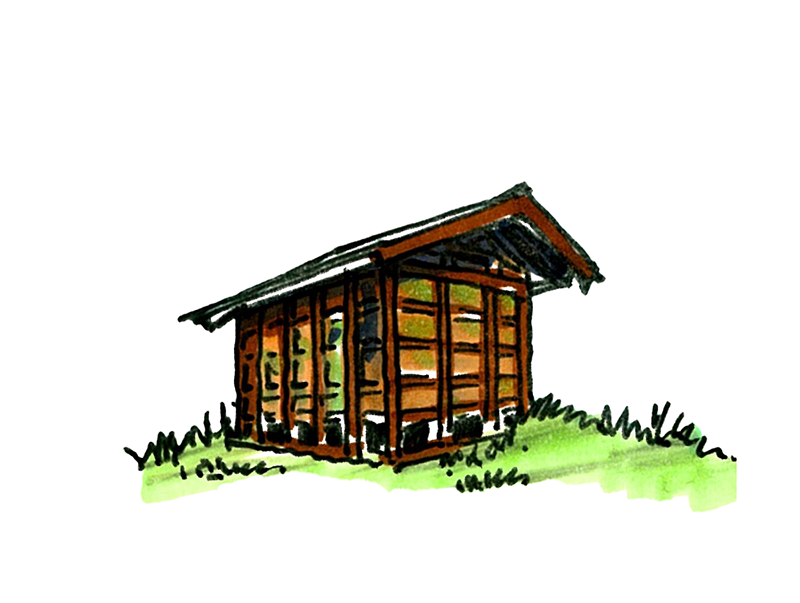
Ancillary buildings of unassuming size can sometimes embody regional character and sculptural beauty. These board storehouses (ITA-GURA), found throughout NISHIAIZU, are one such example. The structure consists simply of a frame of columns and NUKI (tie beams) with drop-in boards, yet the wind-weathered color of the wood also becomes part of the landscape. Address Google Map Check with Google Maps Access Parking Business Hours Admission Fee Regular Holiday Phone Number URL SNS
Large Stone Storehouse in TOKUSAWA
Heritage Architecture
Open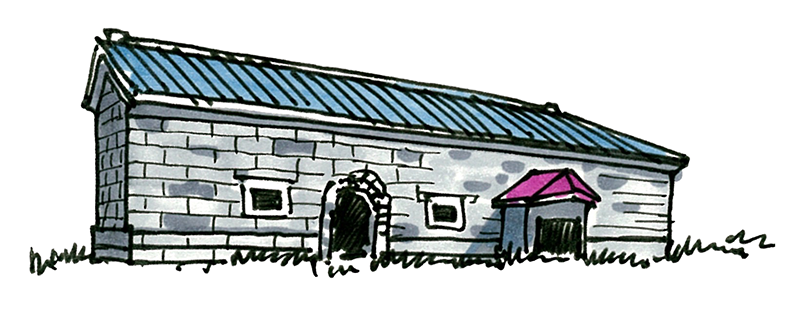
Turning onto the lane on the north side of the road, several old buildings await. This stone storehouse is characterized by its long frontage and a flat-entry arch opening. On the east wall, stone buttresses (HIKAEKABE) stand in a row—also unusual. It is genuine masonry construction. Address Google Map Check with Google Maps Access Parking Business Hours Admission Fee Regular Holiday Phone Number URL SNS
Greek-Style Columns in HOGAWA
Heritage Architecture
Open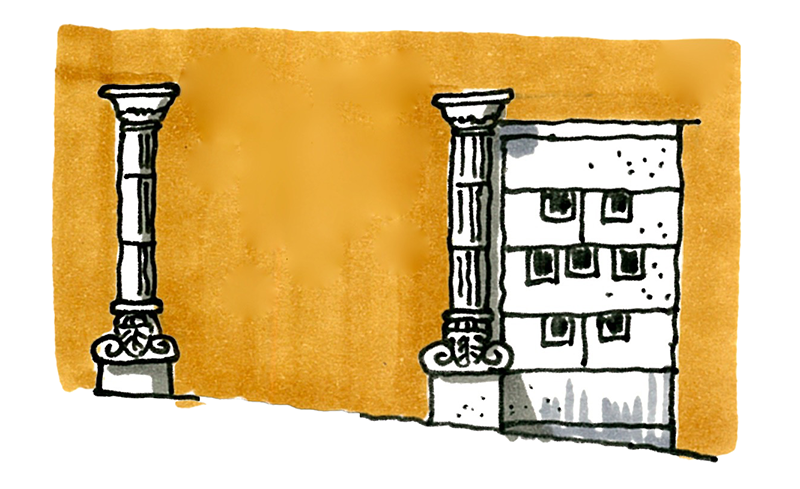
Along the road through HOGAWA hamlet stands a house with a mysterious gate. A colonnade in what is called the Ionic order from ancient Greece is placed upside down. Address Google Map Check with Google Maps Access Parking Business Hours Admission Fee Regular Holiday Phone Number URL SNS
KAMIGOSHOKUSHIN Stone Storehouse in KAMINOJIRI
Heritage Architecture
Open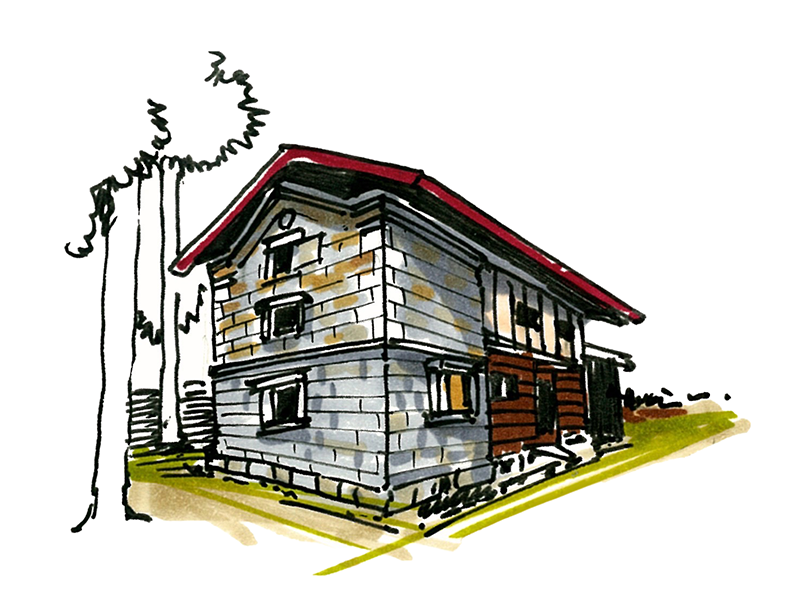
A combined stone storehouse and wooden KOYA-storehouse structure facing a small lane on the west side of the road. TATEKURUMI of a stone storehouse is unusual. What draws the eye is its design: the first floor uses finely worked tuff in contrast with the second floor, and the projecting window frames are flanked by Greek-style columns—also carved from stone. In a cedar grove, an unexpectedly dignified presence. Address Google Map Check with Google Maps Access Parking Business Hours Admission Fee Regular Holiday Phone Number URL SNS
KABUTO-Roofed House in TAKAME
Heritage Architecture
Open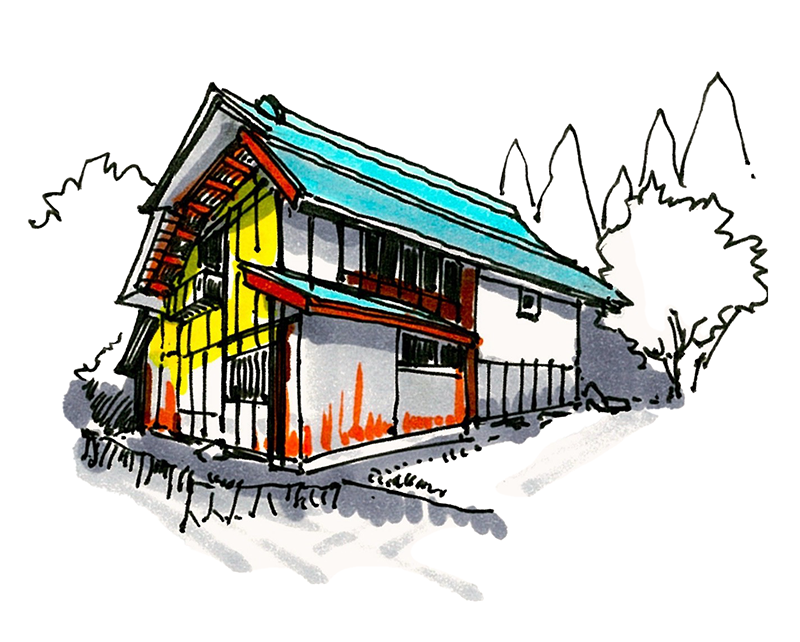
"TAKAME is located at the northernmost tip of the SHINGŌ district, where a rare farmhouse awaits. A full two-story KABUTO-ZUKURI outbuilding (KOYA), its rear is entirely a plastered earthen storehouse, with a large thatched roof sheltering both as if to protect them. *KABUTO-ZUKURI A roof form in which the upper portion of a gable end is steeply pitched and then curves outward at the eaves — resembling the silhouette of a samurai helmet (kabuto). Common in the Aizu and Nishiaizu region, it is often used for the protruding nakamon section or outbuildings, and was originally designed to shed heavy snow loads efficiently while giving the building a distinctive, imposing presence." Address Google Map Check with Google Maps Access Parking Business Hours Admission Fee Regular Holiday Phone Number URL SNS
KURA-Earthen Storehouse in YAEKUBO
Heritage Architecture
Open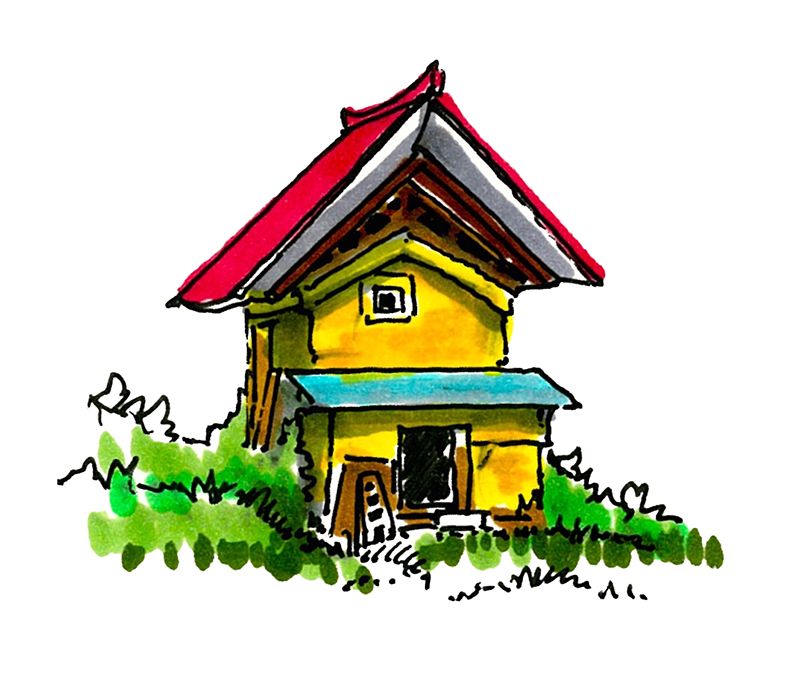
"A figure blending into the landscape, standing in natural repose. The corrugated iron-covered thatched OKIYANE roof is amply large, the small window shifted from center has no door, and the lower eave of the TOMAE(front structure) protrudes without ornamentation. And yet it is filled with grace. The old agricultural villages of Japan must have been full of just such simple beauty. *OKIYANE An earthen storehouse roof type in which a separate wooden roof structure is set on top of the clay body, rather than being integrated with it — protecting the walls from rain while allowing early detection of leaks, and often surviving fires intact even when the outer roof burns away." Address Google Map Check with Google Maps Access Parking Business Hours Admission Fee Regular Holiday Phone Number URL SNS
 Shrine
OYAMAZUMI Shrine
Shrine
Open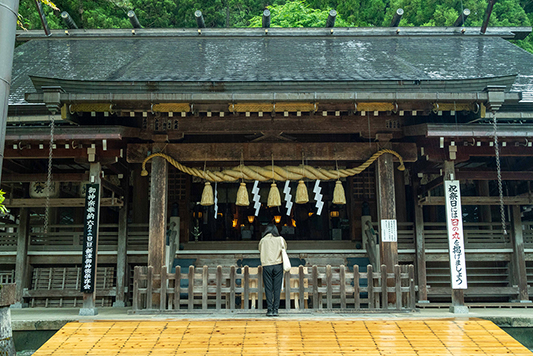
Worship here for three consecutive years, and the mountain deity will grant any wish — however great — just once in your lifetime. (Najo is an Aizu dialect word meaning "whatever kind of" or "however great.") The shrine enshrines three deities: Ōyamazumi-no-Mikoto, guardian of mountains and hills; Iwanagahime-no-Mikoto, guardian of longevity; and Konohanasakuya-hime-no-Mikoto, guardian of good marriage and safe childbirth. The shrine draws many visitors connected with farming and fishing. Address 1445-2 Ōkubo-kō, Nozawa, Nishiaizu-machi, Fukushima 969-4406, Japan Google Map Check with Google Maps Access Parking Available Business Hours 8:00-16:00 Admission Fee Regular Holiday Phone Number 0241-45-2323 URL http://www.ooyamazumi.net/ SNS
MATSUO Shrine
Shrine
Open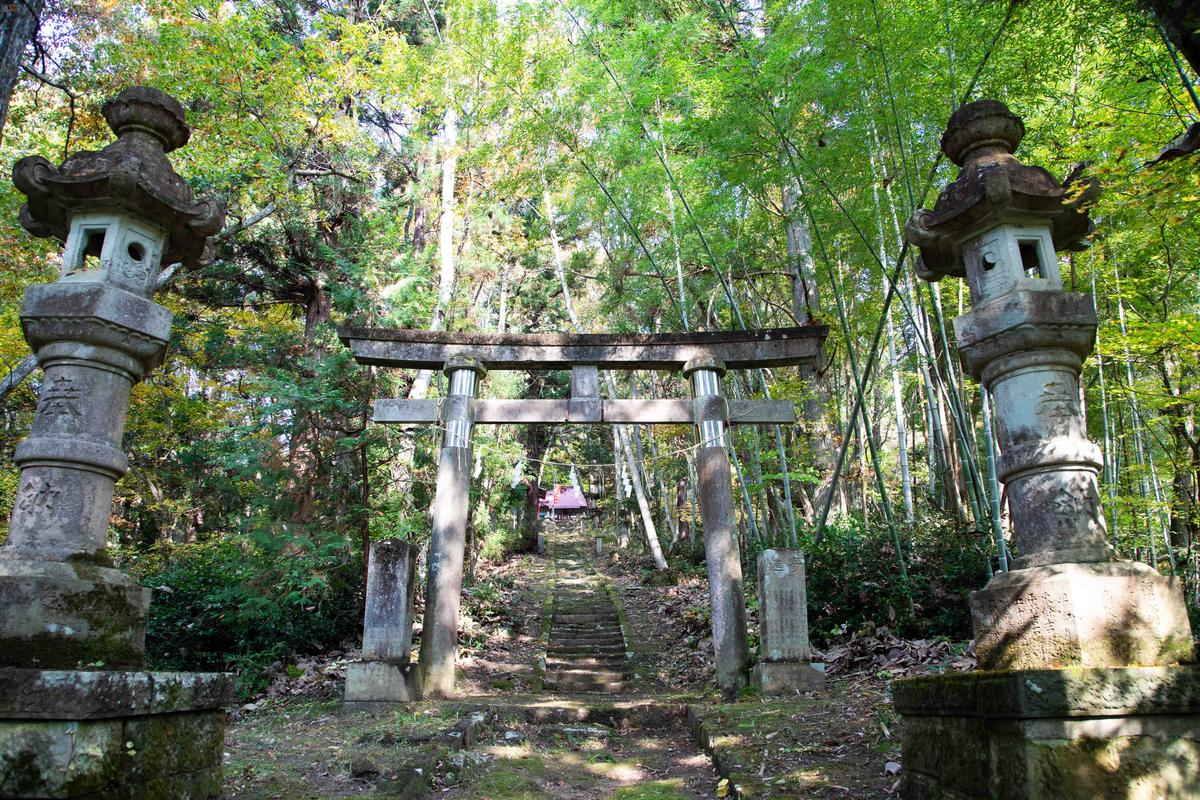
The Only Deity of Sake Brewing in Fukushima Prefecture Established in the early Heian period (811 CE) within the Matsuo settlement of Nishiaizu — a village still surrounded by pastoral rice fields — Matsuo Shrine is the only shrine in Fukushima Prefecture to bear the name Matsuo. It is believed to enshrine a divided spirit (bunrei) of Matsuo Taisha, the great shrine in Kyoto. Since the Kyōhō era (around 1716), it has been deeply venerated as the deity of brewing (jōzō-shin) by sake and fermented-food producers throughout present-day Fukushima and Niigata prefectures. By long-standing tradition, sake brewing begins on the first u (rabbit) day of November — when the new rice harvest is in — and is completed on the middle tori (rooster) day of April, with festivals held to mark each occasion. At the Jōusai festival, held on the u day of November, brewers from across Fukushima Prefecture — centered on the Aizu region — gather to perform the sacred water-drawing ritual (omizutori shinto). The head priest draws water from the sacred well (go-shin-i) within the shrine precincts; the participants receive this holy water to take home as tane-mizu (seed water for brewing) and enshrine it on their household altars. This history and tradition speaks to the deep and enduring bond between Nishiaizu and the art of sake brewing. Address Google Map Check with Google Maps Access Parking Business Hours Admission Fee Regular Holiday Phone Number URL SNS
 Temple
TORIOI KANNON Temple
Temple
Open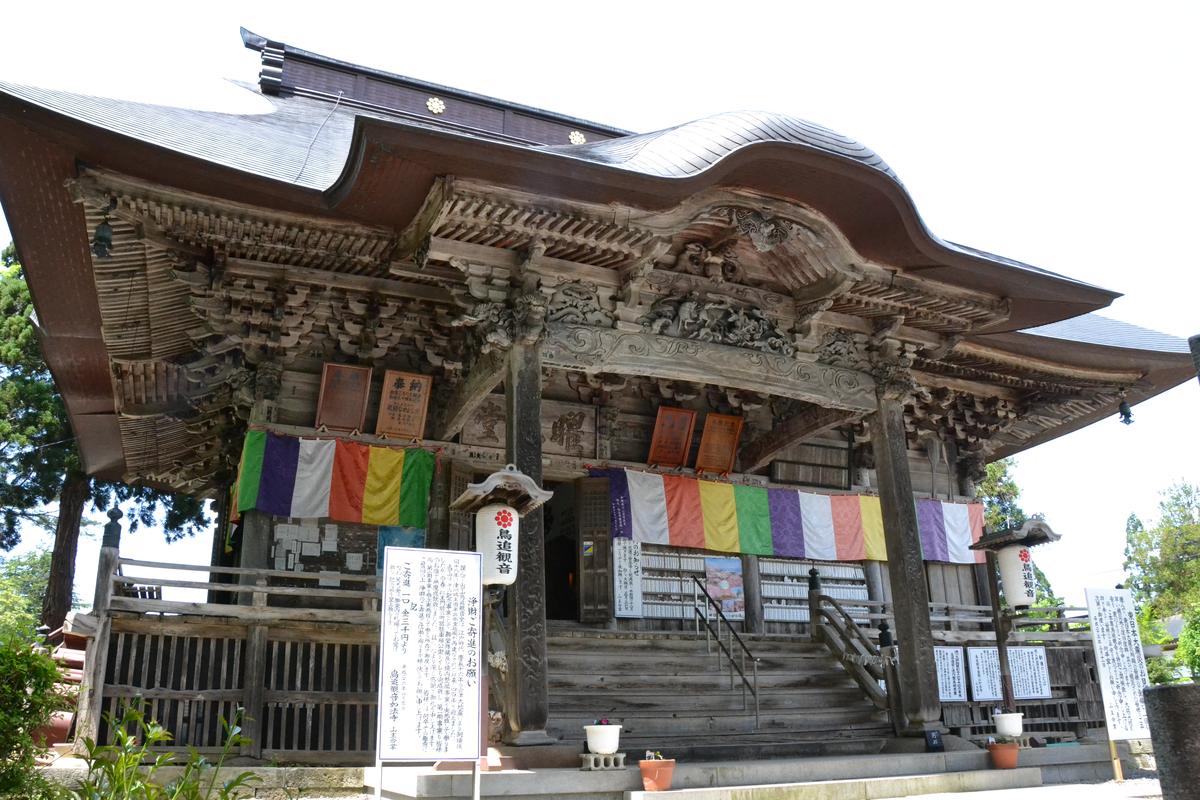
Founded by the Venerable Tokuitsu, Patriarch of Buddhist Aizu. This sacred site was established in 807 CE by the monk Tokuitsu — revered as the founding patriarch of Buddhism in Aizu — as a Pure Land of the West for the Aizu region. The temple draws worshippers of all ages, offering blessings for love and marriage, conception, safe childbirth, child-rearing, protection from misfortune, and longevity. Four wooden Buddhist statues — including a standing figure of Shō-Kannon (Avalokiteśvara) — along with the Kannondō (Kannon Hall) and the Niōmon (temple gate housing the guardian Niō kings) are designated as Important Cultural Properties of Fukushima Prefecture. Address 3533 Nyohōji-otsu, Nozawa, Nishiaizu-machi, Fukushima 969-4406, Japan Google Map Check with Google Maps Access Parking Available Business Hours 8:30-16:00 Admission Fee Regular Holiday Phone Number URL http://www.torioi.com/ SNS
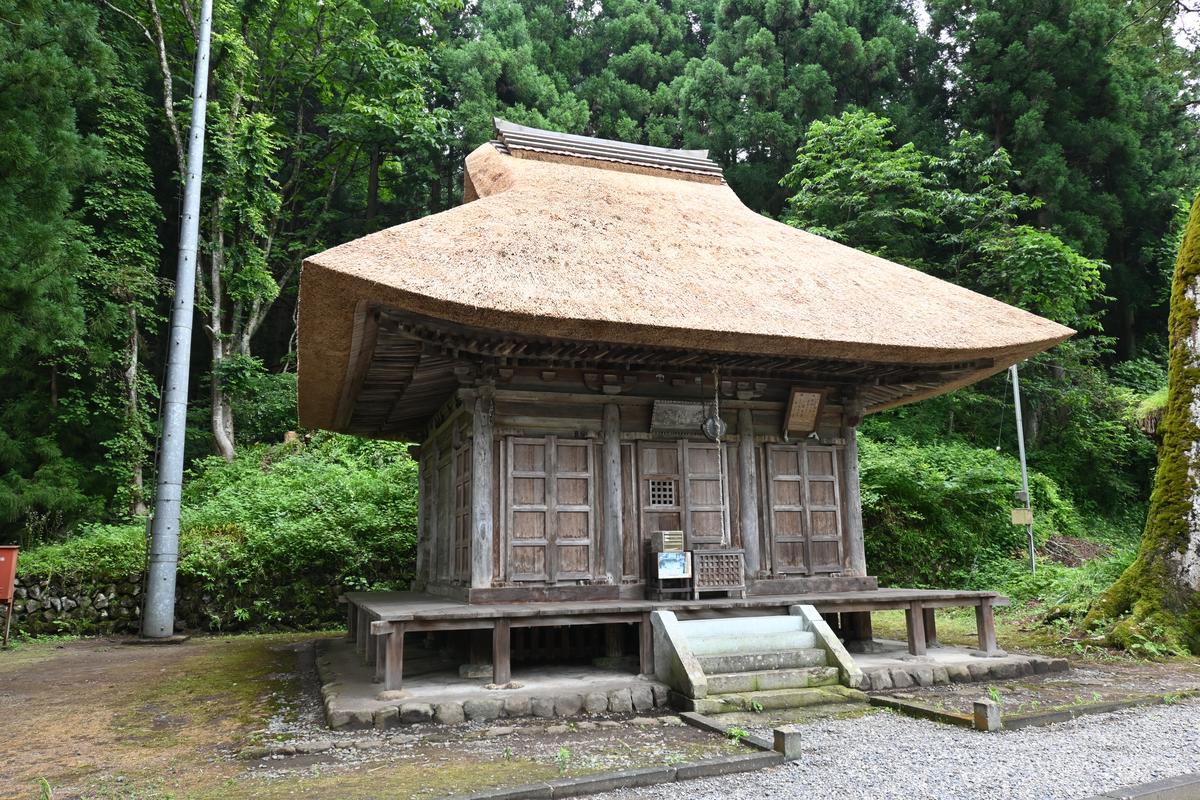
Designated as a National Important Cultural Property, this hall is believed to date from the Muromachi period. Its thatched irimoya (hip-and-gable) roof and full three-bay, four-sided Zen-style (karayo) architecture represent a masterwork of medieval sacred construction. Long cherished by local people as the Komori Kannon — the Kannon who watches over and protects children. Address Google Map Check with Google Maps Access Parking Available Business Hours Admission Fee Regular Holiday Phone Number URL SNS
Taishōkankiten
Temple
Open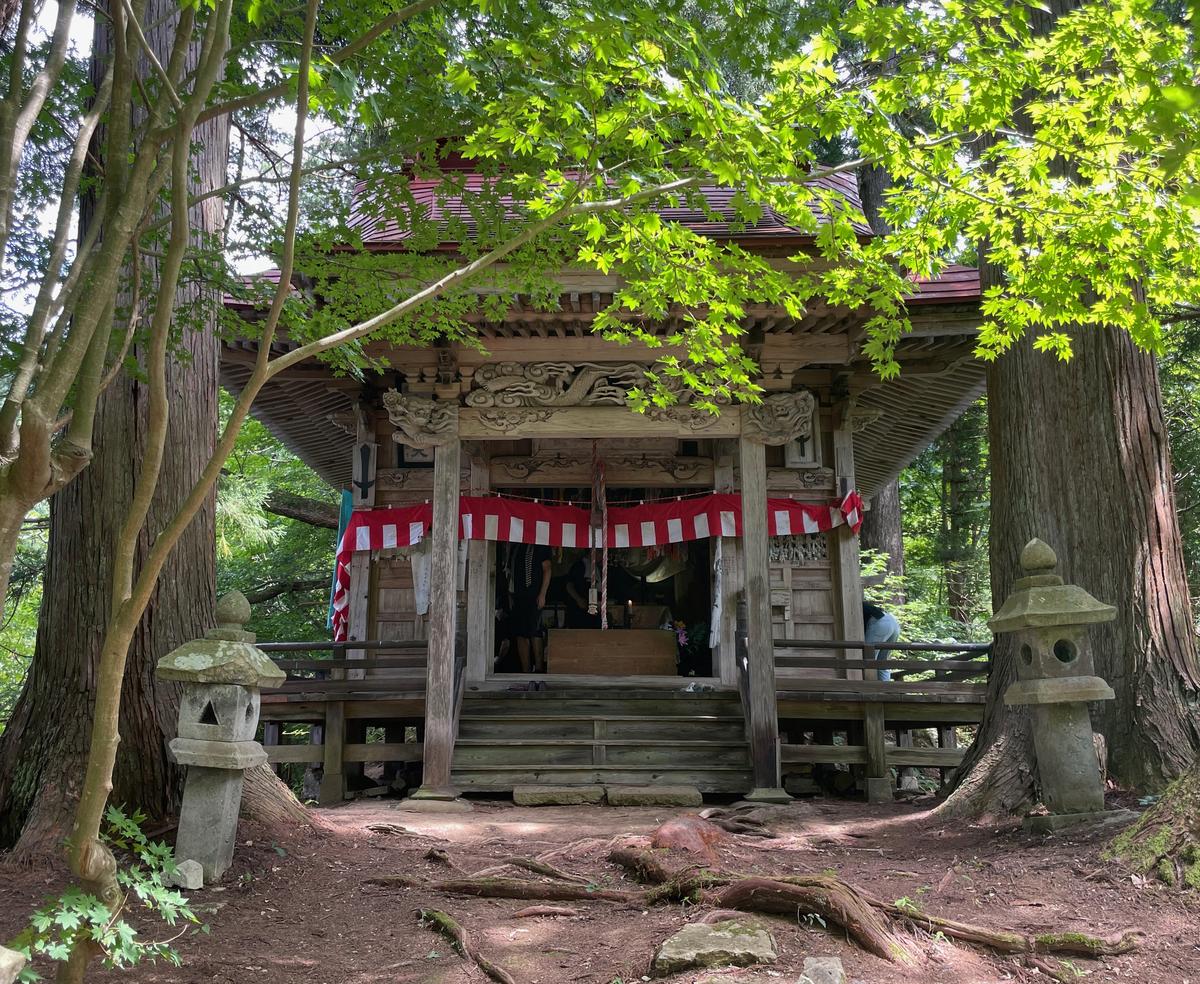
Address 1673 Nakamura, Iine, Okugawa, Nishiaizu-machi, Yama-gun, Fukushima 969-4731, Japan Google Map Check with Google Maps Access Parking Business Hours Admission Fee Regular Holiday Phone Number URL SNS
Iwaya Kokūzō-son
Temple
Open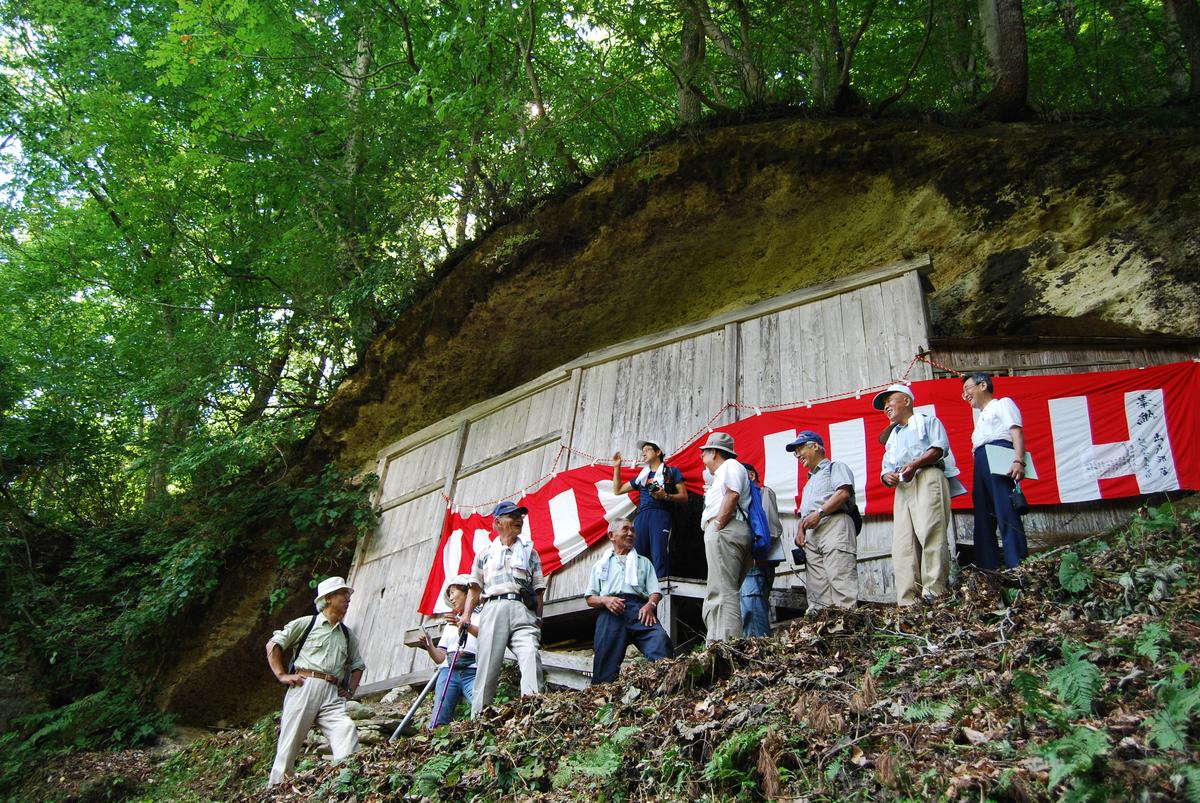
Established in 1511, this shrine stands in the remote settlement of Deto (出戸) in the heart of Nishiaizu. A festival is held here every September, and the traditions surrounding it have been carefully preserved and passed down by the people of the settlement for over 500 years. Address Kayane, Okugawa, Nishiaizu-machi, Yama-gun, Fukushima 969-4737, Japan Google Map Check with Google Maps Access Parking Business Hours Admission Fee Regular Holiday Phone Number URL SNS
Kōbō Iwaya
Temple
Open
A sacred rock cave (iwaya) associated with Kōbō Daishi (Kūkai, 774–835), the founder of Shingon Buddhism in Japan. Such grottos are found across the country along pilgrimage routes where Kōbō Daishi is believed to have practiced austerities or left his spiritual imprint. The site is venerated as a place of prayer and ascetic tradition. Address Kusaizaka-hei, Nozawa, Nishiaizu-machi, Yama-gun, Fukushima 969-4406, Japan Google Map Check with Google Maps Access Parking Business Hours Admission Fee Regular Holiday Phone Number URL SNS
 Mountain
Mt. Dainichidake
Mountain
Open
Address Google Map Check with Google Maps Access Parking Business Hours Admission Fee Regular Holiday Phone Number URL SNS
Mt. Iidesan
Mountain
Open
Address Google Map Check with Google Maps Access Parking Business Hours Admission Fee Regular Holiday Phone Number URL SNS
Mt. Iboiwayama
Mountain
Open
Address Google Map Check with Google Maps Access Parking Business Hours Admission Fee Regular Holiday Phone Number URL SNS
Mt. Daizukayama
Mountain
OpenAddress Google Map Check with Google Maps Access Parking Business Hours Admission Fee Regular Holiday Phone Number URL SNS
Mt. KAGAMIYAMA
Mountain
Open
At the summit, a sweeping panorama of the Iide Mountain Range unfolds before you. Elevation: 1,339 m. Address Google Map Check with Google Maps Access Parking Business Hours Admission Fee Regular Holiday Phone Number URL nishiaizu-yamanetwork.com SNS
From the summit in the late-snow season, the full expanse of the southern face of the Iide Mountain Range comes into view. Elevation: 1,126 m. Address Google Map Check with Google Maps Access Parking Business Hours Admission Fee Regular Holiday Phone Number URL nishiaizu-yamanetwork.com SNS
Mt. Fujisan
Mountain
Open
A mountain of faith enshrining the deity of harvests and agriculture (Saku-no-kami). From the summit, the Kaminojiri settlement spreads out in full view below. Elevation: 438 m. Address Google Map Check with Google Maps Access Parking Business Hours Admission Fee Regular Holiday Phone Number URL SNS
Mt. Toyasan
Mountain
OpenAddress Google Map Check with Google Maps Access Parking Business Hours Admission Fee Regular Holiday Phone Number URL SNS
Mt. Sugaridake
Mountain
Open
A mountain of faith enshrining the deity of harvests and agriculture (Saku-no-kami). From the summit, the Kaminojiri settlement spreads out in full view below. Elevation: 438 m. Address Google Map Check with Google Maps Access Parking Business Hours Admission Fee Regular Holiday Phone Number URL nishiaizu-yamanetwork.com SNS
Mt. Daikurayama
Mountain
OpenAddress Google Map Check with Google Maps Access Parking Business Hours Admission Fee Regular Holiday Phone Number URL SNS
Mt. Mezashidake
Mountain
OpenAddress Google Map Check with Google Maps Access Parking Business Hours Admission Fee Regular Holiday Phone Number URL SNS
Mt. Kijiyotakayama
Mountain
OpenAddress Google Map Check with Google Maps Access Parking Business Hours Admission Fee Regular Holiday Phone Number URL SNS
Mt. Kurootokoyama
Mountain
OpenAddress Google Map Check with Google Maps Access Parking Business Hours Admission Fee Regular Holiday Phone Number URL SNS
Mt. Iitanisan
Mountain
OpenAddress Google Map Check with Google Maps Access Parking Business Hours Admission Fee Regular Holiday Phone Number URL SNS
 Park
Park
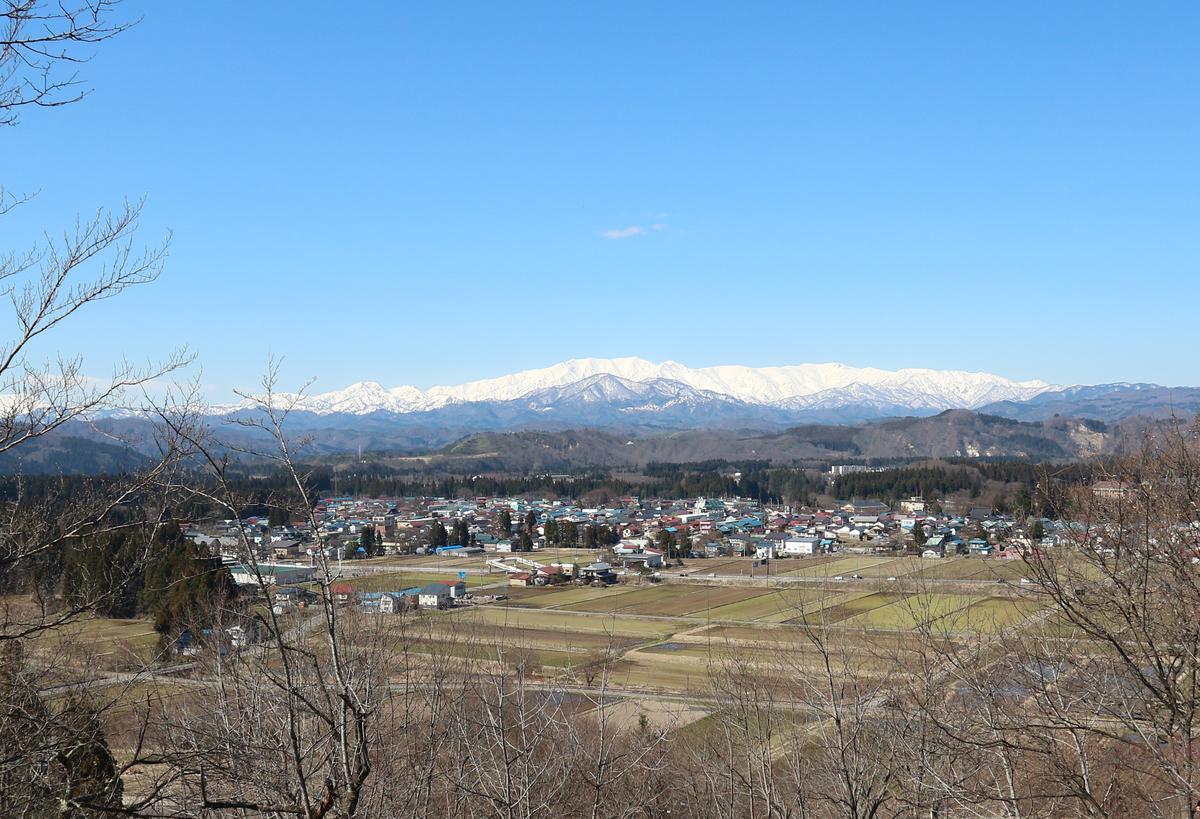
An observation deck offering a sweeping view over the townscape of Nishiaizu. On a clear day, the peaks of the Iide Mountain Range come into sight, and the open vista is sure to refresh the spirit. Pack a lunch and a good book — a leisurely picnic in the rest shelter (azumaya) while taking in the autumn foliage is highly recommended. Address Google Map Check with Google Maps Access Parking Business Hours Admission Fee Regular Holiday Phone Number URL SNS
SAYURI Park
Park
Open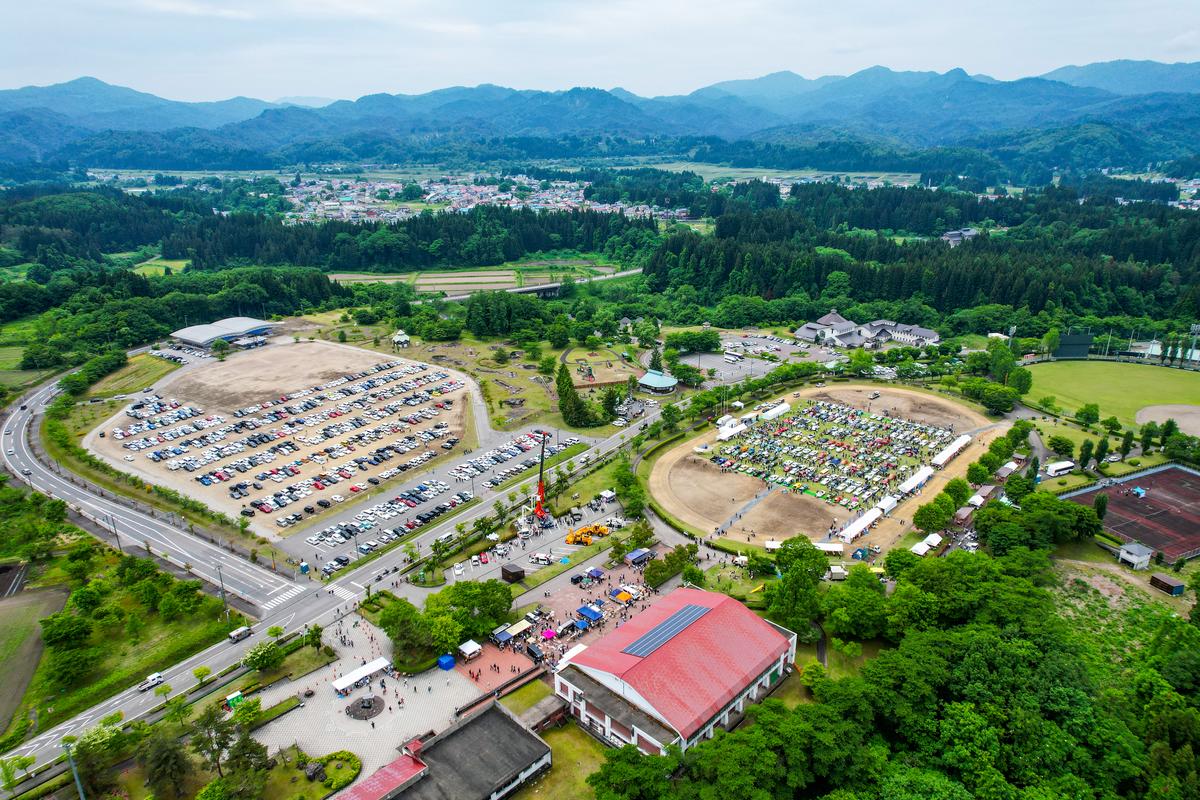
A comprehensive sports complex blessed with a magnificent natural setting, surrounded on all sides by mountains. The spacious grounds make full use of the generous site, bringing together a wide range of indoor and outdoor facilities — including a baseball field and gymnasium — available for sport and recreation throughout all four seasons. Address Google Map Check with Google Maps Access Parking Business Hours Admission Fee Regular Holiday Phone Number URL SNS
 Tourist Attraction
Choshi no Kuchi
Tourist Attraction
Open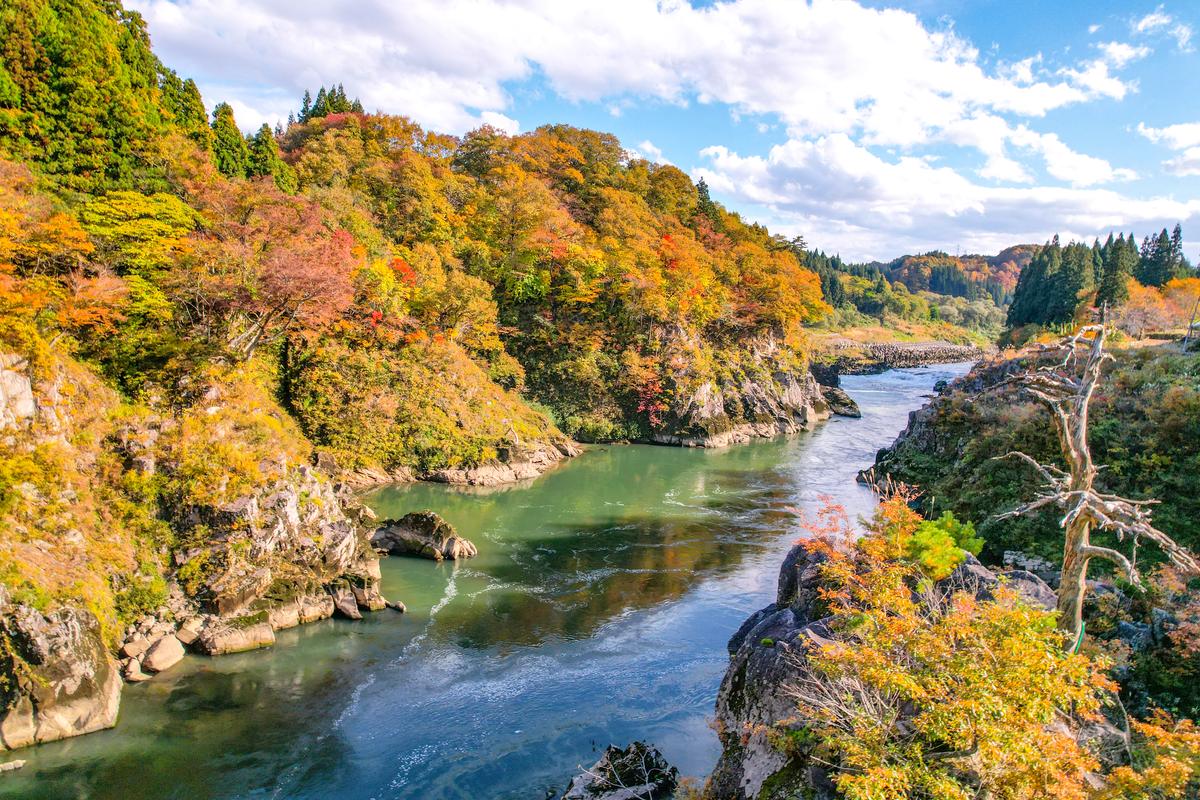
The row of cherry trees in full bloom along the banks of the Agakawa River is a beloved spot of relaxation for locals. With the right timing, visitors can capture the striking sight of the steam locomotive SL Ban'etsu Monogatari passing before a backdrop of cherry blossoms in full bloom — a photo opportunity that draws many visitors to the area each spring. Address Google Map Check with Google Maps Access Parking Business Hours Admission Fee Regular Holiday Phone Number URL SNS
DAIKAN SHIMIZU
Tourist Attraction
OpenA natural freshwater spring (shimizu) bearing the name of the daikan — the Edo-period local magistrate who governed the district on behalf of the domain. Such springs were often prized sources of pure water for the surrounding community, and many retain their name and local significance to this day. Address Google Map Check with Google Maps Access Parking Business Hours Admission Fee Regular Holiday Phone Number URL SNS
Michi-no-Eki Nishiaizu
Tourist Attraction
Open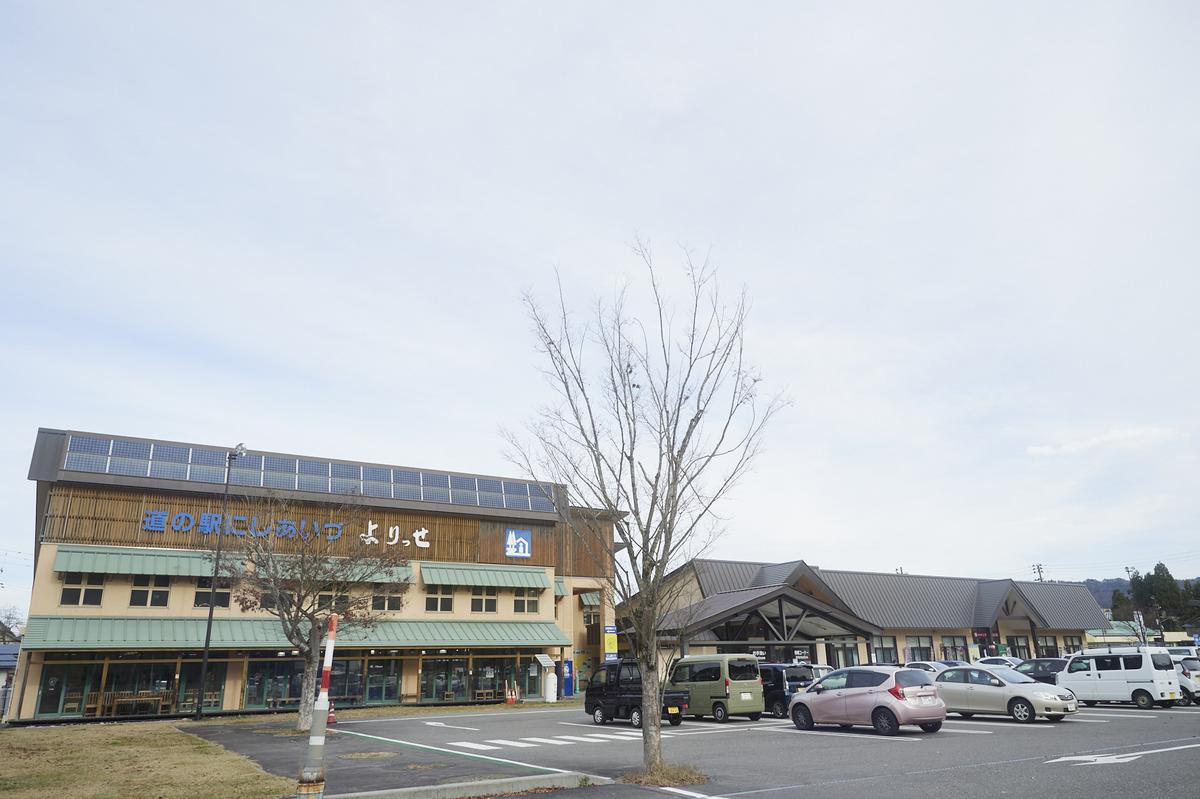
A michi-no-eki (roadside station) — Japan's network of publicly registered rest stops offering travellers local produce, regional specialties, tourist information, and community facilities. The Nishiaizu Roadside Station serves as a gateway to the area, showcasing the rich agricultural and cultural heritage of the region. Address Google Map Check with Google Maps Access Parking Business Hours Admission Fee Regular Holiday Phone Number URL SNS
Lotus Inn / Sayuri Auto Park
Tourist Attraction
Open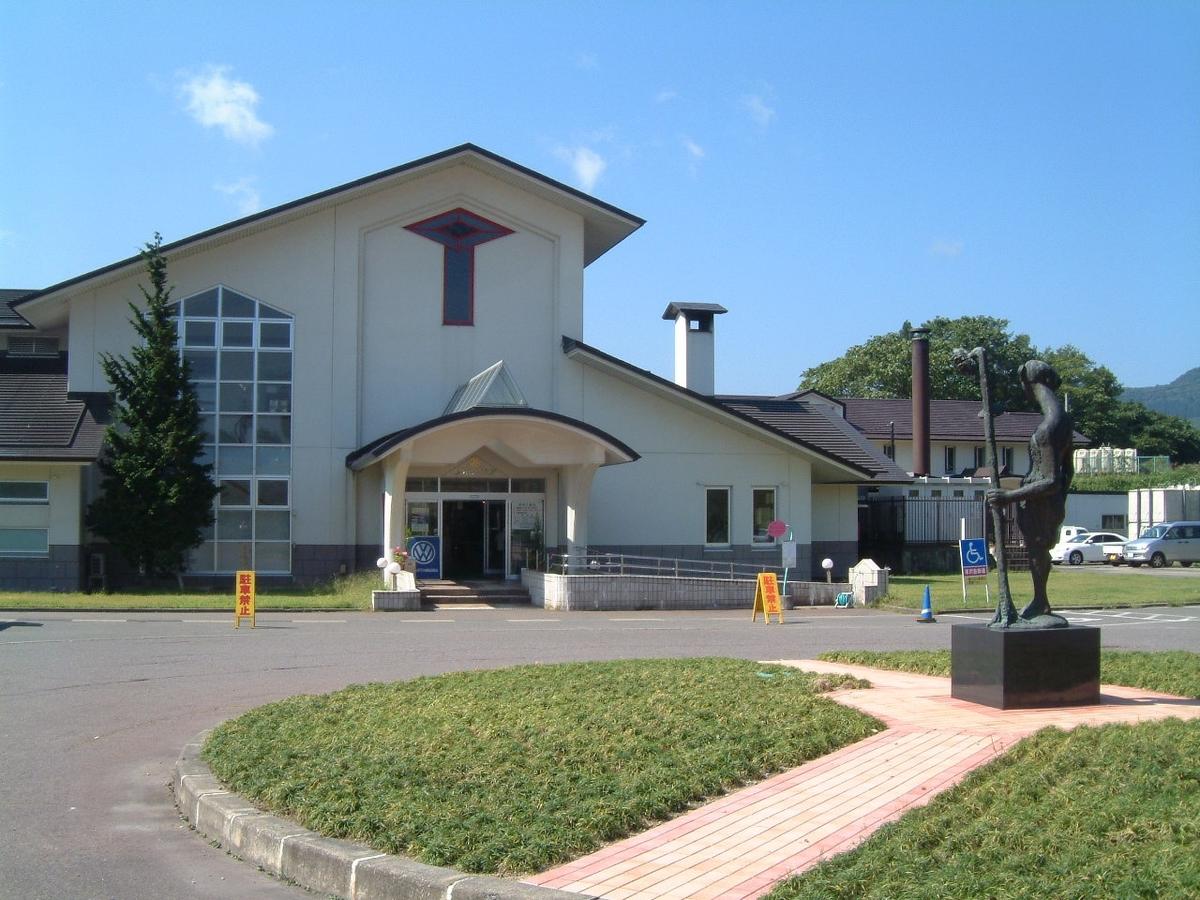
Whether you're visiting for the day or staying the night — why not round off your trip to Nishiaizu with a soak in the hot spring? Lotus Inn is a health and relaxation facility offering natural hot spring baths with free-flowing source water (gensen kake-nagashi) and a sauna. The water is a naturally mineral-rich, slightly salty spring that warms you from the core and keeps the chill away long after you've dried off. The sauna at Lotus Inn has earned a reputation that draws devoted enthusiasts (sauna-tsū) from well beyond the town — with its high-temperature sauna room and ice-cold plunge pool, guests say it's simply "the best place to reach that perfect state of bliss (totonou)." Let the fatigue of your journey melt slowly away in a truly restorative spa experience. Address Google Map Check with Google Maps Access Parking Business Hours Admission Fee Regular Holiday Phone Number URL SNS
SAKAEGAWA Sake Brewery
Tourist Attraction
Open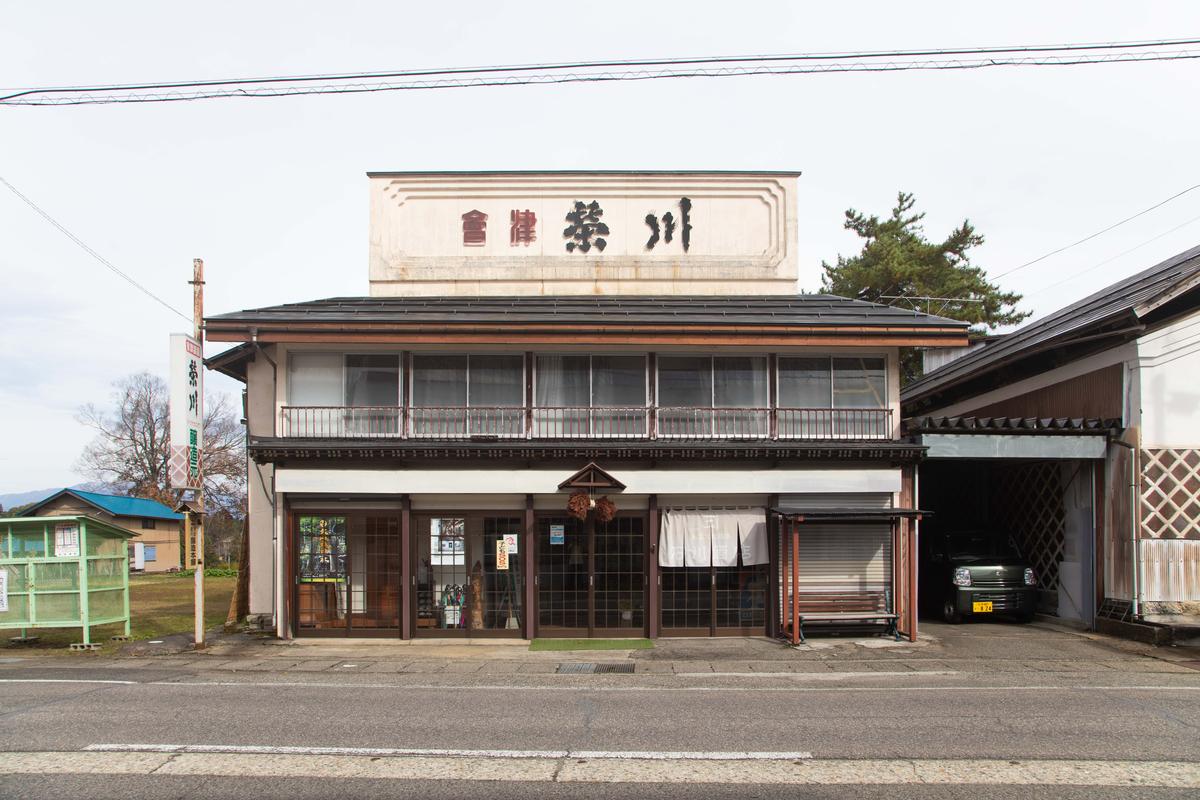
Sakagawa Sake Brewery stands along the old Nozawa-juku post-town street of the former Echigo Kaidō, its brewery and shop a familiar landmark on the road. Founded in Bunka 4 (1807) when the Aizu domain granted the family its sakahoki (brewing licence), the brewery has continued crafting sake on this very site through sixteen generations. Water is the soul of sake. Brewed with the abundant snowmelt of the Iide Mountain Range, Sakagawa's sake is smooth and lingering on the palate — a taste that calls to mind the quiet countryside of Japan with every sip. Come and savour a truly local sake, born of the land and waters of Nishiaizu. Address Google Map Check with Google Maps Access Parking Business Hours Admission Fee Regular Holiday Phone Number URL SNS
Aza Otome Yuri Colony
Tourist Attraction
Open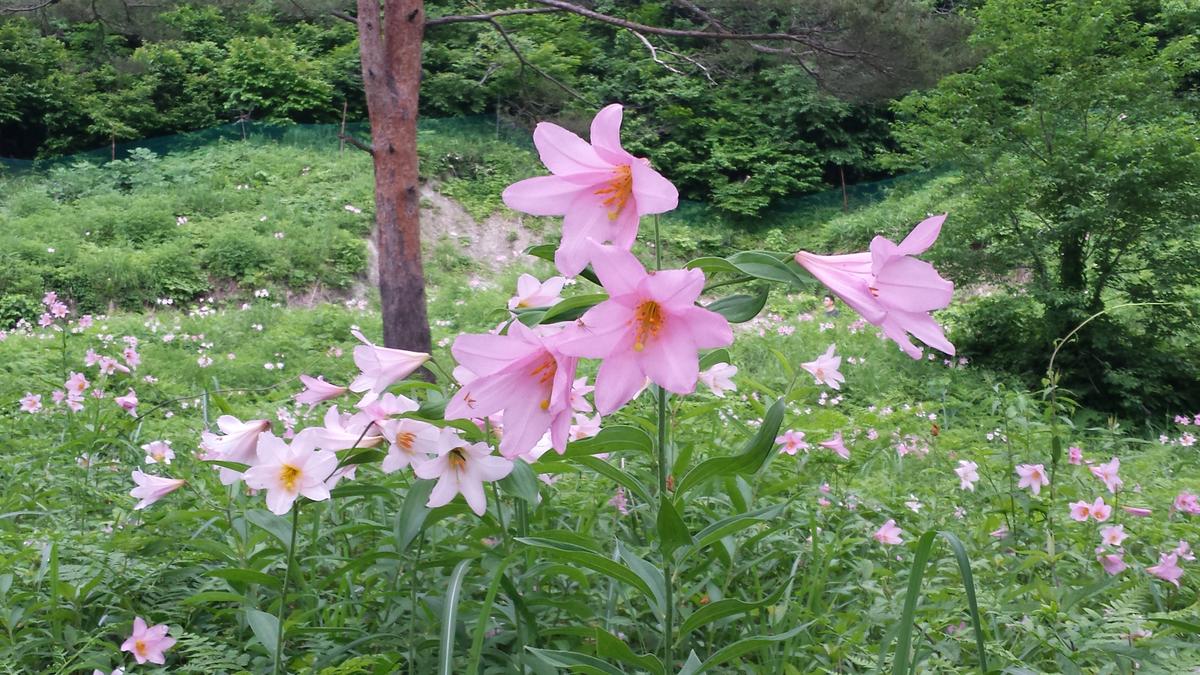
The otome yuri (maiden lily, Lilium rubellum) is the symbolic flower of Nishiaizu. Listed as a Near Threatened species (NT) on the Ministry of the Environment's Red List, it is a plant of considerable rarity and ecological importance. Cherished and carefully protected over many generations by the people of the local Anza settlement, the lily blooms each year in early to mid-June — when the annual Otome Yuri Matsuri (Maiden Lily Festival) is held in celebration of the season. Address Google Map Check with Google Maps Access Parking Business Hours Admission Fee Regular Holiday Phone Number URL SNS
Cherry Blossoms and the Steam Locomotive at Kaminojiri
Tourist Attraction
Open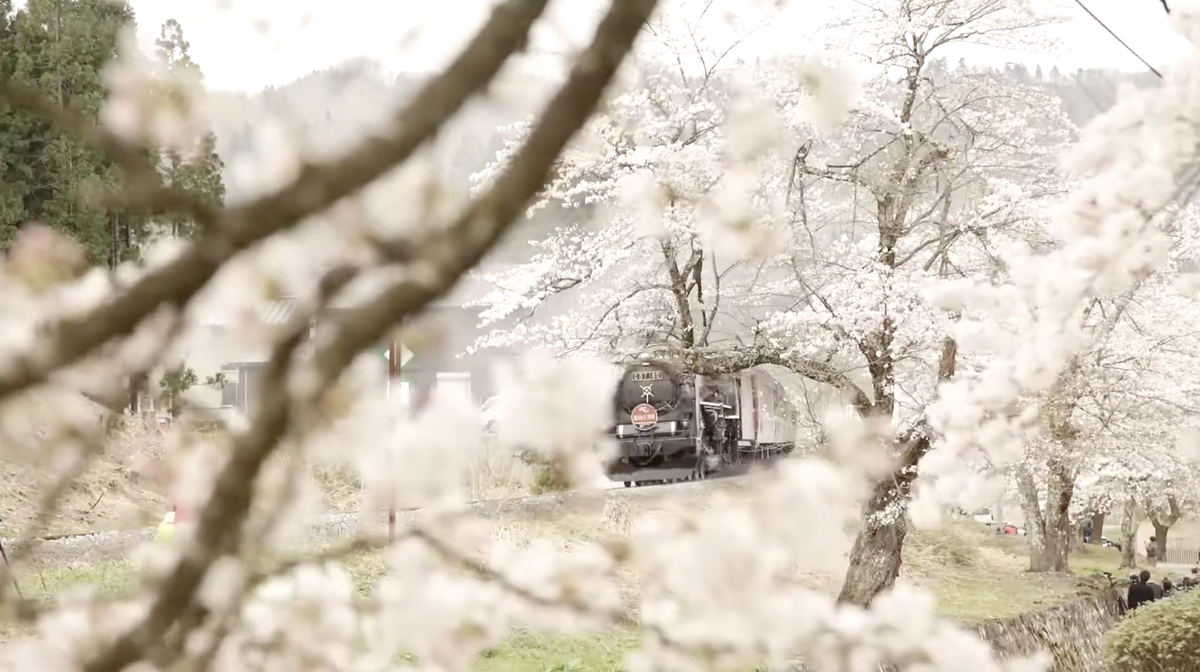
Best viewed: late April Address Google Map Check with Google Maps Access Parking Business Hours Admission Fee Regular Holiday Phone Number URL SNS
 Culture
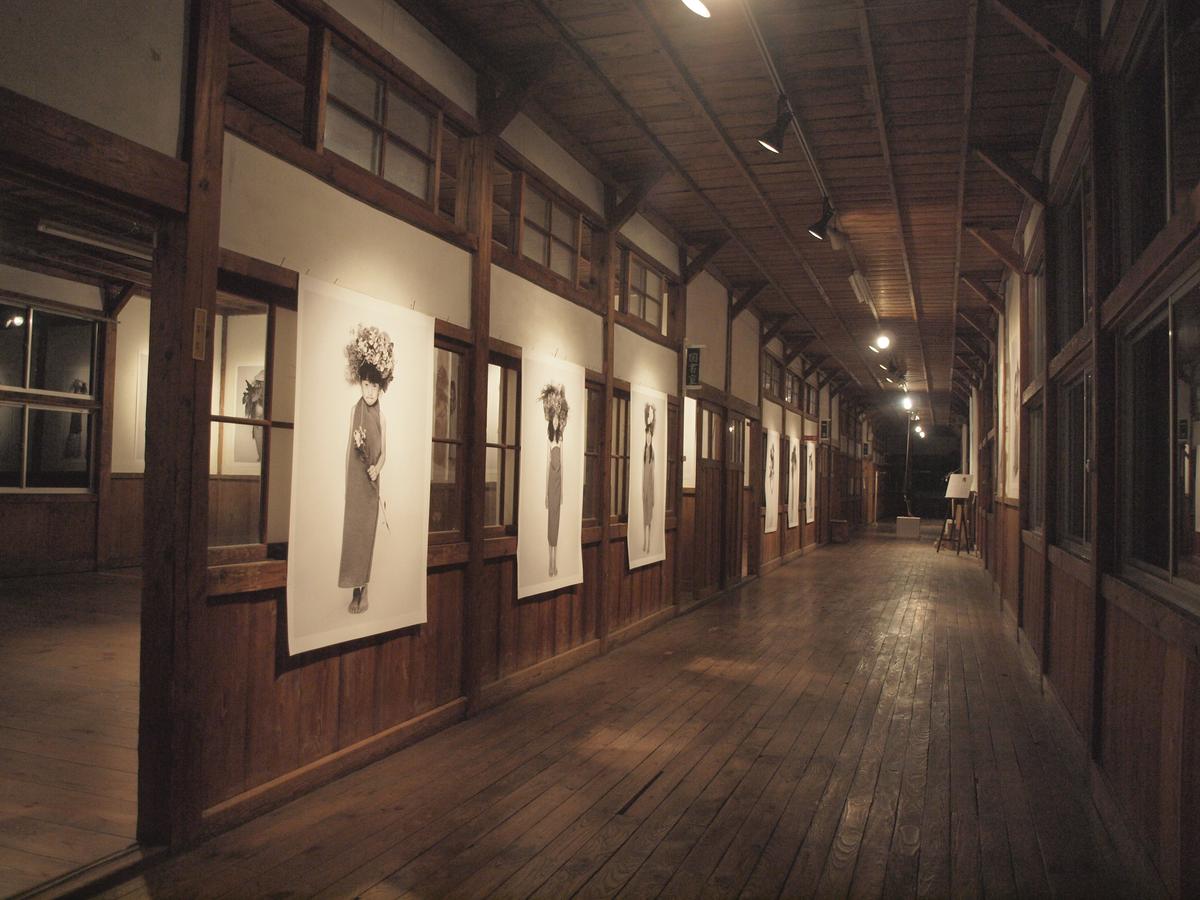
A creative center established in 2004 within the wooden schoolhouse of a former junior high school. From Artist-in-Residence programs welcoming artists from Japan and abroad, to curated exhibitions, events, and workshops, to theatre, concerts, and even circus performances — this is a place where things that are distinctly Nishiaizu in spirit, at once ancient and new, continue to be born. Address 5752 Uenohara-michiue, Sasagawa, Shingō, Nishiaizu-machi, Fukushima 969-4622, Japan Google Map Check with Google Maps Access Parking Available Business Hours Admission Fee Adults: ¥300 / Children (junior high school and under): ¥100 / Preschool children: Free / Town residents: Free Note: Areas outside the exhibition room are free of charge for all visitors. Regular Holiday Phone Number URL https://nishiaizu-artvillage.com/ SNS
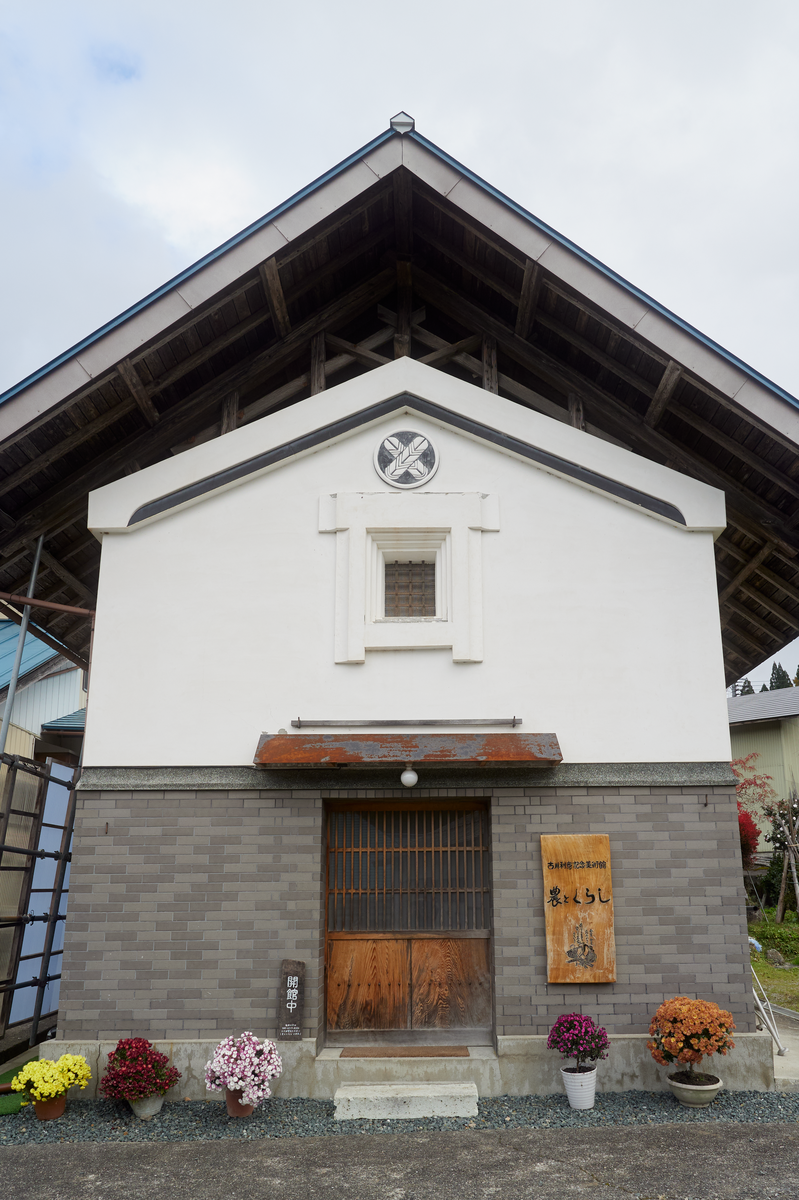
A small museum themed around Aizu no Kurashi — Life in Aizu — where visitors can enjoy a wide range of works from folk crafts to contemporary art. The gallery occupies a 150-year-old storehouse on the property of director Mr. Onogi, who lives in the Magasawa settlement of the Okugawa district. Renovated and opened in the summer of 2022 through the collaboration of local residents, community revitalization workers (chiiki okoshi kyōryokutai), and artists and creators from within and beyond the prefecture. For some, a sense of nostalgia. For others, something entirely new. Come and spend a moment touching, feeling, and remembering — the original landscape of Aizu and the way of life woven by the hands of the people who have called this place home. Address Google Map Check with Google Maps Access Parking Available Business Hours Admission Fee Regular Holiday Phone Number URL https://ftmg.localinfo.jp/ SNS
Yamaami Bag Atelier
Culture
Open
A bag workshop and shop run by Mina Kataoka, a bag-maker who relocated to Nishiaizu in 2020. Operating from a renovated former dagashi-ya (traditional neighbourhood sweet shop), she creates handcrafted goods that draw on the culture and nature of Aizu. Browsing the shop and handling the pieces in person, you may find yourself drawn into conversation with Kataoka about her philosophy and creative process — and come away with a deepened sense of reverence for the lives of living creatures, the natural world, and the culture cultivated by those who came before us. Hands-on craft workshops are also held regularly, making for a memorable addition to any visit to Nishiaizu. The materials Kataoka works with are deeply rooted in the local landscape: hides of deer and wild boar caught through the town's wildlife management programme, Degahara washi — a traditional paper unique to the area — and vintage fabrics such as kimono and cotton cloth received from local residents. From these materials touched directly (jika) by nature and local life, she creates bags and accessories suited to contemporary living under her brand zica (じか) — available both in the shop and online. Address Google Map Check with Google Maps Access Parking Within the grounds of Henshōji Temple Business Hours Admission Fee Regular Holiday Phone Number URL https://www.yamaami.com/ SNS
Nozawa Mingei
Culture
Open
From the Edo through to the Meiji period, folk toys (kyōdo gangu) were crafted in communities across Japan. Among them, the Aka-beko — the red bobble-head cow — stands as one of Aizu's most beloved folk icons, long cherished as a protective charm and good-luck talisman. (Beko is the Aizu dialect word for "cow.") The workshop responsible for approximately 70% of all Aka-beko production in Japan is right here in Nishiaizu: the Nozawa Mingei-hin Seizaku Kigyō Kumiai (Nozawa Folk Crafts Production Cooperative). Trading as Nozawa Mingei, the cooperative has been crafting Aizu haiko (papier-mâché) folk toys and traditional crafts for over 50 years. With their charmingly rounded form, Aka-beko make a wonderfully distinctive gift or souvenir from Nishiaizu. Address 2704-2 Ueharashimo-otsu, Nozawa, Nishiaizu-machi, Fukushima 969-4406, Japan Google Map Check with Google Maps Access Parking Business Hours Admission Fee Regular Holiday Phone Number 0241-45-3129 URL SNS
Furusato Jiman-kan
Culture
Open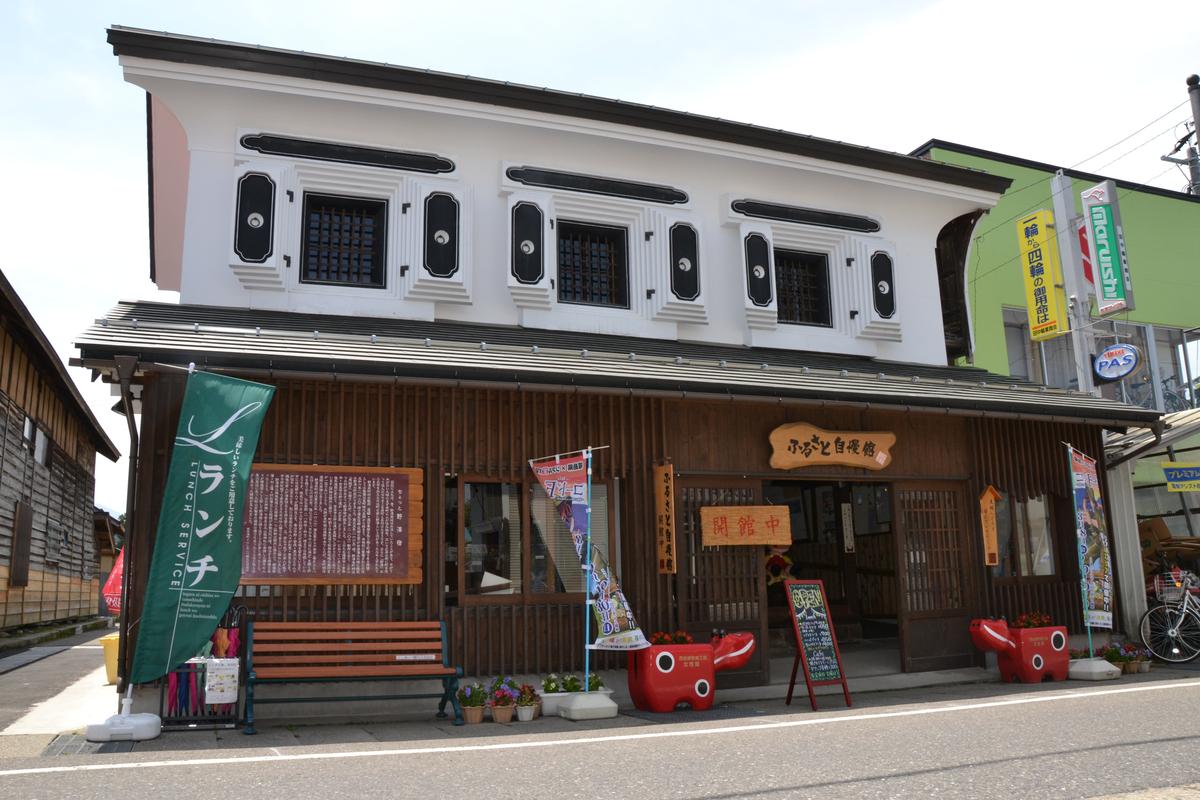
A small local history museum introducing the history and culture of Nishiaizu, as well as the remarkable figures who emerged from the Kenki-dō academy. The building that now houses the Furusato Jiman-kan is said to have served, until the late Edo period, as a shugendo training hall (dōjō) for mountain ascetic practitioners along the Nozawa-juku post-town of the Echigo Kaidō — lending the site a history that runs even deeper than its displays might suggest. Address 2147 Haramachi-otsu, Nozawa, Nishiaizu-machi, Fukushima 969-4406, Japan Google Map Check with Google Maps Access Parking Business Hours Open irregularly (please check the official website for current schedule) Admission Fee Regular Holiday Phone Number 0241-45-3235 (Nishiaizu Town Chamber of Commerce) URL https://r.goope.jp/nishisho/free/furusato SNS
 Restaurant & Café
Ōyama Drive-in
Restaurant & Café
Open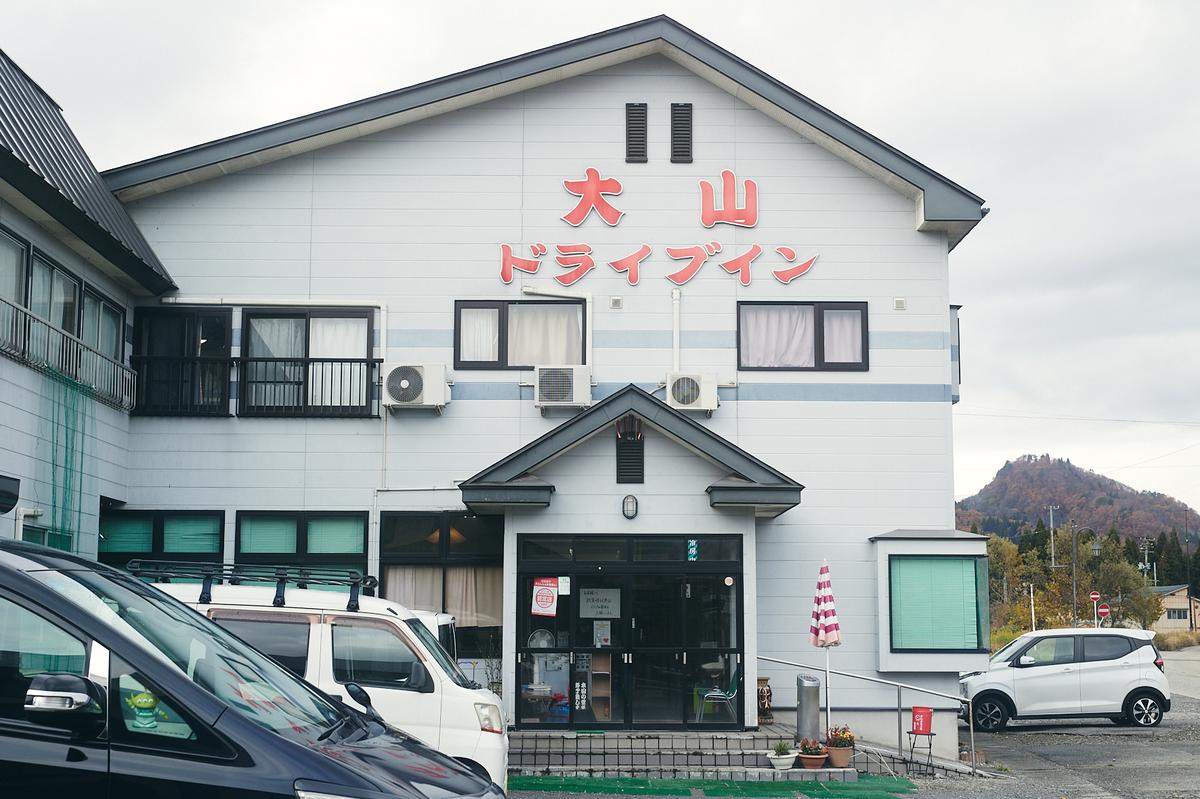
Home of the Original Nishiaizu Miso Ramen Address Google Map Check with Google Maps Access Parking Available Business Hours Admission Fee Regular Holiday Phone Number URL SNS
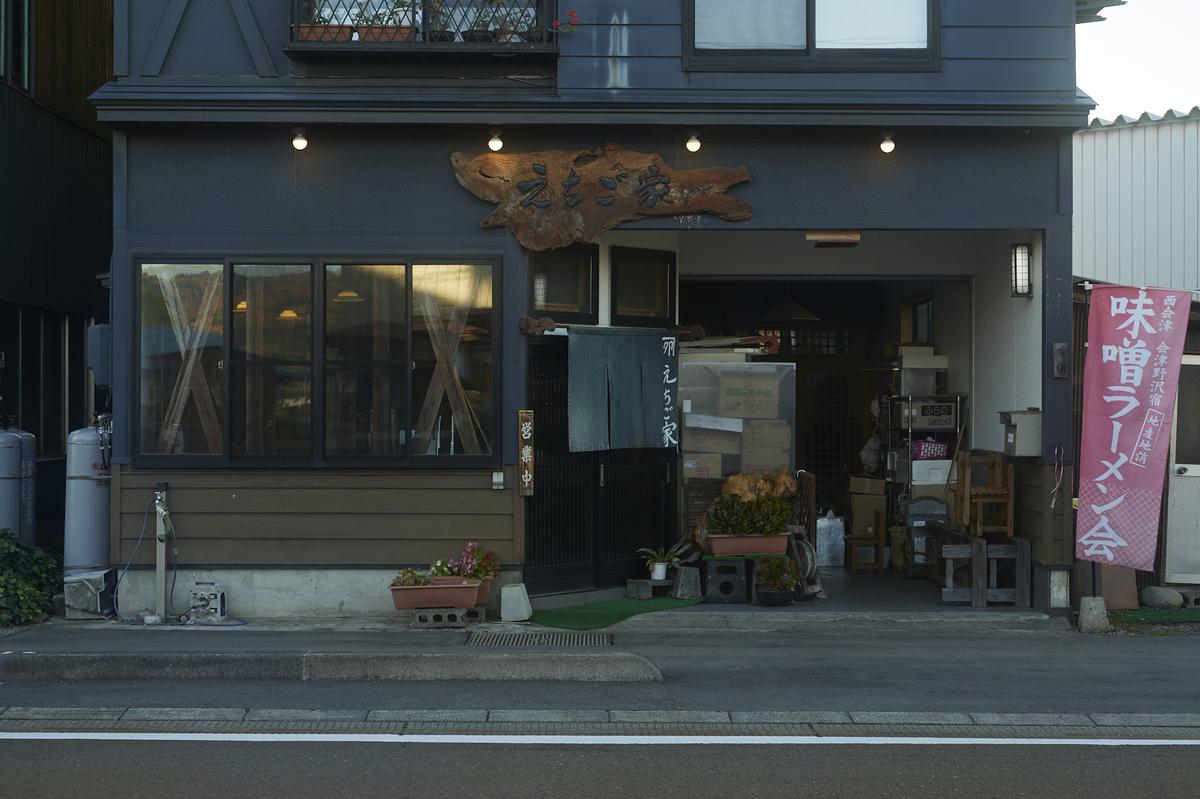
The miso ramen crafted by Usatoshi Komata — whose family ties to the owner of Ōyama Drive-in run brotherly deep — delivers a flavour entirely its own: a gentle sweetness on the palate, followed by a pleasantly sharp kick of spice. The secret lies in the house broth, a carefully guarded blend of Aizu-grown miso that gives every bowl its unmistakable character. Address 2431-1 Uehara-otsu, Nozawa, Nishiaizu-machi, Fukushima 969-4406, Japan Google Map Check with Google Maps Access Parking Available Business Hours 11:00〜14:30 Admission Fee Regular Holiday Thursday Phone Number 0241-45-3248 URL SNS
Miso Ramen at the Roadside Station — Quick and Easy Craving Nishiaizu's soul food in the heart of town? This is the place. Choose from classic miso ramen, a spicy miso variation, or a bowl piled high with mineral-rich vegetables grown right here in Nishiaizu. Order a few different bowls between your group and enjoy a side-by-side tasting — the perfect way to discover your favourite. Address Inside Michi-no-Eki Nishiaizu (Nishiaizu Roadside Station), 1969-26 Shimojō-otsu, Nozawa, Nishiaizu-machi, Fukushima 969-4406, Japan Google Map Check with Google Maps Access Parking Business Hours 11:00~15:30 Admission Fee Regular Holiday Phone Number 0241-48-1512 URL SNS
Aizu Yamazio Ramen — Clean, Umami-Rich Flavour Yamazio (mountain salt) is produced by slowly simmering the mineral spring waters of Ōshio Urabandai down to their crystalline essence. Seasoned with this yamazio alone, the broth achieves a beautifully balanced flavour — light and refreshing on the surface, yet layered with a deep, lingering umami. To finish the bowl in style, try soaking a small rice (ko-raisu) in the remaining broth — highly recommended. Address Google Map Check with Google Maps Access Parking Business Hours Admission Fee Regular Holiday Phone Number URL SNS
A dependable diner for whatever mood strikes — whether you're after something light and wholesome or a hearty, satisfying meal. Soba, rice bowls, and more are on offer, but the standout is the kenchin soba: a comforting, health-conscious dish in which the natural sweetness of locally grown vegetables melts into the broth, gently warming both body and soul. Address Google Map Check with Google Maps Access Parking Business Hours Admission Fee Regular Holiday Phone Number URL http://www.w-aizu.jp/yorisse/?utm_source=ig&utm_medium=social&utm_content=link_in_bio&fbclid=PAZXh0bgNhZW0CMTEAc3J0YwZhcHBfaWQMMjU2MjgxMDQwNTU4AAGnZ7_MIkhf-gcM3Z4qpCPDgrkLlqgHV-83zwwGjiOwQ9-WwdmSYaoox-oPt1c_aem_fydZJpCY-SFwpqot1vzzEQ SNS
A bakery tucked inside the Nishiaizu Roadside Station, serving freshly baked goods every day. If you want the widest selection to choose from, aim to visit between 11am and 1pm. Look out for breads made with locally grown Nishiaizu rice flour, and the charming Nishiaizu-branded anpan (sweet red bean buns) — perfect for a light snack on the road. Address Inside Michi-no-Eki Nishiaizu (Nishiaizu Roadside Station), 1969-26 Shimojō-otsu, Nozawa, Nishiaizu-machi, Fukushima 969-4406, Japan Google Map Check with Google Maps Access Parking Available Business Hours Admission Fee Regular Holiday Phone Number URL http://www.w-aizu.jp/yorisse/?utm_source=ig&utm_medium=social&utm_content=link_in_bio&fbclid=PAZXh0bgNhZW0CMTEAc3J0YwZhcHBfaWQMMjU2MjgxMDQwNTU4AAGnZ7_MIkhf-gcM3Z4qpCPDgrkLlqgHV-83zwwGjiOwQ9-WwdmSYaoox-oPt1c_aem_fydZJpCY-SFwpqot1vzzEQ SNS
Dōki Shokudō
Restaurant & Café
Open
Founded in Taishō 10 (1921), this beloved neighbourhood diner takes its name from the phrase "the same feeling as our customers" — a philosophy of wholehearted hospitality that has endured for over a century. The Aizu region has a long-standing tradition of eating horsemeat, and is counted among the three great basashi (raw horse sashimi) regions of Japan. Savour thick-cut, fresh, and delicately flavoured basashi — healthy and full of character — wrapped in the diner's house-made spicy miso sauce (karamiso dare). Address 2168 Haramachi-otsu, Nozawa, Nishiaizu-machi, Fukushima 969-4406, Japan Google Map Check with Google Maps Access Parking Business Hours 11:00〜18:00 Admission Fee Regular Holiday Closed on the 1st and 3rd Wednesdays of each month Phone Number 0241-45-2852 URL SNS
Yōshokudō K
Restaurant & Café
Open
A relaxed, casual restaurant with a welcoming, unpretentious atmosphere, run with care by a husband-and-wife team. Lunch, dinner, and takeaway are all available. The star of the menu is the fuwa-toro omu-raisu — a cloud-soft omelette draped over seasoned rice, so light and silky it melts the moment it touches your tongue. The kind of dish that puts a smile on your face before you even realise it. Address 2147 Haramachi-otsu, Nozawa, Nishiaizu-machi, Fukushima 969-4406, Japan Google Map Check with Google Maps Access Parking Business Hours 11:30〜13:30 17:30〜20:00 Admission Fee Regular Holiday Wednesday, Thursday Phone Number 0241-45-2224 URL SNS
restaurant&café KURA.
Restaurant & Café
Open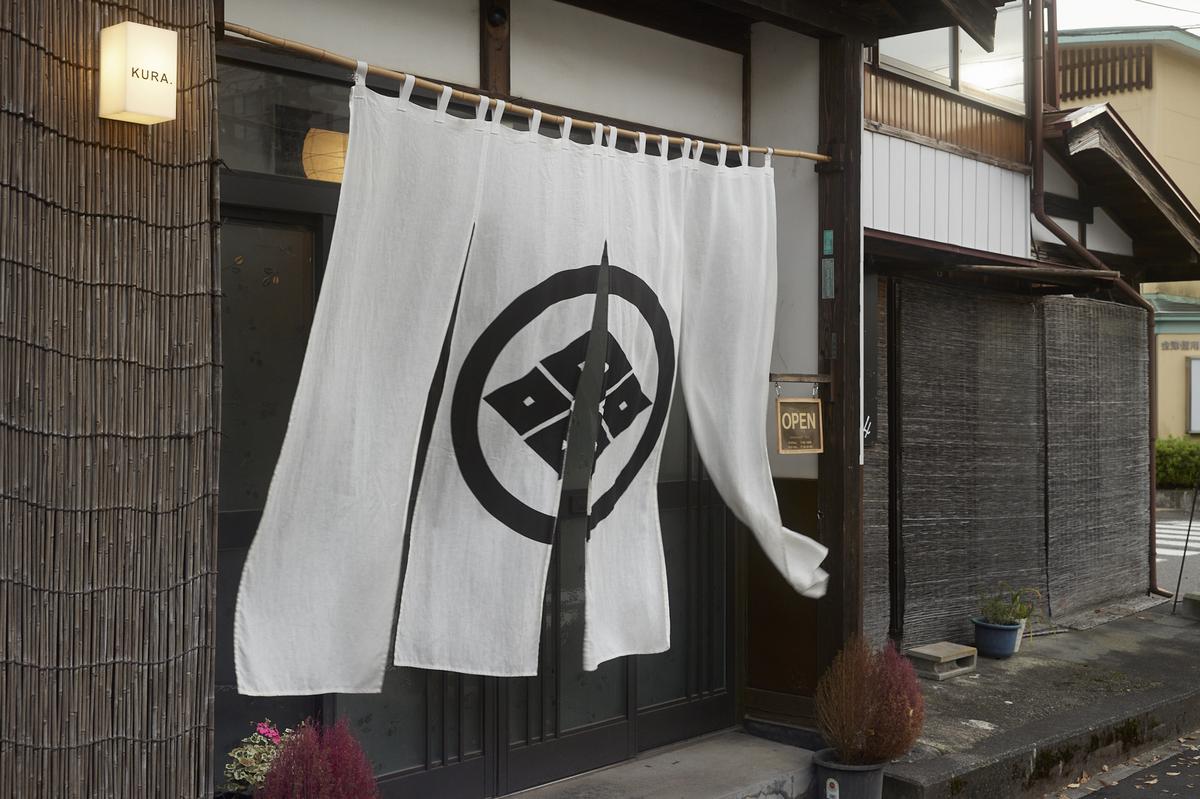
An Italian restaurant opened within a carefully renovated farmhouse of over 100 years. The chef, with more than 40 years of experience, brings an extra touch of craft and care to every dish — making lunchtime here a truly colourful affair. For first-time visitors, the one-plate lunch is highly recommended: a generous, beautifully composed spread that satisfies even the most eager of appetites. Address 2211-1 Haramachi-otsu, Nozawa, Nishiaizu-machi, Fukushima 969-4406, Japan Google Map Check with Google Maps Access Parking Business Hours 11:00〜14:30(L.O.14:00) Admission Fee Regular Holiday Wednesday Phone Number 0241-45-2204 URL https://www.facebook.com/KURA.Nishiaizu/ SNS
KANNON CHAYA
Restaurant & Café
Open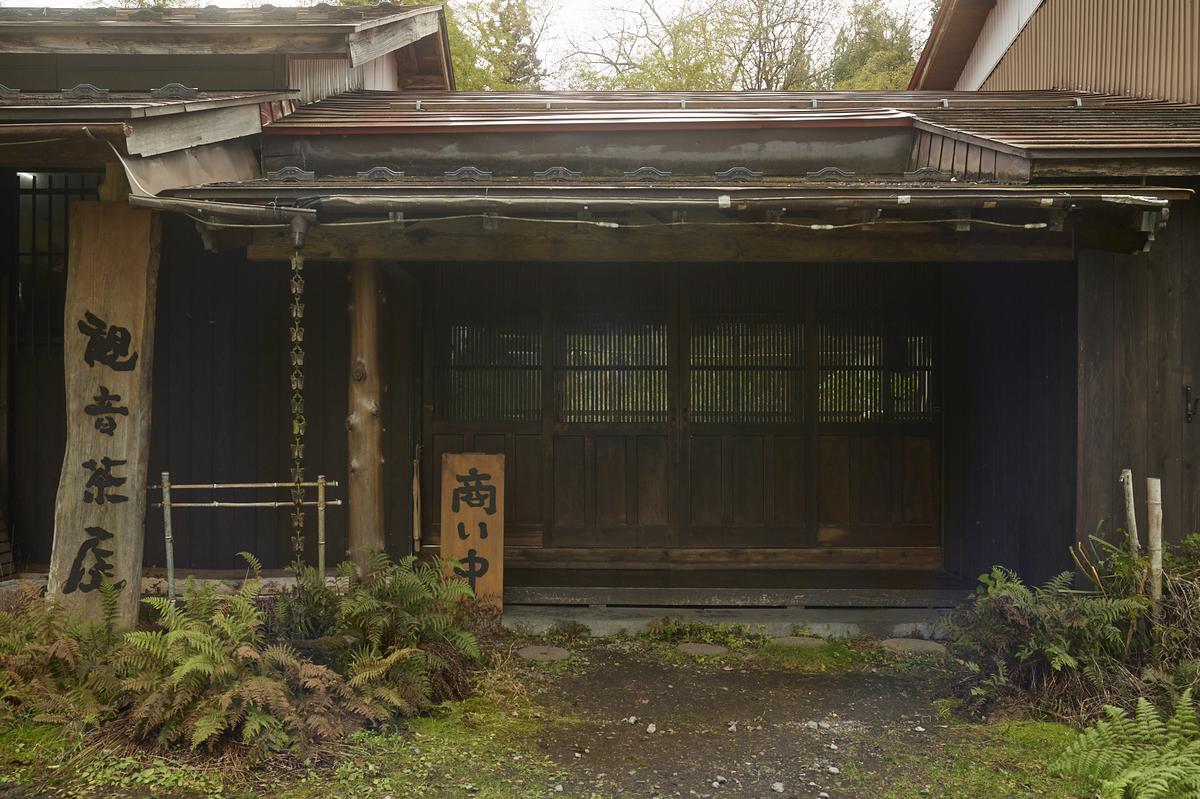
The specialty here is hand-rolled juwari soba — pure buckwheat noodles made with locally grown flour, containing no wheat whatsoever. Silky smooth on the way down, with a satisfying firmness to the bite, the noodles release a deep buckwheat fragrance with every chew — so full of flavour they can be enjoyed even without dipping sauce. The lightly crisped seasonal vegetable tempura is an essential accompaniment. A second location can also be found at the Nishiaizu Roadside Station. Address 3595-3 Nyohōji-otsu, Nozawa, Nishiaizu-machi, Fukushima 969-4406, Japan Google Map Check with Google Maps Access Parking Availble Business Hours 11:00〜15:00 Admission Fee Regular Holiday Mondays Also closed for winter: mid-December through late March Phone Number 0241-45-2371 URL SNS
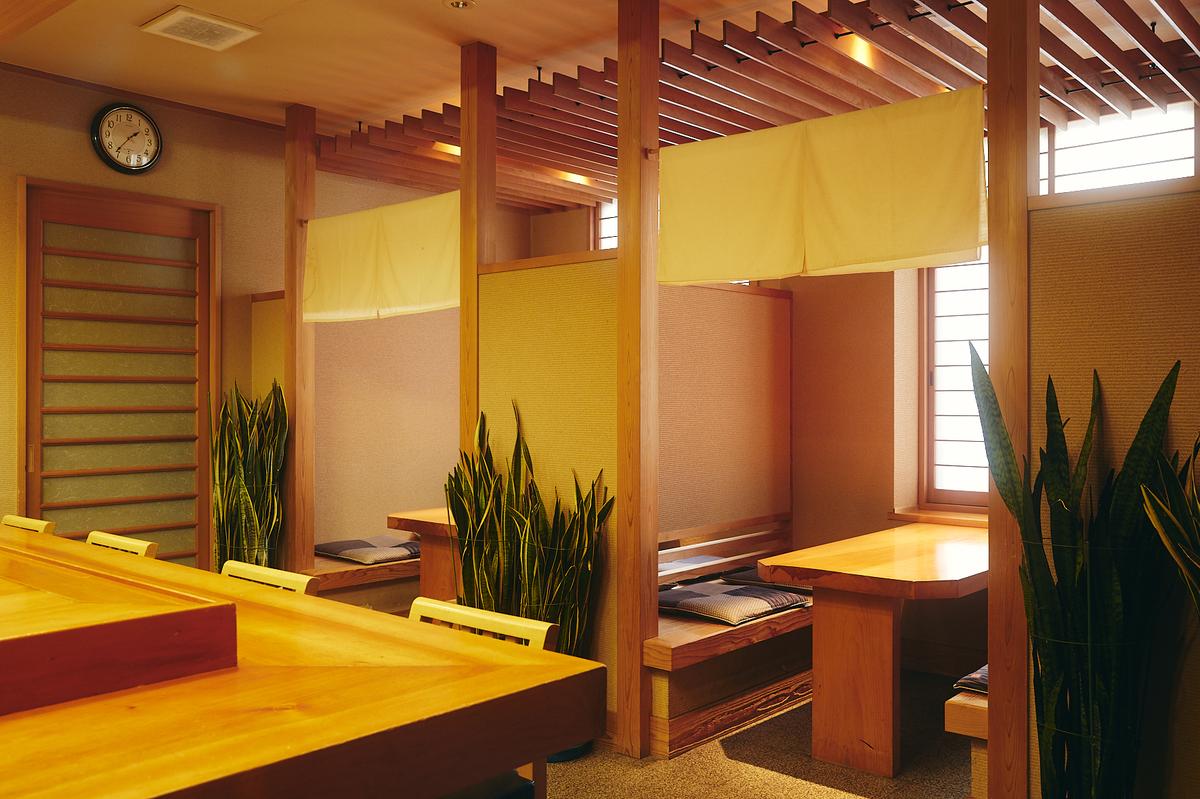
A restaurant serving authentic nigiri sushi crafted by a chef who trained in the prestigious kitchens of Ginza. Despite its setting deep in the mountains, the freshest seafood — sourced directly from Niigata — is here for the enjoying in full. Perfect for a special occasion, or simply when you feel like treating yourself. A moment of pure, soul-satisfying bliss awaits. Address 1969-15 Shimojō-otsu, Nozawa, Nishiaizu-machi, Fukushima 969-4406, Japan Google Map Check with Google Maps Access Parking Available Business Hours 11:30〜13:30 17:00〜22:00 Admission Fee Regular Holiday Monday Phone Number 0241-45-3031 URL SNS
HARUYOSHI WASUI
Restaurant & Café
Open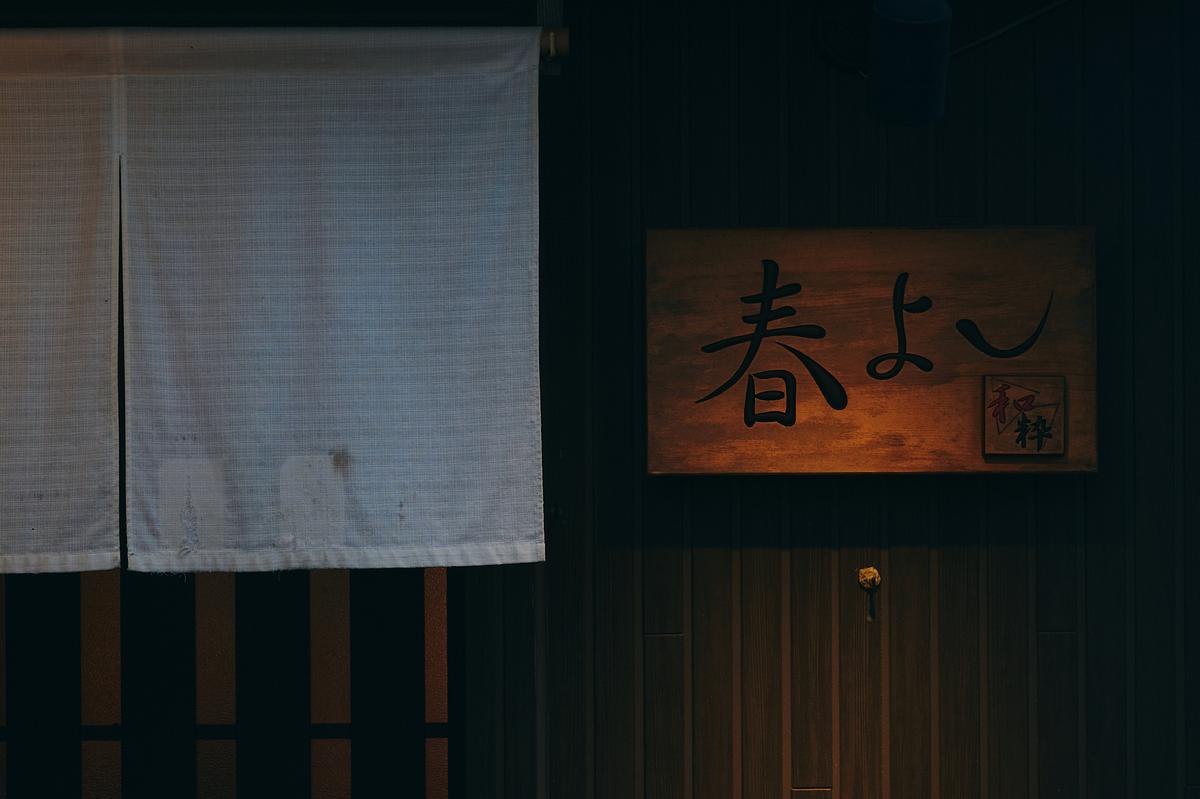
An izakaya opened by Takeshi Wada, the fourth-generation heir of the long-established kappo (traditional Japanese cuisine) restaurant Haruyoshi. Fresh, premium seafood delivered directly from Niigata and a carefully curated selection of Aizu's finest sake await. Whatever Wada-san puts on the plate, it simply tastes wonderful. The time spent eating, drinking, and talking here — that itself becomes the memory. Address 2450 Uehara-otsu, Nozawa, Nishiaizu-machi, Fukushima 969-4406, Japan Google Map Check with Google Maps Access Parking Available Business Hours 17:00〜23:00(L.O.22:00) Admission Fee Regular Holiday Wednesday Phone Number 0241-45-3113 URL SNS
SABO NADESHIKO
Restaurant & Café
Open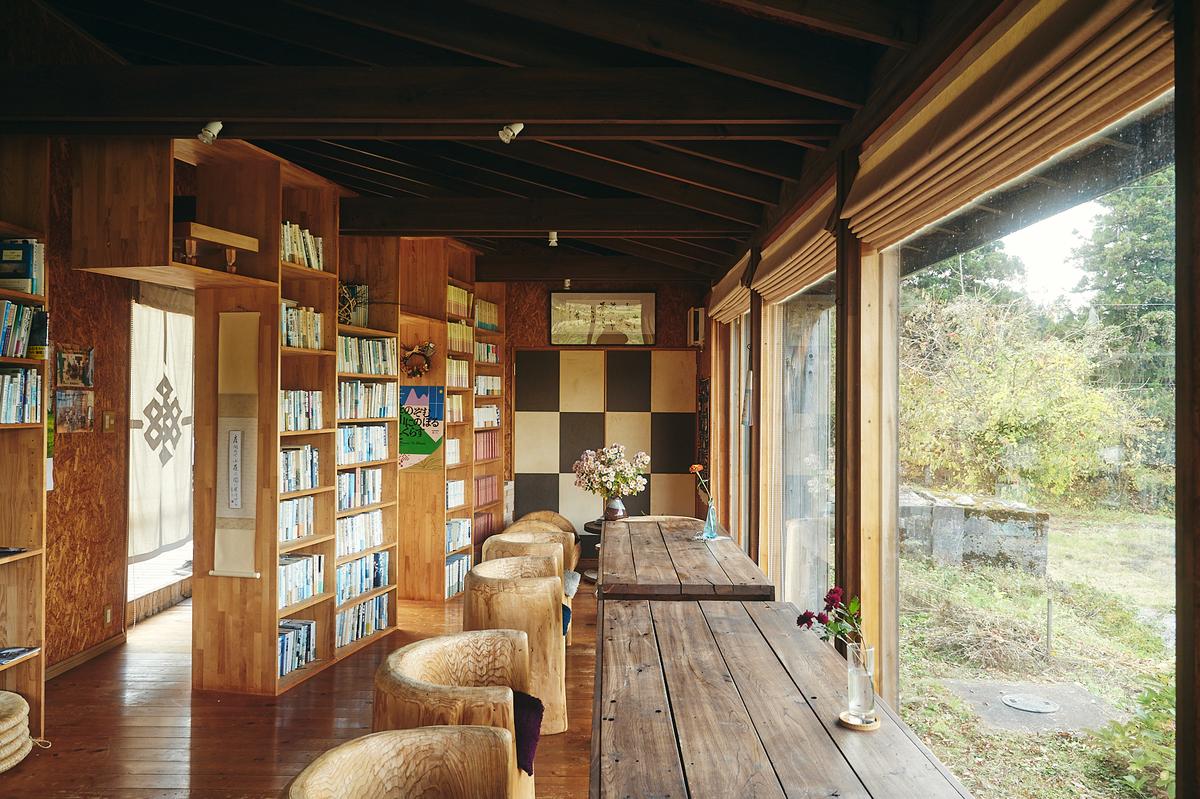
A book café run by Reiko Onogi, who also operates the private art museum Nō to Kurashi (Agriculture and Life) in the Magasawa settlement. True to Reiko-san's love of mountain hiking, the menu features Nepali curry and Nepali coffee — a warm and unexpected delight. Sit back, take a breath, and let the pastoral landscape of the settlement and the gentle silhouette of Mt. Kōyōzan ease the mind. Address 2264 Satomichi, Iisato, Okugawa, Nishiaizu-machi, Fukushima 969-4734, Japan Google Map Check with Google Maps Access Parking Available Business Hours 11:00〜15:00 Admission Fee Regular Holiday Open: Saturdays, Sundays & Public Holidays Closed for winter: December through late Apr Phone Number URL SNS
Suwa no Mori Café
Restaurant & Café
Open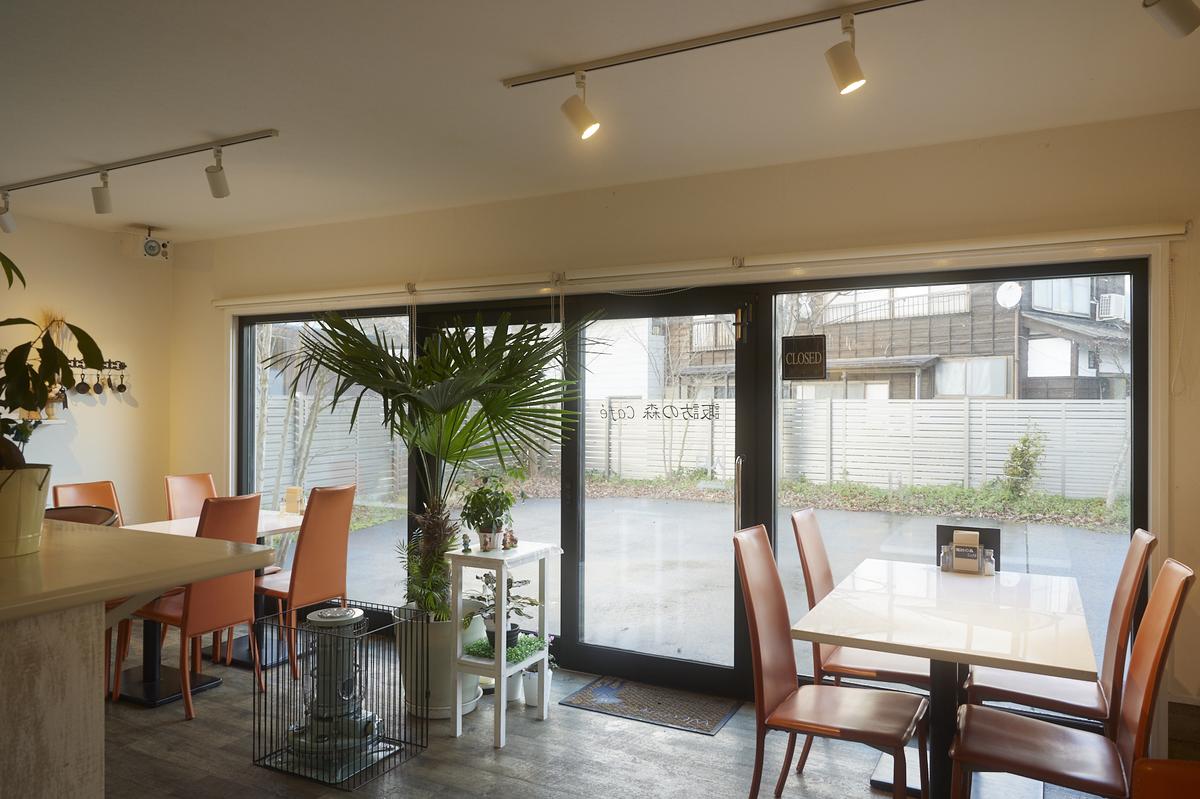
A café run by Junichi Abe, a local rice farmer, taking its name from the nearby Suwa Shrine. The standout dishes are the galette made with Nishiaizu-grown buckwheat flour, and the French toast — crisp on the outside, gloriously soft and yielding within. Families are warmly welcomed, and the relaxed, kids-friendly atmosphere makes it an easy choice for visitors travelling with little ones. Address 1402-1 Iwainomae, Nozawa, Nishiaizu-machi, Fukushima 969-4406, Japan Google Map Check with Google Maps Access Parking Business Hours 10:00〜17:00 Admission Fee Regular Holiday Tuesday (also closed during the rice harvest season) Phone Number URL SNS
Possible coffee
Restaurant & Café
Open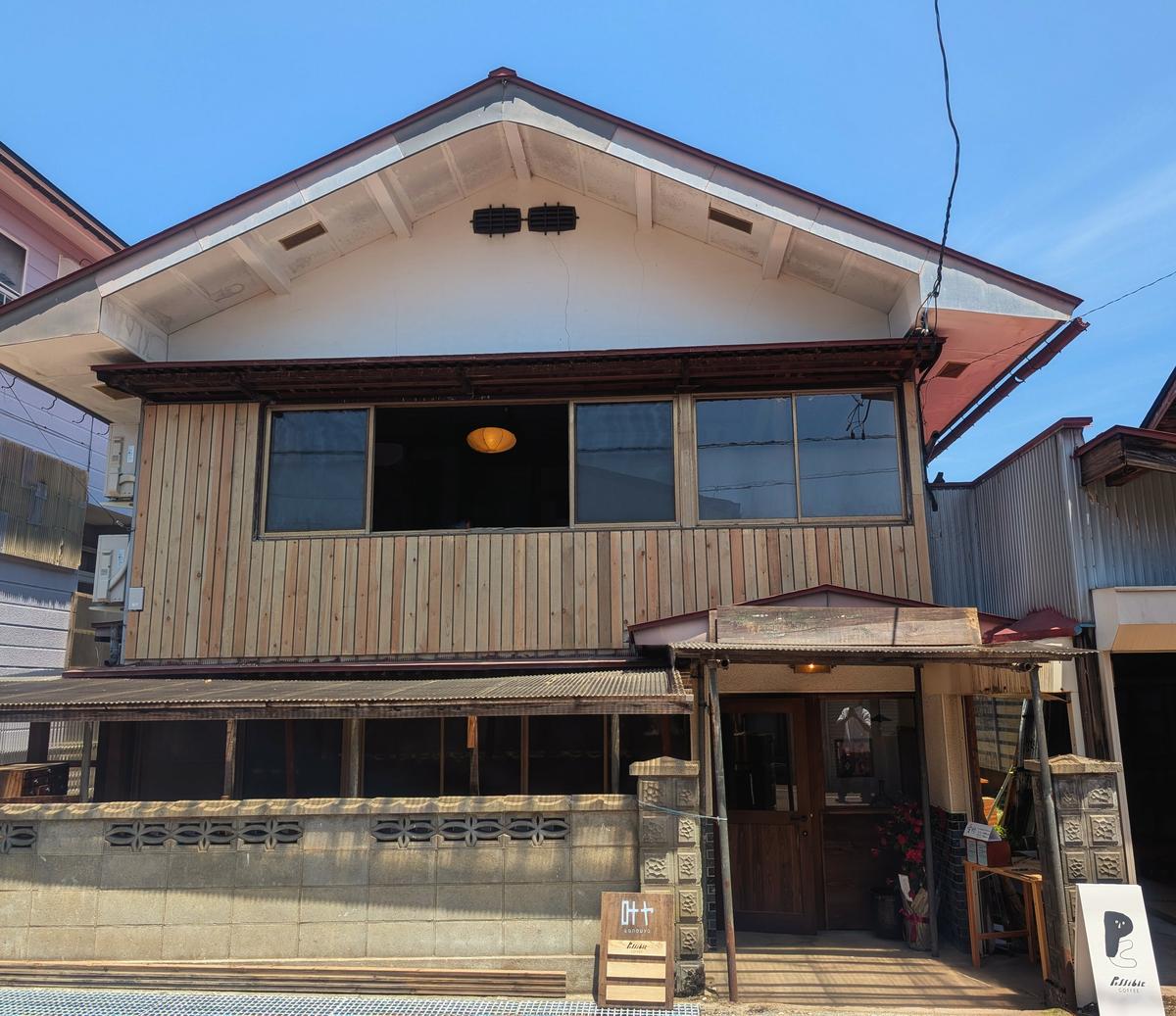
Kanōya — a century-old farmhouse newly reimagined through renovation (opening spring 2025). POSSIBLE COFFEE occupies the ground floor: a café serving house-roasted coffee and a signature spiced curry, in a space where old timber and new life meet. Address 2609-2 Okinohara, Kaminojiri-shimo, Nishiaizu-machi, Fukushima, Japan Google Map Check with Google Maps Access Parking Business Hours Admission Fee Regular Holiday Monday - Wednesday Phone Number URL SNS
KANNON CHAYA in Roadside station
Restaurant & Café
Open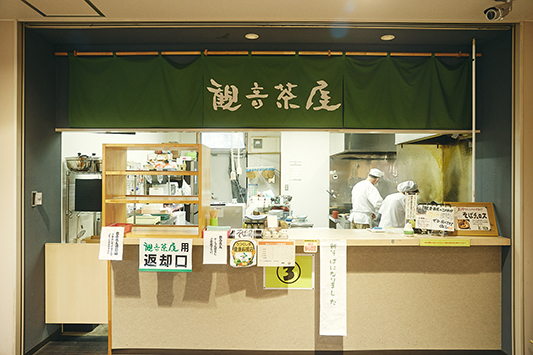
The specialty here is hand-rolled juwari soba — pure buckwheat noodles made with locally grown flour, containing no wheat whatsoever. Silky smooth on the way down, with a satisfying firmness to the bite, the noodles release a deep buckwheat fragrance with every chew — so full of flavour they can be enjoyed even without dipping sauce. The lightly crisped seasonal vegetable tempura is an essential accompaniment. Address Google Map Check with Google Maps Access Parking Business Hours Admission Fee Regular Holiday Phone Number URL SNS
 Accomodation
NIPPONIA NARAYAMA VILLAGE
Accomodation
Open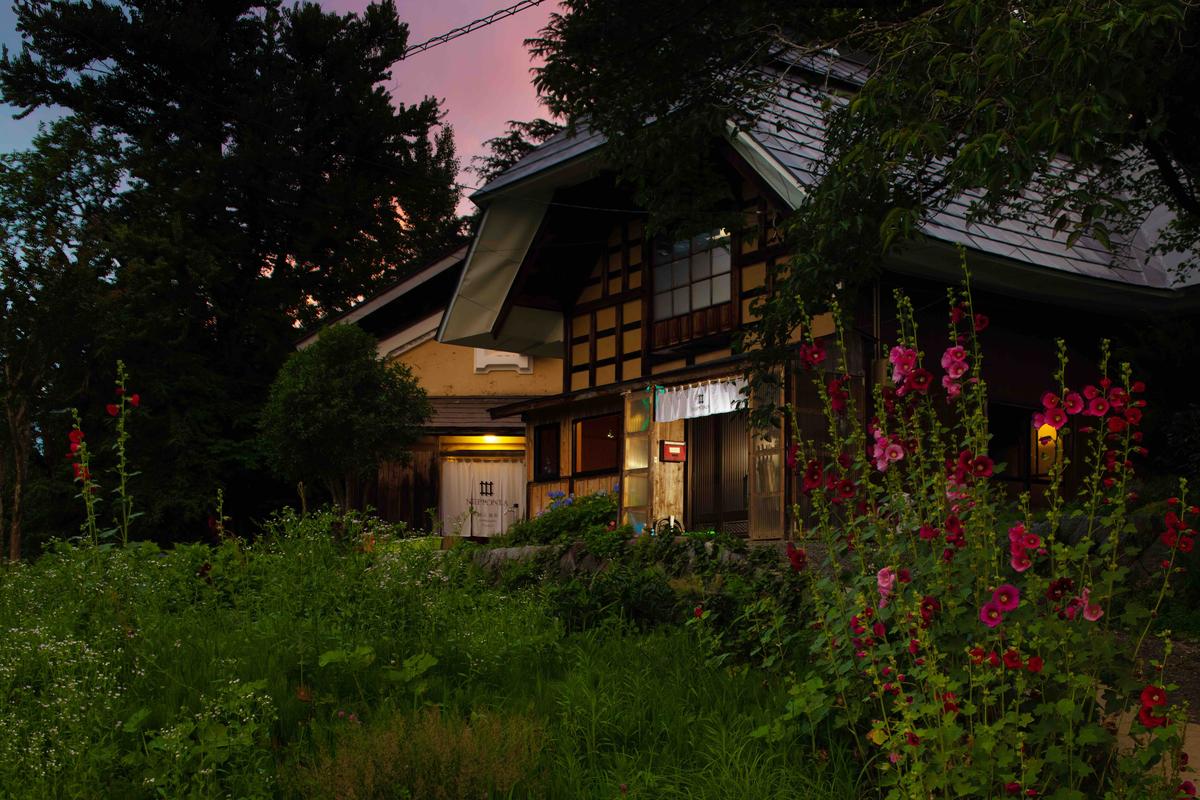
A retreat born from the renovation of a storehouse and barn both over 120 years old — a place to stay in the settlement as if you truly lived there. Surrounded by mountain ridges and sea-of-clouds views stretching below, a sky thick with stars, and the quiet murmur of running water, guests find themselves rediscovering what it feels like to be part of the living ecosystem. Address 5900 Domeki, Kayane, Okugawa, Nishiaizu-machi, Fukushima 969-4737, Japa Google Map Check with Google Maps Access Parking Available Business Hours Admission Fee Regular Holiday Phone Number 080-9074-8301 URL https://www.ikyu.com/00050875/ SNS
FUKUNOYA / FUKU NO KURA
Accomodation
Open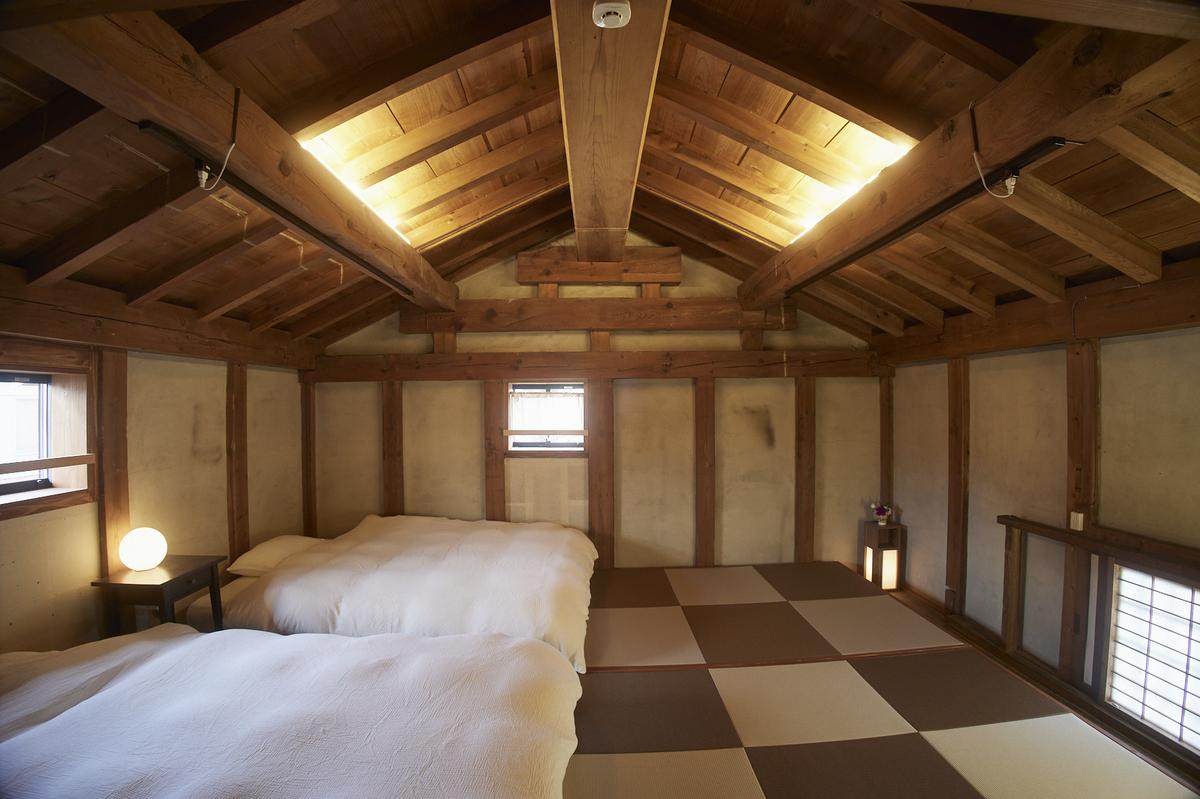
A inn created from the renovation of a farmhouse and storehouse both over 100 years old. Conveniently located in the heart of Nishiaizu town — within easy reach of Nozawa Station and the Nishiaizu IC interchange — it makes an ideal base for exploring the area. Limited to one group per day, guests have the entire space to themselves, free to unwind at their own unhurried pace. Address 2213 Haramachi-otsu, Nozawa, Nishiaizu-machi, Fukushima 969-4406, Japan Google Map Check with Google Maps Access Parking Available Business Hours Admission Fee Regular Holiday Phone Number 080-9074-8301 URL SNS
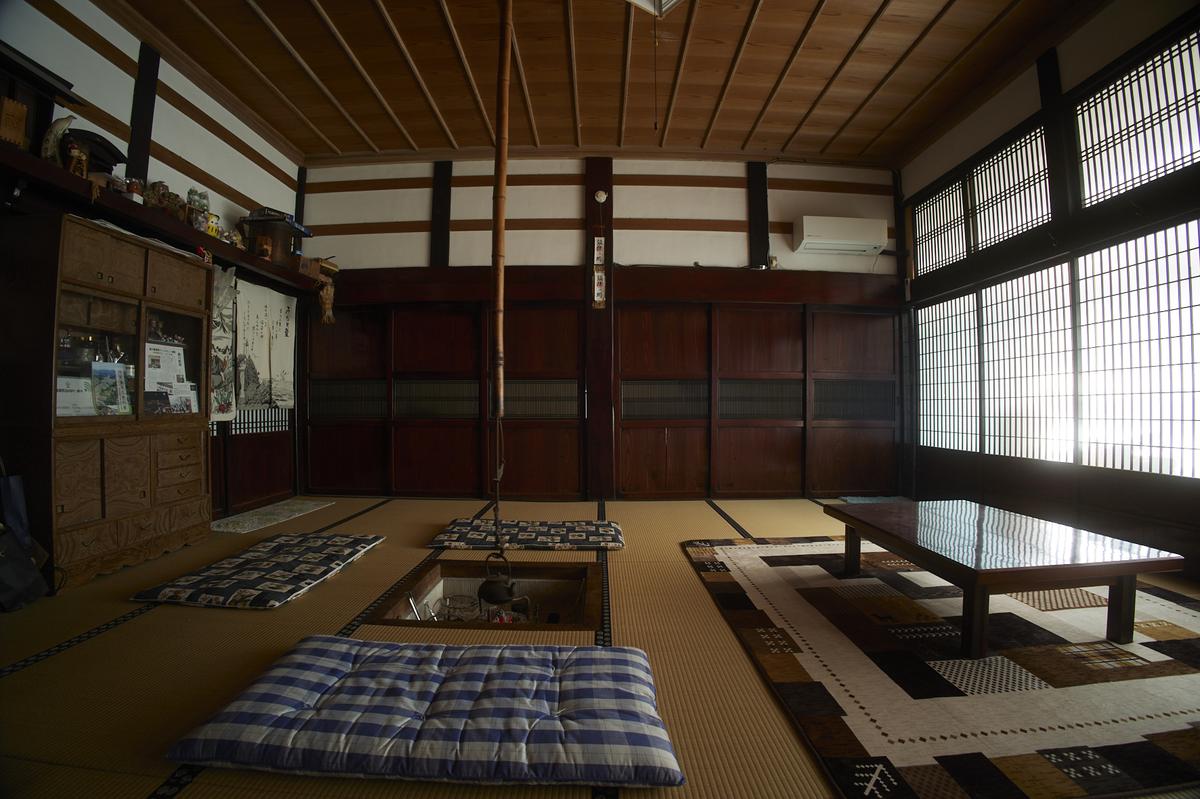
A guesthouse run by Yoshihei Iwahashi, a key figure in the Okugawa district. The building is a traditional magari-ya (L-shaped farmhouse) where horses and sheep were once kept. Iwahashi-san is wonderfully approachable — ask him about the history and culture of the area, and he'll be happy to share more than you might expect. Address 90 Uenohara, Iisato, Okugawa, Nishiaizu-machi, Fukushima 969-4734, Japan Google Map Check with Google Maps Access Parking Business Hours Admission Fee Regular Holiday Phone Number 0241-49-2974 URL SNS
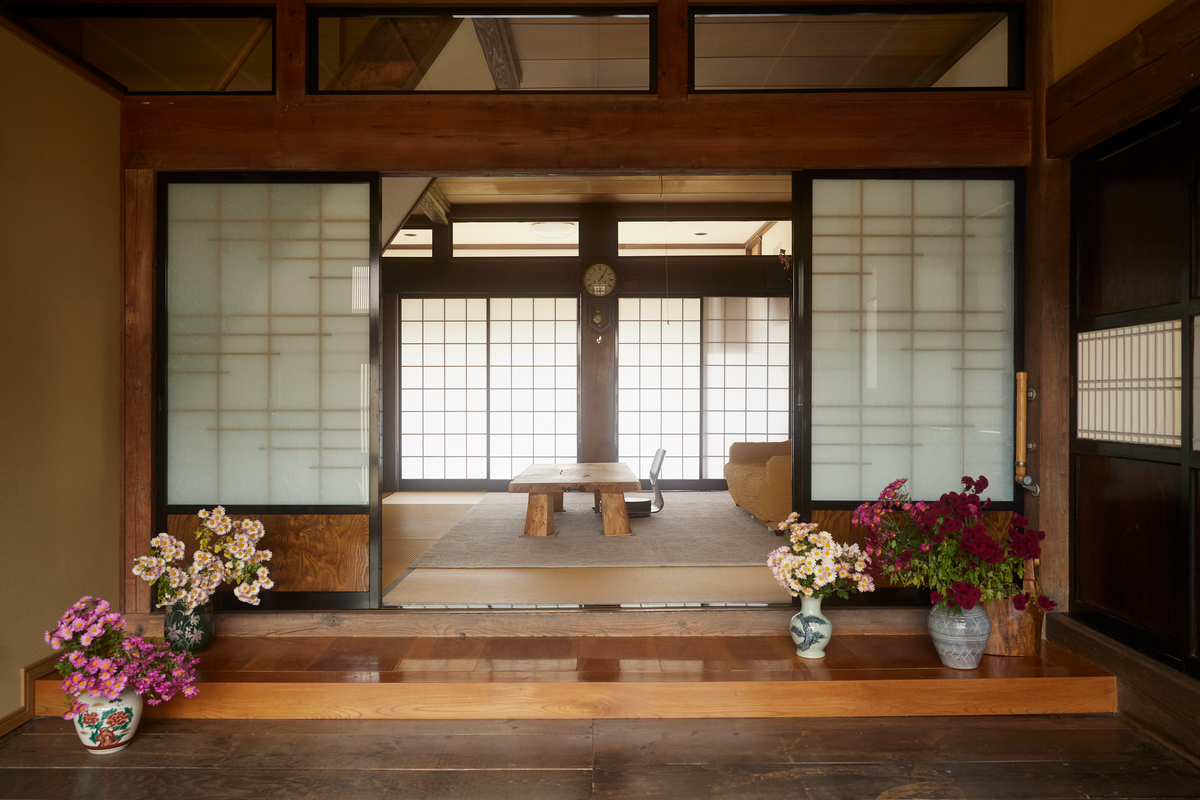
A guesthouse run by Reiko Onogi, who also operates the art museum Nō to Kurashi (Agriculture and Life) and the book café Sabō Sekichūka. During your stay, be sure to visit the surrounding facilities as well. Calligraphy, mountain hiking, reading — Reiko-san's many passions are woven into the fabric of her satoyama life here, and guests are sure to feel it. Address 2246 Satomichi, Iisato, Okugawa, Nishiaizu-machi, Fukushima 969-4734, Japan Google Map Check with Google Maps Access Parking Available Business Hours Admission Fee Regular Holiday Phone Number 080-6019-0384 URL SNS
Iide no Yado Makunouchi
Accomodation
Open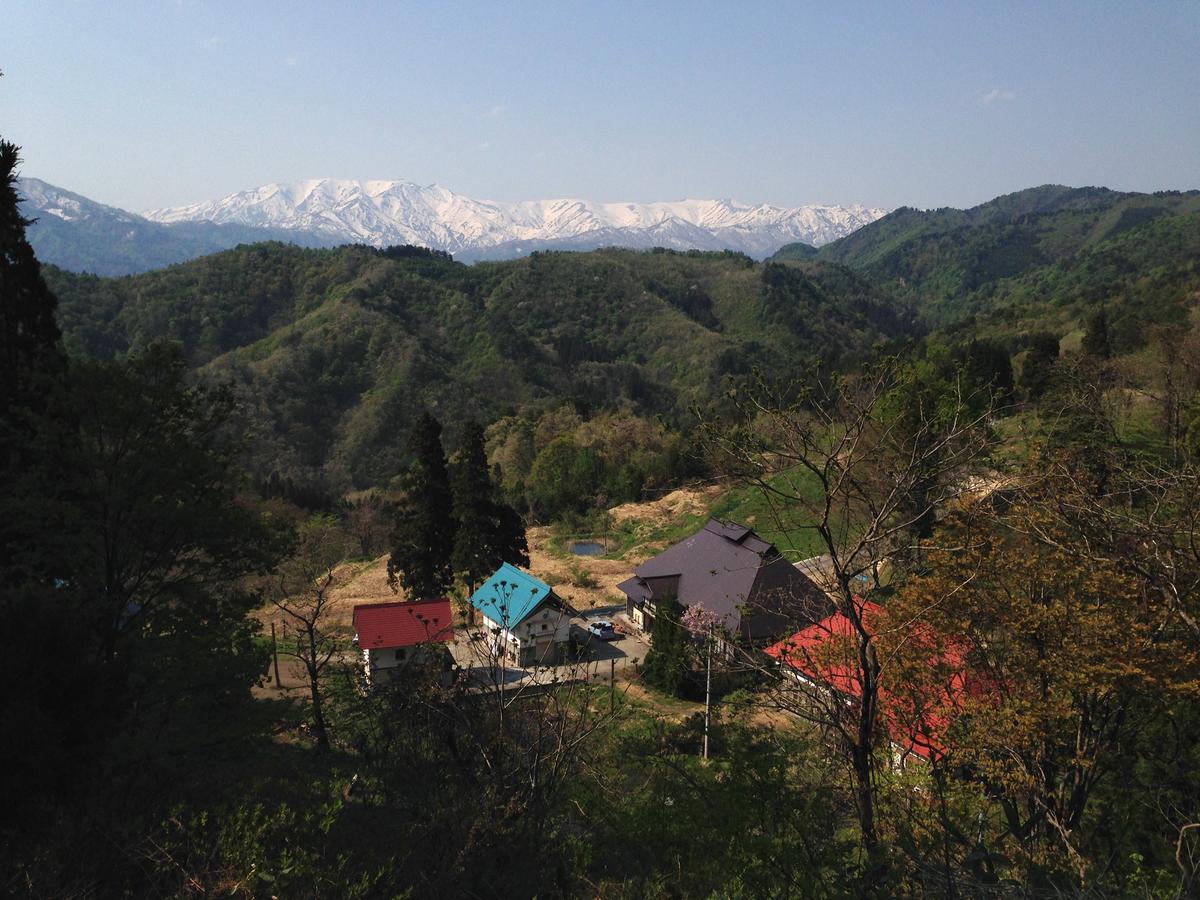
A true lone house deep in the mountains. Situated at one of the highest elevations in the township, this guesthouse offers breathtaking views of the Iide Mountain Range on clear days. The host, Shigeko Igarashi, is a wonderfully gifted cook — expect heartfelt home cooking made with seasonal ingredients, including vegetables freshly picked from her own garden. Address 2618 Makunouchi, Ōtsunaki, Okugawa, Nishiaizu-machi, Fukushima 969-4733, Japan Google Map Check with Google Maps Access Parking Available Business Hours Admission Fee Regular Holiday Phone Number 090-9243-3307 URL SNS
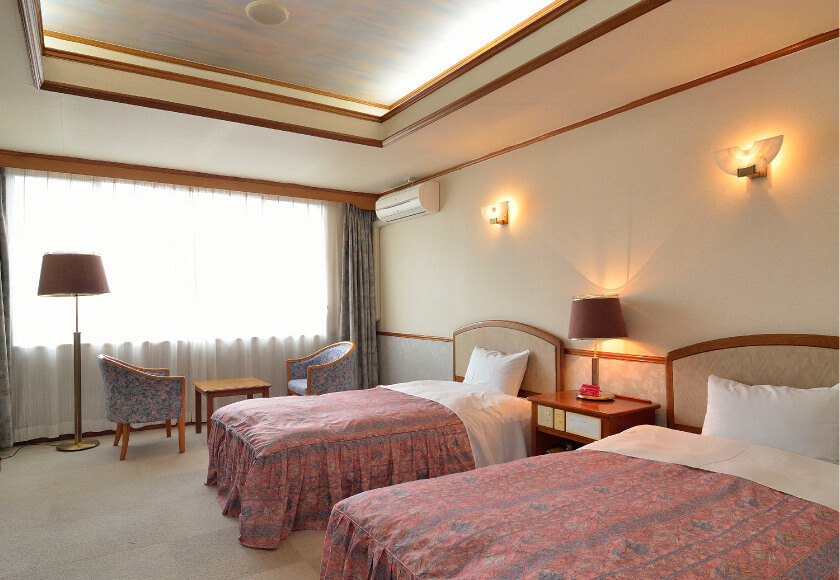
The only facility in Nishiaizu where you can enjoy a natural hot spring. The mineral-rich, slightly salty spring water and the renowned sauna — which many returning guests declare "the best place to reach that perfect state of bliss (totonou)" — await you. The kitchen is equally proud of its menu, making generous use of Nishiaizu's own ingredients: locally grown rice, mineral-rich vegetables, and more. Address 187 Shimo-ojima, Tosejima, Nishiaizu-machi, Fukushima 969-4401, Japan Google Map Check with Google Maps Access Parking Available Business Hours Admission Fee Regular Holiday Phone Number URL https://www.lotosinn.com/ SNS
Green Okugawa
Accomodation
Open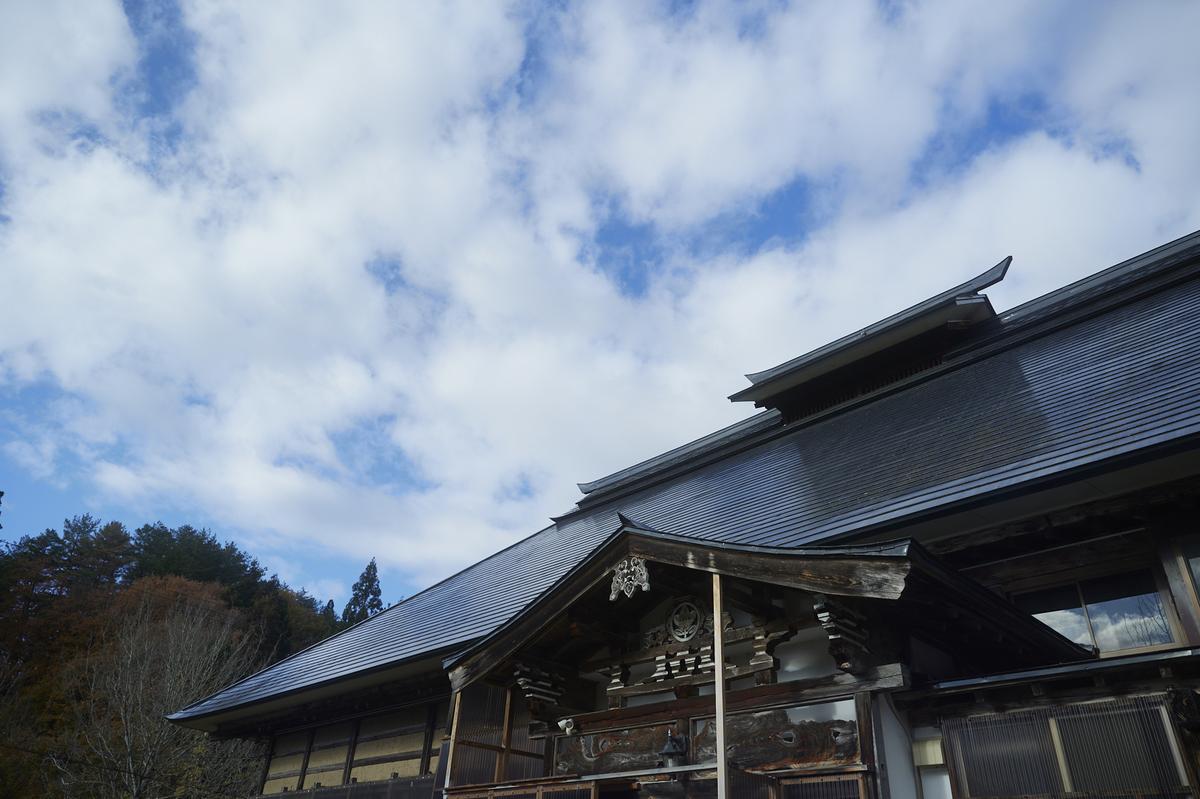
A guesthouse run with quiet dedication by Mitsuko Suzuki. Located in one of the most deeply mountainous settlements in the township, it offers guests a chance to experience rural village life in a traditional farmhouse just as it has always been. The home-cooked meals prepared by Suzuki-san herself are gentle, warming, and full of the kind of comfort only a grandmother's kitchen can offer. Address 3001 Nishigawa-mae, Kōyōne, Okugawa, Nishiaizu-machi, Fukushima 969-4737, Japan Google Map Check with Google Maps Access Parking Available Business Hours Admission Fee Regular Holiday Phone Number 0241-49-2188 URL SNS
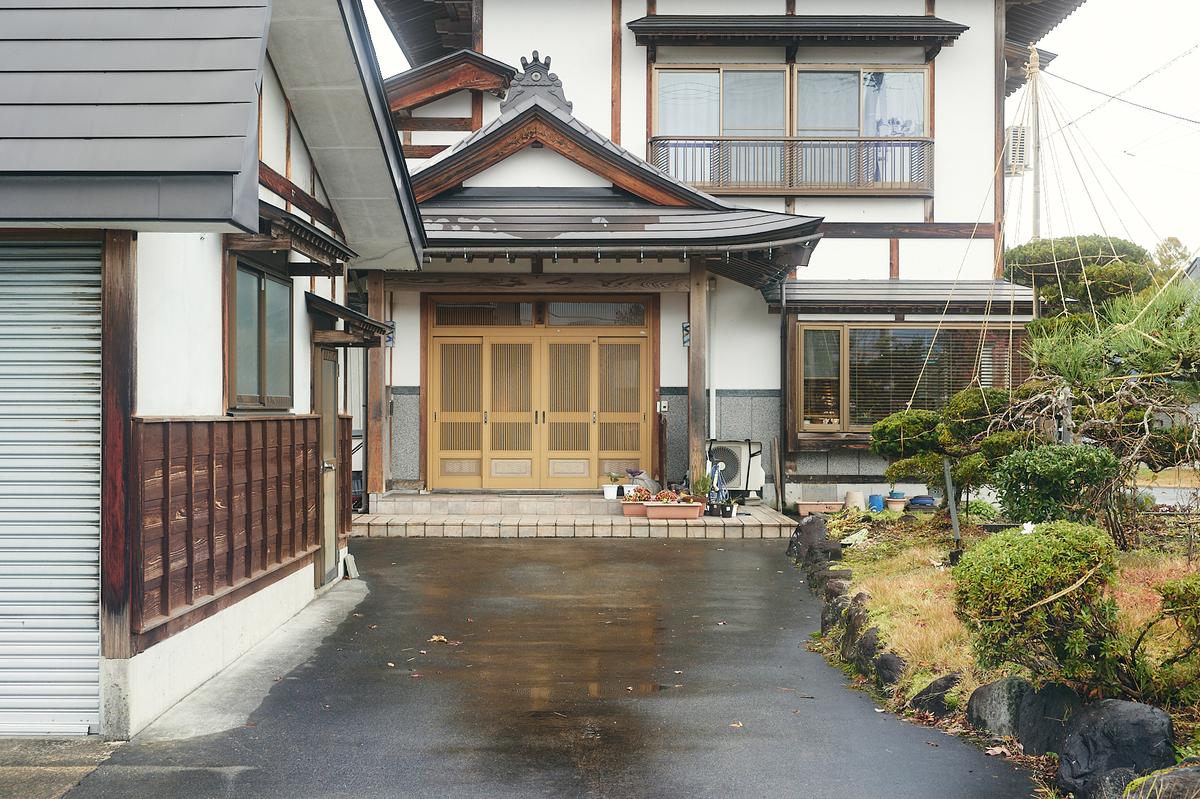
The home of Mitsuko Iwahara — a stained glass artist — opened as a guesthouse, with her works displayed throughout the rooms. For those who wish, a hands-on stained glass making experience can also be arranged (advance inquiry required). A wonderful way to create something to carry home as a memento of your stay and your time in Nishiaizu. Address 1230-61 Sayurigaoka-otsu, Toyoshima, Nishiaizu-machi, Fukushima 969-4401, Japan Google Map Check with Google Maps Access Parking Business Hours Admission Fee Regular Holiday Phone Number 090-4886-5523 URL SNS
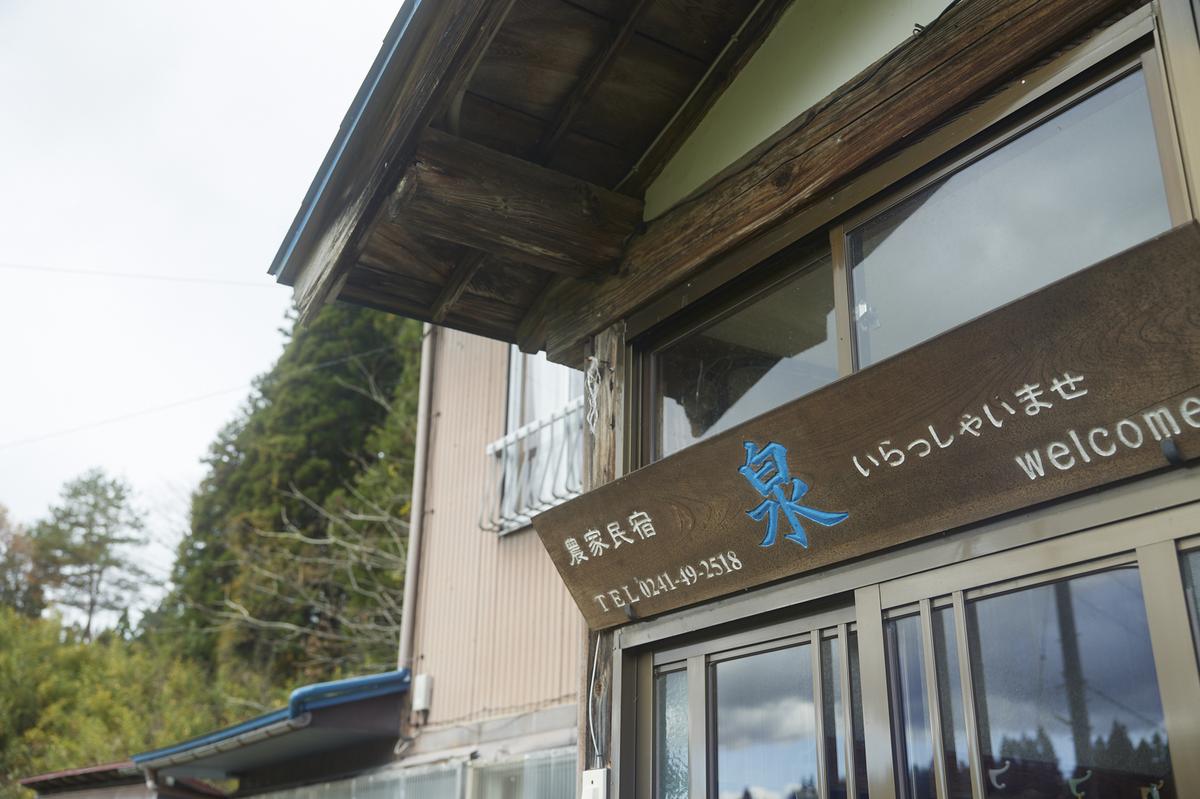
A guesthouse where the warm and attentive hospitality of host Etsuko Tsuge makes every guest feel truly cared for. The mountain vegetable (sansai) dishes are exceptional — so much so that some guests make the trip especially to taste them. Rice paddies and fields stretch out before the house, and the distance from city noise makes for a wonderfully unhurried stay. Address 1 Idaira, Motoshima, Okugawa, Nishiaizu-machi, Fukushima 969-4736, Japan Google Map Check with Google Maps Access Parking Available Business Hours Admission Fee Regular Holiday Phone Number 090-3470-4123 URL SNS
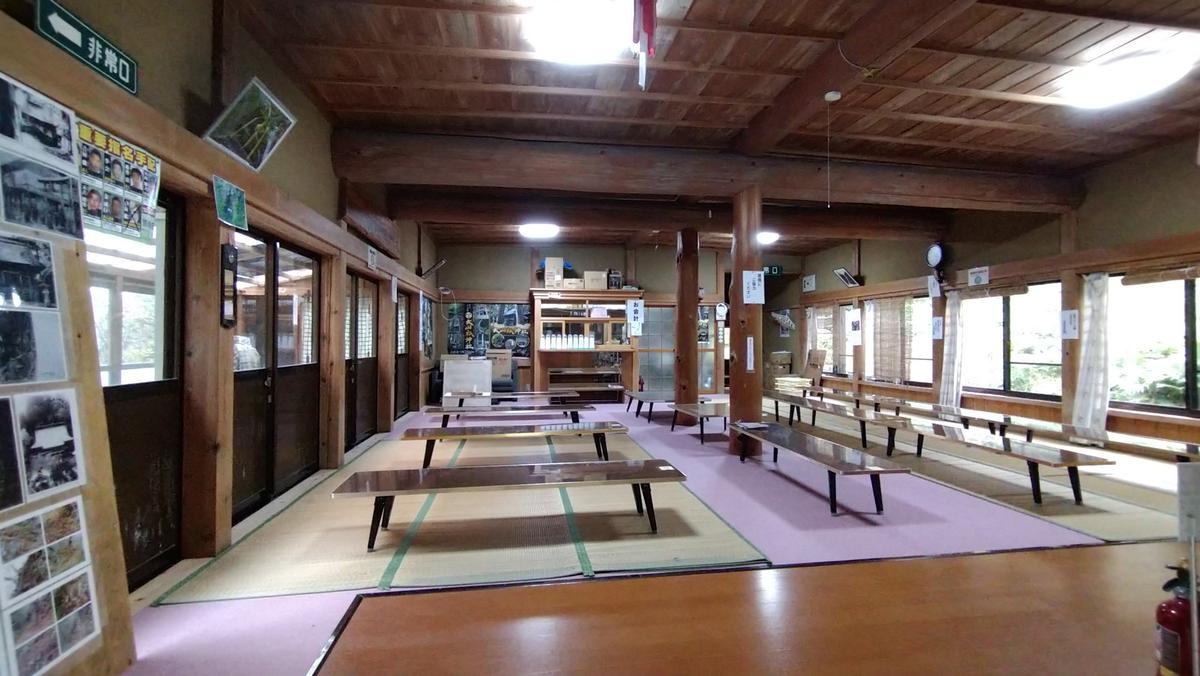
Climb the sacred mountain trail (sandō) leading to the main shrine of Ōyamazumi Jinja for approximately an hour and a half — and this guesthouse appears, right before the shrine itself. Tucked away alone in the heart of the mountain, the only sounds are the voices of the creatures of the forest. Spend a night here, and you may just find yourself drawing on the power of the mountain deity itself. Address In front of Ōyamazumi Jinja Main Shrine, Ōkubo, Nozawa, Nishiaizu-machi, Fukushima 969-4406, Japan Google Map Check with Google Maps Access Parking Available Business Hours Admission Fee Regular Holiday Phone Number 090-4049-4448 URL SNS
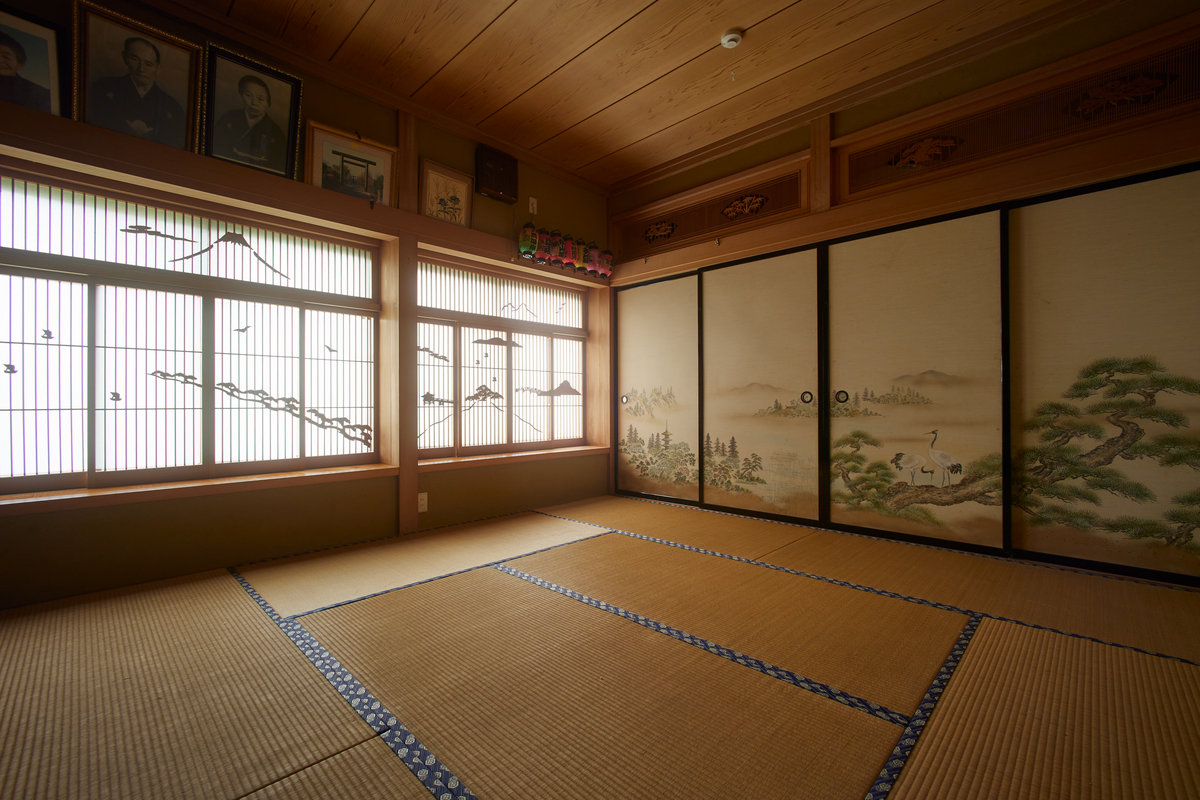
The host is Yoshie Monoe, a grower of Nishiaizu's celebrated mineral vegetables. A qualified cook, he takes pride in dishes made with fresh seasonal produce straight from his own fields. Wonderfully easy to talk to, conversation is sure to flow — about vegetable growing, life in the town, and whatever else comes to mind. The resident cat Tora will be there to greet you too, in his own unhurried way. Address 1016 Hamura-naka-otsu, Toyoshima, Nishiaizu-machi, Fukushima 969-4401, Japan Google Map Check with Google Maps Access Parking Business Hours Admission Fee Regular Holiday Phone Number 0241-45-3497 URL SNS
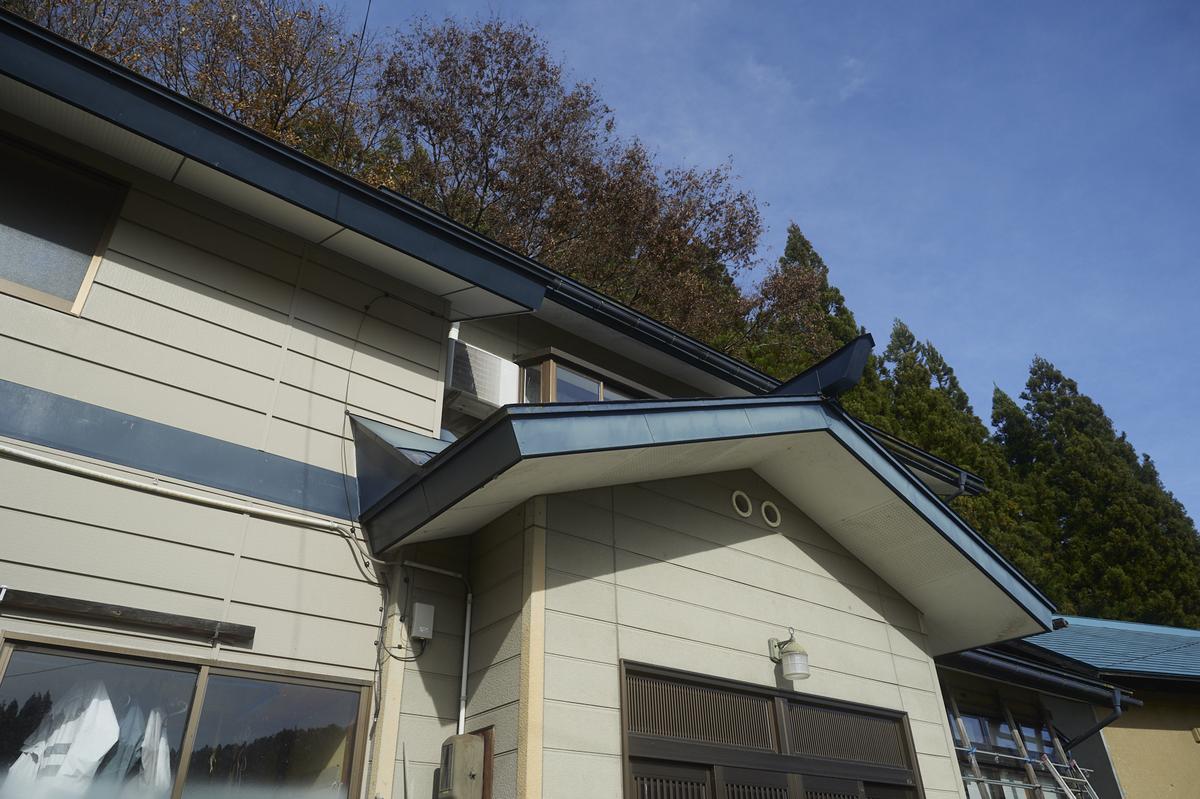
Motoji Kataoka — farmer and guesthouse host — welcomes guests to his land along the Okugawa River. A sign at the entrance reads "Okugawa's Ihatov" — a nod to the visionary ideal world imagined by the poet Kenji Miyazawa, and for Kataoka-san, this place and this land are precisely that: a world of his own making. Joining him in the fields or taking a walk along the river together sounds like just the kind of simple, unhurried joy this place is made for. Address 39 Idaira, Motoshima, Okugawa, Nishiaizu-machi, Fukushima 969-4736, Japan Google Map Check with Google Maps Access Parking Available Business Hours Admission Fee Regular Holiday Phone Number 0241-49-2515 URL SNS
DANA VILLAGE
Accomodation
Open
Address Google Map Check with Google Maps Access Parking Business Hours Admission Fee Regular Holiday Phone Number URL SNS
 Station
JR NOZAWA Station
Station
OpenAddress Google Map Check with Google Maps Access Parking Business Hours Admission Fee Regular Holiday Phone Number URL SNS
JR KAMINOJIRI Station
Station
OpenAddress Google Map Check with Google Maps Access Parking Business Hours Admission Fee Regular Holiday Phone Number URL SNS
JR Onobori Station
Station
OpenAddress Google Map Check with Google Maps Access Parking Business Hours Admission Fee Regular Holiday Phone Number URL SNS
JR TOKUSAWA Station
Station
OpenAddress Google Map Check with Google Maps Access Parking Business Hours Admission Fee Regular Holiday Phone Number URL SNS
Address Google Map Check with Google Maps Access Parking Business Hours Admission Fee Regular Holiday Phone Number URL SNS
 Public Facility
Nishiaizu Town Hall
Public Facility
OpenAddress 3308 Shitagoya-kami-otsu, Nozawa, Nishiaizu-machi, Yama-gun, Fukushima 969-4406, Japan Google Map Check with Google Maps Access Parking Business Hours 8:30〜17:15 Admission Fee Regular Holiday Weekends & Public Holidays Phone Number 0241-45-2211 URL https://www.town.nishiaizu.fukushima.jp/ SNS
NISHIAIZU Town Community Center
Public Facility
OpenAddress 2234-1 Haramachi-otsu, Nozawa, Nishiaizu-machi, Yama-gun, Fukushima 969-4406, Japan Google Map Check with Google Maps Access Parking Available Business Hours 8:30〜17:15 Admission Fee Regular Holiday Weekends & Public Holidays Phone Number 0241-45-3244 URL SNS
OKUGAWA MIRAI KOURYUKAN -community center
Public Facility
OpenAddress 37-1 Kaminohara, Iisato, Okugawa, Nishiaizu-machi, Yama-gun, Fukushima 969-4734, Japan Google Map Check with Google Maps Access Parking Available Business Hours 8:30〜17:15 Admission Fee Regular Holiday Weekends & Holidays Phone Number 0241-49-2001 URL SNS
Nishiaizu Town Hall — Shingō Branch Office
Public Facility
OpenAddress 589 Sasagawadaira, Sasagawa, Shingō, Nishiaizu-machi, Yama-gun, Fukushima 969-4622, Japan Google Map Check with Google Maps Access Parking Available Business Hours 8:30-17:15 Admission Fee Regular Holiday Weekends & Public Holidays Phone Number 0241-47-2301 URL SNS