
Hieizan(Mt.Hiei) and Biwako (Lake Biwa) Walk Map
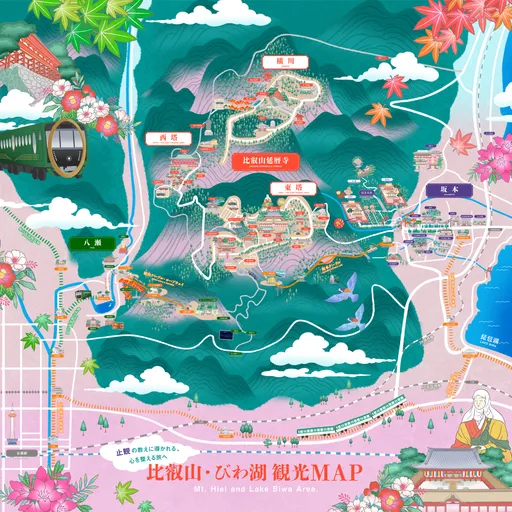
This walking map covers the Hiei Mountain and Lake Biwa area, centered around the World Cultural Heritage site Enryaku-ji Temple. Spanning the border between Kyoto and Shiga Prefectures, the entire mountain features 100 temple halls. We introduce level-specific pilgrimage routes recommended by locals, suitable for beginners to experts, along with various nearby tourist spots including Lake Biwa. Please use this map to fully enjoy the history and nature of the Hiei Mountain and Lake Biwa area!
 Posted by比叡山・びわ湖散策マップUpdated:
 All spots information
111 spots
 Course
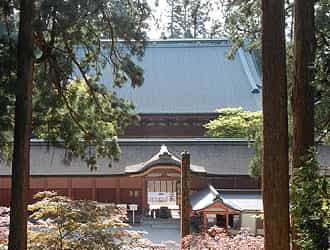
As you visit the various temple halls in the Tōtō (Eastern Pagoda) area of Mount Hiei, take time to experience the teachings of "Shikan", calming your mind and reflecting inward. It's a moment to quiet the heart and reconnect with yourself. What is "Shikan"? Shikan is the practice of calming the mind and observing its depths in order to discover your true self. All forms of training on Mount Hiei are rooted in the pursuit of Shikan. 全長: Total Duration:1.5 hours~ ① Konpon-Chu-do - START! Details Offer incense to Yakushi Rurikō Nyorai, the principal deity enshrined in the Main Hall of Enryakuji Temple on Mount Hiei, and join your hands in prayer. Surrounded by the fragrant smoke and the gentle glow of the Eternal Dharma Light, which has continued to burn for over 1,200 years, you step into a moment of deep serenity. Incense Offering ② Daiko-do Details Gently ring the bell tower, which is also used for the New Year’s Eve bell-ringing ceremony. The resonating sound of the bell clears away confusion from the heart and guides you on the path to enlightenment. Ringing the Bell Tower (Sound Healing) ③ Amida-do Details Chant "Namu Amida Butsu" with sincerity. You may recite it aloud or quietly in your heart. With a calm and grateful mind, offer thanks to Amida Buddha, who, with boundless compassion, continues to save all living beings. Nenbutsu (Mantra Chanting) ④ Daiko-do Details Copying sutras—each character considered a manifestation of the Buddha—you trace the sacred words spoken by Shakyamuni Buddha. As you quietly move your brush with focused attention, you experience the essence of Shikan, calming the mind and observing within. Shakyo (Mindfulness) ⑤ Details ⑥ Details ⑦ Details ⑧ Details ⑨ Details ⑩ Details
As you visit the various temple halls spanning from the Tōtō (Eastern Pagoda) area to the Saitō (Western Pagoda) area of Mount Hiei, take time to experience the teaching of "Shikan"—a chance to calm your mind and quietly reflect inward. It is a moment to face yourself with stillness and clarity. What is “Shikan”? Shikan is the practice of calming the mind (shi) and deeply observing its inner workings (kan) to discover your true self. All forms of spiritual training on Mount Hiei are rooted in the pursuit of this essential practice. 全長: Total Duration:2 hours~ ① Konpon-Chu-do - START! Details Offer incense to Yakushi Ruriko Nyorai, the principal deity enshrined in the Main Hall of Enryakuji Temple on Mount Hiei, and place your hands together in prayer. Surrounded by the fragrant smoke and the light of the Eternal Dharma Flame, which has continued to burn for 1,200 years, you step into a moment of quiet serenity. Incense Offering ② Daiko-do Details Gently ring the bell tower, which is also used for the New Year’s Eve bell-ringing ceremony. The resonating sound of the bell clears away doubts from the heart and guides you on the path to enlightenment. Ringing the Bell Tower (Sound Healing) ③ Amida-do Details Chant "Namu Amida Butsu" with sincerity. It is also fine to recite it silently in your heart. With a calm and quiet mind, offer gratitude to Amida Buddha, who continues to save all living beings with boundless compassion. Nenbutsu (Mantra Chanting) ④ Jodo-in Details At the mausoleum of Dengyō Daishi Saichō, the most sacred site within Mount Hiei, join your hands in prayer. As you offer your respects to the founder of Japanese Buddhism, you can feel the spirit that has been preserved and passed down from the past to the present. Prayer to Ancestors ⑤ Shaka-do Details Step into Shakadō, nestled among the trees, and offer your prayers to its principal deity, Shaka Nyorai. As you pray to the Buddha who founded Buddhism and attained enlightenment, your heart is purified, allowing you to quietly reflect on yourself. Silent Meditation ⑥ Details ⑦ Details ⑧ Details ⑨ Details ⑩ Details
As you visit the various temple halls of Mount Hiei—from the Tōtō (Eastern Pagoda) area to the Saitō (Western Pagoda) and Yokokawa areas—take the time to experience the teaching of "Shikan", quieting your mind and spending a moment in self-reflection. What is “Shikan”? Shikan is the practice of calming the mind (shi) and deeply observing its inner workings (kan) to discover your true self. All forms of spiritual training on Mount Hiei are rooted in the pursuit of this essential practice. 全長: Total Duration:3 hours~ ① Konpon-Chu-do - START! Details Offer incense to Yakushi Ruriko Nyorai, the principal deity enshrined in the Main Hall of Enryakuji Temple on Mount Hiei, and bring your hands together in prayer. Surrounded by the fragrant smoke and the light of the Eternal Dharma Flame, which has continued to burn for 1,200 years, you step into a moment of deep tranquility. Yakushi Nyorai is a Buddha who brings blessings in this life—take this opportunity to reflect on your present self. Incense Offering ② Daiko-do Details Gently ring the bell tower, which is also used for the New Year’s Eve bell-ringing ceremony. The resonating sound of the bell clears away confusion from the mind and helps guide you on the path to enlightenment. Ringing the Bell Tower (Sound Healing) ③ Amida-do Details Chant "Namu Amida Butsu" with sincerity. You may recite it silently in your heart. With a calm and quiet mind, offer your gratitude to Amida Buddha, who continues to save all living beings with boundless compassion. Nenbutsu (Mantra Chanting) ④ Jodo-in Details At the mausoleum of Dengyō Daishi Saichō, the most sacred site on Mount Hiei, join your hands in prayer. Offer your respects to the founder of Japanese Buddhism and feel the spirit that has been preserved and passed down from the past to the present. Prayer to Ancestors ⑤ Shaka-do Details Step into Shakadō, surrounded by trees, and offer your prayers to its principal deity, Shaka Nyorai. As you pray to the Buddha, who founded Buddhism and attained enlightenment, your heart is purified. Take this moment to reflect on your past. Silent Meditation ⑥ Yokawa Details Join your hands in prayer before the principal deity, Seikanzeon Bosatsu (Sacred Kannon Bodhisattva), a National Important Cultural Property who saves people from various hardships. Offer your prayers to this Buddha who works to create a better future, and turn your thoughts toward the person you wish to become. Yokokawa Chudo ⑦ Details ⑧ Details ⑨ Details ⑩ Details
 Access from Kyoto Station to Mount Hiei
Access from Kyoto Station to Mount Hiei
Access from Kyoto Station to Mount Hiei
 Open
Open
交通ルート選択(戻るボタン付き) Select a transportation route
 Sightseeing
Konpon-Chu-do
Sightseeing
Open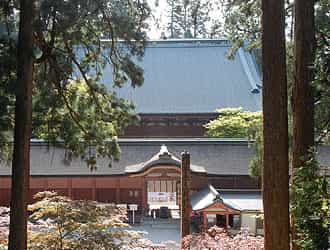
Founded by Saicho in 788, this is one of Japan's most important temples, where monks of various sects have practiced. The temple enshrines the Yakushi Nyorai statue as its principal image, and an everlasting flame of Buddhism has been burning for over 1,200 years. The outer sanctuary, where worshippers pray, and the main hall where the principal image is enshrined are both built on the same level and are floored with wooden planks, representing the Tendai Buddhist teaching that each of us has the potential to become a Buddha. Daily sutras are chanted in the Konpon-Chu-do, and goma prayers are performed, in which goma wood bearing prayers is burned. Regarding Visiting the Konpon-Chu-do Due to the ongoing major renovation of the Konpon-Chu-do, we have decided to refrain from visiting the main hall, Konpon-Chu-do, during the following period. This is a difficult decision, and we ask for your understanding. During this period, please worship at the Manhai-do of Worship as described above. Goshuin stamps will also be moved to the Manhai-do of Worship. PeriodJanuary 6, 2026 - January 1998 (approximately two years) Worship at the Manhai-do of Worship will begin on January 8, 2026 Only the student stage will be open on January 6th and 7th due to the preparation period. Starting January 8, 2026, the Manhai-do of Worship will house the "Yakushi Nyorai Statue," a secret principal image of the Konpon-Chu-do of Enryakuji Temple, and the "Eternal Dharma Lamp," a special statue for a limited time. This will be a rare opportunity to see the Buddha statues up close, so we hope you will come and deepen your connection with the Buddha of Mount Hiei. Address Honmachi, Sakamoto, Otsu City, Shiga Prefecture, 520-0116 Google Map Check with Google Maps Access ・From Eizan Ropeway's “Mt. Hiei Summit Station,” take the shuttle bus and get off at “Enryakuji Bus Center” (immediately accessible) ・From Sakamoto Cable's “Enryakuji Station,” get off and walk about 8 minutes Parking Business Hours 9:00 AM - 4:00 PM Admission Fee Common ticket for East, West, and Yokawa Areas Adults: 1,000 yen, Junior High and High School Students: 600 yen, Elementary School Students: 300 yen Regular Holiday Phone Number 077-578-0001 URL https://www.hieizan.or.jp/keidai/toudou SNS
Hokke Soji-in To-do
Sightseeing
Open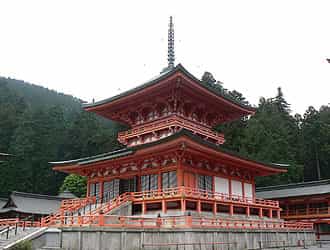
The Hokkeshōjinin Eastern Pagoda, the highest point within Enryaku-ji, houses the Lotus Sutra in six precious towers and is considered the most important part of Saichō's architectural plan. Dainichi Nyorai is the principal deity, and the upper part of the tower enshrines Buddha relics and the Lotus Sutra. Additionally, hand-copied sutras donated by followers are stored in the tower. Address 4220 Honmachi, Sakamoto, Otsu City, Shiga Prefecture, 520-0116 Google Map Check with Google Maps Access ・From Eizan Ropeway's “Mt. Hiei Summit Station,” take the shuttle bus and get off at “Enryakuji Bus Center” (immediately accessible) ・From Sakamoto Cable's “Enryakuji Station,” get off and walk about 8 minutes Parking Business Hours 9:00 AM - 4:00 PM Admission Fee Common ticket for East, West, and Yokawa Areas Adults: 1,000 yen, Junior High and High School Students: 600 yen, Elementary School Students: 300 yen Regular Holiday Phone Number 077-578-0001 URL https://www.hieizan.or.jp/keidai/toudou SNS
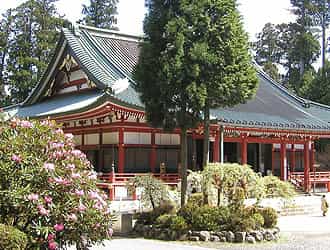
Founded by Saichō’s disciple Gishin (781–833), it initially served as lodging for imperial envoys during ordination ceremonies but later developed into a study and training hall for monks’ scholarly pursuits. The Great Lecture Hall enshrines statues of the founders of various sects who trained on Mount Hiei and later established new sects, earning Mount Hiei the title "Mother of Japanese Buddhism." Address 4220 Honmachi, Sakamoto, Otsu City, Shiga Prefecture, 520-0116 Google Map Check with Google Maps Access ・From Eizan Ropeway's “Mt. Hiei Summit Station,” take the shuttle bus and get off at “Enryakuji Bus Center” (immediately accessible) ・From Sakamoto Cable's “Enryakuji Station,” get off and walk about 8 minutes Parking Business Hours 9:00 AM - 4:00 PM Admission Fee Common ticket for East, West, and Yokawa Areas Adults: 1,000 yen, Junior High and High School Students: 600 yen, Elementary School Students: 300 yen Regular Holiday Phone Number 077-578-0001 URL https://www.hieizan.or.jp/keidai/toudou SNS
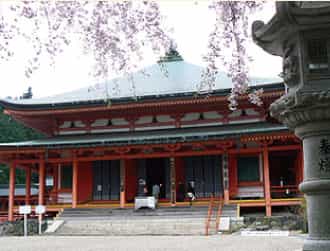
A hall that was part of Saichō’s original architectural plan for Hokkeshōjinin, completed over several years as the central training ground for Tendai Esoteric Buddhism. It now serves as the central facility in the Eastern Pagoda area, connected to the Kanjodō Hall to the south and the Jakōdō Hall to the north by corridors. It is the only hall in Enryaku-ji for memorial services, where daily Jōdo Nenbutsu practices are held to pray for the peace of ancestors’ spirits and those connected to them. Address 4220 Honmachi, Sakamoto, Otsu City, Shiga Prefecture, 520-0116 Google Map Check with Google Maps Access ・From Eizan Ropeway's “Mt. Hiei Summit Station,” take the shuttle bus and get off at “Enryakuji Bus Center” (immediately accessible) ・From Sakamoto Cable's “Enryakuji Station,” get off and walk about 8 minutes Parking Business Hours 9:00 AM - 4:00 PM Admission Fee Common ticket for East, West, and Yokawa Areas Adults: 1,000 yen, Junior High and High School Students: 600 yen, Elementary School Students: 300 yen Regular Holiday Phone Number 077-578-0001 URL https://www.hieizan.or.jp/keidai/toudou SNS
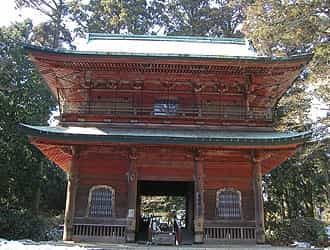
Modeled after the Manjusri Bodhisattva Hall of Wutai Mountain in China and established by Saichō’s disciple Ennin (794–864). Manjusri Bodhisattva is revered for possessing complete wisdom and conveys teachings, and nowadays, many people pray here for success in examinations and academic achievements. Address 4220 Honmachi, Sakamoto, Otsu City, Shiga Prefecture, 520-0116 Google Map Check with Google Maps Access ・From Eizan Ropeway's “Mt. Hiei Summit Station,” take the shuttle bus and get off at “Enryakuji Bus Center” (immediately accessible) ・From Sakamoto Cable's “Enryakuji Station,” get off and walk about 8 minutes Parking Business Hours 9:00 AM - 4:00 PM Admission Fee Common ticket for East, West, and Yokawa Areas Adults: 1,000 yen, Junior High and High School Students: 600 yen, Elementary School Students: 300 yen Regular Holiday Phone Number 077-578-0001 URL https://www.hieizan.or.jp/keidai/toudou SNS
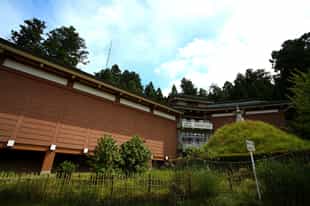
The Enryaku-ji properties store cultural assets such as Buddhist statues, paintings, and writings passed down through the temple. Many National Treasures and Important Cultural Properties are included and displayed on a rotating basis. The permanent exhibition titled "Buddhist Art and Faith" includes Important Cultural Properties like the Thousand-armed Kannon Bodhisattva statue created during the Heian period. Address 4220 Honmachi, Sakamoto, Otsu City, Shiga Prefecture, 520-0116 Google Map Check with Google Maps Access ・From Eizan Ropeway's “Mt. Hiei Summit Station,” take the shuttle bus and get off at “Enryakuji Bus Center” (immediately accessible) ・From Sakamoto Cable's “Enryakuji Station,” get off and walk about 8 minutes Parking Business Hours 9:00 AM - 4:00 PM Admission Fee Adults: 500 yen, Junior High and High School Students: 300 yen, Elementary School Students: 100 yen Regular Holiday Phone Number 077-578-0001 URL https://www.hieizan.or.jp/keidai/kokuhoden SNS
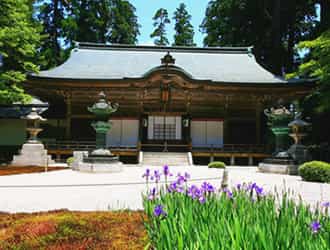
Jodo-in Temple, home to Dengyo Daishi's tomb, is the place where Jikaku Daishi moved and enshrined his remains in July 854 (the 4th year of the Ninju era) after he passed away on June 4, 822 (the 13th year of the Kōnin era). It's located on the border between the To-to and Sai-to areas, and belongs to the To-to area. Currently, monks who have been seclusion for 12 years worship the tomb every day, as if they were serving the living Daishi. It has been designated a National Important Cultural Property. Address 4220 Sakamotohonmachi, Otsu City, Shiga Prefecture, 520-0116 Google Map Check with Google Maps Access ・From the Hieizan Ropeway “Hieizan-sanchō Station,” take the shuttle bus and get off at “Saitō.” It's right there. Parking Free parking available Business Hours 9:00-16:00 Admission Fee Common ticket for East, West, and Yokawa Areas Adults: 1,000 yen, Junior High and High School Students: 600 yen, Elementary School Students: 300 yen Regular Holiday Phone Number 077-578-0001 URL https://www.hieizan.or.jp/keidai/saitou SNS
Shaka-do (important cultural asset)
Sightseeing
Open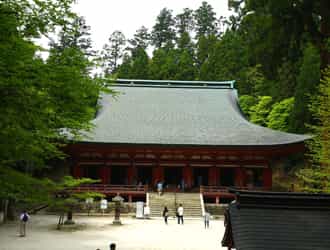
A central hall in the Western Pagoda area enshrining a Shakyamuni Buddha statue made by Dengyō Daishi. After Oda Nobunaga's attack, Toyotomi Hideyoshi transferred it from Mii-dera in Otsu, and it is considered a representative example of Tendai architecture and the oldest building in the area. Address 4220 Honmachi, Sakamoto, Otsu City, Shiga Prefecture, 520-0116 Google Map Check with Google Maps Access ・From the Hieizan Ropeway “Hieizan-sanchō Station,” take the shuttle bus and get off at “Saitō.” It's right there. Parking Business Hours 9:00 AM - 4:00 PM Admission Fee Common ticket for East, West, and Yokawa Areas Adults: 1,000 yen, Junior High and High School Students: 600 yen, Elementary School Students: 300 yen Regular Holiday Phone Number 077-578-0001 URL https://www.hieizan.or.jp/keidai/saitou SNS
Ninai-do (important cultural asset)
Sightseeing
Open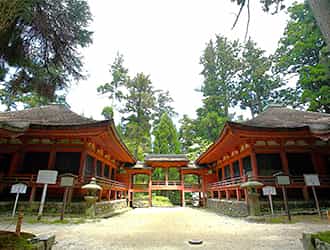
Considered by Tendai Buddhism founder Zhongi to be the ultimate training ground for "Regular Practice Samadhi" in the Mahāśvétān Sutra, Jōgyōdō and Hokke-dō Hall are identical buildings connected by a corridor. They were designed as training grounds for "Walking and Sitting Half Samadhi." According to legend, the strongman Benkei carried the corridor between the two halls like a yoke, hence the name "Benkei's Carrying Hall." Address 4220 Honmachi, Sakamoto, Otsu City, Shiga Prefecture, 520-0116 Google Map Check with Google Maps Access ・From the Hieizan Ropeway “Hieizan-sanchō Station,” take the shuttle bus and get off at “Saitō.” It's right there. Parking Business Hours 9:00 AM - 4:00 PM Admission Fee Common ticket for East, West, and Yokawa Areas Adults: 1,000 yen, Junior High and High School Students: 600 yen, Elementary School Students: 300 yen Regular Holiday Phone Number 077-578-0001 URL https://www.hieizan.or.jp/keidai/saitou SNS
Yokawa Chu-do
Sightseeing
Open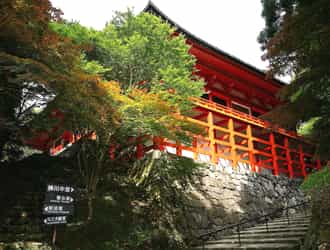
The central great hall of the Yokogawa area enshrining a trinity of statues including Bishamonten. It is a pilgrimage site for the New Saigoku Thirty-three Kannon Pilgrimage, attracting many visitors who come to honor Kannon and deepen their faith. Address 4225 Honmachi, Sakamoto, Otsu City, Shiga Prefecture, 520-0116 Google Map Check with Google Maps Access ・From the Hieizan Ropeway “Hieizan-sanchō Station,” take the shuttle bus and get off at “Yokawa.” It's right there. Parking Business Hours 9:00 AM - 4:00 PM Admission Fee Common ticket for East, West, and Yokawa Areas Adults: 1,000 yen, Junior High and High School Students: 600 yen, Elementary School Students: 300 yen Regular Holiday Phone Number URL https://www.hieizan.or.jp/keidai/yokawa SNS
Konpon Nyoho-to
Sightseeing
Open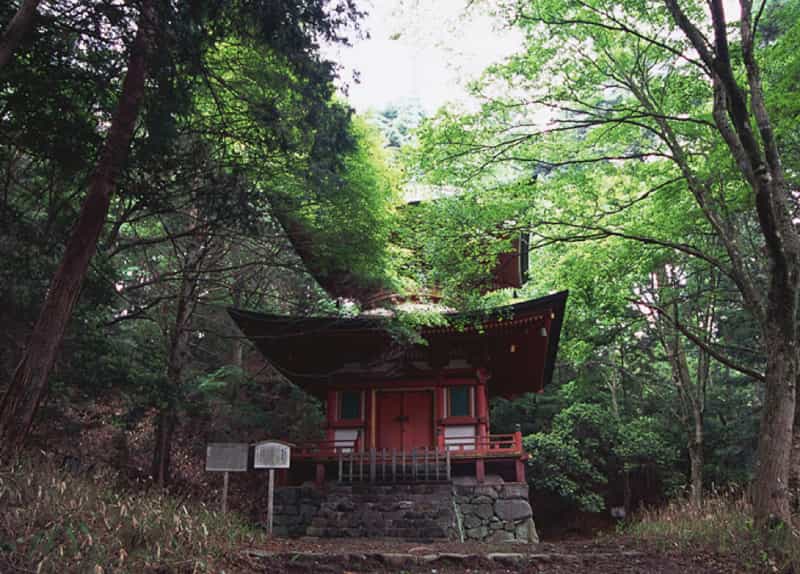
Established by Ennin, a small tower housing the eight volumes of the Lotus Sutra written with ink made from graphite that reportedly doesn’t wear down even after a thousand years and brushes made from grass. The small tower contains the sutras and enshrines Shakyamuni Buddha and Taho Buddha as principal deities, both revered by the Lotus Sutra. Address 4225 Honmachi, Sakamoto, Otsu City, Shiga Prefecture, 520-0116 Google Map Check with Google Maps Access ・From the Hieizan Ropeway “Hieizan-sanchō Station,” take the shuttle bus and get off at “Yokawa.” It's right there. Parking Business Hours 9:00 AM - 4:00 PM Admission Fee Common ticket for East, West, and Yokawa Areas Adults: 1,000 yen, Junior High and High School Students: 600 yen, Elementary School Students: 300 yen Regular Holiday Phone Number URL https://www.hieizan.or.jp/keidai/yokawa SNS
Shiki Ko-do (Gansan Daishi-do)
Sightseeing
Open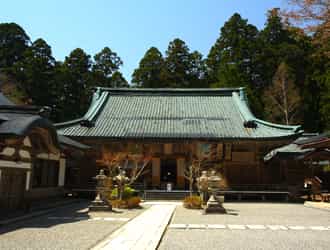
The origin of this hall is the residence of Ryōgen (912-985), called Teshinbō. The principal image was Maitreya Bodhisattva, but Emperor Murakami's decree established it as a place where students gathered for lectures and debates on Mahayana sutras throughout the four seasons, hence it was called Shikikōdō (Four Seasons Lecture Hall). Various legends have emerged, and it is also worshipped as an incarnation of Nyoirin Kannon and Fudō Myōō. The hall enshrines Ryōgen’s true image, developing into a central hub for Gyōsan Daishi worship throughout Japan. Address 4225 Honmachi, Sakamoto, Otsu City, Shiga Prefecture, 520-0116 Google Map Check with Google Maps Access ・From the Hieizan Ropeway “Hieizan-sanchō Station,” take the shuttle bus and get off at “Yokawa.” It's right there. Parking Business Hours 9:00 AM - 4:00 PM Admission Fee Common ticket for East, West, and Yokawa Areas Adults: 1,000 yen, Junior High and High School Students: 600 yen, Elementary School Students: 300 yen Regular Holiday Phone Number URL https://www.hieizan.or.jp/keidai/yokawa SNS
Garden Museum Hiei
Sightseeing
Open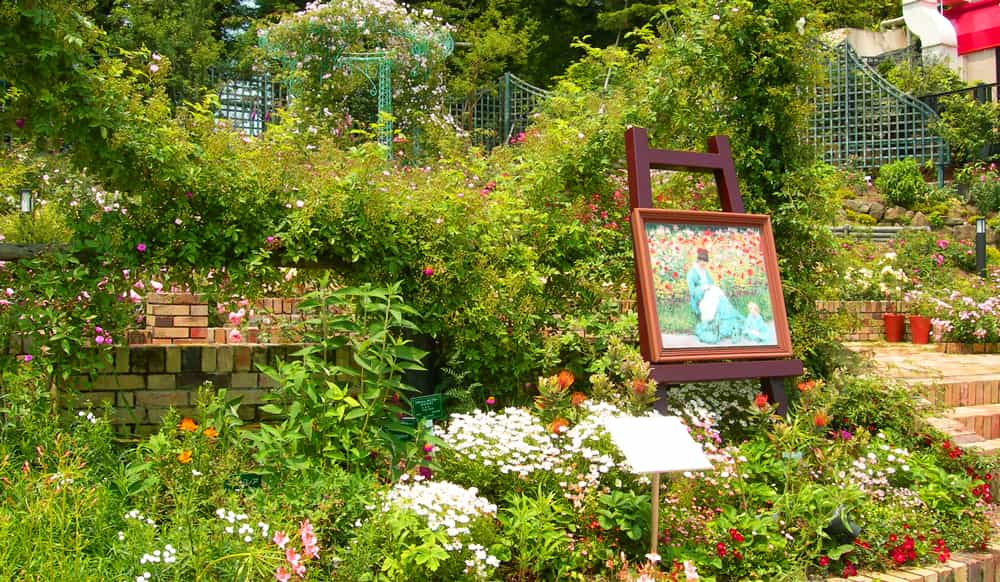
A garden museum designed by a French designer, inspired by the works of French Impressionist painters. It features a relaxing café, a shop with museum goods, stylish items, and souvenirs, and offers stunning views of Lake Biwa, Kyoto, and Osaka from its grounds. Address 4 Shakuranarigai, Shugakuin, Sakyo Ward, Kyoto City, Kyoto Prefecture 606-0000 Google Map Check with Google Maps Access ・Get off at Hieizan Ropeway's “Hieizan Summit Station” Parking Business Hours Hours: 10:00 a.m. – 5:30 p.m. (Last admission at 5:00 p.m.) Open annually from mid-April to early December. Please note that opening hours may change from November onward. For details, please check the official website. Admission Fee Adults (Middle school and above) April 19 - November 24: ¥1,200 Other periods: ¥600 Children (Elementary school) April 19 - November 24: ¥600 Other periods: ¥300 Regular Holiday WednesdaysWinter Closure: December 8, 2025 – mid-April 2026 Phone Number 075-707-7733 URL https://gmhiei.jp/ SNS
Yumemigaoka
Sightseeing
Open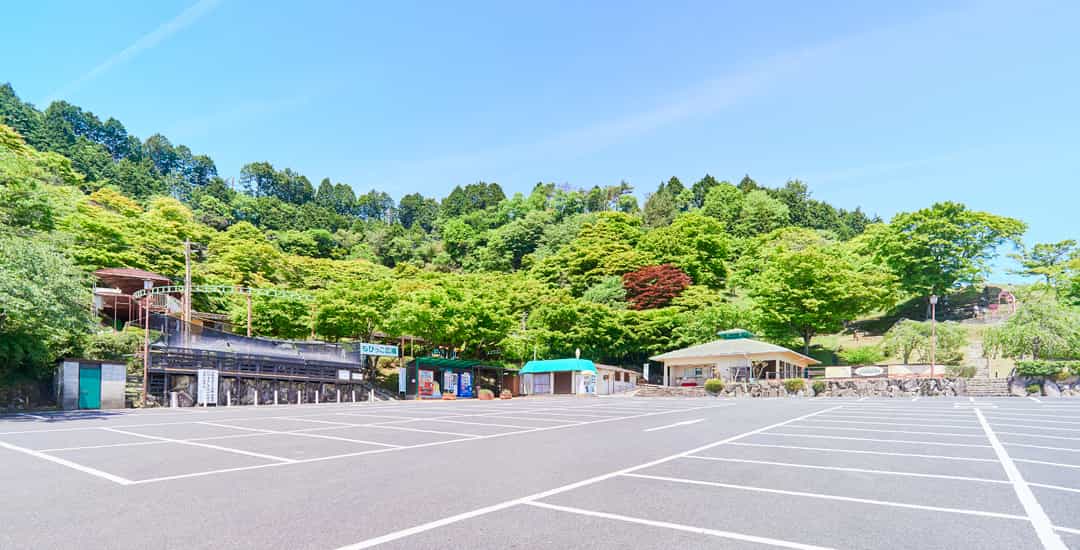
The observation deck offers panoramic views of Lake Biwa and Otsu city. It features a cycle monorail for enjoying aerial walks, and "Café Terrace Yumemi" offers affordable menus from drinks to curry and ramen. The popular summer attraction "Kabuto Beetle House" is also available. Address 776 Yamanaka-cho, Otsu City, Shiga Prefecture, 520-0017 Google Map Check with Google Maps Access Parking Business Hours "Open only on weekends and holidays from March 18 to November 26 10:00 AM - 5:00 PM ※ Open every day during summer vacation" Admission Fee Regular Holiday Phone Number 077-529-2367 URL http://hieizan-way.com/facility/yumemigaoka/ SNS
To-sen-dai
Sightseeing
Open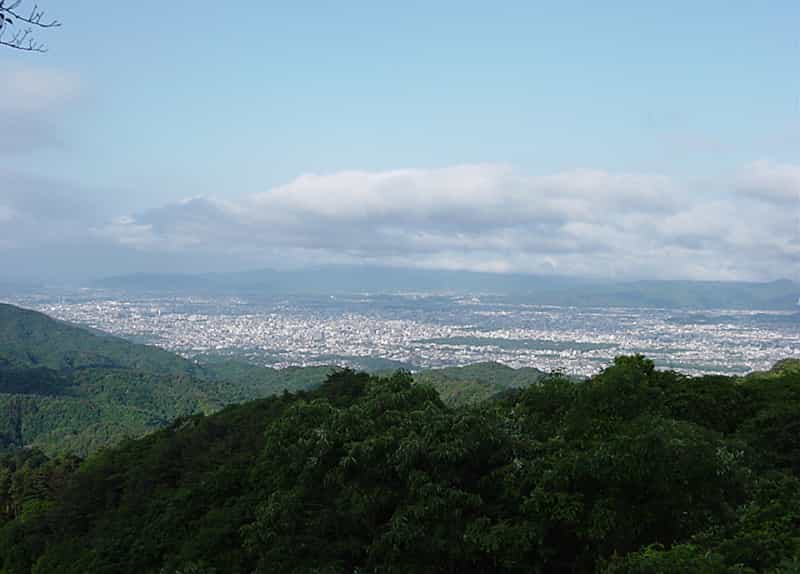
One of the observation points along the Hiei Driveway, situated at the Kyoto-Shiga prefectural border. From the Tosen-dai parking area, you can enjoy views of Kyoto city to the southwest and Lake Biwa and Otsu city to the southeast. The peaceful night views are especially remarkable. Address 1 Byoudare, Ichijoji, Sakyo Ward, Kyoto City, Kyoto Prefecture 606-8146 Google Map Check with Google Maps Access Parking Business Hours Admission Fee Regular Holiday Phone Number URL SNS
Tsutsuji-ga-oka
Sightseeing
Open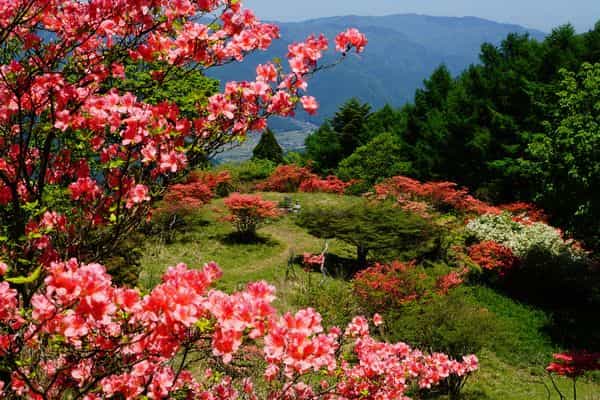
Approximately a 20-minute walk from the "Hieizancho" station of the Eizan Ropeway. Offers views of serene mountain villages such as Ōhara and Rakuhoku. In May, the area blooms with azaleas, coloring the landscape in pink. Autumn brings beautiful foliage, particularly during late autumn when the paths are adorned with fallen leaves. You can experience the magnificent beauty and grandeur of nature. Address 606-0000 Shugakuin, Sakyo Ward, Kyoto City, Kyoto Prefecture Google Map Check with Google Maps Access ・Get off at the Hieizan Summit Station on the Eizan Ropeway, then walk for about 15 minutes. Parking Business Hours Admission Fee Regular Holiday Phone Number 077-529-2216 URL SNS
Hiyoshi Taisha
Sightseeing
Open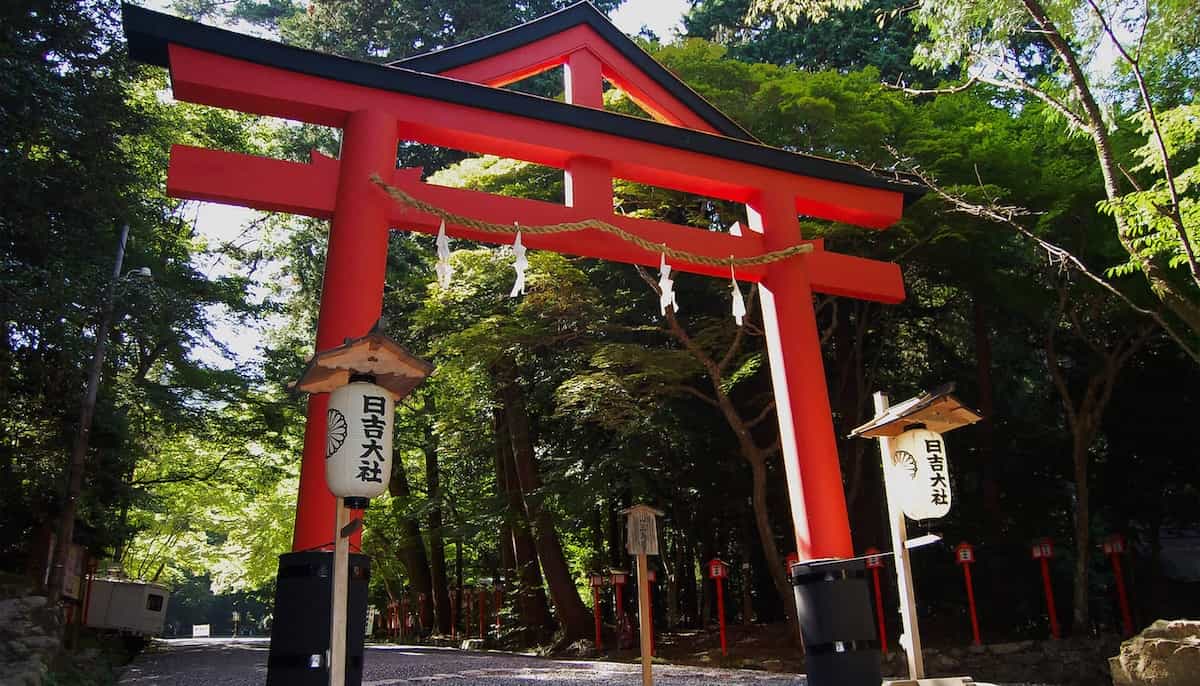
This shrine enshrines the mountain gods of Mount Hiei, which has been protecting Kyoto as its northeast guardian deity since the 8th century when Kyoto became Japan's capital. The shrine, along with Enryaku-ji Temple, has the role of guarding Kyoto from evil spirits entering through the kimon (demon gate). The precinct hosts a wide variety of shrines, including ones dedicated to famous gods invited from notable shrines throughout Japan to ward off evil. Address 5-1-1 Sakamoto, Otsu City, Shiga Prefecture 520-0113 Google Map Check with Google Maps Access ・20-minute walk from JR Kosei Line “Hieizan-Sakamoto Station” ・10-minute walk from Keihan Ishiyama-Sakamoto Line “Sakamoto-Hieizan-guchi Station” Parking Business Hours 9:00 AM - 4:30 PM Admission Fee Adults: 500 yen, Junior High and High School Students: 300 yen, Free for Elementary School Students and younger Regular Holiday Phone Number 077-578-0009 URL https://hiyoshitaisha.jp/ SNS
Kyū-Chikurin’in
Sightseeing
Open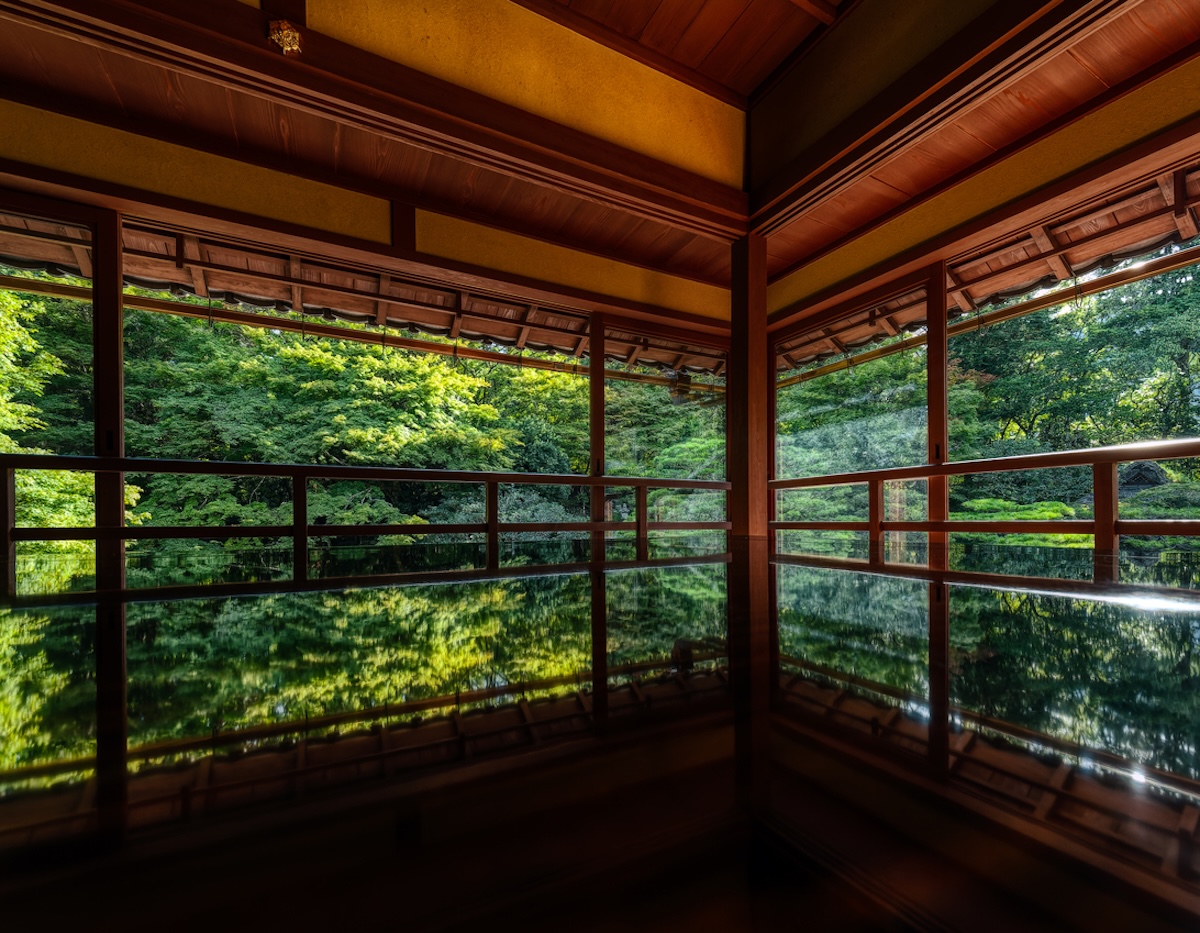
Sakamoto in Otsu city, at the foot of Mount Hiei, has long prospered as a temple town. This area is recognized as a national Important Preservation District for Groups of Traditional Buildings. Especially notable are the "satobō," retirement residences for Enryaku-ji monks, which make up the historical townscape unique to Sakamoto. The Old Chikurin-in is one such satobō, with a garden of about 3,300 square meters to the southwest of the main house featuring two tea houses and an arbor. The garden borrows the scenery of Mount Hachioji, skillfully using the terrain to arrange a waterfall and artificial hills, creating seasonal charm. Address 5-2-13 Sakamoto, Otsu City, Shiga Prefecture 520-0113 Google Map Check with Google Maps Access ・20-minute walk from JR Kosei Line “Hieizan-Sakamoto Station” ・10-minute walk from Keihan Ishiyama-Sakamoto Line “Sakamoto-Hieizan-guchi Station” Parking Business Hours 9:00 AM - 5:00 PM (Reception until 4:30 PM) Admission Fee Adults: 330 yen, Elementary School Students: 160 yen Regular Holiday Monday (If a holiday, then the next day), Holidays, The day after holidays, Year-end Phone Number 077-578-0955 URL https://kyuchikurinin.jp/ SNS
Site of Shiga-in Monzeki
Sightseeing
Open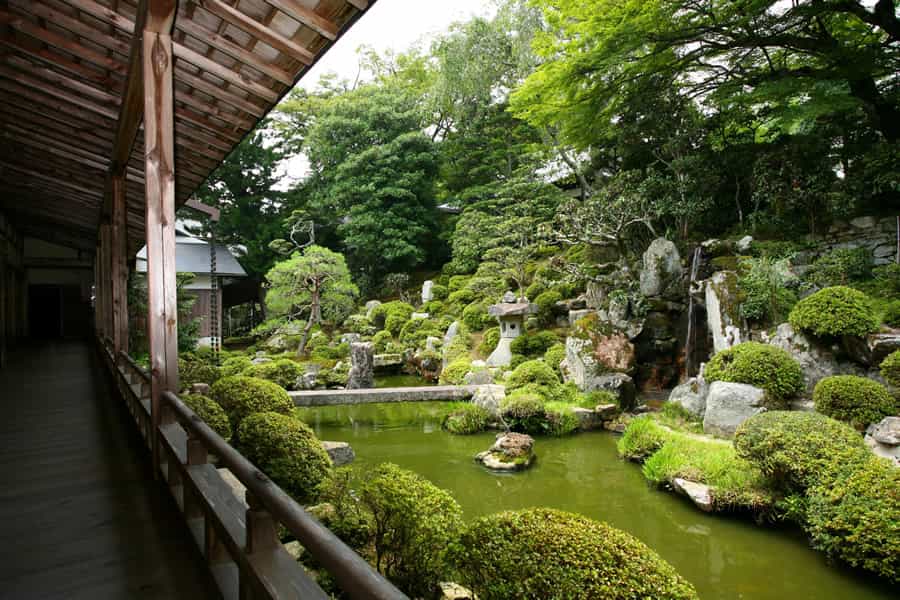
Shiga-in Monzeki enshrines Yakushi Nyorai as its principal deity and holds the status of a palace monzeki, being the main residence among the satobō of Enryaku-ji in Sakamoto. It is one of the eight monzeki temples of the Tendai sect. Known as "Shiga-in Residence," it serves as the abode of successive Tendai leaders. The inner Buddha hall’s principal image is Yakushi Nyorai, flanked by statues of Zhongzhi, the founder of Chinese Tendai Buddhism, and Saichō, who introduced Tendai Buddhism to Japan. Daily prayers are offered for national peace and security. Address 4-6-1 Sakamoto, Otsu City, Shiga Prefecture 520-0113 Google Map Check with Google Maps Access ・20-minute walk from JR Kosei Line “Hieizan-Sakamoto Station” ・5-minute walk from Keihan Ishiyama-Sakamoto Line “Sakamoto-Hieizan-guchi Station” Parking Business Hours 9:00 AM - 4:00 PM Admission Fee Adults: 500 yen Regular Holiday Phone Number 077-578-0130 URL https://www.hieizan.or.jp/keidai/sanroku SNS
Saikyō-ji Temple
Sightseeing
Open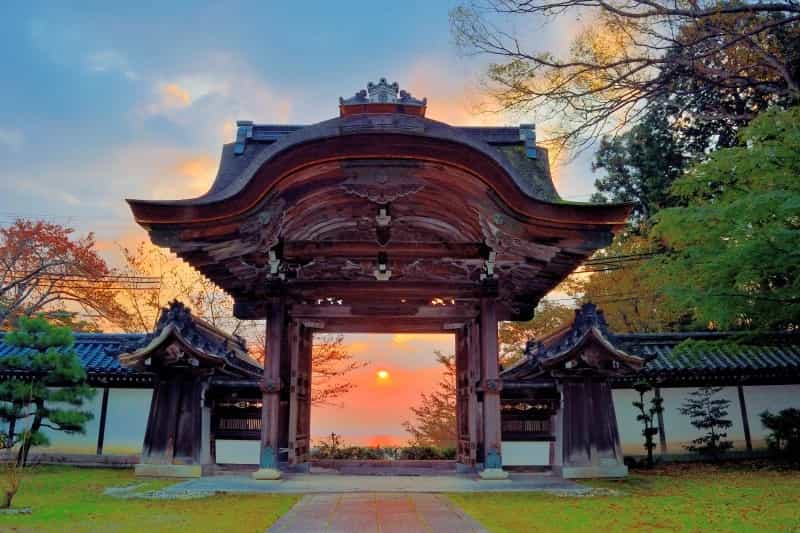
In the early 7th century, Prince Shōtoku, who served as regent under Empress Suiko, founded this temple in honor of his mentors, the Korean monks Eji and Eso. During the Kamakura period, in 1325, the priest Echin (also known as Enkan) entered the temple and revived the Perfect and Sudden Mahāyāna Precepts advocated by the Great Teacher Dengyō (Saichō) as his life’s work. Over a century later, in 1486, the revered monk Shinshō (Shinsei) restored both the temple buildings and its teachings, establishing it as a center of continuous Buddhist chanting (fudan nenbutsu). Since then, the temple has grown into the head temple of a network of more than 400 branch temples throughout Japan. Saikyō-ji Temple and Its Deep Connection with Akechi Mitsuhide Saikyō-ji suffered great damage during the 1571 fire attack on Mount Hiei. The temple’s restoration was supported by Akechi Mitsuhide, who became lord of nearby Sakamoto Castle shortly after the attack and a devoted follower of Saikyō-ji. The temple’s main gate was originally relocated from Sakamoto Castle, and the bell tower once used the castle’s battle bell until 1987 (Shōwa 62). The bell is now preserved in storage. In gratitude for his contributions to the temple’s reconstruction, Mitsuhide—who died in 1582 (Tenshō 10)—is enshrined here alongside his wife Hiroko and their family graves. Address 5-13-1 Sakamoto, Otsu City, Shiga Prefecture 520-0113 Google Map Check with Google Maps Access ・Get off at JR Kosei Line “Hieizan-Sakamoto” Station, then take the Etsu Bus for about 7 minutes (get off at Saikyoji) or walk for 30 minutes. ・Get off at Keihan Railway “Sakamoto” Station, then take the Etsu Bus for about 4 minutes (get off at Saikyoji) or walk for 25 minutes. Parking Business Hours 9:00 AM - 4:30 PM Admission Fee Adults: 500 yen, Junior High School Students: 300 yen, Elementary School Students: 200 yen Regular Holiday Phone Number 077-578-0013 URL http://www.saikyoji.org/ SNS
Sakamoto Tourist Information Center
Sightseeing
OpenThis is a tourist information center for Sakamoto, Otsu City, Shiga Prefecture, which flourished as a temple town for Enryaku-ji Temple on Mount Hiei. We promote the charms of Sakamoto, including its beautiful stone-paved streets and historic temples and shrines. Services Available at the Sakamoto Tourist Information Center ・Tourist information and guidance ・Volunteer tour guides ・Luggage storage ・Bicycle rentals Address 4-12 Sakamoto, Otsu City, Shiga Prefecture, 520-0113 Google Map Check with Google Maps Access ・Keihan Railway/Ishiyama-Sakamoto Line: Get off at “Sakamoto-Hieizan-guchi” Station, 1-minute walk ・JR Kosei Line: Get off at “Hieizan-Sakamoto” Station, 10-minute walk Parking Business Hours 9:30-16:30 Admission Fee Regular Holiday Phone Number 077-578-6565 URL https://hieizansakamoto.jp/ SNS
Ogoto Onsen
Sightseeing
Open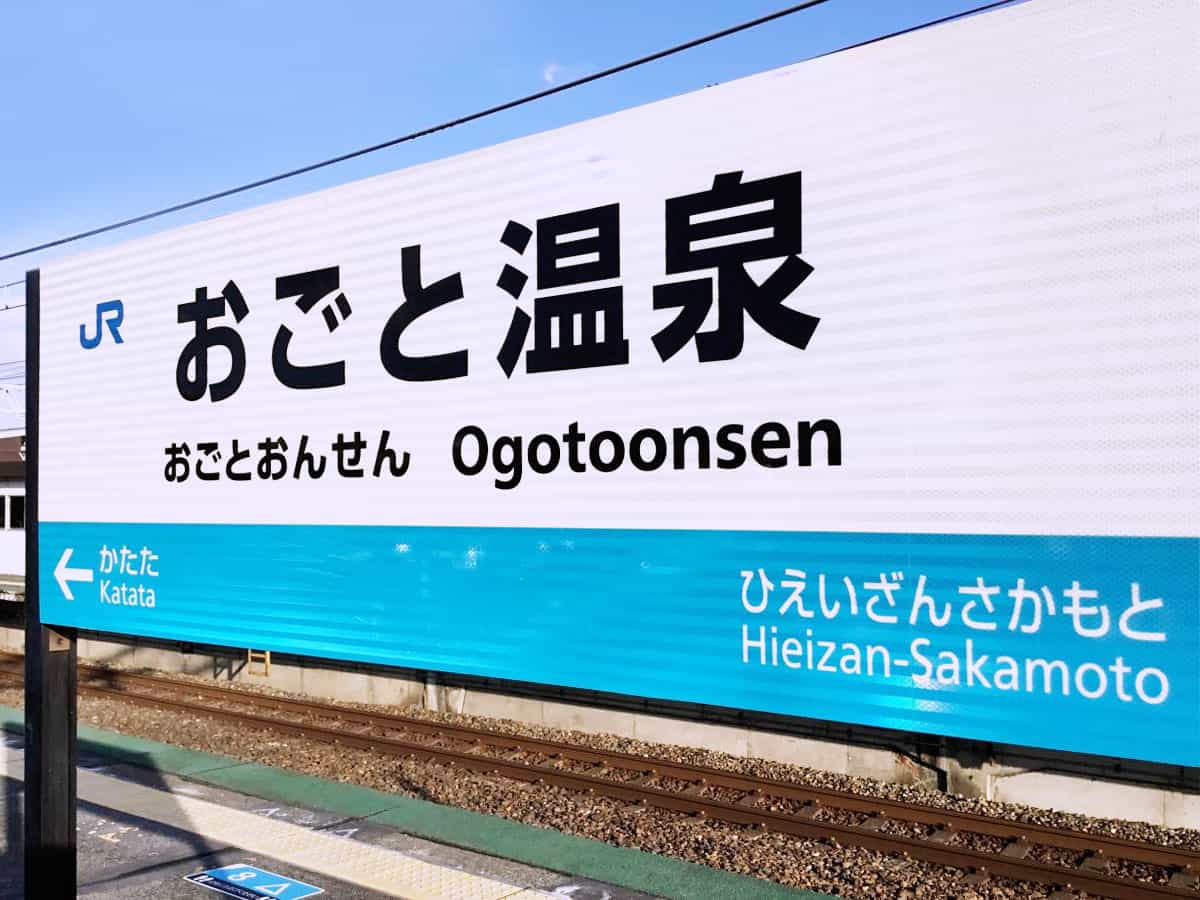
A hot spring area at the foot of Mount Hiei. It is said to have been opened 1,200 years ago by Dengyō Daishi Saichō. Known today for its healing springs. With a pH value of 9.0, the highly alkaline simple hot springs provide "Beautiful Skin Water" for smooth skin after bathing. Free footbaths and a café can be enjoyed at Ogoto Onsen Tourism Park in Otsu City. Address 1-3 Ogoto Kita, Otsu City, Shiga Prefecture 520-0107 Google Map Check with Google Maps Access Parking Business Hours Admission Fee Regular Holiday Phone Number 077-578-3750 URL https://www.ogotoonsen.com/ SNS
Anoshu-zumi Stone Wall
Sightseeing
Open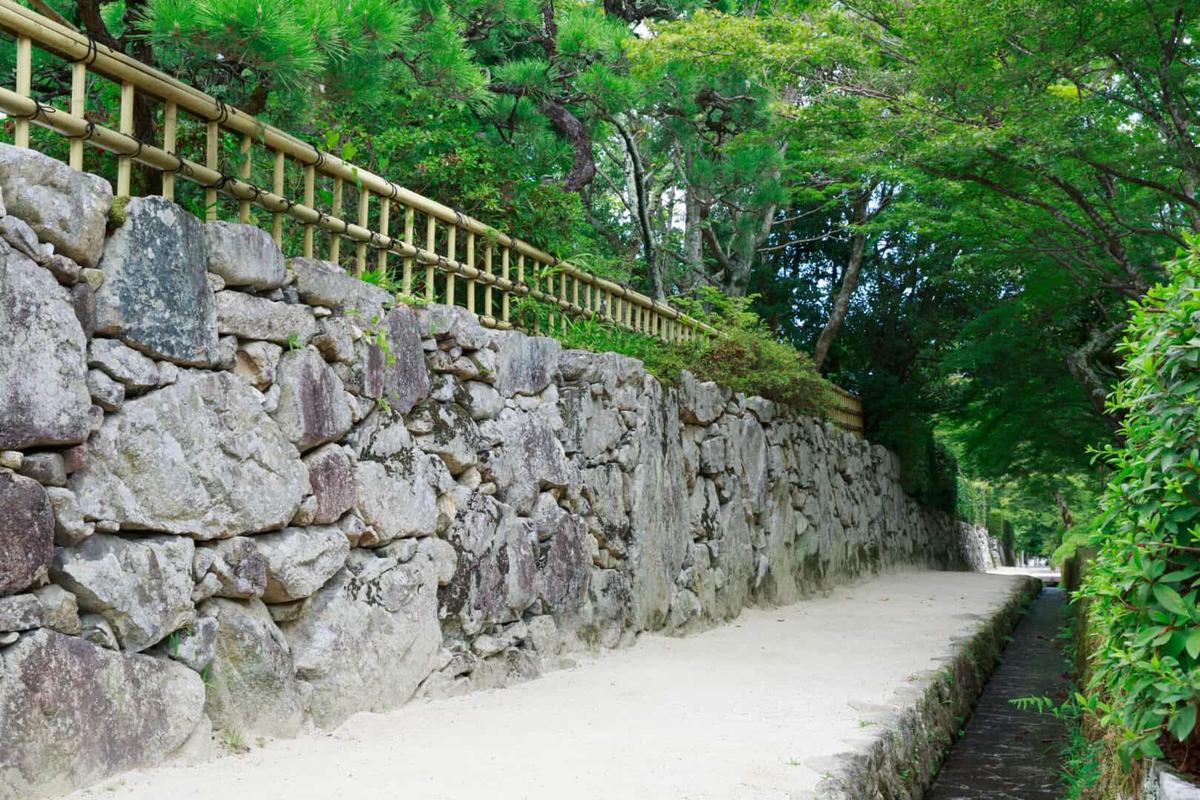
In Sakamoto, the temple town of Enryaku-ji Temple, there was a group of stonemasons called Anō-shū. The stone walls built by Anō-shū, known for the maxim "Listen to the voice of the stone," skillfully combine unprocessed natural stones using a method called "Anō-stone stacking," and were used for castle walls during the Sengoku period. The town of Satobō continues to have a beautiful landscape created by these stone walls. Address 4-5 Sakamoto, Otsu City, Shiga Prefecture 520-0113 Google Map Check with Google Maps Access ・Get off at Keihan “Sakamoto Hieizan-guchi Station,” then walk about 3 minutes ・Get off at JR “Hieizan Sakamoto Station,” then walk about 10 minutes Parking Business Hours Admission Fee Regular Holiday Phone Number 077-578-6565 URL SNS
Michigan Cruise (Otsu Port/Biwako Kisen)
Sightseeing
Open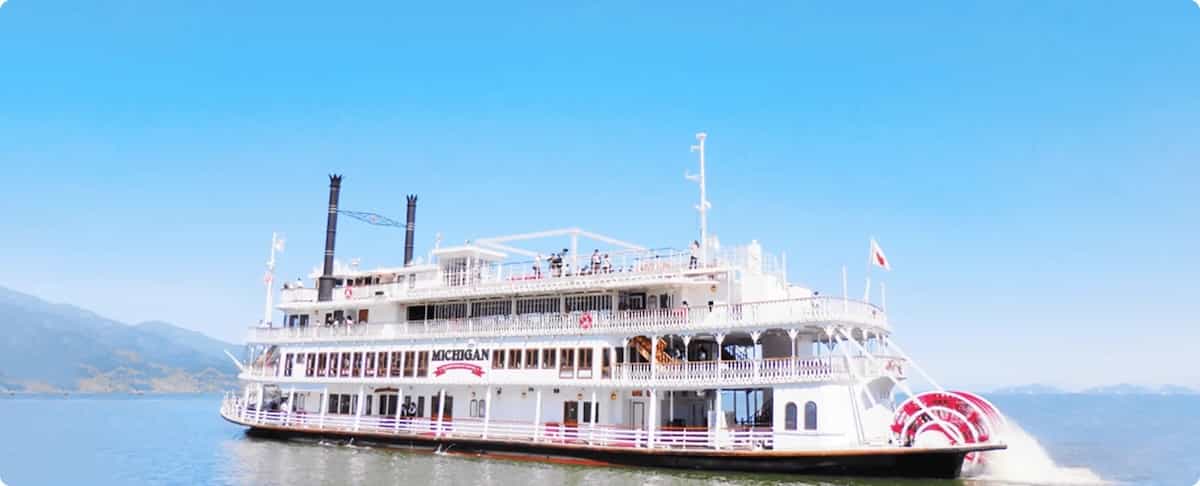
The base for Lake Biwa cruising, with paddlewheel boats like the Michigan and sightseeing cruise ships departing and arriving. The breeze across the lake surface is pleasant, and the beautiful lakeside scenery can be enjoyed from the deck. Address 5-1-1 Hamaotsu, Otsu City, Shiga Prefecture 520-0047 Google Map Check with Google Maps Access ・Get off at Keihan “Biwako-Hamaotsu Station,” then walk about 3 minutes ・About 10 minutes by bus from JR “Otsu Station” ・About 10 minutes from Meishin Expressway “Otsu IC” ・About 15 minutes from Meishin Expressway “Kyoto-Higashi IC” Parking Business Hours Admission Fee Regular Holiday Phone Number 077-524-5000 URL https://www.biwakokisen.co.jp/ SNS
Biwako Otsukan
Sightseeing
Open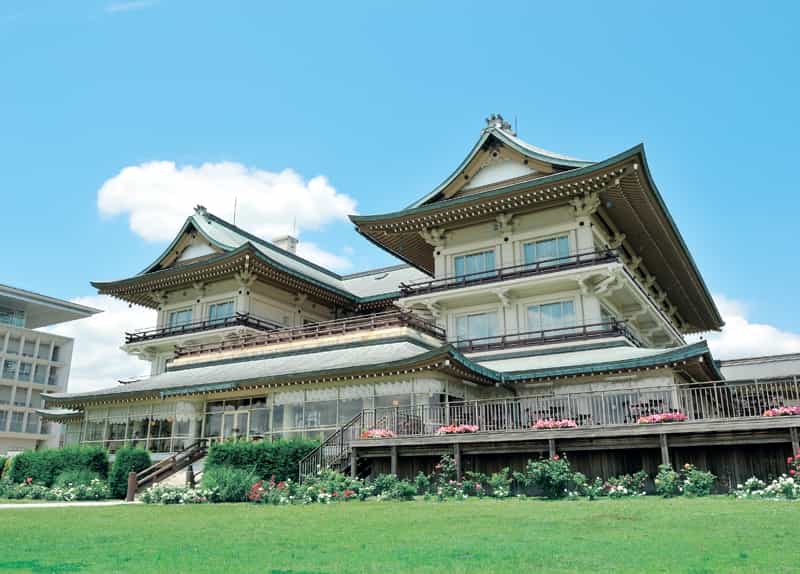
A modern building constructed in 1934 (Showa 9) as the first international tourist hotel in Shiga Prefecture, named the Biwako Hotel. Called the “Guesthouse of Lake Country,” it currently features restaurants, cafes, halls, galleries, and the Biwako Hotel Museum, all offering views of Lake Biwa. Address 5-35 Yanagisaka, Otsu City, Shiga Prefecture 520-0022 Google Map Check with Google Maps Access ・From JR Otsu Station or Keihan Biwako-Hamaotsu Station, take the Etsu Bus (bound for Katata) and get off at Yanagisaki. About a 3-minute walk. ・From Keihan Omi-Jingumae Station, about a 15-minute walk. ・From JR Otsukyō Station, about a 15-minute walk. ・About 15 minutes from the Meishin Expressway Otsu Interchange. Parking Business Hours 9:00 AM - 10:00 PM (Reception until 7:30 PM) Admission Fee Regular Holiday Phone Number 077-511-4187 URL https://www.biwako-otsukan.jp/ SNS
Yanagasaki Lakeside Park
Sightseeing
Open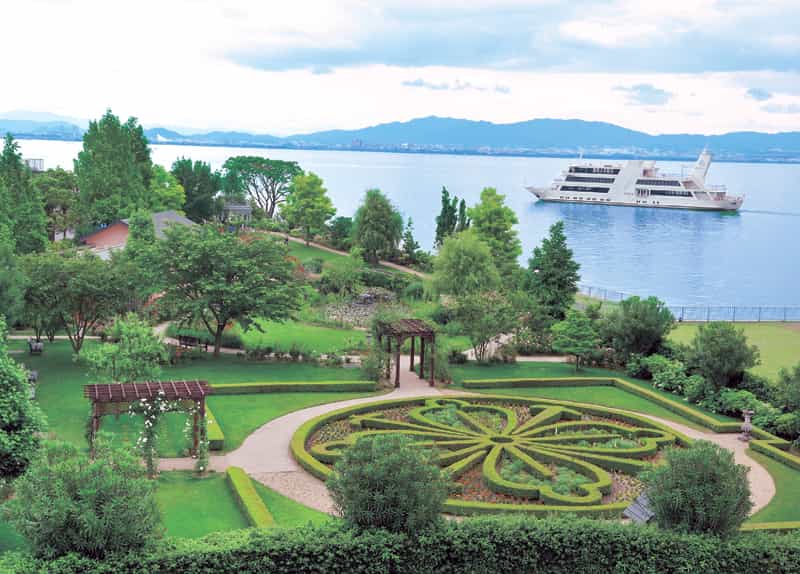
A park centering on Biwako Ōtsukan, extending along the shores of Lake Biwa. The park includes an English garden with roses and seasonal flowers, providing a refreshing garden walk with lake breezes. Note: Separate admission fee required for the English garden. Address 5-35 Yanagisaka, Otsu City, Shiga Prefecture 520-0022 Google Map Check with Google Maps Access ・From JR Otsu Station or Keihan Biwako-Hamaotsu Station, take the Etsu Bus (bound for Katata) and get off at Yanagisaki. About a 3-minute walk. ・From Keihan Omi-Jingumae Station, about a 15-minute walk. ・From JR Otsukyō Station, about a 15-minute walk. ・About 15 minutes from the Meishin Expressway Otsu Interchange. Parking Business Hours 9:00 AM - 10:00 PM (Reception until 7:30 PM) Admission Fee Regular Holiday Phone Number 077-511-4187 URL SNS
Mii-dera (Onjo-ji Temple)
Sightseeing
Open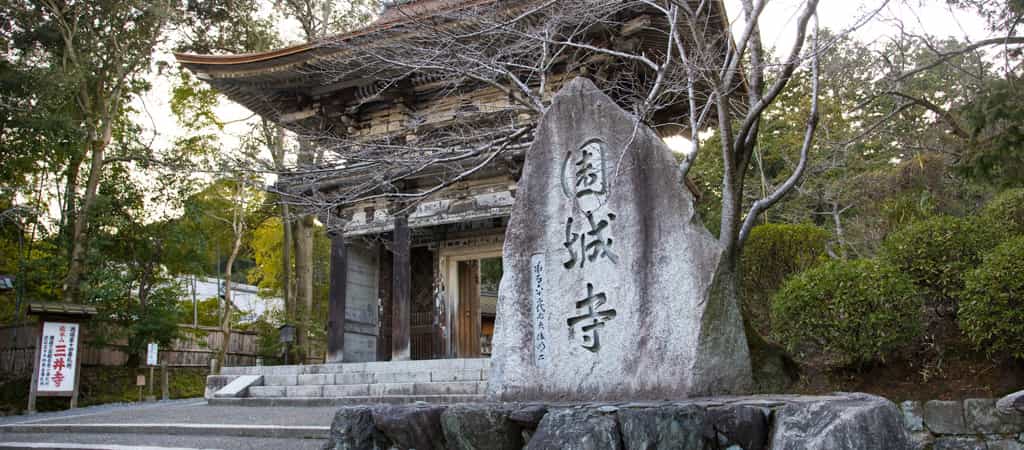
The head temple of the Tendai Jimon Sect, formally known as Nagara-yama Onjō-ji. It has a long history dating back to the Heian period, with numerous National Treasures and Important Cultural Properties. The temple bell is famous as "Mii no Banshō" (Evening Bell of Mii), one of the Eight Views of Omi. Address 246 Onjoji Town, Otsu City, Shiga Prefecture 520-0036 Google Map Check with Google Maps Access ・7-minute walk from Keihan Ishiyama-Sakamoto Line Mii-dera Station ・12-minute walk from Otsu City Hall Station on the Keihan Ishiyama-Sakai Main Line ・Immediately after getting off the Keihan Bus at Mii-dera stop from JR Tokaido Main Line (Biwako Line) Otsu Station or JR Kosei Line Otsu-kyo Station ・Approximately 10 minutes via the Lakeshore Road from the Otsu Interchange on the Meishin Expressway ・Approximately 10 minutes via National Route 16 from National Route 1 Parking Business Hours 8:00 AM - 5:00 PM Admission Fee Adults: 600 yen, Junior High and High School Students: 300 yen, Elementary School Students: 200 yen Regular Holiday Phone Number 077-522-2238 URL https://miidera1200.jp/ SNS
Omi Jingu Shrine
Sightseeing
Open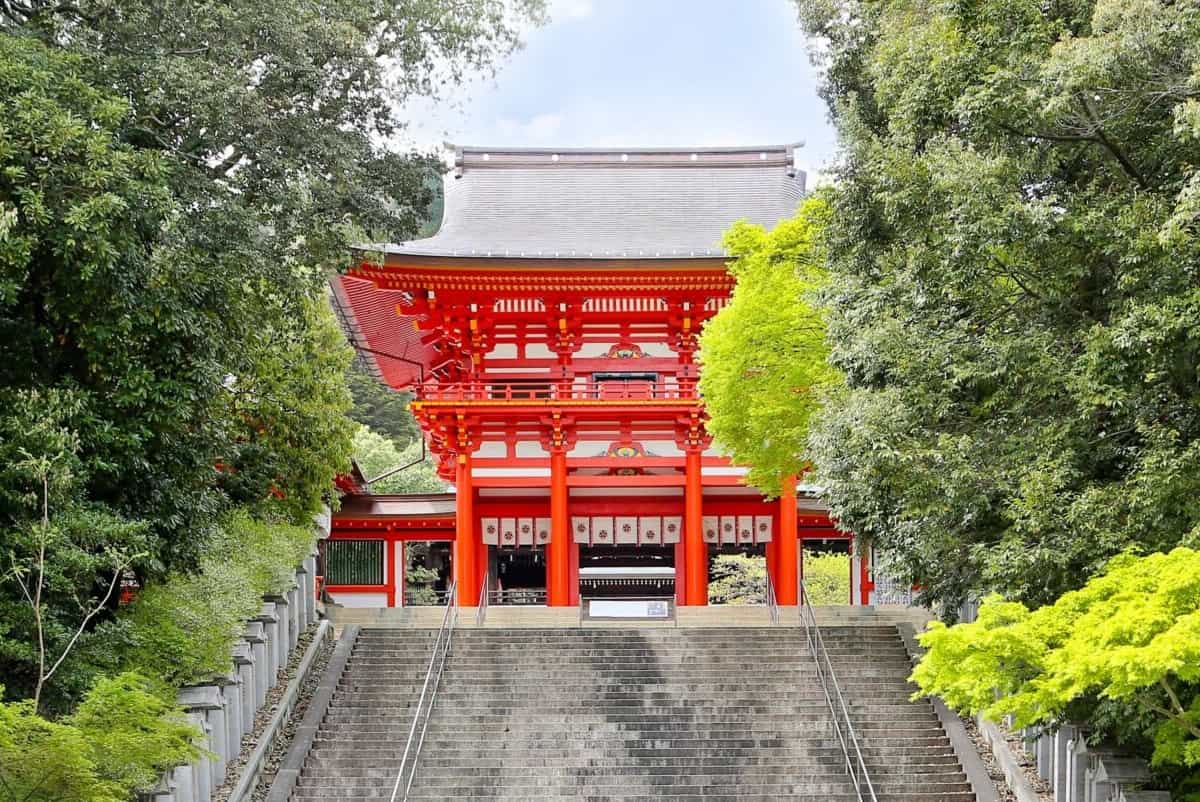
A shrine dedicated to Emperor Tenji, who founded the ancient capital Otsu-kyo. It sits adjacent to the Otsu-kyo site. Known as the "God of Time" for setting up a clepsydra and starting time announcements, it hosts the "Clepsydra Festival" on June 10, Time Memorial Day. The shrine includes a clock museum, clepsydra, and sundial. Known as a holy site for competitive karuta (playing cards) due to its association with Ogura Hyakunin Isshu. Address 1-1 Jingu-cho, Otsu City, Shiga Prefecture 520-0015 Google Map Check with Google Maps Access ・Get off at Keihan “Omi Jingu-mae Station,” then walk about 10 minutes ・Get off at JR “Otsu-kyo Station,” then walk about 15 minutes Parking Business Hours 6:00 AM - 6:00 PM (Amulets and signature books from 9:00 AM to 4:30 PM) Admission Fee Free (Clock Museum and Treasure Museum: 300 yen) Regular Holiday Phone Number 077-522-3725 URL https://oumijingu.org/ SNS
Biwako Sosui (Lake Biwa Canal)
Sightseeing
Open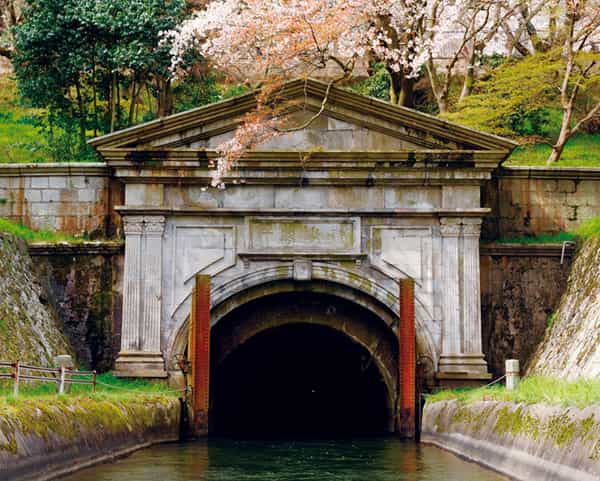
A canal running approximately 20 km from Miho-gasaki in Otsu City along Lake Biwa, through Kyoto’s Keage to Fushimi. At the base of Mii-dera Temple is the "Otsu Lock," a brick structure for adjusting water levels and passing boats. There are also cruising courses between Otsu and Keage, offering a special experience while viewing cherry blossoms or autumn leaves. Address 7 Miidera Town, Otsu City, Shiga Prefecture 520-0034 Google Map Check with Google Maps Access ・Approximately a 4-minute walk from Keihan Railway's “Mii-dera Station” Parking Business Hours Admission Fee Free Regular Holiday Phone Number 075-365-7768 URL https://biwakososui.kyoto.travel/information/access.html SNS
Karasaki Shrine
Sightseeing
Open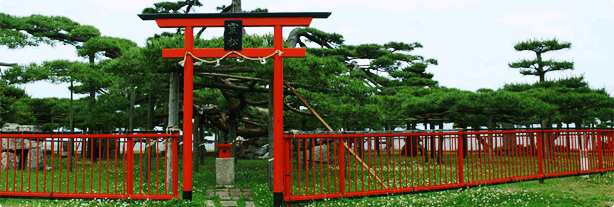
A branch shrine of Hiyoshi Taisha Shrine. The shrine precinct facing Lake Biwa features enormous sacred pines whose branches extend widely. The opposite shore offers views of Mount Omi Fuji. Known as a scenic spot from ancient times and appearing in Basho’s haiku, it is counted among the Eight Views of Omi. The deity Wakesuki-hime-no-mikoto is enshrined, known for blessings in curing women's illnesses. Address 1-7-1 Karasaki, Otsu City, Shiga Prefecture 520-0106 Google Map Check with Google Maps Access ・From Keihan “Biwako-Hamaotsu Station,” take the bus and get off at “Karasaki” (immediately accessible) ・From JR “Karasaki Station,” it's about a 15-minute walk Parking Business Hours Free within the precincts ※ Prayer reception, signature and amulet distribution from 10:00 AM to 4:00 PM (only on holidays) ※ On weekdays, signature and amulet distribution at "Kagiya" in front of the shrine (closed on Thursdays) Admission Fee Free Regular Holiday Phone Number 077-578-0009 URL https://hiyoshitaisha.jp/karasaki/ SNS
Yase Maple Path
Sightseeing
Open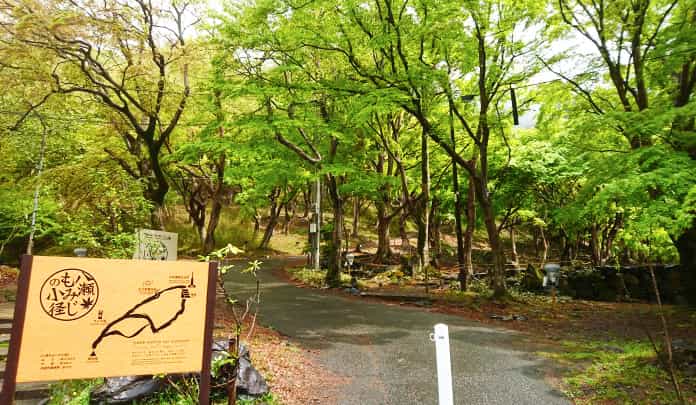
Yase Maple Path is a 3,700m² site filled with maple trees, allowing you to enjoy the changing seasons alongside nature. Along the 300m walking path, you can also see the Heian Capital Memorial Monument, which commemorates the success of the 1100th anniversary of the relocation of the capital to Heian, as well as heritage sites from Kyoto's modernization, such as a radio tower and the remains of a hydroelectric power plant. Address Kamitakano Higashiyama, Sakyo Ward, Kyoto City, Kyoto Prefecture Google Map Check with Google Maps Access ・Get off at Yase-Hieizanguchi Station on the Eizan Railway and walk for about 5 minutes Parking Business Hours Free admission Admission Fee Regular Holiday Phone Number 075-781-4338 (Keifuku Electric Railway Cable Section) URL SNS
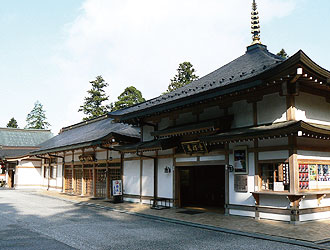
This hall enshrines Buddhas and bodhisattvas, and the beneficent deities who protect the Buddhist Law, originating from temples and shrines from all over Japan. These deities variously protect the people and the nation, practitioners of the Lotus Sutra, and include the deities on earth who symbolize the universe that provides such good fortune. Visitors are invited to enter the hall, thank the deities for their protection, and to pray for their personal concerns and for world peace. Thirty protective deities, one for each day of the month, are portrayed on the walls. Regarding Visiting the Konpon-Chu-do Due to the ongoing major renovation of the Konpon-Chu-do, we have decided to refrain from visiting the main hall, Konpon-Chu-do, during the following period. This is a difficult decision, and we ask for your understanding. During this period, please worship at the Manhai-do of Worship as described above. Goshuin stamps will also be moved to the Manhai-do of Worship. PeriodJanuary 6, 2026 - January 1998 (approximately two years) Worship at the Manhai-do of Worship will begin on January 8, 2026 Only the student stage will be open on January 6th and 7th due to the preparation period. Starting January 8, 2026, the Manhai-do of Worship will house the "Yakushi Nyorai Statue," a secret principal image of the Konpon-Chu-do of Enryakuji Temple, and the "Eternal Dharma Lamp," a special statue for a limited time. This will be a rare opportunity to see the Buddha statues up close, so we hope you will come and deepen your connection with the Buddha of Mount Hiei. Address 4220 Sakamotohonmachi, Otsu City, Shiga Prefecture, 520-0116 Google Map Check with Google Maps Access ・From Eizan Ropeway's “Mt. Hiei Summit Station,” take the shuttle bus and get off at “Enryakuji Bus Center” (immediately accessible) ・From Sakamoto Cable's “Enryakuji Station,” get off and walk about 8 minutes Parking Business Hours Admission Fee Common ticket for East, West, and Yokawa Areas Adults: 1,000 yen, Junior High and High School Students: 600 yen, Elementary School Students: 300 yen Regular Holiday Phone Number URL https://www.hieizan.or.jp/keidai/toudou SNS
Kunin Yashiki (former Okamoto Mansion)
Sightseeing
Open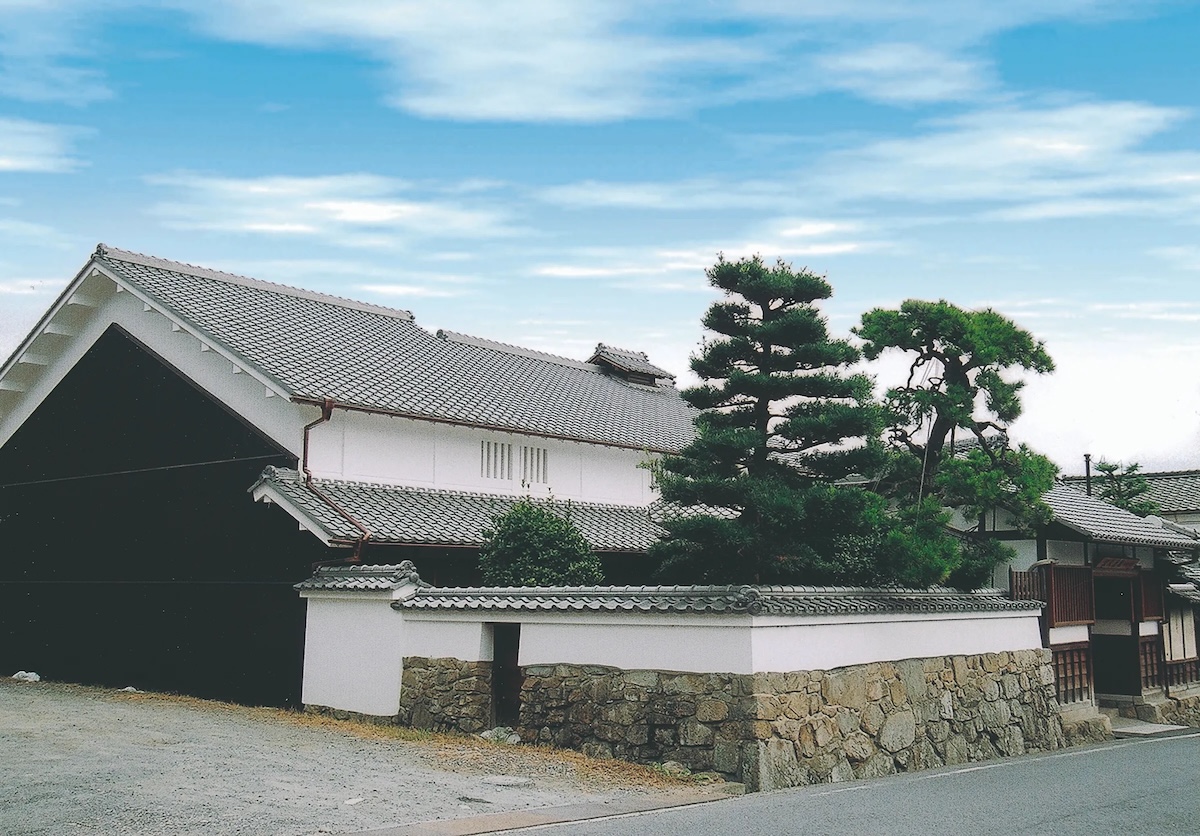
Since old times, Sakamoto thrived as so called "Monzenmachi", lit. "city in front of the temple gate", due to the fact that it provided the supplies for the Enryakuji-Temple located at nearby Mt. Hiei. During the Edo era, the city of Sakamoto established the "Satobou", a place to stay for the monks who came to Mt.Hiei to receive their training. Gradually, Satobou developed into a place for dwelling not only for said monks and Shinto-priests from the Hiyoshitaisya-Shrine, but also wide variety of people, amongst others craftsmen like carpenters and merchants. Also, there existed the so called "Kunin", who were - while being monks of the Enryakuji-Temple-charged by this temple with the collection of the land taxes. Furthermore, along with the right to have a wife and carry a sword, the Kunin were also awarded the right to carry a family name. At that time, this was a right reserved (in general) only to members of the samurai families and thereby represented special privilege. a Due to the fact that Sakamoto was donated Enryakuji-Temple as some kind of fief by the Tokugawa-Government, Sakamoto was spared direct control by said government, feudal lords or samurai families. Instead, a council, called "Oodoshiyori" and consisting of 5 members, was established, which shouldered the whole administration of Sakamoto. Below this was the rank of the "Toshiyori", to which also the Kunin belonged. Until recent years, many former dwellings of the Kunin, called "Kunin Yashiki", were left in Sakamoto. Among these, the buildings belonging to the Okamoto family-from whose ranks generations of Kunin were drawn-are still left in their original (i.e.structurally unchanged) state. As of March 2005, the main building, the rice storehouse and the stables of said Okamoto Mansion have been acknowledged their historical value and accordingly have been awarded the status of "Cultural Treasure of Otsu City". Address 6-27-10 Sakamoto, Otsu City, Shiga Prefecture, 520-0113 Google Map Check with Google Maps Access ・Approximately a 10-minute walk from JR Kosei Line "Hieizan-Sakamoto" Station toward Yamate ・Approximately a 2-minute walk from Keihan Line "Sakamoto-Hieizanguchi" Station Parking Business Hours 9:00~17:00 (Entry until 16:30) Admission Fee Adults: ¥100 (Groups of 15 or more: ¥80 discount) Elementary School Students: ¥50 (Groups of 15 or more: ¥40 discount) Disability: Free (including city residents and one caregiver) Discount Ticket Combined with Public Official Residence and Former Chikurin-in Temple: ¥400 (Regularly ¥430) Purchases at: Public Official Residence, Former Chikurin-in Temple, Sakamoto Tourist Information Center Regular Holiday Mondays (open on public holidays) / the day after public holidays / December 26th to December 31st Phone Number URL https://kuninyashiki.jp/ SNS
Ruins of Sakamoto Castle
Sightseeing
Open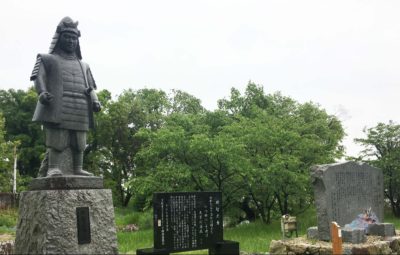
Sakamoto Castle was built on the shores of Lake Biwa by Akechi Mitsuhide on the orders of Oda Nobunaga shortly after the burning of Enryaku-ji Temple in 1571. It is said to have been the second most magnificent castle after Azuchi Castle. After the Honno-ji Incident in 1582, the castle fell to an attack by Hashiba Hideyoshi's forces. Akechizuka, said to be a memorial mound for Mitsuhide, is located within what is thought to be the castle grounds. Furthermore, during periods of drought in Lake Biwa, the stone walls under the lake become visible, but are normally not visible. Currently, there are two monuments in the area where Sakamoto Castle once stood. One is near Tonan-ji Temple along the old Hokkoku Kaido in Shimosakamoto, and the other stands in front of a park built on the lakeside, which also houses a statue of Akechi Mitsuhide. Address 3-chome, Shimosakamoto, Otsu City, Shiga Prefecture, 520-0105 Google Map Check with Google Maps Access ・Take the bus from JR Otsu Station, get off at Shimosakamoto, and walk for 3 minutes. ・5 minutes from Shimosakamoto IC on the Kosai Road. Parking 10 regular cars (using Sakamoto Castle Ruins Park P) Business Hours Admission Fee Regular Holiday Phone Number Sakamoto Tourist Information Center TEL: 077-578-6565 URL https://otsu.or.jp/thingstodo/spot179 SNS
 Gourmet
Enryakuji Kaikan
Gourmet
Open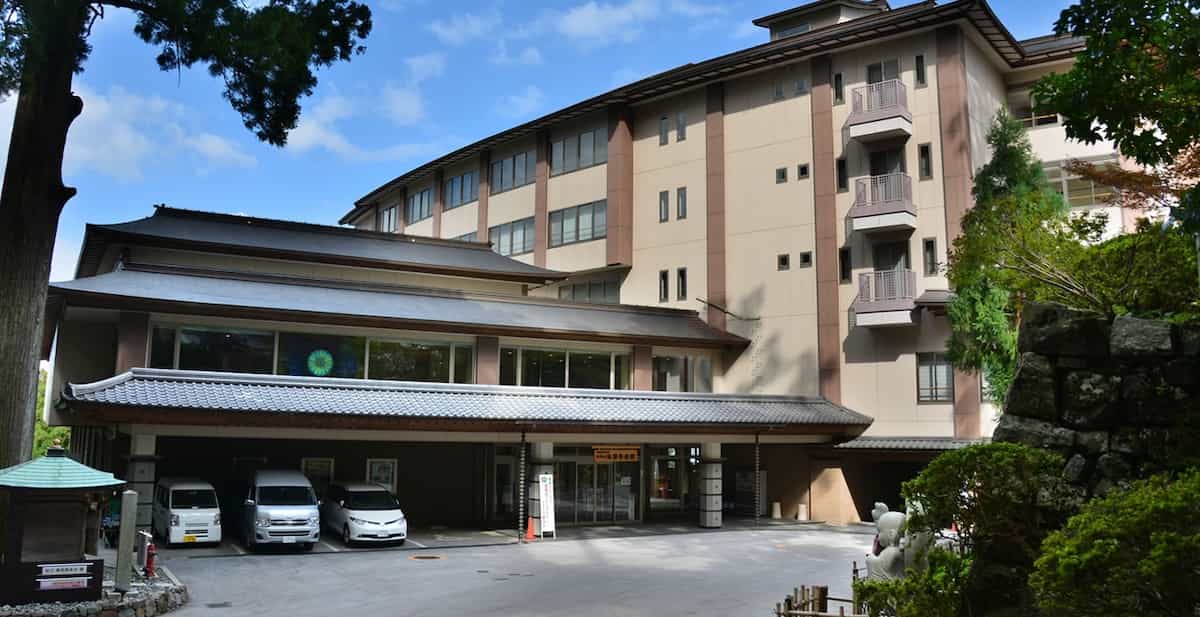
On the second floor, the dining area “Boko” offers traditional shojin ryori—Buddhist vegetarian cuisine that embodies the heritage of Mount Hiei. On the lobby floor, the café “Reihō” serves sweet treats and drinks, including the unique *Sanskrit character latte*, all while you take in the breathtaking views of Lake Biwa. Providing authentic meals and restful breaks, this is the culinary hub of Mount Hiei—perfect for nourishing both body and soul after a day of worship. Address 4220 Honmachi, Sakamoto, Otsu City, Shiga Prefecture, 520-0116 Google Map Check with Google Maps Access ・From Eizan Ropeway's “Mt. Hiei Summit Station,” take the shuttle bus and get off at “Enryakuji Bus Center” (immediately accessible) ・From Sakamoto Cable's “Enryakuji Station,” get off and walk approximately 8 minutes Parking Business Hours 9:00 AM - 4:00 PM Admission Fee Regular Holiday Phone Number 077-578-0047 URL SNS
Tsuru-Ki Soba
Gourmet
Open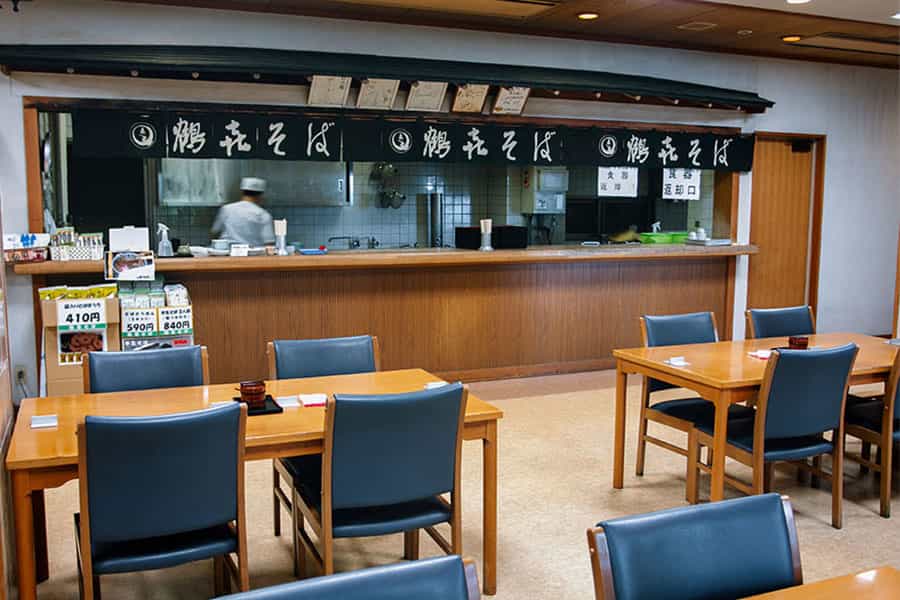
A soba restaurant founded about 300 years ago by Tsuruyaki Kihachi in Sakamoto at the base of Mount Hiei. You can enjoy soba made from carefully selected buckwheat flour, including Gate Soba and Mount Hiei Soba. Located in the large parking area of the Enryaku-ji Eastern Pagoda area and the Ichigu Kaikan. Known for its simple "Soba Boro" cookies. Address 4220 Honmachi, Sakamoto, Otsu City, Shiga Prefecture, 520-0116 Google Map Check with Google Maps Access ・From Eizan Ropeway's “Mt. Hiei Summit Station,” take the shuttle bus and get off at “Enryakuji Bus Center” (immediately accessible) ・From Sakamoto Cable's “Enryakuji Station,” get off and walk about 8 minutes Parking Business Hours 9:00 AM - 4:00 PM Admission Fee Regular Holiday Phone Number 077-578-7083 URL https://tsurukisoba.co.jp/ SNS
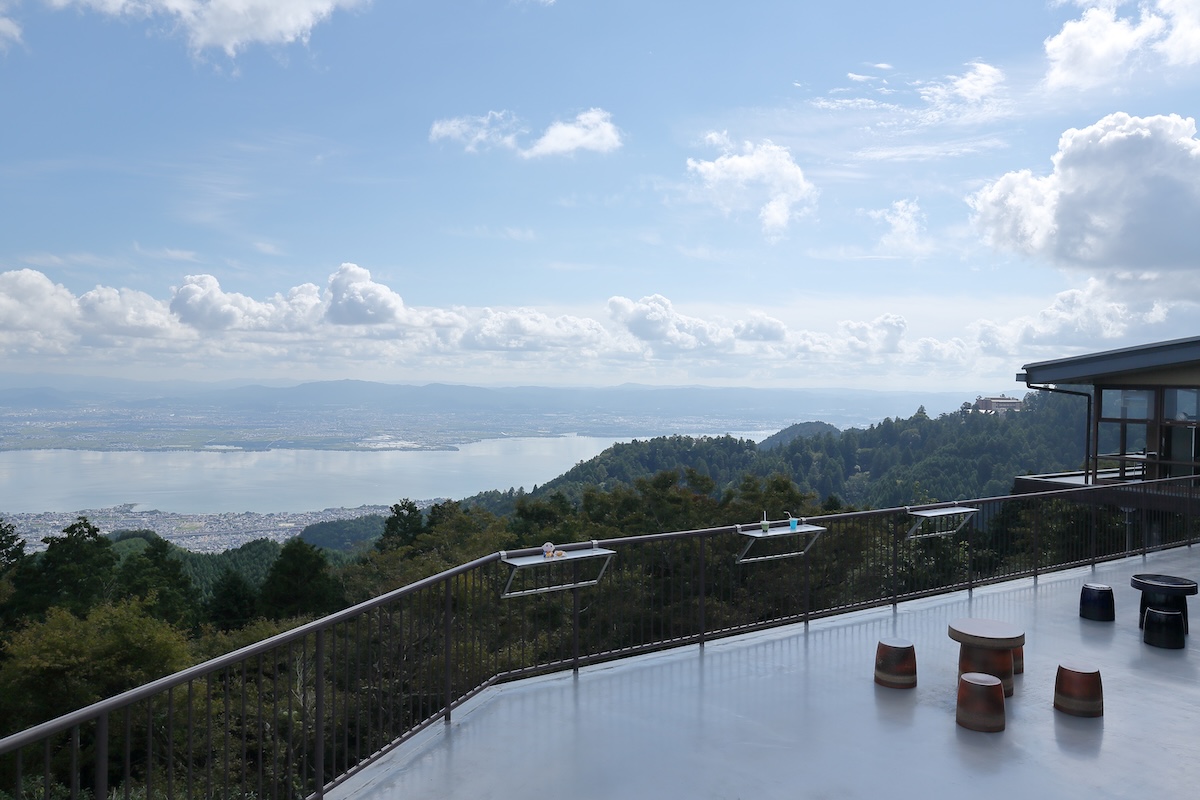
From this spot, you can enjoy breathtaking views stretching from the southern to the northern reaches of Lake Biwa—and on clear days, you can even see Mount Mikami (also known as “Ōmi Fuji”) across the lake. The restaurant offers a wide variety of dishes made with local ingredients such as Ōmi beef and Ōmi black chicken, as well as a relaxing café menu. Pets are welcome on the terrace seats. Takeout options include Ōmi Beef Curry, “Mountain” Meatballs & Fried Chicken with Fries, and a selection of drinks. The shop also sells local specialties such as Hieizan sesame tofu and Hiei yuba (tofu skin). A statue of the Buddhist monk Saichō, the founder of Enryaku-ji Temple, stands near the parking area of Mine-michi Restaurant. Address 4220 Honmachi, Sakamoto, Otsu City, Shiga Prefecture, 520-0116 Google Map Check with Google Maps Access ・From the Hieizan Ropeway “Hieizan-sanchō Station,” take the shuttle bus and get off at “Mine-michi” (Mountain Path). Parking Business Hours 10:00 AM - 5:00 PM Admission Fee Regular Holiday Phone Number 077-578-3673 URL https://www.hieizan.co.jp/gourmet/restaurant/ SNS
Cafe de Paris
Gourmet
Open
A café within the Garden Museum Hiei. It offers meals and desserts in a space inspired by Parisian street corners, with terrace seating available for enjoying panoramic views of Lake Biwa on fine days. The café is popular for its original herbal teas blended with numerous herbs. Address Garden Museum Hiei, 4 Shakuranarigai, Shugakuin, Sakyo Ward, Kyoto City, Kyoto Prefecture 606-8046 Google Map Check with Google Maps Access ・Immediately upon exiting the Eizan Ropeway “Mt. Hiei Summit Station” ・Immediately upon exiting the Mt. Hiei Drive Bus/Shuttle Bus “Mt. Hiei Summit” stop Parking Business Hours 11:00 AM - 4:30 PM (Last order for food at 3:00 PM, drinks at 4:00 PM) ※ Extended hours in summer, closed periods in winter Admission Fee Entrance fee to Garden Museum Hiei required separately. Regular Holiday Phone Number 075-707-7733 URL http://www.garden-museum-hiei.co.jp/map/cafe/ SNS
Cafe Terrace Yumemi
Gourmet
Open
A café with excellent views located at the Yume-no-Tani viewing point, about 2 km from the Tano-tani Gate of Hiei Driveway. On clear days, you can see Otsu city and Lake Biwa from the garden deck. The menu includes sandwiches, curry rice, and hotcakes, with soft serve ice cream being a popular choice. Ideal for a break during a drive. Address Within Hieizan Driveway, 776-3 Yamanaka-cho, Otsu City, Shiga Prefecture 520-0017 Google Map Check with Google Maps Access ・From the Omi Jingu Ramp on the Nishi-Otsu Bypass, enter via the Shimogamo-Otsu Line (Yamanaka Pass) at the Tanadani Pass Gate ・Immediately upon exiting the Hieizan Drive Bus at Yumemigaoka Parking Business Hours 10:00 AM - 5:00 PM ※ Open only on weekends and holidays. Temporary openings during summer vacation, closed in winter Admission Fee Entrance fee to Hieizan Driveway required separately. Regular Holiday Phone Number 077-529-2367 URL http://hieizan-way.com/facility/yumemigaoka/ SNS
Tsuru-ki Handmade Soba
Gourmet
Open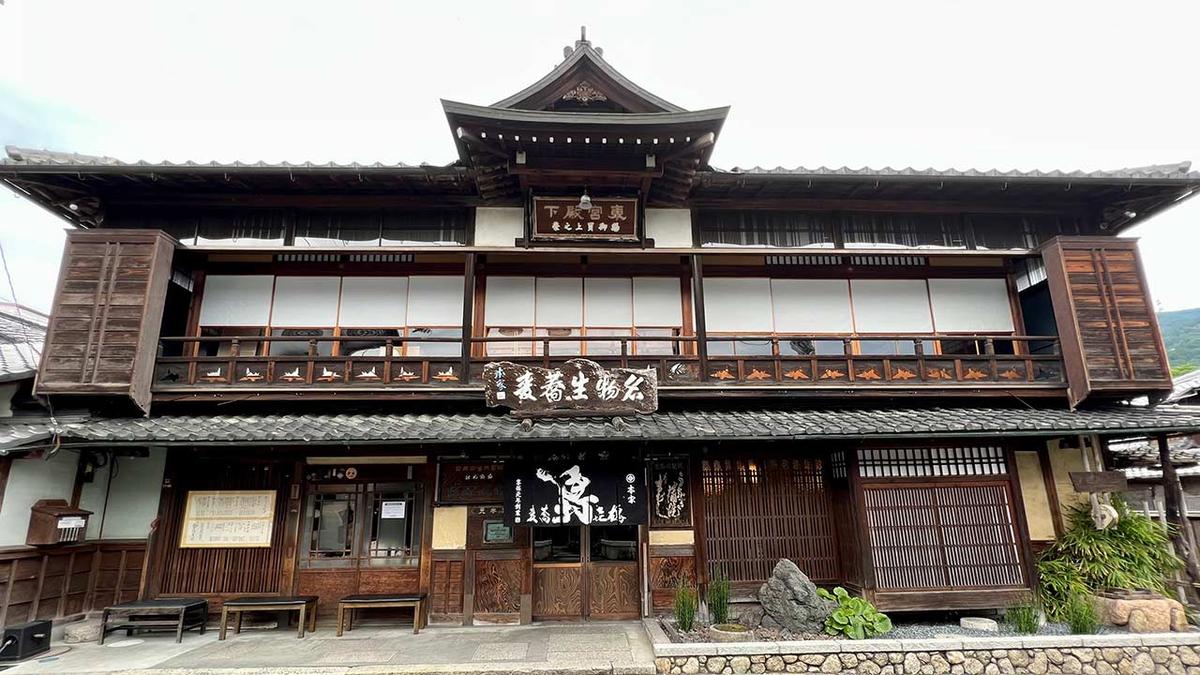
A soba restaurant with over 300 years of history. The building, constructed in the luxurious irimoya-zukuri style, is about 130 years old and designated as a National Registered Tangible Cultural Property. The hand-made nihachi soba, adjusted to suit the temperature and humidity, and the harmonious broth made with "kaeshi" continuously added since the founding is remarkable. Address 4-11-40 Sakamoto, Otsu City, Shiga Prefecture 520-0113 Google Map Check with Google Maps Access ・Immediately upon exiting Keihan “Sakamoto Hieizan-guchi Station” ・Approximately 13 minutes on foot from JR “Hieizan-Sakamoto Station” Parking Business Hours 11:00 AM - 4:00 PM (Last order at 3:30 PM) Admission Fee Regular Holiday 1/1, 1/27, 2/17, 3/31, 4/21, 5/26, 6/30, 7/28, 8/25, 8/26, 9/29, 10/27, 12/22 Phone Number 077-578-0002 URL https://www.tsurukisoba.com/ SNS
Koueido Juen
Gourmet
Open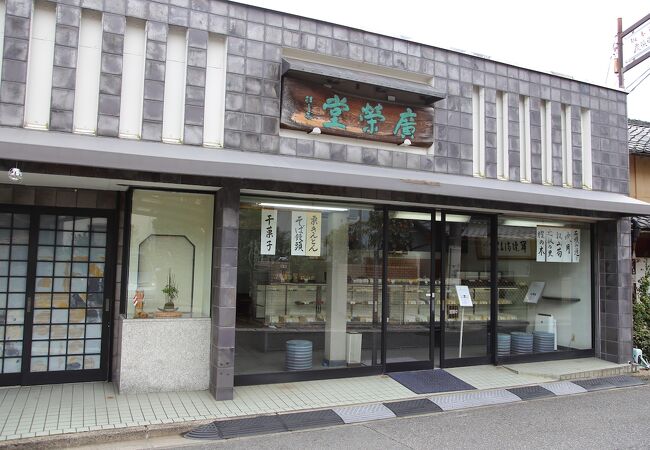
A Japanese confectionery store favored by both Enryaku-ji Temple and Hiyoshi Taisha Shrine. Famous for its "Soba Manjū," with a dough made from buckwheat flour, rice flour, and yam, filled with homemade sweet azuki bean paste. Additionally, it offers "Eizan Kiku," large monaka with white skin shaped like a chrysanthemum, filled with four types of bean paste: coarse, smooth, white, and yuzu-flavored. Address 4-12-13 Sakamoto, Otsu City, Shiga Prefecture 520-0113 Google Map Check with Google Maps Access ・Get off at Keihan “Sakamoto Hieizan-guchi Station,” then walk about 3 minutes ・Get off at JR “Hieizan-Sakamoto Station,” then walk about 10 minutes Parking Business Hours 9:00 AM - 7:00 PM Admission Fee Regular Holiday Tuesday (Open if a holiday) Phone Number 077-578-0064 URL SNS
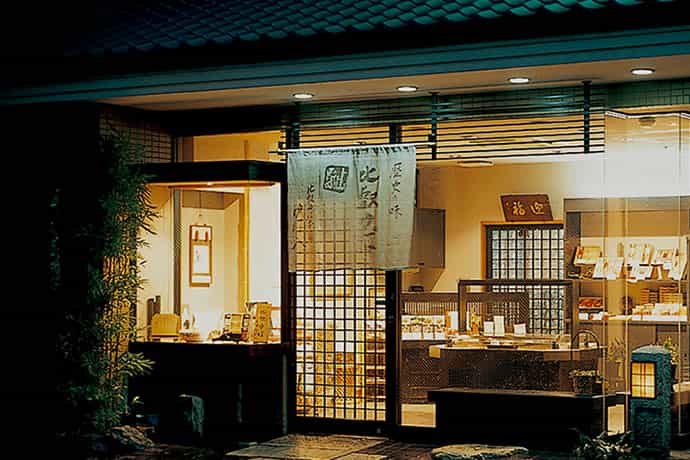
A specialized Yuba (tofu skin) store favored by Enryaku-ji Temple on Mount Hiei. Japanese yuba is said to have been introduced from China by Saichō. Named "Hiei Yuba," its yuba is known for the gentle sweetness of Omi soybeans and a delicate texture. In addition to fresh yuba, it offers creamy "Hiei Toro Yuba" and convenient dried yuba. Address 4-3-10 Chuo, Otsu City, Shiga Prefecture 520-0043 Google Map Check with Google Maps Access ・Get off at Keihan “Shimanose Station,” then walk about 3 minutes ・Get off at JR “Otsu Station,” then walk about 10 minutes Parking Business Hours 10:00 AM - 5:00 PM Admission Fee Regular Holiday Saturday, Sunday, Holidays Phone Number 077-526-2689 URL https://hieiyuba.co.jp/ SNS
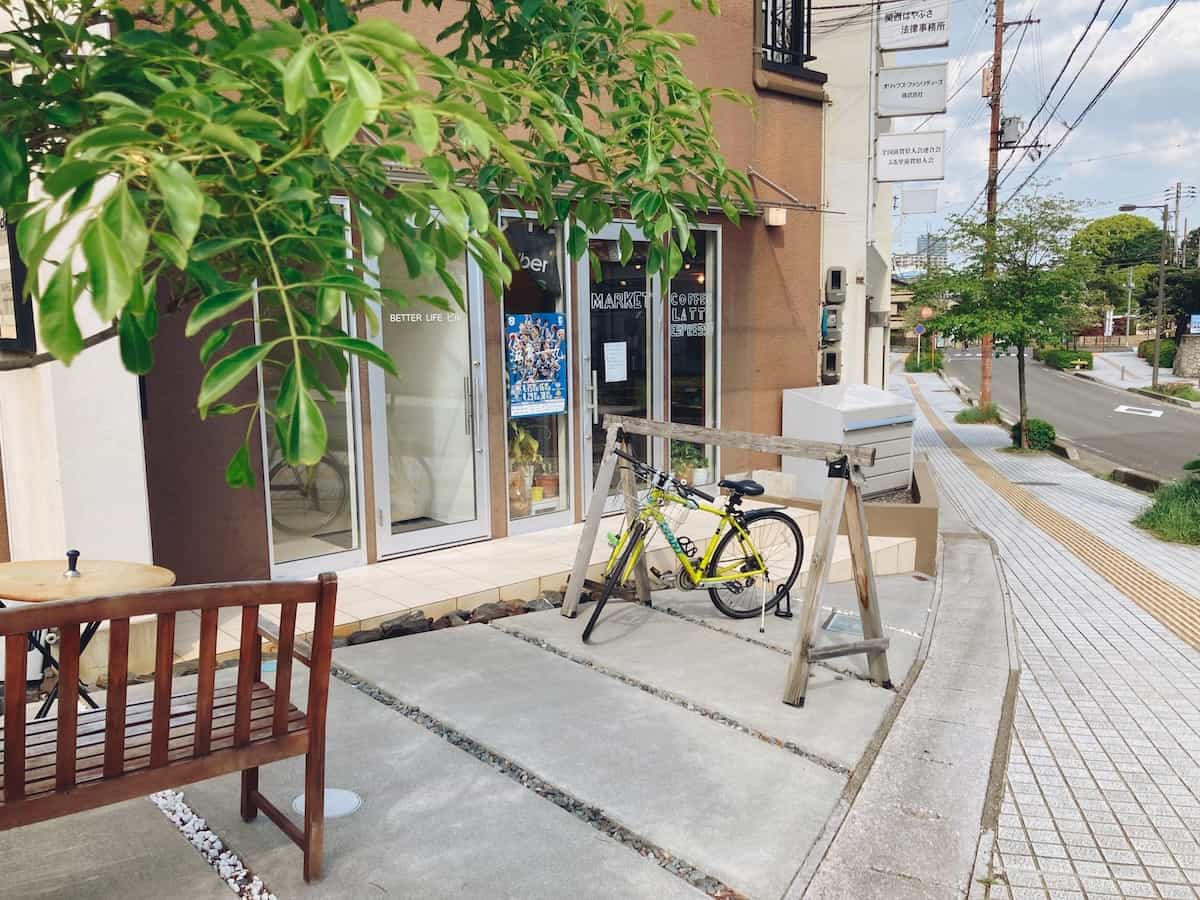
A coffee stand where you can choose the origin and roasting method of your beans, enjoying latte art. It also serves food items like the "Plate Lunch Set" and various sweets. Address 1-15-31 Umabayashi, Otsu City, Shiga Prefecture 520-0051 Google Map Check with Google Maps Access ・Get off at Keihan “Ishiba Station” or “Shimanose Station,” then walk for about 9 minutes ・Get off at JR “Otsu Station,” then walk for about 7 minutes Parking Business Hours 7:00 AM - 7:00 PM Saturday 9:00 AM - 7:00 PM Sunday 9:00 AM - 6:00 PM Admission Fee Regular Holiday ※ Irregular holidays (Check Instagram for closed days) Phone Number 077-599-4880 URL https://marketespressoandv.wixsite.com/marketev-1 SNS
PATISSERIE LA POCHE
Gourmet
Open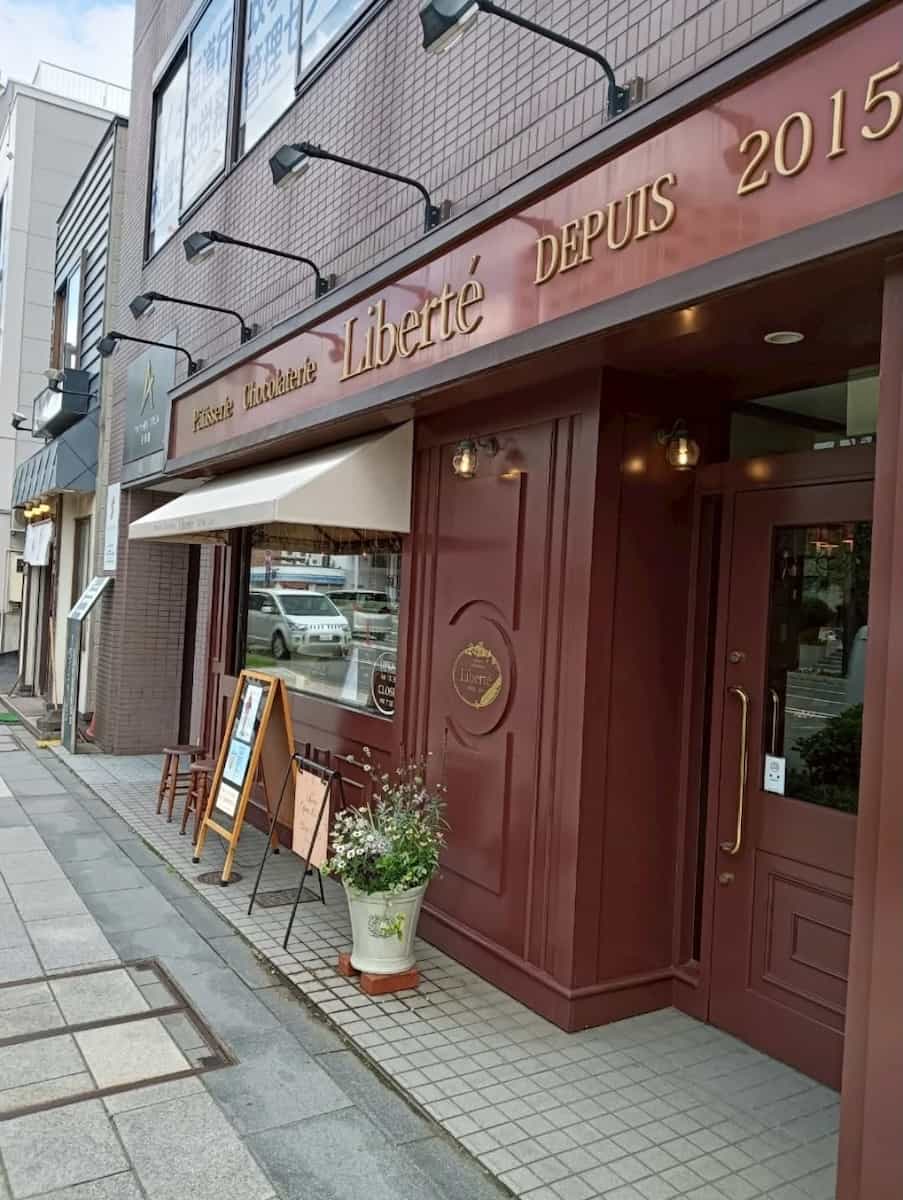
A patissier with a career at prestigious hotels in Osaka and Shiga opened this local patisserie. It offers popular cream puffs and cheesecakes, as well as a colorful variety of cakes. Address 1-1-1 Matsumoto, Otsu City, Shiga Prefecture 520-0807 Google Map Check with Google Maps Access ・Get off at Keihan “Ishiba Station,” then walk for about 8 minutes ・Get off at JR “Otsu Station,” then walk for about 10 minutes Parking Business Hours 10:00 AM - 7:00 PM (Ends when sold out) Admission Fee Regular Holiday Closed on Tuesday, Irregular holidays on Wednesday (Other irregular holidays) Phone Number 077-548-8624 URL SNS
Cafe Marvel
Gourmet
Open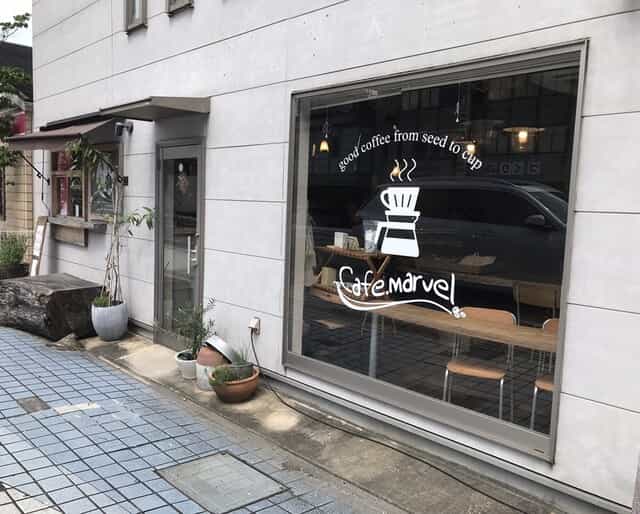
We directly source single origin coffee from local farms with the motto "from seed to cup," providing safe and delicious coffee. Address 5-9 Goryocho, Otsu City, Shiga Prefecture 520-0037 Google Map Check with Google Maps Access ・Get off at Keihan “Otsu City Hall” Station, then walk for about 1 minute. Parking Business Hours 9:30 AM - 6:00 PM Admission Fee Regular Holiday Sunday, 2nd and 4th Monday Phone Number 077-526-5909 URL SNS
Issenyaki Cafe Fujitani
Gourmet
Open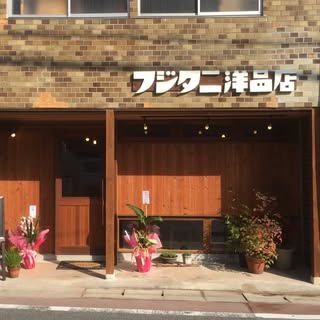
Serving breakfast in the morning and Hiroshima-style okonomiyaki called "Issen-yaki" from the afternoon. The shop owner has inherited the cozy space from his aunt who ran a fashion store here. Address 4-6-59 Chuo, Otsu City, Shiga Prefecture 520-0043 Google Map Check with Google Maps Access ・Get off at Keihan “Shimanose Station,” then walk for about 2 minutes. ・Get off at JR “Otsu Station,” then walk for about 10 minutes. Parking Business Hours Morning Cafe 9:00 AM - 12:00 PM Issen-yaki Cafe 12:00 PM - 4:00 PM Admission Fee Regular Holiday Monday, Tuesday, Sunday Phone Number 077-522-2195 URL SNS
Saikyoji Temple
Gourmet
Open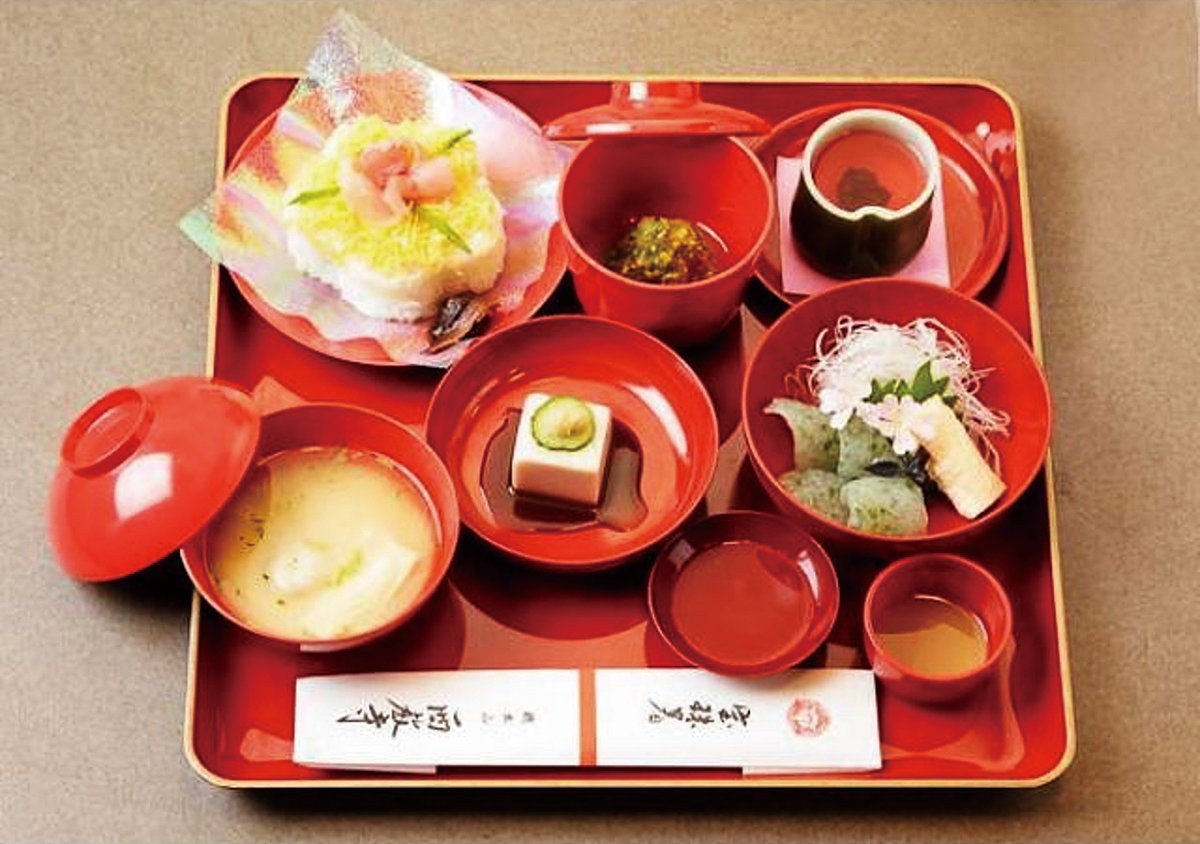
We offer vegetarian vegetarian cuisine by reservation only. We also offer limited-time special dishes such as "Secret Daikon Boiled Radish" in mid-January, "Hinamatsuri Gozen" from mid-February to early March, and "Kiku Gozen" in mid-November. Address Sakamoto 5-13-1 Google Map Check with Google Maps Access Parking Yes Business Hours Reservations only Admission Fee Regular Holiday Open daily Phone Number 077-578-0013 URL SNS
Fuyoen Main Building
Gourmet
Open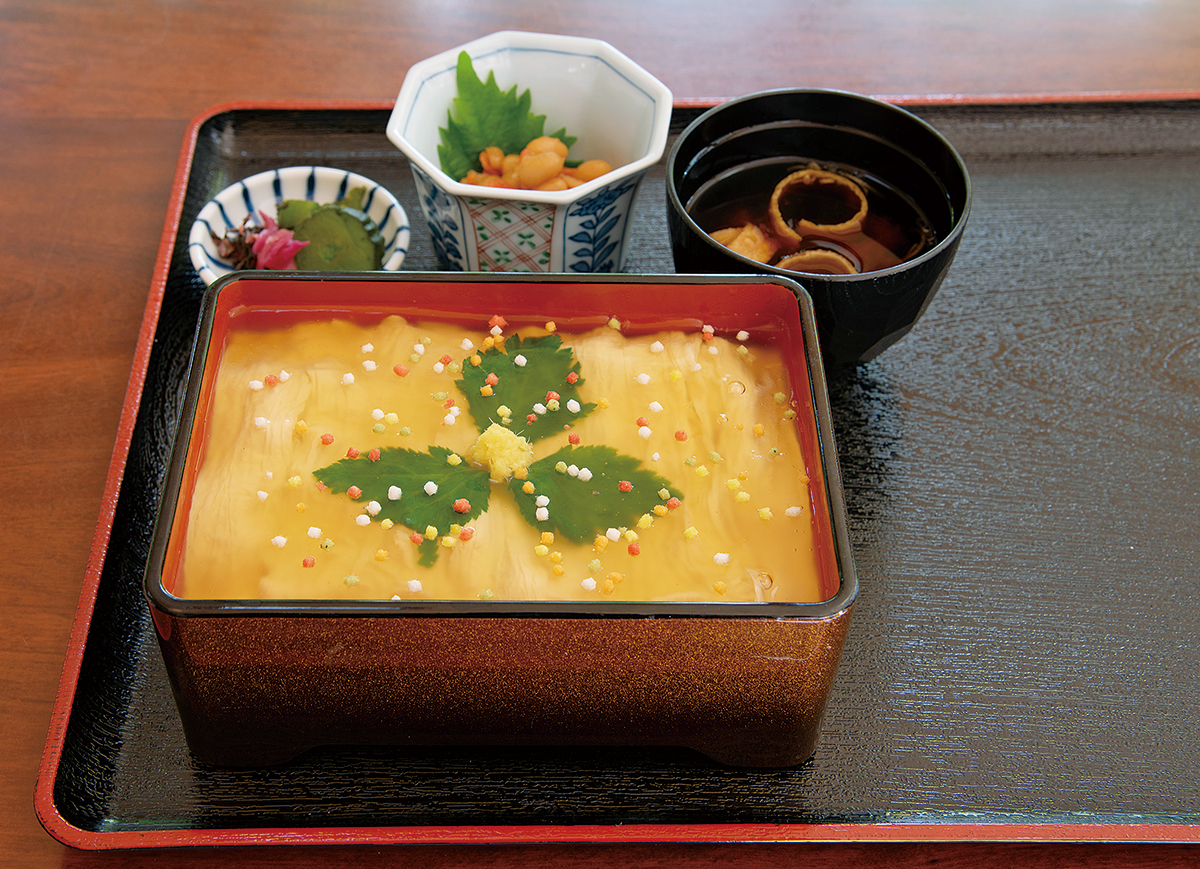
Enjoy your meal while looking out at the scenic garden. Reservations are required for evening meals. Address Sakamoto 4-5-17 Google Map Check with Google Maps Access Parking Yes Business Hours Reservations are given priority 11:00-15:00 (telephone reservations accepted from 10:00 on the day) Admission Fee Regular Holiday Irregular holidays Phone Number 077-578-0567 URL SNS
Vegan Cafe AN cafe&space
Gourmet
Open
This is a vegan cafe. We also have seating for dogs. Please come and enjoy some relaxing time with your dog. Address Sakamoto 8-11-46 Google Map Check with Google Maps Access Parking Yes Business Hours We will announce it on Instagram as soon as it is decided. Admission Fee Regular Holiday Irregular holidays Phone Number 090-2015-6757 URL SNS
Osugi Chaya
Gourmet
Open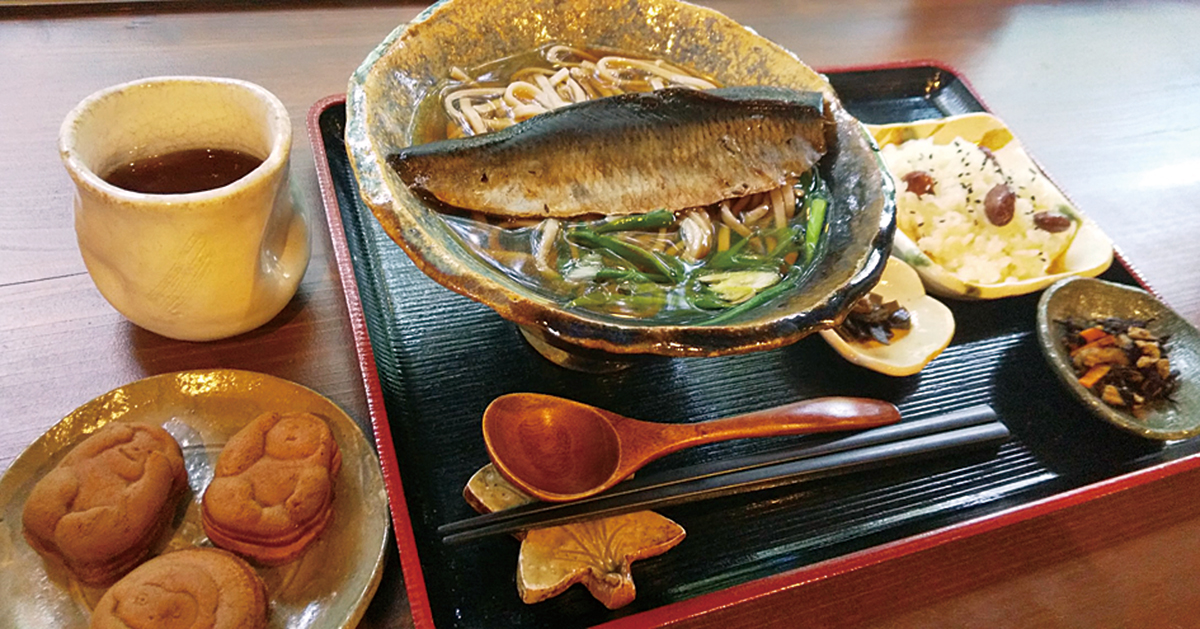
Just a one-minute walk from the red torii gate of Hiyoshi Taisha Shrine. If you're tired from your walk, why not take a break? In addition to soba noodles, we offer nostalgic sweets like zenzai and amazake, as well as coffee and homemade cakes. Shaved ice and chilled candy are also popular in the hot season. We stock a wide variety of products, including our famous "Goen-yaki" (Five Monkeys Yaki), Shiga specialties, local Omi sake, and Shigaraki ware. Address Sakamoto 5-2-6 Google Map Check with Google Maps Access Parking Yes Business Hours 10:00-17:00 Admission Fee Regular Holiday Wednesday(Closed on irregular days.) Phone Number 077-576-7730 URL SNS
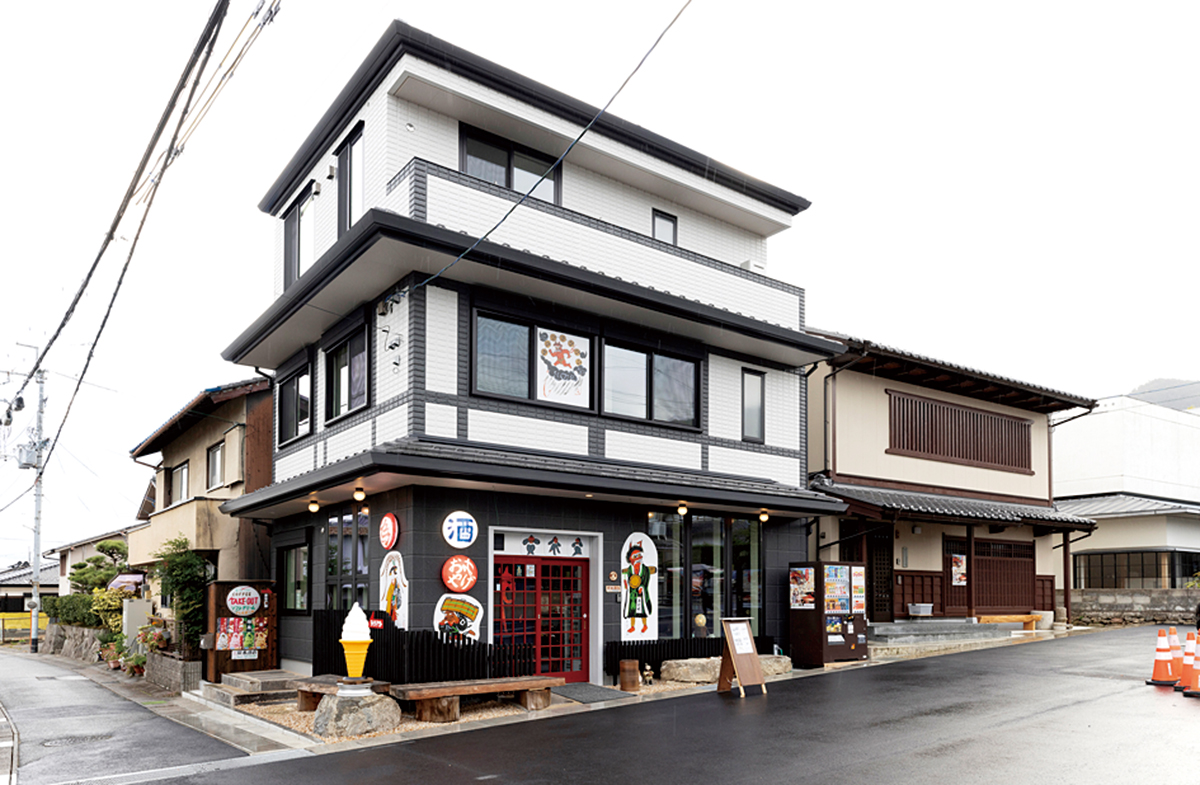
1 minute walk from Sakamoto-Hieizanguchi Station on the Keihan Railway towards Lake Biwa. Ogawa Coffee, Shanao Mochi, Omi souvenirs, soft serve ice cream, and a tasting of Omi local sake. Address Sakamoto 3-10-36 Google Map Check with Google Maps Access Parking none Business Hours 10:30-18:30 Admission Fee Regular Holiday Wednesday(Closed on irregular days.) Phone Number 077-579-3967 URL SNS
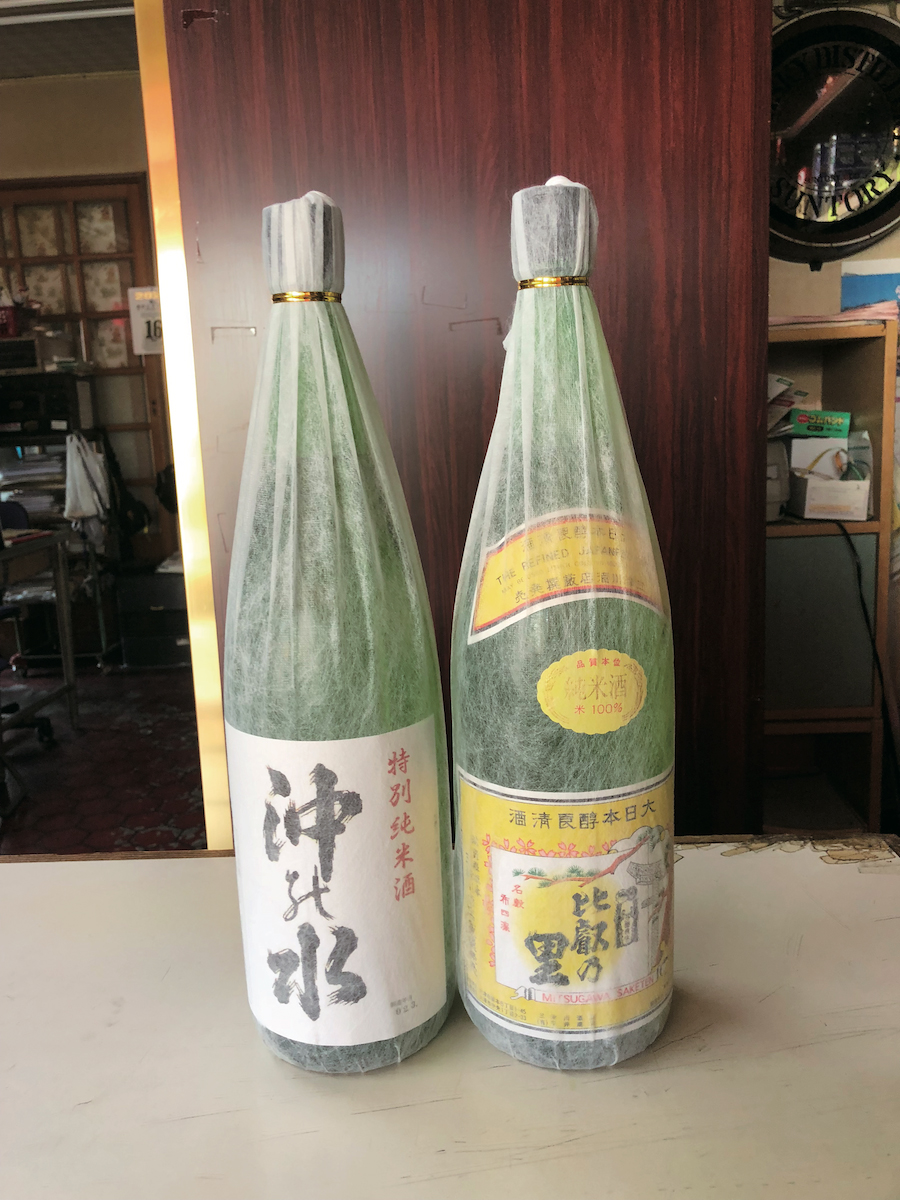
We have a wide selection of delicious local Omi sake and look forward to your visit. Address 6-1-45 Sakamoto Google Map Check with Google Maps Access Parking none Business Hours 8:00-21:00 Admission Fee Regular Holiday Open daily Phone Number 077-578-0023 URL SNS
Western-style Bakery
Gourmet
Open
Since our founding in 1982, we have been carefully selecting ingredients and baking bread using techniques we have cultivated over many years. Our specialty "Ishizumi Bread" comes in two different flavors depending on the season, so be sure to try it as a souvenir from Sakamoto. Address 4-14-11 Sakamoto Google Map Check with Google Maps Access Parking Yes Business Hours 7:30-18:30 (Ends when sold out) Admission Fee Regular Holiday Sundays, holidays, Wednesdays (may be closed temporarily) Phone Number 077-578-0111 URL SNS
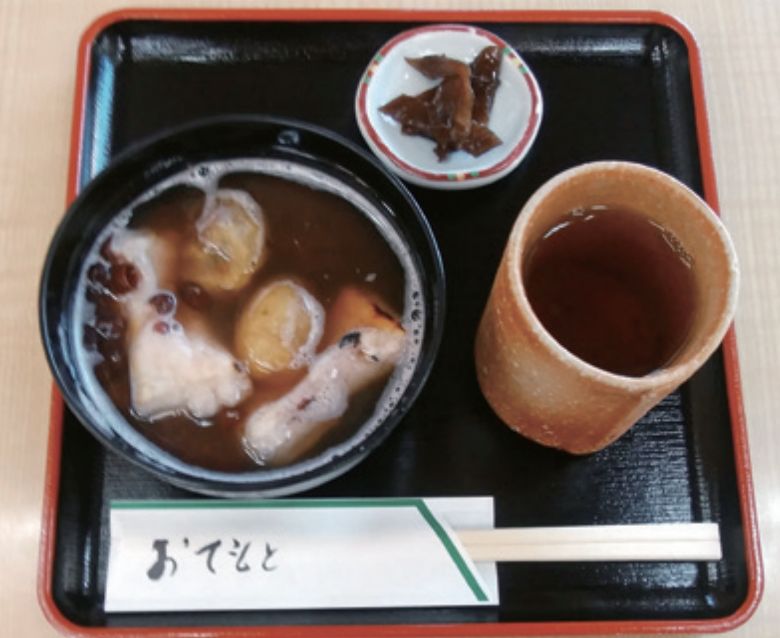
A shop that offers handmade souvenirs and sweets. Their zenzai and warabimochi are very popular. Located right next to Sakamoto-Hieizanguchi Station on the Keihan Railway. Convenient for stopping by before heading home. Address Sakamoto 3-10-30 Google Map Check with Google Maps Access Parking none Business Hours 10:00-17:00 Admission Fee Regular Holiday Wednesday and Thursday Phone Number 077-578-0382 URL SNS
Uozenso Main Store
Gourmet
Open
We sell catered bento boxes and homemade side dishes. Please make a reservation in advance for catering and various business dinners. We will close once all the side dishes for the day have been sold out. Address Sakamoto 3-15-24 Google Map Check with Google Maps Access Parking Yes Business Hours 10:00~ Admission Fee Regular Holiday (Prepared meals) Wednesday, Thursday, Sunday, and public holidays. Temporary closures will be posted on Instagram. Phone Number 077-578-0251 URL SNS
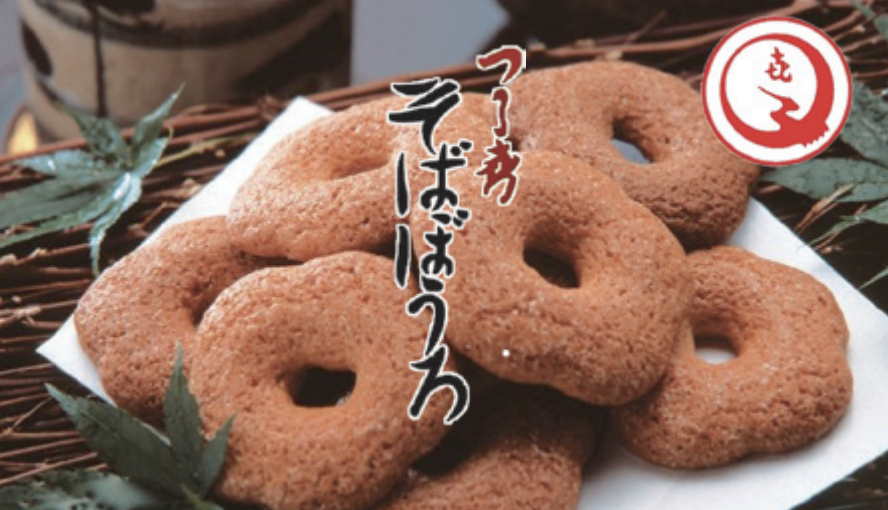
A simple, nostalgic taste that everyone has tried at least once. This is one of our pride and joys, grilled to bring out the aroma of buckwheat and with a gentleness that will remind you of nature and home. Please give it a try. We also have many other products that can be used as souvenirs, gifts, offerings, and more. Please feel free to stop by. Address Sakamoto 2-12-33 Google Map Check with Google Maps Access Parking Yes Business Hours 9:00-17:00 Admission Fee Regular Holiday day Phone Number 077-578-0327 URL SNS
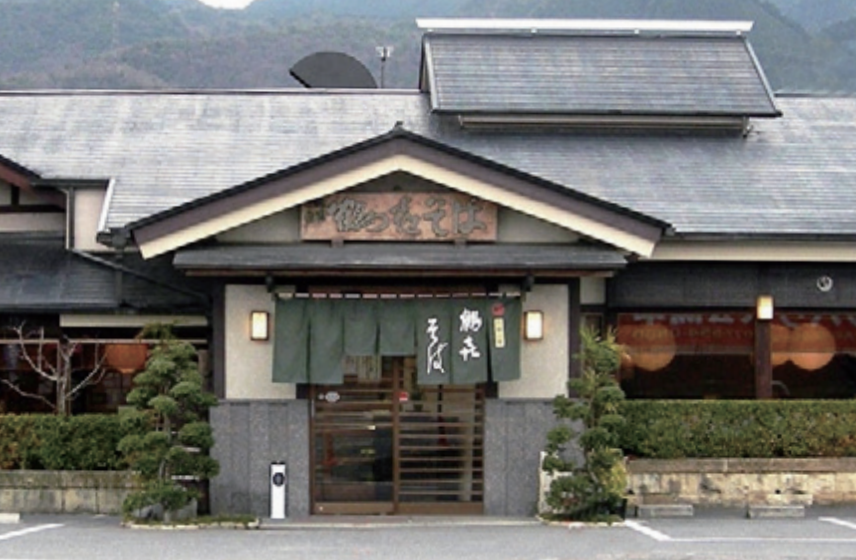
We have seasonal menus, set menus, and children's menus that are enjoyed by people of all ages. We look forward to your visit. Address 1-23-1 Karasaki, Otsu City Google Map Check with Google Maps Access Parking Yes Business Hours 11:00-20:30 (Last Order 20:00) Admission Fee Regular Holiday Open all year round Phone Number 077-578-0332 URL SNS
Restaurant La Seria
Gourmet
Open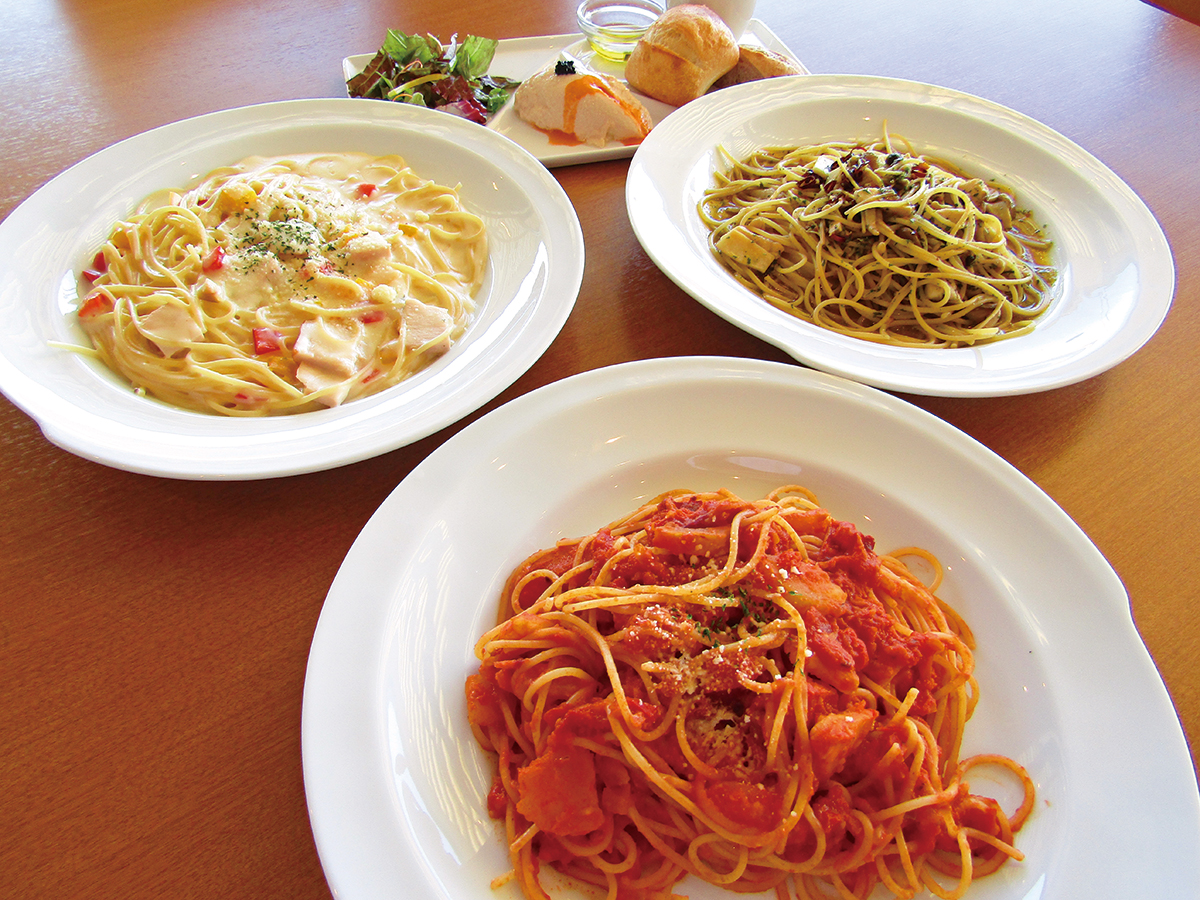
"Relaxing lunch while looking out at Lake Biwa" This popular lakeside restaurant serves a variety of dishes prepared by a chef who used to work at a hotel. They offer pasta lunches, pizzas, and curry lunches. Their cake sets are also popular during cafe time. Address 5-2-2 Shimosakamoto Google Map Check with Google Maps Access Parking Yes Business Hours 11:00-17:00 (Lunch until 14:15) Admission Fee Regular Holiday Tuesday and Wednesday Phone Number 077-578-5785 URL SNS
Restaurant CABIN
Gourmet
Open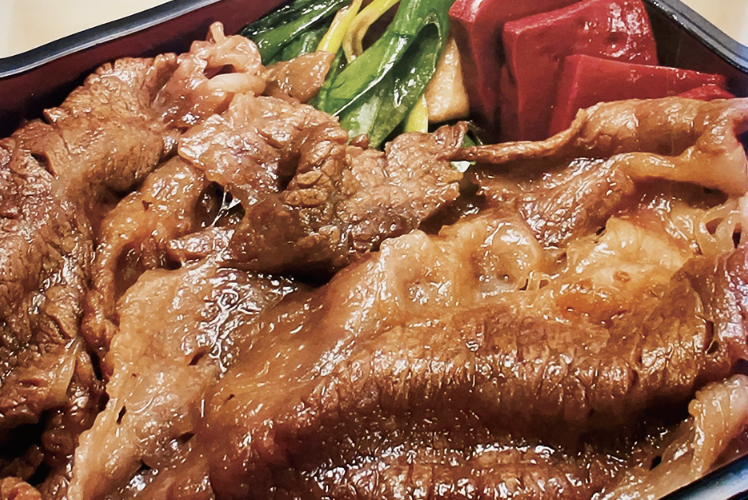
You can enjoy a relaxing meal while looking out at Lake Biwa. The hearty set meals and daily lunch specials, mainly Western cuisine, are popular. Pets are welcome on the outdoor terrace seating. Address 1-29-9 Shimosakamoto Google Map Check with Google Maps Access Parking Yes Business Hours 11:00-15:00 (LO 14:30) Admission Fee Regular Holiday Irregular holidays Phone Number 077-577-2235 URL SNS
Restaurant Kofu
Gourmet
Open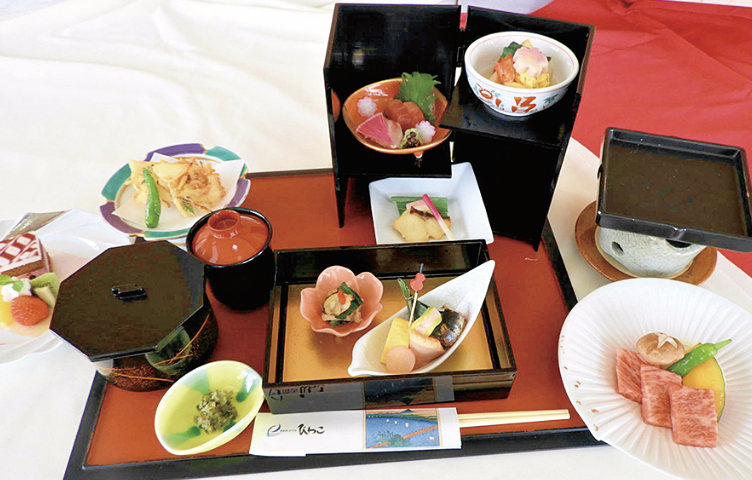
A lakeside restaurant with Lake Biwa right in front of you. We offer a variety of meals, including seasonal meals and Omi beef rice bowls. After your meal, you can purchase souvenirs at the shop. We also welcome you to stay overnight. Address 1-1-1 Shimosakamoto Google Map Check with Google Maps Access Parking Yes Business Hours 11:30-14:30 (reservations required) Admission Fee Regular Holiday Irregular holidays Phone Number 077-578-2020 URL SNS
Chinese Restaurant Todo
Gourmet
Open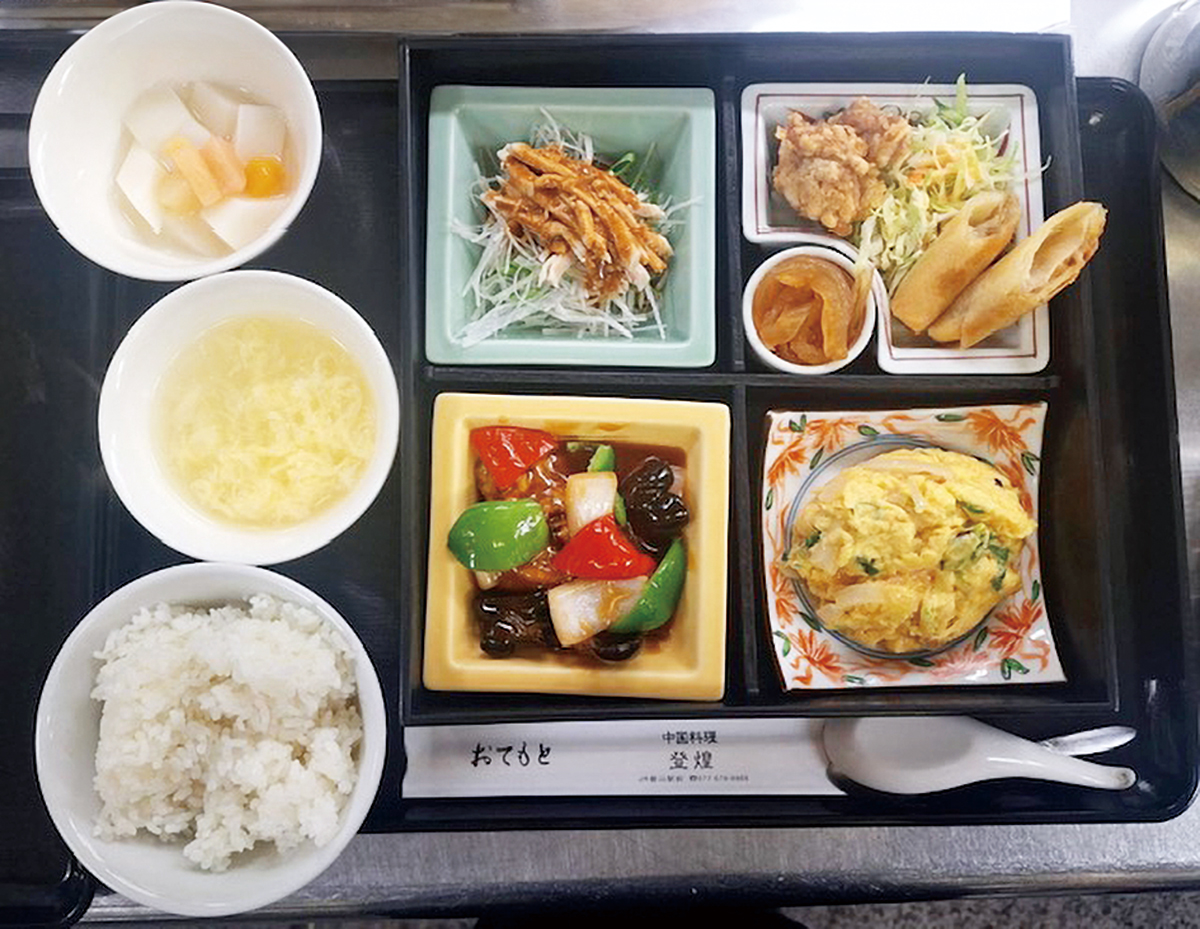
We use the ingredients to create a taste that evokes a sense of Japanese culture. Everyone from small children to seniors can enjoy this dish. Address 3-32-27 sakamoto Google Map Check with Google Maps Access Parking Yes Business Hours 11:30~15:00(L.O.14:00), 17:00~22:00(L.O.21:00) Admission Fee Regular Holiday Every Monday and second Tuesday Phone Number 077-579-0966 URL SNS
Hiei Sankuro
Gourmet
Open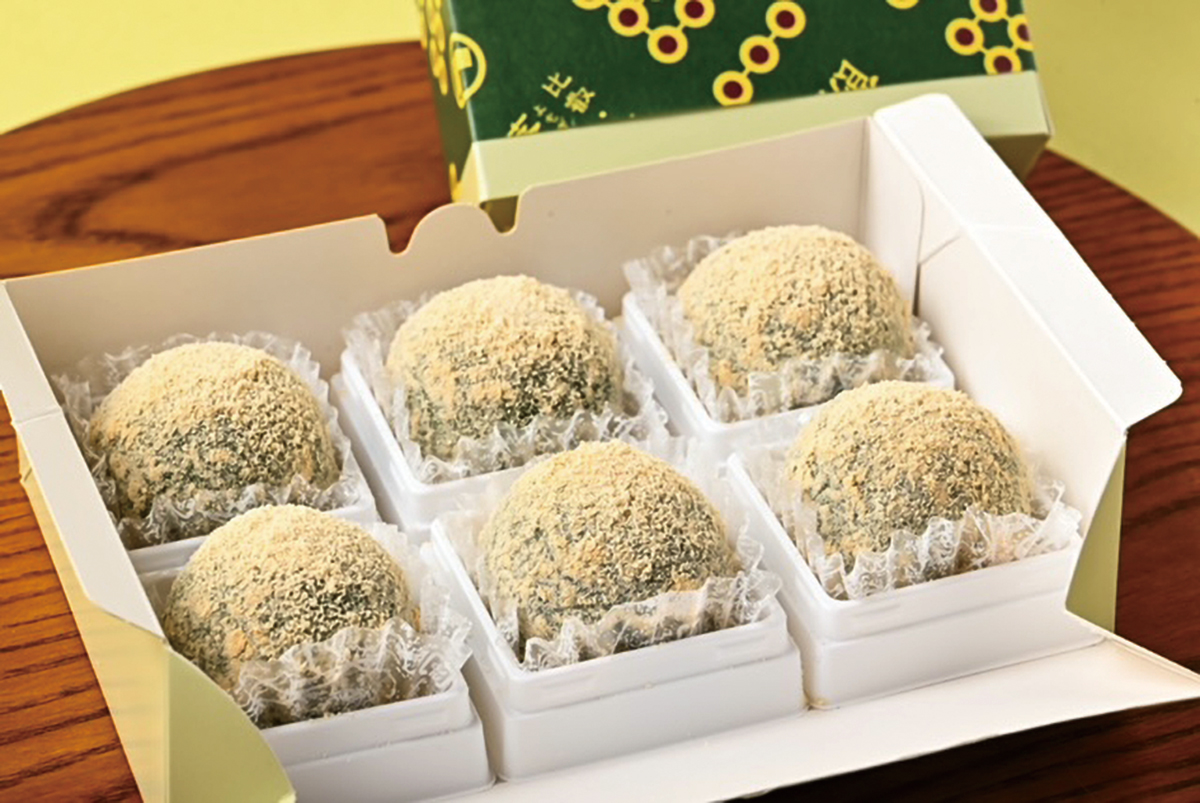
Hiei Sankyuryo is a shop specializing in lotus mochi (lotus rice cakes). Each fragrant lotus mochi is carefully handcrafted using plumply steamed habutae mochi (rice cakes with a layer of habutae) and young mugwort leaves picked in the spring. The dish is also light and refreshing, made with less sweet azuki bean paste and kinako (roasted soybean flour) for health reasons. Address Sakamoto 6-28-3 Google Map Check with Google Maps Access Parking Yes Business Hours 10:00-17:00 (Lunchtime 11:30-14:30/Last orders 16:30) Admission Fee Regular Holiday Every Monday and second Tuesday Phone Number 077-578-1720 URL SNS
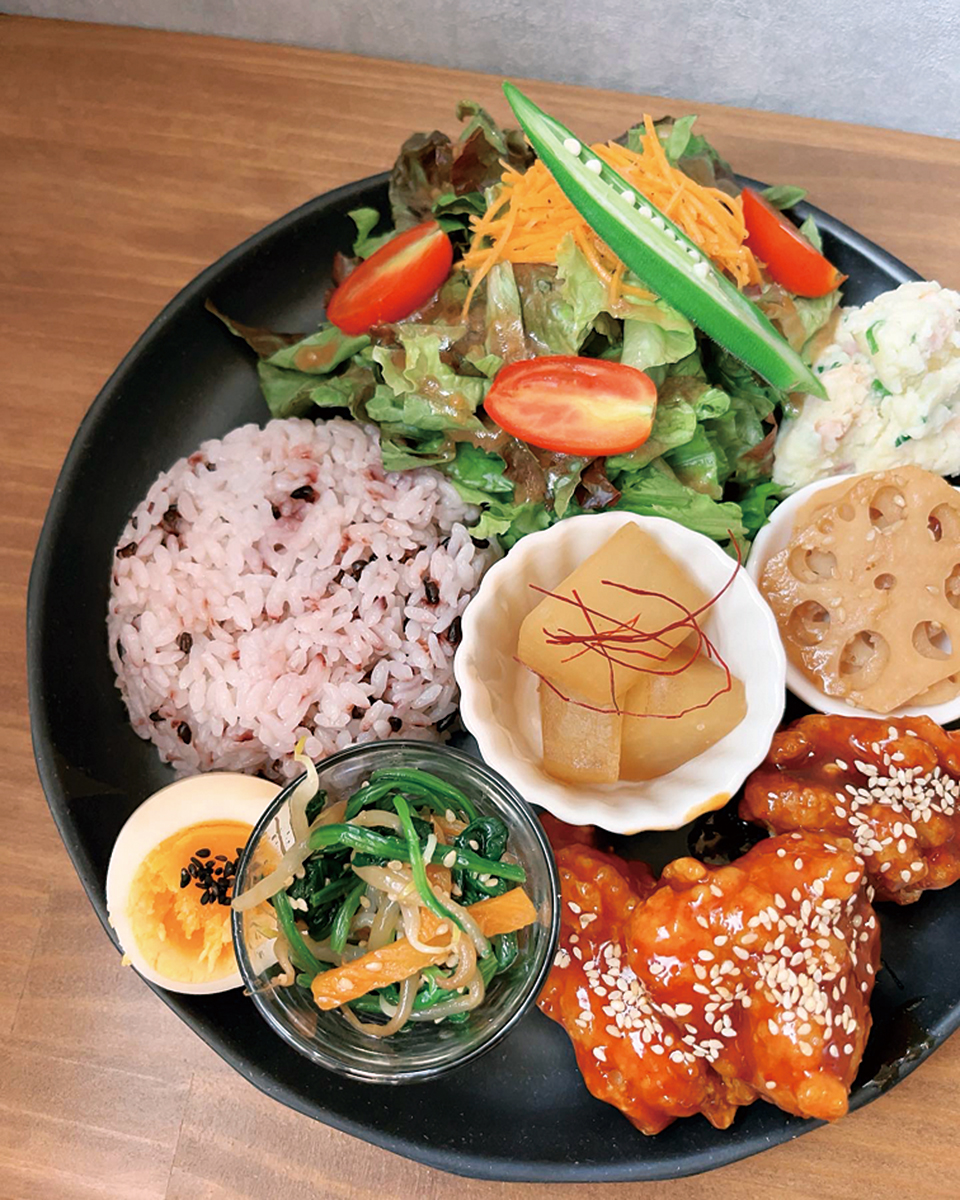
We offer plate lunches packed with vegetables. Lunch boxes can also be ordered with a reservation made the day before. You can also enjoy canelés, cake of the day, and seasonal parfaits. Address 3-11-28 Sakamoto Google Map Check with Google Maps Access Parking Yes Business Hours 11:00-17:00 Admission Fee Regular Holiday Thursday, Sunday, 1st and 3rd Friday Phone Number 090-9989-0950 URL SNS
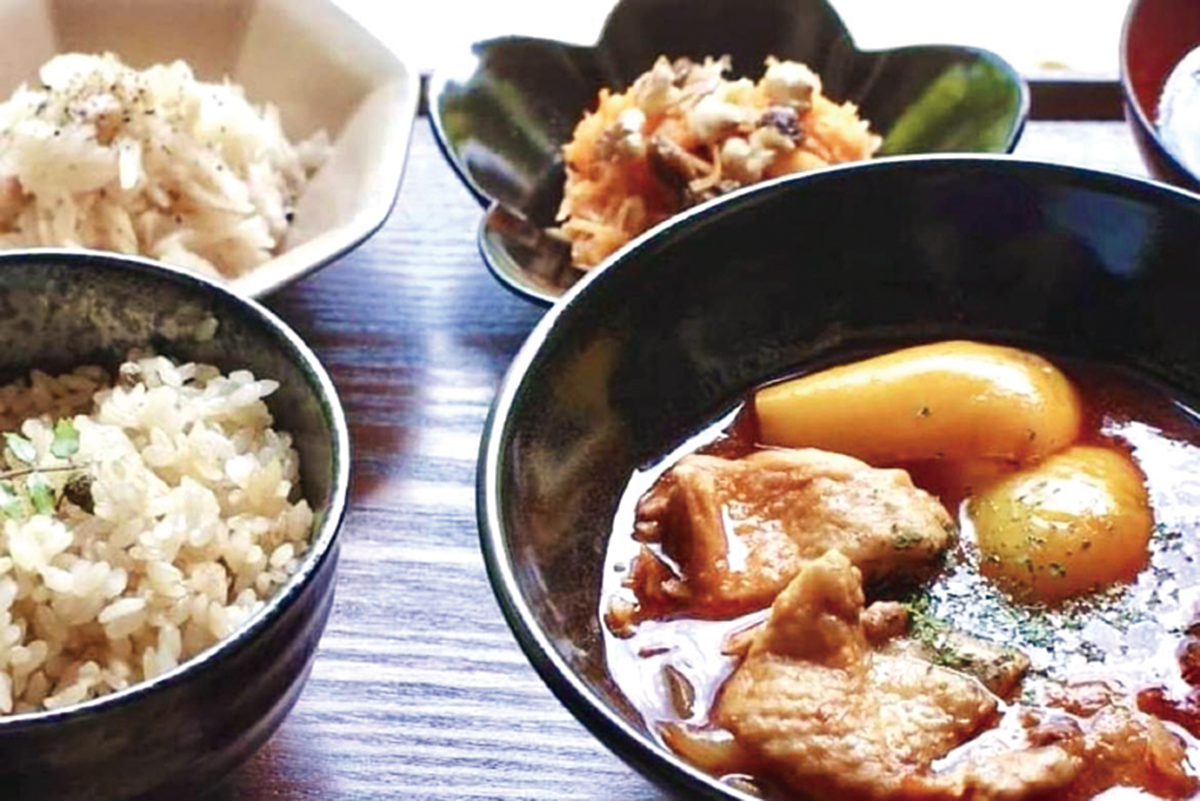
Enjoy your meal at the power spot of Tenjinyama while taking in the spectacular views of the garden and Lake Biwa. Address Sakamoto 1-11-26 Google Map Check with Google Maps Access Parking Available (3 general spaces, 1 priority space) Business Hours 10:00-17:00 Admission Fee Regular Holiday December to March, July to August Sundays, Mondays, Tuesdays, and Wednesdays Phone Number 090-1716-7299 URL SNS
L'Hotel de Hiei
Gourmet
Open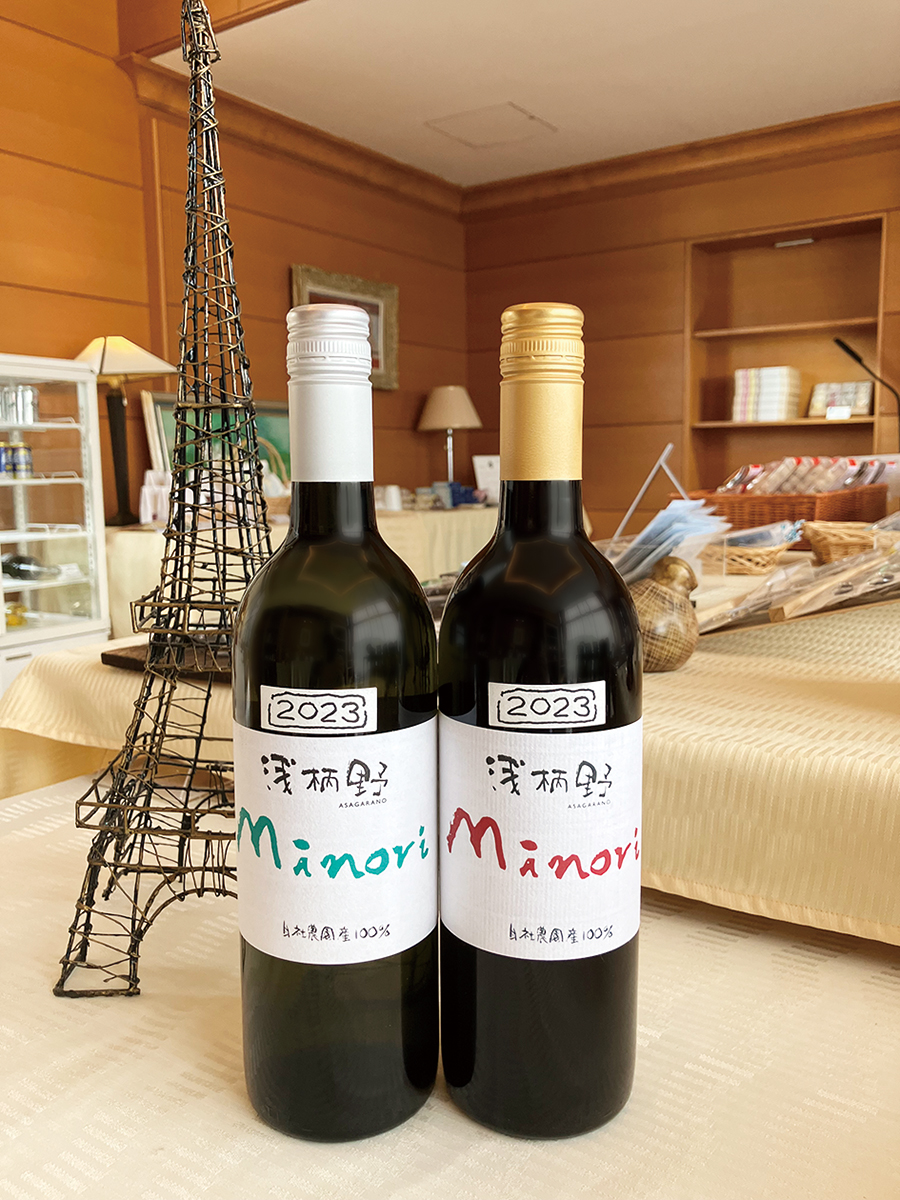
We stock an original wine jointly developed by a Shiga Prefecture sake brewery and the hotel's sommelier, as well as local specialty Omi tea, accessories, and local specialties. Please stop by. Address Hiei Mountain Ipponsugi, Sakyo Ward, Kyoto City Google Map Check with Google Maps Access Parking Yes Business Hours 7:00~21:00 Admission Fee Regular Holiday Every Tuesday and Wednesday Phone Number 075-701-0201 URL SNS
Address Sakamoto 6-2-23 Google Map Check with Google Maps Access Parking No Business Hours 13:00~18:00 Admission Fee Regular Holiday Weekdays except Saturdays and Sundays Phone Number 080-3111-5982 URL SNS
Rakushinan
Gourmet
Open
Address Sakamoto 6-26-45 Google Map Check with Google Maps Access Parking Yes Business Hours 11:00~17:00 Admission Fee Regular Holiday Money (confirmation required) Phone Number 077-548-8554 URL SNS
Hiyoshi Soba Shop
Gourmet
OpenAddress 4-11-38 Sakamoto Google Map Check with Google Maps Access Parking Yes Business Hours 11:00~17:00 Admission Fee Regular Holiday Irregular holidays Phone Number 077-578-0004 URL SNS
Koei-do Jyuen
Gourmet
OpenAddress Sakamoto 4-12-13 Google Map Check with Google Maps Access Parking none Business Hours 10:00~18:00 Admission Fee Regular Holiday Irregular holidays Phone Number 077-578-0064 URL SNS
Dining is delicious
Gourmet
OpenAddress 4-10-59 Sakamoto Google Map Check with Google Maps Access Parking Yes Business Hours 11:30~15:00, 18:00~21:00 Admission Fee Regular Holiday Irregular holidays Phone Number 077-578-0006 (Reservations are prioritized for dinner) URL SNS
Mike and Mame
Gourmet
OpenAddress Sakamoto 4-15-35 Google Map Check with Google Maps Access Parking Available (We recommend coming by light vehicle) Business Hours 12:30~17:00 Admission Fee Regular Holiday Sun/Mon/Tue/Wed Phone Number URL SNS
Address Sakamoto 4-12-30 Google Map Check with Google Maps Access Parking Yes Business Hours 11:00~15:30 Admission Fee Regular Holiday Mondays (irregular holidays) Phone Number 077-578-0165 URL SNS
Address 3-11-26 Sakamoto Google Map Check with Google Maps Access Parking Yes Business Hours 17:00~24:00 Admission Fee Regular Holiday Thursday (irregular holidays) Phone Number 077-578-6200 URL SNS
Address 3-16-40 Sakamoto, Otsu City Google Map Check with Google Maps Access Parking Available (1 unit) Business Hours 11:00~16:00 Admission Fee Regular Holiday Irregular holidays (opening days are posted on Instagram or in store) Phone Number 080-9562-1053 URL SNS
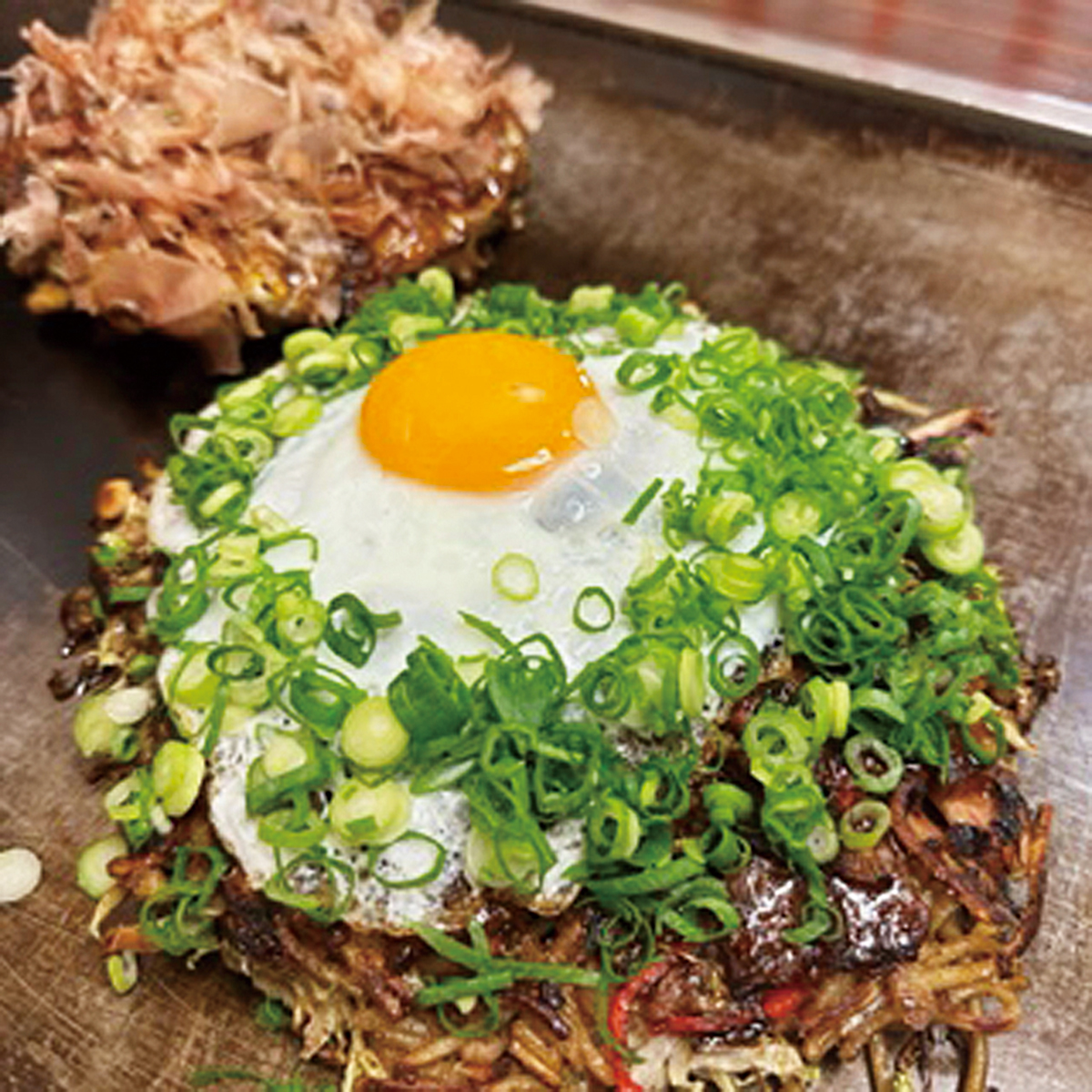
Address 102 Rene Eizan, 18-71 Sakamoto 3-chome Google Map Check with Google Maps Access Parking Available (2-3 spaces in front of the store) Business Hours 10:00~22:00 Admission Fee Regular Holiday day Phone Number 077-578-1233 URL SNS
WINDS Kaze Coffee Shop
Gourmet
OpenAddress 18-62 Sakamoto 3-chome, Otsu City Google Map Check with Google Maps Access Parking Available (one small car) Business Hours 10:00~18:00 Admission Fee Regular Holiday Irregular holidays Phone Number 070-8491-3589 URL SNS
Address 7-30-75-2 Sakamoto Google Map Check with Google Maps Access Parking Yes Business Hours 12:00~17:00 Admission Fee Regular Holiday Posted on Instagram Phone Number URL SNS
Ramen Ittetsu
Gourmet
OpenAddress Inside JR Hieizan Sakamoto Station Google Map Check with Google Maps Access Parking none Business Hours 11:00~23:00(L.O.22:30) Admission Fee Regular Holiday Wednesday Phone Number 090-5098-6694 URL SNS
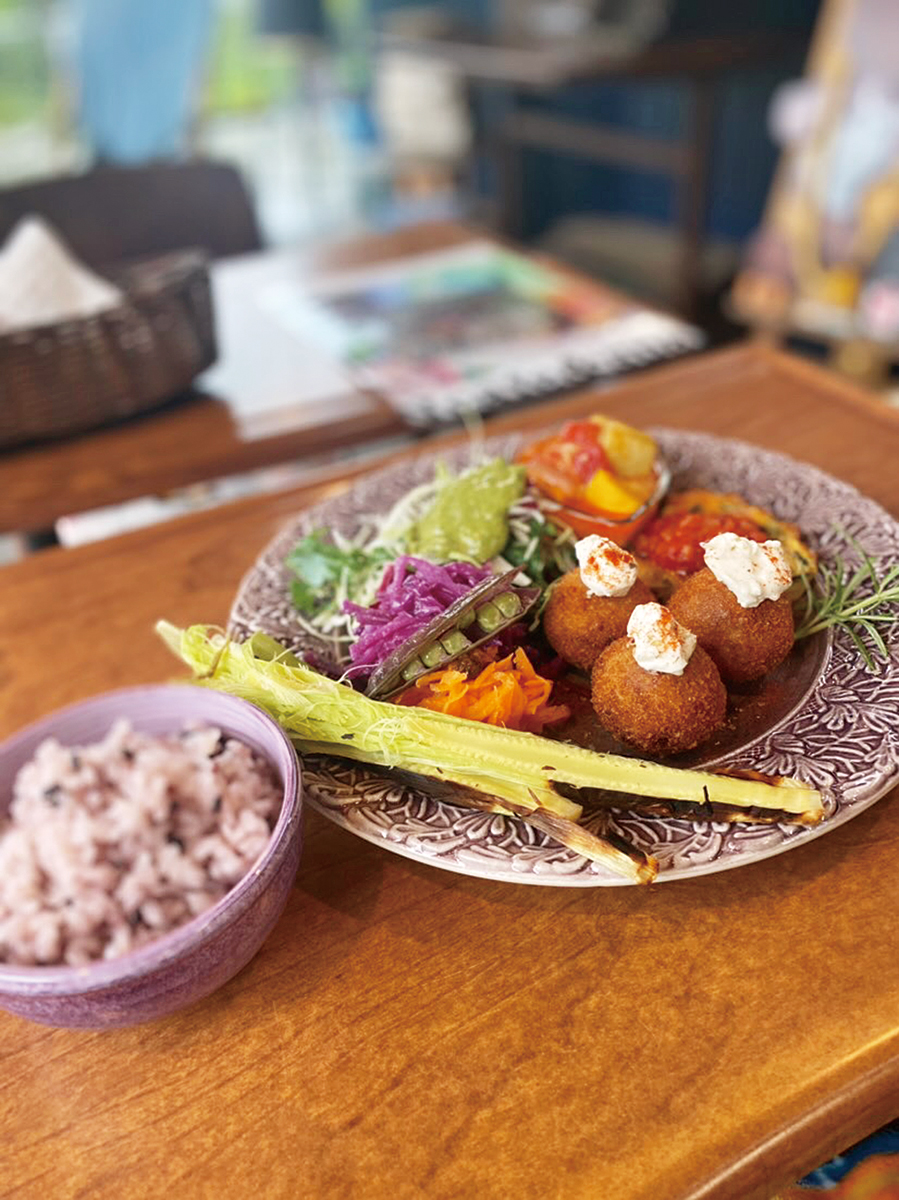
Address Inside JR Hieizan Sakamoto Station Google Map Check with Google Maps Access Parking none Business Hours 7:30~19:00 Admission Fee Regular Holiday day Phone Number 077-578-3700 URL SNS
Medium weight
Gourmet
OpenAddress Sakamoto 7-32-12 Google Map Check with Google Maps Access Parking Available (three units) Business Hours 11:00~13:30, 17:00~21:30 Admission Fee Regular Holiday Wednesday and Thursday Phone Number 077-578-1717 URL SNS
Anato Shoten Main Store
Gourmet
OpenAddress Sakamoto 4-11-43 Google Map Check with Google Maps Access Parking none Business Hours 10:00~17:00 Admission Fee Regular Holiday Tuesday Phone Number 077-536-6930 URL SNS
 Souvenir
Enryakuji Bus Center Shop
Souvenir
OpenDue to shop renovations, we will be selling souvenirs at a temporary location until August 31st.The largest store within Mount Hiei, offering specialty items such as sesame tofu, sesame daifuku, and Hiei yuba along with Kyoto and Shiga regional products. Address 4220 Honmachi, Sakamoto, Otsu City, Shiga Prefecture, 520-0116 Google Map Check with Google Maps Access ・From Eizan Ropeway's “Mt. Hiei Summit Station,” take the shuttle bus and get off at “Enryakuji Bus Center” (immediately accessible) ・From Sakamoto Cable's “Enryakuji Station,” get off and walk about 8 minutes Parking Business Hours 9:00 AM - 4:00 PM Admission Fee Regular Holiday Phone Number 077-578-2139 URL SNS
Enryakuji Kaikan
Souvenir
Open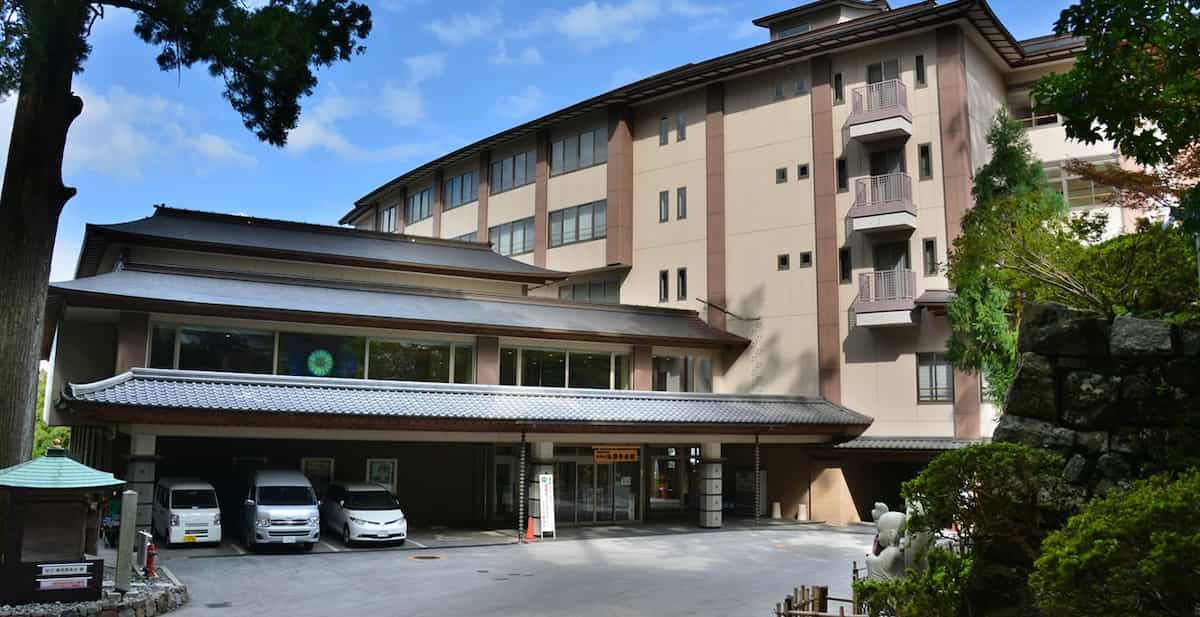
We offer a wide variety of souvenirs to help you cherish your memories of visiting Mount Hiei. In addition to items unique to the area—such as prayer beads and incense—we also carry original sweets and specialty products from Shiga and Kyoto. Conveniently located for a visit after worship, this is the perfect place to find something for yourself or a thoughtful gift for someone special. It's an ideal spot to stop by at the end of your journey. Address 4220 Honmachi, Sakamoto, Otsu City, Shiga Prefecture, 520-0116 Google Map Check with Google Maps Access ・From Eizan Ropeway's “Mt. Hiei Summit Station,” take the shuttle bus and get off at “Enryakuji Bus Center” (immediately accessible) ・From Sakamoto Cable's “Enryakuji Station,” get off and walk approximately 8 minutes Parking Business Hours 9:00 AM - 4:00 PM Admission Fee Regular Holiday Phone Number 077-578-0047 URL SNS
Maison de Fleur
Souvenir
OpenLocated inside the Garden Museum Hiei, this shop offers a variety of items including museum merchandise, gardening goods, and stylish French accessories. Visitors can also enjoy hands-on craft experiences such as making herbariums and keychains. Address 4 Ushigakaku, Shugakuin, Sakyo Ward, Kyoto City, Kyoto Prefecture 606-0000 Google Map Check with Google Maps Access ・Immediately upon exiting the Eizan Ropeway “Mt. Hiei Summit Station” ・Immediately upon exiting the Mt. Hiei Drive Bus/Shuttle Bus “Mt. Hiei Summit” stop Parking Business Hours 10:00 AM - 5:00 PM Admission Fee Entrance fee to Garden Museum Hiei required separately. Regular Holiday Phone Number 075-707-7733 URL https://gmhiei.jp/map/shop/ SNS
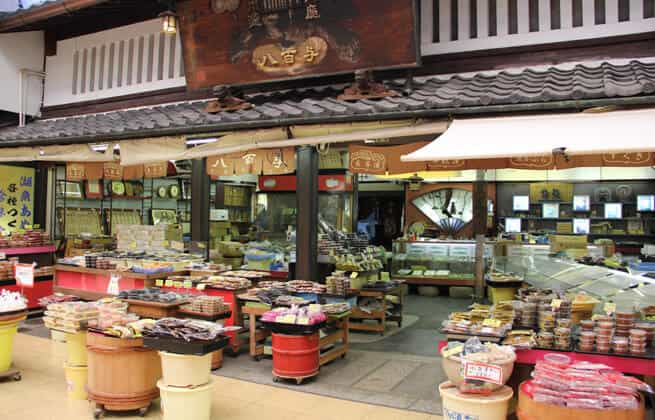
Founded in 1850, this traditional pickle shop formerly served the Imperial Household Agency. It offers treasures such as Nagara-zuke, Senmai-zuke, and seasonal vegetables pickled with special Shiga ingredients. You can also view items gifted by the Imperial Household over 100 years ago inside the store. Address 2-9-4 Nagara, Otsu City, Shiga Prefecture 520-0046 Google Map Check with Google Maps Access ・Get off at Keihan Biwako-Hamaotsu Station, then walk about 5 minutes. Parking Business Hours 10:00 AM - 7:00 PM Admission Fee Regular Holiday Sunday Phone Number 077-522-4021 URL SNS
Umino-Eki Hamaotsu
Souvenir
Open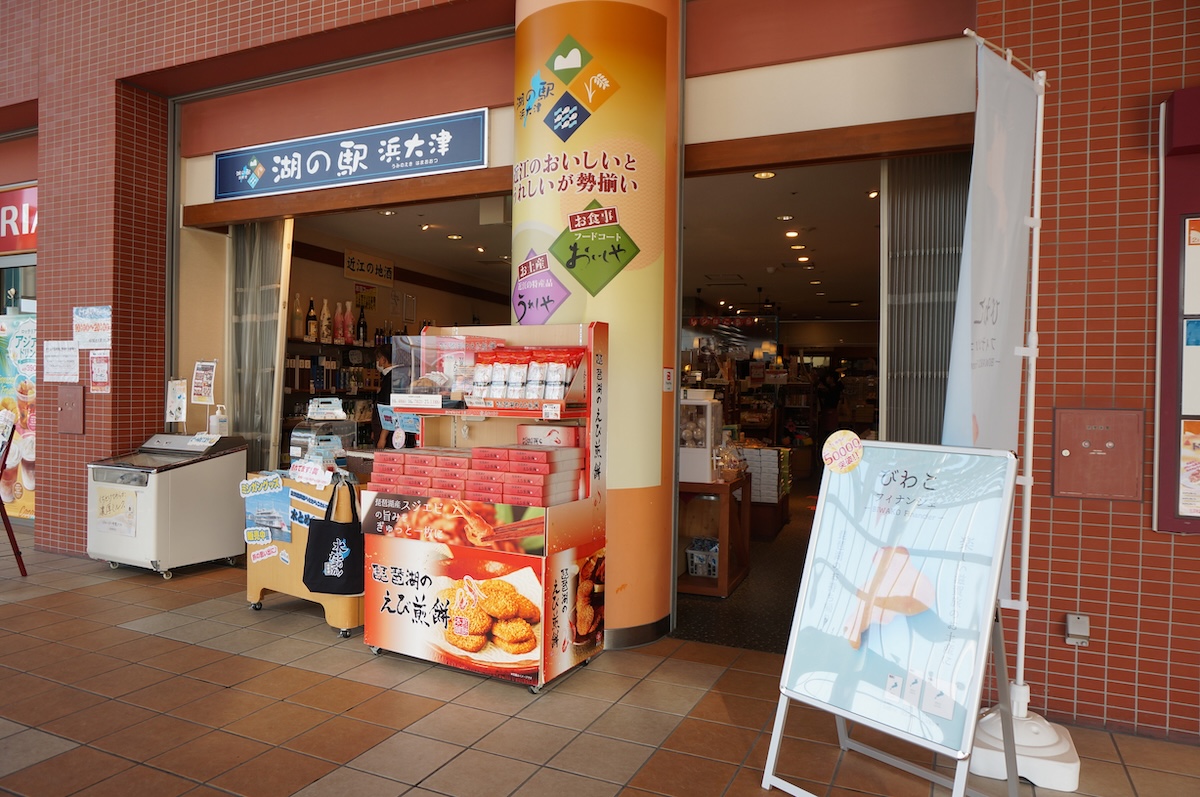
We boast a wide selection of Shiga and Omi specialties, souvenirs, and other exquisite items. In the food court, you can enjoy dishes made with Omi rice and local ingredients. Address Hamaotsu Arcus 2nd Floor, 2-1 Hamamachi, Otsu City, Shiga Prefecture, 520-0041 Google Map Check with Google Maps Access ・Approximately a 3-minute walk from Biwako-Hamaotsu Station on the Keihan Line ・Approximately a 15-minute walk from JR Otsu Station ・Approximately 5 minutes from the Otsu Interchange on the Meishin Expressway Parking Business Hours 10:00-20:00 Admission Fee Regular Holiday Phone Number 077-526-8286 URL https://umino-eki.jp/ SNS
 Hotel
Hotel
Enryakuji Kaikan
Hotel
Open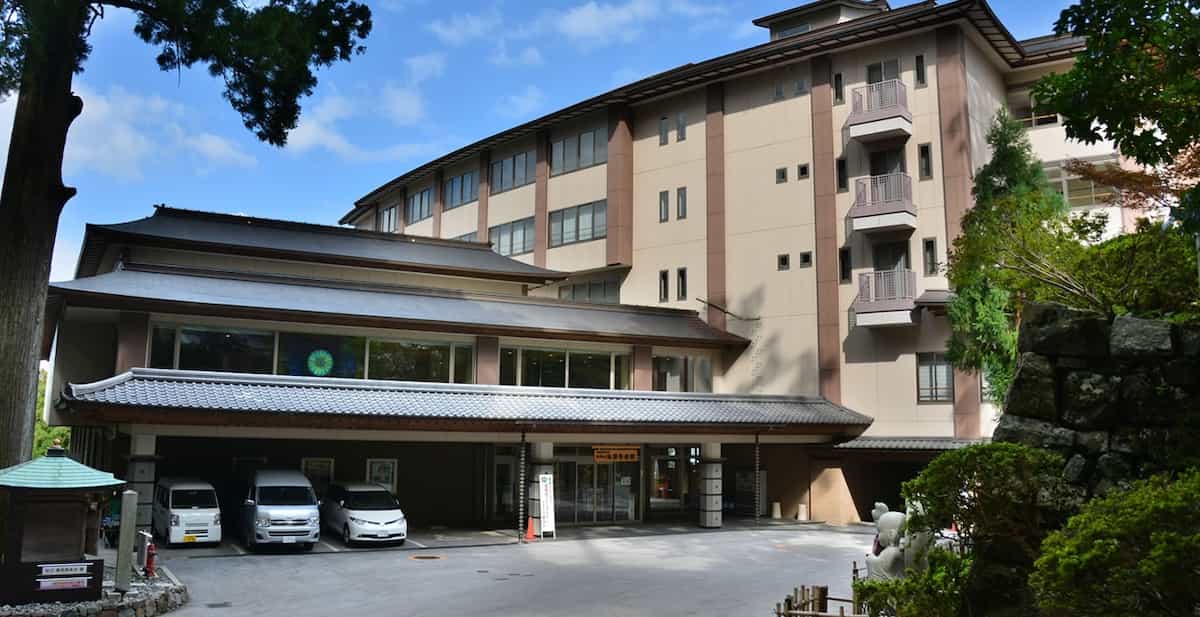
A temple lodging nestled within the grounds of Enryakuji Temple on Mount Hiei. Guests can enjoy a large communal bath with stunning views of Lake Biwa, as well as traditional shojin ryori (Buddhist vegetarian cuisine) rooted in centuries of tradition. Overnight guests also have the exclusive opportunity to participate in the morning service held at the temple's main hall, Konpon Chudo. This is a special stay on Mount Hiei, perfect for those seeking a peaceful retreat from everyday life. Address 4220 Honmachi, Sakamoto, Otsu City, Shiga Prefecture, 520-0116 Google Map Check with Google Maps Access ・From Eizan Ropeway's “Mt. Hiei Summit Station,” take the shuttle bus and get off at “Enryakuji Bus Center” (immediately accessible) ・From Sakamoto Cable's “Enryakuji Station,” get off and walk about 8 minutes Parking Business Hours 9:00 AM - 4:00 PM Admission Fee Regular Holiday Phone Number 077-578-0047 URL https://kaikan.enryakuji-immersion.com/ SNS
Biwako Hotel
Hotel
Open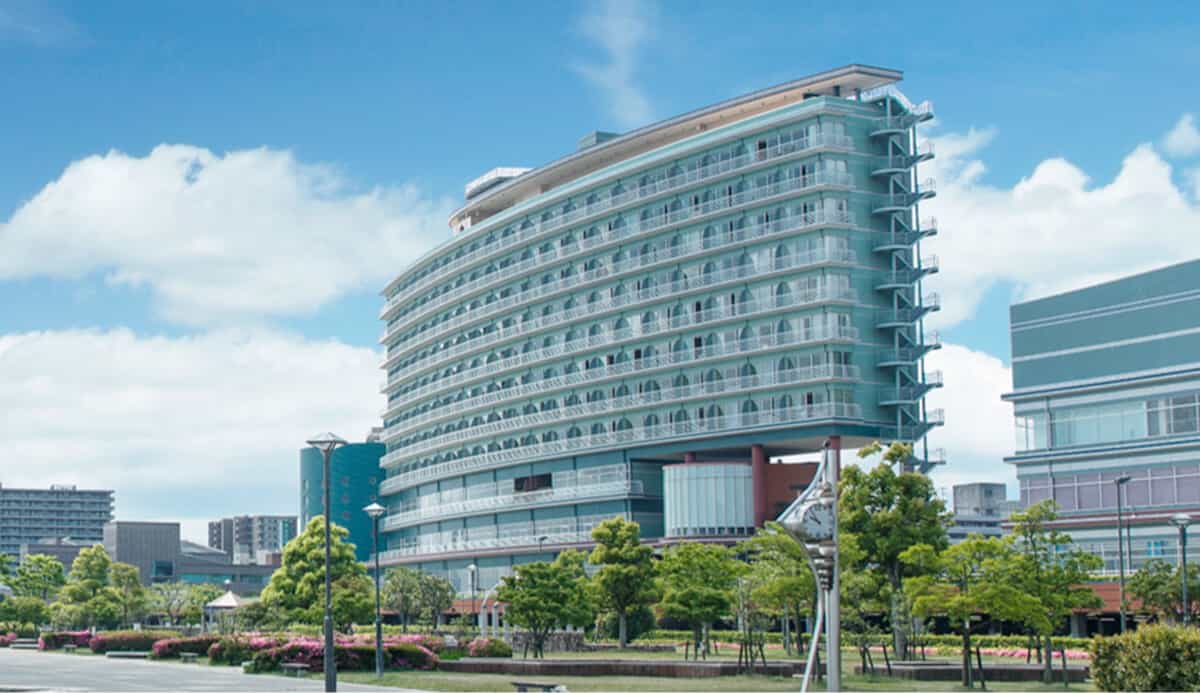
All rooms offer a lake view, as do the restaurant and large bath. There are many in-house facilities such as various restaurants offering local cuisine, bars, and cafes, allowing guests to enjoy the delights of the journey fully. Address 2-40 Hamacho, Otsu City, Shiga Prefecture 520-0041 Google Map Check with Google Maps Access ・Get off at Keihan “Biwako-Hamaotsu Station,” then walk about 5 minutes ・About 5 minutes by shuttle bus from JR “Otsu Station” Parking Business Hours Admission Fee Regular Holiday Phone Number 077-524-7111 URL https://www.keihanhotels-resorts.co.jp/biwakohotel/ SNS
 Cable Car
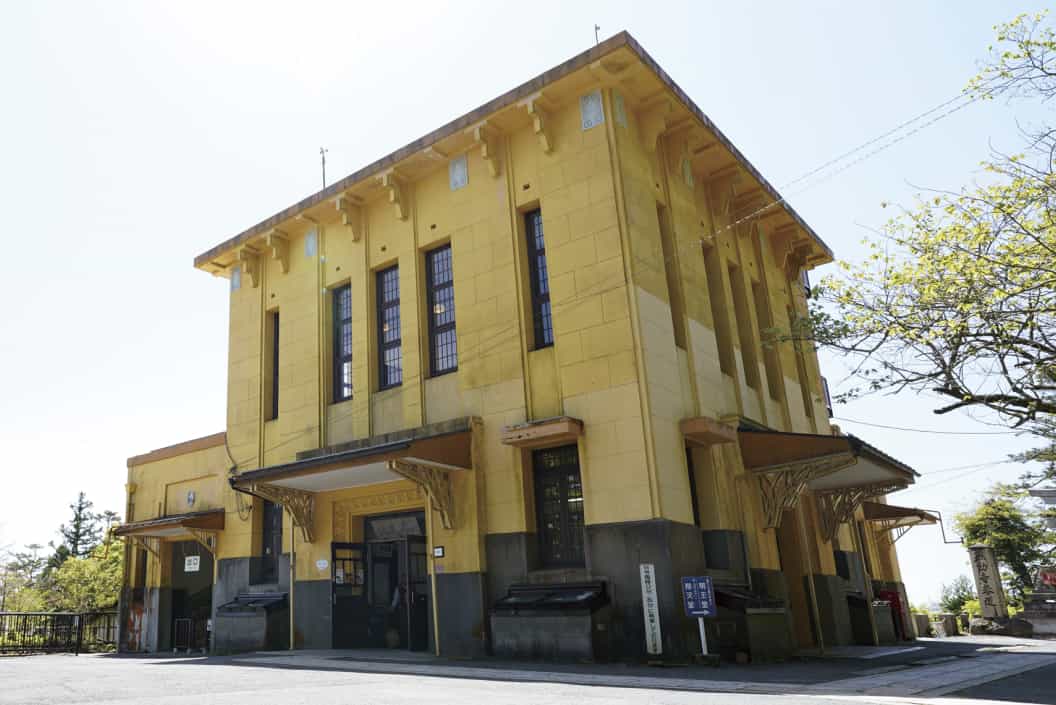
Like Cable Sakamoto Station, it was constructed in 1925. The Western-style, two-story reinforced concrete station building has a historical, Taisho-era modern feel both inside and out. It is also a registered tangible cultural property of the country, and has been certified as one of the "100 Best Stations in the Kinki Region." View Timetable (Opens in a new tab) View fares (Opens in a new tab) Address Sakamoto Honmachi, Otsu City, Shiga Prefecture, 520-0116 Check with Google Maps Facilities toiletMount Hiei Free Wi-Fi(Opens in a new tab)Please use this service to search for tourist information, transit routes, and to share your experience on social media. SNS Attractions around the station Recommended Scenic Spots: Mountain Deck (Enryakuji Station Observation Deck) On the second floor and rooftop of Cable Enryakuji Station, there is an observation terrace called "Mountain Deck" that offers a spectacular view of Lake Biwa from the summit of Mount Hiei. On a particularly clear day, it's a spectacular spot where you can see all the way to Chikubushima Island. You can relax and enjoy the view while waiting for your cable car to arrive. Cable Enryakuji Station Building This retro Taisho-era station building has been designated a Registered Tangible Cultural Property. Inside the station building there is a small exhibition room introducing the history of the cable car, as well as a terrace, and the classic building itself is full of charm and is well worth seeing. Approach to Konponchudo Hall If you have time, we recommend taking a short walk along the approach to Enryaku-ji Temple's Konponchudo Hall. It's about a 7-10 minute walk from the station to Konponchudo Hall, and the approach is quiet, lined with trees on both sides. You can enjoy a stroll in the cool air, immersed in nature. Discounted tickets Enryakuji Temple and Sakamoto One-Day Pass This digital pass includes bus, cable car, and Enryaku-ji Temple admission tickets, making it convenient for those who want to enjoy Mount Hiei, Lake Biwa, and Enryaku-ji Temple all at once. Just display the ticket on your smartphone and use it; it's a great value. A must-see for passengers using the JR Kosei Line and Keihan Ishizaka Line. Sightseeing is efficient thanks to the bus and cable car. Included items Ewaka Bus and Sakamoto Cable Car Tickets Enryakuji Temple (East Pagoda, West Pagoda, Yokokawa) Admission Ticket Benefits: 10% off at Enryakuji Kaikan Cafe, discount on Hiyoshi Taisha Shrine admission fee Items not included Shuttle bus within Mt. Hiei (East Tower - West Tower - Yokokawa) View ticket details Included items Items not included View ticket details Sakamoto Cable From the station building, from the train window, from outside—you'll want to take lots of photos. Japan's longest cable car Opened in 1927Sakamoto Cable connects Sakamoto to Enryaku-ji Temple on Mount Hiei, spanning 2,025 meters in 11 minutes as Japan's longest cable car. The journey offers countless photo opportunities: mountain valley views from the windows, the car gliding through lush forests, and the station building—a Registered Tangible Cultural Property—evoking the romance of the Taisho era. Enjoy a leisurely cable car ride while taking in the scenery. ▼ See history The Sky Path Overlooking Lake Biwa: The Story of Sakamoto Cable Sakamoto Cable opened the path from Sakamoto on the shores of Lake Biwa to the mountaintop, serving as the main approach to Mount Hiei's Enryaku-ji Temple. Known as Japan's longest cable car line, it has carried countless pilgrims and tourists since the Taisho era. Its history is a story of passion—of challenging the mountain and overcoming the times. Opening and Construction Challenges 1924 (Taisho 13) The Hiei Mountain Railway was established, and after arduous construction, it opened in 1927 (Showa 2). It was built to serve as the main approach connecting the town of Sakamoto with Enryaku-ji Temple on Mount Hiei, aiming to greatly enhance convenience for many people. To traverse the complex undulations of the mountainside and cross valleys, seven bridges and two tunnels were constructed, resulting in a unique track layout featuring continuous curves. At 2,025 meters in total length, it remains Japan's longest cable carsince its opening, representing the pinnacle of civil engineering technology at the time. Surviving a Turbulent Era Due to the Pacific War, operations were temporarily suspended in 1945 (Showa 20). Rolling stock and rails were confiscated as military materials under national policy. After the war ended, August 7, 1946 (Showa 21) saw the resumption of passenger service. Since reopening, it has continued to welcome numerous pilgrims and tourists. Station Buildings Preserving the Romance of the Taisho Era The station buildings, preserved since the opening, are charming Western-style structures that evoke the romance of the Taisho era. The station buildings at Cable Sakamoto Station and Cable Enryakuji Station were recognized for their historical value and designated as Registered Tangible Cultural Properties in 1997 (Heisei 9) Eizan Cable Car A Century Racing Through the Heart of Mount Hiei The Eizan Cable Car, opened in December 1925 as a means of transportation from Kyoto to Mount Hiei. It connects Cable Yase Station and Cable Hiei Station over 1.3km in about 9 minutes. The elevation difference between the two stations is 561m, the highest in Japan. Seasonal colors of cherry blossoms and autumn leaves along the tracks create a rich natural scenery visible from the train windows. ▼ 歴史を見る A Century Racing Through the Heart of Mount Hiei: The Story of the Eizan Cable Car Deep within the embrace of Mount Hiei, with the ancient capital's charm behind it, the Eizan Cable Car has paved the way for both pilgrimage and tourism. On December 20, 2025, this small railway that has continuously traversed steep slopes will celebrate its 100th anniversary. Its history is a story of passion—challenging the mountain and carrying travelers across the ages. The Hiei Path in Kyoto, Pioneered by Cable Cars December 20, 1925 (Taisho 14) The Eizan Cable opened, connecting Cable Yase Station and Cable Hiei Station, operated by Keifuku Electric Railway. This instantly made the path to Mount Hiei's Enryaku-ji Temple, previously accessible only via steep mountain trails, much more accessible. With a vertical rise of 561 meters, the highest in Japan and a maximum gradient of 330‰ (per mille), it was constructed through the extraordinary efforts of the engineers of the time. The journey itself became a special experience, offering breathtaking views of Kyoto cityscape from the train windows as it raced up the mountainside in just 9 minutes. Surviving a Turbulent Era However, its history was far from smooth. In 1944 (Showa 19), during World War II, operations were suspended under national policy as “non-essential and non-urgent.” Rails and rolling stock were requisitioned for military use. Though the railway was lost once, the postwar recovery period saw the people's longing for Mount Hiei revive the line. Just one year after the war ended, in 1946 (Showa 21) operations resumed. It once again added color to people's lives and supported the revival of tourism. And into the Future: A Story Passed Down Through Generations A century since its opening. Eizan Cable has carved out its history, renewing its vehicles with the times. December 20, 2025 marks its commemorative 100th anniversary. Events and initiatives celebrating this special year are anticipated. Carrying travelers through the changing seasons of Hiei's nature, the cable car continues its journey. Its path is not merely the history of a mode of transportation, but a testament to the passion that has carried people's devotion to Mount Hiei.
Sakamoto Cable Sakamoto Station
Cable Car
Open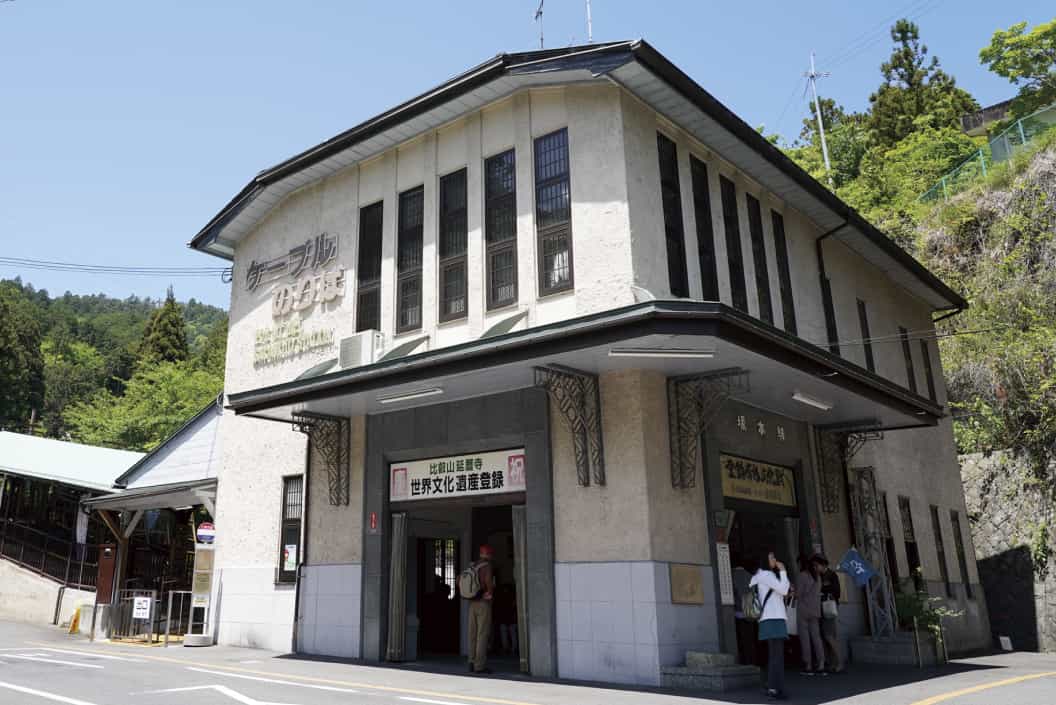
This is a cable car station from Sakamoto, which flourished as a temple town of Enryaku-ji Temple. The Western-style, two-story wooden station building, constructed in 1925, was popular at the time as a modern example of Western architecture. It was registered as a national tangible cultural property in 1997. View Timetable (Opens in a new tab) View fares (Opens in a new tab) Address 4244 Sakamoto Honmachi, Otsu City, Shiga Prefecture, 520-0116 Check with Google Maps Facilities toiletMount Hiei Free Wi-Fi(Opens in a new tab)Please use this service to search for tourist information, transit routes, and to share your experience on social media. SNS Attractions around the station Hiyoshi Taisha Shrine This is the head shrine of the approximately 3,800 Hiyoshi, Hie, and Sanno shrines across the country. Located at the foot of Mount Hiei, it is a beautiful power spot with its vermilion-lacquered tower gate and abundant nature. The autumn foliage season is also a highlight. Former Chikurin-in Temple This is one of the village temples for monks from Enryaku-ji Temple on Mount Hiei. It has a garden where you can enjoy the changing atmosphere of the seasons, and is particularly popular with tourists during the seasons of fresh greenery and autumn leaves. We also recommend enjoying the garden while sipping matcha green tea. Saikyoji Temple This historic temple was rebuilt after being completely burned down during Oda Nobunaga's burning of Mount Hiei. It is known as a place associated with Akechi Mitsuhide, and you can enjoy a leisurely stroll through the tranquil grounds. Discounted tickets Enryakuji Temple and Sakamoto One-Day Pass This digital pass includes bus, cable car, and Enryaku-ji Temple admission tickets, making it convenient for those who want to enjoy Mount Hiei, Lake Biwa, and Enryaku-ji Temple all at once. Just display the ticket on your smartphone and use it; it's a great value. A must-see for passengers using the JR Kosei Line and Keihan Ishizaka Line. Sightseeing is efficient thanks to the bus and cable car. Included items Ewaka Bus and Sakamoto Cable Car Tickets Enryakuji Temple (East Pagoda, West Pagoda, Yokokawa) Admission Ticket Benefits: 10% off at Enryakuji Kaikan Cafe, discount on Hiyoshi Taisha Shrine admission fee Items not included Shuttle bus within Mt. Hiei (East Tower - West Tower - Yokokawa) View ticket details Included items Items not included View ticket details Sakamoto Cable From the station building, from the train window, from outside—you'll want to take lots of photos. Japan's longest cable car Opened in 1927Sakamoto Cable connects Sakamoto to Enryaku-ji Temple on Mount Hiei, spanning 2,025 meters in 11 minutes as Japan's longest cable car. The journey offers countless photo opportunities: mountain valley views from the windows, the car gliding through lush forests, and the station building—a Registered Tangible Cultural Property—evoking the romance of the Taisho era. Enjoy a leisurely cable car ride while taking in the scenery. ▼ See history The Sky Path Overlooking Lake Biwa: The Story of Sakamoto Cable Sakamoto Cable opened the path from Sakamoto on the shores of Lake Biwa to the mountaintop, serving as the main approach to Mount Hiei's Enryaku-ji Temple. Known as Japan's longest cable car line, it has carried countless pilgrims and tourists since the Taisho era. Its history is a story of passion—of challenging the mountain and overcoming the times. Opening and Construction Challenges 1924 (Taisho 13) The Hiei Mountain Railway was established, and after arduous construction, it opened in 1927 (Showa 2). It was built to serve as the main approach connecting the town of Sakamoto with Enryaku-ji Temple on Mount Hiei, aiming to greatly enhance convenience for many people. To traverse the complex undulations of the mountainside and cross valleys, seven bridges and two tunnels were constructed, resulting in a unique track layout featuring continuous curves. At 2,025 meters in total length, it remains Japan's longest cable carsince its opening, representing the pinnacle of civil engineering technology at the time. Surviving a Turbulent Era Due to the Pacific War, operations were temporarily suspended in 1945 (Showa 20). Rolling stock and rails were confiscated as military materials under national policy. After the war ended, August 7, 1946 (Showa 21) saw the resumption of passenger service. Since reopening, it has continued to welcome numerous pilgrims and tourists. Station Buildings Preserving the Romance of the Taisho Era The station buildings, preserved since the opening, are charming Western-style structures that evoke the romance of the Taisho era. The station buildings at Cable Sakamoto Station and Cable Enryakuji Station were recognized for their historical value and designated as Registered Tangible Cultural Properties in 1997 (Heisei 9) Eizan Cable Car A Century Racing Through the Heart of Mount Hiei The Eizan Cable Car, opened in December 1925 as a means of transportation from Kyoto to Mount Hiei. It connects Cable Yase Station and Cable Hiei Station over 1.3km in about 9 minutes. The elevation difference between the two stations is 561m, the highest in Japan. Seasonal colors of cherry blossoms and autumn leaves along the tracks create a rich natural scenery visible from the train windows. ▼ 歴史を見る A Century Racing Through the Heart of Mount Hiei: The Story of the Eizan Cable Car Deep within the embrace of Mount Hiei, with the ancient capital's charm behind it, the Eizan Cable Car has paved the way for both pilgrimage and tourism. On December 20, 2025, this small railway that has continuously traversed steep slopes will celebrate its 100th anniversary. Its history is a story of passion—challenging the mountain and carrying travelers across the ages. The Hiei Path in Kyoto, Pioneered by Cable Cars December 20, 1925 (Taisho 14) The Eizan Cable opened, connecting Cable Yase Station and Cable Hiei Station, operated by Keifuku Electric Railway. This instantly made the path to Mount Hiei's Enryaku-ji Temple, previously accessible only via steep mountain trails, much more accessible. With a vertical rise of 561 meters, the highest in Japan and a maximum gradient of 330‰ (per mille), it was constructed through the extraordinary efforts of the engineers of the time. The journey itself became a special experience, offering breathtaking views of Kyoto cityscape from the train windows as it raced up the mountainside in just 9 minutes. Surviving a Turbulent Era However, its history was far from smooth. In 1944 (Showa 19), during World War II, operations were suspended under national policy as “non-essential and non-urgent.” Rails and rolling stock were requisitioned for military use. Though the railway was lost once, the postwar recovery period saw the people's longing for Mount Hiei revive the line. Just one year after the war ended, in 1946 (Showa 21) operations resumed. It once again added color to people's lives and supported the revival of tourism. And into the Future: A Story Passed Down Through Generations A century since its opening. Eizan Cable has carved out its history, renewing its vehicles with the times. December 20, 2025 marks its commemorative 100th anniversary. Events and initiatives celebrating this special year are anticipated. Carrying travelers through the changing seasons of Hiei's nature, the cable car continues its journey. Its path is not merely the history of a mode of transportation, but a testament to the passion that has carried people's devotion to Mount Hiei.
Sakamoto Cable Horaioka Station
Cable Car
Open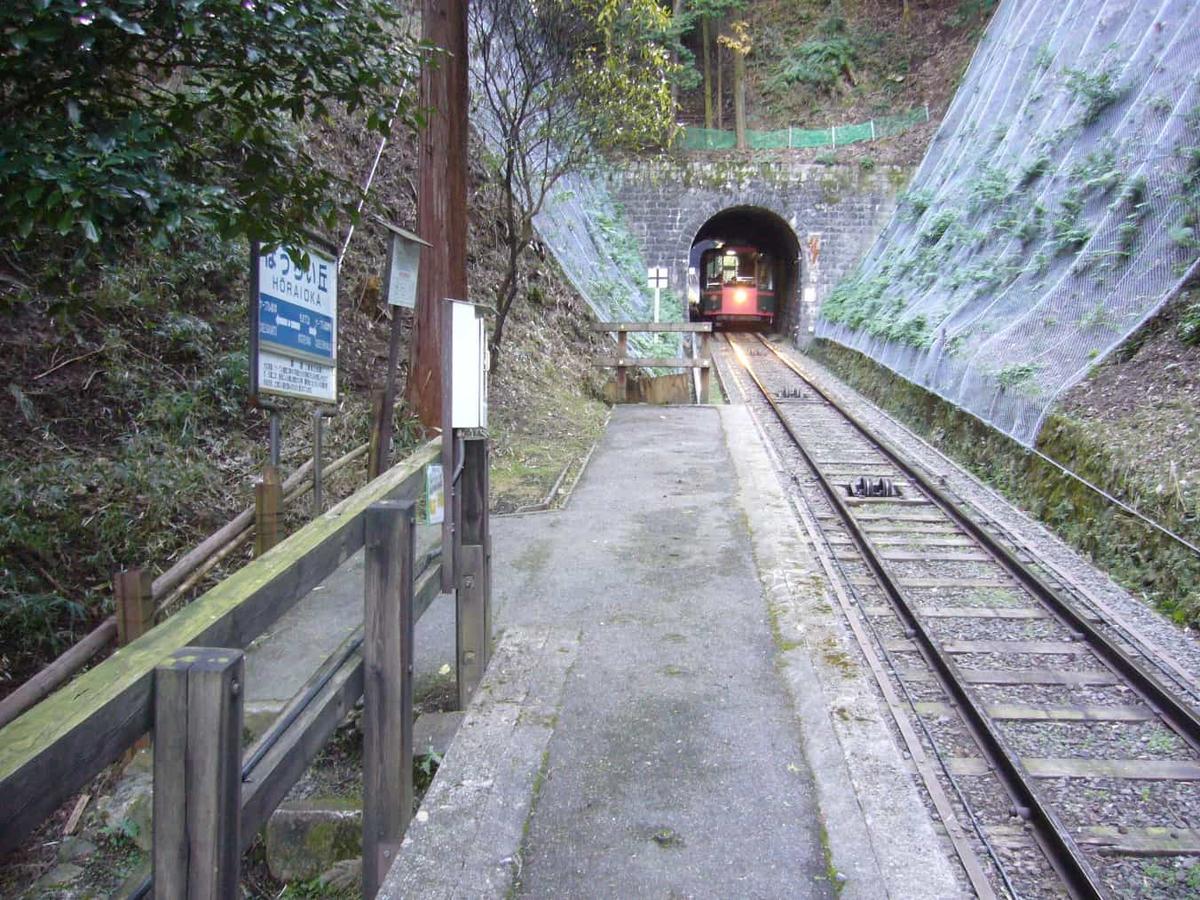
An intermediate station on the Sakamoto side. Next to the station is a sacred cave where many stone Buddha statues excavated during construction are enshrined. It is said that the local people enshrined these statues to console the spirits of those who died in Nobunaga's burning of Mount Hiei. This is an unmanned station where all trains will pass through unless prior notice is given. View Timetable (Opens in a new tab) View fares (Opens in a new tab) Address Sakamoto Honmachi, Otsu City, Shiga Prefecture, 520-0116 Check with Google Maps Facilities Intercom for communicationMount Hiei Free Wi-Fi(Opens in a new tab)Please use this service to search for tourist information, transit routes, and to share your experience on social media. SNS Attractions around the station Stone Buddha statues in sacred caves (Horai Hill) Numerous stone Buddha statues are lined up in this sacred cave nestled in the quiet forest of Sakamoto at the foot of Mount Hiei. The Buddha statues, floating among the moss-covered rocks and sunlight filtering through the trees, still retain their serene expressions even after the passage of time, bringing deep peace to all who visit. Discounted tickets Enryakuji Temple and Sakamoto One-Day Pass This digital pass includes bus, cable car, and Enryaku-ji Temple admission tickets, making it convenient for those who want to enjoy Mount Hiei, Lake Biwa, and Enryaku-ji Temple all at once. Just display the ticket on your smartphone and use it; it's a great value. A must-see for passengers using the JR Kosei Line and Keihan Ishizaka Line. Sightseeing is efficient thanks to the bus and cable car. Included items Ewaka Bus and Sakamoto Cable Car Tickets Enryakuji Temple (East Pagoda, West Pagoda, Yokokawa) Admission Ticket Benefits: 10% off at Enryakuji Kaikan Cafe, discount on Hiyoshi Taisha Shrine admission fee Items not included Shuttle bus within Mt. Hiei (East Tower - West Tower - Yokokawa) View ticket details Included items Items not included View ticket details Sakamoto Cable From the station building, from the train window, from outside—you'll want to take lots of photos. Japan's longest cable car Opened in 1927Sakamoto Cable connects Sakamoto to Enryaku-ji Temple on Mount Hiei, spanning 2,025 meters in 11 minutes as Japan's longest cable car. The journey offers countless photo opportunities: mountain valley views from the windows, the car gliding through lush forests, and the station building—a Registered Tangible Cultural Property—evoking the romance of the Taisho era. Enjoy a leisurely cable car ride while taking in the scenery. ▼ See history The Sky Path Overlooking Lake Biwa: The Story of Sakamoto Cable Sakamoto Cable opened the path from Sakamoto on the shores of Lake Biwa to the mountaintop, serving as the main approach to Mount Hiei's Enryaku-ji Temple. Known as Japan's longest cable car line, it has carried countless pilgrims and tourists since the Taisho era. Its history is a story of passion—of challenging the mountain and overcoming the times. Opening and Construction Challenges 1924 (Taisho 13) The Hiei Mountain Railway was established, and after arduous construction, it opened in 1927 (Showa 2). It was built to serve as the main approach connecting the town of Sakamoto with Enryaku-ji Temple on Mount Hiei, aiming to greatly enhance convenience for many people. To traverse the complex undulations of the mountainside and cross valleys, seven bridges and two tunnels were constructed, resulting in a unique track layout featuring continuous curves. At 2,025 meters in total length, it remains Japan's longest cable carsince its opening, representing the pinnacle of civil engineering technology at the time. Surviving a Turbulent Era Due to the Pacific War, operations were temporarily suspended in 1945 (Showa 20). Rolling stock and rails were confiscated as military materials under national policy. After the war ended, August 7, 1946 (Showa 21) saw the resumption of passenger service. Since reopening, it has continued to welcome numerous pilgrims and tourists. Station Buildings Preserving the Romance of the Taisho Era The station buildings, preserved since the opening, are charming Western-style structures that evoke the romance of the Taisho era. The station buildings at Cable Sakamoto Station and Cable Enryakuji Station were recognized for their historical value and designated as Registered Tangible Cultural Properties in 1997 (Heisei 9) Eizan Cable Car A Century Racing Through the Heart of Mount Hiei The Eizan Cable Car, opened in December 1925 as a means of transportation from Kyoto to Mount Hiei. It connects Cable Yase Station and Cable Hiei Station over 1.3km in about 9 minutes. The elevation difference between the two stations is 561m, the highest in Japan. Seasonal colors of cherry blossoms and autumn leaves along the tracks create a rich natural scenery visible from the train windows. ▼ 歴史を見る A Century Racing Through the Heart of Mount Hiei: The Story of the Eizan Cable Car Deep within the embrace of Mount Hiei, with the ancient capital's charm behind it, the Eizan Cable Car has paved the way for both pilgrimage and tourism. On December 20, 2025, this small railway that has continuously traversed steep slopes will celebrate its 100th anniversary. Its history is a story of passion—challenging the mountain and carrying travelers across the ages. The Hiei Path in Kyoto, Pioneered by Cable Cars December 20, 1925 (Taisho 14) The Eizan Cable opened, connecting Cable Yase Station and Cable Hiei Station, operated by Keifuku Electric Railway. This instantly made the path to Mount Hiei's Enryaku-ji Temple, previously accessible only via steep mountain trails, much more accessible. With a vertical rise of 561 meters, the highest in Japan and a maximum gradient of 330‰ (per mille), it was constructed through the extraordinary efforts of the engineers of the time. The journey itself became a special experience, offering breathtaking views of Kyoto cityscape from the train windows as it raced up the mountainside in just 9 minutes. Surviving a Turbulent Era However, its history was far from smooth. In 1944 (Showa 19), during World War II, operations were suspended under national policy as “non-essential and non-urgent.” Rails and rolling stock were requisitioned for military use. Though the railway was lost once, the postwar recovery period saw the people's longing for Mount Hiei revive the line. Just one year after the war ended, in 1946 (Showa 21) operations resumed. It once again added color to people's lives and supported the revival of tourism. And into the Future: A Story Passed Down Through Generations A century since its opening. Eizan Cable has carved out its history, renewing its vehicles with the times. December 20, 2025 marks its commemorative 100th anniversary. Events and initiatives celebrating this special year are anticipated. Carrying travelers through the changing seasons of Hiei's nature, the cable car continues its journey. Its path is not merely the history of a mode of transportation, but a testament to the passion that has carried people's devotion to Mount Hiei.
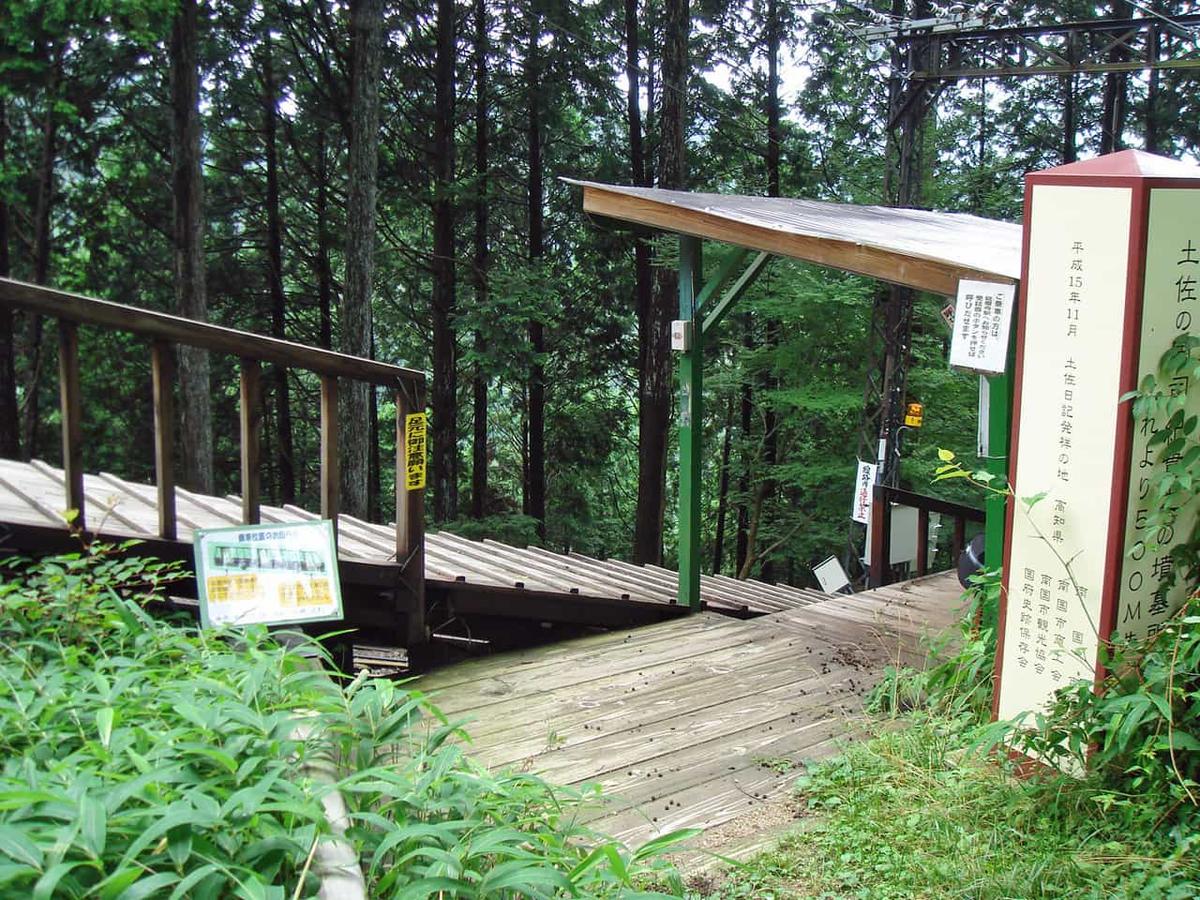
This is an intermediate station on the mountaintop side. The platform is on the mountain trail, and it is known as a remote station on a steep slope. The tomb of Ki no Tsurayuki, a Heian period poet who wrote the Tosa Nikki and is said to have loved the view from Mt. Motate, remains nearby. This is an unmanned station, and all trains will pass through unless a prior notice is given. View Timetable (Opens in a new tab) View fares (Opens in a new tab) Address Sakamoto Honmachi, Otsu City, Shiga Prefecture, 520-0116 Check with Google Maps Facilities Intercom for communicationMount Hiei Free Wi-Fi(Opens in a new tab)Please use this service to search for tourist information, transit routes, and to share your experience on social media. SNS Attractions around the station Discounted tickets Enryakuji Temple and Sakamoto One-Day Pass This digital pass includes bus, cable car, and Enryaku-ji Temple admission tickets, making it convenient for those who want to enjoy Mount Hiei, Lake Biwa, and Enryaku-ji Temple all at once. Just display the ticket on your smartphone and use it; it's a great value. A must-see for passengers using the JR Kosei Line and Keihan Ishizaka Line. Sightseeing is efficient thanks to the bus and cable car. Included items Ewaka Bus and Sakamoto Cable Car Tickets Enryakuji Temple (East Pagoda, West Pagoda, Yokokawa) Admission Ticket Benefits: 10% off at Enryakuji Kaikan Cafe, discount on Hiyoshi Taisha Shrine admission fee Items not included Shuttle bus within Mt. Hiei (East Tower - West Tower - Yokokawa) View ticket details Included items Items not included View ticket details Sakamoto Cable From the station building, from the train window, from outside—you'll want to take lots of photos. Japan's longest cable car Opened in 1927Sakamoto Cable connects Sakamoto to Enryaku-ji Temple on Mount Hiei, spanning 2,025 meters in 11 minutes as Japan's longest cable car. The journey offers countless photo opportunities: mountain valley views from the windows, the car gliding through lush forests, and the station building—a Registered Tangible Cultural Property—evoking the romance of the Taisho era. Enjoy a leisurely cable car ride while taking in the scenery. ▼ See history The Sky Path Overlooking Lake Biwa: The Story of Sakamoto Cable Sakamoto Cable opened the path from Sakamoto on the shores of Lake Biwa to the mountaintop, serving as the main approach to Mount Hiei's Enryaku-ji Temple. Known as Japan's longest cable car line, it has carried countless pilgrims and tourists since the Taisho era. Its history is a story of passion—of challenging the mountain and overcoming the times. Opening and Construction Challenges 1924 (Taisho 13) The Hiei Mountain Railway was established, and after arduous construction, it opened in 1927 (Showa 2). It was built to serve as the main approach connecting the town of Sakamoto with Enryaku-ji Temple on Mount Hiei, aiming to greatly enhance convenience for many people. To traverse the complex undulations of the mountainside and cross valleys, seven bridges and two tunnels were constructed, resulting in a unique track layout featuring continuous curves. At 2,025 meters in total length, it remains Japan's longest cable carsince its opening, representing the pinnacle of civil engineering technology at the time. Surviving a Turbulent Era Due to the Pacific War, operations were temporarily suspended in 1945 (Showa 20). Rolling stock and rails were confiscated as military materials under national policy. After the war ended, August 7, 1946 (Showa 21) saw the resumption of passenger service. Since reopening, it has continued to welcome numerous pilgrims and tourists. Station Buildings Preserving the Romance of the Taisho Era The station buildings, preserved since the opening, are charming Western-style structures that evoke the romance of the Taisho era. The station buildings at Cable Sakamoto Station and Cable Enryakuji Station were recognized for their historical value and designated as Registered Tangible Cultural Properties in 1997 (Heisei 9) Eizan Cable Car A Century Racing Through the Heart of Mount Hiei The Eizan Cable Car, opened in December 1925 as a means of transportation from Kyoto to Mount Hiei. It connects Cable Yase Station and Cable Hiei Station over 1.3km in about 9 minutes. The elevation difference between the two stations is 561m, the highest in Japan. Seasonal colors of cherry blossoms and autumn leaves along the tracks create a rich natural scenery visible from the train windows. ▼ 歴史を見る A Century Racing Through the Heart of Mount Hiei: The Story of the Eizan Cable Car Deep within the embrace of Mount Hiei, with the ancient capital's charm behind it, the Eizan Cable Car has paved the way for both pilgrimage and tourism. On December 20, 2025, this small railway that has continuously traversed steep slopes will celebrate its 100th anniversary. Its history is a story of passion—challenging the mountain and carrying travelers across the ages. The Hiei Path in Kyoto, Pioneered by Cable Cars December 20, 1925 (Taisho 14) The Eizan Cable opened, connecting Cable Yase Station and Cable Hiei Station, operated by Keifuku Electric Railway. This instantly made the path to Mount Hiei's Enryaku-ji Temple, previously accessible only via steep mountain trails, much more accessible. With a vertical rise of 561 meters, the highest in Japan and a maximum gradient of 330‰ (per mille), it was constructed through the extraordinary efforts of the engineers of the time. The journey itself became a special experience, offering breathtaking views of Kyoto cityscape from the train windows as it raced up the mountainside in just 9 minutes. Surviving a Turbulent Era However, its history was far from smooth. In 1944 (Showa 19), during World War II, operations were suspended under national policy as “non-essential and non-urgent.” Rails and rolling stock were requisitioned for military use. Though the railway was lost once, the postwar recovery period saw the people's longing for Mount Hiei revive the line. Just one year after the war ended, in 1946 (Showa 21) operations resumed. It once again added color to people's lives and supported the revival of tourism. And into the Future: A Story Passed Down Through Generations A century since its opening. Eizan Cable has carved out its history, renewing its vehicles with the times. December 20, 2025 marks its commemorative 100th anniversary. Events and initiatives celebrating this special year are anticipated. Carrying travelers through the changing seasons of Hiei's nature, the cable car continues its journey. Its path is not merely the history of a mode of transportation, but a testament to the passion that has carried people's devotion to Mount Hiei.
Eizan Cable Cable Yase Station
Cable Car
Open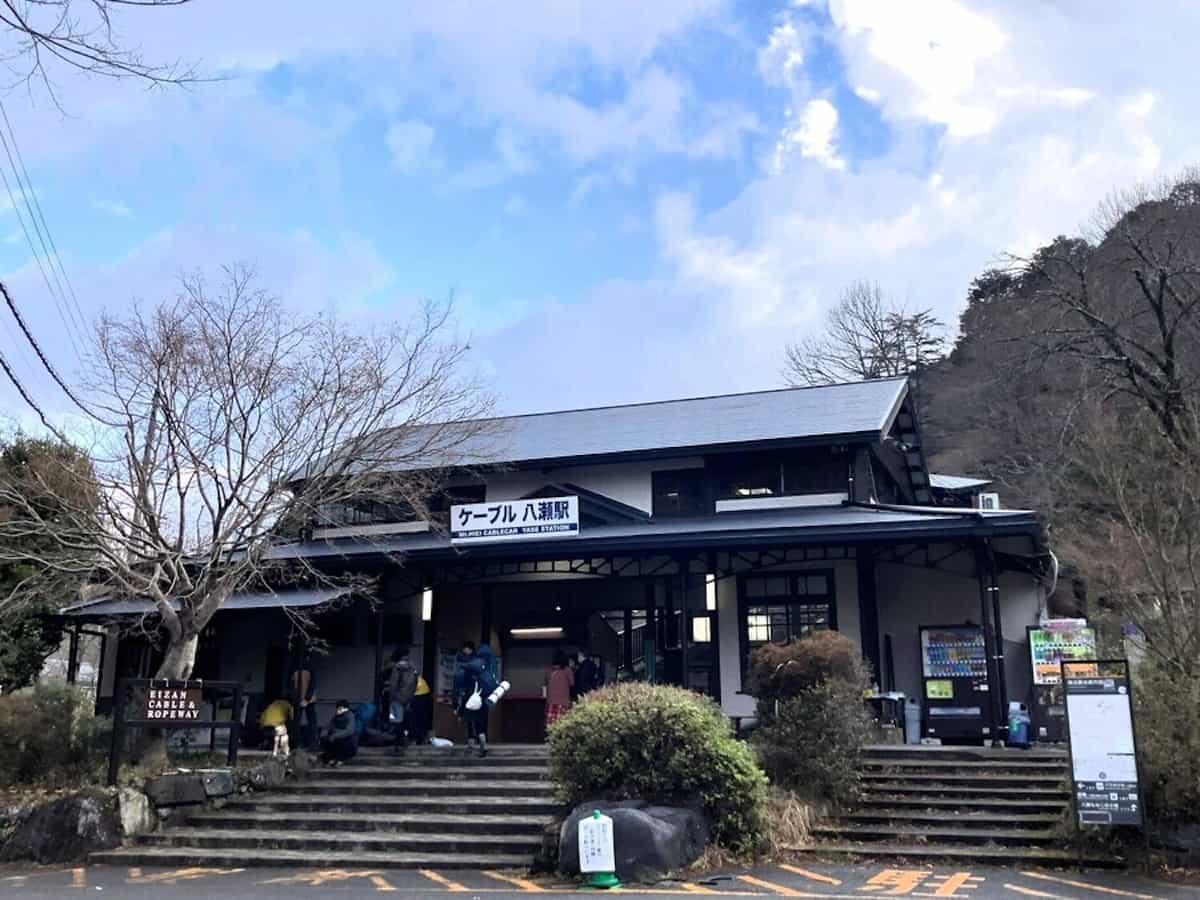
This station is on the Keifuku Electric Railway Cable Line (Eizan Cable), which runs from Kyoto city to the summit of Mount Hiei. It has the largest elevation difference of any cable car in Japan at 561m, and takes about 9 minutes to get to Cable Hiei Station. Unlike the Sakamoto Cable on the Otsu side, which is open year-round, it is closed during the winter except for the New Year holidays. From Eizan Electric Railway Yase-Hieizanguchi Station, it's about 300m away, crossing the bridge over the Takano River. View Timetable (Opens in a new tab) View fares (Opens in a new tab) Address Kamitakano Higashiyama, Sakyo Ward, Kyoto City, Kyoto Prefecture, 606-0067 Check with Google Maps Facilities Waiting room Restrooms Baby seats Tourist information deskMount Hiei Free Wi-Fi(Opens in a new tab)Please use this service to search for tourist information, transit routes, and to share your experience on social media. SNS Attractions around the station Rurikoin Temple This temple has beautiful gardens that change with the seasons. In particular, during the autumn foliage season, the scenery reflected on the floor creates a fantastical atmosphere. It is about a 9-minute walk from the station. Rengeji Temple This temple is known for its tranquil grounds and seasonal flowers. It's a great place to enjoy a quiet stroll and take photos. It's located about a 13-minute walk from the station. Yase Maple Path This autumn foliage path is located right next to the station. In autumn, the red and yellow leaves are beautiful, and you can enjoy nature while casually strolling around. Discounted tickets Mount Hiei Free Pass This transportation pass includes the Eizan Electric Railway, Eizan Cable Car, Ropeway, Sakamoto Cable Car, and Ewaka Bus. This convenient digital ticket is great value; simply display the ticket on your smartphone. It's a convenient all-day pass that significantly reduces the hassle of sightseeing and travel. Included items [Eizan Electric Railway] Unlimited hop-on and hop-off from Demachiyanagi Station to Yase-Hieizanguchi Station [Eizan Cable Ropeway] Unlimited hop-on and hop-off [Mount Hiei Shuttle Bus] Unlimited hop-on and hop-off from Mount Hiei Summit to Yokokawa Station [Sakamoto Cable] Unlimited hop-on and hop-off [Ewaka Bus] Unlimited hop-on and hop-off from Cable Sakamoto Station to Mount Hiei Sakamoto Station Items not included View ticket details Included items Items not included View ticket details Sakamoto Cable From the station building, from the train window, from outside—you'll want to take lots of photos. Japan's longest cable car Opened in 1927Sakamoto Cable connects Sakamoto to Enryaku-ji Temple on Mount Hiei, spanning 2,025 meters in 11 minutes as Japan's longest cable car. The journey offers countless photo opportunities: mountain valley views from the windows, the car gliding through lush forests, and the station building—a Registered Tangible Cultural Property—evoking the romance of the Taisho era. Enjoy a leisurely cable car ride while taking in the scenery. ▼ See history The Sky Path Overlooking Lake Biwa: The Story of Sakamoto Cable Sakamoto Cable opened the path from Sakamoto on the shores of Lake Biwa to the mountaintop, serving as the main approach to Mount Hiei's Enryaku-ji Temple. Known as Japan's longest cable car line, it has carried countless pilgrims and tourists since the Taisho era. Its history is a story of passion—of challenging the mountain and overcoming the times. Opening and Construction Challenges 1924 (Taisho 13) The Hiei Mountain Railway was established, and after arduous construction, it opened in 1927 (Showa 2). It was built to serve as the main approach connecting the town of Sakamoto with Enryaku-ji Temple on Mount Hiei, aiming to greatly enhance convenience for many people. To traverse the complex undulations of the mountainside and cross valleys, seven bridges and two tunnels were constructed, resulting in a unique track layout featuring continuous curves. At 2,025 meters in total length, it remains Japan's longest cable carsince its opening, representing the pinnacle of civil engineering technology at the time. Surviving a Turbulent Era Due to the Pacific War, operations were temporarily suspended in 1945 (Showa 20). Rolling stock and rails were confiscated as military materials under national policy. After the war ended, August 7, 1946 (Showa 21) saw the resumption of passenger service. Since reopening, it has continued to welcome numerous pilgrims and tourists. Station Buildings Preserving the Romance of the Taisho Era The station buildings, preserved since the opening, are charming Western-style structures that evoke the romance of the Taisho era. The station buildings at Cable Sakamoto Station and Cable Enryakuji Station were recognized for their historical value and designated as Registered Tangible Cultural Properties in 1997 (Heisei 9) Eizan Cable Car A Century Racing Through the Heart of Mount Hiei The Eizan Cable Car, opened in December 1925 as a means of transportation from Kyoto to Mount Hiei. It connects Cable Yase Station and Cable Hiei Station over 1.3km in about 9 minutes. The elevation difference between the two stations is 561m, the highest in Japan. Seasonal colors of cherry blossoms and autumn leaves along the tracks create a rich natural scenery visible from the train windows. ▼ 歴史を見る A Century Racing Through the Heart of Mount Hiei: The Story of the Eizan Cable Car Deep within the embrace of Mount Hiei, with the ancient capital's charm behind it, the Eizan Cable Car has paved the way for both pilgrimage and tourism. On December 20, 2025, this small railway that has continuously traversed steep slopes will celebrate its 100th anniversary. Its history is a story of passion—challenging the mountain and carrying travelers across the ages. The Hiei Path in Kyoto, Pioneered by Cable Cars December 20, 1925 (Taisho 14) The Eizan Cable opened, connecting Cable Yase Station and Cable Hiei Station, operated by Keifuku Electric Railway. This instantly made the path to Mount Hiei's Enryaku-ji Temple, previously accessible only via steep mountain trails, much more accessible. With a vertical rise of 561 meters, the highest in Japan and a maximum gradient of 330‰ (per mille), it was constructed through the extraordinary efforts of the engineers of the time. The journey itself became a special experience, offering breathtaking views of Kyoto cityscape from the train windows as it raced up the mountainside in just 9 minutes. Surviving a Turbulent Era However, its history was far from smooth. In 1944 (Showa 19), during World War II, operations were suspended under national policy as “non-essential and non-urgent.” Rails and rolling stock were requisitioned for military use. Though the railway was lost once, the postwar recovery period saw the people's longing for Mount Hiei revive the line. Just one year after the war ended, in 1946 (Showa 21) operations resumed. It once again added color to people's lives and supported the revival of tourism. And into the Future: A Story Passed Down Through Generations A century since its opening. Eizan Cable has carved out its history, renewing its vehicles with the times. December 20, 2025 marks its commemorative 100th anniversary. Events and initiatives celebrating this special year are anticipated. Carrying travelers through the changing seasons of Hiei's nature, the cable car continues its journey. Its path is not merely the history of a mode of transportation, but a testament to the passion that has carried people's devotion to Mount Hiei.
Eizan Cable Cable Hiei Station
Cable Car
Open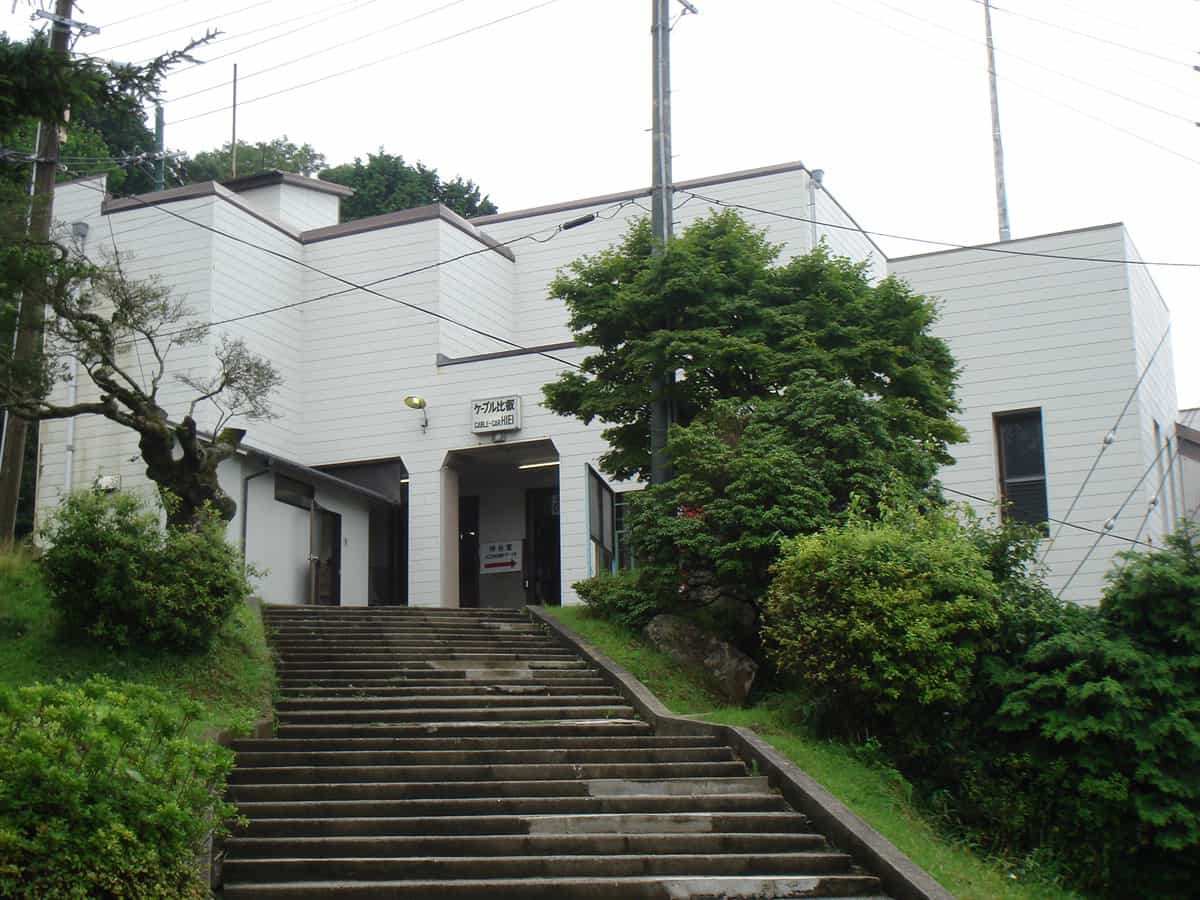
This station is on the Keifuku Electric Railway Cable Line (Eizan Cable), which runs from Kyoto city to the summit of Mount Hiei. It has the largest elevation difference of any cable car in Japan at 561m, and takes approximately 9 minutes to reach Cable Yase Station. Unlike the Sakamoto Cable on the Otsu side, which is open year-round, this station is closed in winter except for the New Year holidays. It is a short walk from Rope Hiei Station on the Eizan Ropeway. View Timetable (Opens in a new tab) View fares (Opens in a new tab) Address Kamitakano Higashiyama, Sakyo Ward, Kyoto City, Kyoto Prefecture, 606-0067 Check with Google Maps Facilities Waiting room (Sennichikaihogyo Photo Studio) Restrooms Baby seats availableMount Hiei Free Wi-Fi(Opens in a new tab)Please use this service to search for tourist information, transit routes, and to share your experience on social media. SNS Attractions around the station Panorama Square This observation plaza is located near the Hiei Ropeway Rope Station. It is a great spot for taking photos and enjoying the scenery, offering a spectacular view of Lake Biwa from Mt. Hiei. Sennichi Kaihogyo Photo Studio This small museum displays photographs related to the Sennichi Kaihogyo training. It is a popular spot for visitors to learn about the history of Mt. Hiei and the training. Discounted tickets Mount Hiei Free Pass This transportation pass includes the Eizan Electric Railway, Eizan Cable Car, Ropeway, Sakamoto Cable Car, and Ewaka Bus. This convenient digital ticket is great value; simply display the ticket on your smartphone. It's a convenient all-day pass that significantly reduces the hassle of sightseeing and travel. Included items [Eizan Electric Railway] Unlimited hop-on and hop-off from Demachiyanagi Station to Yase-Hieizanguchi Station [Eizan Cable Ropeway] Unlimited hop-on and hop-off [Mount Hiei Shuttle Bus] Unlimited hop-on and hop-off from Mount Hiei Summit to Yokokawa Station [Sakamoto Cable] Unlimited hop-on and hop-off [Ewaka Bus] Unlimited hop-on and hop-off from Cable Sakamoto Station to Mount Hiei Sakamoto Station Items not included View ticket details Included items Items not included View ticket details Sakamoto Cable From the station building, from the train window, from outside—you'll want to take lots of photos. Japan's longest cable car Opened in 1927Sakamoto Cable connects Sakamoto to Enryaku-ji Temple on Mount Hiei, spanning 2,025 meters in 11 minutes as Japan's longest cable car. The journey offers countless photo opportunities: mountain valley views from the windows, the car gliding through lush forests, and the station building—a Registered Tangible Cultural Property—evoking the romance of the Taisho era. Enjoy a leisurely cable car ride while taking in the scenery. ▼ See history The Sky Path Overlooking Lake Biwa: The Story of Sakamoto Cable Sakamoto Cable opened the path from Sakamoto on the shores of Lake Biwa to the mountaintop, serving as the main approach to Mount Hiei's Enryaku-ji Temple. Known as Japan's longest cable car line, it has carried countless pilgrims and tourists since the Taisho era. Its history is a story of passion—of challenging the mountain and overcoming the times. Opening and Construction Challenges 1924 (Taisho 13) The Hiei Mountain Railway was established, and after arduous construction, it opened in 1927 (Showa 2). It was built to serve as the main approach connecting the town of Sakamoto with Enryaku-ji Temple on Mount Hiei, aiming to greatly enhance convenience for many people. To traverse the complex undulations of the mountainside and cross valleys, seven bridges and two tunnels were constructed, resulting in a unique track layout featuring continuous curves. At 2,025 meters in total length, it remains Japan's longest cable carsince its opening, representing the pinnacle of civil engineering technology at the time. Surviving a Turbulent Era Due to the Pacific War, operations were temporarily suspended in 1945 (Showa 20). Rolling stock and rails were confiscated as military materials under national policy. After the war ended, August 7, 1946 (Showa 21) saw the resumption of passenger service. Since reopening, it has continued to welcome numerous pilgrims and tourists. Station Buildings Preserving the Romance of the Taisho Era The station buildings, preserved since the opening, are charming Western-style structures that evoke the romance of the Taisho era. The station buildings at Cable Sakamoto Station and Cable Enryakuji Station were recognized for their historical value and designated as Registered Tangible Cultural Properties in 1997 (Heisei 9) Eizan Cable Car A Century Racing Through the Heart of Mount Hiei The Eizan Cable Car, opened in December 1925 as a means of transportation from Kyoto to Mount Hiei. It connects Cable Yase Station and Cable Hiei Station over 1.3km in about 9 minutes. The elevation difference between the two stations is 561m, the highest in Japan. Seasonal colors of cherry blossoms and autumn leaves along the tracks create a rich natural scenery visible from the train windows. ▼ 歴史を見る A Century Racing Through the Heart of Mount Hiei: The Story of the Eizan Cable Car Deep within the embrace of Mount Hiei, with the ancient capital's charm behind it, the Eizan Cable Car has paved the way for both pilgrimage and tourism. On December 20, 2025, this small railway that has continuously traversed steep slopes will celebrate its 100th anniversary. Its history is a story of passion—challenging the mountain and carrying travelers across the ages. The Hiei Path in Kyoto, Pioneered by Cable Cars December 20, 1925 (Taisho 14) The Eizan Cable opened, connecting Cable Yase Station and Cable Hiei Station, operated by Keifuku Electric Railway. This instantly made the path to Mount Hiei's Enryaku-ji Temple, previously accessible only via steep mountain trails, much more accessible. With a vertical rise of 561 meters, the highest in Japan and a maximum gradient of 330‰ (per mille), it was constructed through the extraordinary efforts of the engineers of the time. The journey itself became a special experience, offering breathtaking views of Kyoto cityscape from the train windows as it raced up the mountainside in just 9 minutes. Surviving a Turbulent Era However, its history was far from smooth. In 1944 (Showa 19), during World War II, operations were suspended under national policy as “non-essential and non-urgent.” Rails and rolling stock were requisitioned for military use. Though the railway was lost once, the postwar recovery period saw the people's longing for Mount Hiei revive the line. Just one year after the war ended, in 1946 (Showa 21) operations resumed. It once again added color to people's lives and supported the revival of tourism. And into the Future: A Story Passed Down Through Generations A century since its opening. Eizan Cable has carved out its history, renewing its vehicles with the times. December 20, 2025 marks its commemorative 100th anniversary. Events and initiatives celebrating this special year are anticipated. Carrying travelers through the changing seasons of Hiei's nature, the cable car continues its journey. Its path is not merely the history of a mode of transportation, but a testament to the passion that has carried people's devotion to Mount Hiei.
 RopeWay
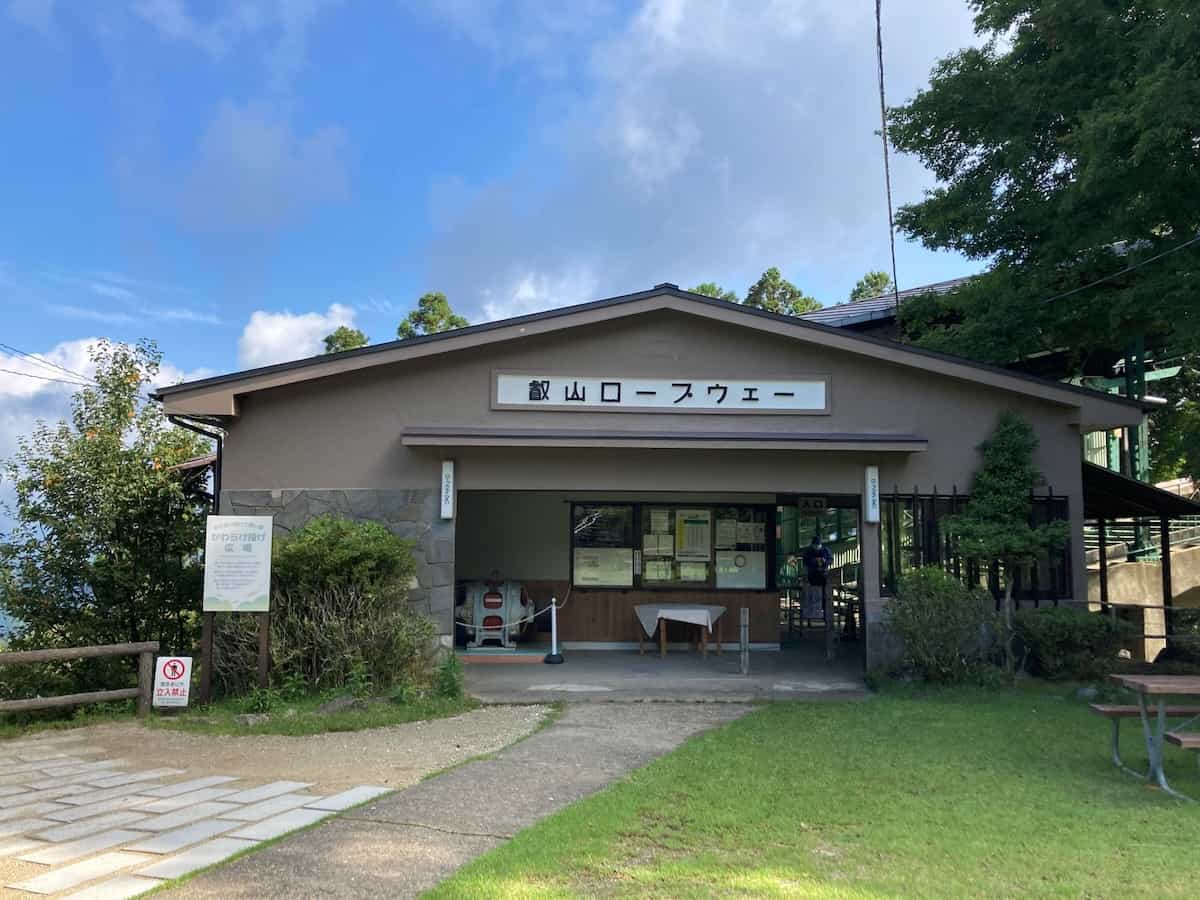
This is a station on the Keifuku Electric Railway's Eizan Ropeway, located on the route connecting Kyoto city to the summit of Mount Hiei. It takes about three minutes to get from Rope Hiei Station to Hieisancho Station. Unlike the Sakamoto Cable on the Otsu side, which is open year-round, this one is closed in winter except for the New Year holidays. From the transfer plaza at Cable Hiei Station, you can enjoy a panoramic view of Kyoto city and Lake Biwa, and the night view is also spectacular. View Timetable (Opens in a new tab) View fares (Opens in a new tab) Address Yase-no-secho, Sakyo-ku, Kyoto City, Kyoto Prefecture, 601-1254 Check with Google Maps Facilities Waiting areaMount Hiei Free Wi-Fi(Opens in a new tab)Please use this service to search for tourist information, transit routes, and to share your experience on social media. SNS Attractions around the station Kawarake Throwing Square You can enjoy throwing tiles in the square right next to the station. It's a great spot to have some fun while enjoying the scenery before or after visiting the shrine. Discounted tickets Mount Hiei Free Pass This transportation pass includes the Eizan Electric Railway, Eizan Cable Car, Ropeway, Sakamoto Cable Car, and Ewaka Bus. This convenient digital ticket is great value; simply display the ticket on your smartphone. It's a convenient all-day pass that significantly reduces the hassle of sightseeing and travel. Included items [Eizan Electric Railway] Unlimited hop-on and hop-off from Demachiyanagi Station to Yase-Hieizanguchi Station [Eizan Cable Ropeway] Unlimited hop-on and hop-off [Mount Hiei Shuttle Bus] Unlimited hop-on and hop-off from Mount Hiei Summit to Yokokawa Station [Sakamoto Cable] Unlimited hop-on and hop-off [Ewaka Bus] Unlimited hop-on and hop-off from Cable Sakamoto Station to Mount Hiei Sakamoto Station Items not included View ticket details Included items Items not included View ticket details Sakamoto Cable From the station building, from the train window, from outside—you'll want to take lots of photos. Japan's longest cable car Opened in 1927Sakamoto Cable connects Sakamoto to Enryaku-ji Temple on Mount Hiei, spanning 2,025 meters in 11 minutes as Japan's longest cable car. The journey offers countless photo opportunities: mountain valley views from the windows, the car gliding through lush forests, and the station building—a Registered Tangible Cultural Property—evoking the romance of the Taisho era. Enjoy a leisurely cable car ride while taking in the scenery. ▼ See history The Sky Path Overlooking Lake Biwa: The Story of Sakamoto Cable Sakamoto Cable opened the path from Sakamoto on the shores of Lake Biwa to the mountaintop, serving as the main approach to Mount Hiei's Enryaku-ji Temple. Known as Japan's longest cable car line, it has carried countless pilgrims and tourists since the Taisho era. Its history is a story of passion—of challenging the mountain and overcoming the times. Opening and Construction Challenges 1924 (Taisho 13) The Hiei Mountain Railway was established, and after arduous construction, it opened in 1927 (Showa 2). It was built to serve as the main approach connecting the town of Sakamoto with Enryaku-ji Temple on Mount Hiei, aiming to greatly enhance convenience for many people. To traverse the complex undulations of the mountainside and cross valleys, seven bridges and two tunnels were constructed, resulting in a unique track layout featuring continuous curves. At 2,025 meters in total length, it remains Japan's longest cable carsince its opening, representing the pinnacle of civil engineering technology at the time. Surviving a Turbulent Era Due to the Pacific War, operations were temporarily suspended in 1945 (Showa 20). Rolling stock and rails were confiscated as military materials under national policy. After the war ended, August 7, 1946 (Showa 21) saw the resumption of passenger service. Since reopening, it has continued to welcome numerous pilgrims and tourists. Station Buildings Preserving the Romance of the Taisho Era The station buildings, preserved since the opening, are charming Western-style structures that evoke the romance of the Taisho era. The station buildings at Cable Sakamoto Station and Cable Enryakuji Station were recognized for their historical value and designated as Registered Tangible Cultural Properties in 1997 (Heisei 9) Eizan Cable Car A Century Racing Through the Heart of Mount Hiei The Eizan Cable Car, opened in December 1925 as a means of transportation from Kyoto to Mount Hiei. It connects Cable Yase Station and Cable Hiei Station over 1.3km in about 9 minutes. The elevation difference between the two stations is 561m, the highest in Japan. Seasonal colors of cherry blossoms and autumn leaves along the tracks create a rich natural scenery visible from the train windows. ▼ 歴史を見る A Century Racing Through the Heart of Mount Hiei: The Story of the Eizan Cable Car Deep within the embrace of Mount Hiei, with the ancient capital's charm behind it, the Eizan Cable Car has paved the way for both pilgrimage and tourism. On December 20, 2025, this small railway that has continuously traversed steep slopes will celebrate its 100th anniversary. Its history is a story of passion—challenging the mountain and carrying travelers across the ages. The Hiei Path in Kyoto, Pioneered by Cable Cars December 20, 1925 (Taisho 14) The Eizan Cable opened, connecting Cable Yase Station and Cable Hiei Station, operated by Keifuku Electric Railway. This instantly made the path to Mount Hiei's Enryaku-ji Temple, previously accessible only via steep mountain trails, much more accessible. With a vertical rise of 561 meters, the highest in Japan and a maximum gradient of 330‰ (per mille), it was constructed through the extraordinary efforts of the engineers of the time. The journey itself became a special experience, offering breathtaking views of Kyoto cityscape from the train windows as it raced up the mountainside in just 9 minutes. Surviving a Turbulent Era However, its history was far from smooth. In 1944 (Showa 19), during World War II, operations were suspended under national policy as “non-essential and non-urgent.” Rails and rolling stock were requisitioned for military use. Though the railway was lost once, the postwar recovery period saw the people's longing for Mount Hiei revive the line. Just one year after the war ended, in 1946 (Showa 21) operations resumed. It once again added color to people's lives and supported the revival of tourism. And into the Future: A Story Passed Down Through Generations A century since its opening. Eizan Cable has carved out its history, renewing its vehicles with the times. December 20, 2025 marks its commemorative 100th anniversary. Events and initiatives celebrating this special year are anticipated. Carrying travelers through the changing seasons of Hiei's nature, the cable car continues its journey. Its path is not merely the history of a mode of transportation, but a testament to the passion that has carried people's devotion to Mount Hiei.
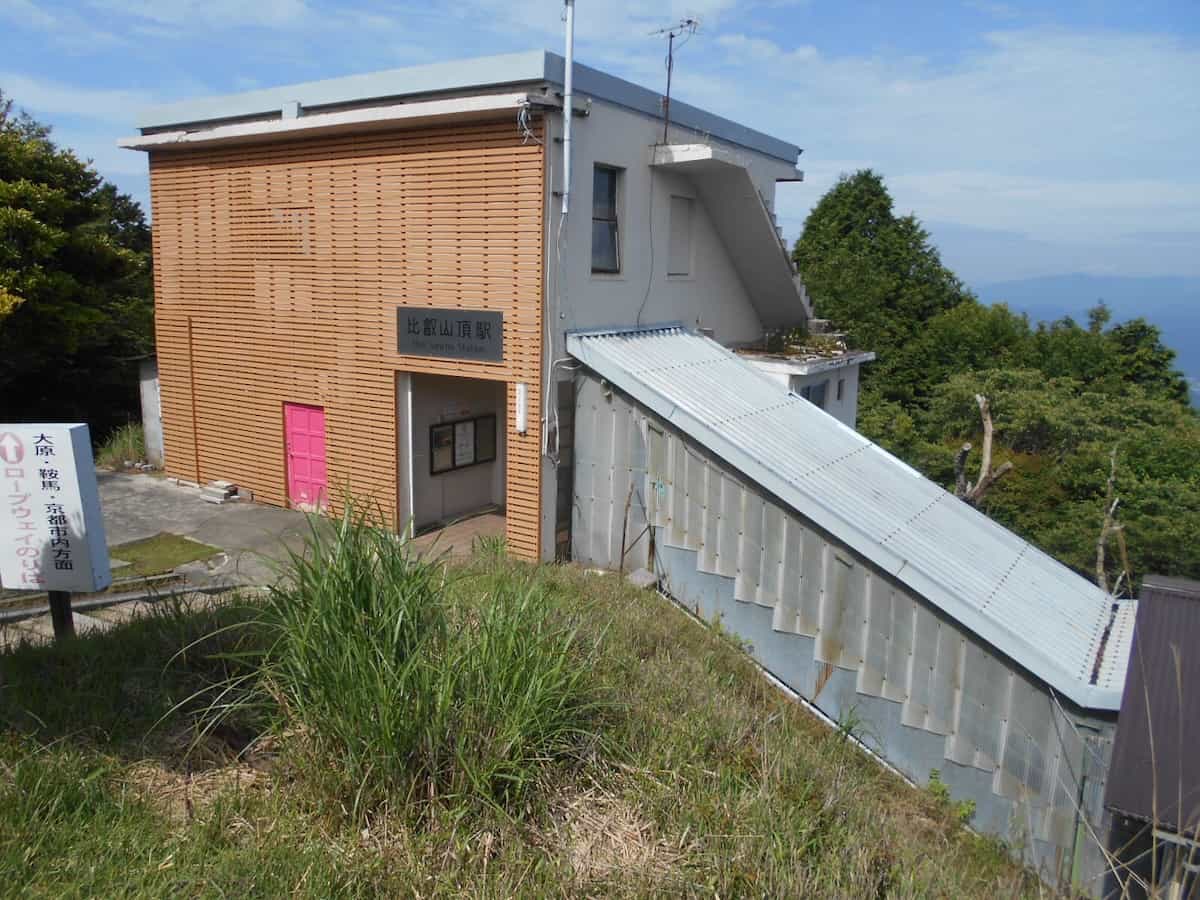
This is the Keifuku Electric Railway's Eizan Ropeway station, located on the route connecting Kyoto city to the summit of Mount Hiei. It's about a 3-minute walk from Rope Hiei Station. Unlike the Sakamoto Cable Car on the Otsu side, which is open year-round, this station is closed in winter except for the New Year holidays. You can access Enryaku-ji Temple via the Mt. Hiei shuttle bus, and the adjacent Garden Museum Hiei, where you can experience the world of famous Impressionist paintings, is also located. View Timetable (Opens in a new tab) View fares (Opens in a new tab) Address Shimeigadake, Shakudani, Shugakuin, Sakyo Ward, Kyoto City, Kyoto Prefecture, 606-0000 Check with Google Maps Facilities Waiting areaMount Hiei Free Wi-Fi(Opens in a new tab)Please use this service to search for tourist information, transit routes, and to share your experience on social media. SNS Attractions around the station Tsutsujigaoka This hill is filled with colorful azaleas in spring. There are walking paths so you can enjoy a leisurely stroll while immersed in nature. It is about a 10-minute walk from the station. Garden Museum Hiei Located right next to the station, this facility combines a beautiful garden with an art museum. You can enjoy seasonal flowers and sculptures, making it a great place for taking photos. Discounted tickets Mount Hiei Free Pass This transportation pass includes the Eizan Electric Railway, Eizan Cable Car, Ropeway, Sakamoto Cable Car, and Ewaka Bus. This convenient digital ticket is great value; simply display the ticket on your smartphone. It's a convenient all-day pass that significantly reduces the hassle of sightseeing and travel. Included items [Eizan Electric Railway] Unlimited hop-on and hop-off from Demachiyanagi Station to Yase-Hieizanguchi Station [Eizan Cable Ropeway] Unlimited hop-on and hop-off [Mount Hiei Shuttle Bus] Unlimited hop-on and hop-off from Mount Hiei Summit to Yokokawa Station [Sakamoto Cable] Unlimited hop-on and hop-off [Ewaka Bus] Unlimited hop-on and hop-off from Cable Sakamoto Station to Mount Hiei Sakamoto Station Items not included View ticket details Included items Items not included View ticket details Sakamoto Cable From the station building, from the train window, from outside—you'll want to take lots of photos. Japan's longest cable car Opened in 1927Sakamoto Cable connects Sakamoto to Enryaku-ji Temple on Mount Hiei, spanning 2,025 meters in 11 minutes as Japan's longest cable car. The journey offers countless photo opportunities: mountain valley views from the windows, the car gliding through lush forests, and the station building—a Registered Tangible Cultural Property—evoking the romance of the Taisho era. Enjoy a leisurely cable car ride while taking in the scenery. ▼ See history The Sky Path Overlooking Lake Biwa: The Story of Sakamoto Cable Sakamoto Cable opened the path from Sakamoto on the shores of Lake Biwa to the mountaintop, serving as the main approach to Mount Hiei's Enryaku-ji Temple. Known as Japan's longest cable car line, it has carried countless pilgrims and tourists since the Taisho era. Its history is a story of passion—of challenging the mountain and overcoming the times. Opening and Construction Challenges 1924 (Taisho 13) The Hiei Mountain Railway was established, and after arduous construction, it opened in 1927 (Showa 2). It was built to serve as the main approach connecting the town of Sakamoto with Enryaku-ji Temple on Mount Hiei, aiming to greatly enhance convenience for many people. To traverse the complex undulations of the mountainside and cross valleys, seven bridges and two tunnels were constructed, resulting in a unique track layout featuring continuous curves. At 2,025 meters in total length, it remains Japan's longest cable carsince its opening, representing the pinnacle of civil engineering technology at the time. Surviving a Turbulent Era Due to the Pacific War, operations were temporarily suspended in 1945 (Showa 20). Rolling stock and rails were confiscated as military materials under national policy. After the war ended, August 7, 1946 (Showa 21) saw the resumption of passenger service. Since reopening, it has continued to welcome numerous pilgrims and tourists. Station Buildings Preserving the Romance of the Taisho Era The station buildings, preserved since the opening, are charming Western-style structures that evoke the romance of the Taisho era. The station buildings at Cable Sakamoto Station and Cable Enryakuji Station were recognized for their historical value and designated as Registered Tangible Cultural Properties in 1997 (Heisei 9) Eizan Cable Car A Century Racing Through the Heart of Mount Hiei The Eizan Cable Car, opened in December 1925 as a means of transportation from Kyoto to Mount Hiei. It connects Cable Yase Station and Cable Hiei Station over 1.3km in about 9 minutes. The elevation difference between the two stations is 561m, the highest in Japan. Seasonal colors of cherry blossoms and autumn leaves along the tracks create a rich natural scenery visible from the train windows. ▼ 歴史を見る A Century Racing Through the Heart of Mount Hiei: The Story of the Eizan Cable Car Deep within the embrace of Mount Hiei, with the ancient capital's charm behind it, the Eizan Cable Car has paved the way for both pilgrimage and tourism. On December 20, 2025, this small railway that has continuously traversed steep slopes will celebrate its 100th anniversary. Its history is a story of passion—challenging the mountain and carrying travelers across the ages. The Hiei Path in Kyoto, Pioneered by Cable Cars December 20, 1925 (Taisho 14) The Eizan Cable opened, connecting Cable Yase Station and Cable Hiei Station, operated by Keifuku Electric Railway. This instantly made the path to Mount Hiei's Enryaku-ji Temple, previously accessible only via steep mountain trails, much more accessible. With a vertical rise of 561 meters, the highest in Japan and a maximum gradient of 330‰ (per mille), it was constructed through the extraordinary efforts of the engineers of the time. The journey itself became a special experience, offering breathtaking views of Kyoto cityscape from the train windows as it raced up the mountainside in just 9 minutes. Surviving a Turbulent Era However, its history was far from smooth. In 1944 (Showa 19), during World War II, operations were suspended under national policy as “non-essential and non-urgent.” Rails and rolling stock were requisitioned for military use. Though the railway was lost once, the postwar recovery period saw the people's longing for Mount Hiei revive the line. Just one year after the war ended, in 1946 (Showa 21) operations resumed. It once again added color to people's lives and supported the revival of tourism. And into the Future: A Story Passed Down Through Generations A century since its opening. Eizan Cable has carved out its history, renewing its vehicles with the times. December 20, 2025 marks its commemorative 100th anniversary. Events and initiatives celebrating this special year are anticipated. Carrying travelers through the changing seasons of Hiei's nature, the cable car continues its journey. Its path is not merely the history of a mode of transportation, but a testament to the passion that has carried people's devotion to Mount Hiei.
 Bus
Bus
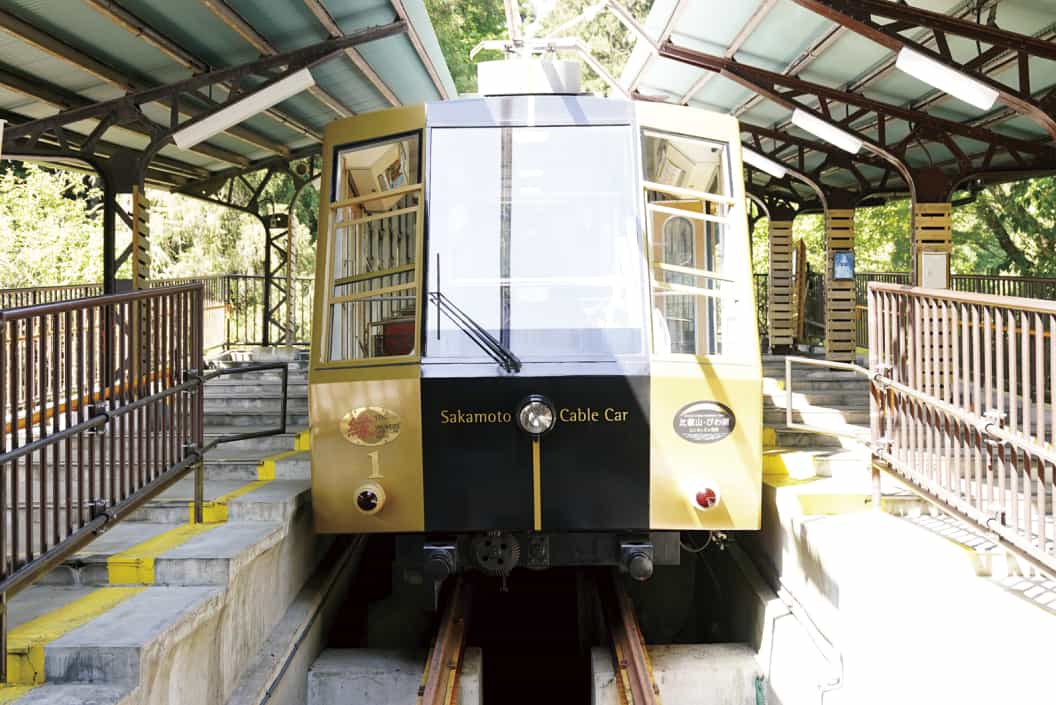
View Timetable (Opens in a new tab) View fares (Opens in a new tab) Address 3-32 Sakamoto, Otsu City, Shiga Prefecture, 520-0113 Check with Google Maps Facilities 比叡山フリーWi-Fi(別タブで開きます)観光情報・乗換案内の検索や、SNS投稿にご利用ください。 --> SNS Attractions around the station https://ntmg-book-eizandensha.vercel.app/products/65f7acaf-686c-5697-bc15-d63ecdcd4925 Discounted tickets Enryakuji Temple and Sakamoto One-Day Pass We are selling a digital free pass that combines a bus, cable car, and Enryaku-ji Temple admission ticket, making it convenient for customers who want to enjoy Mount Hiei, Lake Biwa, and Enryaku-ji Temple all at once. It's a great value digital ticket. Simply display the ticket on your smartphone. A must-see for passengers using the JR Kosei Line and Keihan Ishizaka Line. The bus and cable car connect Enryaku-ji Temple (JR ⇒ Keihan ⇒ East Pagoda). Included items ・Ewaka Bus: JR Hieizan-Sakamoto Station - Keihan Sakamoto-Hieizanguchi Station - Cable Sakamoto Station ・Sakamoto Cable: Cable Sakamoto Station - Cable Enryakuji Station ・Enryakuji Temple (East Pagoda, West Pagoda, and Yokokawa Area) Admission Ticket ・★Benefit ① Enryakuji Kaikan: 10% off cafe and 5% off souvenirs ・★Benefit ② Hiyoshi Taisha: Adult admission fee reduced from ¥500 to ¥450 ・★Benefit ③ Saikyo-ji: Adult admission fee reduced from ¥500 to ¥450 ・★Benefit ④ Shiga-in Monzeki: Adult admission fee reduced from ¥500 to ¥400 ・★Benefit ⑤ Kyu-Chikurin-in: Adult admission fee reduced from ¥330 to ¥260 ・★Benefit ⑥ Kojin Yashiki: Adult admission fee reduced from ¥100 to ¥80 ・★Benefit ⑦ Authentic Hand-made Soba 5% off your meal at Tsuruki ・★Benefit 8: 5% off your meal at Fuyoen Main Building, a restaurant serving scenic views (for up to 6 people) Items not included ・Mount Hiei Shuttle Bus (East Pagoda - West Pagoda - Yokokawa) ・Enryakuji Temple National Treasure Hall View ticket details Mount Hiei Free Pass This transportation pass includes the Eizan Electric Railway, Eizan Cable Car, Ropeway, Sakamoto Cable Car, and Ewaka Bus. This convenient digital ticket is great value; simply display the ticket on your smartphone. It's a convenient all-day pass that significantly reduces the hassle of sightseeing and travel. Included items [Eizan Electric Railway] Unlimited hop-on and hop-off from Demachiyanagi Station to Yase-Hieizanguchi Station [Eizan Cable Ropeway] Unlimited hop-on and hop-off [Mount Hiei Shuttle Bus] Unlimited hop-on and hop-off from Mount Hiei Summit to Yokokawa Station [Sakamoto Cable] Unlimited hop-on and hop-off [Ewaka Bus] Unlimited hop-on and hop-off from Cable Sakamoto Station to Mount Hiei Sakamoto Station Items not included View ticket details Sakamoto Cable From the station building, from the train window, from outside—you'll want to take lots of photos. Japan's longest cable car Opened in 1927Sakamoto Cable connects Sakamoto to Enryaku-ji Temple on Mount Hiei, spanning 2,025 meters in 11 minutes as Japan's longest cable car. The journey offers countless photo opportunities: mountain valley views from the windows, the car gliding through lush forests, and the station building—a Registered Tangible Cultural Property—evoking the romance of the Taisho era. Enjoy a leisurely cable car ride while taking in the scenery. ▼ See history The Sky Path Overlooking Lake Biwa: The Story of Sakamoto Cable Sakamoto Cable opened the path from Sakamoto on the shores of Lake Biwa to the mountaintop, serving as the main approach to Mount Hiei's Enryaku-ji Temple. Known as Japan's longest cable car line, it has carried countless pilgrims and tourists since the Taisho era. Its history is a story of passion—of challenging the mountain and overcoming the times. Opening and Construction Challenges 1924 (Taisho 13) The Hiei Mountain Railway was established, and after arduous construction, it opened in 1927 (Showa 2). It was built to serve as the main approach connecting the town of Sakamoto with Enryaku-ji Temple on Mount Hiei, aiming to greatly enhance convenience for many people. To traverse the complex undulations of the mountainside and cross valleys, seven bridges and two tunnels were constructed, resulting in a unique track layout featuring continuous curves. At 2,025 meters in total length, it remains Japan's longest cable carsince its opening, representing the pinnacle of civil engineering technology at the time. Surviving a Turbulent Era Due to the Pacific War, operations were temporarily suspended in 1945 (Showa 20). Rolling stock and rails were confiscated as military materials under national policy. After the war ended, August 7, 1946 (Showa 21) saw the resumption of passenger service. Since reopening, it has continued to welcome numerous pilgrims and tourists. Station Buildings Preserving the Romance of the Taisho Era The station buildings, preserved since the opening, are charming Western-style structures that evoke the romance of the Taisho era. The station buildings at Cable Sakamoto Station and Cable Enryakuji Station were recognized for their historical value and designated as Registered Tangible Cultural Properties in 1997 (Heisei 9) Eizan Cable Car A Century Racing Through the Heart of Mount Hiei The Eizan Cable Car, opened in December 1925 as a means of transportation from Kyoto to Mount Hiei. It connects Cable Yase Station and Cable Hiei Station over 1.3km in about 9 minutes. The elevation difference between the two stations is 561m, the highest in Japan. Seasonal colors of cherry blossoms and autumn leaves along the tracks create a rich natural scenery visible from the train windows. ▼ 歴史を見る A Century Racing Through the Heart of Mount Hiei: The Story of the Eizan Cable Car Deep within the embrace of Mount Hiei, with the ancient capital's charm behind it, the Eizan Cable Car has paved the way for both pilgrimage and tourism. On December 20, 2025, this small railway that has continuously traversed steep slopes will celebrate its 100th anniversary. Its history is a story of passion—challenging the mountain and carrying travelers across the ages. The Hiei Path in Kyoto, Pioneered by Cable Cars December 20, 1925 (Taisho 14) The Eizan Cable opened, connecting Cable Yase Station and Cable Hiei Station, operated by Keifuku Electric Railway. This instantly made the path to Mount Hiei's Enryaku-ji Temple, previously accessible only via steep mountain trails, much more accessible. With a vertical rise of 561 meters, the highest in Japan and a maximum gradient of 330‰ (per mille), it was constructed through the extraordinary efforts of the engineers of the time. The journey itself became a special experience, offering breathtaking views of Kyoto cityscape from the train windows as it raced up the mountainside in just 9 minutes. Surviving a Turbulent Era However, its history was far from smooth. In 1944 (Showa 19), during World War II, operations were suspended under national policy as “non-essential and non-urgent.” Rails and rolling stock were requisitioned for military use. Though the railway was lost once, the postwar recovery period saw the people's longing for Mount Hiei revive the line. Just one year after the war ended, in 1946 (Showa 21) operations resumed. It once again added color to people's lives and supported the revival of tourism. And into the Future: A Story Passed Down Through Generations A century since its opening. Eizan Cable has carved out its history, renewing its vehicles with the times. December 20, 2025 marks its commemorative 100th anniversary. Events and initiatives celebrating this special year are anticipated. Carrying travelers through the changing seasons of Hiei's nature, the cable car continues its journey. Its path is not merely the history of a mode of transportation, but a testament to the passion that has carried people's devotion to Mount Hiei.
View Timetable (Opens in a new tab) View fares (Opens in a new tab) Address Sakamoto Honmachi, Otsu City, Shiga Prefecture, 520-0116 Check with Google Maps Facilities 比叡山フリーWi-Fi(別タブで開きます)観光情報・乗換案内の検索や、SNS投稿にご利用ください。 --> SNS Attractions around the station Discounted tickets Mount Hiei Free Pass This transportation pass includes the Eizan Electric Railway, Eizan Cable Car, Ropeway, Sakamoto Cable Car, and Ewaka Bus. This convenient digital ticket is great value; simply display the ticket on your smartphone. It's a convenient all-day pass that significantly reduces the hassle of sightseeing and travel. Included items [Eizan Electric Railway] Unlimited hop-on and hop-off from Demachiyanagi Station to Yase-Hieizanguchi Station [Eizan Cable Ropeway] Unlimited hop-on and hop-off [Mount Hiei Shuttle Bus] Unlimited hop-on and hop-off from Mount Hiei Summit to Yokokawa Station [Sakamoto Cable] Unlimited hop-on and hop-off [Ewaka Bus] Unlimited hop-on and hop-off from Cable Sakamoto Station to Mount Hiei Sakamoto Station Items not included View ticket details Included items Items not included View ticket details Sakamoto Cable From the station building, from the train window, from outside—you'll want to take lots of photos. Japan's longest cable car Opened in 1927Sakamoto Cable connects Sakamoto to Enryaku-ji Temple on Mount Hiei, spanning 2,025 meters in 11 minutes as Japan's longest cable car. The journey offers countless photo opportunities: mountain valley views from the windows, the car gliding through lush forests, and the station building—a Registered Tangible Cultural Property—evoking the romance of the Taisho era. Enjoy a leisurely cable car ride while taking in the scenery. ▼ See history The Sky Path Overlooking Lake Biwa: The Story of Sakamoto Cable Sakamoto Cable opened the path from Sakamoto on the shores of Lake Biwa to the mountaintop, serving as the main approach to Mount Hiei's Enryaku-ji Temple. Known as Japan's longest cable car line, it has carried countless pilgrims and tourists since the Taisho era. Its history is a story of passion—of challenging the mountain and overcoming the times. Opening and Construction Challenges 1924 (Taisho 13) The Hiei Mountain Railway was established, and after arduous construction, it opened in 1927 (Showa 2). It was built to serve as the main approach connecting the town of Sakamoto with Enryaku-ji Temple on Mount Hiei, aiming to greatly enhance convenience for many people. To traverse the complex undulations of the mountainside and cross valleys, seven bridges and two tunnels were constructed, resulting in a unique track layout featuring continuous curves. At 2,025 meters in total length, it remains Japan's longest cable carsince its opening, representing the pinnacle of civil engineering technology at the time. Surviving a Turbulent Era Due to the Pacific War, operations were temporarily suspended in 1945 (Showa 20). Rolling stock and rails were confiscated as military materials under national policy. After the war ended, August 7, 1946 (Showa 21) saw the resumption of passenger service. Since reopening, it has continued to welcome numerous pilgrims and tourists. Station Buildings Preserving the Romance of the Taisho Era The station buildings, preserved since the opening, are charming Western-style structures that evoke the romance of the Taisho era. The station buildings at Cable Sakamoto Station and Cable Enryakuji Station were recognized for their historical value and designated as Registered Tangible Cultural Properties in 1997 (Heisei 9) Eizan Cable Car A Century Racing Through the Heart of Mount Hiei The Eizan Cable Car, opened in December 1925 as a means of transportation from Kyoto to Mount Hiei. It connects Cable Yase Station and Cable Hiei Station over 1.3km in about 9 minutes. The elevation difference between the two stations is 561m, the highest in Japan. Seasonal colors of cherry blossoms and autumn leaves along the tracks create a rich natural scenery visible from the train windows. ▼ 歴史を見る A Century Racing Through the Heart of Mount Hiei: The Story of the Eizan Cable Car Deep within the embrace of Mount Hiei, with the ancient capital's charm behind it, the Eizan Cable Car has paved the way for both pilgrimage and tourism. On December 20, 2025, this small railway that has continuously traversed steep slopes will celebrate its 100th anniversary. Its history is a story of passion—challenging the mountain and carrying travelers across the ages. The Hiei Path in Kyoto, Pioneered by Cable Cars December 20, 1925 (Taisho 14) The Eizan Cable opened, connecting Cable Yase Station and Cable Hiei Station, operated by Keifuku Electric Railway. This instantly made the path to Mount Hiei's Enryaku-ji Temple, previously accessible only via steep mountain trails, much more accessible. With a vertical rise of 561 meters, the highest in Japan and a maximum gradient of 330‰ (per mille), it was constructed through the extraordinary efforts of the engineers of the time. The journey itself became a special experience, offering breathtaking views of Kyoto cityscape from the train windows as it raced up the mountainside in just 9 minutes. Surviving a Turbulent Era However, its history was far from smooth. In 1944 (Showa 19), during World War II, operations were suspended under national policy as “non-essential and non-urgent.” Rails and rolling stock were requisitioned for military use. Though the railway was lost once, the postwar recovery period saw the people's longing for Mount Hiei revive the line. Just one year after the war ended, in 1946 (Showa 21) operations resumed. It once again added color to people's lives and supported the revival of tourism. And into the Future: A Story Passed Down Through Generations A century since its opening. Eizan Cable has carved out its history, renewing its vehicles with the times. December 20, 2025 marks its commemorative 100th anniversary. Events and initiatives celebrating this special year are anticipated. Carrying travelers through the changing seasons of Hiei's nature, the cable car continues its journey. Its path is not merely the history of a mode of transportation, but a testament to the passion that has carried people's devotion to Mount Hiei.
View Timetable (Opens in a new tab) View fares (Opens in a new tab) Address Shimeigatake, Shakuragatani, Shugakuin, Sakyo Ward, Kyoto City, Kyoto Prefecture 606-0000 Check with Google Maps Facilities 比叡山フリーWi-Fi(別タブで開きます)観光情報・乗換案内の検索や、SNS投稿にご利用ください。 --> SNS Attractions around the station Discounted tickets Mount Hiei Free Pass This transportation pass includes the Eizan Electric Railway, Eizan Cable Car, Ropeway, Sakamoto Cable Car, and Ewaka Bus. This convenient digital ticket is great value; simply display the ticket on your smartphone. It's a convenient all-day pass that significantly reduces the hassle of sightseeing and travel. Included items [Eizan Electric Railway] Unlimited hop-on and hop-off from Demachiyanagi Station to Yase-Hieizanguchi Station [Eizan Cable Ropeway] Unlimited hop-on and hop-off [Mount Hiei Shuttle Bus] Unlimited hop-on and hop-off from Mount Hiei Summit to Yokokawa Station [Sakamoto Cable] Unlimited hop-on and hop-off [Ewaka Bus] Unlimited hop-on and hop-off from Cable Sakamoto Station to Mount Hiei Sakamoto Station Items not included View ticket details Included items Items not included View ticket details Sakamoto Cable From the station building, from the train window, from outside—you'll want to take lots of photos. Japan's longest cable car Opened in 1927Sakamoto Cable connects Sakamoto to Enryaku-ji Temple on Mount Hiei, spanning 2,025 meters in 11 minutes as Japan's longest cable car. The journey offers countless photo opportunities: mountain valley views from the windows, the car gliding through lush forests, and the station building—a Registered Tangible Cultural Property—evoking the romance of the Taisho era. Enjoy a leisurely cable car ride while taking in the scenery. ▼ See history The Sky Path Overlooking Lake Biwa: The Story of Sakamoto Cable Sakamoto Cable opened the path from Sakamoto on the shores of Lake Biwa to the mountaintop, serving as the main approach to Mount Hiei's Enryaku-ji Temple. Known as Japan's longest cable car line, it has carried countless pilgrims and tourists since the Taisho era. Its history is a story of passion—of challenging the mountain and overcoming the times. Opening and Construction Challenges 1924 (Taisho 13) The Hiei Mountain Railway was established, and after arduous construction, it opened in 1927 (Showa 2). It was built to serve as the main approach connecting the town of Sakamoto with Enryaku-ji Temple on Mount Hiei, aiming to greatly enhance convenience for many people. To traverse the complex undulations of the mountainside and cross valleys, seven bridges and two tunnels were constructed, resulting in a unique track layout featuring continuous curves. At 2,025 meters in total length, it remains Japan's longest cable carsince its opening, representing the pinnacle of civil engineering technology at the time. Surviving a Turbulent Era Due to the Pacific War, operations were temporarily suspended in 1945 (Showa 20). Rolling stock and rails were confiscated as military materials under national policy. After the war ended, August 7, 1946 (Showa 21) saw the resumption of passenger service. Since reopening, it has continued to welcome numerous pilgrims and tourists. Station Buildings Preserving the Romance of the Taisho Era The station buildings, preserved since the opening, are charming Western-style structures that evoke the romance of the Taisho era. The station buildings at Cable Sakamoto Station and Cable Enryakuji Station were recognized for their historical value and designated as Registered Tangible Cultural Properties in 1997 (Heisei 9) Eizan Cable Car A Century Racing Through the Heart of Mount Hiei The Eizan Cable Car, opened in December 1925 as a means of transportation from Kyoto to Mount Hiei. It connects Cable Yase Station and Cable Hiei Station over 1.3km in about 9 minutes. The elevation difference between the two stations is 561m, the highest in Japan. Seasonal colors of cherry blossoms and autumn leaves along the tracks create a rich natural scenery visible from the train windows. ▼ 歴史を見る A Century Racing Through the Heart of Mount Hiei: The Story of the Eizan Cable Car Deep within the embrace of Mount Hiei, with the ancient capital's charm behind it, the Eizan Cable Car has paved the way for both pilgrimage and tourism. On December 20, 2025, this small railway that has continuously traversed steep slopes will celebrate its 100th anniversary. Its history is a story of passion—challenging the mountain and carrying travelers across the ages. The Hiei Path in Kyoto, Pioneered by Cable Cars December 20, 1925 (Taisho 14) The Eizan Cable opened, connecting Cable Yase Station and Cable Hiei Station, operated by Keifuku Electric Railway. This instantly made the path to Mount Hiei's Enryaku-ji Temple, previously accessible only via steep mountain trails, much more accessible. With a vertical rise of 561 meters, the highest in Japan and a maximum gradient of 330‰ (per mille), it was constructed through the extraordinary efforts of the engineers of the time. The journey itself became a special experience, offering breathtaking views of Kyoto cityscape from the train windows as it raced up the mountainside in just 9 minutes. Surviving a Turbulent Era However, its history was far from smooth. In 1944 (Showa 19), during World War II, operations were suspended under national policy as “non-essential and non-urgent.” Rails and rolling stock were requisitioned for military use. Though the railway was lost once, the postwar recovery period saw the people's longing for Mount Hiei revive the line. Just one year after the war ended, in 1946 (Showa 21) operations resumed. It once again added color to people's lives and supported the revival of tourism. And into the Future: A Story Passed Down Through Generations A century since its opening. Eizan Cable has carved out its history, renewing its vehicles with the times. December 20, 2025 marks its commemorative 100th anniversary. Events and initiatives celebrating this special year are anticipated. Carrying travelers through the changing seasons of Hiei's nature, the cable car continues its journey. Its path is not merely the history of a mode of transportation, but a testament to the passion that has carried people's devotion to Mount Hiei.
View Timetable (Opens in a new tab) View fares (Opens in a new tab) Address Sakamoto Honmachi, Otsu City, Shiga Prefecture, 520-0116 Check with Google Maps Facilities 比叡山フリーWi-Fi(別タブで開きます)観光情報・乗換案内の検索や、SNS投稿にご利用ください。 --> SNS Attractions around the station Discounted tickets Mount Hiei Free Pass This transportation pass includes the Eizan Electric Railway, Eizan Cable Car, Ropeway, Sakamoto Cable Car, and Ewaka Bus. This convenient digital ticket is great value; simply display the ticket on your smartphone. It's a convenient all-day pass that significantly reduces the hassle of sightseeing and travel. Included items [Eizan Electric Railway] Unlimited hop-on and hop-off from Demachiyanagi Station to Yase-Hieizanguchi Station [Eizan Cable Ropeway] Unlimited hop-on and hop-off [Mount Hiei Shuttle Bus] Unlimited hop-on and hop-off from Mount Hiei Summit to Yokokawa Station [Sakamoto Cable] Unlimited hop-on and hop-off [Ewaka Bus] Unlimited hop-on and hop-off from Cable Sakamoto Station to Mount Hiei Sakamoto Station Items not included View ticket details Included items Items not included View ticket details Sakamoto Cable From the station building, from the train window, from outside—you'll want to take lots of photos. Japan's longest cable car Opened in 1927Sakamoto Cable connects Sakamoto to Enryaku-ji Temple on Mount Hiei, spanning 2,025 meters in 11 minutes as Japan's longest cable car. The journey offers countless photo opportunities: mountain valley views from the windows, the car gliding through lush forests, and the station building—a Registered Tangible Cultural Property—evoking the romance of the Taisho era. Enjoy a leisurely cable car ride while taking in the scenery. ▼ See history The Sky Path Overlooking Lake Biwa: The Story of Sakamoto Cable Sakamoto Cable opened the path from Sakamoto on the shores of Lake Biwa to the mountaintop, serving as the main approach to Mount Hiei's Enryaku-ji Temple. Known as Japan's longest cable car line, it has carried countless pilgrims and tourists since the Taisho era. Its history is a story of passion—of challenging the mountain and overcoming the times. Opening and Construction Challenges 1924 (Taisho 13) The Hiei Mountain Railway was established, and after arduous construction, it opened in 1927 (Showa 2). It was built to serve as the main approach connecting the town of Sakamoto with Enryaku-ji Temple on Mount Hiei, aiming to greatly enhance convenience for many people. To traverse the complex undulations of the mountainside and cross valleys, seven bridges and two tunnels were constructed, resulting in a unique track layout featuring continuous curves. At 2,025 meters in total length, it remains Japan's longest cable carsince its opening, representing the pinnacle of civil engineering technology at the time. Surviving a Turbulent Era Due to the Pacific War, operations were temporarily suspended in 1945 (Showa 20). Rolling stock and rails were confiscated as military materials under national policy. After the war ended, August 7, 1946 (Showa 21) saw the resumption of passenger service. Since reopening, it has continued to welcome numerous pilgrims and tourists. Station Buildings Preserving the Romance of the Taisho Era The station buildings, preserved since the opening, are charming Western-style structures that evoke the romance of the Taisho era. The station buildings at Cable Sakamoto Station and Cable Enryakuji Station were recognized for their historical value and designated as Registered Tangible Cultural Properties in 1997 (Heisei 9) Eizan Cable Car A Century Racing Through the Heart of Mount Hiei The Eizan Cable Car, opened in December 1925 as a means of transportation from Kyoto to Mount Hiei. It connects Cable Yase Station and Cable Hiei Station over 1.3km in about 9 minutes. The elevation difference between the two stations is 561m, the highest in Japan. Seasonal colors of cherry blossoms and autumn leaves along the tracks create a rich natural scenery visible from the train windows. ▼ 歴史を見る A Century Racing Through the Heart of Mount Hiei: The Story of the Eizan Cable Car Deep within the embrace of Mount Hiei, with the ancient capital's charm behind it, the Eizan Cable Car has paved the way for both pilgrimage and tourism. On December 20, 2025, this small railway that has continuously traversed steep slopes will celebrate its 100th anniversary. Its history is a story of passion—challenging the mountain and carrying travelers across the ages. The Hiei Path in Kyoto, Pioneered by Cable Cars December 20, 1925 (Taisho 14) The Eizan Cable opened, connecting Cable Yase Station and Cable Hiei Station, operated by Keifuku Electric Railway. This instantly made the path to Mount Hiei's Enryaku-ji Temple, previously accessible only via steep mountain trails, much more accessible. With a vertical rise of 561 meters, the highest in Japan and a maximum gradient of 330‰ (per mille), it was constructed through the extraordinary efforts of the engineers of the time. The journey itself became a special experience, offering breathtaking views of Kyoto cityscape from the train windows as it raced up the mountainside in just 9 minutes. Surviving a Turbulent Era However, its history was far from smooth. In 1944 (Showa 19), during World War II, operations were suspended under national policy as “non-essential and non-urgent.” Rails and rolling stock were requisitioned for military use. Though the railway was lost once, the postwar recovery period saw the people's longing for Mount Hiei revive the line. Just one year after the war ended, in 1946 (Showa 21) operations resumed. It once again added color to people's lives and supported the revival of tourism. And into the Future: A Story Passed Down Through Generations A century since its opening. Eizan Cable has carved out its history, renewing its vehicles with the times. December 20, 2025 marks its commemorative 100th anniversary. Events and initiatives celebrating this special year are anticipated. Carrying travelers through the changing seasons of Hiei's nature, the cable car continues its journey. Its path is not merely the history of a mode of transportation, but a testament to the passion that has carried people's devotion to Mount Hiei.
View Timetable (Opens in a new tab) View fares (Opens in a new tab) Address Sakamoto Honmachi, Otsu City, Shiga Prefecture, 520-0116 Check with Google Maps Facilities 比叡山フリーWi-Fi(別タブで開きます)観光情報・乗換案内の検索や、SNS投稿にご利用ください。 --> SNS Attractions around the station Discounted tickets Mount Hiei Free Pass This transportation pass includes the Eizan Electric Railway, Eizan Cable Car, Ropeway, Sakamoto Cable Car, and Ewaka Bus. This convenient digital ticket is great value; simply display the ticket on your smartphone. It's a convenient all-day pass that significantly reduces the hassle of sightseeing and travel. Included items [Eizan Electric Railway] Unlimited hop-on and hop-off from Demachiyanagi Station to Yase-Hieizanguchi Station [Eizan Cable Ropeway] Unlimited hop-on and hop-off [Mount Hiei Shuttle Bus] Unlimited hop-on and hop-off from Mount Hiei Summit to Yokokawa Station [Sakamoto Cable] Unlimited hop-on and hop-off [Ewaka Bus] Unlimited hop-on and hop-off from Cable Sakamoto Station to Mount Hiei Sakamoto Station Items not included View ticket details Included items Items not included View ticket details Sakamoto Cable From the station building, from the train window, from outside—you'll want to take lots of photos. Japan's longest cable car Opened in 1927Sakamoto Cable connects Sakamoto to Enryaku-ji Temple on Mount Hiei, spanning 2,025 meters in 11 minutes as Japan's longest cable car. The journey offers countless photo opportunities: mountain valley views from the windows, the car gliding through lush forests, and the station building—a Registered Tangible Cultural Property—evoking the romance of the Taisho era. Enjoy a leisurely cable car ride while taking in the scenery. ▼ See history The Sky Path Overlooking Lake Biwa: The Story of Sakamoto Cable Sakamoto Cable opened the path from Sakamoto on the shores of Lake Biwa to the mountaintop, serving as the main approach to Mount Hiei's Enryaku-ji Temple. Known as Japan's longest cable car line, it has carried countless pilgrims and tourists since the Taisho era. Its history is a story of passion—of challenging the mountain and overcoming the times. Opening and Construction Challenges 1924 (Taisho 13) The Hiei Mountain Railway was established, and after arduous construction, it opened in 1927 (Showa 2). It was built to serve as the main approach connecting the town of Sakamoto with Enryaku-ji Temple on Mount Hiei, aiming to greatly enhance convenience for many people. To traverse the complex undulations of the mountainside and cross valleys, seven bridges and two tunnels were constructed, resulting in a unique track layout featuring continuous curves. At 2,025 meters in total length, it remains Japan's longest cable carsince its opening, representing the pinnacle of civil engineering technology at the time. Surviving a Turbulent Era Due to the Pacific War, operations were temporarily suspended in 1945 (Showa 20). Rolling stock and rails were confiscated as military materials under national policy. After the war ended, August 7, 1946 (Showa 21) saw the resumption of passenger service. Since reopening, it has continued to welcome numerous pilgrims and tourists. Station Buildings Preserving the Romance of the Taisho Era The station buildings, preserved since the opening, are charming Western-style structures that evoke the romance of the Taisho era. The station buildings at Cable Sakamoto Station and Cable Enryakuji Station were recognized for their historical value and designated as Registered Tangible Cultural Properties in 1997 (Heisei 9) Eizan Cable Car A Century Racing Through the Heart of Mount Hiei The Eizan Cable Car, opened in December 1925 as a means of transportation from Kyoto to Mount Hiei. It connects Cable Yase Station and Cable Hiei Station over 1.3km in about 9 minutes. The elevation difference between the two stations is 561m, the highest in Japan. Seasonal colors of cherry blossoms and autumn leaves along the tracks create a rich natural scenery visible from the train windows. ▼ 歴史を見る A Century Racing Through the Heart of Mount Hiei: The Story of the Eizan Cable Car Deep within the embrace of Mount Hiei, with the ancient capital's charm behind it, the Eizan Cable Car has paved the way for both pilgrimage and tourism. On December 20, 2025, this small railway that has continuously traversed steep slopes will celebrate its 100th anniversary. Its history is a story of passion—challenging the mountain and carrying travelers across the ages. The Hiei Path in Kyoto, Pioneered by Cable Cars December 20, 1925 (Taisho 14) The Eizan Cable opened, connecting Cable Yase Station and Cable Hiei Station, operated by Keifuku Electric Railway. This instantly made the path to Mount Hiei's Enryaku-ji Temple, previously accessible only via steep mountain trails, much more accessible. With a vertical rise of 561 meters, the highest in Japan and a maximum gradient of 330‰ (per mille), it was constructed through the extraordinary efforts of the engineers of the time. The journey itself became a special experience, offering breathtaking views of Kyoto cityscape from the train windows as it raced up the mountainside in just 9 minutes. Surviving a Turbulent Era However, its history was far from smooth. In 1944 (Showa 19), during World War II, operations were suspended under national policy as “non-essential and non-urgent.” Rails and rolling stock were requisitioned for military use. Though the railway was lost once, the postwar recovery period saw the people's longing for Mount Hiei revive the line. Just one year after the war ended, in 1946 (Showa 21) operations resumed. It once again added color to people's lives and supported the revival of tourism. And into the Future: A Story Passed Down Through Generations A century since its opening. Eizan Cable has carved out its history, renewing its vehicles with the times. December 20, 2025 marks its commemorative 100th anniversary. Events and initiatives celebrating this special year are anticipated. Carrying travelers through the changing seasons of Hiei's nature, the cable car continues its journey. Its path is not merely the history of a mode of transportation, but a testament to the passion that has carried people's devotion to Mount Hiei.
View Timetable (Opens in a new tab) View fares (Opens in a new tab) Address Sakamoto Honmachi, Otsu City, Shiga Prefecture, 520-0116 Check with Google Maps Facilities 比叡山フリーWi-Fi(別タブで開きます)観光情報・乗換案内の検索や、SNS投稿にご利用ください。 --> SNS Attractions around the station Discounted tickets Mount Hiei Free Pass This transportation pass includes the Eizan Electric Railway, Eizan Cable Car, Ropeway, Sakamoto Cable Car, and Ewaka Bus. This convenient digital ticket is great value; simply display the ticket on your smartphone. It's a convenient all-day pass that significantly reduces the hassle of sightseeing and travel. Included items [Eizan Electric Railway] Unlimited hop-on and hop-off from Demachiyanagi Station to Yase-Hieizanguchi Station [Eizan Cable Ropeway] Unlimited hop-on and hop-off [Mount Hiei Shuttle Bus] Unlimited hop-on and hop-off from Mount Hiei Summit to Yokokawa Station [Sakamoto Cable] Unlimited hop-on and hop-off [Ewaka Bus] Unlimited hop-on and hop-off from Cable Sakamoto Station to Mount Hiei Sakamoto Station Items not included View ticket details Included items Items not included View ticket details Sakamoto Cable From the station building, from the train window, from outside—you'll want to take lots of photos. Japan's longest cable car Opened in 1927Sakamoto Cable connects Sakamoto to Enryaku-ji Temple on Mount Hiei, spanning 2,025 meters in 11 minutes as Japan's longest cable car. The journey offers countless photo opportunities: mountain valley views from the windows, the car gliding through lush forests, and the station building—a Registered Tangible Cultural Property—evoking the romance of the Taisho era. Enjoy a leisurely cable car ride while taking in the scenery. ▼ See history The Sky Path Overlooking Lake Biwa: The Story of Sakamoto Cable Sakamoto Cable opened the path from Sakamoto on the shores of Lake Biwa to the mountaintop, serving as the main approach to Mount Hiei's Enryaku-ji Temple. Known as Japan's longest cable car line, it has carried countless pilgrims and tourists since the Taisho era. Its history is a story of passion—of challenging the mountain and overcoming the times. Opening and Construction Challenges 1924 (Taisho 13) The Hiei Mountain Railway was established, and after arduous construction, it opened in 1927 (Showa 2). It was built to serve as the main approach connecting the town of Sakamoto with Enryaku-ji Temple on Mount Hiei, aiming to greatly enhance convenience for many people. To traverse the complex undulations of the mountainside and cross valleys, seven bridges and two tunnels were constructed, resulting in a unique track layout featuring continuous curves. At 2,025 meters in total length, it remains Japan's longest cable carsince its opening, representing the pinnacle of civil engineering technology at the time. Surviving a Turbulent Era Due to the Pacific War, operations were temporarily suspended in 1945 (Showa 20). Rolling stock and rails were confiscated as military materials under national policy. After the war ended, August 7, 1946 (Showa 21) saw the resumption of passenger service. Since reopening, it has continued to welcome numerous pilgrims and tourists. Station Buildings Preserving the Romance of the Taisho Era The station buildings, preserved since the opening, are charming Western-style structures that evoke the romance of the Taisho era. The station buildings at Cable Sakamoto Station and Cable Enryakuji Station were recognized for their historical value and designated as Registered Tangible Cultural Properties in 1997 (Heisei 9) Eizan Cable Car A Century Racing Through the Heart of Mount Hiei The Eizan Cable Car, opened in December 1925 as a means of transportation from Kyoto to Mount Hiei. It connects Cable Yase Station and Cable Hiei Station over 1.3km in about 9 minutes. The elevation difference between the two stations is 561m, the highest in Japan. Seasonal colors of cherry blossoms and autumn leaves along the tracks create a rich natural scenery visible from the train windows. ▼ 歴史を見る A Century Racing Through the Heart of Mount Hiei: The Story of the Eizan Cable Car Deep within the embrace of Mount Hiei, with the ancient capital's charm behind it, the Eizan Cable Car has paved the way for both pilgrimage and tourism. On December 20, 2025, this small railway that has continuously traversed steep slopes will celebrate its 100th anniversary. Its history is a story of passion—challenging the mountain and carrying travelers across the ages. The Hiei Path in Kyoto, Pioneered by Cable Cars December 20, 1925 (Taisho 14) The Eizan Cable opened, connecting Cable Yase Station and Cable Hiei Station, operated by Keifuku Electric Railway. This instantly made the path to Mount Hiei's Enryaku-ji Temple, previously accessible only via steep mountain trails, much more accessible. With a vertical rise of 561 meters, the highest in Japan and a maximum gradient of 330‰ (per mille), it was constructed through the extraordinary efforts of the engineers of the time. The journey itself became a special experience, offering breathtaking views of Kyoto cityscape from the train windows as it raced up the mountainside in just 9 minutes. Surviving a Turbulent Era However, its history was far from smooth. In 1944 (Showa 19), during World War II, operations were suspended under national policy as “non-essential and non-urgent.” Rails and rolling stock were requisitioned for military use. Though the railway was lost once, the postwar recovery period saw the people's longing for Mount Hiei revive the line. Just one year after the war ended, in 1946 (Showa 21) operations resumed. It once again added color to people's lives and supported the revival of tourism. And into the Future: A Story Passed Down Through Generations A century since its opening. Eizan Cable has carved out its history, renewing its vehicles with the times. December 20, 2025 marks its commemorative 100th anniversary. Events and initiatives celebrating this special year are anticipated. Carrying travelers through the changing seasons of Hiei's nature, the cable car continues its journey. Its path is not merely the history of a mode of transportation, but a testament to the passion that has carried people's devotion to Mount Hiei.
View Timetable (Opens in a new tab) View fares (Opens in a new tab) Address Sakamoto Honmachi, Otsu City, Shiga Prefecture, 520-0116 Check with Google Maps Facilities 比叡山フリーWi-Fi(別タブで開きます)観光情報・乗換案内の検索や、SNS投稿にご利用ください。 --> SNS Attractions around the station Discounted tickets Mount Hiei Free Pass This transportation pass includes the Eizan Electric Railway, Eizan Cable Car, Ropeway, Sakamoto Cable Car, and Ewaka Bus. This convenient digital ticket is great value; simply display the ticket on your smartphone. It's a convenient all-day pass that significantly reduces the hassle of sightseeing and travel. Included items [Eizan Electric Railway] Unlimited hop-on and hop-off from Demachiyanagi Station to Yase-Hieizanguchi Station [Eizan Cable Ropeway] Unlimited hop-on and hop-off [Mount Hiei Shuttle Bus] Unlimited hop-on and hop-off from Mount Hiei Summit to Yokokawa Station [Sakamoto Cable] Unlimited hop-on and hop-off [Ewaka Bus] Unlimited hop-on and hop-off from Cable Sakamoto Station to Mount Hiei Sakamoto Station Items not included View ticket details Included items Items not included View ticket details Sakamoto Cable From the station building, from the train window, from outside—you'll want to take lots of photos. Japan's longest cable car Opened in 1927Sakamoto Cable connects Sakamoto to Enryaku-ji Temple on Mount Hiei, spanning 2,025 meters in 11 minutes as Japan's longest cable car. The journey offers countless photo opportunities: mountain valley views from the windows, the car gliding through lush forests, and the station building—a Registered Tangible Cultural Property—evoking the romance of the Taisho era. Enjoy a leisurely cable car ride while taking in the scenery. ▼ See history The Sky Path Overlooking Lake Biwa: The Story of Sakamoto Cable Sakamoto Cable opened the path from Sakamoto on the shores of Lake Biwa to the mountaintop, serving as the main approach to Mount Hiei's Enryaku-ji Temple. Known as Japan's longest cable car line, it has carried countless pilgrims and tourists since the Taisho era. Its history is a story of passion—of challenging the mountain and overcoming the times. Opening and Construction Challenges 1924 (Taisho 13) The Hiei Mountain Railway was established, and after arduous construction, it opened in 1927 (Showa 2). It was built to serve as the main approach connecting the town of Sakamoto with Enryaku-ji Temple on Mount Hiei, aiming to greatly enhance convenience for many people. To traverse the complex undulations of the mountainside and cross valleys, seven bridges and two tunnels were constructed, resulting in a unique track layout featuring continuous curves. At 2,025 meters in total length, it remains Japan's longest cable carsince its opening, representing the pinnacle of civil engineering technology at the time. Surviving a Turbulent Era Due to the Pacific War, operations were temporarily suspended in 1945 (Showa 20). Rolling stock and rails were confiscated as military materials under national policy. After the war ended, August 7, 1946 (Showa 21) saw the resumption of passenger service. Since reopening, it has continued to welcome numerous pilgrims and tourists. Station Buildings Preserving the Romance of the Taisho Era The station buildings, preserved since the opening, are charming Western-style structures that evoke the romance of the Taisho era. The station buildings at Cable Sakamoto Station and Cable Enryakuji Station were recognized for their historical value and designated as Registered Tangible Cultural Properties in 1997 (Heisei 9) Eizan Cable Car A Century Racing Through the Heart of Mount Hiei The Eizan Cable Car, opened in December 1925 as a means of transportation from Kyoto to Mount Hiei. It connects Cable Yase Station and Cable Hiei Station over 1.3km in about 9 minutes. The elevation difference between the two stations is 561m, the highest in Japan. Seasonal colors of cherry blossoms and autumn leaves along the tracks create a rich natural scenery visible from the train windows. ▼ 歴史を見る A Century Racing Through the Heart of Mount Hiei: The Story of the Eizan Cable Car Deep within the embrace of Mount Hiei, with the ancient capital's charm behind it, the Eizan Cable Car has paved the way for both pilgrimage and tourism. On December 20, 2025, this small railway that has continuously traversed steep slopes will celebrate its 100th anniversary. Its history is a story of passion—challenging the mountain and carrying travelers across the ages. The Hiei Path in Kyoto, Pioneered by Cable Cars December 20, 1925 (Taisho 14) The Eizan Cable opened, connecting Cable Yase Station and Cable Hiei Station, operated by Keifuku Electric Railway. This instantly made the path to Mount Hiei's Enryaku-ji Temple, previously accessible only via steep mountain trails, much more accessible. With a vertical rise of 561 meters, the highest in Japan and a maximum gradient of 330‰ (per mille), it was constructed through the extraordinary efforts of the engineers of the time. The journey itself became a special experience, offering breathtaking views of Kyoto cityscape from the train windows as it raced up the mountainside in just 9 minutes. Surviving a Turbulent Era However, its history was far from smooth. In 1944 (Showa 19), during World War II, operations were suspended under national policy as “non-essential and non-urgent.” Rails and rolling stock were requisitioned for military use. Though the railway was lost once, the postwar recovery period saw the people's longing for Mount Hiei revive the line. Just one year after the war ended, in 1946 (Showa 21) operations resumed. It once again added color to people's lives and supported the revival of tourism. And into the Future: A Story Passed Down Through Generations A century since its opening. Eizan Cable has carved out its history, renewing its vehicles with the times. December 20, 2025 marks its commemorative 100th anniversary. Events and initiatives celebrating this special year are anticipated. Carrying travelers through the changing seasons of Hiei's nature, the cable car continues its journey. Its path is not merely the history of a mode of transportation, but a testament to the passion that has carried people's devotion to Mount Hiei.
View Timetable (Opens in a new tab) View fares (Opens in a new tab) Address Sakamoto Honmachi, Otsu City, Shiga Prefecture, 520-0116 Check with Google Maps Facilities 比叡山フリーWi-Fi(別タブで開きます)観光情報・乗換案内の検索や、SNS投稿にご利用ください。 --> SNS Attractions around the station Discounted tickets Mount Hiei Free Pass This transportation pass includes the Eizan Electric Railway, Eizan Cable Car, Ropeway, Sakamoto Cable Car, and Ewaka Bus. This convenient digital ticket is great value; simply display the ticket on your smartphone. It's a convenient all-day pass that significantly reduces the hassle of sightseeing and travel. Included items [Eizan Electric Railway] Unlimited hop-on and hop-off from Demachiyanagi Station to Yase-Hieizanguchi Station [Eizan Cable Ropeway] Unlimited hop-on and hop-off [Mount Hiei Shuttle Bus] Unlimited hop-on and hop-off from Mount Hiei Summit to Yokokawa Station [Sakamoto Cable] Unlimited hop-on and hop-off [Ewaka Bus] Unlimited hop-on and hop-off from Cable Sakamoto Station to Mount Hiei Sakamoto Station Items not included View ticket details Included items Items not included View ticket details Sakamoto Cable From the station building, from the train window, from outside—you'll want to take lots of photos. Japan's longest cable car Opened in 1927Sakamoto Cable connects Sakamoto to Enryaku-ji Temple on Mount Hiei, spanning 2,025 meters in 11 minutes as Japan's longest cable car. The journey offers countless photo opportunities: mountain valley views from the windows, the car gliding through lush forests, and the station building—a Registered Tangible Cultural Property—evoking the romance of the Taisho era. Enjoy a leisurely cable car ride while taking in the scenery. ▼ See history The Sky Path Overlooking Lake Biwa: The Story of Sakamoto Cable Sakamoto Cable opened the path from Sakamoto on the shores of Lake Biwa to the mountaintop, serving as the main approach to Mount Hiei's Enryaku-ji Temple. Known as Japan's longest cable car line, it has carried countless pilgrims and tourists since the Taisho era. Its history is a story of passion—of challenging the mountain and overcoming the times. Opening and Construction Challenges 1924 (Taisho 13) The Hiei Mountain Railway was established, and after arduous construction, it opened in 1927 (Showa 2). It was built to serve as the main approach connecting the town of Sakamoto with Enryaku-ji Temple on Mount Hiei, aiming to greatly enhance convenience for many people. To traverse the complex undulations of the mountainside and cross valleys, seven bridges and two tunnels were constructed, resulting in a unique track layout featuring continuous curves. At 2,025 meters in total length, it remains Japan's longest cable carsince its opening, representing the pinnacle of civil engineering technology at the time. Surviving a Turbulent Era Due to the Pacific War, operations were temporarily suspended in 1945 (Showa 20). Rolling stock and rails were confiscated as military materials under national policy. After the war ended, August 7, 1946 (Showa 21) saw the resumption of passenger service. Since reopening, it has continued to welcome numerous pilgrims and tourists. Station Buildings Preserving the Romance of the Taisho Era The station buildings, preserved since the opening, are charming Western-style structures that evoke the romance of the Taisho era. The station buildings at Cable Sakamoto Station and Cable Enryakuji Station were recognized for their historical value and designated as Registered Tangible Cultural Properties in 1997 (Heisei 9) Eizan Cable Car A Century Racing Through the Heart of Mount Hiei The Eizan Cable Car, opened in December 1925 as a means of transportation from Kyoto to Mount Hiei. It connects Cable Yase Station and Cable Hiei Station over 1.3km in about 9 minutes. The elevation difference between the two stations is 561m, the highest in Japan. Seasonal colors of cherry blossoms and autumn leaves along the tracks create a rich natural scenery visible from the train windows. ▼ 歴史を見る A Century Racing Through the Heart of Mount Hiei: The Story of the Eizan Cable Car Deep within the embrace of Mount Hiei, with the ancient capital's charm behind it, the Eizan Cable Car has paved the way for both pilgrimage and tourism. On December 20, 2025, this small railway that has continuously traversed steep slopes will celebrate its 100th anniversary. Its history is a story of passion—challenging the mountain and carrying travelers across the ages. The Hiei Path in Kyoto, Pioneered by Cable Cars December 20, 1925 (Taisho 14) The Eizan Cable opened, connecting Cable Yase Station and Cable Hiei Station, operated by Keifuku Electric Railway. This instantly made the path to Mount Hiei's Enryaku-ji Temple, previously accessible only via steep mountain trails, much more accessible. With a vertical rise of 561 meters, the highest in Japan and a maximum gradient of 330‰ (per mille), it was constructed through the extraordinary efforts of the engineers of the time. The journey itself became a special experience, offering breathtaking views of Kyoto cityscape from the train windows as it raced up the mountainside in just 9 minutes. Surviving a Turbulent Era However, its history was far from smooth. In 1944 (Showa 19), during World War II, operations were suspended under national policy as “non-essential and non-urgent.” Rails and rolling stock were requisitioned for military use. Though the railway was lost once, the postwar recovery period saw the people's longing for Mount Hiei revive the line. Just one year after the war ended, in 1946 (Showa 21) operations resumed. It once again added color to people's lives and supported the revival of tourism. And into the Future: A Story Passed Down Through Generations A century since its opening. Eizan Cable has carved out its history, renewing its vehicles with the times. December 20, 2025 marks its commemorative 100th anniversary. Events and initiatives celebrating this special year are anticipated. Carrying travelers through the changing seasons of Hiei's nature, the cable car continues its journey. Its path is not merely the history of a mode of transportation, but a testament to the passion that has carried people's devotion to Mount Hiei.
 Toll booth
Tanotani Pass Tollgate
Toll booth
OpenAbout access (It will open in a separate tab) About pricing (It will open in a separate tab) About access, tolls, and business information (It will open in a separate tab) Google Map Check the location on Google Maps
Ogi Tollgate
Toll booth
OpenAbout access (It will open in a separate tab) About pricing (It will open in a separate tab) About access, tolls, and business information (It will open in a separate tab) Google Map Check the location on Google Maps
 Keihan
This is the gateway to the World Heritage Site, Enryaku-ji Temple on Mount Hiei, and the temple town of Sakamoto. At the terminus of the Keihan Ishiyama-Sakamoto Line, you can enjoy a stroll through the historical and atmospheric streets lined with beautiful stonework. From the station, you can access the summit of Mount Hiei via the Sakamoto Cable Car, Japan's longest cable car. View Timetable (Opens in a new tab) View fares (Opens in a new tab) Address 4-12-35 Sakamoto, Otsu City, Shiga Prefecture, 520-0113 Check with Google Maps Facilities Restrooms Wheelchair accessible restrooms Coin lockers比叡山フリーWi-Fi(別タブで開きます)観光情報・乗換案内の検索や、SNS投稿にご利用ください。 --> SNS Attractions around the station Discounted tickets Mount Hiei Free Pass This is a convenient ticket for traveling from the Otsu Line to explore the area around Mount Hiei. *Pilgrimage to Enryaku-ji Temple on Mount Hiei is not included. Included items Keihan Electric Railway: All Otsu Line Sakamoto Cable: Cable Sakamoto Station to Cable Enryakuji Station Ewaka Bus: Hiei-san Sakamoto Station to Cable Sakamoto Station Mount Hiei Shuttle Bus: Mount Hiei Summit to Yokokawa All routes within the same section are valid for one day. Items not included View ticket details Included items Items not included View ticket details Sakamoto Cable From the station building, from the train window, from outside—you'll want to take lots of photos. Japan's longest cable car Opened in 1927Sakamoto Cable connects Sakamoto to Enryaku-ji Temple on Mount Hiei, spanning 2,025 meters in 11 minutes as Japan's longest cable car. The journey offers countless photo opportunities: mountain valley views from the windows, the car gliding through lush forests, and the station building—a Registered Tangible Cultural Property—evoking the romance of the Taisho era. Enjoy a leisurely cable car ride while taking in the scenery. ▼ See history The Sky Path Overlooking Lake Biwa: The Story of Sakamoto Cable Sakamoto Cable opened the path from Sakamoto on the shores of Lake Biwa to the mountaintop, serving as the main approach to Mount Hiei's Enryaku-ji Temple. Known as Japan's longest cable car line, it has carried countless pilgrims and tourists since the Taisho era. Its history is a story of passion—of challenging the mountain and overcoming the times. Opening and Construction Challenges 1924 (Taisho 13) The Hiei Mountain Railway was established, and after arduous construction, it opened in 1927 (Showa 2). It was built to serve as the main approach connecting the town of Sakamoto with Enryaku-ji Temple on Mount Hiei, aiming to greatly enhance convenience for many people. To traverse the complex undulations of the mountainside and cross valleys, seven bridges and two tunnels were constructed, resulting in a unique track layout featuring continuous curves. At 2,025 meters in total length, it remains Japan's longest cable carsince its opening, representing the pinnacle of civil engineering technology at the time. Surviving a Turbulent Era Due to the Pacific War, operations were temporarily suspended in 1945 (Showa 20). Rolling stock and rails were confiscated as military materials under national policy. After the war ended, August 7, 1946 (Showa 21) saw the resumption of passenger service. Since reopening, it has continued to welcome numerous pilgrims and tourists. Station Buildings Preserving the Romance of the Taisho Era The station buildings, preserved since the opening, are charming Western-style structures that evoke the romance of the Taisho era. The station buildings at Cable Sakamoto Station and Cable Enryakuji Station were recognized for their historical value and designated as Registered Tangible Cultural Properties in 1997 (Heisei 9) Eizan Cable Car A Century Racing Through the Heart of Mount Hiei The Eizan Cable Car, opened in December 1925 as a means of transportation from Kyoto to Mount Hiei. It connects Cable Yase Station and Cable Hiei Station over 1.3km in about 9 minutes. The elevation difference between the two stations is 561m, the highest in Japan. Seasonal colors of cherry blossoms and autumn leaves along the tracks create a rich natural scenery visible from the train windows. ▼ 歴史を見る A Century Racing Through the Heart of Mount Hiei: The Story of the Eizan Cable Car Deep within the embrace of Mount Hiei, with the ancient capital's charm behind it, the Eizan Cable Car has paved the way for both pilgrimage and tourism. On December 20, 2025, this small railway that has continuously traversed steep slopes will celebrate its 100th anniversary. Its history is a story of passion—challenging the mountain and carrying travelers across the ages. The Hiei Path in Kyoto, Pioneered by Cable Cars December 20, 1925 (Taisho 14) The Eizan Cable opened, connecting Cable Yase Station and Cable Hiei Station, operated by Keifuku Electric Railway. This instantly made the path to Mount Hiei's Enryaku-ji Temple, previously accessible only via steep mountain trails, much more accessible. With a vertical rise of 561 meters, the highest in Japan and a maximum gradient of 330‰ (per mille), it was constructed through the extraordinary efforts of the engineers of the time. The journey itself became a special experience, offering breathtaking views of Kyoto cityscape from the train windows as it raced up the mountainside in just 9 minutes. Surviving a Turbulent Era However, its history was far from smooth. In 1944 (Showa 19), during World War II, operations were suspended under national policy as “non-essential and non-urgent.” Rails and rolling stock were requisitioned for military use. Though the railway was lost once, the postwar recovery period saw the people's longing for Mount Hiei revive the line. Just one year after the war ended, in 1946 (Showa 21) operations resumed. It once again added color to people's lives and supported the revival of tourism. And into the Future: A Story Passed Down Through Generations A century since its opening. Eizan Cable has carved out its history, renewing its vehicles with the times. December 20, 2025 marks its commemorative 100th anniversary. Events and initiatives celebrating this special year are anticipated. Carrying travelers through the changing seasons of Hiei's nature, the cable car continues its journey. Its path is not merely the history of a mode of transportation, but a testament to the passion that has carried people's devotion to Mount Hiei.