
Bite into Osaka(文化)
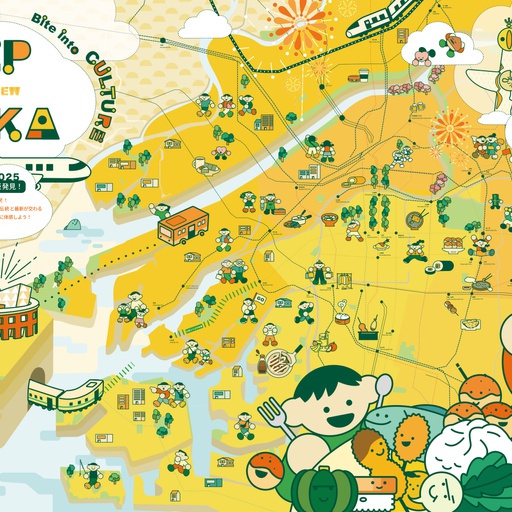
大阪・関西万博 Expo 2025 大阪ヘルスケアパビリオン - リボーンチャレンジ 2025年7月22日~28日 展示 観光の新規事業の実験場 ~観光産業から、関西を元気に~ 大阪の隠れた魅力がみつかるイラストデジタルマップで探索の旅にでかけよう! Bite into Osaka 大阪は笑いと食の宝庫! たこ焼きやお好み焼きが街角を彩り、にぎやかな商店街と人情あふれる文化が魅力。伝統と現代カルチャーが融合する街で、毎日が楽しい発見にあふれています。 ぜひ大阪の元気パワーを感じましょう!
 Posted byStroly更新日:
 すべてのスポット情報
21件のスポット
 Osaka
Osaka
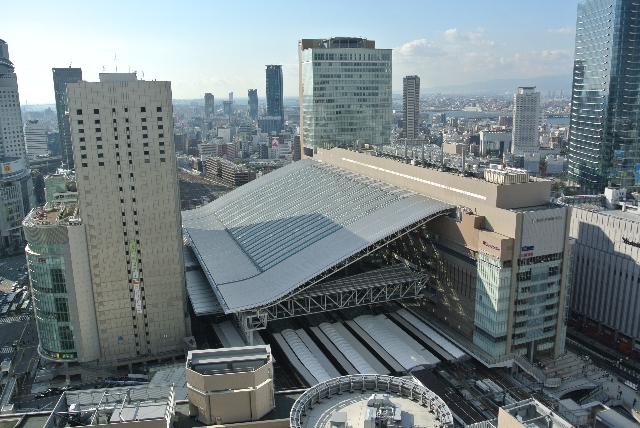
大阪駅(大阪ステーションシティ) Osaka Station (Osaka Station City) 大阪駅 Osaka Station 2011年に大阪駅再開発により生まれ変わりました。プラットホーム中央部を覆う東西長約180m、南北長約100mの大屋根は圧巻。三越伊勢丹、ルクアが完成、大丸の拡張で西日本最大、日本第2位の規模を誇る商業施設となりました。映画館、8つの広場、屋上には農園があります。 It was reborn in 2011 as part of the Osaka Station redevelopment project. The large roof covering the center of the platform, measuring 180m east to west and 100m north to south, is a spectacular sight. With the completion of Mitsukoshi Isetan and Lucua, and the expansion of Daimaru, it has become the largest commercial facility in Western Japan and the second largest in Japan. There is a movie theater, eight plazas, and a farm on the rooftop. 日本語 English 繁體中文 简体中文 한국어 -->

空中庭園展望台(梅田スカイビル) Floating Garden Observatory (Umeda Sky Building) 梅田スカイビル Umeda Sky Building 1993年に完成した高さ約173mの高層ビル。その独特の形状により、大阪の人気観光名所の一つ。「Dorling Kindersley」が選ぶ「TOP 20BUILDINGS AROUND THE WORLD」の一つ。アテネのパルテノン神殿、バルセロナのサグラダ・ファミリアといった歴史的建造物と共に選出された世界的にも有名な建築物。空中庭園展望台には、「空中庭園大明神」を祀る社があり御利益は恋愛成就。ここからの夕景は「日本の夕陽百選」にも選ばれています。 This skyscraper was completed in 1993 and is approximately 173 meters tall. Its unique shape makes it one of Osaka's most popular tourist attractions. It is one of the "TOP 20 BUILDINGS AROUND THE WORLD" selected by "Dorling Kindersley". It is a world-famous building, selected alongside historical landmarks such as the Parthenon in Athens and the Sagrada Familia in Barcelona. The Kuchu Teien Observatory is home to a shrine dedicated to Kuchu Teien Daimyojin, a deity said to bring good luck in love. The evening view from here has also been selected as one of the "100 Best Sunsets in Japan." 日本語 English 繁體中文 简体中文 한국어 -->
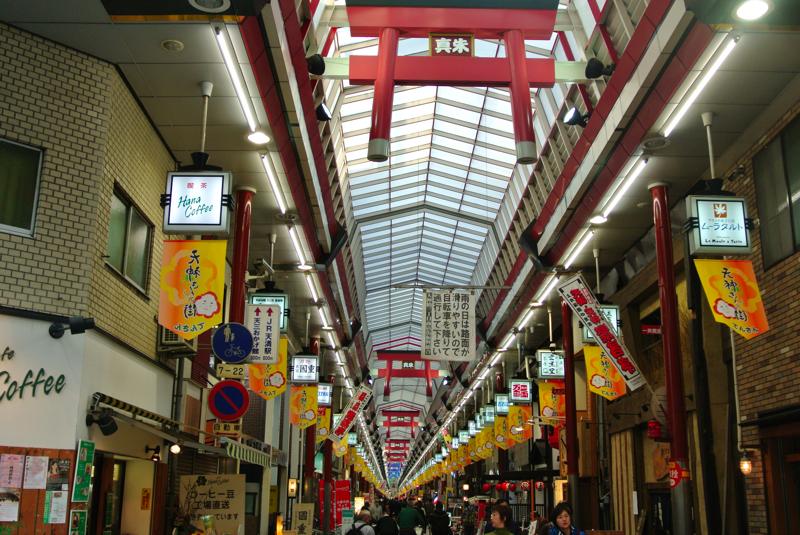
天神橋筋商店街 Tenjinbashisuji Shopping Street 天神橋筋商店街 Tenjinbashi-suji Shopping Street 南北約2.6kmと直線では日本一の長さを誇る「天神橋筋商店街」。約600店のお店が連なり、その規模、距離感は圧巻です。歴史あるお店から、最新の専門店、大阪の味が楽しめる飲食店まで満載、東西にも大小の商店街、横丁があり、それぞれ独特の雰囲気をかもし出しています。本日は予定コース(約1.6km)を歩くと「満歩状」(商店街をすべて歩いた証明書)を差し上げます。 Tenjinbashisuji Shopping Street is the longest straight-line shopping street in Japan, stretching 2.6km from north to south. It is lined with around 600 stores, and its scale and sense of distance is overwhelming. It is packed with everything from historic shops to the latest specialty shops and restaurants where you can enjoy the flavors of Osaka, and there are shopping streets and alleys of various sizes on the east and west sides, each with its own unique atmosphere. If you walk the planned course today (approximately 1.6km), you will receive a "Complete Walk Certificate" (certificate that you have walked the entire shopping street). 日本語 English 繁體中文 简体中文 한국어 -->
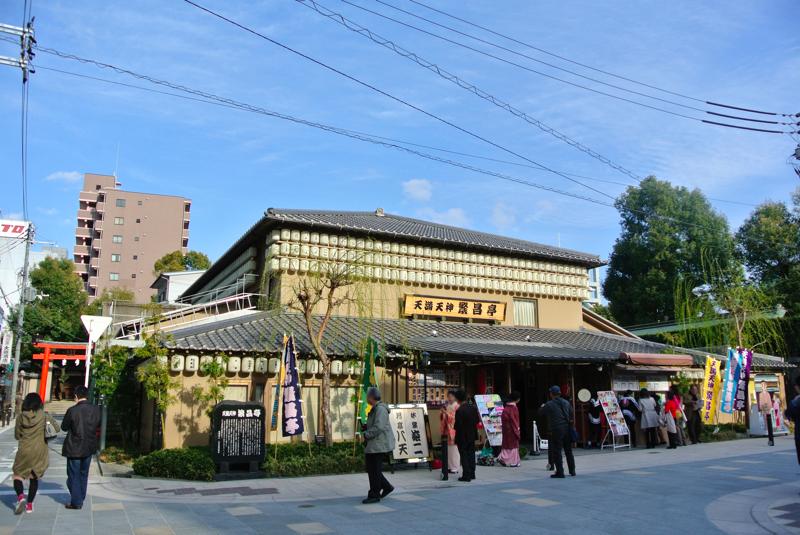
天満天神繁昌亭 Tenman Tenjin Hanjotei 天満天神繁昌亭 Tenma Tenjin Hanjotei 大阪天満宮の北側に2006年、関西で約60年ぶりに復活した落語の定席(毎日公演している小屋)が誕生。毎日2回~3回公演が行われます。全国から多くの落語ファンが訪れます。運営は上方落語協会、会長は三枝改メ 六代 桂文枝さんです。 In 2006, a rakugo theater (a small theater where daily performances are held) was established on the north side of Osaka Tenmangu Shrine, which was the first in about 60 years in Kansai. Two to three performances are held every day. Many rakugo fans from all over the country visit. It is run by the Kamigata Rakugo Association, and the chairman is Katsura Bunshi, the 6th generation of the Saegusa Kaime. 日本語 English 繁體中文 简体中文 한국어 -->
大阪の祭 大阪天満宮「天満天神えびす祭」
Osaka
 開く
開く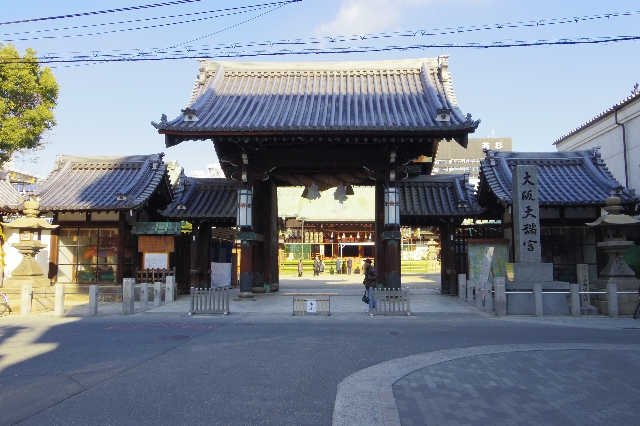
大阪天満宮 Osaka Tenmangu Shrine 大阪の祭 大阪天満宮「天満天神えびす祭」 Osaka Tenmangu Shrine 創建は949年、主祭神は学問の神様、菅原道真公。1000年以上続く「天神祭」は日本三大祭のひとつで、そのクライマッ クスをかざる船御渡は壮大な火と水の祭です。また、戦後途絶えていた十日戎が、2007年「天満天神えびす祭」として復活しました。 It was founded in 949 and its main deity is the god of learning, Sugawara no Michizane. The Tenjin Festival, which has been held for over 1,000 years, is one of the three major festivals in Japan, and the boat procession that climaxes the festival is a spectacular fire and water festival. In addition, the Toka Ebisu Festival, which had ceased after the war, was revived in 2007 as the Tenmangu Tenjin Ebisu Festival. 日本語 English 繁體中文 简体中文 한국어 -->
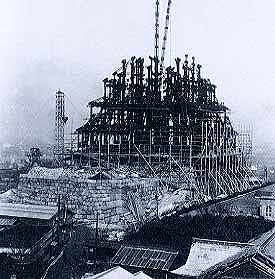
1930年頃の天守閣再建中の様子 The castle tower under reconstruction around 1930 大阪城 Osaka Castle 大阪のシンボル、大阪城。 天守閣は江戸時代に焼け落ち、この地図では存在しない。 この後、市民の募金により、1931年に再建された。 Osaka Castle is the symbol of Osaka. The castle tower burned down during the Edo period and does not appear on this map. It was later rebuilt in 1931 with donations from citizens. 日本語 English 繁體中文 简体中文 한국어 -->

写真は1930年の中之島 The photo shows Nakanoshima in 1930. 中之島 Nakanoshima 写真では、手前から大阪市中央公会堂、大阪府立中之島図書館、大阪市役所、日本銀行大阪支店が並んでいる。大阪市役所以外はいずれも今も残る建物である。 ここ中之島は、江戸時代に全国からの物資が集まっていた蔵屋敷が多くあった場所。 蔵屋敷は明治時代に払い下げられ、昭和時代の前期までの間に、国の重要文化財である大阪府立中之島図書館や大阪市中央公会堂、移転前の大阪大学などが次々と建設され、この地図の時期、「商都」と呼ばれた大阪において、経済・政治のみならず、情報と文化の発信地でもあった。 In the photo, from front to back, you can see Osaka City Central Public Hall, Osaka Prefectural Nakanoshima Library, Osaka City Hall, and the Osaka branch of the Bank of Japan. All of these buildings except Osaka City Hall still remain today. Nakanoshima was an area where many storehouses were located during the Edo period, where goods from all over the country were gathered. The storehouses were sold off during the Meiji period, and by the early Showa period, buildings such as Osaka Prefectural Nakanoshima Library, which is a national important cultural property, and Osaka City Central Public Hall, as well as Osaka University before it relocated, were built one after another, and at the time this map was drawn, Osaka was known as the "commercial city," and was a source of not only economy and politics, but also information and culture. 日本語 English 繁體中文 简体中文 한국어 -->

御堂筋 Midosuji 御堂筋の名前は西本願寺派の「北御堂」と、東本願寺派の「南御堂」が沿道にある事から名付けられている。 この地図の当時の御堂筋(淀屋橋筋とも呼ばれた)は、幅6mほどの狭い道に過ぎなかった。 1920年市長となった關一によって、地下鉄の建設とセットで大幅な道路拡張がほどこされ、一躍大阪を代表する道路へと様変わりした。 The name Midosuji comes from the fact that the Nishi Honganji sect's "Kita Mido" and Higashi Honganji sect's "Minami Mido" temples are located along the road. At the time this map was made, Midosuji (also called Yodoyabashi-suji) was just a narrow road about 6m wide. When Seki Hajime became mayor in 1920, he carried out major expansions of the road along with the construction of the subway, and it was transformed into one of Osaka's most representative roads. 日本語 English 繁體中文 简体中文 한국어 -->

戦後すぐ、1951年の戎橋 Ebisubashi Bridge in 1951, shortly after the war 道頓堀 Dotombori 写真右側が現在名物グリコの看板がある場所。 地図には、浪速座、角座、朝日座、中座、松竹座など歌舞伎や人形浄瑠璃の劇場が描かれている。 現在は移転・復活した松竹座以外はすべて劇場は閉鎖。 大阪ミナミの繁華街として、様々な飲食店が溢れている。 The right side of the photo is where the famous Glico sign is currently located. The map shows kabuki and puppet theaters such as Naniwa-za, Kado-za, Asahi-za, Nakaza, and Shochiku-za. All of the theaters are currently closed except for Shochiku-za, which has relocated and reopened. As a bustling area in Osaka's Minami district, it is filled with a variety of restaurants and bars. 日本語 English 繁體中文 简体中文 한국어 -->
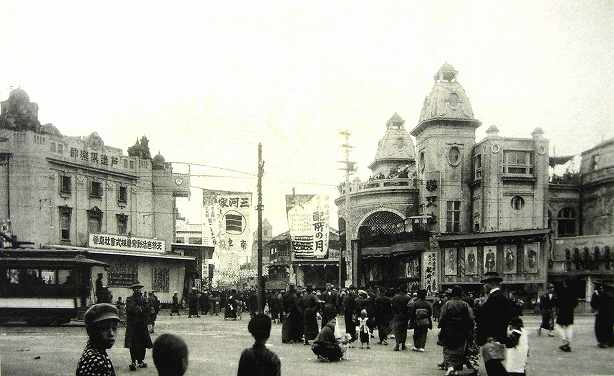
1916年の千日前を北から南に撮影 Sennichimae, photographed from north to south in 1916 千日前 (楽天地) Rakutenchi in Sennichimae 上の写真の右側が「楽天地」、左側が「芦邊倶楽部」。 現在はそれぞれ家電量販店のビックカメラと、レジャービル「アムザ1000」になっている。 名前の由来は、付近に千日念仏を唱えたと言われる法善寺(通称:千日寺)があることから。 1912年の大火後、その焼け跡に映画館や劇場、ローラースケート場や展望台を併設した娯楽場「楽天地」が建った。 以後映画館や劇場が進出し、道頓堀と肩を並べるミナミのメッカへと変貌を遂げた。 In the photo above, Rakutenchi is on the right and Ashibe Club is on the left. Currently, they are the electronics retailer Bic Camera and the leisure mall Amza 1000, respectively. The name comes from the presence of Hozenji Temple (commonly known as Sennichiji Temple), nearby, where it is said that Buddhist prayers were chanted for the 1,000th day. After a great fire in 1912, Rakutenchi, an entertainment center with a cinema, theater, roller skating rink and observation deck, was built on the ruins. Since then, cinemas and theaters have opened up here, and it has transformed into a mecca of Minami, rivalling Dotonbori. 日本語 English 繁體中文 简体中文 한국어 -->
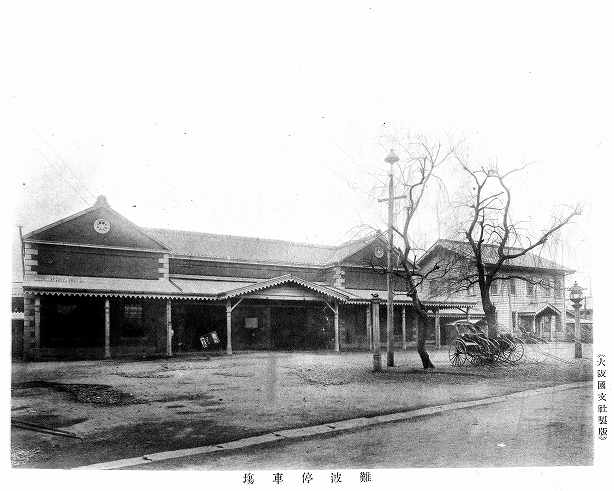
難波駅 Namba Station 大阪ミナミの玄関口・難波駅は、明治時代の開業から今に至るまで、人と街をつなぐ拠点として発展してきました。かつての地上駅舎は姿を変え、今では地下に広がる通路と高層ビルが交錯する、近代的な都市の風景が広がっています。 写真は「建築雑誌1932年10月号:南海鉄道株式会社難波駅本屋新築工事概要」より Namba Station, the gateway to Osaka’s Minami district, has grown into a vital hub connecting people and the city since its opening in the Meiji era. The former ground-level station has transformed over time, and today it features a modern cityscape where underground passageways intersect with towering skyscrapers. Photo from "Architecture Magazine October 1932 Issue: Overview of New Construction of Nankai Railway Company's Namba Station Main Building" 日本語 English 繁體中文 简体中文 한국어 -->
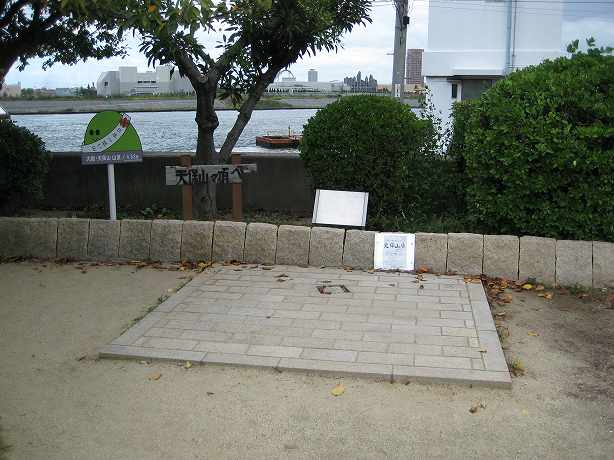
写真は現在の天保山山頂 The photo shows the current summit of Mount Tempo. 天保山 Mount Tempozan 標高4.53mの日本で一番低い山。 江戸後期の天保時代に、付近の土砂を積み上げて作られた。 当初は標高20mほどあり、桜や松が植えられ、花見や舟遊びに興じる人々の姿の光景が、歌川広重の絵に描かれるほどの行楽地であった。 幕末の砲台建設やその後の地盤沈下のために、現在の標高になった。 At 4.53m above sea level, it is the lowest mountain in Japan. It was created by piling up nearby soil and sand during the Tenpo period in the late Edo period. Originally it was about 20m above sea level, and cherry trees and pine trees were planted. It was a popular tourist spot, with scenes of people enjoying flower viewing and boating depicted in paintings by Utagawa Hiroshige. The construction of artillery batteries at the end of the Edo period and subsequent land subsidence caused it to drop to its current elevation. 日本語 English 繁體中文 简体中文 한국어 -->
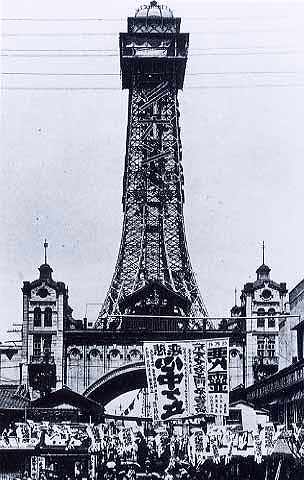
通天閣と新世界 Tsutenkaku and Shinsekai 初代通天閣 Tsutenkaku tower 1903年に開催された第5回内国勧業博覧会の会場跡地を利用して、パリのエッフェル塔と凱旋門を模した初代通天閣が1912年に建設。 1920年には「ライオン歯磨」とのタイアップで、巨大ネオン広告が設置。 通天閣は戦時中の金属供出で解体されたが、戦後、1956年に復活した。 現在大阪を代表する観光名所の一つである。 The first Tsutenkaku, modeled after the Eiffel Tower and Arc de Triomphe in Paris, was built in 1912 on the site of the 5th Domestic Industrial Exposition held in 1903. In 1920, a huge neon advertisement was installed in collaboration with Lion Toothpaste. Tsutenkaku was dismantled during the war as a metal donation, but was restored after the war in 1956. It is now one of Osaka's most famous tourist attractions. 日本語 English 繁體中文 简体中文 한국어 -->
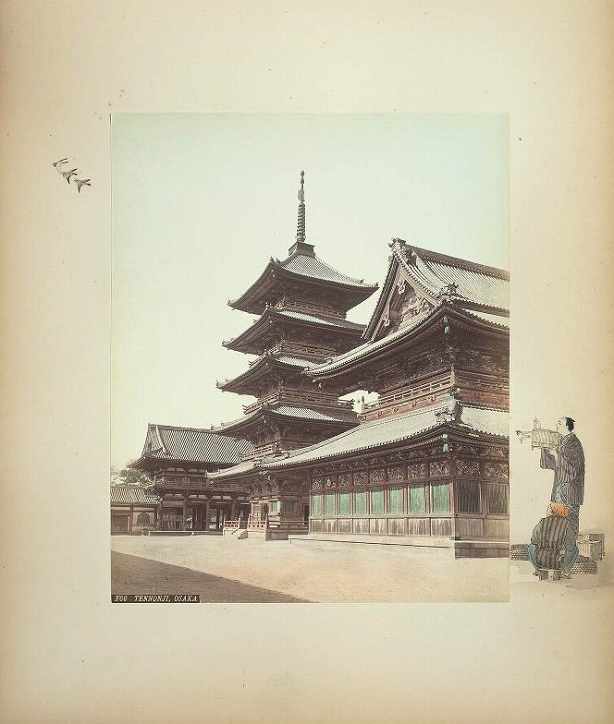
明治時代撮影、戦災で焼け落ちる前の四天王寺 Photographed during the Meiji period, Shitennoji Temple before it was burned down during the war 四天王寺 Shitenno-ji Temple 飛鳥時代に聖徳太子が建てた日本仏教の最古のお寺と伝えられる。 何度も焼け落ちて、その都度再建を繰り返しており、飛鳥時代の建物で現存するものはないが、南北に南大門、中門、塔、金堂、講堂が一直線上に並び、それを回廊が囲む「四天王寺式伽藍配置」と呼ばれる建物の並びは今も変わらない。 It is said to be the oldest temple in Japanese Buddhism, built by Prince Shotoku during the Asuka period. It has burned down many times and has been rebuilt each time, so no buildings from the Asuka period remain, but the arrangement of the buildings, known as the "Shitennoji-style temple layout," remains unchanged to this day, with the Great South Gate, Central Gate, pagoda, Kondo Hall, and lecture hall lined up in a straight line from north to south and surrounded by a corridor. 日本語 English 繁體中文 简体中文 한국어 -->
EXPO2025大阪・関西万博会場
Osaka
開くEXPO2025大阪・関西万博会場 Expo 2025 Osaka, Kansai, Japan 2025年大阪・関西万博は、「いのち輝く未来社会のデザイン」をテーマに、夢洲で開催中。約150の国と地域が参加し、医療・環境・AIなど未来社会を体験できるパビリオンが並びます。 Expo 2025 Osaka, Kansai, Japan is being held in Yumeshima with the theme of "Designing a Future Society for Life." Approximately 150 countries and regions are participating, and there are pavilions where visitors can experience the future society, including medicine, the environment, and AI. 日本語 English 繁體中文 简体中文 한국어 -->
 Bites
Bites

なし 大阪・梅田エリア Osaka・Umeda Area --> 西日本最大のターミナル・大阪駅 Osaka Station, the largest terminal in western Japan 大阪駅は交通の中心部! Osaka Station is the transportation hub! たしかに!高層ビルも多いし、都市のランドマークでもあるんだよね。 That's true! There are many skyscrapers and they are also city landmarks. 商業施設も洗練されてて、歩いてるだけで街の流れを感じるんだ。 The commercial facilities are also sophisticated, and you can feel the flow of the town just by walking around. カフェもレストランもおしゃれで、人が集まるのもわかる気がする。 The cafes and restaurants are stylish, so it's easy to see why people gather there. 日本語 English 繁體中文 简体中文 한국어 -->

なし 中之島エリア Nakanoshima Area --> 水の都・大阪の象徴、中之島 Nakanoshima, the symbol of Osaka, the city of water 中之島は、もともと蔵屋敷がずらりと並んでた商業の中心地だったんだよ。 Nakanoshima was originally a commercial center lined with storehouses. えっ、あのバラ園とか美術館があるところが?全然想像つかない! What, the place with the rose garden and art museum? I have no idea! 今は文化やアートの拠点として再開発されてて、まさに水と歴史と芸術が交差する場所って感じ。 It has now been redeveloped as a hub for culture and the arts, and truly feels like a place where water, history, and art intersect. 日本語 English 繁體中文 简体中文 한국어 -->

なし 天満エリア Tenma Area --> 商店街のにぎわい、天満のまち The bustling shopping district of Tenma 天満の商店街は、日常と地元の食文化がそのまま詰まってるような場所! Tenma's shopping district is a place that is packed with everyday life and local food culture! 観光地というよりも、普段の暮らしの延長にある感じがする。 Rather than a tourist destination, it feels like an extension of everyday life. 日本で一番長い商店街は圧巻!歩いているだけで食の選択肢がどんどん出てくる。 The longest shopping street in Japan is a sight to behold! Just walking around will give you endless food options. あの距離感と雑多さは、肩の力を抜いて楽しめるエリアだと思う。 I think that sense of distance and variety makes it an area where you can enjoy yourself without having to worry about anything. 日本語 English 繁體中文 简体中文 한국어 -->

なし なんばエリア Namba Area --> 食い倒れ文化、なんばのまち Namba City: A culture of eating to your heart's content なんばは、大阪の食と笑いが一番濃く交差しているエリア! Namba is the area in Osaka where food and laughter intersect most intensely! 市場の熱気や、ソースの香りには独特の迫力があるよね。 The excitement of the market and the aroma of the sauce have a unique impact. 粉もん文化の街として知られてるけど、通りを歩くとその空気が自然に伝わってくる。 It's known as a city with a flour-based food culture, and you can naturally feel that atmosphere when you walk down the streets. 雑多さの中に、人の笑い声と食の熱気が混ざって大阪らしくていいよね。 Amidst the diversity, the sound of laughter and excitement of eating is what makes it so Osaka-like. 日本語 English 繁體中文 简体中文 한국어 -->

なし 天王寺エリア Tennoji area --> ミナミの玄関口、天王寺 Tennoji, the gateway to Minami 超高層ビルのすぐ近くに、昔ながらの立ち飲みや商店街があるのが印象的だよね。 It's impressive to see old-fashioned standing bars and shopping streets so close to skyscrapers. 街の層の厚さとして機能してるのが面白い! It's interesting how it functions as the depth of the city's layers! 歩いてると、時代の違う景色を並行して見てるような感じがするね。 When you walk, you feel like you're looking at scenery from different eras at the same time. 日本語 English 繁體中文 简体中文 한국어 -->
なし --> 大阪は「天下の台所」と呼ばれ、江戸時代から全国の食材が集まる商いの都でした。やがて「食い倒れのまち」とも言われるようになり、庶民の食から料亭の味まで、さまざまな料理が息づいてきました。ごちそうも、粉もんも、出汁の一杯も。笑い声といっしょに広がっていく。大阪では食べることがいつも、暮らしのまんなかにあります。 Osaka has long been known as the “Nation’s Kitchen,” a city of commerce where ingredients from all over Japan gathered since the Edo period. Over time, it also came to be called the “city of kuidaore”—where people indulge in food until they’re broke. From everyday street food to refined dishes served at traditional restaurants, a rich culinary culture has flourished here. Whether it’s a feast, comfort food like konamon (flour-based dishes), or a bowl of savory broth, everything is shared with laughter. In Osaka, eating is always at the heart of daily life. 日本語 English 繁體中文 简体中文 한국어 -->