Kyoto Event Guide Map Kyoto Shinbun&Stroly presents
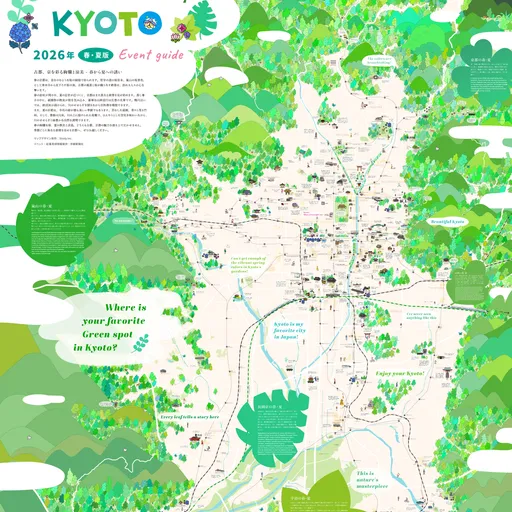
Summer in Kyoto is the season when the greenery of temples and shrines is at its most beautiful. Moss-covered gardens, lush bamboo groves, and the riverside dining in Kibune. You can enjoy the cool air, the sound of the flowing river, and the abundant nature while sitting on a tatami room built over the river. The magnificent cherry blossoms of spring, and the heat and cool beauty of summer—both are indispensable when talking about the charm of the ancient capital, Kyoto. Please come and experience Kyoto, which shows a different face in each season.
 Posted byKyoto Shimbun and Stroly Digital Map ProjectUpdated:
 All spots information
134 spots
 Event Spot
Adashino Nenbutsu-ji Temple
Event Spot
 Open
Open
Originally founded in the Heian period, this temple belongs to the Jōdo sect of Buddhism. According to tradition, Kūkai (Kōbō Daishi) established a temple named Gochizan Nyorai-ji and buried exposed remains found in the area. Later, Hōnen transformed the site into a nembutsu practice hall and renamed it to its current name. The main hall was rebuilt in 1711 (Shōtoku 2) by Jaku-dō Shōnin. Within the temple grounds, there are over 8,000 stone statues and gravestones, marking the resting places of those once buried in Adashino, a historical burial ground. Every year, on the final Saturday and Sunday of August, the temple holds the Sento Kuyō (Thousand Lantern Memorial Ceremony), in which candles are lit to honor the spirits in a deeply atmospheric and spiritual setting. Reservations are no longer required for attending the Sento Kuyō. 17 Saga Toriimoto Kaya-no-cho, Ukyo-ku, Kyoto City, Kyoto PrefectureGoogleMap Get off at "Toriimoto" on the Kyoto Bus and walk for about 5 minutes Official website Instagram Facebook LINE X(Twitter) Youtube 情報提供:京都新聞 技術提供:Stroly (c)The Kyoto Shimbun Co.,Ltd. All rights reserved.
Kitano Tenmangu Shrine
Event Spot
Open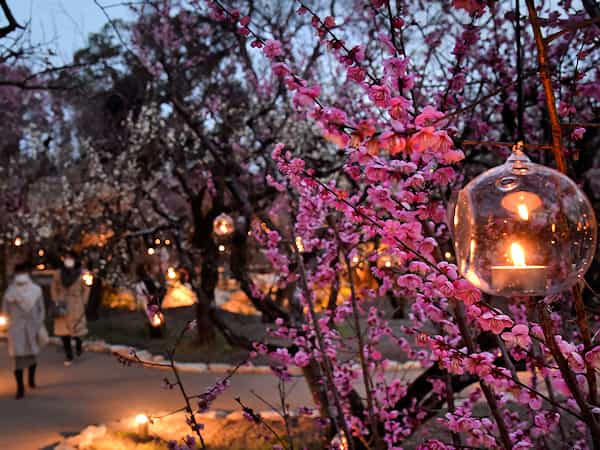
Previous years (plum blossoms) Headquarters of Tenjin Shrines, the national Tenmangu shrines that enshrine the god of learning, Michizane Sugawara. During the autumn foliage season, the "Momiji Garden'' at the historical site Odoi is specially opened to the public. The maple garden is home to approximately 350 maple trees, including large trees that are over 400 years old. The sight of the red leaves folding over each other to fill the Odoi is very atmospheric. When illuminated, the autumn leaves and shrine buildings stand out in a fantastical light against the nighttime cityscape. Sunset to 8:00 p.m. from November 9th to December 8th (Reception ends at 7:40 p.m.) Bakurocho, Kamigyo Ward, Kyoto City, Kyoto PrefectureGoogleMap 7:00 a.m. - 5:00 p.m. Free of charge in the precincts. Get off at Kyoto City Bus "Kitano Tenmangu-mae" station / Get off at Randen "Kitano Hakubaicho" station and walk for about 5 minutes Official website Instagram Facebook LINE X(Twitter) Youtube 情報提供:京都新聞 技術提供:Stroly (c)The Kyoto Shimbun Co.,Ltd. All rights reserved.
Genkō-ji Temple (Tokiwazan Genkō-ji)
Event Spot
OpenOriginally a sub-temple of Ninna-ji, this temple is now affiliated with the Tenryū-ji school of the Rinzai sect and is known as Tokiwazan Genkō-ji. Its principal image is Jizō Bosatsu (the Bodhisattva of Salvation). The temple is said to have been established by converting the mountain villa of Minamoto no Tokiwa, the third prince of Emperor Saga and former Minister of the Left. According to legend, Tokiwa Gozen, the mother of Minamoto no Yoshitsune, spent her final years in a small hermitage within the temple grounds, where she passed away. Her grave remains on-site. Genkō-ji is home to Tokiwa Jizō, one of the sites of the Kyoto Six Jizō Pilgrimage, a traditional event held for over 800 years. The pilgrimage takes place annually on August 22 and 23, drawing many visitors. Ofuda (protective talismans): Available on August 22 and 23 Goshuin (temple seal stamps): If you wish to receive one, please send a written request with your contact information to the temple by mail. (Telephone inquiries are not accepted.) 1 Tokiwa Umazukacho, Ukyo Ward, Kyoto City, Kyoto PrefectureGoogleMap 3 minutes walk from Keifuku Tokiwa Station 7 minutes walk from JR Uzumasa Station Official website Instagram Facebook LINE X(Twitter) Youtube 情報提供:京都新聞 技術提供:Stroly (c)The Kyoto Shimbun Co.,Ltd. All rights reserved.
Arashiyama
Event Spot
Open
Autumn leaves:2021 shooting Arashiyama is a mountain on the right bank (south side) of the Oi River (Katsura River) and is 382 meters high. The surrounding area, including Mt. Ogura on the opposite bank, is a famous spot for autumn leaves, and is crowded with tourists during the autumn leaves season. Kameyama Park, which leads to Mt. Ogura, has a lot of autumn leaves, and from the observation deck at the top, you can see boats slowly descending down the Hozu River through the valley of autumn leaves. The Arashiyama Momiji Festival is held every year on the second Sunday of November from 10 a.m. to 3 p.m. upstream of Togetsukyo Bridge, and performances related to the area are performed. Arashiyama, Ukyo Ward, Kyoto City, Kyoto PrefectureGoogleMap Get off at Randen/Hankyu "Arashiyama" station and walk for about 5-10 minutes / From Keihan "Sanjo" station take the Kyoto bus or Kyoto city bus and get off at "Arashiyama" / From JR Kyoto station take the Kyoto city bus and get off at "Arashiyama Koen" or take the JR bus Get off at “Arashiyama” Official website Instagram Facebook LINE X(Twitter) Youtube 情報提供:京都新聞 技術提供:Stroly (c)The Kyoto Shimbun Co.,Ltd. All rights reserved.
Matsuo-taisha Shrine
Event Spot
Open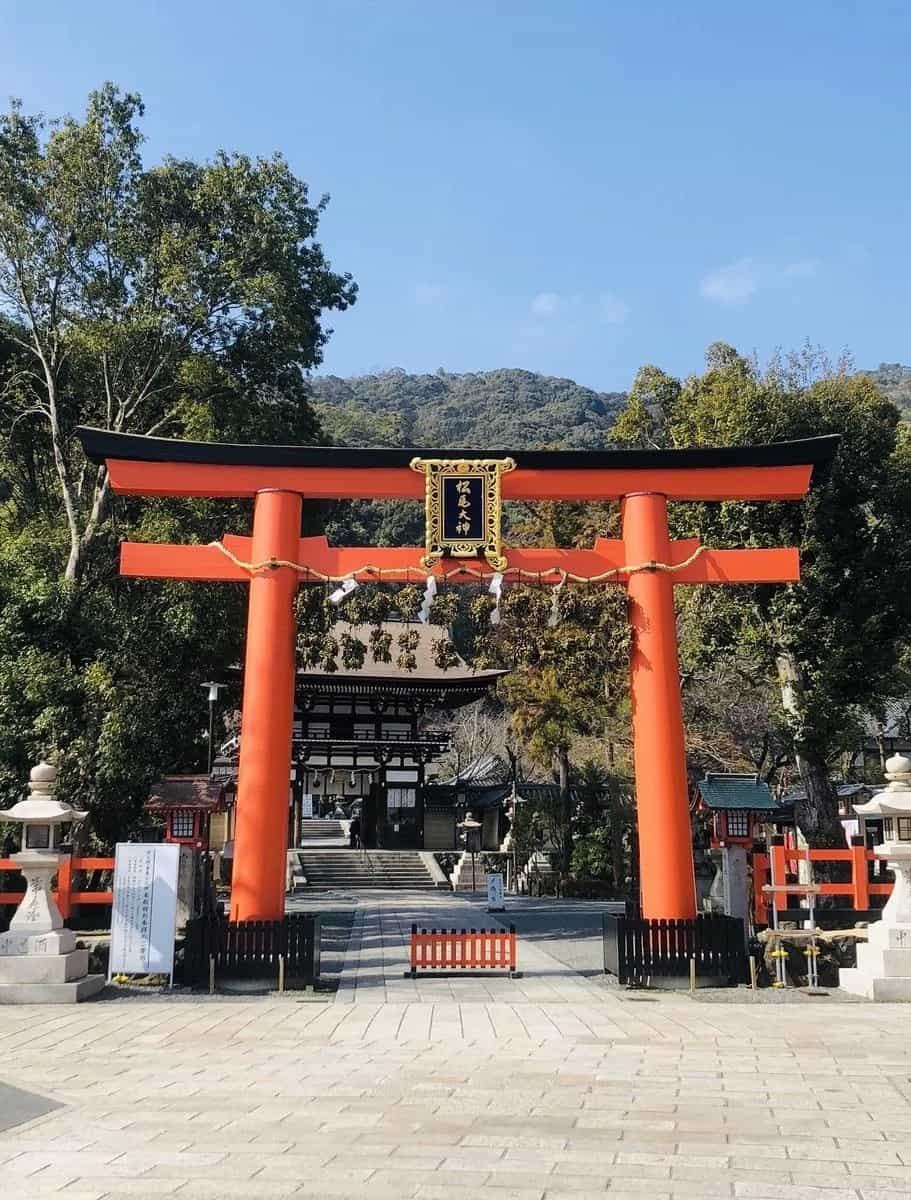
It is said that the people who have lived in this area since ancient times worshiped the mountain spirit of Mt. Matsuo in Iwakura, the upper part of Osugidani near the summit, and revered it as the guardian deity of their lives. The area is known as the god of sake-making because the high-quality underground water has been used to make sake since ancient times. Even today, there is a good legend that if you brew sake by adding spring water from Kamenoi, a sacred spring, to the base water, it will not spoil. The garden was created by Mirei Shigemori. The three gardens of Joko Garden, Kyokusui Garden, and Horai Garden are also worth seeing. In mid-April, as many as 3,000 Yamabuki trees are in full bloom all around the grounds. 3 Arashiyama Miyamachi, Nishikyo Ward, Kyoto City, Kyoto PrefectureGoogleMap Weekdays/Saturdays 9:00 a.m. to 4:00 p.m.Sundays and holidays 9:00 a.m. to 4:30 p.m. Adult 500 yenStudent 400 yenChild 300 yen(Common to garden and statue hall) Get off at Hankyu Railway “Matsuo Taisha” stationJR Kyoto Station → (Subway) → Shijo Karasuma → (Hankyu Kyoto Line) → Katsura → (Hankyu Arashiyama Line) → Matsuo TaishaRequired time: 40 minutes from Kyoto StationGet off at the city bus “Matsuo Taisha-mae” bus stopJR Kyoto Station → (city bus bound for Arashiyama Daikakuji → Matsuo Taisha Shrine)JR Kyoto Station → (Kyoto Bus bound for Kokedera) → Matsuo Taisha ShrineTime required: 40 minutes from Kyoto Station Official website Instagram Facebook LINE X(Twitter) Youtube 情報提供:京都新聞 技術提供:Stroly (c)The Kyoto Shimbun Co.,Ltd. All rights reserved.
Kiyomizu Temple
Event Spot
Open
Approximately 1,000 maple trees are planted within the grounds. The spectacular fall foliage in Kinunkei, the valley below the main temple cliff, is reminiscent of Kitayama's Takao, and is also called the ""New Takao.'' Each year, 500 lights are installed. The view from Okunoin is that red maple leaves stand out against the night view of the city, and blue rays of light, representing the compassion of Kannon Bodhisattva, stretch toward the western sky. Illumination will be from 5:30pm to 9pm from November 18th to 30th (Registration closes, gates will not close in the evening) 1-294 Shimizu, Higashiyama-ku, Kyoto-shi, Kyoto PrefectureGoogleMap 6:00~18:00(Depends on the time of year.For more information.) Adults 400 yen, elementary and junior high school students 200 yen Get off at Keihan Railway "Kiyomizu Gojo" station and walk for about 25 minutes / Take the Kyoto city bus from JR "Kyoto" station or Hankyu train "Shijo Kawaramachi" station and get off at "Kiyomizu-michi" and walk about 10 minutes. Official website Instagram Facebook LINE X(Twitter) Youtube 情報提供:京都新聞 技術提供:Stroly (c)The Kyoto Shimbun Co.,Ltd. All rights reserved.
Shimogamo Shrine
Event Spot
OpenTadasu no Mori, which covers an area of 36,000 tsubo (approximately 118,800 square meters), is said to have around 600 trees between 600 and 200 years old. Many maple trees are planted around the Semi Stream that flows to the east of the forest. The leaves change color around the end of November. If you visit this time of year when it's raining lightly, the Semi Stream flows silently, and when the rain stops, a thin mist forms over the area, creating a mystical atmosphere. 59 Shimogamo Izumigawacho, Sakyo Ward, Kyoto City, Kyoto PrefectureGoogleMap 6:00-17:00 (subject to change due to religious ceremonies, etc.) Free to visit the precincts of the temple. Adults: 500 yen for Oidono. Approximately 10 minutes' walk from Keihan "Demachiyanagi" Station / From JR "Kyoto" Station or Keihan "Sanjo Station" get off at Kyoto City Bus "Shimogamo Jinja-mae" and walk approximately 5 minutes Official website Instagram Facebook LINE X(Twitter) Youtube 情報提供:京都新聞 技術提供:Stroly (c)The Kyoto Shimbun Co.,Ltd. All rights reserved.
Kyoto City KYOCERA Museum of Art
Event Spot
Open
The Museum opened in 1933 as the Kyoto Enthronement Memorial Museum of Art in Kyoto’s Okazaki district, itself an expression of the city’s modern trends at the time. The establishment of the Museum owes much to the generous support of many local citizens.It was renamed the Kyoto Municipal Museum of Art after World War II.As Japan’s oldest public art museum that is housed in its original architecture, its classical visage standing against the backdrop of Higashiyama has been highly appreciated for 85 years.The innovative concepts of two leading Japanese architects, Aoki Jun and Nishizawa Tezzo, for the Museum renewal project introduced new designs while preserving original elements, thus allowing for a fusion of old and new to create a fresh image for the Museum.We invite you to enjoy the new Kyoto City KYOCERA Museum of Art. 124 Enshojimachi Okazaki, Sakyo Ward, Kyoto City, Kyoto PrefectureGoogleMap Click here for exhibition informationOpening hours10:00-18:00 (Last entry time varies depending on the exhibition.)Closed daysMondays (open on public holidays)Year-end and New Year holidays (December 28th to January 2nd) Official website Instagram Facebook LINE X(Twitter) Youtube 情報提供:京都新聞 技術提供:Stroly (c)The Kyoto Shimbun Co.,Ltd. All rights reserved.
The National Museum of Modern Art, Kyoto, was established in 1952 and focuses on collecting and exhibiting a wide variety of works, including modern and contemporary Japanese paintings, sculptures, and crafts. Emphasizing art activities in Kyoto and western Japan, the museum hosts significant exhibitions from both Japan and abroad and is dedicated to research and educational outreach. Visitors can enjoy workshops and lectures, making the museum a beloved cultural hub in the region. 26-1 Enshojimachi Okazaki, Sakyo Ward, Kyoto City, Kyoto PrefectureGoogleMap Click here for exhibition informationOpening hoursRegular hours: 10am to 6pm (admission until 5:30pm)Night hours: Open until 8:00 pm every Friday during special exhibitions (admission is at 7:30 pm)Closed daysEvery Monday (if Monday is a holiday, the following day will be closed)New year holiday seasonClosed during exhibition change periods and year-end and New Year holidays Exhibition admission fees vary depending on each exhibition.Please see the official website for details. Official website Instagram Facebook LINE X(Twitter) Youtube 情報提供:京都新聞 技術提供:Stroly (c)The Kyoto Shimbun Co.,Ltd. All rights reserved.
Museum EKI Kyoto
Event Spot
OpenIn September 1997, the art museum "Eki" KYOTO was established with the aim of becoming a cultural and information hub that brings joy to many people in the internationalized cultural city of Kyoto. It also aspires to contribute to further cultural creation and exchange. Located adjacent to the 7th floor of the JR Kyoto Isetan department store, this museum offers easy access, including an entrance from the grand staircase that extends skyward. 7th Floor, Adjacent to JR Kyoto Isetan, Higashishiokoji-cho, Shimogyo-ku, Kyoto-shi, Kyoto-fu, 600-8555, JapanGoogleMap Opening Hours:10:00 AM – 7:30 PMLast Admission:30 minutes before closingClosed Days:During exhibition changeoversTemporary Closure for Maintenance:Scheduled closure from Wednesday, April 1, 2025, to Friday, April 18, 2025 for maintenance. Official website Instagram Facebook LINE X(Twitter) Youtube 情報提供:京都新聞 技術提供:Stroly (c)The Kyoto Shimbun Co.,Ltd. All rights reserved.

KYOTO PREFECTURAL INSHO-DOMOTO MUSEUM OF FINE ARTS was founded in 1966 by INSHO DOMOTO, a Japanese painter who was active in Kyoto from the Taisho and Showa periods. Everything from the exterior to the interior of the museum was designed by INSHO DOMOTO, and his decorative forms can still be seen in the museum today. 26-3 Hirano Kamiyagicho, Kita Ward, Kyoto City, Kyoto PrefectureGoogleMap Opening hours9:30 a.m. to 5:00 p.m. (Last admission 30 minutes before closing)Closed daysMondays (open on public holidays and closed on the following weekday) and New Year's holidays (December 28th to January 4th)*In addition, the museum may be temporarily closed due to changes in exhibits, etc. General 510 yen (400 yen) / High school and university students 400 yen (320 yen) / Elementary and junior high school students 200 yen (160 yen)*The numbers in parentheses are group rates (20 people or more) and free for elementary school students and younger.*Free for those over 65 years old. (Official certificate required)*Free admission for those who present a disability certificate or Mirairo ID and one caregiver. Official website Instagram Facebook LINE X(Twitter) Youtube 情報提供:京都新聞 技術提供:Stroly (c)The Kyoto Shimbun Co.,Ltd. All rights reserved.
Located on the 6th floor of Daimaru Kyoto Store, the Event Hall hosts a variety of seasonal exhibitions such as regional food fairs, art displays, and limited-time pop-up stores. Conveniently situated in the heart of Kyoto at Shijo-Karasuma, it’s the perfect stop to experience both shopping and Japanese culture during your visit. 79 Shijo-dori Takakura Nishiiru Tachiumai Nishicho, Shimogyo-ku, Kyoto City, Kyoto Prefecture, 6th floor, Daimaru Kyoto StoreGoogleMap 1 minute walk from Karasuma Station on the Hankyu Kyoto Line (directly connected to the underground passage) 2 minutes walk from Shijo Station on the Karasuma Subway Line (directly connected to the underground passage) Official website Instagram Facebook LINE X(Twitter) Youtube 情報提供:京都新聞 技術提供:Stroly (c)The Kyoto Shimbun Co.,Ltd. All rights reserved.
Ryukoku Museum
Event Spot
OpenThe Ryukoku Museum is a comprehensive Buddhist museum that was opened to mark the 370th anniversary of Ryukoku University’s founding. It holds and exhibits precious cultural assets and academic materials primarily related to Buddhism. Concept exhibitions present in an easy-to-understand fashion how Buddhism, after emerging approximately twenty-five hundred years ago in India, spread throughout Asian countries, was transmitted to Japan in the sixth century, and subsequently developed. Special and focus exhibitions use themes to examine Buddhism from a variety of angles and share the results of academic surveys and research with the general public. On the second floor are life-size recreated murals from the walls of the Bezeklik Cave Temple’s Cave 15, which is located on the outskirts of Turpan in China’s Xinjiang Uyghur Autonomous Region. On the third floor is a museum theater where visitors can enjoy original movies regarding exhibition content and Buddhism. The museum also features a cafe and shop. 117 Maruyacho, Shimogyo-ku, Kyoto City, Kyoto Prefecture 600-8399, in front of Nishi Honganji TempleGoogleMap Official website Instagram Facebook LINE X(Twitter) Youtube 情報提供:京都新聞 技術提供:Stroly (c)The Kyoto Shimbun Co.,Ltd. All rights reserved.
Raku Museum
Event Spot
OpenThe Raku Museum is situated immediately next door to the Raku family home and workshop. It was opened in 1978 by the 14th generation Kakunyû (1918~1980) and has a collection consisting primarily of ceramics made by successive heads of the Raku family, related documents and tea utensils passed down over the generations. The collection has been formed over 450 years as a resource from which future generations can learn about the techniques and artistry of their forebears enabling them to establish each individual style. The Raku Museum is, in effect, an encapsulation of the essence of the Raku tradition incessant over 450 years. 87-1 Aburahashi Tsume-cho, Kamigyo-ku, Kyoto-shi, Kyoto PrefectureGoogleMap Click here for exhibition informationOpening hours10:00-16:30 (Admission until 16:00)Closed daysMondays (open on holidays)Exhibition change period Official website Instagram Facebook LINE X(Twitter) Youtube 情報提供:京都新聞 技術提供:Stroly (c)The Kyoto Shimbun Co.,Ltd. All rights reserved.
Hosomi Museum
Event Spot
OpenThe Hosomi Museum is an art museum operated by the Hosomi Art Foundation, a public interest incorporated foundation. It was established in 1998, based on the collection amassed over three generations of the Hosomi family, beginning with Koshoan Hosomi (1901–1979), a businessman and collector of Japanese art.The museum’s collection covers nearly all fields and periods of Japanese art, including Shinto and Buddhist art, tea ceremony-related art, and Edo-period paintings such as those from the Rimpa school and works by Ito Jakuchu. The museum hosts diverse special exhibitions, aiming to preserve and promote traditional culture while carrying forward the timeless beauty found in classical art.To create a welcoming space for art enthusiasts, the museum also features a tea room, a shop, and a café. 6-3 Saishojicho, Okazaki, Sakyo-ku, Kyoto-shi, Kyoto-fu, 606-8342, JapanGoogleMap Opening hoursMuseum10 a.m. to 5 p.m.Tea room Kokoan11:00 a.m. to 4:00 p.m. (irregular holidays)*General business is suspended. Please contact us regarding the sections you wish to use.ARTCUBE SHOP10am - 5pmCAFÉ CUBE10:30 a.m. - 5:00 p.m. (L.O. 4:30)trattoria en6pm - 9:30pm*Available by reservation. Please contact us.Closed daysMonday (the next day if Monday is a holiday)Exhibition change period Official website Instagram Facebook LINE X(Twitter) Youtube 情報提供:京都新聞 技術提供:Stroly (c)The Kyoto Shimbun Co.,Ltd. All rights reserved.
Kyoto Theater
Event Spot
OpenKyoto Theater is located in the Kyoto Station Building, directly connected to JR Kyoto Station. With a seating capacity of 941, the theater is able to present a wide range of performing arts, including plays, concerts, ballet, and dance, in a spectacular and expressive manner. Kyoto Station Building, Shimogyo-ku, Kyoto City, Kyoto PrefectureGoogleMap ・Approximately a 3-minute walk from JR Kyoto Station ・Approximately an 8-minute walk from the Shinkansen Central Exit of Kyoto Station ・Approximately an 8-minute walk from Kintetsu Kyoto Station ・Approximately a 3-minute walk from Kyoto City Subway Kyoto Station Official website Instagram Facebook LINE X(Twitter) Youtube 情報提供:京都新聞 技術提供:Stroly (c)The Kyoto Shimbun Co.,Ltd. All rights reserved.
Jikkoku-bune
Event Spot
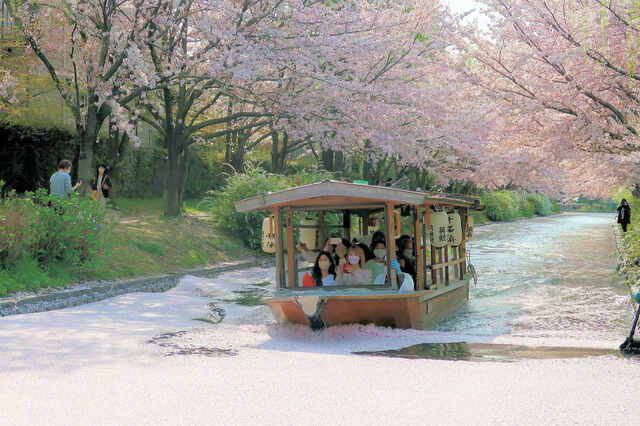
OpenThis sightseeing experience takes you on a "Jikkoku-bune," a replica of the boat that transported rice, sake, and passengers on the Yodo River during the Edo period, through the sake breweries and willow-lined canals of Fushimi Ward, Kyoto City. The boat, which can accommodate around 20 people, takes you from the boarding point behind the Gekkeikan Okura Sake Museum via Misu Locks for a round trip of approximately 50 minutes, offering views of the four seasons from the waterside, including sake breweries and a cherry blossom tunnel. With a relaxing time that can only be had by the water, this popular tour offers a slightly different perspective on sightseeing in Kyoto. 〒612-8043 247 Minamihamacho, Fushimi Ward, Kyoto City, Kyoto PrefectureGoogleMap Adults: ¥1,900 (junior high school students and above) / Children: ¥900 (elementary school students and below) *Prices are subject to change. *Discounts for persons with physical, intellectual, and mental disabilities: 50% off *Prices listed include consumption tax. Official website Instagram Facebook LINE X(Twitter) Youtube 情報提供:京都新聞 技術提供:Stroly (c)The Kyoto Shimbun Co.,Ltd. All rights reserved.
 Tourist attractions
Kamigamo Shrine
Tourist attractions
OpenThe vast site, which includes two national treasures and 41 important cultural properties, is all registered as one of the UNESCO World Heritage Sites, ``Historic Monuments of Ancient Kyoto.'' Along the babbling stream called ``Nara no Ogawa'', Nino Torii where the Shinmesha is located, and Shokeien, the stage for the ``Kamo Kyokusui En'', where people dressed in Heian costumes sing waka poems. The bright red maple leaves are beautiful. 339 Kamigamo Motoyama, Kita Ward, Kyoto City, Kyoto PrefectureGoogleMap 5:30 a.m. - 5:00 p.m. free to see Get off at Kyoto City Bus "Kamigamo Jinja-mae" Official website Instagram Facebook LINE X(Twitter) Youtube 情報提供:京都新聞 技術提供:Stroly (c)The Kyoto Shimbun Co.,Ltd. All rights reserved.
Kyoto Gyoen National Garden
Tourist attractions
OpenThis temple is associated with Yoshino Dayū, a famous courtesan. In the first year of Genwa (1616), Hon'ami Kōetsu donated land, and the temple was founded by Nikken, a leading figure in the revival of the Nichiren sect. The vermilion-painted mountain gate, donated by the second-generation Yoshino Dayū, is called the Yoshino Gate. Yoshino Dayū was renowned as one of the greatest courtesans of the time, and her romance with Hayaya Shōeki is famous in Kabuki theater. The temple also has a tea room called Ihō-an, featuring circular windows, which was favored by the courtesan, as well as her grave. The temple is also known for its cherry blossoms, and on the second Sunday of April, a flower memorial service for Yoshino Dayū is held. Kyoto Gyoen Garden 3, Kamigyo Ward, Kyoto City, Kyoto PrefectureGoogleMap Get off at Marutamachi Station on the Kyoto Municipal Subway Karasuma Line and walk 5 minutes to Ainomachi Exit or get off at Imadegawa Station on the Kyoto Municipal Subway Karasuma Line and walk 5 minutes to Inui Gomon. Official website Instagram Facebook LINE X(Twitter) Youtube 情報提供:京都新聞 技術提供:Stroly (c)The Kyoto Shimbun Co.,Ltd. All rights reserved.
Nijō Castle
Tourist attractions
OpenMany trees with beautiful autumn leaves have been planted within the castle grounds, and you can enjoy the autumn colors from mid-November to mid-December. On the path on the south side of Seiryuen, you can take a stroll through the bright red trees. There are large ginkgo trees near the Honmaru Nishi Bridge and in the cherry blossom garden, so you can enjoy the harmony of the castle and the autumn leaves. In the three gardens, the contrast between the green pine trees and the autumn leaves is beautiful. October 25th - December 8th, 6:00pm - 9:00pm (closes at 10:00pm). Day and night rotation system. From Monday to Thursday, admission is 2,400 yen for junior high school students and above, and 1,600 yen for elementary school students. On Fridays, Saturdays, Sundays, and holidays, admission is 2,400 yen for junior high school students and above, and 1,600 yen for elementary school students. Same-day admission tickets will be sold at the counter from 6 p.m. 541 Nijo Jomachi, Horikawa Nishiiri, Nakagyo Ward, Kyoto City, Kyoto PrefectureGoogleMap 8:45-16:00 (Closed at 17:00) Admission (including the Ninomaru Palace): Adults 1,300 yen, junior high and high school students 400 yen, elementary school students 300 yen Kyoto Municipal Subway "Nijo-jo-mae" Station / From JR "Kyoto" Station, take Kyoto City Bus No. 9 or 50 and get off at "Nijo-jo-mae" / 17 minutes walk from JR "Nijo" Station Official website Instagram Facebook LINE X(Twitter) Youtube 情報提供:京都新聞 技術提供:Stroly (c)The Kyoto Shimbun Co.,Ltd. All rights reserved.
Umenomiya-taisha Shrine
Tourist attractions
OpenPrevious years (plum blossoms) This shrine is dedicated to Sakatake-no-kami and Sakako-kami (Oyamazumi and Konohanasakuyahime), who were prayed to by Tachibana no Moroe's mother, Tachibana Michiyo. He is known for having a child born to the empress's prayers, and is worshiped as the god of child-bearing and safe childbirth. The garden is full of seasonal flowers, and there are legendary stones such as Yogo-seki and Matage-ishi, and during shrine festivals, children's mikoshi and shrine mikoshi are paraded through the town. It was built during the Nara period (around 750). 13-12 Fukenogawacho, Umezu, Ukyo Ward, Kyoto City, Kyoto PrefectureGoogleMap 9:00~17:00 Adult 600 yenChild 400 yen Get off at Matsuo Taisha on the Hankyu Railway Arashiyama Line, exit the ticket gate, and turn right along the road in front of you.Cross the Katsura River and head east. Turn left at the second traffic light from the river (about 10 minutes walk). Official website Instagram Facebook LINE X(Twitter) Youtube 情報提供:京都新聞 技術提供:Stroly (c)The Kyoto Shimbun Co.,Ltd. All rights reserved.
Sanzen-in Temple
Tourist attractions
OpenThere are two beautiful gardens called Yusei-en and Shuheki-en within the precincts, which make good use of the natural topography, and the autumn leaves of the mountain maples are spectacular. At Yusei-en Garden, which leads from Shinden to Ojo Gokuraku-in, the contrast between the green moss and the autumn leaves among the cedar trees is beautiful. The "Momiji Festival'' will be held from October 28th to November 28th, and the golden Fudo Myo-o statue, which is usually a secret Buddha, will be unveiled. 540 Ohara Raigoincho, Sakyo Ward, Kyoto City, Kyoto PrefectureGoogleMap [March to October] 9:00 am to 5:00 pm[November] 8:30 am to 5:00 pm[December to February] 9:00 am to 4:30 pm Adults 700 yen, Junior high and high school students 400 yen, Elementary school students 150 yen Take the Kyoto Bus from Kyoto Station, Eiden/Demachiyanagi Station, or Kokusai Kaikan Station on the Municipal Subway and get off at Ohara. Approximately 60 minutes by bus from Kyoto Station. About 10 minutes walk from Ohara bus stop Official website Instagram Facebook LINE X(Twitter) Youtube 情報提供:京都新聞 技術提供:Stroly (c)The Kyoto Shimbun Co.,Ltd. All rights reserved.
Tetsugaku No Michi
Tourist attractions
OpenThe approximately 2km walking path that runs from Ginkakuji to Nanzenji (actually Nakaoji Shrine) was named "Philosopher's Path'' because Kitaro Nishida, a philosopher in the early 20th century, took a walk there every morning. A canal drawn from Lake Biwa, Japan's largest lake, flows along its side, and it is also known as a famous spot for cherry blossom viewing. In addition, the Kansetsu cherry blossoms donated by the Japanese painter Hashimoto Kansetsu are beautifully lined up along the road. Philosopher's Path, Ginkakuji-cho, Sakyo Ward, Kyoto City, Kyoto PrefectureGoogleMap [When walking from the north side]From Kyoto Station, get off at Marutamachi Station on the Karasuma Subway Line. Transfer to city bus number 204 and get off at Ginkakuji-michi.From Kyoto Station, get off at Imadegawa Station on the Karasuma Subway Line. Transfer to city bus number 203 and get off at Ginkakuji-michi.City bus No. 7 or 5, get off at “Ginkakuji-michi”*During the tourist season, it gets crowded, so we recommend transferring from the subway.[When walking from the south side]Transfer to the Tozai Line at Karasuma Oike Station on the Subway Karasuma Line and get off at Keage Station, then walk for about 20 minutes.Get off at City Bus No. 5 "Nanzenji Eikando-mae"*Crowded during tourist season Official website Instagram Facebook LINE X(Twitter) Youtube 情報提供:京都新聞 技術提供:Stroly (c)The Kyoto Shimbun Co.,Ltd. All rights reserved.
Heian-jingu Shrine
Tourist attractions
OpenHeian Jingu Shrine Garden is a vast stroll-style garden with a pond built by the 7th generation Jihei Ogawa during the Meiji period. It consists of four gardens: east, middle, west, and south, and has an area of approximately 33,000 square meters. You can enjoy the beauty of each season, with red weeping cherry blossoms in spring, kakitsubata and irises in early summer, colored leaves in autumn, and beautiful snowy scenery in winter. It was designated as a national scenic spot in 1975, and its divine scenery invites visitors to a time of peace. 97 Nishitennocho, Okazaki, Sakyo Ward, Kyoto City, Kyoto PrefectureGoogleMap Please note that the visiting hours of the shrine garden vary depending on the season.March 1st - March 14th: 8:30 - 17:30 (Entry until 17:00)March 15th to September 30th: 8:30-18:00 (Entry until 17:30)October 1st - October 31st: 8:30 - 17:30 (Entry until 17:00)*Only October 22nd is the period festival, so reception will be from 9:30 to 11:30 (gates close at 12:00)November 1st to the end of February: 8:30 to 17:00 (Entry until 16:30) Adult 600 yenDwarf 300 yen 10 minutes walk from Exit 1 of Higashiyama Station on the Tozai Subway Line15 minutes walk from Sanjo Station or Jingu Marutamachi Station on the Keihan Oto Line Official website Instagram Facebook LINE X(Twitter) Youtube 情報提供:京都新聞 技術提供:Stroly (c)The Kyoto Shimbun Co.,Ltd. All rights reserved.
Kiyamachi-dori
Tourist attractions
OpenKiyamachi Street developed from a small street along the Takasegawa River and changed its name from Kiyamachi Street, which was lined with timber merchants, to Kiyamachi. During the Meiji period, Japan's first train was operated, and it became a popular place for entertainment and cool breeze. On May 1st, restaurants and inns set up floors facing the Kamogawa River. It is an elegant event that carries on the tradition of Noryoyuka in Shijo Kawaramachi, which was popular during the Edo period, and has become a summer tradition in Kyoto. Shimokicho, Nakagyo Ward, Kyoto City, Kyoto PrefectureGoogleMap Get off at Hankyu Railway "Kawaramachi Station"Get off at Keihan Railway "Shijo Station" Official website Instagram Facebook LINE X(Twitter) Youtube 情報提供:京都新聞 技術提供:Stroly (c)The Kyoto Shimbun Co.,Ltd. All rights reserved.
Chionin Temple (in Kyoto)
Tourist attractions
OpenChion-in is the head temple of the Jodo sect, founded by Honen Shonin in 1175, and the current magnificent temple was built by Tokugawa Ieyasu, Hidetada, Iemitsu, and others. The temple grounds are lined with national treasures and many buildings designated as cultural properties. There are many attractions such as the Yuzenen garden, the large Hojo, small Hojo, and Hojo gardens, and Nuekami Daimyojin is affectionately known as "Nurekami-san,'' the god of matchmaking. A great festival of Goma bonfire is held on November 25th every year, and Shiunsui is famous as clear water. 400 Hayashishita-cho, Higashiyama-ku, Kyoto-shi, Kyoto PrefectureGoogleMap Closing time is 16:00Opening hours vary depending on the seasonClick here for details YuzenenAdults (high school students and above) 300 yenChildren (elementary and junior high school students) 150 yenHojo GardenAdults 400 yenChildren 200 yen>Common ticketAdults 400 yenChildren 200 yen Approximately 8 minutes' walk from Higashiyama Station on the Kyoto Municipal Subway Tozai LineApproximately 15 minutes' walk from Hankyu 'Kyoto Kawaramachi' StationApproximately 10 minutes' walk from Keihan 'Gion Shijo' Station Official website Instagram Facebook LINE X(Twitter) Youtube 情報提供:京都新聞 技術提供:Stroly (c)The Kyoto Shimbun Co.,Ltd. All rights reserved.
Anrakuji Temple
Tourist attractions
OpenIn the early Kamakura period (1192-1333), Anraku-ji temple was founded by Anraku and Juren, disciples of Honen, who popularized the chanting of Namu Amida-Butsu ("I worship thee, Amida Buddha"). Honen's teachings brought solace to commoners during a turbulent era transitioning from aristocratic to feudal rule. However, opposition from the imperial court, fearing social unity and stability would be compromised, led to the persecution of Honen, Anraku, Juren, and Honen's followers. This event, known as the "Kenei Persecution" (1207), marked a rare instance of severe suppression in Japanese Buddhist history. Anraku-ji temple was later rebuilt to honor the memories of those affected. 21 Shikagaya Gosho-no-Dancho, Sakyo-ku, Kyoto 606-8422GoogleMap 10:00~16:00 ¥500 (free for junior high school students and under)¥1,000 (Pumpkin Memorial Day) For city busesFrom Kyoto Station: Take city bus No. 5 bound for "Iwakura Sharyojo" and get off at "Shinnyodo-mae", then walk for about 15 minutesFrom Shijo Kawaramachi: Take city bus No. 203 to "Gion/Kinrinshako" and get off at "Shinnyodo-mae", then walk for about 15 minutesFrom Demachiyanagi Station: City bus No. 17, No. 102, No. 203, get off at "Kinrinshako-mae" and walk east for about 15 minutes.From Jingu Marutamachi Station: City bus No. 93 or No. 204, get off at "Kinrinshako-mae" and walk east for about 15 minutes. Official website Instagram Facebook LINE X(Twitter) Youtube 情報提供:京都新聞 技術提供:Stroly (c)The Kyoto Shimbun Co.,Ltd. All rights reserved.
Bishamondō Temple
Tourist attractions
OpenThis is an ancient temple located at the foot of a mountain, and the sight of the approach to the shrine, the stone steps leading to the Niomon Gate, and the Chokushimon Gate all covered in autumn leaves is a sight to behold. You can enjoy the beautiful colored scenery in the garden within the temple grounds and around the Bentendo Hall. The "Momiji Festival" will be held on November 23, 2024, and will feature koto performances, music ensemble cello performances, and Japanese drum performances starting at 10 a.m. 18 Anju Inariyama-cho, Yamashina-ku, Kyoto City, Kyoto PrefectureGoogleMap March to November: 9:00 to 17:00 (Reception ends at 16:30)December to February: 9:00 to 16:30 (Reception ends at 16:00) General 500 yenHigh school student 400 yenElementary school student 300 yen About 20 minutes walk from JR Yamashina Station, Municipal Subway Yamashina Station, Keihan Yamashina Station Official website Instagram Facebook LINE X(Twitter) Youtube 情報提供:京都新聞 技術提供:Stroly (c)The Kyoto Shimbun Co.,Ltd. All rights reserved.
Kodaiji Temple
Tourist attractions
OpenThe precincts are decorated with approximately 1,000 autumn leaves. In particular, when Garyo Pond is lit up, the surrounding colored trees are reflected in the water, making for a spectacular sight. This year, 2024, marks the 400th anniversary of the death of Toyotomi Hideyoshi's legal wife Kodaiin (Kitamandokoro Nene), and to help us remember his feelings, a projection mapping system that combines light and sound will be displayed on the front garden of the Hojo, "Nami." The event takes place in the heart garden. October 25th to December 15th, 5pm to 10pm (Registration closes at 9:30pm) 526 Shimokawaramachi, Kodaiji Temple, Higashiyama Ward, Kyoto City, Kyoto PrefectureGoogleMap 9:00-17:30 (Reception ends at 17:00)*Reception will close at 5pm.Visiting hours will be extended during the special night viewing period. Adults 600 yen, Junior and senior high school students 250 yen, Free for elementary school students and younger (must be accompanied by a parent or guardian) From JR Kyoto Station or Shijo Kawaramachi, get off at Kyoto City Bus Higashiyama Yasui and walk for about 7 minutes. Official website Instagram Facebook LINE X(Twitter) Youtube 情報提供:京都新聞 技術提供:Stroly (c)The Kyoto Shimbun Co.,Ltd. All rights reserved.
Tanukidanisan-hudouin
Tourist attractions
OpenHo-Atsubo Shozen Priest (Mokushoku Shozen Yoa Shonin, 1687 - 1763) learned the essentials of the four sects of Zen, Ritsu, Shingon, and Tendai from a young age. , I learned how to eat wood at Mt. Koya. In 1715, he discovered a cave called Tanukidani in Ichijoji Village in Rakuhoku, and began his Sankago training here. During his training, he also experienced the arduous pilgrimage to Kumano, and Tanukidani Mountain Shugendo was born. Master Tomo Atsushi carved a statue of Fudo Myoo on Mt. Tanukidani and made it the principal image of Shugendo. After the Meiji era, it faced the threat of deterioration, but in 1944 it was rebuilt as Ichijoji Tanukitaniyama Fudoin, and its miraculous powers made it one of the most sacred places of worship in the Kansai region. 6 Ichijoji Matsubaracho, Sakyo Ward, Kyoto City, Kyoto Prefecture 606-8156GoogleMap 9:00〜16:00 Entrance fee: 500 yen City bus: Ichijoji Down MatsuchoEizan Train: Ichijoji Station Official website Instagram Facebook LINE X(Twitter) Youtube 情報提供:京都新聞 技術提供:Stroly (c)The Kyoto Shimbun Co.,Ltd. All rights reserved.
Shijō Ōhashi (Shijō Bridge)
Tourist attractions
OpenThe Shijō Bridge spans the Kamo River along Shijō Street. On the east side of the bridge stands Minami-za Theatre, and directly ahead you can see the West Cherry Blossom Gate of Yasaka Shrine. In summer, you can enjoy a panoramic view of the Kamo River’s outdoor dining terraces known as noryo-yuka. The bridge is also famous for the Mikoshi-arai (portable shrine washing) ritual held during the Gion Festival. Kyoto City, Kyoto Prefecture, Nakagyo Ward, Kashiwaya-cho, Higashiyama Ward, Kawabata-cho, Shimogyo Ward, Saito-choGoogleMap Get off at Gion-Shijo Station on the Keihan Main Line and Kawaramachi Station on the Hankyu Kyoto Line Official website Instagram Facebook LINE X(Twitter) Youtube 情報提供:京都新聞 技術提供:Stroly (c)The Kyoto Shimbun Co.,Ltd. All rights reserved.
Yasui Konpira Shrine
Tourist attractions
Open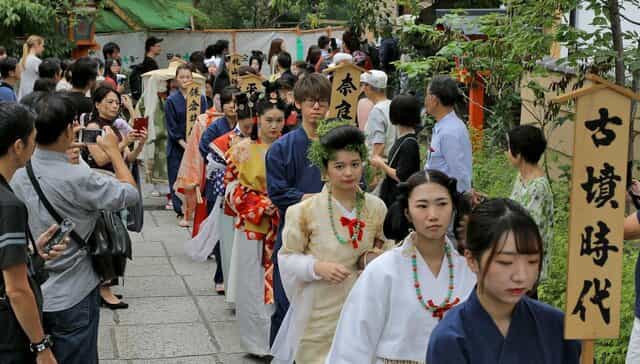
“Comb Festival”(2019) Yasui Konpiragu Shrine is a historic shrine founded by Fujiwara Kamatari during the era of the 38th Emperor Tenji, and began as a shrine to pray for the prosperity of his family and descendants. It has a legend related to Emperor Sutoku and his favorite consort, Awa Naishi, and is especially worshiped as a shrine that cuts off bad relationships and forges good ones. It is also known as Kyoto's only ``Konpira-san'' as it has blessings for maritime safety and traffic safety. Nowadays, many worshipers visit this shrine as a place to pray for marriage and gifts. 70 Shimobentencho, Higashiyama Ward, Kyoto City, Kyoto PrefectureGoogleMap You can visit the shrine all day long. JR/KintetsuFrom JR Shinkansen, Tokaido Main Line, Kintetsu "Kyoto Station"Take city bus 206 bound for Kitaoji Bus Terminal, get off at Higashiyama Yasui, and walk south for 1 minute.Keihan Railway/Hankyu Railway10 minutes walk from Keihan Main Line "Gion Shijo" station15 minutes walk from Kawaramachi Station on the Hankyu Kyoto Line Official website Instagram Facebook LINE X(Twitter) Youtube 情報提供:京都新聞 技術提供:Stroly (c)The Kyoto Shimbun Co.,Ltd. All rights reserved.
Yamashina Canal
Tourist attractions
OpenThe Yamashina area is just one stop from Kyoto Station on the JR Biwako Line (Tokaido Line). It is part of the Lake Biwa Canal, which transports water from the rich Lake Biwa to Kyoto, and is commonly known as the "Yamashina Canal.'' It is a walking course with a promenade, and cherry blossoms are planted on both banks. The autumn leaves around the Lake Biwa canal boat "Shinomiya Funadamari" are spectacular. It is also close to Bishamondo Temple, a famous spot for autumn leaves in Yamashina. 48 Anju-Nakamizo-cho, Yamashina-ku, Kyoto-shi, Kyoto PrefectureGoogleMap Approximately 10 minutes walk from JR Yamashina Station, Keihan Keihan Yamashina Station, and Municipal Subway Yamashina Station Official website Instagram Facebook LINE X(Twitter) Youtube 情報提供:京都新聞 技術提供:Stroly (c)The Kyoto Shimbun Co.,Ltd. All rights reserved.
Shinkoin Temple
Tourist attractions
OpenHe is affectionately known as 'Kobo-san of Nishikamo.' Shingon sect. Founded in 1217 (Kenpo 5). The main statue of Kobo Daishi is said to be a self-carved wooden statue of Kukai (Kobo Daishi) when he was 42 years old, and is worshiped as a master to ward off evil spirits. There is a teahouse in the temple grounds where the late Edo period poet Otagaki Rengetsu lived in seclusion. Furthermore, this temple is known as a temple for praying for warding off evil spirits and eye diseases. On July 21st and Doyo Ushi Day every year, Kiuri blessings are held to ward off various diseases.Built: 1217 (Kenpo 5) 120 Nishikamo Jinkoincho, Kita-ku, Kyoto 603-8836GoogleMap Official website Instagram Facebook LINE X(Twitter) Youtube 情報提供:京都新聞 技術提供:Stroly (c)The Kyoto Shimbun Co.,Ltd. All rights reserved.
Kurama-dera Temple
Tourist attractions
OpenThe head temple of Kurama Kōkyo, it was founded in the first year of Hōki (770) by the high disciple of Master Ganjin, Ganchō Shōnin, who established a grass hut and enshrined Bishamonten. The temple is associated with the legend of Ushiwakamaru (Minamoto no Yoshitsune), who met a tengu at the site of the Okunoin. There are several historical landmarks related to Ushiwakamaru, including the Tree Root Path, the Height Comparison Stone, and the Breathing Water. The view of Mount Hiei from the main hall is magnificent. In the Reihōden (Treasury Hall), visitors can view the National Treasure statues of Bishamonten Triad and items excavated from the Kyōzuka (sacred burial mound). In spring, the Uzu-zakura (spiral cherry blossoms) bloom beautifully. 1074 Kuramahonmachi, Sakyo Ward, Kyoto City, Kyoto PrefectureGoogleMap 9:00 am to 4:00 pm Aizan Fee: 500 yenCable Donation: Adults - 200 yen (one way), Children (elementary school age and below) - 100 yen (one way) □ Keihan Railway○End station: From Demachiyanagi Station, take the Eizan Railway to "Kurama Station" (30 minutes)□ Hankyu Railway○Get off at Kawaramachi Station, cross the Shijo Bridge, and from Keihan Railway "Gion-Shijo Station", take the train to the end station, Demachiyanagi Station. From there, take the Eizan Railway to Kurama Station.□ Subway○Get off at Sanjo-Keihan Station on the Tozai Line, then take the Keihan Railway from "Sanjo Station" to "Demachiyanagi Station," and from there, take the Eizan Railway to Kurama Station.○Alternatively, from Kyoto Station, take the Karasuma Line to Kokusai Kaikan Station, then transfer to the Kyoto Bus heading to Kurama Onsen and get off at the Kurama stop (25 minutes).□ From JR Kyoto Station by train○Take the JR Nara Line and get off at Tofukuji Station. From there, take the Keihan Railway from Tofukuji Station to Demachiyanagi Station, and then transfer to the Eizan Railway to Kurama Station.○Alternatively, from Kyoto Station, take the Karasuma Line to Kokusai Kaikan Station, then transfer to the Kyoto Bus heading to Kurama Onsen and get off at the Kurama stop (25 minutes).□ From JR Kyoto Station by bus○Take the Kyoto Bus No. 17 (heading to Ohara) and get off at Demachiyanagi Station, then transfer to the Eizan Railway to Kurama Station.○Alternatively, take the Kyoto City Bus No. 4 (heading to Kamigamo Shrine), get off at Demachiyanagi Station (30 minutes), and then transfer to the Eizan Railway to Kurama Station. Official website Instagram Facebook LINE X(Twitter) Youtube 情報提供:京都新聞 技術提供:Stroly (c)The Kyoto Shimbun Co.,Ltd. All rights reserved.
Kajū-ji Temple
Tourist attractions
OpenYou can enjoy the autumn leaves leisurely throughout the vast grounds. The garden, with Mt. Dainichi in the Higashiyama Mountain Range in the background, is decorated with seasonal plants, each with its own beautiful atmosphere. There is Himuroike Pond, which is approximately 6,600 square meters in size, and is also known as a famous spot for lily pads and water lilies. 27-6 Niodocho, Kanshuji, Yamashina Ward, Kyoto City, Kyoto PrefectureGoogleMap 9:00-16:30 (Reception ends at 16:00) Adults 500 yen Get off at Kyoto Municipal Subway "Ono" station, about 6 minutes walk Official website Instagram Facebook LINE X(Twitter) Youtube 情報提供:京都新聞 技術提供:Stroly (c)The Kyoto Shimbun Co.,Ltd. All rights reserved.
GoogleMap Official website Instagram Facebook LINE X(Twitter) Youtube 情報提供:京都新聞 技術提供:Stroly (c)The Kyoto Shimbun Co.,Ltd. All rights reserved.
Maruyama Park
Tourist attractions
OpenThe Gion Weeping Cherry Blossoms, a symbol of Maruyama Park, are located in the center of Maruyama Park and are commonly known as the Gion Night Cherry Blossoms. The official name is "Single White Higan Shidarezakura," and the current second-generation Gion Weeping Cherry Blossom was cultivated from the seeds of the first generation cherry tree by the 15th generation Mr. Toemon Sano in 1928. It was planted in its current location in 1949, and has a beautiful appearance with a height of 12 m, a trunk circumference of 2.8 m, and a branch span of 10 m. Maruyama Park, where you can easily take a stroll, is famous as a scenic spot, and has a long history as a place where people gather for entertainment. Maruyama-cho, Higashiyama-ku, Kyoto PrefectureGoogleMap Approximately 10 minutes walk from Keihan "Gion Shijo" stationApproximately 14 minutes walk from Hankyu Kawaramachi StationApproximately 15 minutes walk from Higashiyama subway station Official website Instagram Facebook LINE X(Twitter) Youtube 情報提供:京都新聞 技術提供:Stroly (c)The Kyoto Shimbun Co.,Ltd. All rights reserved.
Ninna-ji Temple
Tourist attractions
OpenWhen you step into the Niomon gate (one of Kyoto's three main gates), which faces a road that is rare in Kyoto, you will find the vast temple grounds including the national treasure Kondo, as well as important cultural properties such as the Five-storied Pagoda, Mieido, and Kannondo. There are also ``Ryoko-tei'' and ``Hito-tei'' inside the palace. Due to its close ties to the imperial family and aristocracy, it is characterized by a palace-style building known as the ``Ninnaji Palace.'' 33 Omuroouchi, Ukyo Ward, Kyoto City, Kyoto PrefectureGoogleMap 9:00~17:00 Adult 800 yenFree for high school students and under Get off at Keifuku train "Omuro Ninnaji", about 3 minutes walk Official website Instagram Facebook LINE X(Twitter) Youtube 情報提供:京都新聞 技術提供:Stroly (c)The Kyoto Shimbun Co.,Ltd. All rights reserved.
Myoshinji Temple
Tourist attractions
OpenOne of the sub-temples of Myoshin-ji Temple. Of the more than 40 sub-temples, only three, including this one, are open for viewing all year round. It is said to have been built by Shigemichi, the governor of Hatano Izumo, about 600 years ago. The highlight is two gardens: one is a dry landscape garden created by Motonobu Kano in the Muromachi period, and the other is a remnant garden created by Kinsaku Nakane, who also created the famous Showa garden, Jonan Gyurakusuien. Koen. You can enjoy the autumn leaves at Yokaen. 35 Myoshinji-cho, Hanazono, Ukyo-ku, Kyoto-shi, Kyoto PrefectureGoogleMap 9:00-17:00 (Reception closed)*No closures General 600 yen (including high school students)Elementary and junior high school students: 300 yen (Free for children under elementary school age, but only if accompanied by a guardian) About 7 minutes walk from Hanazono Station on the JR Sanin (Sagano) Line (bound for Kameoka/Fukuchiyama)Transfer to Randen at Kamikonotsuji Station and get off at Myoshinji Station bound for Kitano Hakubaicho, about a 10-minute walk Official website Instagram Facebook LINE X(Twitter) Youtube 情報提供:京都新聞 技術提供:Stroly (c)The Kyoto Shimbun Co.,Ltd. All rights reserved.
Tenryu-ji Temple
Tourist attractions
OpenThe Chisenkaiyu-style Sogenchi Garden, which features Arashiyama, Kameyama, and Kokurayama as a backdrop, is the first National Historic Site/Special Place of Scenic Beauty, and the oldest remaining structure among the strolling-style gardens. That's what it means. The garden was created by Muso Kokushi, a Zen monk from the Kamakura to Muromachi period who is said to have been the first to give Japanese gardens a deep sense of thought, and shows off the beauty of the four seasons. The gates open at 7:30 a.m. from November 16th to December 1st, and you can leisurely visit the garden. 68 Aonobabacho, Saga Tenryuji Temple, Ukyo Ward, Kyoto City, Kyoto PrefectureGoogleMap 8:30-17:00 (Reception ends at 16:50)《Special Early Morning Visit》GardenPeriod: 2024/11/16 (Sat) - 12/1 (Sun)Time: 7:30~ (Garden reception only, North gate reception starts from 8:30am) Gardens (Sogen Pond, Hyakkaen)・High school students and above: 500 yen・Elementary and junior high school students: 300 yen・Preschoolers: FreeHalls(Great Hojo, Shoin, Tahoden)・Garden 300 yen added to the garden worship fee Separate) Immediately after getting off at Arashiyama Station on the Keifuku Electric Railway Arashiyama Line13 minutes walk from JR Sagano Line "Saga Arashiyama" station15 minutes walk from Hankyu Railway Arashiyama Station Official website Instagram Facebook LINE X(Twitter) Youtube 情報提供:京都新聞 技術提供:Stroly (c)The Kyoto Shimbun Co.,Ltd. All rights reserved.
Ryōan-ji Temple
Tourist attractions
OpenThe Myoshinji school of the Rinzai sect was converted into a Zen temple by Katsumoto Hosokawa in 1450 from a villa of the Tokudaiji family as Myoshinji. The Hojo Garden (Historical Site and Special Scenic Spot), famous for its rock garden, is a dry landscape garden surrounded on three sides by Tsukiji walls, and is also known as the ""Tiger Pup's Garden.'' A famous garden with 15 stones arranged on white sand. In 1994, it was registered as a World Heritage Site as a ""cultural property of ancient Kyoto. 13, Ryoanji Goryo no Shitamachi, Ukyo Ward, Kyoto City, Kyoto PrefectureGoogleMap March 1st - November 30th: 8:00 - 17:00December 1st to the end of February: 8:30 to 16:30 Adults 600 yenHigh school students 500 yenElementary and junior high school students 300 yen Keifuku Electric Railway, get off at Ryoanji Station, 7 minutes walk Official website Instagram Facebook LINE X(Twitter) Youtube 情報提供:京都新聞 技術提供:Stroly (c)The Kyoto Shimbun Co.,Ltd. All rights reserved.
Located halfway up Kyoto's Arashiyama district, Horin-ji Temple is said to have been founded in 713 by the monk Gyoki at the request of the emperor. It's an ancient temple with a long history. It's said that Kobo Daishi's disciple Dosho later enshrined Kokuzo Bosatsu and renamed the temple Horin-ji. The principal image, Kokuzo Bosatsu, is worshipped as the guardian deity of wisdom, good fortune, and artistic achievement, as well as those born in the years of the Ox and Tiger. Stone statues of the Ox and Tiger can be found within the temple grounds. The temple is also famous for the "Jusan Mairi" (a custom in which boys and girls aged 13 visit the temple to pray for wisdom and good fortune), and is a popular tourist destination in Arashiyama, with its beautiful spring greenery and autumn foliage. 〒616-0006 Arashiyama Kokuzo-cho Ukyo-ku Kyoto-cityGoogleMap Official website Instagram Facebook LINE X(Twitter) Youtube 情報提供:京都新聞 技術提供:Stroly (c)The Kyoto Shimbun Co.,Ltd. All rights reserved.
Nisonin Temple
Tourist attractions
OpenThe wide, gentle approach path that leads to the main hall for about 200 meters is called "Momiji no Baba.'' The scenery of autumn leaves near the stone steps leading to the shrine is featured in tourist posters. The maple leaves of Mt. Ogura, which were written about in waka poems during the Heian period, are still beautiful today. 27 Chogamicho, Saga Nisonin Monzen, Ukyo Ward, Kyoto City, Kyoto PrefectureGoogleMap 9:00-16:30 (Reception closed) Adults (junior high school students and above): 500 yenChildren (elementary school students and younger): Free 15 minutes walk from Arashiyama Station on the Keifuku Arashiyama Main Line19 minutes walk from Saga-Arashiyama Station on the JR Sanin Main Line Official website Instagram Facebook LINE X(Twitter) Youtube 情報提供:京都新聞 技術提供:Stroly (c)The Kyoto Shimbun Co.,Ltd. All rights reserved.
Daikakuji Temple, Osawa Pond
Tourist attractions
OpenThe autumn leaves shine in the elegant appearance of Emperor Saga's villa, which was converted into a temple. Osawa Pond, which stretches to the east of the temple grounds, is said to have been used by aristocrats to enjoy boating during the Heian period. It is surrounded by red maple trees, and the reflection on the water's surface is beautiful. Osawaike Illumination illuminates a vast area with a fantastic, soft light. “Osawa Pond Light Up” will be held from November 15th to December 1st. Open day and night, from 5:30pm to 8:30pm (reception closes at 8pm). Adults 900 yen, elementary, junior high and high school students 500 yen 4, Saga Osawacho, Ukyo Ward, Kyoto City, Kyoto PrefectureGoogleMap 9:00 a.m. - 5:00 p.m. (Registration closes at 4:30 p.m.) Hall area: 500 yen for adults, 300 yen for elementary, junior high and high school students;Osawaike area: 300 yen for adults, 100 yen for elementary, junior high and high school students Immediately after getting off at Kyoto City Bus/Kyoto Bus "Daikakuji"/About 20 minutes walk from JR "Saga Arashiyama" Station Official website Instagram Facebook LINE X(Twitter) Youtube 情報提供:京都新聞 技術提供:Stroly (c)The Kyoto Shimbun Co.,Ltd. All rights reserved.
Jōjakkō-ji Temple
Tourist attractions
OpenAutumn leaves:2007 shooting Ogurayama is located on the north bank (left bank) of the Katsura River, facing Arashiyama. Jojakko-ji Temple stretches from the foot of Mt. Ogura to the middle of the mountain, and the entire precincts are colored with autumn leaves. Old maple trees grow thick on both sides of the stone steps leading up to the main hall. The autumn leaves around Tahoto are especially not to be missed. The scenery overlooking Sagano below is also beautiful. 3 Kokuracho, Saga Kokurayama, Ukyo Ward, Kyoto City, Kyoto PrefectureGoogleMap 9:00-17:00 (Reception ends at 16:30) 500 yen Get off at JR "Saga Arashiyama" station and walk for about 20 minutes / Get off at Randen "Arashiyama" station and walk for about 25 minutes / From JR "Kyoto" station or Keihan "Sanjo" station get off at Kyoto city bus "Saga Shogakko-mae" and walk about 15 minutes minutes Official website Instagram Facebook LINE X(Twitter) Youtube 情報提供:京都新聞 技術提供:Stroly (c)The Kyoto Shimbun Co.,Ltd. All rights reserved.
Hōkongō-in Temple
Tourist attractions
OpenHokongoin Temple, located in Kyoto’s Ukyo Ward, is the 13th temple on the Kansai Flower Temples pilgrimage, celebrated for its seasonal flowers. Established in the Heian period, it was initially a royal villa before being converted into a temple. The temple’s lotus blossoms are especially popular in summer, attracting numerous visitors. The grounds also feature important statues and historic buildings, offering a serene glimpse into Kyoto’s traditional atmosphere. 49 Hanazono Oginocho, Ukyo Ward, Kyoto City, Kyoto PrefectureGoogleMap By trainExit Hanazono Station on the JR Sagano San'in Line and walk west along Marutamachi Street for about 5 minutes.By busKyoto City Bus 91/93, get off at "Hanazono Oginocho"Kyoto Bus 62, 63, 65, 66, get off at "Hanazono Oginocho" Official website Instagram Facebook LINE X(Twitter) Youtube 情報提供:京都新聞 技術提供:Stroly (c)The Kyoto Shimbun Co.,Ltd. All rights reserved.
Jingoji Temple
Tourist attractions
OpenAutumn leaves:2021 shooting Jingoji, an ancient temple of the Shingon sect of Buddhism, is located halfway up Mt. Takao, far from the city center, and you can enjoy the autumn leaves earlier than in Kyoto. The shrine is known as a famous spot for autumn leaves, with maple trees planted throughout the ancient stone steps leading up from the Kiyotaki River and the vast grounds past the Sanmon Gate. The temple bell, a national treasure, is counted as one of Japan's top three bells. 5, Umegahata Takaocho, Ukyo Ward, Kyoto City, Kyoto PrefectureGoogleMap 9:00 a.m. - 4:00 p.m. Adults/junior high school students and older: 800 yenElementary school students: 400 yen From JR Kyoto Station, take the JR bus bound for Toganoo and get off at Takao, and walk for about 20 minutes. / From Shijo Karasuma, take the Kyoto City Bus and get off at Takao, and walk about 20 minutes. Official website Instagram Facebook LINE X(Twitter) Youtube 情報提供:京都新聞 技術提供:Stroly (c)The Kyoto Shimbun Co.,Ltd. All rights reserved.
Jounan shrine
Tourist attractions
OpenPrevious years (plum blossoms) The guardian shrine of Toba Imperial Villa, where the national culture flourished. The autumn leaves at Rakusuien, a sacred garden with a dynasty romance, are gorgeous. The red of the autumn leaves stands out against the green of the moss, and is also vividly reflected on the surface of the pond. You can also enjoy autumn-blooming camellias. The garden was created by Kinsaku Nakane, who was praised as the "Kobori Enshu of the Showa era. 7, Nakajima Toba Rikyumachi, Fushimi Ward, Kyoto City, Kyoto PrefectureGoogleMap 9:00 a.m. - 4:30 p.m. (Registration closes at 4:00 p.m.) It depends on the time. Get off at Kyoto Municipal Subway "Takeda" station, 15 minutes walk Official website Instagram Facebook LINE X(Twitter) Youtube 情報提供:京都新聞 技術提供:Stroly (c)The Kyoto Shimbun Co.,Ltd. All rights reserved.
Hozu Keikoku Gorge
Tourist attractions
Open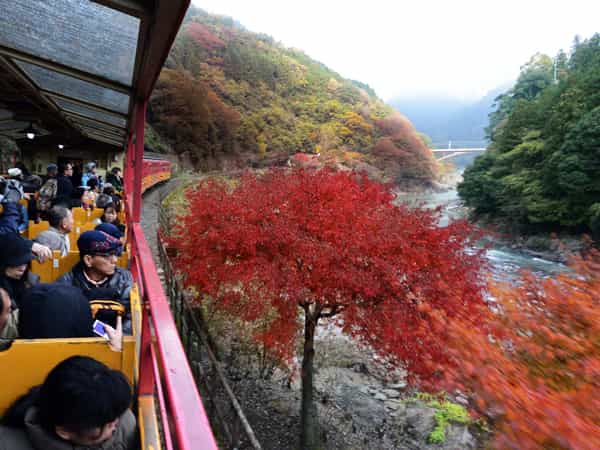
Autumn leaves photographed in 2013 Hozu Gorge, which runs from the Hozu Bridge area in Kameoka City to Arashiyama and Togetsukyo Bridge in Kyoto City, is known as one of the most beautiful valleys in Kyoto. You can enjoy the fall foliage in the valley on the Sagano Scenic Railway's Sagano Trolley train, which travels 7.3km along the valley in about 25 minutes, or on the Hozugawa Boat Ride run by the Hozugawa Boat Association, which takes you down the 16km mountain stream in about two hours. During the illuminations along the trolley train, you can enjoy around 1,000 maple trees that stand out in the darkness of the night. The area along the Sagano Trolley train is illuminated. Every day from October 14th to December 29th, excluding holidays on December 6th, 13th, 20th, and 27th. There will also be special train services during the period. From 4:30pm until the last train. Only the ride fee (no light-up fee). Hozuyama 2, Hozucho, Kameoka City, Kyoto PrefectureGoogleMap A fee is required for the Sagano Trolley train (880 yen for adults, 440 yen for children) and the Hozu River Boat Ride (6,000 yen for adults, 4,500 yen for infants to elementary school students). The trolley train runs from Torokko Saga Station, near JR Saga-Arashiyama Station, to Torokko Kameoka Station, near JR Umahori Station. The boarding point for Hozugawa Kudari is near JR Kameoka Station. Approximately 10 minutes walk from JR Kameoka Station to the boarding point, approximately 15 minutes by Keihan Kyoto Kotsu Bus from Torokko Kameoka Station. Official website Instagram Facebook LINE X(Twitter) Youtube 情報提供:京都新聞 技術提供:Stroly (c)The Kyoto Shimbun Co.,Ltd. All rights reserved.
Takao and San'o area
Tourist attractions
OpenThe Takao and San'o area in Kyoto City is a nature-rich tourist destination, known for its beautiful mountains and historical temples. In Takao, you can visit the ancient temples such as Kōyōzan Jingoji and Seimei-ji, where you can enjoy the changing scenery of the four seasons. The autumn foliage and spring cherry blossoms are particularly beautiful, making it a perfect spot for a leisurely walk, immersing yourself in both nature and history. Additionally, in San'o, you can explore attractions like the San'o Falls and the San'o Ancient Path, offering a refreshing experience in nature. Takao, Ukyō Ward, Kyoto City, Kyoto PrefectureGoogleMap Official website Instagram Facebook LINE X(Twitter) Youtube 情報提供:京都新聞 技術提供:Stroly (c)The Kyoto Shimbun Co.,Ltd. All rights reserved.
Yoshimine-dera Temple
Tourist attractions
OpenCrimson, vermilion, yellow, orange... Not only the temple grounds but also the mountain opposite is covered in various types of maples. The more you walk around in front of the main hall and the stone steps to Amida-do, the more vivid the autumn leaves will become. If you go up to the inner temple in the precincts, you can see a panoramic view of Kyoto city. It is the 20th temple of the Saigoku Sanjusansho Kannon Sacred Site, and is famous for the Yuryu no Matsu, a nationally designated natural monument that is over 600 years old and has a total length of 37 meters. 1372 Oharano Koshio-cho, Nishikyo-ku, Kyoto-shi, Kyoto PrefectureGoogleMap 8:00 a.m. on Saturdays, Sundays, and holidays; 8:30 a.m. to 5:00 p.m. on weekdays (reception ends at 4:45 p.m.) Adults 500 yen, high school students 300 yen, elementary and junior high school students 200 yen Approximately 20 minutes by taxi from Hankyu/Nagaoka-Tenjin Station. Approximately 20 minutes by taxi from JR Mukomachi Station. From JR Mukomachi Station or Hankyu Higashi Muko Station, take the Hankyu bus and get off at Yoshimineji, then walk for about 10 minutes. Official website Instagram Facebook LINE X(Twitter) Youtube 情報提供:京都新聞 技術提供:Stroly (c)The Kyoto Shimbun Co.,Ltd. All rights reserved.
Daigoji Temple
Tourist attractions
OpenIn early November, Mt. Daigo begins to change color little by little from the summit. From mid-December to early December, it becomes the true beauty of Manzan Kinshu. The Sanpoin Garden is a nationally designated special historic site and special scenic spot, and is said to have been designed by Toyotomi Hideyoshi himself for the ``Daigo Cherry Blossom Viewing.'' It conveys the gorgeous atmosphere of the Momoyama period. From November 22nd to December 1st, 6:00pm to 8:50pm (Registration closes at 8:10pm). Autumn night visit to the temple: 1,000 yen (day and night alternate) 22 Daigo Higashioji-cho, Fushimi-ku, Kyoto-shi, Kyoto PrefectureGoogleMap SummerMarch 1st - 1st Sunday of December9am - 5pmWinter periodThe day after the first Sunday in December to the last day of February9:00 a.m. to 4:30 p.m.*Reception closes 30 minutes before closing time(Visit times may change during the spring period) It depends on the time. For details, seeOfficial HPPlease see. 5 minutes walk from Daigo Station on the Tozai Subway Line. Official website Instagram Facebook LINE X(Twitter) Youtube 情報提供:京都新聞 技術提供:Stroly (c)The Kyoto Shimbun Co.,Ltd. All rights reserved.
Kyoto Prefectural Uji Park
Tourist attractions
OpenUji Park includes Tonoshima Island in the middle of the Uji River and Yorimichi Park on the left bank, where various events are held, such as the cherry blossom festival in the spring and the moon-viewing tea ceremony in the fall. It is also known as the setting for Murasaki Shikibu's "The Tale of Genji,'' and construction of walking trails and projects related to historical roads are underway. Japan's largest stone pagoda rises from Uji Park, and you can feel its historical background. Uji, Uji City, Kyoto PrefectureGoogleMap 10 minutes walk from JR and Keihan Uji Station Official website Instagram Facebook LINE X(Twitter) Youtube 情報提供:京都新聞 技術提供:Stroly (c)The Kyoto Shimbun Co.,Ltd. All rights reserved.
Yodogawa River Park Baddy District
Tourist attractions
OpenThe Yodogawa Riverside Park’s Sewaritei area, located in Yawata City, Kyoto, is renowned for its 1.4-kilometer cherry blossom-lined path, especially popular in spring when many visitors come to experience the beautiful "Sewari Sakura" cherry blossom tunnel. The park also offers a designated barbecue area and various sports facilities, with seasonal events held throughout the year. The "Sakura Deai-kan" center, which opened in 2017, includes an observation tower with stunning views and serves as a rest area for cyclists and tourists alike. Yawata Zaioji Temple, Yawata City, Kyoto PrefectureGoogleMap About 10 minutes walk from Iwashimizu Hachimangu Station on the Keihan Railway Official website Instagram Facebook LINE X(Twitter) Youtube 情報提供:京都新聞 技術提供:Stroly (c)The Kyoto Shimbun Co.,Ltd. All rights reserved.
Ishimizu Hachimangu Shrine
Tourist attractions
OpenIwashimizu Hachimangu Shrine (Iwashimizu Hachimangu Shrine) was built on Otokoyama in the first year of Jogan (859), after the sacred spirit was transferred from Usa Hachimangu Shrine in Buzen Province (present-day Oita Prefecture) during the era of Emperor Seiwa. After quelling the rebellion of Taira no Masakado and Fujiwara Sumitomo, it received deep reverence from the imperial family as a shrine for the protection of the nation. In the early Meiji period, it was listed as a Kanpei Taisha and was known as Iwashimizu Hachimangu Shrine. It is revered as the guardian deity of the Genji clan, and Minamoto no Yoshiie also celebrated his New Year's festival here, and is worshiped as a god of warding off evil and ensuring victory. 30 Yawata Takabo, Yawata City, Kyoto PrefectureGoogleMap Minamisomon gate opening/closing time: 6:00-18:00Awarding office (including Goshuin): 9:00-16:00Prayer reception: 9:00-16:00 Get off at Keihan Railway “Iwashimizu Hachimangu Station”Get off at “Hachimanguchi Station” on the approach cableway and get off at “Hachimangu Yamagami Station” and walk 5 minutes Official website Instagram Facebook LINE X(Twitter) Youtube 情報提供:京都新聞 技術提供:Stroly (c)The Kyoto Shimbun Co.,Ltd. All rights reserved.
Muko Shrine
Tourist attractions
OpenMuko Shrine, located in Muko City, Kyoto Prefecture, is an ancient shrine founded in the Nara period. The main hall, built in the Muromachi period architectural style "Sangen-sha Nagare Zukuri," is a designated Important Cultural Property of Japan. In spring, the Sakura Festival is held with prayer ceremonies, flower arrangements, drum performances, and nighttime torch lighting to enjoy the cherry blossoms. The May festivals, Shinko-sai and Kanko-sai, feature a sacred procession through the town. Other traditional events include the July purification ritual with the "Chinowa Kuguri" for good health and the "Ohitaki Festival" in October to pray for well-being. 65 Kitayama, Muko-cho, Muko-shi, KyotoGoogleMap 10 minutes walk from Hankyu Kyoto Line "Nishimukou Station" Official website Instagram Facebook LINE X(Twitter) Youtube 情報提供:京都新聞 技術提供:Stroly (c)The Kyoto Shimbun Co.,Ltd. All rights reserved.
Nagaoka Tenmangu Shrine
Tourist attractions
OpenThis shrine was founded in Nagaoka, where Sugawara no Michizane played, and was rebuilt after being destroyed by fire during the Onin War (1467). Hachijoga Pond was built by Prince Hachijonomiya Tomotada, and Kirishima azaleas, which are over 100 years old, were planted there. The company land used to be over 100,000 tsubo, but with the Meiji Restoration it has now been reduced to just over 20,000 tsubo. The main shrine building (goshaden) was relocated from Heian Shrine, the worship hall (haiden) was expanded and renovated, and the main shrine and prayer hall are designated as tangible cultural properties. 2-15-7 Tenjin, Nagaokakyo City, Kyoto PrefectureGoogleMap Freedom within the precincts 20 minutes walk west from the west exit of Nagaokakyo Station (rapid stop) on the JR Tokaido Line (taxi and bus available)10 minute walk west from the west exit of Nagaokakyo Station (limited express stop) on the Hankyu Kyoto Line (taxi and bus) Yes) Official website Instagram Facebook LINE X(Twitter) Youtube 情報提供:京都新聞 技術提供:Stroly (c)The Kyoto Shimbun Co.,Ltd. All rights reserved.
Byōdō-in Temple
Tourist attractions
OpenByodoin Temple is a symbol of aristocratic culture from Japan's Heian period. Founded in 1052 by Fujiwara no Yorimichi, the temple's Amida Hall, known as the Phoenix Hall, was constructed the following year to represent the Pure Land paradise. The hall, with its wings resembling a phoenix in flight, is especially stunning in autumn when its reflection blends with vibrant autumn leaves on the pond’s surface. Inside, visitors can see the National Treasure Amida Nyorai seated statue, while the adjacent Byodoin Museum Hoshokan displays valuable temple treasures. Byodoin is a must-visit spot to experience Japan's rich history and beauty. 116 Uji Renge, Uji City, Kyoto PrefectureGoogleMap Garden: 8:30-17:30 (Reception closed)Phoenix Hall interior viewing: 9:30-16:10 (limited to 50 people each time)*Reception hours: 9:00~ Closes as soon as supplies run out on a first-come, first-served basisByodoin Museum Hoshokan: 9:30-17:00 (Registration closes: 16:45)Museum shop: 9:00-17:00Sabo Fujihana: 10:00-16:30 (last order 16:00)Collection office: 9:00-17:00*The handling of entries and notes on the ledger differs depending on the day. [Admission fee]Garden + Byodoin Museum Hoshokan・Adult: 700 yen (individual), 600 yen (group of 25 or more)・Junior high and high school students: 400 yen (individual), 300 yen (groups of 25 or more)・Elementary school students: 300 yen (individual), 200 yen (groups of 25 or more)Tour inside the Phoenix Hall・300 yen JR/Keihan "Uji Station" Official website Instagram Facebook LINE X(Twitter) Youtube 情報提供:京都新聞 技術提供:Stroly (c)The Kyoto Shimbun Co.,Ltd. All rights reserved.
Hokyoji Temple
Tourist attractions
Open“Doll Memorial Festival”(Photo taken in 2010) Hokyo-ji Temple is a monzeki temple of the Rinzai sect, and its mountain name is "Nishiyama'' and it has the name "Momo Gosho.'' The temple was founded by Karingu Egon Zenni, the daughter of Emperor Kogon, who gave it the name "Hokyoji''. The principal image of the temple, Sho Kanzeon Bodhisattva, is a rare statue that held a small circular mirror in its hand when it was caught in a fishing net in Futamiura, Ise. Hokyo-ji Temple inherited the lanterns of Keiai-ji Temple, which is ranked first among the five Ama temples, and has a deep connection with the imperial family, with successive princesses serving as chief priests. It is also known as the "Doll Temple'' and houses many dolls given to princesses. It is widely popular and is open to the public in spring and fall, as well as a doll memorial service held on October 14th every year. 547 Momodo-cho, Kamigyo-ku, Kyoto-shi, Kyoto PrefectureGoogleMap From Kyoto Station, take city bus No. 9 and get off at Horikawa Teranouchi bus stop, then walk 1 minute.From Sanjo Keihan Station/Hankyu Karasuma Station, take city bus No. 12 and get off at Horikawa Teranouchi bus stop, 1 minute walk.15 minutes walk from Kyoto Municipal Subway "Imadegawa Station" or "Kuramaguchi Station" Official website Instagram Facebook LINE X(Twitter) Youtube 情報提供:京都新聞 技術提供:Stroly (c)The Kyoto Shimbun Co.,Ltd. All rights reserved.
Shinnyo-do Temple
Tourist attractions
OpenShinnyo-do (officially named Reishozan Shinsho Gokurakuji) is a Tendai Buddhist temple founded in 984. Known for its main deity, the "Nodding Amida Buddha" who especially aids women, it has attracted prayers from countless people. The spacious grounds are renowned for seasonal beauty, including autumn foliage, cherry blossoms, and green maples. It also houses many cultural treasures, along with a Zen garden and Edo-era reconstructions like the main hall and three-story pagoda. 82 Shinnyocho, Jodoji, Sakyo Ward, Kyoto City, Kyoto PrefectureGoogleMap 9:00-16:00 (Reception until 15:45)*Visiting may be suspended or restricted due to events, etc. It varies depending on the time. Please check the official website. The route from the nearest Shinnyodo-mae bus stop is steeply uphill, soIt is convenient to come from the "Kinrinshako-mae" bus stop. Official website Instagram Facebook LINE X(Twitter) Youtube 情報提供:京都新聞 技術提供:Stroly (c)The Kyoto Shimbun Co.,Ltd. All rights reserved.
Kyoto Ebisu Shrine
Tourist attractions
Open(2002)" src="https://prod-strolycom-map-assets.s3.ap-northeast-1.amazonaws.com/3789681476/materials/3f60084b-cae8-487d-b028-d09990b49e47.jpg"/> “Business Card Appreciation Festival”(2002) Kyoto Ebisu Shrine is popularly known as one of Japan's three major Ebisu shrines, and is known as "Ebessan'', the god of business prosperity. It was built in 1202 by Eisai Zenji as the guardian of Kenninji Temple, and its history spans approximately 800 years. Bamboo, which has become popular as a symbol of business prosperity, originally came from the form of a talisman unique to this shrine. Bamboo is believed to be a symbol of prosperous family fortune and business because of its characteristics of "growing straight,'' "hard to break,'' and "always green.'' Ebisu Shrine, 125 Komatsucho, Higashiyama Ward, Kyoto City, Kyoto PrefectureGoogleMap Keihan Railway: “Gion Shijo Station”Hankyu Railway: “Kawaramachi Station”JR/Kintetsu: "Kyoto Station" - "Kawaramachi Matsubara Bus Stop"City bus: “Shijo Keihan-mae bus stop” Official website Instagram Facebook LINE X(Twitter) Youtube 情報提供:京都新聞 技術提供:Stroly (c)The Kyoto Shimbun Co.,Ltd. All rights reserved.
Hokaiji Temple
Tourist attractions
OpenHokai-ji Temple is the family temple of the Hino family of the Fujiwara clan, and its principal image is Yakushi Nyorai. He is affectionately known as the "Hino Yakushi-san'' and is worshiped for his blessings such as safe childbirth and childbirth. In 1051, Hino Shiryo built Yakushi-do Hall, which contains a statue of Yakushi Nyorai engraved by Saicho himself. The statue of Amida Nyorai is a national treasure that represents the Pure Land of Paradise.It is a Buddha statue that conveys the influence of Pure Land thought and is also related to Shinran Shonin. 19 Hinonishidaido-cho, Fushimi-ku, Kyoto-shi, Kyoto Prefecture 601-1417GoogleMap April to September 9:00 to 17:00October to March 9:00 to 16:00 [National Treasure Amida-do Hall Admission Fee]Adult: 500 yenHigh school student: 400 yenJunior high/elementary school students: 200 yen Official website Instagram Facebook LINE X(Twitter) Youtube 情報提供:京都新聞 技術提供:Stroly (c)The Kyoto Shimbun Co.,Ltd. All rights reserved.
Shiramine Shrine
Tourist attractions
OpenLocated in Kamigyouku, Kyoto City, this shrine honors Emperor Sutoku and Emperor Junnin. Emperor Sutoku, born in 1119, faced exile and passed away in 1164. Emperor Junnin, born in 733, also died in exile in 765. Established in 1863 by Emperor Meiji, the shrine comforts their spirits. Emperor Sutoku is renowned for his waka poetry in Hyakunin Isshu. The shrine is revered as the deity of Kemari, an ancient courtly ball game, popular among athletes seeking blessings for skill and victory. Various charms and ema offerings reflect its significance in sports and cultural traditions. 261 Asukaimachi, Kamigyo-ku, Kyoto 602-0054GoogleMap 8:00〜17:00 City bus: Get off at “Horikawa Imadegawa”Subway: Get off at "Imadegawa Station" on the Karasuma Line Official website Instagram Facebook LINE X(Twitter) Youtube 情報提供:京都新聞 技術提供:Stroly (c)The Kyoto Shimbun Co.,Ltd. All rights reserved.
Located at the foot of Mount Tsukinowa in Higashiyama Ward, Kyoto City, Sennyu-ji Temple is the head temple of the Sennyu-ji school of Shingon Buddhism. It is also affectionately known as "Mitera" (Imperial Temple) and has long served as the family temple of the Imperial family. The temple grounds include the Reimeiden Hall, which enshrines the sacred tablets of successive emperors, creating an elegant temple space. The area is rich in natural colors, from the fresh greenery of spring to the colorful foliage of autumn, allowing you to spend some quiet time worshiping Buddha. 27 Sennyujiyamauchicho, Higashiyama Ward, Kyoto City, 605-0977GoogleMap March to November: 9:00-16:30 (gates close at 17:00) / December to February: 9:00-16:00 (gates close at 16:30) Admission to the temple: Adults 500 yen / Children (elementary and junior high school students) 300 yen. Special admission: Adults 500 yen (junior high school students and above). From Kyoto Station (Karasuma Exit), take city bus (208) and get off at Sennyujimichi bus stop, then walk for 15 minutes. From Tofukuji Station (Nara Line), walk for 20 minutes. Official website Instagram Facebook LINE X(Twitter) Youtube 情報提供:京都新聞 技術提供:Stroly (c)The Kyoto Shimbun Co.,Ltd. All rights reserved.
Kyoto Prefectural Office Old Main Building
Tourist attractions
OpenThe Old Main Building of the Kyoto Prefectural Office was built in 1904 (Meiji 37) as a brick Western-style building and is designated as an important cultural property of Japan. While the exterior is Western-style, the interior incorporates excellent Japanese craftsmanship, creating an atmosphere akin to a work of art. Currently, the building is open to the public on select days, where visitors can tour the former governor's office and the former assembly hall. In spring, the "Cherry Blossom Festival" is held, showcasing the beautiful cherry blossoms in the courtyard, and in autumn, the "Art Festival" takes place, drawing in visitors. Yabunocho, Kamigyo Ward, Kyoto City, Kyoto PrefectureGoogleMap Tuesday to Friday, and Saturday (1st, 3rd, and 5th weeks)From 10:00 AM to 5:00 PM, excluding public holidays and the New Year period.For groups of 10 or more, "advance reservations" are required for visits. Free. ●SubwayFrom Kyoto Station, take the Karasuma Line of the city subway and get off at Marutamachi Station.Alternatively, from Nijo Station, take the Tozai Line of the city subway, transfer at Karasuma Oike Station to the Karasuma Line, and get off at Marutamachi Station. It’s a 10-minute walk from there.●City BusFrom Sanjo Keihan, take Bus No. 10.From Keihan Shimmachi Marutamachi, take Bus No. 93, 202, or 204, and get off at Fuchomae. It’s a 5-minute walk from there. Official website Instagram Facebook LINE X(Twitter) Youtube 情報提供:京都新聞 技術提供:Stroly (c)The Kyoto Shimbun Co.,Ltd. All rights reserved.
Rokudō Chinno-ji Temple
Tourist attractions
OpenCommonly known as "Rokudō-san", this temple belongs to the Kennin-ji school of the Rinzai sect. It is said to have been founded by Keishun, the teacher of Kūkai (Kōbō Daishi), in 836 (Jōwa 3). The start of Kyoto’s Obon season is marked by the ringing of the Mukae-gane (Welcoming Bell) at this temple. In the past, the temple stood at the entrance to Toribeno, one of Kyoto’s ancient cremation grounds. Because of this, it came to be regarded as the boundary between this world and the afterlife, a place known as the "Rokudō no Tsuji" (Crossroads of the Six Realms). According to legends and classical literature such as the Konjaku Monogatari, it was believed that the sound of the bell guided ancestral spirits back to this world. Behind the main hall are two wells, known in legend as the portals used by Ono no Takamura to travel between this world and the underworld. In the Enma Hall, statues of both King Enma (the Lord of the Underworld) and Ono no Takamura are enshrined. Visitors are free to stroll the temple grounds, but entry to the halls—which contain culturally significant features such as the main image of Yakushi Nyorai (the Healing Buddha, a designated Important Cultural Property), the "Well to the Underworld", and paintings of hell—requires advance reservation. 595 Komatsucho, Higashiyama-ku, Kyoto City, Kyoto PrefectureGoogleMap Get off at "Kiyomizu-Gojo" or "Gion-Shijo" on the Keihan Railway, then walk for about 20 minutes. Get off at "Kiyomizu-michi" on the city bus, then walk for about 5 minutes. Official website Instagram Facebook LINE X(Twitter) Youtube 情報提供:京都新聞 技術提供:Stroly (c)The Kyoto Shimbun Co.,Ltd. All rights reserved.
Hirano Shrine
Tourist attractions
OpenRecords remain in the late Nara period, in the first year of Enryaku (782), and it was moved to its current location with the transfer of the capital to Heian in the 13th year of Enryaku (794). Initially, the precincts were about the same size as the Kyoto Imperial Palace, but it has now been reduced to a site of 200 meters square. During the Heian period, the status of the shrine rose and was awarded the highest divine rank. The existing main shrine is a nationally designated important cultural property and was built during the Kanei era. There are many shrines and historical buildings within the precincts. 1 Hiranomiyamotocho, Kita-ku, Kyoto-shi, Kyoto PrefectureGoogleMap JR "Kyoto Station" City bus [205][50] get off at "Kinugasa Gakko-mae" stop and walk north for 3 minutesKeifuku Electric Railway Kitano Line "Kitano Hakubaicho" Station 7 minutes walk northKeihan "Sanjo" Station City bus [10] get off at "Kitano Hakubaimachi" and walk north 7 minutes. City bus [15] get off at "Kinugasa Gakko-mae" and walk north 3 minutes.Hankyu Kyoto Line "Kawaramachi" Station City bus [205] system "Kinugasa School" 3 minutes walk northParking: Northeast corner of the east road (17 spaces) Official website Instagram Facebook LINE X(Twitter) Youtube 情報提供:京都新聞 技術提供:Stroly (c)The Kyoto Shimbun Co.,Ltd. All rights reserved.
Sanjusangendo Temple
Tourist attractions
OpenSanjusangendo Temple, officially known as Rengeo-in Temple, is a Tendai Buddhist temple located in Higashiyama Ward, Kyoto City. Its main hall, measuring approximately 120 meters, is one of the longest wooden buildings in Japan, and its name comes from the 33 spaces between its pillars. The hall is home to a total of 1,001 standing statues of the Thousand-Armed Kannon, a spectacular sight that dazzles visitors. A large seated statue of the Thousand-Armed Kannon is enshrined in the center, flanked by national treasure sculptures of the Twenty-Eight Deities and the Wind and Thunder Gods, creating a collection of masterpieces of Buddhist art. It is also a popular spot steeped in history and culture, hosting the traditional "Toshiya" (traditional Japanese archery) and Kyudo (Japanese archery) tournaments every New Year. 657 Sanjusangendo-mawaricho, Higashiyama-ku, Kyoto 605-0941 GoogleMap April 1st - November 15th: 8:30 AM - 5:00 PM November 16th - March 31st: 9:00 AM - 4:00 PM Adults: ¥600 (¥550) Junior and High School Students: ¥400 (¥350) Elementary School Students: ¥300 (¥250) *Prices in parentheses are for groups of 25 or more. Present your disability certificate or rehabilitation certificate to receive half-price admission for yourself and one accompanying person. Get off at the bus stop "Hakubutsukan Sanjusangendo-mae" From Kyoto Station, take city bus lines 100, 206, or 208 for approximately 10 minutes. Approximately a 7-minute walk from Exit 2 of Keihan Railway's Shichijo Station Official website Instagram Facebook LINE X(Twitter) Youtube 情報提供:京都新聞 技術提供:Stroly (c)The Kyoto Shimbun Co.,Ltd. All rights reserved.
Toji Temple
Tourist attractions
OpenToji Temple is the only remaining structure in Heiankyo, with a history of approximately 1,200 years, and was registered as a World Heritage Site in 1994. Emperor Saga entrusted the construction of To-ji to Kobo Daishi Kukai, who studied esoteric Buddhism in the Tang Dynasty, making it Japan's first esoteric Buddhist temple. Inside the temple, there is a vast temple area centered around Dainichi Nyorai, and tea is still served every day in the Mieido hall, just like when Kobo Daishi visited. 1 Kujo-cho, Minami-ku, Kyoto-shi, Kyoto PrefectureGoogleMap 5:00〜17:00 For those using JR15 minutes walk from Kyoto Station Hachijo Exit. (approx. 1.1km)For those using Kintetsu trains10 minutes walk from Toji Station. (approx. 0.6km)For those using Keihan RailwayPlease change to "Kintetsu Tanbabashi Station" at "Tanbabashi Station".10 minutes walk from Toji Station. (approx. 0.6km)For those using Hankyu RailwayGet off at Omiya Station and transfer to the bus.1 minute walk from Toji Higashimon-mae bus stop on city bus lines 18, 71, and 207. Official website Instagram Facebook LINE X(Twitter) Youtube 情報提供:京都新聞 技術提供:Stroly (c)The Kyoto Shimbun Co.,Ltd. All rights reserved.
Seiryo-ji Temple (Saga Shakado)
Tourist attractions
OpenSeiryo-ji Temple, also known as Saga Shakado, is a historic temple located in the Sagano area of Kyoto. Its principal image, a National Treasure Shaka Nyorai statue said to faithfully represent the Buddha’s appearance, attracts many visitors. The spacious grounds feature traditional buildings such as the main hall and a pagoda, and in spring, cherry blossoms add to the serene atmosphere. It is a wonderful place to experience the harmony of history and nature, especially when visiting the Arashiyama area. GoogleMap 9:00 AM – 4:00 PM Temple Grounds: Free admission Admission Fee: Adults: 500 yen Junior High & High School Students: 400 yen Elementary School Students: 300 yen Approx. 15-minute walk from JR Saga-Arashiyama Station Official website Instagram Facebook LINE X(Twitter) Youtube 情報提供:京都新聞 技術提供:Stroly (c)The Kyoto Shimbun Co.,Ltd. All rights reserved.
Obaku-san Manpuku-ji
Tourist attractions
OpenManpukuji Temple, located in Uji, Kyoto Prefecture, is the head temple of the Obaku sect of Buddhism. It was built in 1661 by Ingen Ryuki, a renowned monk from Fujian Province, China. It retains a strong Ming Dynasty architectural style, rare among Japanese Zen temples, and its main buildings and corridors, including the Tennoden Hall, Daibutsuden Hall, and Lecture Hall, exude a unique atmosphere. The temple grounds are neatly arranged, and visitors can enjoy the exotic scenery, including Chinese-style circular windows and decorations. The temple is also known for its fucha ryori (Chinese vegetarian cuisine). Its cultural assets of great historical value attract many worshippers. 34 Sanbanwari, Gokasho, Uji City, Kyoto Prefecture, 611-0011 GoogleMap 9:00 - 17:00 (reception closes at 16:30) Adults: 500 yen University and high school students: 500 yen Middle school students: 300 yen Elementary school students: 300 yen 5-minute walk from JR Nara Line Obaku Station 5-minute walk from Keihan Uji Line Obaku Station Official website Instagram Facebook LINE X(Twitter) Youtube 情報提供:京都新聞 技術提供:Stroly (c)The Kyoto Shimbun Co.,Ltd. All rights reserved.
Rozanji Temple, founded in 938, is the head temple of the Tendai Enjo sect of Buddhism. It is known as the place where Murasaki Shikibu, a female author of the Heian period, had her residence and wrote The Tale of Genji. The Genji Garden within the temple grounds is a beautiful garden decorated with moss and white sand, and the bellflowers are in full bloom from June to September. Seasonal events such as the Onihoraku, a Setsubun ritual to purify the dead, are also popular. As a prestigious temple with close ties to the Imperial family, it is a tranquil space that combines tourism, culture, and history. 〒602-0852 397 Kitanobecho, Teramachi-dori Hirokojiagaru, Kamigyo-ku, Kyoto City GoogleMap 9:00 AM - 4:00 PM Closed: January 1st and February 1st - 9th Adults: ¥500, Elementary and Junior High School Students: ¥400 Groups of 15 or more people are requested to contact us in advance. Kyoto City Bus: Get off at "Furitsu Idai Hospital Mae" bus stop, about 5 minutes Official website Instagram Facebook LINE X(Twitter) Youtube 情報提供:京都新聞 技術提供:Stroly (c)The Kyoto Shimbun Co.,Ltd. All rights reserved.
Agonshu Daibodaiji Temple
Tourist attractions
OpenAgonshu is a new Buddhist sect in Japan, emphasizing the teachings of Buddha's direct teachings on the method of attaining enlightenment. Its head temple, the Agonshu Sohonden, is located in Kitahanayama, Yamashina Ward, Kyoto City, and attracts believers as the place where goma ceremonies and traditional events (e.g., the Agon Star Festival) are held. Its Kansai headquarters, the main branch, is located in Higashiyama Ward, where training and ceremonies are held for worshippers, and where the general public can also visit and consult. Sanjo-dori Jingu-michi, Higashiyama-ku, Kyoto 605-0031 GoogleMap 5-minute walk from Higashiyama Station on the Tozai Line of the Kyoto Municipal Subway 10-minute walk from Keihan Sanjo Station on the Keihan Line Take city bus No. 5 from JR Kyoto Station to Iwakura and get off at Jingumichi Official website Instagram Facebook LINE X(Twitter) Youtube 情報提供:京都新聞 技術提供:Stroly (c)The Kyoto Shimbun Co.,Ltd. All rights reserved.
Mibu Temple
Tourist attractions
OpenMibu-dera Temple is a Ritsu sect Buddhist temple founded in 991. Its principal image is Enmei Jizo Bodhisattva, and it is an ancient temple that attracts believers for protection from evil and good fortune. Traditional events such as the Mibu Kyogen pantomime, which has been running for about 700 years, and Setsubun ceremonies are held within the temple grounds. It was also used as a training ground for the Shinsengumi at the end of the Edo period, and highlights include a memorial tower for the corps members and a statue of Kondo Isami. The quiet, historic grounds are popular as a relaxing spot for tourists in Kyoto. 31 Mibuyanomiyacho, Nakagyo Ward, Kyoto City, 604-8821GoogleMap 3-5 minute walk from the city bus stop "Mibudera-michi", 7-10 minute walk from Hankyu "Omiya" station Official website Instagram Facebook LINE X(Twitter) Youtube 情報提供:京都新聞 技術提供:Stroly (c)The Kyoto Shimbun Co.,Ltd. All rights reserved.
Tofukuji Temple
Tourist attractions
OpenAutumn leaves:2022 shooting The area of Tsutenkyo Bridge, which connects the main hall and Kaizando, is a valley called Sengyokukan, and is one of Kyoto's most famous spots for autumn leaves. The precincts are decorated with around 2,000 autumn leaves, mainly maples. The view of Sengyokukan peeking out from the overhang of Tsutenkyo Bridge is beautiful, as is the view of Tsutenkyo Bridge as you look up from the promenade. November 16th to December 1st, 5:30pm to 7:30pm (reservation required) 15-778 Honmachi, Higashiyama Ward, Kyoto City, Kyoto PrefectureGoogleMap From April to the end of October: 9:00-16:30 (Reception ends at 16:00)Until the first Sunday from November to December: 8:30-16:30 (Reception ends at 16:00)First Monday of December to the end of March: 9:00-16:00 (Registration closes at 15:30) Honbo Garden Adults 500 yen, children and junior high school students 300 yen / Tsutenkyo Bridge Adults 1,000 yen, children and junior high school students 300 yen Get off at Keihan JR "Tofukuji" station and walk for about 10 minutes / Get off at Keihan "Toba Kaido" station and walk about 8 minutes / From JR "Kyoto" Station or Hankyu "Shijo Kawaramachi" Station, get off at Kyoto City Bus "Tofukuji" and walk for about 10 minutes Official website Instagram Facebook LINE X(Twitter) Youtube 情報提供:京都新聞 技術提供:Stroly (c)The Kyoto Shimbun Co.,Ltd. All rights reserved.
Komyoji Temple
Tourist attractions
OpenAutumn leaves:2013 shooting The head temple of the Nishiyama Jodo sect, which is associated with Honen Shonin. 26-1 Ayu Saijo-no-uchi, Nagaokakyo City, Kyoto PrefectureGoogleMap Mieido is open from 9 a.m. to 4 p.m. In addition, the main gate closes at 6 p.m. except during the autumn leaves season. Free of charge, except during the foliage season.During the fall foliage season (November 13th to December 5th), admission is 1,000 yen for adults and 500 yen for junior high and high school students. 800 yen for groups of 20 or more people From JR "Nagaokakyo" station or Hankyu "Nagaokatenjin" station, get off at Hankyu bus "Asahigaoka platform-mae"(There are no parking lots near Komyoji Temple, so please use public transportation.) Official website Instagram Facebook LINE X(Twitter) Youtube 情報提供:京都新聞 技術提供:Stroly (c)The Kyoto Shimbun Co.,Ltd. All rights reserved.
Sagano trolley train
Tourist attractions
OpenFrom the window of the Sagano Trolley train, you can see beautiful scenery in each season. The natural beauty that unfolds from the train window will enrich your soul, and the scenery of the historic Hozugawa Valley will intertwine with the seasonal elegance to deliver a special journey that will cleanse your soul. Saga Tenryuji Kuramichicho, Ukyo Ward, Kyoto City, Kyoto Prefecture 616-8373GoogleMap Official website Instagram Facebook LINE X(Twitter) Youtube 情報提供:京都新聞 技術提供:Stroly (c)The Kyoto Shimbun Co.,Ltd. All rights reserved.
Kosyoji Temple
Tourist attractions
OpenAutumn leaves:photographed on 2018 A Zen temple in Uji. The gentle road leading up to the Sanmon gate is called Kotosaka, and in autumn it transforms into a tunnel of autumn leaves. While enjoying the changing colors of the maple trees, enjoy a 200 meter walk to the temple grounds. The contrast between the white tower gate and the autumn leaves is also beautiful. 27-1 Ujiyamada, Uji City, Kyoto PrefectureGoogleMap 10:00~16:00*Depending on the event, there may be restrictions on entering the mountain. 500 yen (free for high school students and under). Get off at Keihan "Uji" station and walk for about 15 minutes / Get off at JR "Uji" station and walk about 25 minutes Official website Instagram Facebook LINE X(Twitter) Youtube 情報提供:京都新聞 技術提供:Stroly (c)The Kyoto Shimbun Co.,Ltd. All rights reserved.
Kosho‑ji Temple ( Oribe‑dera)
Tourist attractions
OpenKosho‑ji is a Rinzai‑sect Zen temple located in Kamigyo‑ku, Kyoto. Founded in 1603 by the renowned tea master Furuta Oribe and priest Kii’n Enn’i (Kioen), it is familiarly called “Oribe‑dera.” Although usually closed to the public, the temple opens specially several times a year, offering visitors a rare glimpse of its historic buildings, tea rooms, and garden. The temple is famous for its beautiful maple‑lined approach that turns into a tunnel of autumn leaves, and for its cultural treasures: ceiling painting “Unryū‑zu” in the main hall, blue‑toned fusuma doors in the hōjō, and the tea room “Unryō‑an” with a rare tsukubai stone basin. Morning zazen sessions and sutra‑copying (shakyo) experiences are also offered, providing a place for spiritual practice in the modern day. 647 Kamitenjin‑chō 2‑chōme, Teranouchi‑agaru, Horikawa‑dori, Kamigyo‑ku, Kyoto 602‑0082, JapanGoogleMap 10:00 AM – 4:30 PM (last admission 4:00 PM) Adults ¥1,000 / High school & younger ¥500 / Preschoolers free. Persons with disabilities + one accompanying person: half price. Group discount for 20+ people (10% off). Kyoto City Subway Karasuma Line “Kuramaguchi” Station → Exit 1 → ~13 min walk; or Kyoto City Bus 9 → “Tenjin Koen‐mae” → ~1 min walk. Official website Instagram Facebook LINE X(Twitter) Youtube 情報提供:京都新聞 技術提供:Stroly (c)The Kyoto Shimbun Co.,Ltd. All rights reserved.
Fushimi Inari-taisha shrine
Tourist attractions
OpenFushimi Inari Taisha is especially popular among the 30,000 Inari shrines nationwide, and Inari Okami was enshrined here in the 4th year of Wado (711) during the Nara period. Since then, many people have believed in him as a god who fulfills wishes such as rich harvests, prosperous business, and family safety.We value the mission of Fushimi Inari Taisha as a shrine of faith for the common people and an important place where God, nature, and people coexist, and we consider it an important role to pass it on to the next generation. . We are also focusing on environmental conservation, protecting the richness of Mt. Inari, which is our shrine, and praying for further prosperity. 68 Fukakusa Yabunouchi-cho, Fushimi-ku, Kyoto-shi, Kyoto 612-0882GoogleMap When using [train]・Short walk from Inari Station on the JR Nara Line (5 minutes from Kyoto Station)・5 minutes walk east from Fushimi Inari Station on the Keihan Main LineWhen using [city bus]・Take the South 5th bus and get off at Inari Taisha-mae, then walk east for 7 minutes.If using [car]・About 20 minutes from Meishin Expressway Kyoto Minami Interchange・About 10 minutes from Hanshin Expressway Kamitoba exit Official website Instagram Facebook LINE X(Twitter) Youtube 情報提供:京都新聞 技術提供:Stroly (c)The Kyoto Shimbun Co.,Ltd. All rights reserved.
Chishakuin Temple
Tourist attractions
Openequivalent English length) Chishakuin Temple, located in Kyoto’s Higashiyama district, serves as the head temple of the Chisan branch of Shingon Buddhism and oversees roughly 3,000 subordinate temples across Japan. Reestablished in 1601 by Monk Genyu with support from Tokugawa Ieyasu, it has since developed as an important center for religious training and scholarly study. The temple houses a collection of nationally treasured sliding-screen paintings by Hasegawa Tōhaku and his son Kyūzō, including masterpieces such as Cherry Blossoms, Maples, and Pines and Autumn Grasses, all representing the pinnacle of Momoyama-period art. Its renowned garden—said to reflect Sen no Rikyū’s aesthetic principles—offers serene beauty throughout the four seasons. Visitors can also stay at the temple lodging, Chishakuin Kaikan, where experiences such as sutra copying and attending morning services provide deeper insight into traditional spiritual culture. Through its garden, cultural treasures, and religious practices, Chishakuin Temple offers a harmonious blend of historic esoteric Buddhism and the contemplative atmosphere cherished in Kyoto. 964 Higashikawaracho, Higashiyama Ward, Kyoto, 605-0951, JapanGoogleMap 9:00 AM – 4:30 PM (last admission 4:00 PM). Garden and Treasure Hall: Approx. ¥500 (adults) / ¥300 (junior & senior high students) / ¥200 (children). Bus: Kyoto City Bus to “Higashiyama Shichijo” and a short walk (typically within 5–10 minutes). Train: Keihan Line to “Shichijo” station, then walk approximately 10 minutes. Official website Instagram Facebook LINE X(Twitter) Youtube 情報提供:京都新聞 技術提供:Stroly (c)The Kyoto Shimbun Co.,Ltd. All rights reserved.
Youkokuji Temple
Tourist attractions
OpenYanagidani Kannon (Yokokuji Temple) was founded in 806 by Enchin Sozu, founder of Kiyomizu-dera Temple, after he had a dream in which he discovered the living Eleven-Headed, Thousand-Armed, Thousand-Eyed Kannon Bodhisattva on Mount Nishiyama. In 811, Kukai witnessed a sick baby monkey being cured after its mother washed its eyes, and prayed for 17 days, creating the sacred water known as Dokkosui. Since then, the temple has attracted the faith of the imperial family and nobles as a place of prayer for the cure of eye diseases, and after Emperor Reigen was cured of his eye disease, Dokkosui was offered as an offering until the Meiji era. The wife of Emperor Higashiyama was blessed with a prince after praying for a child, and the future Emperor Nakamikado dedicated a Tsuizen Bodhisattva to Okunoin. Even today, worshippers from all over the country visit the temple to pray for the cure of eye diseases and to ward off cancer, and the temple boasts a 1,200-year tradition. 2 Jododani-Donoya, Nagaokakyo City, Kyoto Prefecture, 617-0855GoogleMap 9:00-17:00 (last admission: 16:30) Approximately 15 minutes by taxi from Hankyu Nishiyama Tennozan Station or JR Nagaokakyo Station. A shuttle bus runs from Hankyu Nishiyama Tennozan Station and JR Nagaokakyo Station on the 17th of every month. Official website Instagram Facebook LINE X(Twitter) Youtube 情報提供:京都新聞 技術提供:Stroly (c)The Kyoto Shimbun Co.,Ltd. All rights reserved.
Hōkyō-in Temple
Tourist attractions
Open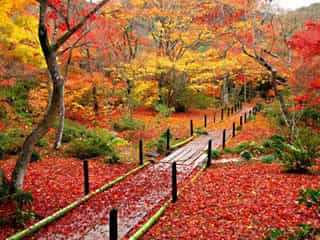
Autumn leaves Photo provided by: Hokyoin A deep precinct. The straight cobblestone pavement is lined with maple and azalea trees on both sides, creating an exceptional beauty. You can enjoy a garden with a different atmosphere depending on the season, such as the fresh greenery of early summer or the snowy landscape of winter. At the back of the shrine are the head mound of Masatsura Kusunoki and the grave of Yoshiakira Ashikaga. 9 Minamichuincho, Saga Shakado Monzen, Ukyo Ward, Kyoto City, Kyoto PrefectureGoogleMap 9:00~16:00 Adults 500 yen, Elementary and junior high school students 200 yen Approximately 15 minutes walk from JR Saga Arashiyama Station. Take the city bus and get off at Saga Shakado-mae stop, then walk for about 5 minutes. Official website Instagram Facebook LINE X(Twitter) Youtube 情報提供:京都新聞 技術提供:Stroly (c)The Kyoto Shimbun Co.,Ltd. All rights reserved.
Eikando Zenrinji Temple
Tourist attractions
OpenAutumn leaves:2021 shooting Approximately 3,000 maple trees are planted within the grounds, allowing you to enjoy the beautiful fall foliage. During the illumination event, 700 lights illuminate the colorful maple trees, which are dyed yellow and red every year. The sound of insects echoes around the Hojoike Pond, and trees are reflected in the water, creating a magical atmosphere. From November 11th to December 1st, 5:30pm to 9:00pm (Registration closes at 8:30pm). 700 yen for junior high school students and above 48 Eikandocho, Sakyo Ward, Kyoto City, Kyoto PrefectureGoogleMap 9:00-17:00(Reception closes at 4pm) General admission 600 yen, elementary, junior high and high school students 400 yen. Approximately 15 minutes' walk from Kyoto Municipal Subway Keage Station / Approximately 3 minutes' walk from JR Kyoto Station or Keihan Sanjo Station, get off at Kyoto City Bus's Nanzenji-Eikandodo bus stop. Official website Instagram Facebook LINE X(Twitter) Youtube 情報提供:京都新聞 技術提供:Stroly (c)The Kyoto Shimbun Co.,Ltd. All rights reserved.
Enkouji Temple
Tourist attractions
OpenFounded in 1601 by Tokugawa Ieyasu to promote learning, Enkoji Temple was a place of learning that opened its doors to both monks and laypeople. It published works such as Confucius's Words and The Essentials of Government, known as the Fushimi and Enkoji editions. The approximately 50,000 woodblock prints that remain are a valuable legacy in the history of publishing culture. The temple's collection includes the principal image of the Thousand-Armed Kannon and a folding screen by Maruyama Okyo, while the gardens "Bonryutei" (Dragon Garden) and "Jugyuno-niwa" (Ten Bull Garden) as well as a suikinkutsu (water chime) create a tranquil beauty. Toshogu Shrine, dedicated to Tokugawa Ieyasu, is located on the mountain behind the temple. 13 Otaricho, Ichijoji, Sakyo Ward, Kyoto CityGoogleMap 9:00-17:00 Official website Instagram Facebook LINE X(Twitter) Youtube 情報提供:京都新聞 技術提供:Stroly (c)The Kyoto Shimbun Co.,Ltd. All rights reserved.
Iwakura Jissoin Monzeki Temple
Tourist attractions
Open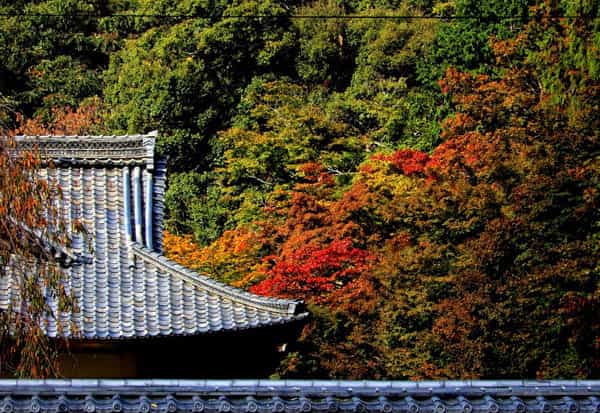
Autumn leaves photographed in 2018 Two gardens, the landscape garden and the "Kokoro no Niwa'' rock garden supervised by Katsushaki Ogawa, a landscape gardener who has been in business since the Edo period, will be dyed with autumn leaves. The wooden floor between the waterfall reflects the autumn leaves in the garden, giving it the name "toko maple.'' The "Yoko Midori'' season is also beautiful. In the reception hall, there is a wooden standing statue of Fudo Myoo, which is said to have been made in the Kamakura period, and a fusuma painting of the Kano school from the Edo period. 121 Iwakura Kamikuracho, Sakyo Ward, Kyoto City, Kyoto PrefectureGoogleMap 9 a.m. to 5 p.m. Adults 500 yen, elementary and junior high school students 250 yen Take the Kyoto Bus from Kokusai Kaikan Station on the municipal subway and get off at Iwakura Jissoin. Approximately 20 minutes walk from Eiden/Iwakura Station Official website Instagram Facebook LINE X(Twitter) Youtube 情報提供:京都新聞 技術提供:Stroly (c)The Kyoto Shimbun Co.,Ltd. All rights reserved.
Kifune Shrine
Tourist attractions
Open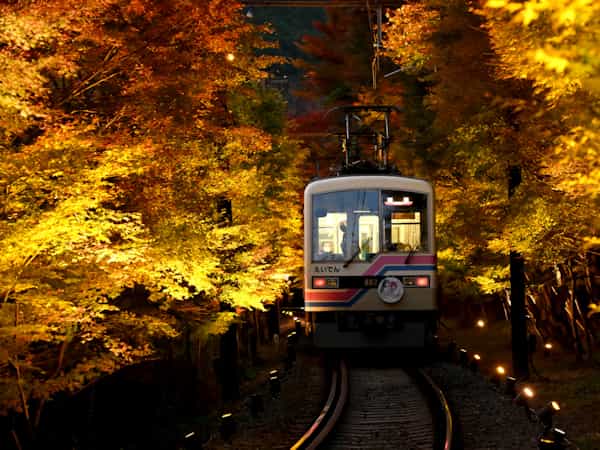
Autumn leaves photographed in 2022 Also known as "Kyoto's inner parlor,'' Kifune Shrine is surrounded by forest and water. In autumn, the illumination of the "Momiji Tunnel'' along the line, which was started by Eiden in 2003, is popular. There are about 280 maple trees in a 250-meter stretch between Ichihara and Ninose stations, and the view from the window of the slowly moving train is magical. From November 1st to 24th, the ``Momiji Tunnel'' will be lit up, and ``Kibune Momiji Lanterns'' will be held around Ninose Station, Kibuneguchi Station, and Kifune Shrine. Sunset to 9:00 p.m. (until 8:30 p.m. around Kibune Shrine). 180 Kurama Kifunecho, Sakyo Ward, Kyoto City, Kyoto PrefectureGoogleMap Kifune Shrine main shrine gates open from 6am to 8pm Kibune Shrine is free to visit (Eiden requires a fare) Take the Kurama Line from Demachiyanagi Station on the Eizan Railway. Kibuneguchi Station, one stop before Kurama Station, the last stop, is close to Kifune Shrine. Official website Instagram Facebook LINE X(Twitter) Youtube 情報提供:京都新聞 技術提供:Stroly (c)The Kyoto Shimbun Co.,Ltd. All rights reserved.
Kuruma-araisha Shrine
Tourist attractions
OpenThe name of Kuruma-araisha Shrine originates from an incident during Emperor Go-Saga’s visit to Arashiyama, when the shaft of his ox-drawn carriage broke in front of the shrine and could not be moved. In awe of the shrine’s divine power, he named the stone on the right side of the shrine’s gate “Kuruma-zaki Ishi” (Car-breaking Stone) and conferred the title “Shoichi-i Kuruma-araisha Daimyojin.” Because of this history, the shrine has a strong tradition of reverence for stones. The conical mound called “Kiyome-no-Yashiro” (Purification Shrine), made with stones as its motif, and the “Kinen Shinseki” (Commemorative Sacred Stone) amulets containing stones blessed by the chief priest, have been objects of faith since ancient times. Today, Kiyome-no-Yashiro is considered a power spot for purifying bad luck, and Kinen Shinseki amulets are regarded as power stones for fulfilling wishes, attracting worshippers from all over Japan. Additionally, within the shrine grounds is the Geinou Jinja (Shrine of Performing Arts), dedicated to Ame-no-Uzume-no-Mikoto, which enjoys strong devotion from people active in all fields of entertainment, arts, and technical skills. Over 4,000 vermilion fences inscribed with stage names, pen names, or names of theater troupes have been offered there. 23 Saga Asahicho, Ukyo Ward, Kyoto City, Kyoto PrefectureGoogleMap Keifuku Railway: Get off at “Kuruma-araisha Shrine” Station, about 1 minute on foot Kyoto City Bus / Kyoto Bus: Get off at “Kuruma-araisha Shrine-mae” stop, about 1 minute on foot Official website Instagram Facebook LINE X(Twitter) Youtube 情報提供:京都新聞 技術提供:Stroly (c)The Kyoto Shimbun Co.,Ltd. All rights reserved.
Nakaragi-no-Michi
Tourist attractions
OpenA small path that stretches about 800 meters between Kita-Oji Bridge and Kita-yama Bridge along the Kyoto Prefectural Botanical Garden by the Kamo River. In spring, the double-flowered cherry blossoms bloom in a tunnel-like formation, making it famous as a cherry blossom viewing spot. Throughout the year, it is also a popular walking and jogging route for locals. After a stroll, it's recommended to enjoy tea at a café in Kita-yama. 10-4 Kamo Imai-cho, Sakyo Ward, Kyoto City, Kyoto PrefectureGoogleMap Take the Karasuma Subway Line to "Kita-Oji Station" and walk for about 10 minutes. Official website Instagram Facebook LINE X(Twitter) Youtube 情報提供:京都新聞 技術提供:Stroly (c)The Kyoto Shimbun Co.,Ltd. All rights reserved.
Joshoji Temple
Tourist attractions
OpenThis temple is associated with Yoshino Dayū, a famous courtesan. In the first year of Genwa (1616), Hon'ami Kōetsu donated land, and the temple was founded by Nikken, a leading figure in the revival of the Nichiren sect. The vermilion-painted mountain gate, donated by the second-generation Yoshino Dayū, is called the Yoshino Gate. Yoshino Dayū was renowned as one of the greatest courtesans of the time, and her romance with Hayaya Shōeki is famous in Kabuki theater. The temple also has a tea room called Ihō-an, featuring circular windows, which was favored by the courtesan, as well as her grave. The temple is also known for its cherry blossoms, and on the second Sunday of April, a flower memorial service for Yoshino Dayū is held. 1, Kitatakafune-cho, Takafune, Kita Ward, Kyoto City, Kyoto PrefectureGoogleMap 8:30 am to 5:00 pm 400 yen (During the autumn foliage season, it is 500 yen). ① From JR Kyoto StationTake the Kyoto City Bus No. 6 (via Shijo-Omiya) and get off at Takafune Gonkō-an. It’s a 2-minute walk from there.② From JR Kyoto StationTake the Karasuma Subway Line to Kita-Oji Station.Transfer to Kyoto City Bus Kita 1 Line and get off at Takafune Gonkō-mae. It’s a 2-minute walk from there. Official website Instagram Facebook LINE X(Twitter) Youtube 情報提供:京都新聞 技術提供:Stroly (c)The Kyoto Shimbun Co.,Ltd. All rights reserved.
Jishu Jinja Shrine
Tourist attractions
OpenJishu Shrine is believed to have been founded in the Age of the Gods (before the founding of Japan), and recent research has confirmed that the "Love Fortune-Telling Stone" is a relic from the Jomon period. In 811, Emperor Saga was so moved by the beauty of the Jishu cherry tree that he returned his carriage three times, giving rise to the name "Okurumagaeshi no Sakura" (Cherry Blossoms Returning Carriage). Emperor En'yu visited the shrine in 970 and Emperor Shirakawa in 1082, demonstrating the shrine's history and divine majesty. It is revered as a Kyoto deity and has been featured in many waka poems. Beliefs related to matchmaking live on within the shrine grounds, including the "Love Fortune-Telling Stone," "Happy Dragon," and "Doll Exorcism," and special prayers are held daily for those seeking a good match. For over a thousand years, the shrine has attracted a wide range of believers, from emperors to samurai and entertainers. 317 Shimizu 1-chome, Higashiyama-ku, Kyoto 605-0862GoogleMap From JR or Kintetsu Kyoto Station, take city buses 86, 206, or 100 to the Gojozaka bus stop. From Keihan Gion-Shijo Station or Hankyu Kawaramachi Station, take city bus 207 to the Kiyomizumichi bus stop. Official website Instagram Facebook LINE X(Twitter) Youtube 情報提供:京都新聞 技術提供:Stroly (c)The Kyoto Shimbun Co.,Ltd. All rights reserved.
Sekizan Zen-in Temple
Tourist attractions
OpenSekiyama Zen-in is a sub-temple of the Tendai sect of Buddhism, Enryaku-ji Temple, founded in 888 at the behest of Ennin. During his training in Tang China, Ennin expressed gratitude to Sekiyama Daimyojin for his protection and vowed to build a Zen temple upon his return to Japan, but was unable to do so. His disciple, An'ei, founded the temple instead. The principal deity, Sekiyama Daimyojin, is a deity enshrined in the name of Taishan Fujun, and was revered by the Imperial family as the guardian deity of the front demon gate of Heian-kyo. Known as the temple where the "Sekiyama Ascetic Practice" of the Sennichi Kaihogyo pilgrimage is held, in the sixth year a rigorous 60-kilometer round trip between Mount Hiei and Sekiyama Zen-in is added. Enshrining Fukurokuju, one of the Seven Lucky Gods of the Capital, the temple is still widely revered today as a place of protection from evil spirits and for business prosperity. 606-8036 18 Shugakuin Kaigenbocho, Sakyo Ward, Kyoto City, Kyoto PrefectureGoogleMap 9:00-16:30 (reception for Gohoin seals) Free (free admission) Take the Karasuma Subway Line to Matsugasaki Station, then a 7-minute taxi ride. Take the Eizan Railway to Shugakuin Station, then a 20-minute walk or a 5-minute taxi ride. Take city bus routes 5, 31, and 65 to Shugakuin Rikyu-michi, or take the Kita 8 bus to Shugakuin-michi, then a 15-minute walk. Official website Instagram Facebook LINE X(Twitter) Youtube 情報提供:京都新聞 技術提供:Stroly (c)The Kyoto Shimbun Co.,Ltd. All rights reserved.
Nanzen-ji Temple
Tourist attractions
OpenNanzen-ji Temple is the head temple of the Rinzai sect of Zen Buddhism and dates back to the Kamakura period, when Emperor Kameyama transformed his palace into a Zen temple. The Sanmon Gate, rebuilt in 1628 (the 5th year of the Kan'ei era), offers a panoramic view of Kyoto from the upper level. The Hōjō, which is said to have been relocated from the Imperial Palace, features sliding doors with paintings from the Kano school. The Hōjō Garden, attributed to Kobori Enshū, is known as the "Tiger Crossing Bridge Garden" due to its arrangement of stone placements. The brick waterway crossing the temple grounds was constructed during the Meiji era to carry water from Lake Biwa, and in spring, the cherry blossom-lined path is especially beautiful. 86 Nanzenji Fukuchicho, Sakyo Ward, Kyoto City, Kyoto PrefectureGoogleMap From December 1 to February 28: 8:40 AM - 4:30 PMFrom March 1 to November 30: 8:40 AM - 5:00 PM※ The last admission is 20 minutes before the closing time.※ General visitors will not be accepted from December 28 to December 31.※ The temple is open during the New Year holidays. Hōjō GardenGeneral: 600 yen (individual), 500 yen (group of 30 or more)High school students: 500 yen (individual), 450 yen (group of 30 or more)Elementary and junior high school students: 400 yen (individual), 350 yen (group of 30 or more)Sanmon GateGeneral: 600 yen (individual), 500 yen (group of 30 or more)High school students: 500 yen (individual), 450 yen (group of 30 or more)Elementary and junior high school students: 400 yen (individual), 350 yen (group of 30 or more)Nanzen-in TempleGeneral: 400 yen (individual), 350 yen (group of 30 or more)High school students: 350 yen (individual), 250 yen (group of 30 or more)Elementary and junior high school students: 250 yen (individual), 200 yen (group of 30 or more)※ Persons with disabilities can visit for free, including one accompanying person, upon presenting a disability certificate. Take the Karasuma Subway Line to "Kita-Oji Station" and walk for about 10 minutes. Official website Instagram Facebook LINE X(Twitter) Youtube 情報提供:京都新聞 技術提供:Stroly (c)The Kyoto Shimbun Co.,Ltd. All rights reserved.
Hojuji Temple
Tourist attractions
OpenNow Situation Meeting(2022) Hojuji Temple was built in 989 by Lord Fujiwara Tamemitsu to mourn for his wife and daughter. It was later destroyed by fire in 1032, but in 1158 Emperor Goshirakawa designated Hojuji as his imperial palace and built Rengeo-in (Sanjusangen-do) and Shinhiyoshi Shrine. Emperor Goshirakawa, also known as the Cloistered Emperor, ruled from this temple and made many pilgrimages and visits to the temple. A statue of Shinran Shonin's Amida Nyorai has been enshrined here since the Meiji period, and it continues to flourish as a place of worship. 655 Sanjusangendomawari, Higashiyama Ward, Kyoto City, Kyoto PrefectureGoogleMap 9:00〜16:00 Official website Instagram Facebook LINE X(Twitter) Youtube 情報提供:京都新聞 技術提供:Stroly (c)The Kyoto Shimbun Co.,Ltd. All rights reserved.
Ōharano Shrine
Tourist attractions
OpenThis ancient shrine was established when Emperor Kanmu moved the capital to Nagaokakyō and enshrined the deity of Nara's Kasuga Taisha Shrine. It is also known as the guardian shrine of Murasaki Shikibu, the famous author of The Tale of Genji. The shrine grounds feature several elements reminiscent of Nara, such as komashika (deer statues) and a deer-themed water basin. Many of the omikuji (fortune slips) and charms also feature deer motifs. The vast grounds offer beautiful views throughout the year, with cherry blossoms in spring, colorful flowers in early summer, and stunning autumn foliage, making it a delightful place to visit in all seasons. 1152 Minamikasuga-cho, Ōharano, Nishikyō Ward, Kyoto City, Kyoto PrefectureGoogleMap Free access to the grounds. Free entry to the shrine grounds. From JR Mukomachi Station / Hankyu Higashi-Mukomachi StationTake the Hankyu Bus heading to Minami-Kasugacho and get off at the last stop, Minami-Kasugacho (approximately 20 minutes).Then, walk toward the mountain for about 7-8 minutes.From JR Katsuragawa Station / Hankyu Rakusaiguchi StationTake the City Bus No. 9 (West 9) and get off at Minami-Kasugacho (approximately 20 minutes).Then, walk toward the mountain for about 7-8 minutes.By TaxiFrom Hankyu Higashi-Mukomachi Station, Hankyu Katsura Station, or JR Mukomachi Station, it takes about 15 minutes (approximately 7 km).The fare is around 1,800 to 2,000 yen. Official website Instagram Facebook LINE X(Twitter) Youtube 情報提供:京都新聞 技術提供:Stroly (c)The Kyoto Shimbun Co.,Ltd. All rights reserved.
Shosei-en (Kikoku-tei) is a scenic garden located within the enclave of Higashi Hongan-ji Temple, and was built on land donated by Tokugawa Iemitsu during the Edo period. It is characterized by a strolling garden with a pond, and you can enjoy beautiful scenery throughout the four seasons. It was used as a retreat for successive Higashi Honganji lords and as a guest facility, and is dotted with tea rooms and historical buildings. It is a quaint place where folklore related to Minamoto no Yukari still remains. This is a hidden spot in Kyoto where you can feel the traditional beauty and history of Japan while strolling through the tranquil garden. 600-8190, Shimozusuya-cho, Torimano-cho, Higashiiri-Higashi Tamamizu-cho, Shimogyo-ku, Kyoto City, Kyoto PrefectureGoogleMap March to October 9:00 to 17:00 (Reception until 16:30)November to February 9:00 to 16:00 (Reception until 15:30) In order to maintain and preserve the garden facilities, please make the following donations. Adults 700 yen or moreJunior and senior high school students 300 yen or moreFree for elementary school students and younger 10 minutes walk from JR Kyoto Station7 minutes walk from Gojo subway station5 minutes walk from city bus Karasuma Nanajo Official website Instagram Facebook LINE X(Twitter) Youtube 情報提供:京都新聞 技術提供:Stroly (c)The Kyoto Shimbun Co.,Ltd. All rights reserved.
Shozan Resort Kyoto
Tourist attractions
OpenShozan Resort Kyoto is a Japanese resort with an attractive Japanese garden and historic architecture overlooking the Takagamine Sanzan. While enjoying the changing nature of the four seasons, you can enjoy a variety of meals including Kyoto cuisine, kaiseki cuisine, and Chinese cuisine. Equipped with a Japanese restaurant and a tea room, it is a space where you can fully enjoy the atmosphere of Kyoto. It is also a popular wedding venue, and the elegant Japanese atmosphere will create a special day. It is a luxurious spot where you can escape from the hustle and bustle of the city and experience the beauty and relaxation unique to Kyoto. 47 Kinugasa Kagamiishicho, Kita-ku, Kyoto-shi, Kyoto 603-8451GoogleMap Approximately a 5-minute walk from Kyoto City Bus “Dotencho” bus stop Official website Instagram Facebook LINE X(Twitter) Youtube 情報提供:京都新聞 技術提供:Stroly (c)The Kyoto Shimbun Co.,Ltd. All rights reserved.
Otoyo Shrine
Tourist attractions
Openoly@StrolynoMacBook-Air KyotoEvent % python clean.py 1: Otoyo Shrine is a shrine located on Tetsugaku no Michi in Kyoto, known as the "Koma Nezumi Shrine.'' Built during the Heian period, it enshrines Sukahikona no Mikoto and Sugawara no Michizane, who are said to have blessings on health, academics, and victory. There is a statue of a guardian mouse in the shrine grounds, which is said to bring good luck, and is popular for its adorable appearance. In spring, weeping cherry blossoms and camellias are beautiful, and you can enjoy nature in all four seasons. Pets are also welcome, and it is a relaxing spot where you can easily stop by while sightseeing or walking. Why not feel the atmosphere of Kyoto at Otoyo Shrine, which is surrounded by history and nature? 1 Miyanomae-cho, Shikagaya, Sakyo-ku, Kyoto-shi, Kyoto 606-8424GoogleMap Visiting hours: Free visit to the shrine grounds Office reception hours: 9:00-17:00 7 minutes walk from Kyoto City Bus “Higashitennocho” stop Official website Instagram Facebook LINE X(Twitter) Youtube 情報提供:京都新聞 技術提供:Stroly (c)The Kyoto Shimbun Co.,Ltd. All rights reserved.
Konkai Komyoji Temple
Tourist attractions
OpenKonkai Komyoji Temple (Kurodani) is a historic temple where the Jodo sect was first established in Kyoto. This is the place where Honen Shonin built his hermitage, and the principal image of worship, Amida Nyorai, is enshrined here. At the end of the Edo period, it became the headquarters of the Aizu clan, and has deep connections with the Shinsengumi. The precincts include a majestic Sanmon gate and a statue of Manjusri Bodhisattva, which fascinate visitors with the beautiful scenery of each season. It is a famous temple in Kyoto where you can experience copying sutras and praying, and spend a special time surrounded by history and tranquility. 121 Kurotanicho, Sakyo-ku, Kyoto-shi, Kyoto 606-8331GoogleMap Reception hours 9:00-16:00 (closed) City bus Okazakimichi stop (32, 203, 204)10 minutes walkCity bus: 15 minutes walk from Higashitennocho stop (5th line) Official website Instagram Facebook LINE X(Twitter) Youtube 情報提供:京都新聞 技術提供:Stroly (c)The Kyoto Shimbun Co.,Ltd. All rights reserved.
Yasaka Shrine
Tourist attractions
OpenYasaka Shrine is affectionately known as "Gion-san,'' and the main deity enshrined here is Suhoson. It is a shrine that has a main shrine (national treasure) and many separate shrines and subsidiary shrines (important cultural properties), and is deeply believed to protect against epidemics. The Gion Festival, which began in the Heian period, is a festival to pray for the prevention of epidemics, and continues to be closely connected to the lives of parishioners. You can enjoy the charm of each season, such as cherry blossoms in spring, Gion Festival in summer, colored leaves in autumn, and cherry blossom viewing in winter. 625 North Gion-cho, Higashiyama-ku, Kyoto-shi, Kyoto Prefecture 605-0073GoogleMap Office reception 9:00-17:00 Official website Instagram Facebook LINE X(Twitter) Youtube 情報提供:京都新聞 技術提供:Stroly (c)The Kyoto Shimbun Co.,Ltd. All rights reserved.
Goou Jinja Shinto Shrine
Tourist attractions
OpenLocated along Karasuma Street on the west side of the Kyoto Imperial Palace, Go'o Shrine enshrines Wake no Kiyomaro, who contributed greatly to the founding of Heian-kyo. Originally a sacred shrine within the grounds of Takaosan Jingo-ji Temple, it was given the rank of Shoichii Go'o Daimyojin by Emperor Komei in 1851, and renamed Go'o Shrine in 1874. In 1886, by imperial order of Emperor Meiji, the shrine was relocated to its current location, where a new shrine building was constructed on the site of the residence of the noble Nakain family. Later, his sister, Wake no Hiromushihime, was also enshrined as the main deity. A sacred boar statue (koma-inoshishi) has been dedicated within the grounds, and the shrine is affectionately known as "Inoshishi Shrine." It is a prestigious, specially designated government-supported shrine honoring those who contributed greatly to the founding of Heian-kyo. 385 Sakurazurumarucho, Kamigyo Ward, Kyoto City, 602-8011GoogleMap Visiting Hours: 6:00 AM - 9:00 PM Gift and Stamp Reception Hours: 9:30 AM - 4:30 PM Prayer Reception Hours: 9:30 AM - 4:30 PM Subway Karasuma Line - Get off at Marutamachi Station and walk 7 minutes north City Bus Route 51 - Get off at Karasuma Shimochojamachi stop On the left side just before the third traffic light north of Karasuma-Marutamachi intersection Official website Instagram Facebook LINE X(Twitter) Youtube 情報提供:京都新聞 技術提供:Stroly (c)The Kyoto Shimbun Co.,Ltd. All rights reserved.
Kamishichiken Kaburenjo
Tourist attractions
OpenKyoto's oldest red-light district, Kamishichiken is a teahouse town located on the east approach to Kitano Tenmangu Shrine. It flourished as a back parlor in the textile town of Nishijin, and continues to inherit the will and traditions of its predecessors while devoting itself to the arts. In particular, at the Kamishichiken Kaburenjo, events such as "Kitano Odori" are held in the spring, "Beer Garden" is held in the summer, and "Kotobuki-kai" is held in the fall. We look forward to your visit. 742 Masamori-cho, Imadegawa-dori Gozen-dori, Higashiiri, Kamigyo-ku, Kyoto 602-8381GoogleMap From JR Kyoto StationCity bus No. 50 (travel time: 30 minutes), 3-minute walk from “Kitano Tenmangu-mae” and “Kamishichiken” stops.From JR Nijo StationCity bus number 55 (travel time: 11 minutes), 3 minutes walk from “Kitano Tenmangu-mae” and “Kamishichiken” stops.From JR Enmachi StationTake city bus No. 203 (northbound) (15 minutes) and get off at "Kitano Tenmangu-mae" and "Kamishichiken" stops, then walk 3 minutes.From Hankyu Saiin StationTake city bus No. 203 (northbound) (travel time: 20 minutes) and get off at "Kitano Tenmangu-mae" or "Kamishichiken" and walk 3 minutes.From Hankyu Shijo Karasuma StationTake city bus No. 55 (travel time: 25 minutes) and get off at "Kitano Tenmangu-mae" and "Kamishichiken" stops, then walk 3 minutes.From Keihan Demachiyanagi StationTake City Bus No. 203 (Westbound) (travel time: 20 minutes) and get off at Kitano Tenmangu-mae and Kamishichiken stops, then walk 3 minutes.From Kyoto Municipal Subway Imadegawa StationTake City Bus No. 203 (Westbound) (8 minutes) and get off at "Kitano Tenmangu-mae" or "Kamishichiken" and walk 3 minutes.Keifuku (Randen) From Kitano Hakubaicho Station10 minutes walk east on Imadegawa Dori Official website Instagram Facebook LINE X(Twitter) Youtube 情報提供:京都新聞 技術提供:Stroly (c)The Kyoto Shimbun Co.,Ltd. All rights reserved.
Ryosoku-in is a sub-temple of the Kennin-ji school of Rinzai sect, founded by Zen Master Ryuzan Tokumi, who inherited the teachings of Zen Master Meian Eisai, the founder of Kennin-ji Temple. When it was first built, it was called "Chisokuin,'' and it became the head temple of the Yellow Dragon School, including Chisokuin, Ryosokuin, and Reisenin, after the ashes of Zen Master Ryuzan Tokumi were buried there. The current name was changed to "Ryosokuin'' after a fire during the Tenbun era. Ryosoku-in was the center of protection for Kennin-ji Kaizan-do and Gokoku-in, and was also considered an important temple in terms of academics. 591 Komatsucho, Higashiyama-ku, Kyoto 605-0811GoogleMap trainGet off at Keihan "Gion Shijo" station, go east to the 2nd traffic light, walk 7 minutes to the end of Hanamikoji south.Get off at Hankyu “Kawaramachi” station, 10 minutes walkIf you are using JR Kyoto Station, please use the city bus. 48 minutes walkcity busCity bus 206 and 100 from JR Kyoto StationGet off at “Shijo Keihan” and walk south on Yamato-oji Street for 5 minutes.Get off at "Higashiyama Yasui" and walk west on Yasui Street for 2-3 minutes.Get off at “Minamiza-mae” and walk for 10 minutes.Get off at “Gion” and walk for 10 minutes Official website Instagram Facebook LINE X(Twitter) Youtube 情報提供:京都新聞 技術提供:Stroly (c)The Kyoto Shimbun Co.,Ltd. All rights reserved.
Awata Shrine
Tourist attractions
Open“Awata Festival” (photo taken in 2016) Awata Shrine's main deities are Susano-onomikoto and Onamuchi-no-mikoto, who are revered as gods that ward off evil and illness. Enshrined at the Awata Exit, the eastern entrance to Kyoto, this shrine has been visited by travelers since ancient times to pray for safety, and is also known as the god of departure and safety. At the festival, sword hoko floats are paraded before the mikoshi, and this is said to be the original form of the yamahoko of the Gion Festival. It is said that during the Heian period, Fujiwara Okiyo prayed as an imperial envoy and was founded as a result of a dream. 1, Awataguchi Kajicho, Higashiyama Ward, Kyoto City, Kyoto PrefectureGoogleMap public transportGet off at Higashiyama Station on the Kyoto Municipal Subway Tozai Line and walk east for 7 minutes.Get off at Keage Station on the Tozai Line, 7 minutes walk to the westKyoto City Bus: 5 minutes walk from Jingu-michi bus stoptaxiAbout 15-20 minutes from Kyoto Station, about 1500 yenprivate carMeishin Expressway, approximately 6km from Kyoto Higashi IC, towards Sanjo-dori Official website Instagram Facebook LINE X(Twitter) Youtube 情報提供:京都新聞 技術提供:Stroly (c)The Kyoto Shimbun Co.,Ltd. All rights reserved.
Fujimori Shrine
Tourist attractions
OpenIt is an old shrine with deep ties to the imperial family, having been founded by Empress Jingu about 1,800 years ago. The main shrine was a gift from Emperor Nakamikado in 1712. In particular, our company is known as the shrine where the Ayame Festival originated, and today it is visited by people involved in horse racing (horse owners, jockeys, etc.) and horse racing fans as it is believed to be the god of luck and horses. 609 Toriizaki-cho, Fukakusa, Fushimi-ku, Kyoto-shi, Kyoto PrefectureGoogleMap 7 minutes walk from Keihan Sumizome Station5 minutes walk from JR Fujimori StationCity bus get off at Fujimori Shrine-mae Official website Instagram Facebook LINE X(Twitter) Youtube 情報提供:京都新聞 技術提供:Stroly (c)The Kyoto Shimbun Co.,Ltd. All rights reserved.
Senbon Enmado
Tourist attractions
OpenLord Ono no Takamura (802-853) was a man with supernatural powers who was said to serve the imperial court during the day and serve the Enma-no-Jitsu at night. He received the "law of welcoming spirits'' from King Enmai, which later developed into the Obon festival. The current Enma-do shrine was built by Lord Takamura with the image of King Enmai carved into it. This area is located at the entrance to Rendai-no, one of the three major burial grounds in Heiankyo, and many stone Buddha groups have been unearthed there. Later, in 1017, Jokaku Shonin named the Buddhist temple "Komyozan Kankiin Hikijoji,'' and it is still popularly known as "Senbon Enma-do.'' 34 Enmae-cho, Kamigyo-ku, Kyoto 602-8307GoogleMap Kyoto City Bus: Get off at “Senbon Kuramaguchi” and walk south.Or get off at “Qianlong School” and walk north for a short distance. Official website Instagram Facebook LINE X(Twitter) Youtube 情報提供:京都新聞 技術提供:Stroly (c)The Kyoto Shimbun Co.,Ltd. All rights reserved.
Tentokuin Temple
Tourist attractions
OpenTentokuin belongs to the Tofukuji school of the Rinzai sect and was founded by Zen Master Mumu Issei during the Shohei era (1346-1370) during the Nanbokucho period. It flourished as one of the five pagodas, but later fell into disrepair. It was revived by the Zen master Daiki Keio, and in 1614, Elder Bun Ying Qing Han became the chief priest. During the Azuchi-Momoyama period, Qinghan was favored by Toyotomi Hideyoshi and Hideyori, and Tentokuin was demolished after its bell inscription, "National security, peace and prosperity for the princes and vassals,'' angered Tokugawa Ieyasu. The current building was rebuilt in 1789, and merged with Honjoji in 1868, resulting in its current status. 15-802 Honmachi, Higashiyama-ku, Kyoto 605-0981GoogleMap Approximately 7 minutes walk from Tofukuji Station on the JR Nara LineAbout 7 minutes walk from Tofukuji Station on the Keihan Main Line Official website Instagram Facebook LINE X(Twitter) Youtube 情報提供:京都新聞 技術提供:Stroly (c)The Kyoto Shimbun Co.,Ltd. All rights reserved.
Okazaki Canal
Tourist attractions
OpenThe Kyoto Canal, a branch of the Lake Biwa Canal, runs from the Incline near Nanzen-ji Temple to the large torii gate of Heian Shrine, and continues to the Ebikawa Power Plant. The canal stretches for about 1.5 km, and in spring, the path along the canal becomes lined with cherry blossoms. During spring, the Jikkoku-bune (traditional wooden boats) operate, offering visitors the chance to enjoy cherry blossoms from the water. Kusakawacho, Nanzenji, Sakyo Ward, Kyoto City, Kyoto PrefectureGoogleMap Take the Tozai Subway Line to "Keage Station" and walk for about 10 minutes. Official website Instagram Facebook LINE X(Twitter) Youtube 情報提供:京都新聞 技術提供:Stroly (c)The Kyoto Shimbun Co.,Ltd. All rights reserved.
Eizan Electric Railway Yasehieizanguchi Station
Tourist attractions
OpenEiden Yase-Hieizanguchi Station opened in 1925, and the station building with a dome roof that conveys the atmosphere of that time remains. Yasenosecho, Sakyo Ward, Kyoto City, Kyoto Prefecture 601-1254GoogleMap Official website Instagram Facebook LINE X(Twitter) Youtube 情報提供:京都新聞 技術提供:Stroly (c)The Kyoto Shimbun Co.,Ltd. All rights reserved.
Daizen-ji Temple
Tourist attractions
OpenHōunzan Jōmyō-in. Jōdo sect. Founded by Jōe. In 709 (Wadō 2), Jōe came from Tōnomine in Yamato Province and established a temple. Later, Enchin (according to some accounts, Ennin), under imperial order, enshrined a statue of Jizō Bosatsu and revived the temple. Over time, devotion to Jizō grew, and many visitors now attend the annual Jizō Bon festival in August. The temple is counted as one of the Six Jizō Temples of Kyoto. 24 Nishimachi, Momoyama-cho, Fushimi-ku, Kyoto City, Kyoto PrefectureGoogleMap Get off at Rokujizo Station on the JR Nara Line or Keihan Uji Line Official website Instagram Facebook LINE X(Twitter) Youtube 情報提供:京都新聞 技術提供:Stroly (c)The Kyoto Shimbun Co.,Ltd. All rights reserved.
Kyoto Ryozen Gokoku Shrine
Tourist attractions
OpenKyoto Ryozen Gokoku Shrine, founded in the first year of the Meiji era, enshrines the spirits of loyalists and those who sacrificed their lives for Japan. It commemorates figures like Ryoma Sakamoto and Shintaro Nakaoka, along with many others. The shrine underwent extensive reconstruction in the Showa era and was officially designated as a Gokoku Shrine in 1939. Annual events include spring and autumn festivals, memorial services for the war dead, and the Ryoma Festival. Currently, the shrine honors 73,011 spirits. 1, Seikanji Ryozancho, Higashiyama Ward, Kyoto City, Kyoto PrefectureGoogleMap Gates open 8:00Mountain entry reception 9:00Closed 17:00Open all year roundNight visit: August 13th to 16th only (lights off and gates closed at 9pm) Reishen tomb admission feeAdult 300 yenElementary/junior high school students 200 yen*Cash only for admission fee and gift items(Please note that credit cards, electronic money, code payments, etc. cannot be used.) From JR Kyoto Station, Keihan Gion-Shijo Station, or Hankyu Kyoto Kawaramachi Station, take the city bus bound for Gion and get off at Kiyomizu-michi or Higashiyama-Yasui stop and walk 10 minutes. Official website Instagram Facebook LINE X(Twitter) Youtube 情報提供:京都新聞 技術提供:Stroly (c)The Kyoto Shimbun Co.,Ltd. All rights reserved.
Jōzen-ji Temple
Tourist attractions
OpenAffiliated with the Tendai Shinsei sect, this temple was originally founded in 863 (Jōgan 5) by the monk Jie (慈恵). Although it once had many sub-temples, repeated fires devastated the grounds. In 1483 (Bunmei 15), the monk Seishin restored the temple and is regarded as its reviver. Later, in 1566 (Eiroku 9), it became an imperial prayer temple under Emperor Kashiwara, and in 1594 (Bunroku 3), it was relocated to Kuramaguchi. The current temple was rebuilt on the ruins of the original site as the former Jōzen-ji (the temple that moved to Kuramaguchi later converted to the Jōdo sect and still exists today). The principal image is Amida Nyorai (Amitābha Buddha). The Daikokuten statue enshrined in the Daishi-dō (Founder’s Hall) is said to have been made by Jie and Saichō, the founder of the Tendai school. In the cemetery behind the main hall lies the grave of Okaru, the wife of Hayano Kanpei—a character from the famous kabuki play Kanadehon Chūshingura (The Treasury of Loyal Retainers). The temple grounds are open to the public, though the interior of the halls is not. However, on August 22–23, the Jizō Hall and Kannon Hall are specially opened for viewing. On August 22 at 8:00 PM, a Kozan-gō Rokusai Nenbutsu ritual is performed as an offering— recognized as both a UNESCO Intangible Cultural Heritage and an Important Intangible Folk Cultural Asset of Japan. 338 Jozenjimonzencho, Kuramaguchi-dori, Teramachi-higashiiru, Kita-ku, Kyoto City, Kyoto PrefectureGoogleMap Get off at "Kuramaguchi" subway station, walk east for 5 minutes Get off at "Izumojibashi" city bus stop, walk west for 3 minutes Official website Instagram Facebook LINE X(Twitter) Youtube 情報提供:京都新聞 技術提供:Stroly (c)The Kyoto Shimbun Co.,Ltd. All rights reserved.
Tokurin-an Hermitage
Tourist attractions
OpenThis temple, belonging to the Nanzen-ji school of the Rinzai sect, bears the mountain name Ryukutani-zan. It was founded in 1550 by Zen Master Ungei Shōi, the 260th head abbot of Nanzen-ji Temple. 16 Shinomiya Izumicho, Yamashina-ku, Kyoto City, Kyoto PrefectureGoogleMap Get off at Keihan "Shinomiya" station, walk 5 minutes west, get off at JR "Yamashina" station or subway "Yamashina" station, walk 10 minutes east Official website Instagram Facebook LINE X(Twitter) Youtube 情報提供:京都新聞 技術提供:Stroly (c)The Kyoto Shimbun Co.,Ltd. All rights reserved.
Jōzen-ji Temple
Tourist attractions
OpenMori-zuka Kannon Temple Endō Moritō, a warrior who served at the northern gate of the Toba Imperial Villa, fell in love with Kesa Gozen, the wife of Watanabe Saemon-no-jō Minamoto no Wataru. Obsessed with her, he plotted to kill her husband and make her his own. However, Kesa Gozen devised a plan and, in place of her husband, allowed herself to be killed by Endō Moritō. Upon learning the truth, Endō was filled with remorse, renounced the world, became a monk, and took the name Mongaku. He later traveled across Japan practicing severe asceticism and went on to restore temples such as Jingo-ji in Takao. Koi-zuka (the “Mound of Love”) is said to be the place where Kesa Gozen’s head was buried. In 1647 (Shōhō 4), the local lord, Nagai Hyūga-no-kami Naokiyo, commissioned the scholar Hayashi Razan to write an inscription in her honor, commemorating her as a woman of great virtue. The monument still stands within the temple grounds. The temple belongs to the Seizan-Zenrin-ji branch of the Jōdo sect, and is also known for Toba Jizō, one of the Six Jizō Pilgrimage Temples in Kyoto. In the Kannon Hall, the temple enshrines a statue of Eleven-faced Kannon (Kannon Bosatsu) dating from the 9th–10th centuries, which is designated a Cultural Property of Kyoto City. The temple is said to have been founded in 1182 (Juei 1) or possibly in 1144 (Ten'yō 1). Kyoto Six Jizō Pilgrimage Dates: August 22–23 Time: 5:00 AM – 10:00 PM 90 Minamiiwanohoncho, Kamitoba, Minami-ku, Kyoto City, Kyoto PrefectureGoogleMap Take city bus 18 and get off at Jizo-mae Official website Instagram Facebook LINE X(Twitter) Youtube 情報提供:京都新聞 技術提供:Stroly (c)The Kyoto Shimbun Co.,Ltd. All rights reserved.
Jizō-ji Temple
Tourist attractions
OpenOne of the Six Jizō Temples of Kyōraku (Central Kyoto) ○ August 22–23: Jizō Bon Festival ○ September 8: Yakushi Bon Festival Not open to the general public. Please contact in advance for visits. 9 Katsura Kasugacho, Nishikyo Ward, Kyoto City, Kyoto PrefectureGoogleMap Get off at Hankyu "Katsura" station, 5 minutes walk from the east exit, get off at "Katsura Fire Station" on the city bus Official website Instagram Facebook LINE X(Twitter) Youtube 情報提供:京都新聞 技術提供:Stroly (c)The Kyoto Shimbun Co.,Ltd. All rights reserved.
Nashinoki Shrine
Tourist attractions
Open“Hagi Festival” (2023) Nashiki Shrine was founded in 1888 as the enshrined deity of Sanjo Sanman, and in 1912, his son Sanemi was enshrined there. The name of the shrine is derived from the former place name "Nashikicho". The Sanjo family was a noble family, producing people who excelled in academics and literature, and in particular, Lord Jimaman and Lord Jimi were revered as the gods of learning. There is a monument of Dr. Hideki Yukawa's poem in the precincts, and it is known for its clover flowers, so it is also called "Hagi no Miya.'' The shrine, which stands on the site of a historic mansion, conveys the charm of learning and culture to its visitors. 680 Somedonocho, Kamigyo Ward, Kyoto City, Kyoto PrefectureGoogleMap For those arriving by busFrom JR Kyoto Station front exit city bus stop A2, take the 4, 17, and 205 routes for about 20 minutes.Get off at “Prefectural Medical University Hospital” and walk for about 3 minutes.For those coming by trainApproximately 20 minutes walk from Exit 1 of Marutamachi Station on the Kyoto Municipal Subway Karasuma LineApproximately 20 minutes walk from Exit 3 of Imadegawa StationApproximately 15 minutes walk from Exit 1 of Keihan Railway “Jingu Marutamachi Station”"Demachiyanagi Station" Approximately 15 minutes walk from Exit 2 Official website Instagram Facebook LINE X(Twitter) Youtube 情報提供:京都新聞 技術提供:Stroly (c)The Kyoto Shimbun Co.,Ltd. All rights reserved.
Imakumano Kannon-ji Temple
Tourist attractions
Open(2022)" src="https://prod-strolycom-map-assets.s3.ap-northeast-1.amazonaws.com/3789681476/materials/5b70cfc0-683f-4077-9ca3-0186c5df93ab.jpg"/> “Shikoku 88-sho sand stepping memorial service”(2022) It is said that Kobo Daishi (Kukai) founded this temple upon his return from the Tang Dynasty after receiving a revelation from Kumano Gongen. Daishi was guided by a white-haired old man in the mountains and was given a statue of Kannon Bodhisattva with 11 faces measuring 1.8 inches in length, and built a Kannon-do hall on this site. It also has a clean spring called Gochisui, and has become popular as a place of Kannon worship. Later, with the support of Emperor Saga and the Fujiwara clan, the temple was renovated, and today it is a historic temple that is visited by many pilgrims as one of the 33 pilgrimage sites in the Saigoku region. 32 Yamauchicho, Sennyuji Temple, Higashiyama Ward, Kyoto City, Kyoto PrefectureGoogleMap For those using city busesCity bus routes 202, 207, and 208 are available. Get off at Sennyuji-michi and walk for about 10 minutes.Both are circular buses. Please pay attention to the direction of travel. Please take a bus that says ``Sennyu-ji'' or ``Tofuku-ji'' as the destination.If coming by JR trainAbout 5 minutes by taxi from Kyoto StationFrom Kyoto Station (Karasuma Exit), take city bus No. 208 and get off at Sennyuji-michi, then walk for about 10 minutes.15 minutes walk from Tofukuji Station (Nara Line)If coming by Keihan trainFrom Shichijo Station, take city bus #208 and get off at Sennyuji-michi, then walk for about 10 minutes.From Gion-Shijo Station, take city bus #207 and get off at Sennyuji-michi, then walk for about 10 minutes.Approximately 15 minutes walk from Tofukuji StationIf coming by Hankyu trainFrom Shijo Kawaramachi Station, take city bus number 207 and get off at Sennyuji-michi, then walk for about 10 minutes.If coming by Kintetsu trainAbout 5 minutes by taxi from Kyoto StationFrom Kyoto Station (Karasuma Exit), take city bus No. 208 and get off at Sennyuji-michi, then walk for about 10 minutes.From Toji Station, take city bus 202, 207, or 208 and get off at Sennyuji-michi, then walk for about 10 minutes. Official website Instagram Facebook LINE X(Twitter) Youtube 情報提供:京都新聞 技術提供:Stroly (c)The Kyoto Shimbun Co.,Ltd. All rights reserved.
Hiraoka Hachiman Shrine
Tourist attractions
OpenHiraoka Hachiman Shrine is the oldest Hachiman shrine in Yamashiro Province, founded with a sacred image of the monk-shaped Hachiman deity personally painted by Kobo Daishi as the guardian deity of Jingo-ji Temple. The main hall was destroyed by fire during the Muromachi period but was rebuilt by Ashikaga Yoshimitsu, and the current building was restored in 1826 (Bunsei 9). The ceiling of the inner sanctuary features 44 vividly colored floral paintings, known as the “Ceiling of Flowers,” and is open to the public twice a year, in spring and autumn. The shrine grounds are famous for the maple-lined approach of Takao and camellias. Founded: December 10, 809 (Heian period) Hiraoka Hachiman Shrine, 23 Miyanoguchicho, Umegahata, Ukyo Ward, Kyoto City, Kyoto PrefectureGoogleMap Kyoto City Bus / JR Bus: Get off at the stop in front of Hiraoka Hachiman Shrine Official website Instagram Facebook LINE X(Twitter) Youtube 情報提供:京都新聞 技術提供:Stroly (c)The Kyoto Shimbun Co.,Ltd. All rights reserved.
Kyoto University Clock Tower Centennial Memorial Hall
Tourist attractions
OpenThe clock tower, which was built in 1925 (Taisho 14), has been a beloved symbol of Kyoto University for nearly 80 years. In December 2003, as part of the centennial celebrations, it underwent renovation work incorporating the latest seismic isolation construction methods. While retaining the ambiance of its exterior and interior, the tower has been reborn as a place for academic exchange, featuring the Centennial Hall and International Exchange Hall, and as a place for disseminating information from Kyoto University to society. Yoshida Honmachi, Sakyo Ward, Kyoto City, Kyoto PrefectureGoogleMap 9:00-18:00 ・15-20 minute walk from Demachiyanagi Station on the Keihan Electric Railway ・Get off at ""Kyoto University Main Gate"" or ""Hyakumanben"" on the Kyoto City Bus Official website Instagram Facebook LINE X(Twitter) Youtube 情報提供:京都新聞 技術提供:Stroly (c)The Kyoto Shimbun Co.,Ltd. All rights reserved.
Mimuroto-ji Temple
Tourist attractions
Open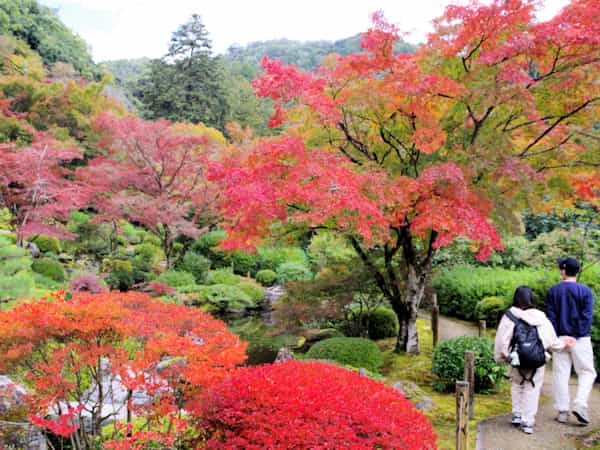
Autumn leaves photographed in 2021 The area has long been known as a famous spot for autumn leaves, with Saigyo, a monk and poet from the late Heian period, writing about autumn leaves in a poem. The temple has planted maple trees and other trees within its grounds, and has also created a dry landscape garden. 21 Shigadani, Animichi, Uji City, Kyoto PrefectureGoogleMap 8:30-15:20 1000 yen for high school students and above, 500 yen for 3 years old and above Get off at Keihan Mimuroto Station and walk for 15 minutesTaxi from JR Uji Station Official website Instagram Facebook LINE X(Twitter) Youtube 情報提供:京都新聞 技術提供:Stroly (c)The Kyoto Shimbun Co.,Ltd. All rights reserved.
Zuishinin Ono Baien
Tourist attractions
OpenZuishin-in is the head temple of the Zentsuji sect of the Shingon sect, which was founded in 991, and the main hall has valuable statues of Nyoirin Kanzeon Bodhisattva, Amida Nyorai, and Kongosatsu. A seated statue of Kongou Sattazazo is enshrined here. It is said to be the site of Ononokomachi's residence, and the standing statue of Bunbari Jizo, a makeup well, and a bunzuka remain. You can enjoy beautiful plum blossoms in the garden, and the Hanezu Odori and plum blossom viewing events are held on the last Sunday of March every year. 35-35 Onogoryo-cho, Yamashina-ku, Kyoto City, Kyoto PrefectureGoogleMap 9:00-17:00 (Reception closes at 16:30) Adult: 500 yenPhysically disabled person: 400 yenJunior high school student: 300 yen 5 minutes walk from Kyoto Municipal Subway Tozai Line "Ono Station" Official website Instagram Facebook LINE X(Twitter) Youtube 情報提供:京都新聞 技術提供:Stroly (c)The Kyoto Shimbun Co.,Ltd. All rights reserved.
Umekoji Park
Tourist attractions
OpenIn the Japanese garden Suzaku-no-niwa Garden which Umekoji Park is proud for, there are about 150 Momiji trees(Japanese maples).From mid-November, it will be colored red everywhere. 56-3 Kankiji-cho, Shimogyo-ku, Kyoto-shi, Kyoto PrefectureGoogleMap Immediately after getting off at "Umekoji Kyoto Nishi" station on the JR Sagano LineApproximately 15 minutes walk west along Shiokoji-dori from the central exit of Kyoto Station (JR/Subway/Kintetsu) Official website Instagram Facebook LINE X(Twitter) Youtube 情報提供:京都新聞 技術提供:Stroly (c)The Kyoto Shimbun Co.,Ltd. All rights reserved.
 Museum
The Museum of Kyoto
Museum
OpenThe Museum of Kyoto is a comprehensive cultural facility that introduces Kyoto's traditional culture and encourages the creation of new culture. The main building holds special exhibitions, general exhibitions, a film library, and the former Bank of Japan Kyoto Branch, which is an important cultural property, is open to the public. It opened in 1986, and also includes a rental exhibition room and a shop. It is operated for the purpose of understanding and promoting Kyoto culture. 623-1 Higashikata-cho, Nakagyo-ku, Kyoto City, Kyoto Prefecture 604-8183GoogleMap special exhibition10:00~18:00*Open until 7:30pm every Friday(Last entry is 30 minutes before each event)General exhibition10:00-19:30 (Admission until 19:00)Annex10:00-19:30(Closing time may change depending on special events.) special exhibitionPrices vary depending on the special exhibition.General exhibitionGeneral: 500 (400) yenUniversity student: 400 (320) yenHigh school students and under: Free*Figures in parentheses are group rates for 20 or more people. Please see information on group use.*With the general exhibition ticket, you can also see the film theater.AnnexFree admission Free*Additional fees may be required depending on various events. Official website Instagram Facebook LINE X(Twitter) Youtube 情報提供:京都新聞 技術提供:Stroly (c)The Kyoto Shimbun Co.,Ltd. All rights reserved.
The Kyoto National Museum, established in 1897, is one of Japan’s oldest museums dedicated to the preservation of cultural properties, coinciding with the enactment of the Ancient Temples and Shrines Preservation Law. The museum’s facilities were gradually modernized, especially after World War II, and a new exhibition hall was opened in 1966. In 1980, it added a conservation facility for cultural property preservation. Research efforts increased around 1970, and today the museum boasts a collection of over 14,600 items, including long-term loans. The Heisei Chishinkan Wing, opened in 2014, became the main exhibition space, supporting enhanced educational programs for visitors of all ages. 527 Chayamachi, Higashiyama-ku, Kyoto City, Kyoto PrefectureGoogleMap Click here for exhibition informationClosed daysMondays (open if Monday is a public holiday, closed on the following Tuesday)New year holiday seasonothers Official website Instagram Facebook LINE X(Twitter) Youtube 情報提供:京都新聞 技術提供:Stroly (c)The Kyoto Shimbun Co.,Ltd. All rights reserved.
The printing factory located in the Kyoto Shimbun headquarters building has been producing newspapers and disseminating domestic and international news almost every day for about 40 years since 1975. The printing base was centralized at the Kumiyama Factory (Kumiyama Town, Kyoto Prefecture), and the main factory was closed in November 2015. Currently, the rotary presses have been removed, and a huge atrium space approximately 10 meters high and approximately 1,000 square meters in size has been opened from the first basement floor to the second floor of the building. We wanted to exhibit art works in this space where you can feel the atmosphere of a printing factory, such as the ink stains on the walls and the faint smell of ink. It has also been used as a venue for events such as KYOTO. 239 Shomasai-cho, Karasuma-dori, Kawakari, Nakagyo-ku, Kyoto City, Kyoto Prefecture 604-0873GoogleMap Official website Instagram Facebook LINE X(Twitter) Youtube 情報提供:京都新聞 技術提供:Stroly (c)The Kyoto Shimbun Co.,Ltd. All rights reserved.
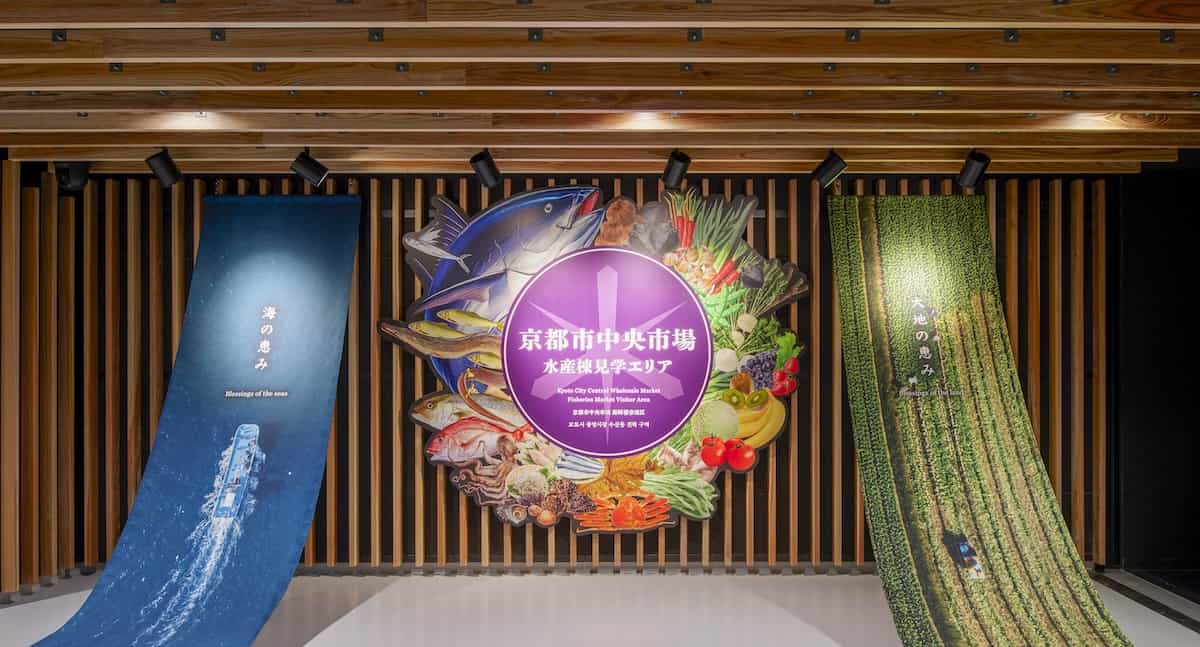
The observation area (approximately 260 meters long) on the second floor of the fisheries building of Kyoto City Central Market not only lets you see the early morning auction, but also introduces the role and function of the market, the people who work there, Kyoto's food culture, and more, through powerful images on a large screen and various exhibits. There is also an experience-based facility using an actual motor truck. 80 Suzaku Bunkicho, Shimogyo Ward, Kyoto City, Kyoto Prefecture, 〒600-8847GoogleMap Business hours5:00-17:00ClosedWednesdays(except public holidays) and New Year's holidays Official website Instagram Facebook LINE X(Twitter) Youtube 情報提供:京都新聞 技術提供:Stroly (c)The Kyoto Shimbun Co.,Ltd. All rights reserved.
A museum that preserves and exhibits approximately 3,500 works of East Asian art and crafts collected by the Sumitomo family, with a focus on ancient Chinese bronzes and mirrors, which are internationally renowned as the "Sumitomo Collection." The museum’s name derives from "Sen-oku," the trade name of the Sumitomo family during the Edo period, and the Hakuko Zuroku, a bronze catalogue compiled in China about 900 years ago. In the Bronze Hall, bronzes and mirrors are displayed thematically, allowing visitors to trace the development of bronzeware in a systematic way. The Second Hall features rotating special exhibitions on other art and craft objects—including Chinese and Japanese paintings, calligraphy, decorative arts, tea utensils, and scholarly instruments—organized under various themes. Established: 1960 (Showa 35). 24 Shishigatani Shimomiyanomaecho, Sakyo Ward, Kyoto City, Kyoto PrefectureGoogleMap Take the City Bus to “Higashi-Tenno-cho” stop, then walk east for about 3 minutes. Get off at “Miyanomae-cho” stop; the museum is right there. Official website Instagram Facebook LINE X(Twitter) Youtube 情報提供:京都新聞 技術提供:Stroly (c)The Kyoto Shimbun Co.,Ltd. All rights reserved.
SUSTAINA KYOTO
Museum
OpenThe Kyoto City Southern Clean Center's environmental learning facility, ``Sasutena Kyoto,'' utilizes the garbage processing facility itself. You can tour impressive large-scale facilities such as incinerators, waste power generation, and biogasification facilities up close, and use them as living teaching materials to learn about cutting-edge environmental technology.We also create experiential programs tailored to each life stage, covering a wide range of fields such as waste reduction, global warming, biodiversity, and local history from an environmental perspective. By arranging content for children, mainly for children, and content for adults, mainly including high-impact videos, we aim to pique the interest and curiosity of a variety of people, including children, students, adults, business owners, and students on school excursions. You can learn while having fun. 29-29 Yokooji Hatanda, Fushimi-ku, Kyoto City, Kyoto PrefectureGoogleMap 9:00〜17:00 From Keihan Railway Chushojima Station or Yodo Station【bus】Take City Bus No. 20 or Kyoto Keihan Bus No. 24A and get off at "Minamiyokooji (Sasutena Kyoto-mae)" bus stop, then walk 5 minutes.[Walk]30 minutes walk from "Yodo Station"From Takeda Station on the municipal subway/Kintetsu train【bus】Take the city bus (81, Minami 5, Minami 8) from the east exit of Takeda Station and get off at the Yokooji Shako-mae bus stop, then walk for 20 minutes.*There is also a Kyoto Keihan bus route (24A and 26) that runs from Kyoto Station Hachijo Exit and Takeda Station West Exit to the "Minamiyokooji (Sasutena Kyoto-mae)" bus stop. Official website Instagram Facebook LINE X(Twitter) Youtube 情報提供:京都新聞 技術提供:Stroly (c)The Kyoto Shimbun Co.,Ltd. All rights reserved.
ROHM Theatre Kyoto
Museum
Open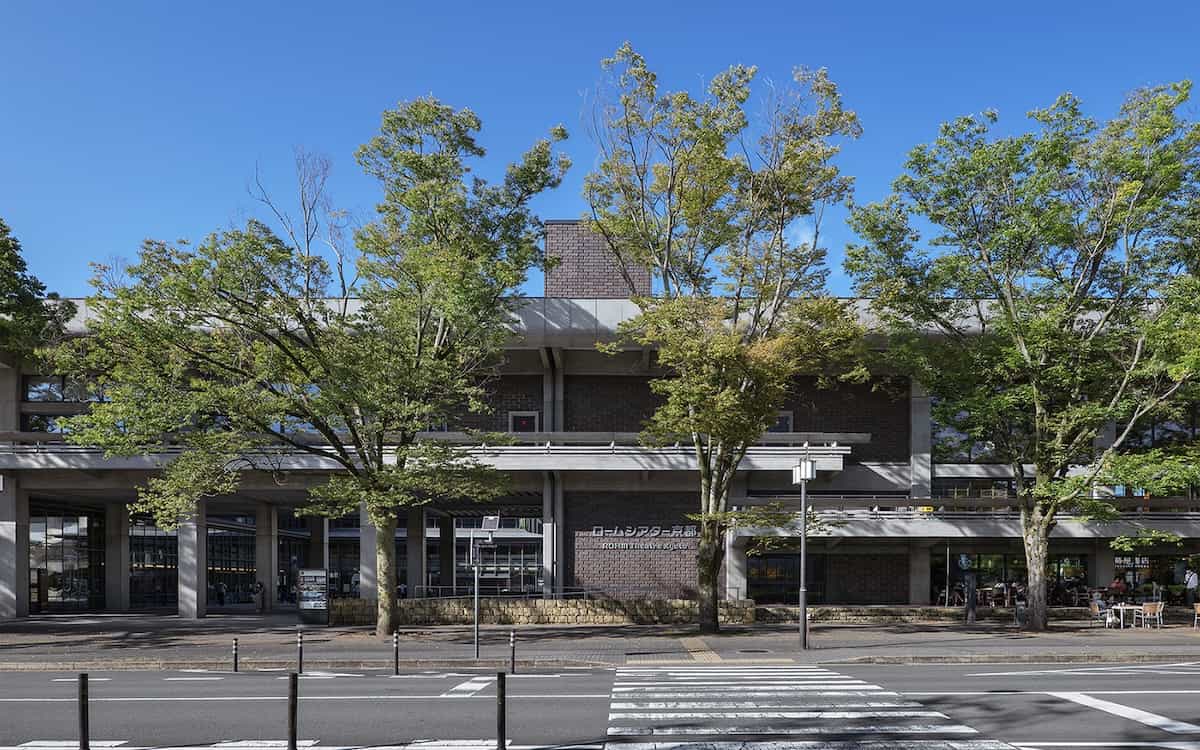
ROHM Theater Kyoto has a main hall with approximately 2,000 seats that can host large-scale domestic and international performances, a south hall with approximately 700 seats where the distance between the stage and the audience seats is close to create a sense of unity, and a hall that is suitable for use as a small theater or rehearsal room. This is a multipurpose hall with a north hall that can accommodate 200 people. In addition, Park Plaza, which has a book & cafe and restaurant, and Rohm Square, which can be used as an outdoor space, support a wide range of cultural activities and have been able to meet the diverse needs of providing a place of relaxation for everyone. It is a public cultural facility unlike any other. 13 Saishojimachi, Okazaki, Sakyo Ward, Kyoto CityGoogleMap Please check the schedule on the official website. Official website Instagram Facebook LINE X(Twitter) Youtube 情報提供:京都新聞 技術提供:Stroly (c)The Kyoto Shimbun Co.,Ltd. All rights reserved.
There are many deciduous trees such as maples around the 5,500 square meter Nakaragi Forest, and the colors of the approximately 200 Japanese maples that stand out in the three large and small ponds are beautiful. In addition, the hydrangea garden is home to one of Japan's largest hydrangeas, which turns brightly colored. Shimogamo Hankicho, Sakyo Ward, Kyoto City, Kyoto PrefectureGoogleMap 9:00~18:30(Admission until 6pm) Adults 200 yen, High school students 150 yen, Free for junior high school students and younger / Free for those over 70 years old and those with a disability certificate (including caregivers) upon presentation of a certificate Take the Kyoto City Bus from Keihan "Demachiyanagi" Station or "Sanjo Station" and get off at "Botanical Garden", then walk for about 5 minutes / From JR/Kintetsu "Kyoto" Station or Hankyu "Karasuma" Station, close to Exit 3 of Kyoto Municipal Subway "Kitayama" Station Official website Instagram Facebook LINE X(Twitter) Youtube 情報提供:京都新聞 技術提供:Stroly (c)The Kyoto Shimbun Co.,Ltd. All rights reserved.
Kyoto Prefectural Kyoto Institute, Library and Archives” was established by adding functions for supporting research, learning, and cultural exchange related to the history and culture of Kyoto to the Prefectural General Archive, which has been comprehensively collecting, preserving, and providing access to materials on Kyoto for over 50 years. Kyoto is the spiritual home of Japanese culture, and research on the history and culture of Kyoto is closely connected with that of Japanese culture as a whole. We regard the study of the rich and distinctive culture that has developed in and around Kyoto from various domestic and international perspectives as “Kyoto Studies.” Our mission is to promote such research, share its outcomes, foster greater interest in Kyoto, and thereby expand opportunities for learning about Kyoto while contributing to the further development of Kyoto’s culture. 1-29 Shimogamo Hangicho, Sakyo Ward, Kyoto City, Kyoto PrefectureGoogleMap Kyoto Municipal Subway [Karasuma Line] Kitayama Station [K03] (Exit 1 or 3): 4 minutes’ walk south Kitayama-eki-mae (Kyoto City Bus Routes 4, North 8): 4 minutes’ walk south Furitsu Daigaku-mae (Kyoto City Bus Routes 1, 204, 205, 206, North 8 / Kyoto Bus Routes 32, 34, 35, 46): 6 minutes’ walk north Official website Instagram Facebook LINE X(Twitter) Youtube 情報提供:京都新聞 技術提供:Stroly (c)The Kyoto Shimbun Co.,Ltd. All rights reserved.
Miyako Messe
Museum
OpenLocated in the Okazaki district of Sakyo Ward, Kyoto City, the Kyoto City Industrial Promotion Hall Miyako Messe opened in 1996 as a large convention facility that supports the promotion of Kyoto City's industry and the cultural activities of its citizens. It houses an exhibition hall, conference rooms, an arts and crafts gallery, and the Kyoto Traditional Industries Center in the basement, and also functions as a hub for traditional industries, craftsmanship, and cultural dissemination. 9-1 Okazaki Seishojicho, Sakyo Ward, Kyoto City, 606-8343 GoogleMap Approximately 8 minutes walk from Higashiyama Station on the Kyoto Municipal Subway Tozai Line. Take the city bus to Okazaki Park Museum of Art/Heian Shrine Front, Higashiyama Nijo/Okazaki Park Exit, or Okazaki Park ROHM Theatre Kyoto/Miyako Messe Front. Official website Instagram Facebook LINE X(Twitter) Youtube 情報提供:京都新聞 技術提供:Stroly (c)The Kyoto Shimbun Co.,Ltd. All rights reserved.
 Announcement
Announcement
Announcement
Open
Map Introduction Pin Explanation Button Explanation Kyoto Shimbun & Stroly presents (Updated on 2026/5/1) Peak cherry blossom updates now live! --> This season's update on the best time to see the autumn leavesended on December 18th.--> The updates for this season's cherry blossom viewing information ended on April 11, 2025. --> Aoi-Festival in Kyoto Every May, the Aoi Matsuri, one of Kyoto's three major festivals, is held. During the "Roto-no-Gi" procession, participants dressed in Heian-period attire, including the Saio-dai in her traditional twelve-layered kimono (jūnihitoe), parade through the streets of the ancient capital. Aoi Matsuri-related spots Shimogamo Shrine Kamigamo Shrine Kyoto Gyoen Garden --> Information on the best time to see cherry blossoms is being updated!! --> Kyoto in BloomA Journey of Elegance and Cool Grace From Spring’s Charm to Summer’s Embrace --> Kyoto, the Ancient Capital, Woven with Brilliance and Cool Elegance: An Invitation from Spring to Summer Spring in Kyoto is painted with a breathtaking carpet of cherry blossoms. The cherry-lined Philosopher's Path, the cherry blossom scenery of Arashiyama, and the sea of cherry blossoms viewed from Kiyomizu-dera. These stunning views, where the ancient capital's scenery intertwines with cherry blossoms, capture the hearts of visitors. As the lingering breath of spring fades, the footsteps of summer approach, and Kyoto begins to reveal a different face. Amidst the humid heat, the Gion Festival engulfs the city in excitement, and the magnificent Yamahoko procession is a spectacular sight. Along the Kamogawa River, dining platforms (Noryo-yuka) are set up, where you can enjoy Kyoto cuisine while listening to the murmur of the river. Furthermore, summer in Kyoto is when the temple gardens are at their most beautiful. Moss-covered gardens, verdant bamboo groves, and the cool dining platforms of Kifune. You can relish the refreshing air while seated above the river, enjoying the sounds of the stream and the lush natural scenery. The brilliant cherry blossoms of spring and the heated excitement and cool elegance of summer. Both are indispensable in conveying the charm of the ancient capital, Kyoto. We invite you to visit Kyoto, which displays a different expression with each passing season. This beautiful map, inspired by the ancient capital bathed in autumn leaves, features charming illustrations of Kyoto's landmarks. It's also packed with information on Kyoto's autumn events, including special temple openings, illuminations, traditional festivals, and art events. Discover your own special autumn in Kyoto with information on the best times to see the autumn leaves. --> Winter in Kyoto is alluring, with its snow-covered shrines and temples and cityscapes that radiate warmth amidst the crisp air. The winter edition of the "Kyoto Event Map" is packed with all the charms of winter in Kyoto. In addition to spectacular winter scenic spots like the snow-covered Kinkaku-ji Temple and the fantastically illuminated Kiyomizu-dera Temple, this map is packed with information on winter events in Kyoto, including special viewings during the New Year holidays and restaurants where you can enjoy warm Kyoto cuisine! --> Click here for the Gion Festival MapOne of Kyoto’s Three Great Festivals The map is a completely hand-drawn original work, featuring whimsical characters inspired by the traditional Japanese art style of “Chōjū-giga” (Scrolls of Frolicking Animals), enjoying the vibrant scenes of the Gion Festival. In the spot details, you'll find comprehensive information provided by The Kyoto Shimbun about each of the Yamaboko floats, along with major rituals and events related to the Gion Festival. Held from July 1st to 31st, this guide will help you enjoy every part of Kyoto’s legendary summer celebration. --> Pin Explanation "Event Spot" Pin Indicates spots where events are planned to be held. Click to view event details at that location. About the "Scenic Spot" Pin Introduces scenic spots where you can enjoy Kyoto’s beautiful landscapes throughout the seasons. During the foliage, plum, and cherry blossom seasons, we update the viewing information regularly. Find a place to visit and enjoy Kyoto's stunning scenery. About the "Museum" Pin Lists current exhibition information. Find an exhibit that interests you. Button Explanation Map Switch Button Use the map switch button at the bottom left to switch to Google Maps view. Spot List Check all spots via the SPOT LIST button. Map Details Check map details. Compass Button Pressing the compass button turns on rotation, allowing two-finger rotation. Press again to turn off rotation, returning to zoom only with two-finger gestures. Information provided by: Kyoto Shimbun Technology provided by: Stroly (c)The Kyoto Shimbun Co.,Ltd. All rights reserved.
 Jikkoku-bune