
深草・稲荷まちあるきマップ
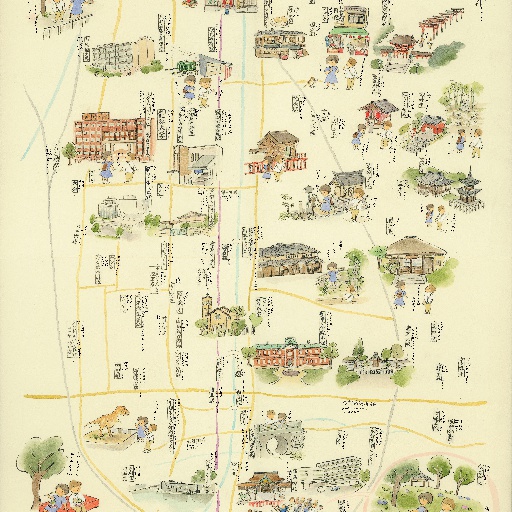
龍谷大前深草駅周辺にある龍谷大学の学生が伏見稲荷大社もある周辺の見どころを調べて紹介しています。 龍谷大学生がランチに行くお店もあり、ぜひ一度足を運んでください。
 Posted by龍谷大学更新日:
 すべてのスポット情報
23件のスポット
 京都と地蔵盆の深いつながり
京都と地蔵盆の深いつながり
京都と地蔵盆の深いつながり
 開く
開く
京都と地蔵盆の深いつながり 昔、子どもたちが楽しみにしていた地域のお祭りとして、「どんと焼き」と「地蔵盆」がありました。「どんと焼き」とは、小正月の火祭りのことで正月飾りやお守り、お札を燃やす伝統行事で、「地蔵盆」は8月後半に町内で数珠廻しと呼ばれる直径2~3メートルの大きな数珠を囲んで座り、大人もその輪に加わりながら僧侶の読経に合わせ順々に回す伝統行事やお菓子の配布など様々な行事を盛り込んだお祭りのことです。「どんと焼き」は伏見ではほとんど見なくなっていますが、「地蔵盆」は今も京の夏の風物詩となっていて、京都市内とその周辺では毎年開催されていて、その割合は京都市全体の約8割にもなります。 「地蔵盆」の開催日 「地蔵盆」は地蔵菩薩の縁日(旧暦7月24日、もしくは、新暦8月24日)の前日を中心に行われ、最近では、参加する人たちの都合に合わせ、その前後の土日に行うところが多くなっています。また、天道大日如来を祀っている町内では、大日如来の縁日(旧暦7月28日、もしくは、新暦8月28日) を中心に「大日盆」を行うところもありますが、それらも「地蔵盆」として行うところが多くなっています。「地蔵盆」の起こりとしては江戸時代初期が有力です。 そもそもお地蔵様とは? お地蔵様は、釈迦入滅後、釈迦の次に仏陀となることが約束された弥勒菩薩が出現するまでの56億年有余年の空白期を埋めるために遣わされた菩薩です。お地蔵様は、生きている者たちがその行為や意志のよって転生する6つの世界六道(地獄、餓鬼、畜生、修羅、人間、天上)のすべての生物を救済し、福利を与えるものとされます。お地蔵様はふつう、宝珠と錫杖をもち、袈裟をまとい、頭を丸めた比丘の姿をしています。お地蔵様は、日本では、日本古来の道祖神(さえのかみ、さいのかみ)信仰と結びつきました。さえのかみとは日本神話から発し、邪霊の侵入を防ぐ神とされており、そのことから、さえのかみを道の悪霊を防いで道行く人を災難から守る神、すなわち道祖神として進行するようになりました。そしてお地蔵様は冥界と現世との境で邪悪な霊魂を払う存在とされることから、さえのかみと融合して、集落の入り口、村や町の境に、石地蔵をまつるようになりました。また、子供も埋葬されることから、子供を守るお地蔵様の信仰が生まれたので、子供のための仏としての性格も持っていました。 復活する「地蔵盆」 明治の伏見は、市街の大半を消失するという壊滅的な打撃を受け、形式的な首都の地位も失いました。この状態を回避するために街の人々は近代化への努力を続け、酒造業が栄えた新たな伏見へと脱皮を果たすことができました。このころの伏見の人々の神聖の意気盛んな時に京都の都人としての誇りが「地蔵盆」復活の原動力になったのだと言われていて、この時代に「地蔵盆」も復活を果たしたのだと考えられています。 第二次世界大戦下でも地蔵盆存続の危機にあいましたが、平和が戻ってくると復活し、以前よりも盛んに地蔵盆が行なわれました。これは、町の人々の平和を願うエネルギーが注がれた結果であると言えます。 地蔵盆と伏見は切っても切れない関係でつながれており、地蔵盆に平和を願うエネルギーははかりしえないものだと感じました。ネット社会の今、このような団結力はとても重宝すべきものであると考えます。参考文献・「子育ての町・伏見 酒造と地蔵盆」著伏見の町づくりをかんがえる研究会、子供の生活空間研究グループ 発行所 都市文化社 発効日1987年11月1日・京都をつなぐ無形文化遺産 京の「地蔵盆」-行事内容などーhttps://kyo-tsunagu.net/jizo/kyonojizobon/ 最終確認日2021年2月21日
 ランチ
ランチ
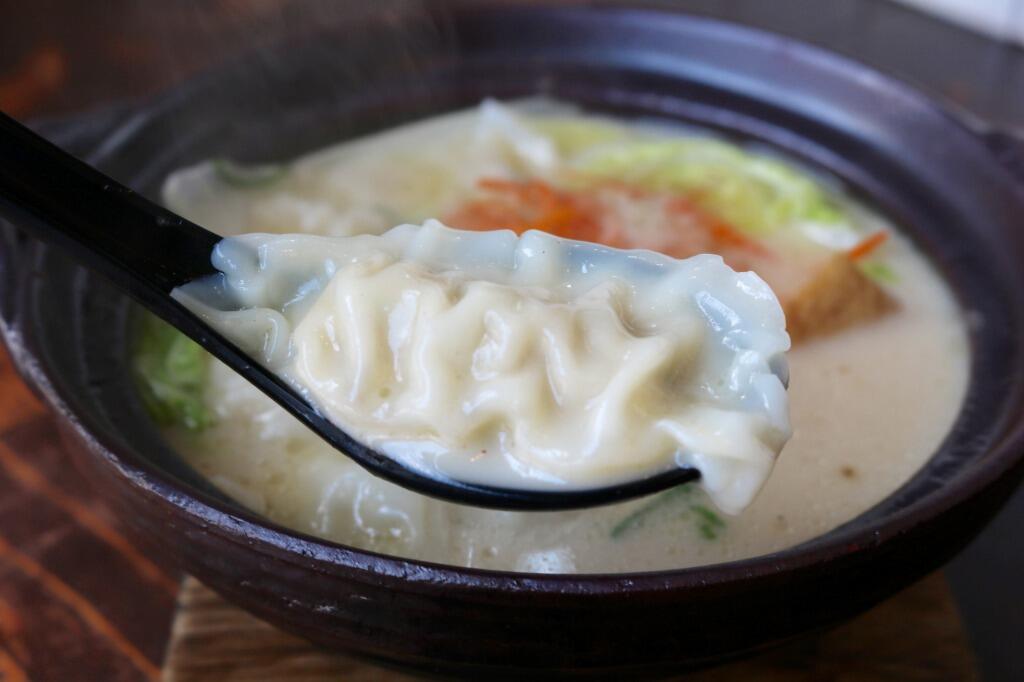
日本語 English 简体中文 深草エリアの餃子専門店といえばこちら福吉。餃子の餡の種類、皮の薄さなどオーダー可能で豊富な餃子メニューが揃う餃子好きにはたまらないお店です。 師団街道沿いの分かりやすい立地。 まずは薄皮焼餃子(海老)380円から。パリッとジューシーで食べ慣れた味わいです。 お次はもっちりした皮が特徴の焼餃子(肉)340円。 本場中国と同じ厚めの皮で中のジューシーさを逃がしません。 水餃子も同じく厚めの皮で。 具材は肉、セロリ、ニラ、ピーマン、海老から選べるのですが、全てを盛り込んだ5種盛りセット480円がおすすめ。一個ずつ違う味わいを堪能できます。 こちらは名物炊き餃子(780円)。 圧力鍋で3時間じっくり炊き上げた熟成鶏白湯スープの中に薄皮肉餃子と薄皮海老餃子が3個ずつはいっています。 鶏の旨味がしみ込んだ絶品餃子。 ラーメンを入れても美味しそうなスープです。 他にも揚げ餃子やねぎ塩餃子、餃子定食(590円)など豊富な餃子メニューが揃うので餃子好きにはたまりません。 ※価格等の情報は取材当時(2019年8月)のものです。 “Fukuyoshi” is a restaurant in Fukakusa area that specializes in gyoza dishes. You can enjoy many different kinds of gyoza, with stuffing and wrapping type of your choice. With its rich variety of gyoza on offer, “Fukuyoshi” is a must-go place for gyoza enthusiasts. Located on Shidan-Kaido Street, “Fukuyoshi” is very easy to access. This is yaki-gyoza (grilled gyoza) with shrimp stuffing wrapped in a thin skin (380 yen per serving). The skin is crispy, and the stuffing is juicy. I believe this is the familiar taste that Japanese love. This is “yaki-gyoza” (grilled gyoza) with pork stuffing wrapped in thick skin (340 yen per serving). Wrapped with a thick and chewy skin, just like dumplings in China, the juice from the stuffing does not escape until you take your first bite. Sui-gyoza (boiled gyoza) are also wrapped with thick skins. You can choose from stuffings of pork, celery, leek, bell pepper, and shrimp. But I definitely recommend a set of 5 pieces with a different stuffing for each (480 yen per serving), so you can enjoy five different flavors. This is the specialty of “Fukuyoshi”, taki-gyoza (stewed gyoza, 780 yen per serving). Thin-skinned gyoza with pork stuffing and shrimp stuffing, three pieces of each, are added to a white chicken broth which has been cooked for three hours in a pressure cooker. Well-soaked in the flavorful chicken soup, the gyoza taste superb. I’m quite sure that this soup goes well with ramen noodles, too. There are a lot more menu items offered at “Fukuyoshi”, including age-gyoza (fried gyoza) and negi-shio gyoza (served with salted spring onion sauce). Set meals with gyoza are also available for 590 yen per serving. 要说深草区域的饺子专门店就是这家福吉。可以要求专门定做饺子馅的种类、皮的厚度等,饺子菜单丰富,品种齐全的饺子令人欲摆不能的店。 位于师团街道很容易就能找到的好地段。 首先是薄皮煎饺(虾)380日元。松脆多汁的风味很合大家的口味。 接下来是皮嫩滑的特色煎饺(肉饺),只要340日元。 和原汁原味的中国饺子皮一样厚,肉汁一滴也不会漏出来。 水饺的皮也一样厚。 配料可以从肉、芹菜、韭菜、青椒、虾中选,推荐5种全选的套餐480日元。能品尝到一个一个都不同的风味。 这是有名的一品料理是汤饺子(780日元)。 用高压锅踏踏实实地熬了3小时的老鸡白汤中,加入薄皮肉饺子和薄皮虾饺子各3个。 渗入美味鸡汤的绝品饺子。 看起来即使放拉面进去也是很好吃的汤。 其他黑油油炸饺子和大葱盐饺子、饺子套餐(590日元)等品种丰富的饺子菜单齐全,对饺子喜爱的不得了。
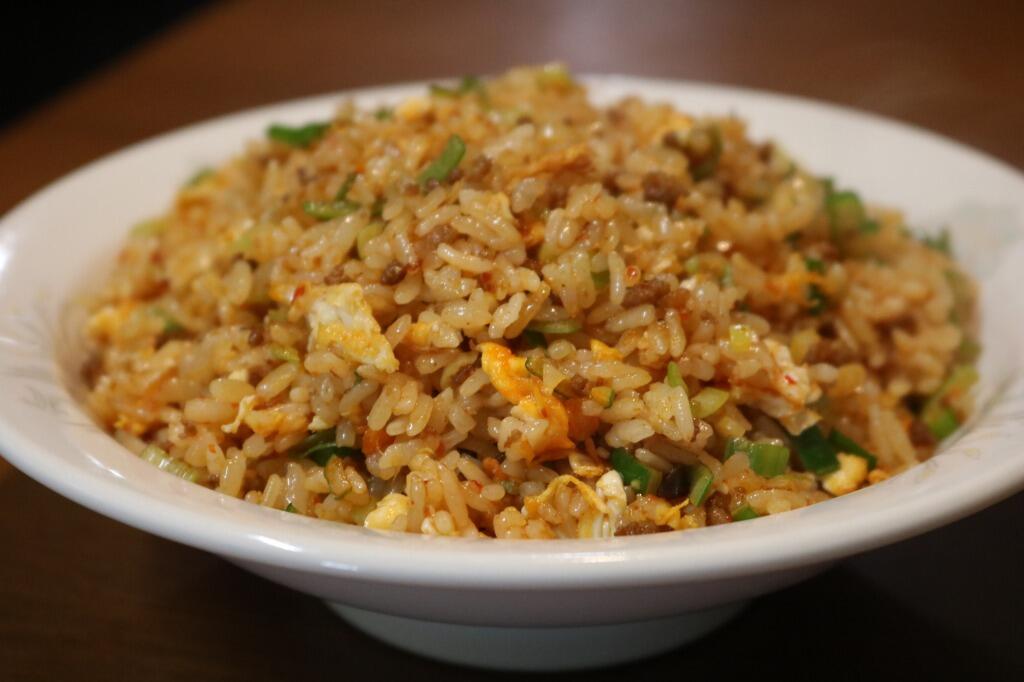
日本語 English 简体中文 京都の中華を語る上で欠かせない「鳳」の文字。あっさりとして食べやすい京都風中華の礎を築いた高華吉氏のお店の1つ「鳳舞(閉店)」の味を今も受け継ぐ中華料理店がいくつかあり、この「鳳」の文字を屋号に使われていることが多いのです。こちらの鳳麟もその一つ。このあたりの詳細は「京都の中華(姜尚美著)」という本に書かれていますので気になる方は読んでみて下さい。 こんなのぼりを見た日には吸い寄せられるように入店してしまいます。 店内は広々としているので、グループ利用にも向いています。 名物ニラ春巻1000円。京都の中華の春巻きといえばこのビジュアルを思い浮かべる方も多いと思います。サクッとした皮と中にぎっしり詰まったタケノコが特徴的。 こちらは珍しい担々炒飯750円。 余談ですが、坦々麺、担々麺と書き方が混在していますが、昔中国で担いで売り歩いていたことが由来なので、「担ぐ」の文字を使っている担々麺が正しいそうです。 ネギのシャキリ食感を残しつつ、ピリ辛がいいアクセントになっています。 深草エリアで京都風中華を味わうならこちらがおすすめです。 ※価格等の情報は取材当時(2019年8月)のものです。 There are a lot of Chinese restaurants that has a name including “Ho” in it. They all inherits the taste of a now-closed Chinese restaurant “Homai”. Mr. Kakichi Ko, the owner of “Homai”, is said to be the founder of the Kyoto-style Chinese cuisine. If you are interested, you can know the details in the book “Kyoto no Chuka (Chinese Cuisine in Kyoto)” written by Mr. Kang Sang-jung. “Horin” is one of the restaurants preserving the “Homai” taste. If you see a banner that says “The Homai taste, faithfully recreated”, you will not be able to resist entering the restaurant. Inside “Horin” is spacious, so a large group can be accommodated. A popular “Horin” menu item is this “leek egg-roll” (1000 yen per serving). This has the typical appearance of the Chinese egg-roll served at restaurants in Kyoto. This egg-roll has a distinctive crispy outer wrap, bursting with bamboo shoots. This is “tantan fried rice” (750 yen), which is generally a very rare menu item. This fried rice is named after “tantan noodles”, a Sichuan dish of noodles covered with a chili sauce. You can enjoy the crunchy texture of chopped spring onion and a spicy hot flavor. If you want to try Kyoto-style Chinese cuisine in Fukakusa area, you should make a point of visiting “Horin”. 在谈到京都的中华时不可或缺的文字是“凤”。开创口味清谈老少皆宜的京都风味中华基业的高华吉先生的店中,有一家就叫“凤舞(现已停业)”,继承其风味的中华料理店有很多家,在店的商号中使用这个“凤”字的也很多。凤麟也是其中一家。关于这个的详细典故都写在“京都的中华(姜尚美著)”这本书里,感兴趣的人可以读一读。 看到这样的旗帜哪一天就会被不自觉地吸引进店。 店内颇为宽敞,也适合团体客就餐。 有名的一品是韭菜春卷只要1000日元。只要说到京都的中华春卷大家脑海里就会浮现出这个视觉效果。松脆的皮和包有很多竹笋的馅是其特色。 这是有稀奇的担担炒饭只要750日元。 说说闲话,坦坦面和担担面两种写法混淆,从前在中国有肩挑串街叫卖的来历,因此“担”字的担担面是对的。 大葱脆爽食感的余韵中,麻辣风味恰如其分。 如果在深草区域想要品尝京都风味中华推荐这家给大家。
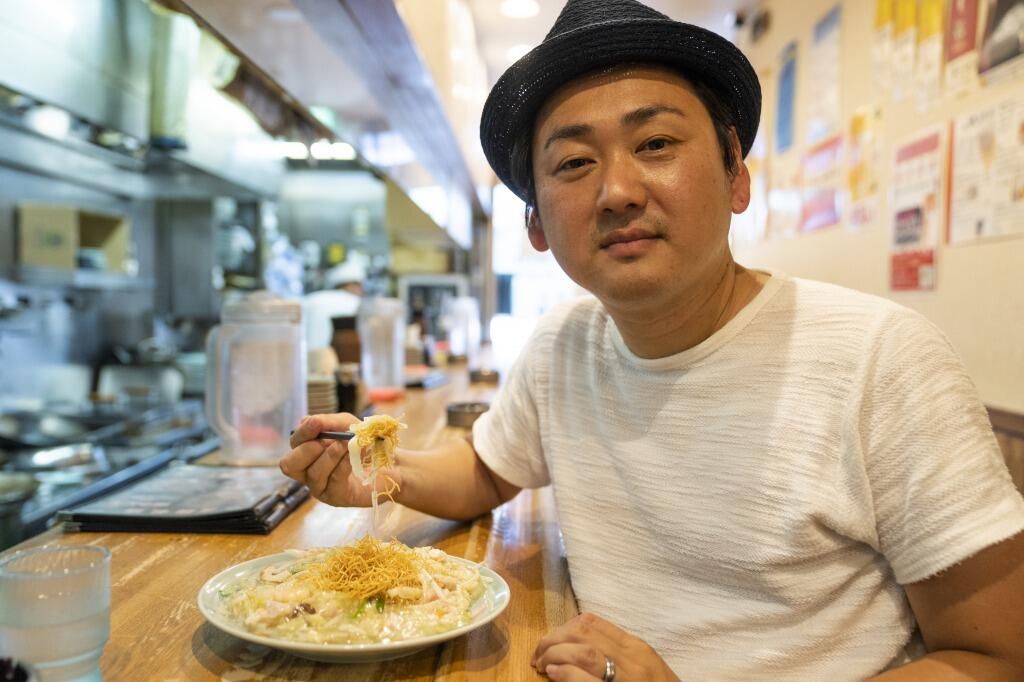
日本語 English 简体中文 深草エリアで昔から愛される中華の実力店。名物は皿うどんですが他のメニューも絶品揃いで、ランチだけでなく深夜食堂としても人気です。 昔ながらの味のある店内は妙に落ち着きますし、手際の良い職人さんの鍋振り姿はつい見とれてしまうほど。オーダーから料理が届くまでの時間も短いので、せっかちな私には非常にありがたい。 師団街道沿いで一際存在感を放っています。 まずは定番の皿うどん(700円)から。エビ、タコ、キャベツ、ちくわ、豚肉、ネギなどかなり具沢山。野菜も多いので実は結構バランスの良い料理です。 麺のパリッと感に程よいとろみの餡がかかることで、強弱のはっきりした食感を実現。 もやしも凄くシャキシャキしていて良いアクセントになっています。 時間が経てば麺がやわらかくなってまた違う味わいになりますが、それもまた良し。 こちらも学生に大人気のボリューム満点の肉丼730円。 中華の丼ぶりといえばJR二条駅近くの「大鵬」のてり丼が有名ですが、こちらの肉丼も侮れません。 とにかく肉と玉ねぎの量が多い。甘みのある玉ねぎは肉の味を邪魔せず、甘辛いタレと共により豊かな味わいに昇華していて、これだけでもご飯がいくらでも食べられます。 久しぶりに来ましたが、やはりどれを食べても間違いないお店です。 ※価格等の情報は取材当時(2019年8月)のものです。 A quality Chinese restaurant beloved for a long time in Fukakusa area. Its most popular item on the menu is sara-udon (fried udon noodles with various toppings), though other menu items are all exquisite as well. “Saikai” is open until late at night, and popular both day and night. The old-fashioned restaurant is quite a comfortable place to visit. It is enjoyable to see the chef deftly shaking the pan to stir the ingredients together. It is also nice, especially for an impatient person like me, that they prepare and serve the food very quickly. The look of “Saikai” is a substantial presence on Shidan-Kaido Street. The most popular menu item is sara-udon (700 yen). The toppings are: shrimp, octopus, cabbage, chikuwa (sausage made from fish), pork, spring onion, and so on. It includes a lot of vegetables, so it is actually a well-balanced dish. The noodles are crispy, and the soup is thick and starchy, which means you can enjoy two contrasting textures. The crunchy bean sprouts add accent to the textures. The noodles soften, their taste changing as the minutes pass, and this is also good. This is a popular menu item for students, “niku-don” (a bowl of rice with pork toppings, 730 yen). The portion is large! As for donburi (a bowl of rice with a choice of toppings) in Chinese cuisine, “Teri-don” served at the Chinese restaurant “Taiho” near JR Nijo Station is the most famous. However, you just cannot miss “niku-don” at “Saikai” too! What most impressive about this menu is the volume of pork and onion in the topping. Onion is sweet, but not obstructing the flavor of the pork. Mixed with a salty-sweet sauce, the topping has a really rich flavor. It all matches perfectly with the white rice that comes with this dish. You will find yourself compulsively requesting another helping of the rice, over and over. I had lunch at “Saikai” after a long absence, but I’m sure that you will be satisfied whichever menu item you select. 在深草区域很早以前就被大家所喜爱的中华料理实力店。有名的一品是什锦炒面,不过也提供其他很多菜单和美味,不仅仅是午餐深夜食堂也深受欢迎。 具有传统味道的店内使人备感轻松,不知不觉地痴迷于手法帅气的大厨甩锅的身姿。从下单到料理做好时间也短,对性急的我来说非常令人感激。 位于师团街道更能突现其存在感。 首先是经典的什锦炒面(700日元)。虾、章鱼、卷心菜、圆筒状鱼糕、猪肉、大葱等相当多的配料。由于蔬菜很多其实是营养相当均衡的料理。 松脆的面条和正合适的浓稠的浇汁,实现了强弱分明的食感。 豆芽也特别脆口,吃起来咔嚓咔嚓很是美妙。 过一会儿面条变得柔软起来,可以品尝到不同的味道,这样不是很好吗。 这也是在学生之间人气很旺的量很大的肉盖浇饭,只要730日元。 要说中华的盖饭JR二条站附近的“大鹏”的盖饭最为有名,不过,这边的肉盖浇饭也不能轻视。 不管怎么说肉和洋葱的量很多。甜甜的洋葱毫不影响肉的味道,和甜辣调料汁一起使味道变的更为丰富和升华,光是这个就能下很多饭。 隔了好久没来,不过是随便吃任何一道也不会错的店。
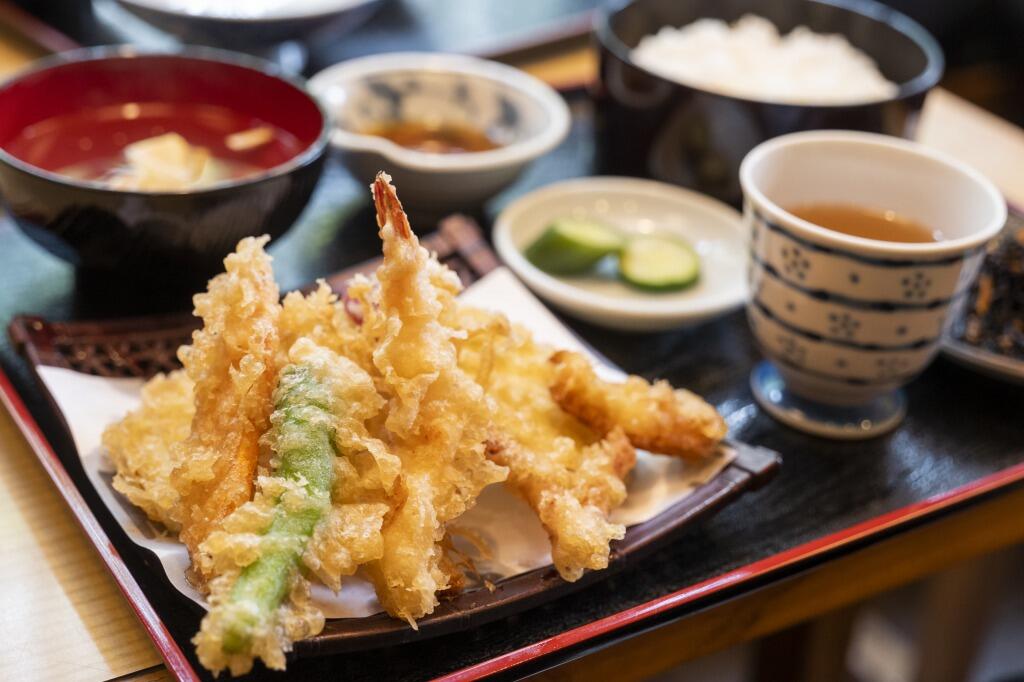
日本語 English 简体中文 深草キャンパスの目の前、西浦町には長い間学生たちに愛され続けている名店がいくつかあります。その中でもこちらは外せないでしょう。 この辺りで天ぷらといえばやはり「天えい」。 ランチタイムは全メニュー800円でしかも消費税込みという超明朗会計! メニューも天ぷら定食、えびフライ定食、天丼、まぐろカツ丼、焼魚定食、刺身定食など種類が豊富な良心的天ぷら店です。 しかも安いだけではありません。天ぷら定食のこのボリュームをご覧あれ。 副菜や吸い物まで付いてきます。ご飯は普通盛りでその辺の定食屋の大盛りぐらいはあるでしょう。 天丼にはこれでもかというぐらい天ぷらがどっさり乗っています。えび、かぼちゃ、玉ねぎ、海苔などいずれもサクッとした食感に丁寧な仕事ぶりが伺えます。 久しぶりに食べましたが、このコスパに慣れると今のオフィス近くでランチを食べられなくなってしまいそうで少し不安になりました。 ※価格等の情報は取材当時(2019年8月)のものです。 In Nishiura-cho, the area right in front of the Fukakusa Campus, there are several famous restaurants that have been favored by students for a long time. Among them, “Tempura Ten-ei” is the must-go-to restaurant. If you want to have tempura in this area, you should go to “Ten-ei” At lunchtime, you can have one of each item from the entire menu for 800 yen, with tax included. What a simple way to charge! Not only is the price is reasonable, but the restaurant offers a rich variety, including set meals with tempura or fried prawns, grilled fish, or sashimi, as well as donburi (a bowl of rice with a choice of toppings) with tempura, or with tuna cutlets, and so on. And the menu is not just reasonably priced, just look at how generous this set meal is with tempura! It is served with some side dishes and a cup of soup. A regular-sized rice portion at this restaurant is almost the same size as a normal large-sized rice portion. Tempura donburi is also served with a variety of tempura on it. Prawn, pumpkin, onion, and seaweed… Delicately cooked, with lightly crispy, crunchy texture. I enjoyed tempura at “Ten-ei” after a long absence. If I get used to this price, I will not be able to tolerate the lunch I usually eat near my office any more. 在深草校园眼前、西浦町有好几家长期以来一直被学生们所喜爱的名店。这家店也是当中不可或缺的一家吧。 这一带说到天妇罗就是“天英”。 午餐全菜单都是800日元而且包含消费税,超级明确账单! 菜单有天妇罗套餐、炸大虾套餐、天妇罗盖浇饭,香煎金枪鱼肉饼盖饭,烤鱼套餐,刺身套餐等种类丰富,良心天妇罗店。 而且不光是便宜。瞧瞧这个天妇罗套餐的量。 还提供副菜和清汤。一般份量的米饭和附近别的店的大份的套餐店的量几乎一样哦。 要特别说的是大量的天妇罗盖在天妇罗盖浇饭上。虾、南瓜、洋葱、海藻等全都是吃起来嚓嚓的松软食感的料理,匠心地烹饪出这些食物。 好久没吃了,不过习惯这个高性价比,在现在办公室附近是否还能吃到这样的午餐稍微有点不安了。
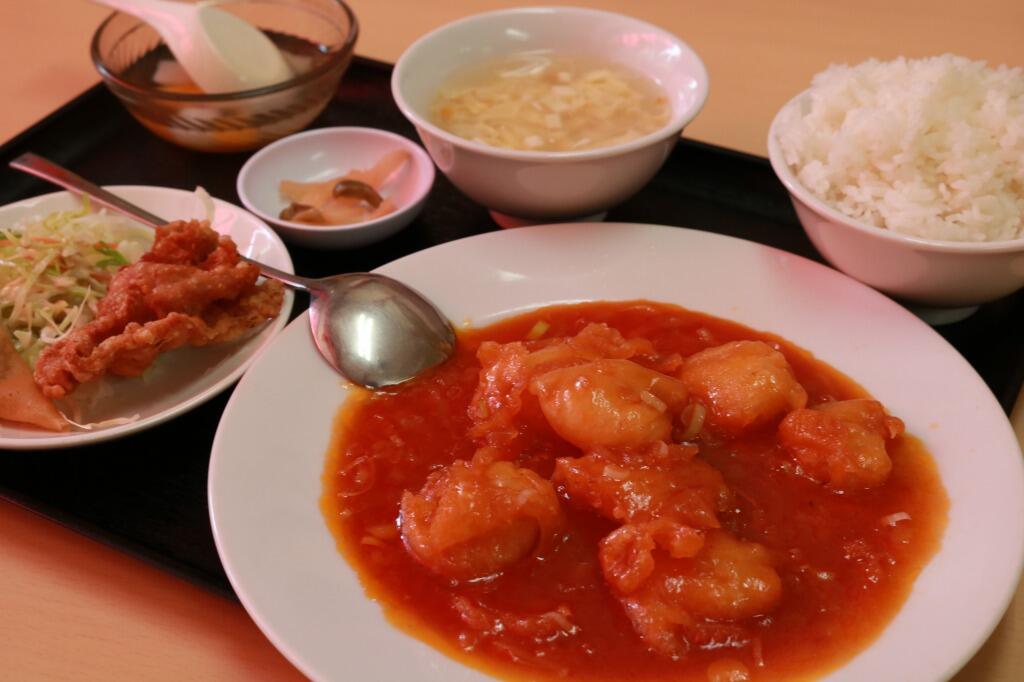
日本語 English 简体中文 龍谷大学の東側、京阪深草駅へ向か道沿いにあるこちら。山東省出身の店主による本場テイストの中華がいただけます。中でもおすすめなのが自家製皮で包む餃子です。 中国出身の店主らしい内装です。京都の大衆中華はこちらのような本場のものと、日本人向けにアレンジした京都風中華があり、京都人は好みや気分によって自然と使い分けているのです。 水餃子は2種類あり、こちらはフェンネル水餃子6個500円 手作りしている皮は歯切れがよく香りも豊か。 中はこんな感じで肉汁たっぷりの美味しい水餃子です。 ちなみに焼き餃子は夜しか頼めないのでご注意下さい。 ランチタイムはおすすめ定食(全品850円)が豊富で、中でもエビチリ定食がおすすめ。 エビもたっぷりで唐揚げ、デザートまで付いたボリューム満点の定食です。 プリっとしたエビチリはご飯によく合います。 他に麺類セット、丼セットなども豊富に揃うので色々と試してみるのもおすすめです。 ※価格等の情報は取材当時(2019年8月)のものです。 “Shinka” is located on the east side of Ryukoku University, on the street toward Fukakusa Station on the Keihan Railway line. The owner is from Shandong Province, China, so you can sample authentic Chinese cuisine. Among a variety of menu items, I recommend you have gyoza (dumpling) wrapped with their homemade skins. As the owner is from China, the interior of the restaurant is decorated in Chinese style. There are two styles of Chinese diners in Kyoto: Ones decorated in authentic Chinese style, and the others decorated in Kyoto style for Japanese customers. People in Kyoto find their favorites according to their preferences, or decide which one to go just depending on their feelings on the day. “Shinka” offers two types of gyoza. The one in the photo is sui-gyoza (boiled gyoza) with fennel. (500 yen for 6 pieces). The homemade gyoza skins are soft and easy to bite into, and richly flavored too. Can you see juicy meat stuffed in the skin? This is so tasty! Be sure to note that the other type, yaki-gyoza (grilled gyoza), is served only in the evenings. A rich variety of set meals (850 yen per serving) are available during lunchtimes. My recommendation is the set meal with stir-fried shrimp in chili sauce. There is a generous serving of shrimps in the dish, and the set meal is served with fried chicken and dessert. It really is a huge meal. I might add that plump shrimp fried in chili sauce matches perfectly with white rice. You can also have set meals with noodles or donburi. Please try many different menu items if you can. 位于龙谷大学的东侧、朝京阪深草站的街道上的这家店。山东省出身的店主能让大家品尝到原产风味的中华。这当中强力推荐的是自制饺子皮。 符合店主中国出身风格的内部装饰。京都的大众中华分为两个流派,与这里一样的保持原产风味的点、针对日本人的口味改良的京都风味中华,京都人根据自己的爱好和心情自然地选择自己喜欢的。 水饺子有2种,这是茴香水饺子6个500日元。 自己做的饺子皮很有嚼劲香味十足,不是吗? 里面是这样子,肉汁很多很好吃的水饺子。 顺便说一下煎饺只有夜晚才有敬请注意。 午餐时间推荐的套餐(全是850日元)种类丰富,当中特别推荐干烧明虾套餐。 虾很多还附送炸鸡块和甜点,是量很足的套餐。 鲜嫩的干烧明虾很能下饭。 其他面条套餐、盖饭套餐等种类丰富品种齐全,建议逐一品尝。
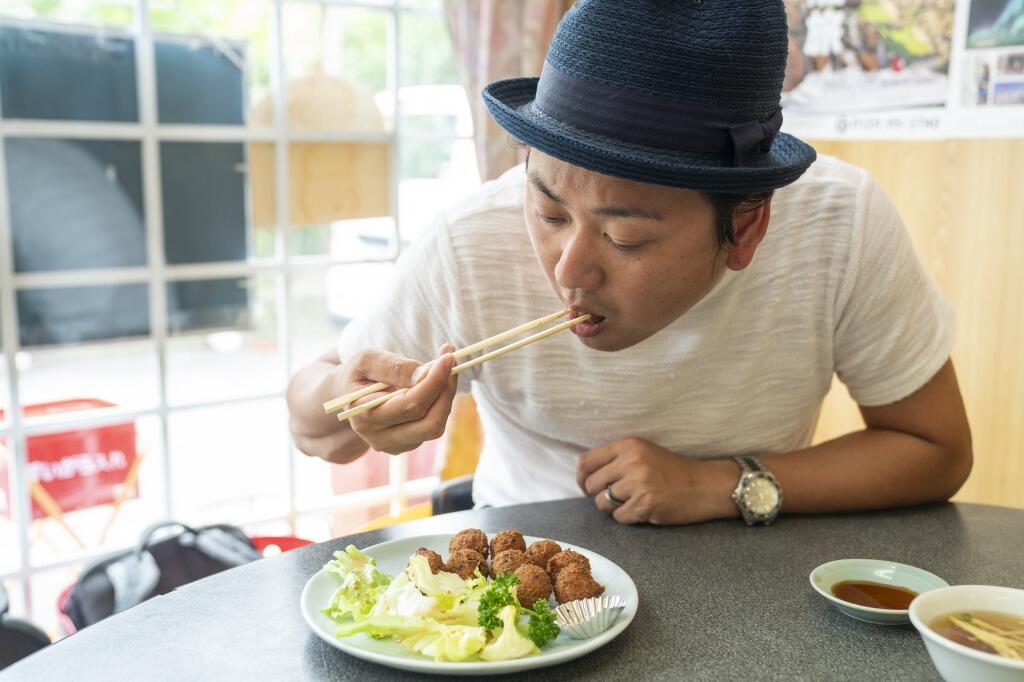
日本語 English 简体中文 深草でアットホームな中華といえば明養軒。ラーメンやワンタンメン、焼きそばなどの麺類と一品料理が充実しています。常連は日替わりランチ(780円)のオーダー率高し。 こちらはミニチャーハン(500円)ですが、十分ボリュームがあります。 パラっとしていて玉子がたっぷり。セットになっているスープが美味しい。 ちょっと珍しい肉団子のから揚げ800円。 肉団子を揚げることで外側をサクッと食感に。意外とあっさりで塩胡椒をつけていただきます。おつまみにもおかずにもなる不思議な一品。 餃子は7個入りで280円とリーズナブル。京都の餃子は6個入りと7個入りに大きく分かれていて、餃子を頼むとつい数えてしまう癖が。 皮が薄く中の餡の旨さがダイレクトに伝わる餃子です。 日本人の口に合う味わいで飽きのこない一軒です。 ※価格等の情報は取材当時(2019年8月)のものです。 “Meiyoken” is a Chinese restaurant in Fukakusa. Here, you can dine in a homely atmosphere and take in the rich variety of noodles on offer, such as ramen, wonton noodles, and fired noodles, as well as a-la-carte dishes. Daily special lunch (780 yen per serving) is a popular menu item for regular customers. This is “mini-sized fried rice” (500 yen per serving). Although it is “mini-sized”, it is actually quite a generous helping. This rice is not sticky, and it is cooked with a lot of eggs. The soup comes with it as a set, and this is tasty too. Fried meatballs (800 yen per serving) is the menu item that is rarely offered at other restaurants. Being fried, the outer layer of the meatballs becomes crispy. Just putting salt and pepper is enough. They match with the white rice, as well as going well with alcohol. 7 pieces of gyoza are served per dish. 280 yen per serving is quite reasonable. Restaurants in Kyoto usually serves 6 or 7 pieces of gyoza per dish, and I can’t help happily counting them when I receive my gyoza order. The skin of the gyoza is not too thick, so you can enjoy the taste of the fillings more directly. “Meiyoken” prepares foods to suit the Japanese palate, and you will never tire of the flavors they create. 在深草要说具有居家氛围的的中华就是明养轩。拉面和馄饨面、炒面等的面条类和一品料理种类繁多。老顾客常点的是每天一换的午餐(780日元)。 这是迷你炒饭(500日元),不过量也足够大。 松软的鸡蛋量很多。一起送的汤也很好喝。 稍微新奇的干炸肉丸子只要800日元。 炸肉丸子的表面食感松脆。口味出人意料地清淡撒上胡椒盐更为美味。小菜和主菜都是不可思议的一品。 饺子7个一盘280日元价格合理。京都的饺子大概分为6个和7个一盘,养成了点了饺子后不知不觉数个数的癖性。 皮很薄饺子馅的美味很直接地就能品尝到的饺子。 是符合日本大众口味百吃不厌的一家店。
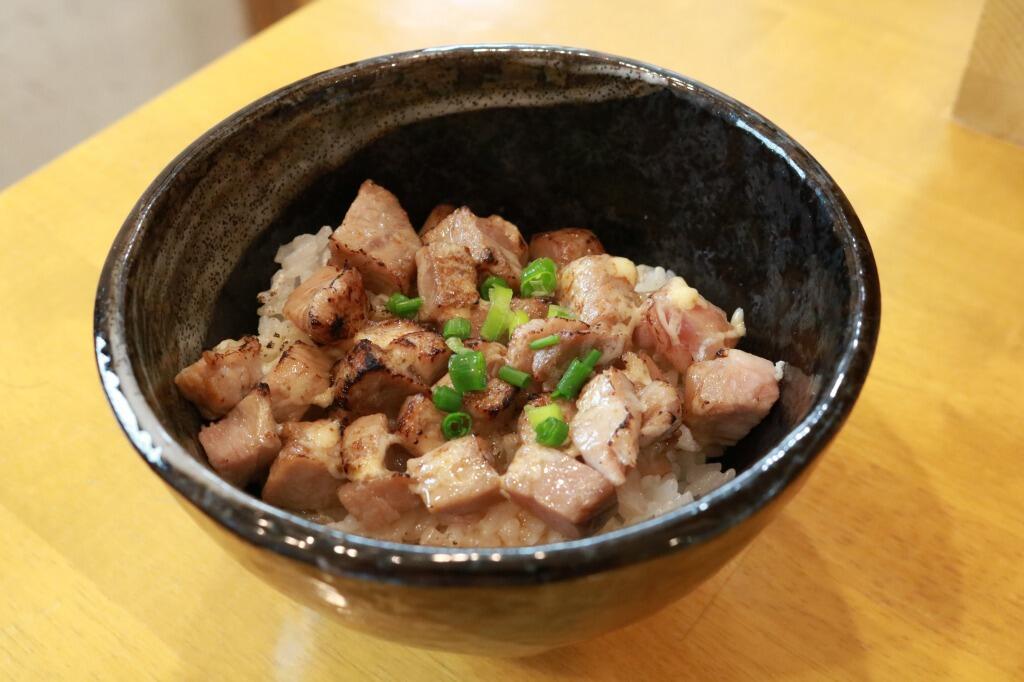
日本語 English 简体中文 龍大の深草キャンパス付近はここ数年で急激にラーメン店が増えています。京都で一番有名なラーメン激戦区「一乗寺」に次いで有名になりつつあり、京都のラーメン通の間でもかなり注目されているエリアです。ここ「らーめんみやび」はその内でも特に人気の一軒。 深草キャンパスの目の前、西浦町にあります。この辺りに下宿している龍大生は多く、学生時代は用もないのによく友人の家に泊まりに行ったものです。 こちらの最大の特徴はこのふわふわの泡スープ。 「とりとんらーめん (しお、しょうゆ各700円)」のスープなのですが、まるでカプチーノのようにきめ細かな泡に覆われて麺が見えません。 口当たりは優しくまろやかで、後からしっかりと鶏、豚の風味が口の中で広がります。 たまりませんね。 麺は国産小麦を使用した自家製で、ツルツルのモチモチ。相性抜群でまさにこのスープのために生まれてきた麺ですね。 炙られたチャーシューが香ばしい「ぶた飯(250円)」。 ラーメンとセットにしても1000円以内というのは嬉しいですね。 しかも学生は麺大盛り100円が無料になります。 龍大生が羨ましい… ※価格等の情報は取材当時(2019年8月)のものです。 There are a lot of new ramen shops opened one after another in the past few years around the Fukakusa Campus of Ryukoku University. The area is now referred to as a ramen battleground in Kyoto, along with the famous Ichijoji area, and have gotten a lot of attention from ramen experts in Kyoto. “Ramen Miyabi” is one of the most popular shops in this battleground. “Ramen Miyabi” is located in Nishiura-cho, the area right in front of the Fukakusa Campus. Lots of students live in apartments in this area. I also had friends living in this area, and often visited and stayed with them for no particular purpose. The greatest feature of the ramen at this shop is this light fluffy soup. This is the soup used for the “Tori-ton Ramen” (salty soup or soy-sauce soup, 700 yen per serving). Ramen noodles are covered almost entirely by the Cappuccino-like smooth, densely-frothed soup. It tastes mild and mellow. The flavor of chicken (tori) and pork (ton) comes out gradually but clearly. As for me, I just can’t stop my addiction to it! The smooth and slightly chewy and sticky ramen noodles come from made-in-Japan wheat. The noodles match perfectly with the soup. I can declare that this soup and these noodles were meant to be together. “Buta-meshi” (rice with roasted pork, 250 yen). The smell of barbecued pork stimulates our appetites. It costs less than 1000 yen even if you have “Buta-meshi” with ramen. How reasonable is that? It usually costs 100 yen for an extra-large helping of noodles, but it’s free for students. I want to be a student again… 龙大深草校园附近这几年拉面店猛烈地增加很多家。正在紧跟在京都最有名的拉面激战区“一乘寺”之后变得有名起来,在京都的拉面通之间也相当地关注的这片区域。这里的“拉面雅”是当中特受欢迎的一家。 位于深草校园眼前、西浦町。在这附近租房住的龙大生特别多,学生时代没什么事情也经常去朋友家留宿。 这家店的最大特色是这个轻飘飘的泡汤。 “TORITON拉面(盐、酱油味各700日元)”的汤,简直象卡布奇诺咖啡一样无数细小的泡沫覆盖在上面看不到面条。 口感优雅温和,慢慢地醇厚的鸡(TORI)和猪(TON)的风味在口中弥漫开来。 让人难以忍受哦。 面条是使用国产小麦自制,柔软光滑很有嚼劲。 浑然天成可以说是为了这个汤而诞生的面条。 炙烤的叉烧肉非常香“炙烤猪肉饭(250日元)”。 和拉面一起的套餐还不要1000日元,太高兴了吧。 而且100日元的面条大份学生免费。 真羡慕龙大生…
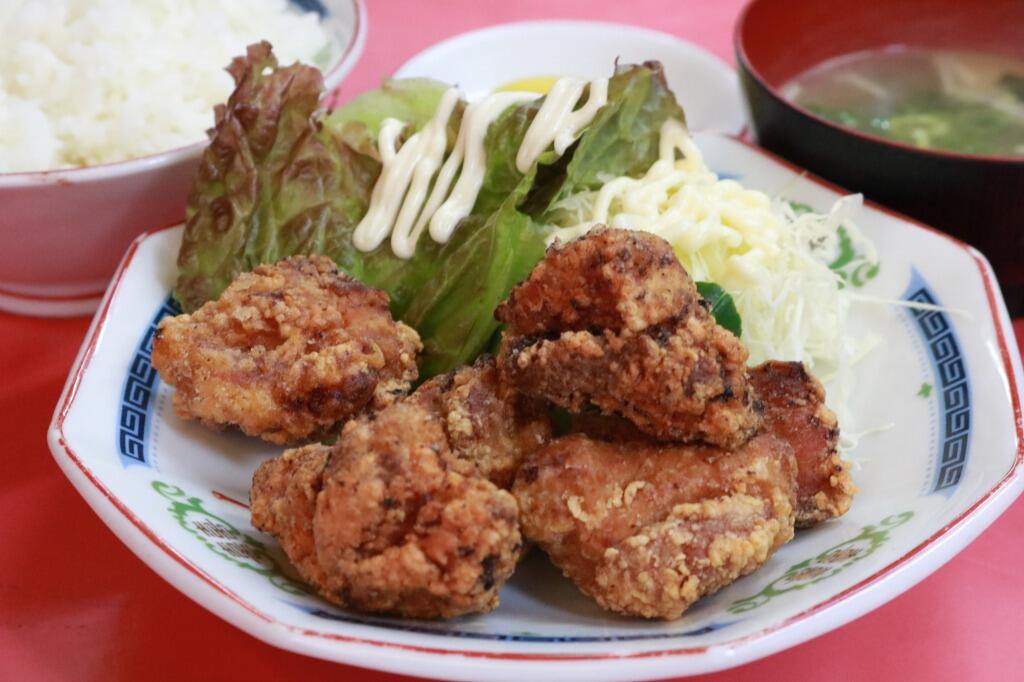
日本語 English 简体中文 深草キャンパスのすぐ西側に佇む老舗ラーメン店。ラーメン以外に定食も多く、大衆食堂や町中華に近い雰囲気のお店です。 こちらに伺うのは何年ぶりだろうか。 龍大卒業生なら誰しもが懐かしがる一軒だと思います。 気さくで優しい店主ご夫婦もお元気そうです。 実はこちら、京都が生んだあるスターの御贔屓のお店としても有名で、店内にはCDやサインが所狭しと並んでいます。 多くのファンが全国から聖地巡礼で訪れていて、地元の方、龍大生も含め様々な方に愛されているお店なのです。 ラーメンの種類も豊富で迷ってしまいますが、個人的にはカレーラーメン(720円)がおすすめ。 出汁が効いていて、夏の汗をかいた後など最高です。 焼きめし530円も外せない一品です。 豪快に炒めたパラッとタイプ。 そしてこちらの名物、鳥のからあげ定食700円。 この唐揚げは甘辛い自家製ダレの浸み具合が凄く、噛むほどにタレと鶏のジューシーな味わいが口の中に広がります。ご飯がいくらでも進むタイプ。 ちなみにラーメン1人前にチャーハン半人前の「はんちゃん」という名物メニューがあり、お値段なんと680円!学生に人気なのも納得です。 この日も多くの学生で賑わっていましたが、店主と学生が楽しそうにお喋りしているのを聞きながら、愛され続ける料理の数々には店主の優しさも詰まっているのだとふと気づきました。 ※価格等の情報は取材当時(2019年8月)のものです。 “Ramen Kiraku” is an old ramen shop located right on the west side of the Fukakusa Campus. They offer a variety of set meals in addition to ramen. It resembles a normal diner or small Chinese restaurant rather than a ramen shop only. How long has it been since I came here last time? I’m quite sure that there are no Ryukoku alumni who have never eaten at this shop while in school. The owner and his wife are kind, friendly and cheerful just as I remember. It might come as surprise that this is a favorite ramen shop of a very famous singer from Kyoto. There are her CDs and autographs displayed, crowded together on one wall. Many of her fans also visit the shop from all over Japan, as if on a pilgrimage to a holy place. You can see how “Ramen Kiraku” is fondly loved by many people, including local residents and students of Ryukoku University. Its ramen menu is rich in variety. There are so many choices that you cannot easily decide what to have. Personally, I recommend the “Curry ramen” (ramen with curry soup, 720 yen per serving). The ramen soup, made using rich stock, makes the curry more tasty. It is best to have this after enduring some of hot summer weather. Fried rice (530 yen) is another must-have menu item. Because it is stirred well while being fried, this rice is not sticky. Here is the specialty of this shop, a set meal with fried chicken (700 yen). Well soaked with their homemade salty-sweet sauce, you can enjoy juicy chicken with the taste of the sauce in every bite. It matches perfectly with white rice, which you will find yourself compulsively requesting for another helping, over and over. Another popular menu “Hanchan” is a set consisting of a bowl of ramen and a half-sized portion of fried rice, for only 680 yen! You can see why this is popular among students, can’t you? There were a lot of students in the shop when I visited, and watching students and the owner chatting, I realized that everyone loves the food here not only because it is delicious but also because the owners’ love for food and the company of their customers is reflected in the food they prepares for them. 伫立于深草校园的西侧伫立的老铺子拉面店。除了拉面以外还有很过套餐,是一家更接近大众餐厅和街边中华料理气氛的店。 大概是时隔多少年拜访这家店? 只要是龙大毕业生谁都会怀念的一家店。 坦率和善的店主夫妇看起来也一如既往地精神。 其实这家店,作为京都诞生的某明星经常关顾的店非常有名,店内地密密麻麻地排列许多CD和签名。 作为圣地巡礼全国很多粉丝来到这里拜访,包括本地的人、龙大生在内为各界人士所喜爱的一家店。 拉面的种类丰富让人难以下决定,不过,我个人还是推荐咖喱拉面(720日元)。 汤汁颇具效果,在夏天出通大汗之后等直达最高境界。 炒饭530日元也是不可或缺的一品料理。 大火炒出来的一粒一粒松散的炒饭。 接下来是这家店的有名料理,炸鸡块套餐700日元。 这个咸甜的炸鸡块和自制调味酱完美调和,一口咬下去,调料酱和鸡汁的味道充满全口。非常能下饭的套餐。 顺便说一下,拉面1人份和炒饭半人份的“半炒饭(HANCHAN)”是有名的一道套餐,价格680日元!深受学生欢迎的也是可以理解的。 这天也有很多学生非常热闹,一边听着店主和学生快乐地谈笑,突然注意到一直被大家喜爱的各道料理中充满了店主善意。
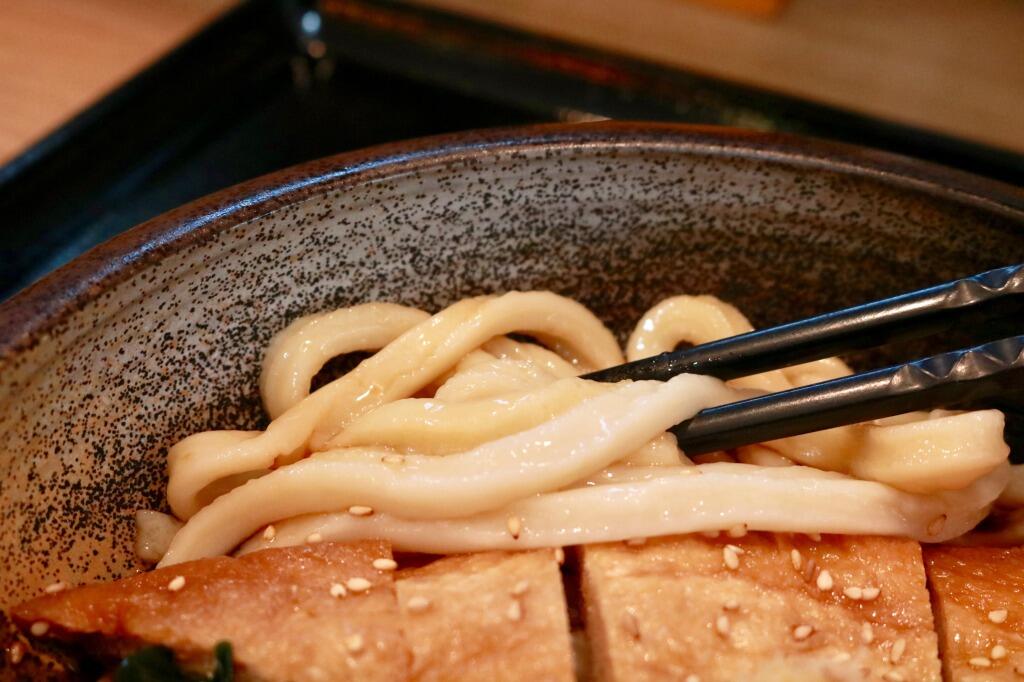
日本語 English 简体中文 うどんや蕎麦は非常にシンプルな料理なので、“だし”はきいても“だまし”はききません。誰でもできそうに見えて実は難しく奥が深い料理なのです。 深草に来て美味しいうどんが食べたくなればここ「けんどん屋」がおすすめ。 観光客で賑わう京阪伏見稲荷駅からすぐの場所にあるテレビや雑誌によく取り上げられている人気の手打ちうどん屋です。 最近は外国人観光客も多いようで英語メニューもあります。 暑い夏にぴったりなのがこの冷やしきつね(820円)。 うどんは太めで歯切れの良い食感が特徴で、冷やしならコシがさらに強調されますね。 甘きつめ、ワカメ、ネギ、錦糸卵と具沢山で、胡麻の風味がほんのり心地いい。 他にどんぶりとのセットメニューも豊富な頼もしい一軒です。 ※価格等の情報は取材当時(2019年8月)のものです。 Udon and soba noodles are very simple foods. A chef’s elaborate efforts should not be overtly displayed in it. They appear easy to cook, but actually they are sophisticated cuisine using intricate recipes. If you want to enjoy udon noodles in Fukakusa, you should go to “Kendonya.” Located close to Fushimi-Inari Station on the Keihan Railway line, a place crowded with many tourists visiting major sightseeing spots nearby, this udon eatery is popular for its hand-kneaded noodles, often introduced on TV and in magazines. They have an English menu, as a lot of foreign tourists have been visiting the premises recently. “Hiyashi Kitsune” (udon noodles with deep-fried tofu served in cold soup, 820 yen) is a perfect menu item for a hot summer day. The thick udon noodles are smooth and easy to bite through. When served in cold soup, you can enjoy the al dente texture even more. It has a number of toppings, such as sweet fried-tofu, seaweed, chopped green onion, and thin omelette cut into strips. A slight sesame flavor adds a pleasant accent to it. “Kendonya” also offers a variety of set meals consisting of udon noodles with donburi (a bowl of rice with a choice of toppings). 因为鸟冬面和荞麦面是非常简单质朴的料理,即使"汤汁"好吃"欺骗"也立马被识破。谁看上去都会其实是一道很难恨深奥的料理。 如果来深草想变得吃好吃的鸟冬面这里“KENDON屋”推荐。 位于满是游客热闹非凡的京阪伏见稻荷站眼前,经常被电视台和杂志采访的深受欢迎的手打乌冬面店。 最近外国人观光客很多还有英文菜单。 很适合酷热的夏天吃的冷油豆腐鸟冬面(820日元)。 鸟冬面很粗嚼劲很好的食感是其特色,凉一下更能突出其弹性哦。 甜油豆腐、海带、大葱、锦糸鸡蛋和很多配料,芝麻的风味微微有点感觉非常好。 与其他盖饭的套餐也很丰富是值得信赖的一家店。
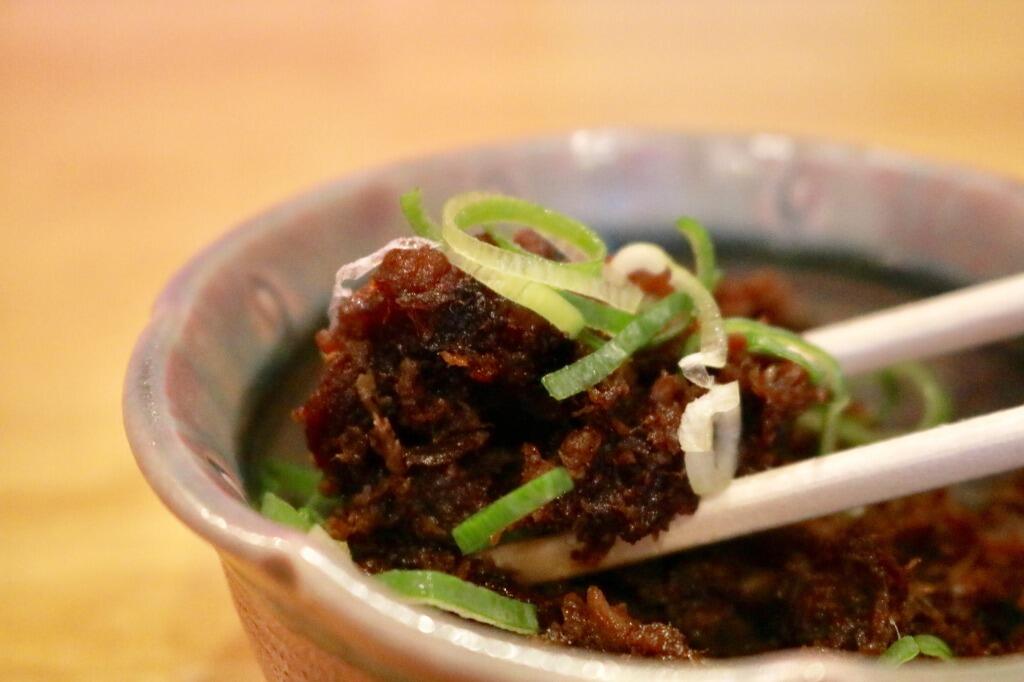
日本語 English 简体中文 居酒屋のランチはお店によってクオリティの差が激しいことでも有名です。私の中で。 居酒屋は売上的にも夜が本番になるので、ランチを片手間でやっていたり、前日の残った食材消費のためにやっていたりするケースもあり、このパターンは正直残念なことが多いです。 一方で、夜と同じく手抜きなしでランチを頑張っている居酒屋もあります。そういうところは結局夜ごはんも食べに行ってみたくなるので、昼夜共に流行ることになります。どんな仕事でも手を抜かずにまじめにやっていると誰かが見てくれてるものです。 そして深草にも昼夜問わず全力投球の素敵な居酒屋があります。 広々とした店内には魅惑のメニュー札がずらり。 名物は、ぷりぷりのホルモンや野菜を堪能できる「ちりとり鍋」ですが、他に出汁巻き、唐揚げ、すじ煮込み、かつとじなどの“テッパンメニュー”の他、豊富な定食が揃います。 特に唐揚げはテイクアウト利用できるほど人気で、とりぽん定食(880円)はがっつりとスタミナチャージできる昼の定番です。 かなり大ぶりの唐揚げはてんこ盛りで食べ応え抜群。外はカリッと中はジューシーな誰もが好きなタイプです。 夜の人気メニューすじ煮込みは1日じっくり煮込んだ濃厚な旨みが堪能できます。 ランチの定食にセットで付けることも可能です。 学生限定でハイボールが400円→200円になるなど、学生にも優しく昼夜問わず人気のお店です。 ※価格等の情報は取材当時(2019年8月)のものです。 In my personal opinion, quality of lunch at izakaya (Japanese-style pubs) greatly differs from one pub to another. Izakaya are open mainly in the evenings. So, some of them open at lunch time just as side businesses, or some even offer lunch just to finish off left-over food from the previous evening. These izakaya do not offer good lunches, unfortunately. However, there indeed are some izakaya that provide excellent lunches, committed to make them equal in quality to their evening offerings. If you eat lunch at one of these places, you will definitely become interested in having dinner there as well. As a result, the izakaya will be popular for both lunches and dinner times. This is a typical example of winning admiration if you work hard at everything, without cutting corners. There is one such wonderful izakaya in Fukakusa: “Renge”, an izakaya that gives their best for both lunch and dinner. Looking around the spacious pub, you can find a good many paper sheets posted on the walls, with a tempting menu selection written on each. The specialty of this izakaya is “Chiritori Nabe”, a hot pot in which beef or pork offal with plump texture are cooked with a lot of vegetables. They also offer staple menu items such as dashimaki (Japanese omelette), katsutoji (pork cutlet with simmered eggs), and stewed beef tendon, in addition to a variety of set meals. Their fried chicken is especially popular, and you can take it home not just eating it at the pub. “Toripon Teishku” (set meal with fried chicken, 880 yen per serving) is an ever-popular lunch menu. See how huge each cut of the chicken, and how generously they are served! Juicy chicken in crispy fried batter. Everyone loves it! Stewed beef tendon is a popular dinner menu item. Stewed well for a day, the tendons are very rich in flavor. You can also select it as a side dish of a set meal. If you are a university student, you can have a glass of highball for 200 yen, which usually costs 400 yen. This student-friendly izakaya is loved by many people, for both lunch time and dinner time. 众所周知居酒屋的午餐各个店的味道千差万别。在我认识中。 因为居酒屋夜晚才是他们销售额的主战场,于是有为了消磨空闲才做午餐、或者为了用掉前一天残留的食材等情况,坦率地说这实在很遗憾。 另一方面,也有与夜晚同样没有偷工减料努力作午餐的居酒屋。因为好吃夜晚也想出尝一下,变得白天和夜晚都流行起来。无论任何工作都不偷工减料认真地做,谁都能看到。 因此在深草有不分昼夜全力投入的非常棒的居酒屋。 宽敞的店内深具魅力的菜单牌排成一大排。 有名的料理是,可以享用的富有弹性的内脏和蔬菜的“簸箕锅”,不过其他的汤汁卷、炸鸡块、炖煮牛筋、炸猪排等“经典的料理”以外,还提供丰富的套餐。 特别是炸鸡块还可外卖深受欢迎,炸鸡(TORIPON)套餐(880日元)是需要大量体力的午餐经典。 相当大块的炸鸡块堆积如上嚼劲十足能满足您的食欲。外焦里嫩谁都喜欢的一品料理。 夜晚的受欢迎的料理是炖煮牛筋,能让您尽享耗费1天踏踏实实地炖出来的浓厚美味。 也可以作为午餐的套餐享用。 学生限定高杯酒400日元优惠到→200日元等,对学生很友善的昼夜不分深受欢迎的一家店。
 紹介
紹介

藤森神社 名水「不二の水」が湧き出す創祀1800年の歴史ある神社 5月5日の駈馬神事は必見! みなさんは願掛けをしたことはありますか?願掛けといえば神社にお参りに行って神様に祈りを捧げることです。学生であれば受験の前などに一度はしたことがあるのではないでしょうか。藤森神社は、勝運と学問の神様に加えて馬の神様が祀られています。馬の神様が祀られているだけあって騎手の武豊さんなど、競馬関係の方が参拝に来られるみたいです。そんな藤森神社ですがどのような経緯で創設され、人々に親しまれるようになったのでしょうか。 そんな藤森神社ですがどのような経緯で創設され、人々に親しまれるようになったのでしょうか。 藤森神社の歴史 藤森神社は2005年に創祀1800年を迎えた歴史ある神社です。神社に伝わる縁起によると藤森神社の起源は、神功皇后が新羅征伐を成し遂げた後、全ての兵具を納め、塚をお造りになり、「弓矢蟇目(ゆみやひきめ)の法」を修して神々を祀り始めたことだとされています。 平安時代から、現在の藤森神社の周辺は藤の林で盛り上がっており、神社の神紋が「登り藤」であることから、藤の林と関連があることが分かります。 むらさきの 雲とそよそに みえつるは 木高き藤の 森にそ有ける 小侍院 このように小侍院の和歌にも詠まれ、この辺りの地域が「藤ノ森」と呼ばれるようになったと推測されます。神社も、「藤ノ森にある神社」ということから「藤森神社」と呼ばれるようになったとか。 藤森祭について 毎年5月5日に行われ、菖蒲(あやめ)の節句発祥の祭りとして知られています。節句に飾る武者人形には「藤森の神」が宿ると言われており、今でも祭りの日に伏見街道の旧家では甲冑を飾り、通る人々に披露しているそうです。菖蒲の節句に因み、武事・軍事を尊ぶ祭りとも考えられ戦勝・武功を祈願する神様とされてきました。 藤森祭では二つの催しがあります。次に、その催しについて触れていきたいと思います。 ・駈馬神事 1200年の歴史を持つ伝統行事である駈馬神事(かけうましんじ)で、馬に乗りながら筆で文字を書く「一字書き」であったり、馬の上で逆立ちしたりするなど、駆け抜ける馬上での様々な曲芸を披露しています。観客は、目の前で繰り広げられる盛大な曲芸に目を奪われ、大きな歓声を起こします。駈馬神事は藤森祭を賑わす一番の催しと言っても良いでしょう。 ・武者行列 武者行列には四つの行列があります。「朝渡」と呼ばれる御祭神早良親王の東征の行装、「皇馬」と呼ばれる清和天皇勅諚による深草貞観の祭りの行装、「拂殿」と呼ばれる御祭神神功皇后凱旋・旗神祀の行装と「七福神」の行装で、これらの先頭に鼓笛隊が進む形で氏子地域を練り歩きます。 地域の人々に愛される不二の水 京都の飲める名水で、日本を代表する酒どころである伏見の名水です。 不二の水の「不二(ふじ)」は二つとないおいしさという意味で、「藤(ふじ)」とかけた名前になっています。「不二」は「不死」にもつながり、健康長寿、勝運にもご利益があると言われています。地元の方々がペットボトルに水を汲みに来る姿が見られます。不二の水は地域の人々に愛されている名水であることが分かります。 石川五右衛門が寄進した台石の秘密 石川五右衛門と手水鉢台石 神社に行くと必ずある手水鉢ですが、藤森神社の手水鉢にはある言い伝えがあります。それは、天下の大泥棒である石川五右衛門が、盗んできた石を台石として使っているのです。ただの台石では言い伝えとして残るはずがありません。では、どこから盗んできたものなのでしょうか。実は、石川五右衛門が盗んできた台石は、宇治市の浮島にある十三重石塔の上から5番目の石を盗んできたと言われています。では、何故わざわざ盗んできて藤森神社に寄進したのでしょうか。 五右衛門は豊臣政権五奉行の一人である前田玄以に追われ、その時に逃げ込んだのが藤森神社でした。前田玄以は、神社に対し身柄の引き渡しを求めましたが、神社側が「管轄が違う」という理由で引き渡しを拒否しました。この神社の対応によって逃亡に成功した五右衛門は、その御礼として宇治の浮島にある十三重石塔から石を盗み藤森神社に寄進したそうです。参考文献・石川五右衛門が盗んできた藤森神社の手水鉢台石https://kyotohotelsearch.com/blog/2011/11/07/fujinomorijinjachozubachi/最終確認日:2021年2月21日・LINE トラベルjp 藤森神社の不二の水https://www.travel.co.jp/guide/article/20112/最終確認日:2021年2月21日・Japan’s Travel Manual-for your pleasant journeyhttps://jpmanual.com/fujinomorijinja最終確認日:2021年2月21日・ラジオNIKKEIhttp://www.radionikkei.jp/kodanwalk/sp/post_31.html最終確認日:2021年2月22日・深草を語る会『深草を語る』財団法人 深草記念会(2013)p58〜63
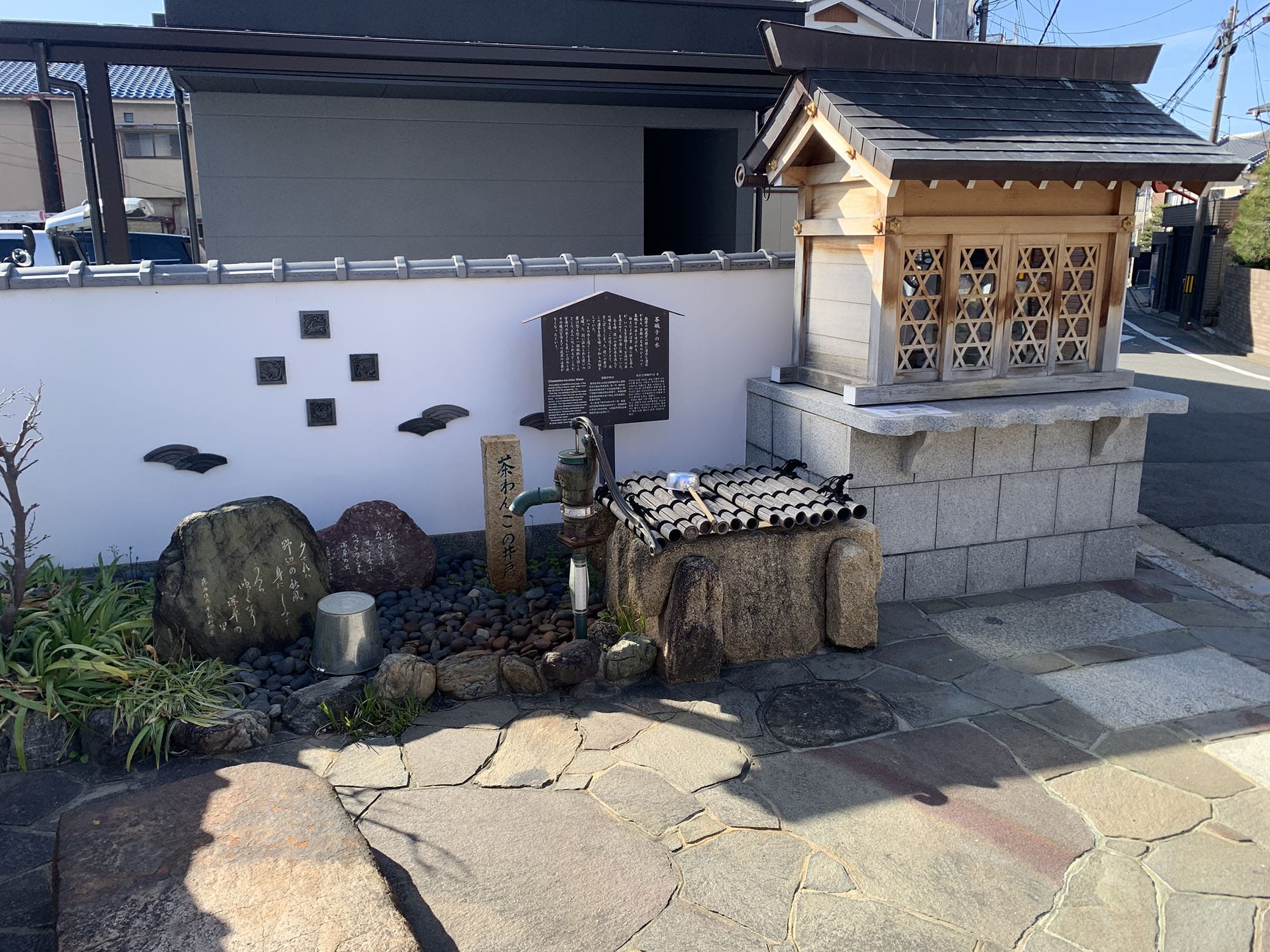
伏見街道を行く② 小さな博物館のような茶碗子の井 伏見街道(本町通)から石峰寺の方に歩いて行くとその井戸はあります。井戸の名は、「茶碗子の井」。古くから地域の人に利用され、町の人によって魅力あふれるスポットへと変貌を遂げた、茶碗子の井について探っていきます 伏見街道(本町通)から石峰寺に向かう途中、石峰寺の石段下から南西方向の道路脇に小さな地蔵堂と「茶碗子の井」と呼ばれる井戸があります。この井戸から湧き出る水は「茶碗子の水」と呼ばれる京都の名水の一つです。 地元では「清水」と呼ばれており、近所の農家が野菜を洗う共同水場となっています。また、明治の初めの頃までは、100mほど西を通る伏見街道までこれらの井戸一つから木菅が引かれ、街道に面した一本松のあたりを往来する人や、牛馬の飲み水として利用されていたと伝えられています。しかし、残念ながら現在水は湧き出るものの飲用水ではありません。 まるで小さな博物館?京都 深草の歴史・文化にあふれる装飾 2014年6月町内や地域の方々によって井戸の周辺が整備されました。井戸の横にある地蔵堂には四体のお地蔵さまがおられます。地蔵堂は、堂の中には町内出身の日本画家作の広大な宇宙と恵みを与える太陽、水豊かな地球を描いた内壁画が描かれており、洗い場の野菜かごをイメージしたかごめ格子戸が取り付けられています。波形の台石は流水をイメージされており午前中には波形の影を見ることができます。 井戸には石組みの井筒竹蓋がされており、開けると清水が見えるようになっています。さらに、手動揚水ポンプが設置されているので、手押しで井戸水をくみ上げることが可能です。 井戸周辺には様々な装飾が施されています。京の都を守る四神を描いた装飾京瓦、平安時代に深草を詠んだ藤原俊成の歌碑(町内会員の揮毫)など、細部までこだわられた装飾がされています。この装飾は京都・深草の文化をギュッと集めたようになっているので、是非現地に足を運んで見て欲しいスポットです。私は実際に見た時、小さな博物館に訪れたような気持ちになりました。 「茶碗子の井」にまつわる昔話 「茶碗子の井」には、名前にちなむ話が語り継がれています。 昔、都に住む茶人が茶を点てるにあたり、使いの者に宇治橋三の間まで水を汲ませていました。しかし、ある日使いの者が水を汲んで持ち帰る途中にこぼしてしまいました。そこで仕方なく、石峰寺の横の井戸で水を汲んで持ち帰ったのですが、叱られることを恐れてこぼしてしまった事実を隠していました。茶人はいつもと違う水に気づくとともに、この水の方がおいしいと褒め、以後この茶碗子の水で茶を点てるようになったそうです。参考文献・深草を語る会『深草を語る』財団法人 深草記念会(2013年)P22・23・『京都観光オフィシャルサイト 京都観光Navihttps://ja.kyoto.travel/tourism/single02.php?category_id=9&tourism_id=41 最終閲覧日:2021年2月27日
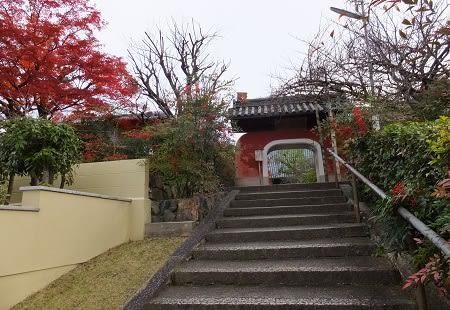
日本語 English 简体中文 狩野派に学んだ絵師、もお世話になった! 石峰寺を直撃。 江戸時代に活躍し、日本美術史に大きく貢献。国内外問わず作品が絶賛されている絵師の伊藤若冲。実は、石峰寺の門前には彼の草庵があったのです。天明8年(1788)の京都大火で家を失った若冲が頼った、石峰寺と若冲との関係性について探っていきます。 石峰寺は三大禅宗の一つであるのお寺です。正式な名前は百丈山石峰寺と言います。私たちが学ぶ龍谷大学から1キロしか離れていません。門前からは伏見区深草一帯を一望できます。山門まで石畳の階段が一直線に造られており、階段を上って最初に視界に飛び込んでくるのは明朝様式の山門です。鮮やかな朱色に彩色された山門と境内の庭園が見事に溶け合っているように感じ、気分が心地よく感じられることでしょう。また、山門の朱色には魔除けの意味があるとご住職は語られます。日本の伝統的寺院の山門で見られる門扉がないのも特徴のひとつです。 明朝様式の山門 石峰寺は、宝永年間(1704~1710)ににより建立されました。建立当時の敷地面積は今と異なり、JR奈良線の辺りまでの広大な敷地面積を有しており、その敷地に若冲の草庵もありました。しかしその後、廃仏毀釈や農地改革によって現在の敷地面積まで縮小し、現在に至ります。建立当時は、JR奈良線の沿線側に若冲の草庵があったそうです。 黄檗宗は江戸時代初期に来日したにより持ち込まれた禅の宗派です。中国のインゲン豆やスイカなどを日本にもたらしたのも隠元だと伝えられており、今日の日本の食文化にも大きな影響を与えています。 寺の造りは臨済宗系列の建物と似ています。特徴的な造りとしては、本堂の至る所に卍くずしが施されており、万の徳が集まるようにという願が掛けられているそうです。 一見、伊藤若冲とは何の関係もなさそうな石峰寺ですが、伊藤若冲と石峰寺には一体どのような関係があったのでしょうか。 伊藤若冲は、正徳6年(1716)に錦市場の青物問屋に生まれました。23歳で家督を継ぎますが、40歳の時に弟に家督を譲り、若冲は画業に専念します。 明和8年(1771)、若冲の実家の青物問屋がある錦市場が、京都東町奉行所の命令により、営業停止になってしまいます。当時、若冲は町年寄も務めており、錦市場の営業停止を解くため農民の嘆願書を集めたり、市場の再開のために奮闘します。さらに、黄檗宗の総本山、萬福寺のトップであるのもとに行きました。若冲は伯珣照光に「革叟(かわそう)」の称号と伯珣照浩の僧衣を授かりました。若冲の奮闘の末、錦市場の営業停止は解かれましたが、もしかすると若冲は萬福寺の僧衣を着て奉行所に抗議しようとしたのかもしれません。萬福寺の僧衣には、徳川幕府から許しを得た裏葵の紋が付いており、それを奉行所の役人に見せつけて交渉に当たろうとしたのかもしれません。 しかし、この時お世話になった萬福寺の伯珣照浩は、1776年に亡くなります。そのことを知った若冲は伯珣照浩を弔う為に、翌年から10年近くの年月をかけ1000体近くある五百羅漢像を石峰寺につくりました。 その途中の、1788年に天明の大火が若冲を襲います。この天明の大火により家を失った若冲は様々な場所を転々とし、縁のあった石峰寺7代目住職の密山和尚の協力を得て、門前にあった草庵で生活をしていました。大火で財産を失った若冲は、絵を描いて売り生活の糧にしていたとされています。 若冲は伯珣照浩を弔うため、翌年から10年近くをかけて1,000体近くのを作りました。 現存する五百羅漢像は530体ほど。当時の住職の密山和尚の協力を得て、北白川から石を運びながら3日に1体のペースで弟子たちと共に分担して作られました。 現在も石峰寺の裏山で当時と変わらぬ姿を見ることができます。また、五百羅漢像は大きさや形だけでなく顔の表情もそれぞれ違います。数多くある像の中からお気に入りを探してみるのも楽しみ方のひとつではないでしょうか。裏山の竹林の中にあり、静かな場所です。夏の暑い時でも涼しいので、休憩を兼ねて足を運んでみてください。石峰寺境内にある若冲のお墓からは伏見区深草の町を一望でき、私たちが学ぶ龍谷大学もよく見えます。 また石峰寺では、毎年、若冲の命日である9月10日「若冲忌」に合わせ、寺所蔵の若冲筆の掛け軸を公開する特別展が催されます Let’s take a close look at Sekihō-ji, a temple with deep ties the celebrated painter Itō Jakuchū. The art of Itō Jakuchū, the Edo Period painter whose influence on Japanese art was enormous, has been applauded within Japan and around the world. It’s said that Jakuchū lived in a small hut in front of the gates of this temple. In this report I will investigate the relationship between the artist and the temple which took him in after he lost his home in the great fires that ravaged Kyoto in 1788. The Hyakujō-zan Sekihō-ji temple, as it is officially named, belongs to the Ōbaku-shū, one of the three great sects of Zen Buddhism. It is located in the Fukakusa neighborhood of Kyoto, within a kilometer from Ryūkoku University’s Fukakusa Campus. From the entrance to the temple one is afforded an expansive view of the entire surrounding area. There is a straight flight of stone steps leading to a sanmon gate built in the Ming style. The deep vermillion hue of the gate melts into the surrounding garden, imparting on the visitor a feeling of great tranquility. The auspicious color of this gate is said to ward off evil, explains the temple’s abbott. Another interesting feature is that these gates do not have any doors, unlike sanmon gates of other traditional Japanese temples. The Ming-style sanmon gate Sekihō-ji was established by the monk Senai Shōan in the Hōei Era (1704~1710). At the time it was established, the temple grounds were far more expansive than they are today, reaching as far as the current-day JR Nara railway line. Jakuchū’s dwelling is said to have stood near the edge of the grounds. However, due to tides of anti-Buddhist sentiment and the expansion of agricultural land, the temple grounds shrunk in size to that of today. Ōbaku-shū Zen was brought to Japan in the early Edo Period by the poet-monk Ingen, whose influence on Japanese culture extends to the culinary field. It’s said that he was responsible for introducing several new foods to Japan, including ingen beans and watermelon. The temple itself is built in a style similar to those of the Rinzai Sect of Buddhism. The fittings in the Main Hall are designed with manji swastika patterns, as part of a wish to bring in a multitude (man meaning ‘ten thousand’) blessings. At first glance the temple does not seem to have any overt connection to the great painter Jakuchū, so what exactly was his link to the place? Itō Jakuchū was born in 1716 into a family of fruit and vegetable merchants in Kyoto’s Nishiki Market. He took over the family business at age 23, but at age 40 Jakuchū handed the reins to the business to his younger brother and set about devoting himself to his painting. In 1771, under orders of the Kyoto machi-bugyō officials of the shogunate, Kyoto’s Nishiki Market was ordered to cease trading. Jakuchū worked tirelessly to get the market reopened, gathering petitions from local farmers and mobilizing the people. Moreover, through his apprentice the abbot of Sekihō-ji, Jakuchū was granted audience with Hakujun Shōkō, chief of the Ōbaku-shū sect’s head temple Manpuku-ji. From Hakujun, Jakuchū received the Buddhist name Kakusō, as well as the head priest’s vestments. Eventually, the ban on trading at Nishiki Market was lifted, but for this to have happened one can imagine Jakuchū arguing the case for the local market, “Kyoto’s kitchen,” dressed in Buddhist garb. The official robes of Manpuku-ji bear a crest officially sanctioned by the Tokugawa shogunate, the ura-fuji. Perhaps Jakuchū flaunted this in front of the Kyoto machi-bugyō to get them to take part in negotiations. However, in 1776, Hakujun Shōkō, the head priest of Manpuku-ji to whom Jakuchū had been so indebted, passed away. Beginning the following year, Jakuchū created as many as 1000 gohyaku-rakan statues over a period of ten years to mourn the great man. As he worked on his memorial, in 1788 the Tenmei Fires took a great toll on the city, and Jakuchū lost his home. After moving from place to place, he was able to find residence in the cottage beside the Sekihō-ji temple gates. through the help of the seventh-generation abbot Mitsusa1n. It’s said that with his fortune lost to the fires, Jakuchū painted Fushimi-ningyō figures to earn a living. After Hakujun’s death, Jakuchū created almost 1000 gohyaku-rakan statues over a period of ten years to mourn his benefactor. Around 530 of these statues survive to this day. It’s said that Jakuchū, dividing the work between his acolytes, and again with the help of Mitsusan, produced the statues at a pace of one every three days. Today, these statues remain in their original state in the area behind the temple. One feature of gohyaku-rakan is that they vary not only in size and shape, but also facial expressions. It’s a pleasant pastime to search among the myriad statues for the one you like best. It’s a cool, serene spot, located in a stand of bamboo- a perfect retreat from the summer heat. From Jakuchū’s gravesite one can take in a beautiful view over the Fukakusa area, including our very own Ryūkoku University. Each year on the anniversary of Jakuchū’s death, the temple puts on display a selection of its collection of the artist’s paintings and hanging scroll artworks. 石峰寺与狩野派画师伊藤若冲之缘 伊藤若冲是活跃在江户时代的对日本美术史有巨大贡献的画师,他的作品受到国内外的广泛好评。但很少有人知道石峰寺的山门前曾有他居住过的草庵。天明8年(1788)京都发生火灾,无家可归的若冲当时得到了石峰寺的帮助。下面我们来追寻一下若冲与石峰寺之缘。 石峰寺是三大禅宗宗派之一的黄檗宗的寺庙。正式名称是百丈山石峰寺。离龙谷大学只有1公里远。从笔直的石头台阶走上去后,最先映入眼帘的是明朝样式的山门。鲜艳的红色大门和寺内庭园相映成辉,景色宜人。住持介绍说山门的朱红色有避邪的意思。另外还有一个和日本传统寺院不同之处是,石峰寺的山门没有门扇。 明代风门 石峰寺是在宝永年间(1704~1710)由千呆性侒兴建的。兴建当初占地面积比现在大很多,一直到延伸到JR奈良线附近,若冲的草庵也在其寺内。后来,因为废佛毁释、农地改革等原因面积逐渐缩小至今。据说当时若冲的草庵就在JR奈良线一侧。 黄檗宗是在江户时代初期由隐元隆琦从中国传入日本的禅宗宗派。据说隐元还把四季豆、西瓜等带到了日本,对日本现今的食文化产生了很大的影响。 寺院的造型和临济宗派的建筑相似。比较有特点的地方是,在正殿里到处都有万(卍)字组合装饰,祈愿万德聚集于此。 伊藤若冲怎么会与石峰寺有关联的呢? 伊藤若冲正德6年(1716)出生在锦市场里的青菜批发商之家。23岁时继承了家业,40岁时转让给了弟弟,从此专心作画。当时石峰寺的住持密山和尚跟若冲学画,是若冲的弟子之一,所以若冲和石峰寺有了关联。 明和8年(1771),京都东町奉行所命令若冲家所在的锦市场停止营业。当时若冲是街道负责人之一,为了让奉行所撤回命令,恢复营业,他收集农民的请愿书,四处奔走。若冲通过弟子密山和尚的介绍,还去拜访了黄檗山总寺万福寺最高层的伯珣照浩。伯珣照浩赐予了若冲「革叟」的称号和自己的僧衣。在若冲的努力下,锦市场终于得以重新营业。当时若冲很有可能是穿着万福寺的僧衣去奉行所抗议的。因为万福寺的僧衣上有德川幕府许可的裹葵纹,若冲也许借此作为和奉行所交涉的砝码。 对若冲有过关照的伯珣照浩安永5年(1776)圆寂。若冲为了祭奠伯珣照浩,从次年开始制作五百罗汉像。当时在密山和尚的帮助下,从北白川运来石头,若冲和弟子们夜以继日花费了10年的时间。 五百罗汉像现存400座左右,在石峰寺的后山幽静的竹林中还可以看到这些像。五百罗汉像的大小形状表情各异,在众多的像中寻找自己喜欢的也是一种乐趣吧。 后来,若冲一直在京都作画。天明8年(1788)发生的火灾烧毁了若冲的家,他几经辗转,最后得到密山和尚的帮助,在石峰寺内的草庵里安居下来。据说在火灾中失去了财产的若冲,曾靠画伏见泥偶的布袋像为生。 9月10日是若冲的忌辰,在石峰寺,每年这个时候都会配合「若冲忌」举办特展,展出寺庙收藏的若冲的画轴。 在石峰寺内的若冲墓附近还可以眺望伏见深草街区,也能清楚地看到龙谷大学校舍。
日本語 English 简体中文 鵤幸右衛門伏見人形の生みの親!? 「鵤幸右衛門」の謎に迫る!! みなさんは「鵤幸右衛門(いかるが こうえもん)」という人物の名前を耳にしたことがありますか? おそらく、この名前を知っている人は少ないと思います。しかし、鵤幸右衛門は、一説では伏見人形を作り始めた人物だとされています。伏見人形を語る上で重要な人物ですが、一方で鵤幸右衛門は伝説上の人物とも考えられており、非常に謎が多い人物です。以下の文で、幸右衛門の謎について詳しく探って行きましょう! 1.鵤幸右衛門にまつわる3つの説。 鵤幸右衛門の来歴には様々な説があり、1つ目は東福寺の近隣で生まれた土着生粋の人形師であると伝えるものです。二つ目は宇喜多秀家の家臣だった林玄蕃に仕えていた武士で、関ヶ原の戦いの後に深草の周辺に隠棲して小児玩具の土偶作りを始めたという説。伏見稲荷神社のそばに7年間居住し、人形作りで生計を立てていたと考えられています。そして3つ目が、深草の周辺で土器や人形作りをしていたところ、豊臣秀吉に招かれて大阪城に入り、大坂夏の陣で戦死したという説です。 2.鵤幸右衛門は本当に実在したのか。 鵤幸右衛門を伝説上の人物として存在を疑う人もいますが、「伏見人形」(昭和42年•河原書店発行)の筆者である塩見青嵐氏は幸右衛門が全くの架空の人物だとする説には賛成できないと主張しています。その理由として、鵤幸右衛門の名が入った作品の存在が挙げられます。幸右衛門の銘入りの作品は偽物が多いと言われていますが、幸右衛門の名が芝居や講談などを通じて世間に広まったことも、偽物の多さの原因となったと思われます。 対して、実在していなかったと主張する識者の意見を述べたいと思います。鵤幸右衛門は豊臣秀吉に仕え、1615年の大坂夏の陣で戦死したと言われていますが、伏見人形作りが始まったのは大阪夏の陣以降であるという説もあります。また、幸右衛門という銘が入っていても偽物が多いため、識者の間では否定の意見が多く、後の時代に作り上げられた人物であると考えられています。 3.歌舞伎の題材にもなった鵤幸右衛門。 1608年3月3日、浮田秀家の家臣で軍事奉公の林玄番は遺恨のため、当麻三郎右衛門という人物に殺害されました。そして、林玄蕃の息子の重次郎と源三郎は下僕の鵤幸右衛門と協力して天下茶屋で父の仇を討ちました。この出来事は「大願成就殿下茶屋叢」という題名で1781年12月に大阪藤川座で歌舞伎として上演されました。鵤幸右衛門は古くから歌舞伎の題材にも使用されるほどの有名な人物だったのです。 4.鵤幸右衛門が伏見人形に与えた影響。 鵤幸右衛門は古い伏見人形のジャンルのひとつである「幸右衛門型」を創始したとも言われています。明治以降から昭和初期の戦前までの間に幸右衛門の銘のある偽物が多く作られました。「幸右衛門型」は天正や寛永などの元号が背面にヘラ彫りされており、素人目にはなかなか見分けが付きにくく、真贋が分かりづらい人形となっています。 「幸右衛門型」には布袋や眷属があり、その人形型は江戸から明治、大正時代まで流行したと考えられています。一説には、鵤幸右衛門は東福寺開山堂に祀られている布袋像尊に興味を持ち、人形作りを始めたのではないかとも言われています。しかし、鵤幸右衛門本人や東福寺開山堂の布袋尊像についての言い伝えは都市伝説の類であり、確かなことは謎に包まれたままです。 5.現代に生きる鵤幸右衛門 今回、鵤幸右衛門のことを調べてみて、まず最初に「今ではよく目にする伏見人形を生み出した人物は“架空の人物”ではないか」と考えられていることが面白いと思いました。鵤幸右衛門はどんな人なのだろう? なぜ人形作りを始めたのか? など、次から次へと疑問が浮かび、もっと深く調べてみようと思うことができました。調査を通じて、天下茶屋の仇討ちの歌舞伎や伏見人形の種類についても詳しく知ることができ、非常に興味深かったです。 鵤幸右衛門には伏見人形を生み出した人物という説、また豊臣秀吉の家臣として仕え、後に討ち死にしたという説があり、当時の伏見の人にとっては非常に格好のいい人物として尊敬されており、それが伝説のように語り継がれたのではないかと感じました。 みなさんが鵤幸右衛門について知り、語り継ぐことによって、鵤幸右衛門は私たちの心の中に生き続けるのです。 Ikaruga Koemon: the founder of Fushimi-ningyō? I wonder how many readers would be familiar with the name Ikaruga Koemon? Even amongst historians, his name is largely unknown. But according to some accounts, Ikaruga Koemon is credited as the man who started the traditional Japanese pottery craft of Fushimi-ningyō. Some other versions of history, however, claim the man was nothing more than a legend. Whichever version you subscribe to, it’s clear that Ikaruga Koemon is a figure swathed in mystery. Let’s take a closer look at some of the myths surrounding the man. The three origin stories of Ikaruga Koemon There are several theories as to Ikaruga Koemon’s origins. One version has it that he was a doll artisan with thorough local roots, born in the vicinity of Tōfuku-ji temple. Another claims he was a samurai in the service of Hayashi Gemba, vassal of Ukita Hide’ie, who after the Battle of Sekigahara settled quietly in the town Fukakusa and began a career crafting dogū clay figures.According to this version, it is believed that Koemon lived adjacent to Fushimi Inari Shrine for seven years, earning a living from his craft. Finally, a third account of his life describes Koemon as a potter from Fukakusa who was invited to work in Osaka Castle by the warlord Toyotomi Hideyoshi himself. In this version Koemon is said to have been killed during the Siege of Osaka. 2. Was Ikaruga Koemon a real person? Though some experts assert that the person Ikaruga Koemon never actually existed, others refute this claim with evidence. Shiomi Seiran, author of the book Fushimi ningyō, does not agree with the concept of Koemon as a completely fictional personage, and points to the existence of pottery bearing the potter’s name as evidence. Some posit that many of the pottery pieces bearing Koemon’s name are fakes, but it’s thought this may be because he was well-known through channels of popular culture such as plays and stories, and forgers used his name to sell their counterfeit pieces. The experts who argue that Koemon was in fact a fiction have proof of their own. With regards the theory of Koemon’s serving Toyotomi Hideyoshi and perishing in the Siege of Osaka in 1615, the Fushimi ningyō genre of pottery figures is believed to have started after this date, making Koemon’s role as the originator of the style impossible.Moreover, the proliferation of fake pottery pieces bearing the Koemon name is further evidence, some argue, that the man was a fictional personage created in later generations. Ikaruga Koemon in kabuki On March 3, 1608, Hayashi Gemba, the vassal of Ukita Hide’ie, was murdered by a person named Tōmasakuroemon because of a personal grudge. Later, at Tengachaya in Osaka, Hayashi’s sons Jūjirō and Genzaburō avenged their father’s murder with the help of their servant Ikaruga Koemon. A kabuki play based on this incident, entitled Daiganjōju Dengachaya-sō made its debut at Osaka’s Fujikawa-za theatre in December 1781. It appears that Ikaruga Koemon was famous enough to be included as a character in kabuki, which used historical and mythological stories in many of its narratives. . Ikaruga Koemon’s influence on Fushimi ningyō As is obvious from the name, Ikaruga Koemon is credited with being the originator of the Koemon style of Fushimi ningyō pottery figures. Hoever, from the Meiji Period through to the early Shōwa Period, many pieces of counterfeit pottery bearing the Koemon mark were produced. Engraved with production dates of the Taisho or Kan’ei Periods, these forgeries are impossible for the layman to distinguish, and hence the authenticity of the entire range of Koemon pottery is rather murky and unknowable. One of the forms Koemon-style pottery often takes is the god Hotei or his followers, and these figures were thought to have been popular from the Edo Period through to the Taisho Period. As one story goes, Ikaruga Koemon’s inspiration to craft pottery figures stemmed from his fascination by the Hotei statue housed in the Kaizandō Hall within the Tōfuku-ji temple complex. However, like much of this man’s life, this detail is also shrouded in mystery and the story has been dismissed as mere legend. 5. Ikaruga Koemon in the present day When looking at a piece of Fushimi-ningyō pottery, it’s fascinating to imagine that the person who gave birth to this now-common craft form was in fact a “fictitious person.” What kind of man was he? What motivated him to be a start this distinct variety? Even after researching this man, one feels that there is still more to be discovered about him. It is interesting to learn that Ikaruga Koemon was connected with aspects of history and culture such as kabuki, and the revenge attack at Tengachaya. On a personal level, I feel that the man who is said to have worked for Toyotomi Hideyoshi and later died in battle is a gallant figure deserving of respect. It is probable then, that his life and legend will continue to be discussed. Ikaruga Koemon lives on in the hearts of those who maintain the man’s legacy through passing on his story. 伏见泥偶的创始人! ?「鵤幸右卫门」之谜 大家听说过鵤幸右卫门的名字吗?估计听说过的人很少。鵤幸右卫门被认为是伏见泥偶的创始人,说到伏见泥偶时不得不提的重要人物。但是也有人说鵤幸右卫门不过是一个虚构人物。下面让我们来探究一下这位充满神秘色彩的人物吧。 1.有关鵤幸右卫门的3种说法 关于鵤幸右卫门的来历有多种说法,一种说他是在东福寺附近出生的土生土长的泥偶工匠。一种说他是宇喜多秀家的家臣林玄蕃手下的武士,关元之战后在深草一带隐居,开始制作儿童玩具。在伏见稻荷神社旁边住了7年,靠制作泥偶为生。还有一种说法是,本来在深草一带靠制作陶器泥偶为生的鵤幸右卫门被丰臣秀吉召去大坂城,在大坂夏季之战中阵亡。 2.鵤幸右卫门是否真有其人 有人怀疑鵤幸右卫门只是虚构的人物,但是《伏见泥偶》(昭和42年·河源书店发行)的作者盐见青岚不同意这种说法。理由是,确实能找到很多落款是「幸右卫门」的作品。虽说这些作品很多可能是假的,但也可以认为正是因为鵤幸右卫门的名字通过戏剧、评话等被人熟知,才有很多落款是「幸右卫门」的赝品出现。 主张鵤幸右卫门是虚构人物的专家们的理由是,传说鵤幸右卫门为丰臣秀吉效力,在1615年大坂夏季之战中阵亡了。可是有人说伏见泥偶制作是在大坂夏季之战以后才开始的。而且,有「幸右卫门」落款的作品多是赝品,所以很多专家认为鵤幸右卫门是后世人们虚构的人物。 3.成为歌舞伎题材的鵤幸右卫门 1608年3月3号,宇喜多秀家的家臣林玄蕃因旧仇被当麻三郎右卫门杀害。林玄蕃的儿子重次郎和源三郎在仆人鵤幸右卫门的协助下在天下茶屋为父亲报了仇。1781年12月在大阪藤川座上演了以此事为题材的歌舞伎「大愿成就天下茶屋业」。鵤幸右卫门是很早开始就出现在歌舞伎题材中的名人。 4.鵤幸右卫门对伏见泥偶的影响 据说鵤幸右卫门开创了伏见泥偶造型之一的「幸右卫门型」。从明治一直到昭和初期,出现了很多有幸右卫门落款的赝品。「幸右卫门型」泥偶上的天正、宽永等年号篦彫在背面,外行人很难分辨真伪。 「幸右卫门型」泥偶里有布袋神和眷属神等,可知这类泥偶在江户、明治、大正时期很流行。有种说法是,鵤幸右卫门是因为对东福寺开山堂供奉的布袋像感兴趣才开始制作泥偶。但是,关于鵤幸右卫门、东福寺开山堂的布袋像的传说都没有很确凿的证据,还是一个谜。 5.流传至今的鵤幸右卫门 伏见泥偶的创始人鵤幸右卫门也许是虚构的人物?刚开始调查时觉得这个观点挺有趣。鵤幸右卫门是怎样的一个人?他为什么开始做泥偶?疑问越来越多,调查也逐渐深入。通过调查,对天下茶屋复仇故事的歌舞伎、伏见泥偶的种类等有了详细了解,产生了很大兴趣。 伏见泥偶的创始人,为丰臣秀吉效力阵亡的鵤幸右卫门的故事能世代流传至今,说明他是当时的伏见人心目中深受尊敬的好汉吧。 鵤幸右卫门的故事被大家了解、传述,他就会一直活在我们的心中。

日本語 English 简体中文 『三十石夢の通い路』喜六と清八は、なぜ、伏見人形を買ったのか。 『三十石夢の通い路』は、京都•伏見と大阪•八軒屋を結ぶ三十石船の船上を舞台とした上方落語の演目のひとつです。この中で主人公の喜六と清八が、ここ、伏見の伏見街道で伏見人形をお土産として買う場面が登場するように、伏見人形は当時の定番のお土産でした。 “三十石”とは。 『三十石夢の通い路』の三十石は三十石船のことです。三十石船は豊臣秀吉が伏見城を築いた後に、土木事業家である角倉了以(すみのくら りょうい)が高瀬川を開いて京都と大阪を結ぶための水路を整備し、その水路で人を運ぶために就航した船です。三十石のお米を積めることから三十石船と呼ばれています。この三十石船は伏見と大阪の間を往来し、伏見人形も運んでいました。大阪に運ばれた伏見人形は大阪で積荷を降ろした後、帰りの船の安定をはかるための積荷として重宝され、全国に広まったとされています。各地に流通した伏見人形は、このようにして全国の土人形の元となっていきました。 伏見港は上方における水運の拠点であり、日本最大の内陸河川港として栄えました。しかし、鉄道の整備などにより三十石船は徐々に姿を消し、伏見港もそれにともなって衰退していきました。その後、三十石船は観光用として復活を遂げ、伏見港跡は公園として整備されました。伏見港の存在は、過去の伏見の繁栄と現在の観光地としての伏見の発展、どちらにも影響を与えているといえます。 あらすじについて。 お伊勢参りからの帰り道、主人公の喜六と清八は京都から大阪に向かう船に乗る前、伏見人形の店へと立ち寄ります。喜六は「福禄寿に天神さん」と「饅頭食い」を、清八は「寝牛」と「虚無僧人形」を買い求め、三十船の船着き場である寺田屋の浜へと向かいました。船宿の番頭が名簿をつける際にふたりは偽名を名乗り、番頭をからかったりした後に船出します。船の中では様々な出会いと客たちの会話が繰り広げられます。終盤に船の中で五十両のお金が盗まれる事件が起きますが、船頭の機転によって犯人は捕まり、船頭の舟歌の後に「三十石は夢の通い路でございます」という言葉で噺は締めくくられます。 噺の中に登場する伏見人形。 今では「丹嘉」の一軒だけとなっている伏見人形屋ですが、噺の中では伏見街道には多くの人形屋があったと語られています。当時の人気のお土産は人形で、その人形を買うために多くの人が伏見街道を訪れました。噺の中で登場する伏見人形は以下の4種です。 ・饅頭食い店主と主人公の間の「これは何ですか」「饅頭食いです」「饅頭食いって年中饅頭食うとるんか。ねんじゅ~まんじゅ~」というやり取りの中で登場します。「饅頭食い」は子供に「お父さんとお母さんのどちらが大切か」と尋ねると、食べかけていた饅頭をふたつに割って両方を差し出したという言い伝えから、安産祈願や子が賢く育つようにという願いを込めて買い求められました。 ・福禄寿に天神さん「福禄寿」は福(幸福)、禄(身分)、寿(寿命)の3つを兼ね備えた神様です。日本では特に長寿の神様として親しまれており、長寿を願う人々に買い求められました。 ・寝牛床の間に「坊のクサ食べとくれ、嬢のクサ食べとくれ」と言って飾っておくと、子のできものが治ると紹介されています。この寝牛は牛が寝そべった状態で草を反芻している姿がモチーフで、その草と皮膚病のクサをかけたおまじないが由来とされています。皮膚病になった子供のために買い求める人が多かったそうです。 ・虚無僧人形「虚無僧人形」は作品の中では言われというものはありませんが、これを身につけておくと船酔いしないとされています。淀川を往来する三十石船の乗客が買い求めたそうです。 主人公が買った4種の人形からも、人形ひとつひとつに意味があり、当時の人々はまじないや様々な願いを込めて人形を購入していたということがよく分かります。喜六と清八も家族や自分のために、お土産として伏見人形を買ったのではないでしょうか。 『三十石夢の通い路』から見える伏見人形と伏見。 『三十石夢の通い路』に触れ、当時の伏見が交通の要所として栄えていた様子や、伏見街道にはたくさんの人形屋が立ち並んでおり、お土産として人形を買うために多くの人が訪れていたという様子を読み取ることができて興味深かったです。なかでも、主人公が伏見人形を買う際の店主と主人公のやり取りは、職人らしさもありながら、分かりやすく人形のことを説明してくださった「丹嘉」のご主人の姿を彷彿させました。 また、当時の人々が家族の健康や旅の安全など、その時の願いに合った人形を購入していたということも分かりました。現在も昔と変わらず、ひとつひとつに願いを込めて丁寧に作られている伏見人形ですが、その意味や想いがあまり知られていないことは残念だと思いました。この文をきっかけに、人形が持つ意味や人形に込められた想いに興味を持っていただければ幸いです。 それでは最後に。豊臣秀吉が伏見城を築いた後、多くの人が夢を抱き、努力を重ねながら歴史を紡いできた伏見は「夢の通い路でございます」 参考文献:・落語 『三十石夢の通路』桂枝雀 - https://youtu.be/7mSGV_x9wR0最終閲覧日:2019年8月23日・淀川三十石船今昔 - https://www.kyoto-wel.com/yomoyama/yomoyama10/059/059.htm最終閲覧日:2019年8月23日 ・伏見港 伏見港 - http://www.pa.kkr.mlit.go.jp/maizuruport/harbors/最終閲覧日:2019年8月23日 ・京の教育 伏見人形 - http://www.kyoto-kyoiku.com/hiroba2/hiroba179/hiroba179hayakawa.html最終閲覧日:2019年8月23日 Why did Kiroku and Seihachi buy Fushimi-ningyō dolls in the the story Sanjikkoku Yume no Kayoi-ji? Sanjikkoku Yume no Kayoi-ji is a famous Kamigata rakugo* story, set aboard one of the sanjikkoku ferry boats that once ran between Osaka’s Hachikenya wharf and Fushimi, in the south of Kyoto. On the Fushimi Kaidō road, the story’s two main characters, Kiroku and Seihachi, buy pottery Fushimi-ningyō dolls, which were popular souvenirs at the time this story was written. *Kamigata rakugo is the Osakan genre of rakugo, the traditional Japanese comic storytelling performed on stage by a single narrator. Sanjikkoku The sanjikkoku of the story’s title refers to the sanjikkoku-bune ferry boats Fushimi is famous for. These boats ferried passengers along the Takase-gawa canals linking Kyoto and Osaka, a transport network that was created by the merchant industrialist Suminokura Ryōi, after feudal lord Toyotomi Hideyoshi established Fushimi-jō castle in 1594. The name sanjikkoku refers to the 30 koku (around 150kg) of rice a single boat of this type could carry. These sanjikkoku boats ferried people, rice, and even Fushimi-ningyō between the two cities. It is said that these pottery dolls were first put on the boats going to Osaka as a kind of ballast, stabilizing the empty ferries returning to Kyoto. From Osaka the dolls became known all over the country, and are thought to have been the prototype for all Japanese clay dolls. The Port of Fushimi was the main shipping docks of the Kamigata region (between Kyoto and Osaka), and flourished as Japan’s largest hub of river trading. However, as the scope of rail transport spread, the sanjikkoku-bune gradually disappeared from the canals as the Port of Fushimi fell into redundancy. In 1997, the port and the sanjikkoku-bune were restored and reopened to the public, giving the area a second life as a tourist destination. The plot Returning from a pilgrimage to the Ise Grand Shrine, the two main characters Kiroku and Seihachi buy some Fushimi-ningyō dolls before they catch the ferry from Fushimi back to Osaka. Kiroku buys a Fukurokuju and a manjū-kui figure, while Seihachi buys a ne-ushi (sleeping cow) and a faceless bamboo figure called a komusō ningyō. They head to the Terada-ya riverbank from where the ferries depart, and sign in under false names, making fun of the ferry clerk as they do so. Along the journey to Osaka the two characters have several encounters with fellow passengers, and a number of conversations take place. Near the end of the voyage a minor incident occurs when someone is robbed of 50 ryō, but the perpetrator is caught thanks to the quick thinking of the crew. The story concludes with the boatman’s song and the words “Sanjikkoku Yume no Kayoi-ji de gozaimasu.” (lit. “This is the ferry-boat of dreams.”) Fushimi-ningyō in the narrative These days, a store named Tanka is the sole remaining outlet specialising in Fushimi-ningyō, but in this story the Fushimi Kaidō road is described as teeming with such stores. At the time, decorative dolls and figurines were popular souvenirs, and many customers visited the Fushimi Kaidō to buy these items. In this comic story, a total of four types of Fushimi-ningyō are mentioned. ・Manjū-kuiIn the story, there is an exchange between one of the main characters and a shopkeeper which proceeds as follows: Customer: What’s this, then? Shopkeeper: That’s a manjū-kui figure.Customer: Manjū-kui? Eating round bean-paste cakes all year round, eh? A year-round round boy… The manjū-kui figure is a boy holding a manjū sweet bean cake torn into halves. As the old saying goes, when asked “Who do you love more, your mother or your father?, the boy showed the two identical halves of manjū cake and asked in reply “Well,which of these is more delicious?” These figures were bought and displayed with the wishes for safe childbirth and the development of childrens’ intelligence. ・Fukurokuju with TenjinFukurokuju, one of the Seven Lucky Gods of East Asian culture, represents luck (fuku), the self (roku) and longevity (ju). In Japan this god is particularly associated with a long life, and this figure was a popular choice for people wishing for longevity. ・Ne-ushiThis figure of a cow, when displayed in the tokonoma alcove while uttering the words “Bō no kusa o tabetokure, jō no kusa tabetokure” (lut. eat the grass of the boy, eat the grass of the girl”) had the power to heal any swellings or boils on children’s skin. It is said that the origin of this belief came from the use of grasses in remedies for skin complaints, as the figure takes the form of a prostrate cow ruminating on grass. Many parents of children with skin complaints bought the ne-ushi in the hope of a cure. ・Komusō ningyōAlthough this is not alluded to in the narrative, the faceless bamboo figures known as komusō ningyō were said to have the power to alleviate seasickness when carried on one’s person. Passengers on the sanjikkoku ferries on the Yodo-gawa River were said to have bought these dolls for that very reason. It is clear when listening to this story that each of the four dolls purchased by the two main characters are colored with their own unique cultural meanings and wishes. It is therefore quite possible that Kiroku and Seihachi bought these souvenirs for the sake of their families of themselves. Fushimi and Fushimi-ningyō in the story Sanjikkoku Yume no Kayoi-ji Thanks to the detail in the comic story Sanjikkoku Yume no Kayoi-ji, we are able to see Fushimi as a centre of trade and transport, and imagine the Fushimi Kaidō with store after store selling Fushimi-ningyō buzzing with customers. In particular, the careful detail with which the shopkeepers describe the features of each doll and figure are reminiscent of that of the owner of Tanka when interviewed for this research. Another interesting discovery was that people in the past would buy dolls and figures to fulfil the promise of specific blessings, such as good health for their family, or safe travels. Fushimi-ningyō are still made with the same care and attention to detail as they were at the time of this story, though unfortunately people who buy them nowadays are mostly unaware of these meanings. It is hoped that through this research, more people might understand the special blessings that each of these figures represent. In conclusion, it might be said that after Toyotomu Hideyoshi revitalised the area with his castle and inspired countless local citizens to co-create a new history for themselves, the town of Fushimi was indeed the “ferry-boat of dreams.” Bibliography:Video: Sanjikkoku Yume no Kayoi-ji (rakugo performed by Katsura Shijaku) - https://youtu.be/7mSGV_x9wR0accessed on August 23rd, 2019Websites: Komabayashi Hideo, Yodogawa sanjikkokubune no kokon - https://www.kyoto-wel.com/yomoyama/yomoyama10/059/059.htmaccessed on August 23rd, 2019Websites: Ministry of Land, Infrastructure, Transport and Tourism, Kinki Regional Development Bureau. Port of Fushimi, - http://www.pa.kkr.mlit.go.jp/maizuruport/harbors/accessed on August 23rd, 2019Websites: Hayakawa Yukio, Fushimi no Ningyō - http://www.kyoto-kyoiku.com/hiroba2/hiroba179/hiroba179hayakawa.htmlaccessed on August 23rd, 2019 三十石梦之通路~喜六和清八为何买了伏见泥偶 《三十石梦之通路》是以连结京都伏见和大阪八轩屋的三十石船为舞台的上方落语的曲目之一。其中有主人公喜六和清八在伏见街道买伏见泥偶的场景,可见在当时伏见泥偶是具有代表性的纪念品。 《三十石梦之通路》中的三十石指的是三十石船。丰臣秀吉建造了伏见城后,土木实业家角仓了以开拓了高濑川,整修了连结京都大阪的河道,三十石船就是在这条河道里航行的船。因为能承重三十石的大米,所以被叫作三十石船。三十石船往返于京都大阪之间,运送伏见泥偶。运到大阪的伏见泥偶,深受从全国各地运货到大阪的货船船主们的欢迎。因为伏见泥偶有一定重量,可以保持回程时船只的稳定。伏见泥偶因此被带到全国各地,成为了全国各地泥偶制作的原型。 伏见港是京都附近水运的据点,当时作为日本最大的内陆港口很昌盛。但是,修建铁路后三十船逐渐销声匿迹,伏见港也随之衰落。后来,三十船作为观光用船恢复航行,伏见港旧址也被建成了公园。可以说无论是以往伏见的繁荣还是现今伏见作为观光地的发展,伏见港在其中都起到了很大的作用。 故事概要 伊势参拜归途,主人公喜六和清八在上从京都开往大阪的船之前,去了伏见泥偶店,喜六买了「福禄寿天神」和「吃馒头(豆包)」,清八买了「寝牛」和「虚无僧人偶」。上船时二人用了假名,还戏弄了船头掌柜。在船上遇见各种各样的人相谈甚欢。后来在船上发生了五十两钱被盗事件,机智的船头掌柜抓住了小偷,故事在船头掌柜的「三十石是梦之通路」的歌声中结束。 故事里出现的伏见泥偶 如今伏见泥偶店只有「丹嘉」一家,但是故事中提到当时伏见街道有很多泥偶店,伏见泥偶是很受欢迎的纪念品,很多人为了买泥偶来到伏见街道。故事中提到了四中泥偶。 ・吃馒头(豆包)「吃馒头」的典故是,问孩子父亲母亲哪个更重要,孩子把正吃着的馒头掰成两半递了过去。人们买这个泥偶,祈求孩子平安诞生、聪明伶俐。 ・福禄寿天神「福禄寿」是福(幸福) 、禄(俸禄) 、寿(寿命)兼备的神。在日本特别是作为长寿的象征受到人们的喜爱,人们买这个泥偶祈求健康长寿。 ・寝牛据介绍,把这个泥偶放在壁龛里,对它说“吃我儿子的KUSA吧、吃我女儿的KUSA吧”,孩子身上起的疮就会消失。寝牛的造型是一头趴着的牛在吃草反刍。因为草(KUSA )和疮(KUSA )的发音相同,所以有了这样的咒文。据说有很多父母为得了皮肤病的孩子来买这个泥偶。 ・虚无僧人偶「虚无僧人偶」没有什么典故,但据说带着它就不会晕船,所以来往淀川的三十石船的乘客们都买。 故事的主人公买的四种泥偶,每种都有其典故、意思,可知当时的人们买泥偶是把自己心中的愿望寄托其中了。喜六和清八也是为家人和自己买了泥偶作纪念品吧。 从《三十石梦之通路》里能了解到的伏见泥偶和伏见 通过《三十石梦之通路》,能知道当时伏见作为交通要塞相当繁华,伏见街道上泥偶店鳞次栉比,有很多人来买伏见泥偶作为纪念品等情况,让人很感兴趣。其中,故事的主人公在买伏见泥偶时店主对泥偶的说明介绍,仿佛是「丹嘉」店长和我们的交谈,即带有匠人气质,又简单易懂。 时的人们为祈求家人健康、旅途平安等等,购买和自己心意的泥偶。现在的伏见泥偶也和从前一样,包含着各种愿望被精心制成。但是很遗憾现在知道其中意义的人已经很少了。希望通过这篇文章,大家能对伏见泥偶加深了解,产生兴趣。 臣秀吉建造伏见城后,人们怀揣梦想,不断努力编织了历史,伏见正是“梦之通路”吧。 Bibliography:Video: Sanjikkoku Yume no Kayoi-ji (rakugo performed by Katsura Shijaku) - https://youtu.be/7mSGV_x9wR0accessed on August 23rd, 2019Websites: Komabayashi Hideo, Yodogawa sanjikkokubune no kokon - https://www.kyoto-wel.com/yomoyama/yomoyama10/059/059.htmaccessed on August 23rd, 2019Websites: Ministry of Land, Infrastructure, Transport and Tourism, Kinki Regional Development Bureau. Port of Fushimi, - http://www.pa.kkr.mlit.go.jp/maizuruport/harbors/accessed on August 23rd, 2019Websites: Hayakawa Yukio, Fushimi no Ningyō - http://www.kyoto-kyoiku.com/hiroba2/hiroba179/hiroba179hayakawa.htmlaccessed on August 23rd, 2019
軍隊のまちから学生のまちへと移り変わった伏見 深草のまちが、軍隊のまちに変化したのは、旧陸軍第十六師団が移駐してから本格化します。軍隊が入ってきて、都市化していきました。第二次世界大戦後の深草は、旧軍の施設を中学、高校、大学などの教育機関に引き継ぎ、若い人々が町に溢れるようになりました。 深草のまちが、「軍隊のまち」になったのは、1896年(明治29年)の歩兵連隊の駐屯に始まります。日露戦争後の1908年(明治41年)に旧陸軍第十六師団が、移駐してきて、本格的に「軍隊のまち」になっていきました。終戦後、GHQに接収され、第十六師団の施設は連合国占領軍(米軍)のキャンプとなりました。この「深草/稲荷まちあるきマップ」の1945年の地図は、GHQ作製の地図を使っています。GHQ作製の地図があることを知ってもらうとともに、この地域が「軍隊のまち」から「学生のまち」に変遷していったことを実感してもらえると思います。 そそんな深草のまちですから、軍隊の名残を今にとどめるものが沢山あります。軍人がよく利用していたことから軍人湯という名の銭湯があり、現在も営業をしています。師団街道、第一軍道と師団があった頃からの呼び名を残す道路があり、鴨川運河(琵琶湖疏水)に架かる師団橋には旧陸軍章がついていたりします。このようにまちの至る所に軍隊の名残をとどめるものが多くあります。 伏見のまちや村の20世紀は軍都化で始まりました。静かな農村であった深草は、軍隊が入ってきたことで急速に都市化していきました。日清・日露戦争で勝利した日本はますます軍備の拡張、すなわち兵隊の数を増やすことに注力し、植民地獲得主義に邁進している欧米各国に対抗していこうとしていきました。 旧陸軍第十六師団の施設は、そのままの姿で終戦を迎えました。そうした軍事施設のなかには、現在の聖母女学院や龍谷大学のように教育機関に払い下げられたものが沢山あります。聖母女学院は、師団司令部の建物を現在でも使用しています。さらに、国立病院、税務省、公務員宿舎、公営住宅などにも利用され、都市機能の充実に大きな役割を果たしました。旧軍の施設のうちの大きな部分を中学、高校、大学が引き継ぎ、若い人々が町に溢れる「学生のまち」になりました。 今では、地方から出てきた学生のためのワンルームマンションが次々と建てられ、まちの景観も様相もすっかり変わりました。参考文献・深草を語る会『深草を語る』財団法人 深草記念会(2013年)・岩井忠熊『まちと暮らしの京都史』図書出版 文理閣(1994年)
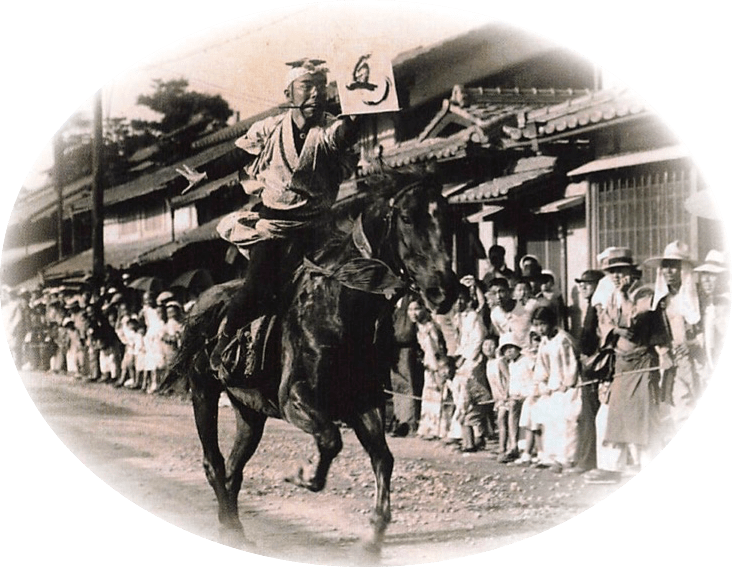
伏見・深草の地で麺を作り続けて120年の老舗製麺所―清水製麺所 伏見区深草の町で約100年以上に渡って、住民や学生、伏見稲荷大社を訪れる観光客、時には軍人の胃袋を支え続けている「清水製麺所」。深草・稲荷との関わりや伝統あるお店を経営していく思いなどをうかがってきました。 清水製麺所の歴史 明治20年代頃より創業した「清水製麺所」は、軍隊へうどんを収めるところから商売を始められ、現在6代目、約120年の歴史を持つ老舗の製麺業者さんです。“製麺所”の名の通り、うどんや中華麺などの麺を製造・販売を行っています。大学や老人ホーム、幼稚園、稲荷大社にあるうどん屋などに卸しており、伏見区内から京都市内、小売店を通じて間接的に全国へ麺を提供しているそうです。 お店について 創業当初は、かつて深草の町に存在した旧陸軍へうどんを卸していたそうです。また、アメリカ兵がお店に来ることもあったようで、ニーズに合わせて缶詰を売ったりしていたそう。6代目の奥さんが嫁いでこられた30年前は、お店や食べるものの選択肢が少なく、かなり忙しかったようです。現在も忙しさや客層自体は変わっていないそうですが、時代の変化につれて、お店ごとにこだわりがあったり、食べる人に合わせて商品を微調整したりと、ニーズの変化に対応しているそうです(提供時間を考慮して、病院へ卸すものは固めにしていたり、保育園・老人ホームへ卸すものは柔らかめ、学校へ卸すものは量を増やしたり)。また、新型コロナウイルスが流行するまでは、伏見稲荷大社にあるうどん屋さんへ卸していた為、インバウンド効果でかなり忙しかったそうです。 製麺業以外にも、小学校へ工場見学としてお店を提供しているそうで、お店には小学生が書いた工場見学のまとめ新聞が多くありました。さらに、町内会の寄り合いの場所としても提供しているそうで、地域に開かれた存在であることがわかります。 伏見・深草との関わり 伏見区深草で約120年も営業を続けてきた清水製麺所さん。町とも深い関係があるようで、代々受け継がれている写真や建物を拝見させていただきました。 この写真は、「藤森祭」で披露される「駈馬神事」を執り行う男性ですが、この写真の方は、清水製麺所のご主人の3代前のひいおじいさんだそうです。お話を伺うと、3代目まで駈馬神事に参加されていたそうで、駈馬の技の1つ「一字書き」で書かれた書が飾られていました。また、京都で古くからある、かまどの上に伏見人形の布袋像を置くという火防布袋の風習も残っていました。 さらに、学生アルバイトも多く雇っており、栄養バランスを考慮した賄いを出しているそうです。アルバイトを辞める学生が、代わりに後輩を紹介するという学生の町・京都ならではのエピソードもお話してくださいました。 お店を営む建物も歴史があり、伝統的な京町家です。町家の引き戸は外からも見ることが出来ます。町家の内部を見てみたい方は、清水製麺所さんから北にまっすぐ進んだところにある龍谷大学町家キャンパスをぜひ覗いてみてください。 最後に 伏見・深草の町で長年に渡って営業されている清水製麺所さん。卸をメインとされていますが、店頭で麺やソースなどの販売もされており、地元住民の方を中心に人気を呼んでいます。京阪本線墨染駅から徒歩6分、本町通に面しています。近隣には藤森神社や琵琶湖疏水があり、まちあるきにはピッタリの場所です。是非訪れてみてください。
伏見街道を行く①~豊臣秀吉も訪れた老舗食事処「祢ざめ家」~ 伏見稲荷大社の稲荷新道と伏見街道(本町通り)の十字路の南西角に歴史ある雰囲気を感じられる祢ざめ家がたたずんでいます。秀吉にもゆかりのある老舗祢ざめ家に訪ねてみました。 豊臣秀吉が店の屋号を付けた! 祢ざめ家の屋号をつけたのは、豊臣秀吉と伝えられています。秀吉が母親の健康を祈願するため、朝早く伏見稲荷大社を訪れました。その時、休憩しようとした秀吉でしたが、早朝であるためどのお店も開いていませんでした。しかし、このお店だけは開いていました。ここでお茶を飲んだ秀吉はとても喜んだそうです。そこで秀吉は店に「ねざめや」の屋号をつけ、しかも「ね」の文字には妻の「祢々(ねね)」の「祢」を与えました。 祢ざめ家の歴史 西暦1540年創業の伝統のあるお店です。今のお店は、昭和初期に建てられた和風建築で、昔ながらの雰囲気を味わえます。メニューには名物のうなぎ丼、いなり寿司、ウズラ焼きなどがあります。ウズラ焼きは、お米などを食べるウズラやスズメを退治するためにこの地域では食べられるようになったと伝わります。 また、店主に今後の意気込みなどをインタビューしたところ、「稲荷大社があってこそ、やっていけている。お越しになったお客様に感謝の気持ちをもって、丁寧に接客していきたい」と答えてくださいました。祢ざめ家さんはご当主で15代目になるそうです。これだけの長い間、営業を続けられる秘訣は、この感謝の心かもしれません。 建物は木造で歴史のある雰囲気を体験できます。店内には伏見人形がおいてあり、伏見の特色を感じとれました。お店の名物であるいなり寿司をいただきました。少し甘味を感じる優しい味わいで、酢飯の中に麻の実と黒ゴマがはいっており、カリッとした食感が楽しめました。訪れた際は是非、名物のいなり寿司を食べてみてください。もう1つの名物、スズメも食べられます。祢ざめ家ホームページ祢ざめ家 NEZAMEYA: 京都・伏見稲荷前 お食事・ご休憩
伏見稲荷大社と生活文化 伏見稲荷大社は京都を代表する社の一つで、全国に約3万を越える稲荷神社の総本山です。歴史が古く、伝統や言い伝えが多く伝わっています。 祀られている神様は倉稲魂神(うかのみたまのかみ)であり、穀物の神様です。そして、その眷属(神の使い)が狐ということになっています。春に山から田へ神が訪れ、秋にはまた里から山へ神が帰っていくという田の神の信仰があり、狐が山から里へ、また里から山へ帰るという状況が田の神の前触れとして、狐に具現化するようになり、稲荷の眷属は狐であるという信仰がしだいに発展していくようになったという一説があります。 稲をつみあげて富裕だった秦伊呂具(はたのいろぐ)という者が餅を的にし、矢を放つ遊びをしていたところ、餅が白鳥になって飛び去り、その鳥の降り立ったところに稲が成ったため、いなりと名付けられました。先祖の行いを後悔し、代々、稲荷山の神木を家に植えて祈り祭ったといわれます。 伏見稲荷大社には様々な神事が行われています。その中でも重要な神事として初午大祭、火焚祭、御神楽があげられます。 重要な神事 ◯初午大祭 倉稲魂神が馬に乗って降臨され、伏見稲荷大社が創建された711年2月の初午の日を祝うお祭です。2日前の辰の日に稲荷山の杉と椎の枝で作られた青山飾りが本殿と摂末社に飾られ、この日を迎える習わしがあります。 <初午の日に行う風習> ・きつね面 初午大祭のときに食べる小豆の粉と白砂糖を使った干菓子です。 ・火難除けの布袋尊 参道などで売られている布袋尊の伏見人形は「火防布袋」といわれ、布袋尊の背中に「火」という字を書き、おくどさん(かまど)の神棚に火難防止として並べられます。 ・しるしの杉 商売繁盛・家内安全の御符(しるし)として、参拝者に授与されています。この風習は平安時代の中頃から始まり、伏見稲荷大社の杉の小枝(しるしの杉)を頂いて、身に着けられていました。 ・畑菜の辛し和え 畑菜は京都の伝統野菜で秦家菜とも表記するそうで、前述した伏見稲荷大社を創建した秦伊呂具から名付けられているそうです。眷属の狐の好物の辛子と油揚げを一緒に頂くと縁起がいいとされています。 ◯火焚祭 11月、秋の収穫の後に豊穣の恩恵に感謝し、神を山に送る祭典です。全国から寄せられた数十万本の願いが書かれた火焚串が神職をはじめ参列者一同で大祓詞(けがれを祓うための祝詞)を唱えて罪障消滅、万福招来を祈ります。 ◯御神楽 御神楽というのは神をまつるために奏する舞楽であり、宮中の神事芸能です。火焚祭の18時から、祭場で焚かれたかがり火の薄明りの中で行われます。神楽歌が歌われ、和琴・神楽笛・篳篥(ひちりき)で奏でられる中、人長舞(じんちょうまい)が舞われます。参考文献・『伏見の歴史と文化』 編者:聖母女学院短期大学伏見学研研究会 発行所:清文堂出版株式会社 発行日:2003年4月30日・『京の社』 著者:上田正昭・岡田精司・五来重・山上伊豆母・井上満郎・松前健・戸田芳実・三浦圭一・景山春樹・安丸良夫 発行所;人文書院 発行日:1985年12月15日・『京都古社寺詳説』 著者:出雲路敬和 発行所:株式会社有吉書店 発行日:1974年12月20日・伏見稲荷大社-http://inari.jp/rite/?month=4%E6%9C%88#334 最終閲覧日:2021年2月20日・京都通百科事典‐https://www.kyototuu.jp/Life/RyouriHatakenaKarashi.html 最終閲覧日:2021年2月20日
日本語 English 简体中文 たった一軒で伏見人形を作り続ける「丹嘉」に、熱い想いを聞いてきた! 江戸時代後期に最盛期を迎えた日本最古の郷土人形、伏見人形。全国で90種類以上もある土人形の中で、伏見人形の系統を引かないものはないと言われています。当時は約60軒もの窯元がありましたが、現在では窯元は1軒のみ。その唯一の窯元である「丹嘉」を訪ね、ご主人に話をうかがってきました。 歴史 「丹嘉」は寛延年間(1750年頃)に創業し、最初は「丹波屋」という名前でした。しかし、明治に入って苗字を付けることになり、当時の店主であった4代目の名前(嘉助)と合わせて「丹嘉」としました。 人形に使用している土は、昔は稲荷山の土を使用していました。しかし、戦後から所有権の問題で土を採取できなくなったため、現在は業者に頼んで信楽の土を仕入れているそうです。 作業について 「作業は大きく分けて、ふたつの期間に分けられます。4月から8月は人形の形作りや乾燥の期間。9月から3月は人形に着色する期間となっています。なぜかというと、気温や季節によって粘土の固まり具合や絵具の乾燥の時間に違いが出るからです。効率良く人形を作成するための職人の知恵ですね。1年間、手間暇をかけて人形は作られます。そのため、完売した人形は注文しても手に入るのは約2年後。欲しい人形がある場合は早めの注文がおすすめです。 伏見人形の型 伏見人形の型は土型と石膏のふたつがあり、「丹嘉」はなんと総数2000以上もの型を所有しているそうです。途方もない数ですが、工房ではきれいに整理されて壁一面に置かれていました。 石膏は消耗品ですが、土型は割らない限り、半永久的に使用できます。今では土型は作られることはないため、すべて江戸時代からあるものとなっています。そのため、新しいデザインが生まれることはほぼありません。同じ型を使い続ける姿勢に職人のこだわりを感じます。 仕事に対する想い ひとつのことをやり続ける職人の仕事に対する想い、気になりますよね。まずは、作業についてですが、ご主人いわく、作業は“マンネリ化”しているそうです。しかし、そのマンネリこそが至高であり、超マンネリまでいくと、それはもう名人の域。毎日、同じ人形に同じ着色をして、普通の人なら飽きると思います。試しにこれまでとは違う着色をしたこともあるそうですが、やはりしっくりこなかったそうです。また、お客さんから「変わってないね」と言われることがモチベーションの維持に。作業をルーティン化しているので、プロ野球選手のイチローたちとやっていることは変わらないとおしゃっていて、そう考えると、やはり職人というのは凄いなと改めて思いました。 ご主人がお客さんとのつながりを「蜘蛛の糸」と表現されていたのも印象的でした。1本の太い糸よりも100本の細い糸。ひとつの強いつながりよりも、弱くてもたくさんのつながりが大切だそうです。友達作りとは違い、あくまで仕事という感じがします。 現在はネットや神社、寺などで人形を販売されていますが、デパートなどでも販売した方がもっと売れるのではないかと思いませんか? 実は、先代が一度、デパートでも販売をしたそうなのですが、その時のデパート側の態度があまり良くなかったため、それ以降、デパートでの販売は止めたという裏話も披露して下さいました。 今後について 最後に、今後の目標について尋ねてみました。今後も、今までと何も変わらない人形を作り続けていくことが目標だそうです。しかし、筆や絵の具など、伏見人形を作る際に必要な小道具が段々となくなってきているため、昔と全く同じ人形を提供するのは難しいとも。時代の流れに逆らうことは厳しいとは思いますが、古くから変わらない形を未来に残して行って欲しいと思いました。 「丹嘉」の熱い想いが伝わったでしょうか? 私はインタビューを通じ、ご主人の職人らしい、良い意味で癖のある感じや仕事に対する熱意を肌で感じることができました。この記事を読んで、伏見人形や「丹嘉」に興味を持っていただければ幸いです。 参考文献:Website - http://www.tanka.co.jp/base.htm The pride and passion of Tanka, the sole remaining Fushimi-ningyō workshop The pottery dolls and figurines known as Fushimi-ningyō are the oldest example of this traditional art, which reached its peak in the late Edo Period. Over ninety separate Japanese varieties of pottery figures have been identified, and it is said that every single one of them draws its roots from Fushimi-ningyō. In its heyday the Fushimi area was home to around 60 pottery kilns, but today there remains but one. This report is an account of a visit to this kiln and store, named Tanka, and an interview with its current master. History of the kiln Tanka was established around the year 1750, and first traded under the name Tamba-ya. Later, in the Meiji Period, the kiln decided to incorporate the master’s name, and so it changed its trading name to Tanka – combining the tan (tam) from the original name Tamba-ya and ka from the name of the kilnmaster of the day, fourth-generation Kasuke. The clay used in the kiln’s pottery works was originally sourced from nearby Mt. Inari. However, after the Pacific War, some issues of property forced Tanka to look elsewhere, and the workshop now sources its materials from Shigaraki in neighboring Shiga Prefecture. The creative process The process of creating a work of Fushimi-ningyō can be divided basically into two stages. April through August is the season for shaping, firing and drying the pieces. September through March is when the artisans finish the figures with paint and enamel. The reason for this is purely seasonal- the clay sets and dries better in drier temperatures. One can see the skill of the artisans in the efficiency with which a piece goes through the various processes over this period of one year. This is why figures that sold out will not be in stock again for another two years, and so it’s always best to buy an item as soon as your heart is set on it. The forms of Fushimi-ningyō The molds used to form Fushimi-ningyō are made of either clay or plaster, and the Tanka kiln has a remarkable collection of over 2000 different shapes. What is just as astounding is that all of these molds are perfectly arranged and ordered on the walls of the workshop. Plaster molds deteriorate over time, but if carefully used, clay molds can last almost indefinitely. Since no new molds are made nowadays, Tanka’s collection is an antique in itself, with every piece dating from the Edo Period over a century ago. This means that no new designs will ever be unveiled, and it is another expression of the artisan’s steely commitment to tradition. The artisan’s philosophy The work ethic of the artisan, creating beautiful items within a defined, repetitive process, is especially intriguing. Asked about his attitude to his work, Tanka’s master replies that the key lies in routine. But it is within the ultimate routine- machine-like production- where true artisans blossom. If an average person were to paint the same figure in the same way, day in day out, surely they would tire of it. The master adds, “Once, as a diversion, I tried using a different color palette on a piece, but it just didn’t feel right. The comment from customers that motivates me most of all is ‘The pieces never change.’ ” Process as automatic routine. It’s something artisans have in common with top sportspeople such as baseball star Ichiro, and something that gives one a renewed sense of admiration for them. Another interesting analogy from the master is how he likens the relationship between artisan and consumer to a spider’s web. Rather than a single thick strand, the web is made up of hundreds of delicate thin ones. That is, a great number of connections, even if they are weak, are preferable to a single, close relationship. Again we see the professionalism of the artisan; he is here to maintain a business rather than simply extend his social circle. Nowadays the figures are sold online, and at certain temples and shrines, but wouldn’t it make better business sense to sell them through outlets such as department stores? In fact there was a time when Tanka did sell their wares through a department store, but this this relationship soured due to the store’s less-than- consummate attitude, and the workshop broke off the agreement. The future of Fushimi-ningyō Finally, we ask for the master’s thoughts on the future of the brand. Unsurprisingly, his goal is to continue making the same items to the same standards, to protect and carry on the name. But he says that this is getting more and more difficult, as the products that sustain the craft- the brushes and the paints, gradually disappear from production. Though it’s clear that running again the tide of the times will not be easy, it’s just as clear that the work is vital and should be protected in its traditional forms. The passion of Tanka and its (in a good sense) quirky, exacting kilnmaster is unmistakable. I hope that though this piece the reader has gained some insight into the history and pride behind Fushimi-ningyō, the and the interest to learn more about the precious artform. Bibliography:Website - http://www.tanka.co.jp/base.htm 「丹嘉」访谈 日本最古老的的乡土泥偶伏见泥偶在江户时代后期迎来了极盛时代。据说全国各地的90多种泥偶,都起源于伏见泥偶。但是当时年有60家的窑户,现在仅剩一家了。我们去唯一现存的伏见泥偶窑户「丹嘉」对其主人进行了采访。 历史 「丹嘉」创业于宽延年间(1750年左右),最初的名字是「丹波屋」。明治时代改名为「丹嘉」。 用来制作泥偶的土,最初取自稻荷山。战后因为所有权的问题不能使用稻荷山的土了,所以现在是买的来自信乐的土。 制作工序 制作工序分成两大时间段。4月到8月是泥偶成型、干燥期间。9月到3月是上色期间。因为气温、季节不同会对黏土的凝固状况、颜料的干燥时间等产生影响,这样分期制作效率更高,这种方法也是工匠们的智慧的结晶。完成一个泥偶需要一年的功夫,所以定制泥偶的话要尽早。 伏见泥偶的模子 伏见泥偶的模子有土模和石膏两种。「丹嘉」有2000多种模子,被整齐地摆放在一面墙上。 石膏是消耗品,但是土模如果不被打破的话可以半永久使用。「丹嘉」土模都是江户时代流传下来的,现在已经不再做土模了。因此也不会再有新的泥偶造型。一直沿用传统模子,从中也能感受到工匠们的执著精神。 经营理念 店主对我们说,制作泥偶的工作是很公式化的,每天重复同样的工序。但是这种重复到达最高境界时,就能成为名家了。每天给同样的泥偶涂上同样的颜色,一般人可能会觉得枯燥无味。店主说也尝试过改变颜色,但是总觉得不太对劲儿。客人们说的“一点儿也没变”也是工匠们坚持的动力。 店主还把与客人的关系比喻为「蜘蛛网」。说100根细丝比一根粗绳更重要,虽然每根丝没有绳子结实,但有很多丝就能连结成结实的大网。从做买卖角度出发的这个比喻让人印象深刻。 现在在一些神社、寺庙里可以买到伏见泥偶,也可以网购 展望未来 采访的最后,我们问店主今后的目标是什么?店主说,今后也想一直做同样的泥偶。但是,制作伏见泥偶所需要的笔、颜料等小道具已经越来越难找了,想制作和从前一样的传统泥偶恐怕也会越来越难了。虽然时代的潮流难以抗拒,但还是希望能把传统泥偶流传下去。 通过这次采访,我们切身感受到了店主身上的匠人气质和对工作的热情。希望大家读了这篇采访,能对伏见泥偶和「丹嘉」产生更多的兴趣。 参考书目:Website - http://www.tanka.co.jp/base.htm
日本語 English 简体中文 『朝鮮通信使~秀吉が最後に残した伏見の文化~』 京都の観光地ランキング第1位に輝いた伏見稲荷大社には、世界中から多くの人が観光に訪れています。目の前の伏見街道は連日、多くの人で賑わっています。しかし、約400年以上前にも伏見街道に大勢の人が押し掛け、伏見人形にも影響を与える出来事がありました。では今から、その出来事について詳しく見ていきましょう。 ○伏見街道と朝鮮通信使 朝鮮通信使は江戸幕府の初期から18世紀の終わりまで、将軍が変わるたびに来日し、合計11回で500名程度の大使節団が江戸を目指しました。朝鮮通信使は川御座船で淀まで行き、鳥羽を通って東寺へ向かうのが通例となっていたとされています。しかし、2度だけ朝鮮通信使が伏見街道を通ることがありました。1度目は1617年の大坂平定祝賀と壬辰•丁酉倭乱の被虜人刷還の目的で訪れた際、伏見城から幕府が用意した大仏殿前の別饌宴会場への移動のために伏見街道を通過。2度目は1624年で、江戸から淀へ向かう帰路に伏見街道を利用しました。この様子は歴史的な作品にも描かれており、私たちでも絵を通じて当時の様子を知ることができます。その作品のひとつが『洛中洛外図』で、100点近くある作品のうちの13点に朝鮮通信使と行列を見物している民衆の姿が描かれています。 朝鮮通信使の行列は歴史的な作品にも描かれるほど、当時の人々にとって大きな出来事だったのでしょう。民衆の人たちは、行列を今でいう遊園地のパレードのような感覚で見ていたようにも思えます。それでは、朝鮮通信使がやって来た時の伏見街道の様子について見ていきましょう。 ・1617年の伏見街道の様子 朝鮮通信使が伏見街道を初めて通った当時の伏見街道の様子はどのようなものだったのでしょうか。当時の様子については、オランダの長崎商館長だったケンペルの描写や、朝鮮通信使従事館の李景稷(リ・キョンジク)が書き残した『扶桑録』で知ることができます。伏見~京都間は人家や飲食店が軒を連ね、東の山麓には堂塔がそびえたっており、周辺には数多くの飲食店があったそうです。多くの飲食店があったということは、普段から多くの人で賑わい、街道全体が活気づいていた様子をイメージすることができますね。 ・1624年の伏見街道の様子 次に朝鮮通信使が2回目に江戸からの帰路で通過した伏見街道の様子は、副使だった姜弘重の紀行録『東槎録』で、秀吉の死後、数十年にして伏見城と城下の大名邸宅が荒廃し、寺刹のみが街中に目立っていると記されています。 『東槎録』を見てみると、朝鮮通信使が初めて伏見街道を通った時と伏見の様子が大きく変わっているように思います。毎日、伏見に通っている私でも荒廃していた伏見の町の姿は想像できませんでしたし、荒廃の原因に有名な豊臣秀吉の死が大きく関わっていたとは予想できませんでした。豊臣秀吉は伏見にとっては欠かすことのできない人物だったのでしょう。 ○朝鮮通信使と伏見人形 朝鮮通信使や対馬藩主などの随行役も合わせて、毎回、3,000名近い一行が伏見を通過しました。朝鮮通信使が日本文化に与えた影響は大きく、江戸や名古屋の祭りや各地の土人形などにも影響が及びました。例えば、江戸の山王祭は五感で感じ取った朝鮮文化を祭りの中で再現したとされています。そして当然、伏見でも伝統工芸品である伏見人形に朝鮮通信使の影響が及びました。「丹嘉」のご主人によると、「象のり唐子」は朝鮮通信使が連れてきた象をモチーフにして作られたと考えられています。 朝鮮通信使の大行列は各地に歩いた痕跡を残しているため、全国的に現代で言う“韓流ブーム”が起こっていたように思います。また大行列は、伏見人形を作る職人の創造意欲をかき立てる出来事でもあったのでしょう。伏見街道を通る朝鮮通信使らの姿を見た職人たちは、きっとすごく感動したのではないでしょうか。伏見人形職人は、その時の感動を「朝鮮通信使人形」や「象のり唐子」などの人形で表現し、今に伝わっているのです。 ・朝鮮通信使人形 伏見街道を通った朝鮮通信使は、伏見の代表的な土産物である伏見人形にも大きな影響を与えました。朝鮮通信使をモデルとした土人形は日本各地にも存在しますが、伏見人形は他の土人形と比べて気品があり、色彩やデザインも際立っていると評価されています。「朝鮮通信使人形」の人物は頭部に飾り物をし、朝鮮人男性の外出着である「トウルマギ」という上着や靴を着用しています。当時の日本人は靴を履く習慣がなかったため、これが朝鮮通信使をモデルにしたという根拠になっています。 朝鮮通信使の身なりが当時の日本人と違ったことが職人の目に留まったのでしょう。日本各地にある「朝鮮通信使人形」のなかでも、伏見の「朝鮮通信使人形」が一番、優れているのは、日本最古の土人形を作る伏見人形の職人のプライドの高さが根底にあるように感じます。 象のり唐子 「象のり唐子」とは名前の通り、象の背中の上に唐子が乗っている置物で、伏見人形の代表的なモチーフのひとつです。秀吉の朝鮮出兵の戦後処理の過程で象が贈られ、都を行脚した際、職人がその様子を見て作成されたと考えられています。実際、1729年4月26日に一頭の牡の象が長崎から江戸に向かう道中に京都に立ち寄りました。京都の町では象に配慮して住民の外出を規制し、道路整備も行われました。京都に立ち寄った理由は、象の休憩に加え、天皇に象を見せるという目的もありました。上皇や天皇は象の入洛を祝う和歌を詠み、象の食事の様子を観覧。体を休めた象は5月10日午前10時頃に京都を出発し、各地に象ブームを巻き起こしながら江戸へと向かいました。 スマホもテレビもインターネットもない時代に、得体のしれない大きな動物を見て人々は何を思ったのでしょうか。民衆はその時、感じたことを言葉で伝えたのでしょう。しかし、伏見人形の職人たちは言葉ではなく“作品”として残すことで、その時の感動や驚きを伝えようとしたのではないかと思います。 参考文献:・『朝鮮通信使の足跡―日朝関係史論』 著者:仲尾宏 発行所:株式会社明石書店発行日:2011年3月10日・『新版 朝鮮通信使往来―江戸時代260年の平和と友好』 著者:辛基秀発行所:株式会社明石書店 発行日:2002年2月22日 ・『京都 大仏御殿盛衰記』 著者:村山修一 Joseon missions to Japan : Toyotomi Hideyoshi’s cultural legacy in Fushimi Kyoto’s Fushimi Inari Shrine is by far the most popular tourist attraction in the city, bringing in countless visitors from all over the globe. The street leading to the temple complex, Fushimi Kaidō, is thronged with people most days of the year. Over four centuries ago, the street was just as full of visitors, but this was because of an incident regarding the local area’s pottery figures, Fushimi-ningyō. In this paper I would like to look closer at this event and its influence on the city of Kyoto. Fushimi Kaidō and the Joseon Missions From the early stages of the Edo bakufu era until the end of the 18th century, the Joseon nation sent a total of 500 envoys on 11 diplomatic missions (each time a new shōgun was named) to Edo, the Japanese capital. These envoys were said to usually arrive in Yodo on a gosabune samurai warship, and head for Tō-ji in Kyoto via the town of Toba. However, records show that there were two occasions on which the envoy group passed along the Fushimi-Kaidō.The first instance was in 1617, when an envoy visited in celebration of the Osaka Normalisation Treaty, and to repatriate Japanese prisoners taken on the occasion of Hideyoshi’s invasions of Joseon. When moving the enjoy from Fushimi Castle to a special banquet hall the Edo Shogunate had prepared at Nara’s Daibutsuden, the party travelled along the Fushimi-Kaidō.The second occasion was in 1624, when the party used Fushimi-Kaidō as a return route to Yodo from Edo. This trip was immortalized in artworks at the time, so even now we have a good idea of what the procession might have looked like. In one famous example, the Rakuchū Rakugai-zu, no less than 13 of the work’s total 100 scenes depict townspeople watching the envoy procession. Given that they are depicted in major artworks these envoy visits were obviously influential events in the lives of Fushimi and Kyoto locals. Perhaps they watched the parades of visiting dignitaries with the same sense that contemporary Japanese watch parades of exotic theme parks. Let’s take a closer look at what the Fushimi Kaidō was like at the time. Fushimi Kaidō circa 1617 What was the Fushimi Kaidō like at the time of the first Joseon Mission? We may get some hints from surviving documents, such as the illustrations Engelbert Kaempfer, head of the Dutch Nagasaki Trading Post, or Fusoroku, Joseon Mission administrator Lee Kwon-jik’s written account of the missions. Through these we witness that the stretch of road between Fushimi and Kyoto was lined with homes and eateries, while in the Eastern Mountains, temples and pagodas stood majestically, surrounded by yet more teahouse and taverns. With such a proliferation of places to eat and drink, one can readily imagine how routinely lively the Fushimi Kaidō must have been. Fushimi Kaidō circa 1624 The second time the Joseon Mission parade passed along the Fushimi Kaidō, the area was described by Kang Hong-Jeung in his account of the visit Tōsaroku. After Toyotomi Hideyoshi’s death, the castle and surrounding living quarters of the daimyo fell into disrepair, and the only remaining features of the town were a few local temples. It’s clear from this account of the visit that the Fushimi Kaidō was vastly different to the one passed through by the Joseon Mission just seven years earlier. Even this writer, who passes through Fushimi every day, finds it difficult to imagine the area in such a run-down state, and just as surprising that the catalyst for such a dramatic change was the death of Hideyoshi. It’s obvious that he was a irreplaceable figure in the history of the region. Joseon Missions and Fushimi-ningyō The processions that passed along the Fushimi Kaidō in those days, be them from the Joseon Missions or other leaders such as that of the Tsushima-Fuchū Domain, each featured close to 3000 members. The influence of the Joseon Missions on Japanese culture was immense, especially in the festivals observed in Edo and Nagoya, as well as crafts such as clay figurines. For example, it’s said that a part of the San’nō Festival of Edo contained a recreation of the Joseon Mission Parades. Furthermore, the Joseon Missions also influenced the local craft of Fushimi-ningyō. For example, according to the head of the Fushimi-ningyō store Tanka, the figure known as a zō-nori karako was inspired by the elephants that were part of the grand Joseon Mission procession. As the missions made their way around Japan, the impact they left of the local populace was considerable, and it’s possible that the nation was gripped by what is known in modern parlance as a “Korean Boom.” It’s also not unthinkable that the artisans creating Fushimi-ningyō were moved by the sight of the processions, and that this roused their creative spirits. The excitement and emotion of the times is passed on to us today through Fushimi-ningyō figures such as zō-nori karako and the Joseon Mission envoy figure. Joseon Mission envoy figures As stated above, it’s clear that as the Joseon Missions passed along the Fushimi Kaidō, they had a deep influence on the crafts of the region. The Korean envoy motif has been used in many regional varieties of pottery figures all over Japan, but among these the Fushimi-ningyō examples have been singled out for their elegant colors and designs. The envoy figures feature a decorative headress, and wear the male overcoat known as a durumagi and shoes. At the time, footwear was not a custom among the common Japanese, so the fact that the figures wear them is proof of their Korean inspiration. The artisans who created these figures obviously took careful note of the sartorial differences between Japanese and Koreans at the time. The superiority of the Fushimi-ningyō Joseon Mission figures to all other examples in Japan is yet more proof of the pride that the Fushimi artisans took in their work. Zō-nori karako 「The Zō-nori karako (elephant-riding boy) figure is, as its name suggests, a piece that features a small boy in Chinese clothing sitting on the back of an elephant. It’s one of the most representative of all the Fushimi-ningyō figures. It’s believed that artisans were inspired to create these by the sight of elephants paraded through Kyoto after Hideyoshi’s invasions of the Korean Peninsula. In fact, a bull elephant was led through through Kyoto on April 26th, 1729, being sent from Nagasaki to Edo. Roads were closed and the townspeople were forbidden to leave their homes as the elephant passed, and another reason for its visit to Kyoto, aside from resting the creature, was so that the Emperor might have an opportunity to inspect the animal. The Emperor and nobles wrote songs in commemoration of the beast’s visit to the capital, and observed it as it ate. The elephant left Kyoto at around 10am on May 10th, and continued on its way to Edo, leaving countless admirers in its wake. It’s incredible to think of what Kyotoites thought of this strange animal, in an age of no smartphones, television, or internet. Perhaps some of them expressed their surprise and interest through the words of poetry and song. However, Fushimi artisans were able to express this through their craftwork, in an attempt to immortalise the feelings of surprise and joy that locals must have felt at the time. Bibliography:・Nakao Hiroshi, 2011, Chōsen Tsūshinshi no Ashiato- Nikkei Kankeishi-ron, Akashi Shoten Publishing・Shin Gi-su, 2002, Shinpan Chōsen Tsūshinshi Ōrai - Edo Jidai kara 260-nen no Heiwa to Yūkō, Akashi Shoten Publishing ・Murayama, Shin’ichi, 2003 Kyoto Daibutsu Goten Seisui-shi. 朝鲜通信使~秀吉留下的伏见文化 伏见稻荷大社在京都的观光地排行榜中荣登榜首,世界各地很多人前来参观。附近的伏见街道上每天都人潮如流很热闹。但是一般人可能不知道,早在400 多年以前就曾有大批人来到伏见街道,而且对伏见泥偶产生了很大影响。下面我们来详细了解一下。 ○ 伏见街道与朝鲜通信使 从江户幕府初期到18世纪末期,每当将军易主,都会有朝鲜通信使使节团来到江户,共计11回500人次左右。朝鲜通信使通常坐川御座船到淀,然后经过鸟羽前往东寺。但是其中有两次,朝鲜通信使经过了伏见街道。第一次是1617年,为了祝贺平定大坂、壬辰·丁酉倭乱被人虏刷还来访时,从伏见城前往幕府在大佛殿前准备的饯行宴会场时路过了伏见街道。第二次是1624年,从江户回淀途中经过了伏见街道。从现存的历史画作中我们也能了解一些当时的情况。在作品之一的《洛中洛外图》组画中,近100幅画中有13幅描绘了民众观看朝鲜通信使队列时的情景。 朝鲜通信使的队列能出现在历史画作中,说明对当时的人们来讲这是一件大事吧。民众观看队列时也许和现在我们看游乐园的盛装游行的感觉相似吧。下面我们来看一看当年朝鲜通信使来访时的伏见街道的样子。 ・1617年的伏见街道的街景 朝鲜通信使最初路过时的伏见街道是什么样的呢?对当时的状况,曾任荷兰的长崎商馆长的kämpfer有过描述,在曾在朝鲜通信使從事馆工作过的李景稷写下的《扶桑錄》中也能了解一些。据描述当时的伏见~京都之间住家、餐饮店鳞次栉比,东边的山麓堂塔耸立,周围也有很多餐饮店。从餐饮店的数量之多,可以想像出街道平时就人多热闹、充满活力。 ・1624年的伏见街道的街景 有关朝鲜通信使第2次路过伏见街道时的场面,在当时的副使姜弘重写的游记《东槎錄》中提到,秀吉过世数十年后,伏见城和大名邸宅都已荒废,只有寺刹在街中很显眼。 从《东槎錄》中可以看出,和朝鲜通信使第1次路过伏见街道时相比伏见的街景发生了很大变化。现在我们走在街上完全想象不出当年伏见街道荒废的样子,更想不到荒废的原因竟然和丰臣秀吉的死有很大的关系。也许丰臣秀吉对伏见来说是非常重要的人吧。 ○ 朝鲜通信使与伏见泥偶 朝鲜通信使和对马藩主等随从加在一起,每次有近3000人的队列路过伏见。朝鲜通信使对日本文化产生了很大影响,其影响也波及到了江户、名古屋的庙会祭礼以及各地的泥偶。比如,在江户的山王祭中就再现了朝鲜文化。当然,作为传统工艺品的伏见泥偶也受到了影响。「丹嘉」的店主说,「骑象唐子」就是看到朝鲜通信使带来的大象受到启发制作而成的。 朝鲜通信使的队列在各地都留下了足迹,按现在的说法可以说当时在日本掀起了「韩流」吧。长队列也激发了伏见泥偶制作工匠们的创作热情。当年看到路过伏见的朝鲜通信使时工匠们一定很感动,所以他们把那份感动体现在「朝鲜通信使泥偶」、「骑象泥偶」的制作中,流传至今。 •朝鲜通信使泥偶 当年路过伏见街道的朝鲜通信使,对伏见最具代表性的工艺品伏见泥偶产生了很大影响。日本各地都有以朝鲜通信使为原型的泥偶,但是与其它地方的相比,伏见的「朝鲜通信使泥偶」气质高雅,色彩、造型也与众不同,得到了很高的评价。「朝鲜通信使泥偶」的人物头部戴有装饰物,朝鲜男性穿着外出时的外套和鞋。因为当时日本人没有穿鞋的习惯,这也是泥偶是以朝鲜通信使为原型的证据之一。 工匠们一定注意到了朝鲜通信使的装束打扮与当时的日本人不同。在日本各地制作的「朝鲜通信使泥偶」中,伏见的「朝鲜通信使泥偶」最为出色,从中也可以感受到作为最古老的泥偶产地的工匠们的自豪感。 •骑象唐子「骑象唐子」如其名,指骑在象背上的唐子(中式发髻、服装的儿童),是伏见泥偶中具有代表性的造型之一。据说是秀吉在朝鲜出兵的战后整治过程中收获一头大象,在首都游行时被工匠看到并模仿制成泥偶。据记载在1729年4月26日确实有一头公象从长崎去江户途中曾在京都落脚。因为大象路过,当时京都还限制了居民外出、整修了道路。中途在京都落脚的目的,除了让大象休息一下以外,也是为了让天皇观览。当时上皇和天皇都作了祝贺大象入洛的和歌,观看了大象进食。休息好了的大象5月10号上午10点左右从京都出发前往江户,一路上在各地掀起了「象潮」。在没有智能手机、电视、网络的时代,不知人们看到这样一个稀奇古怪的大家伙有何感受。当时人们一定用语言互相传递了感想。而伏见泥偶的工匠们不是用语言而是想通过留下「作品」,来传达当时的感动和惊奇之情吧。 Bibliography:・Nakao Hiroshi, 2011, Chōsen Tsūshinshi no Ashiato- Nikkei Kankeishi-ron, Akashi Shoten Publishing・Shin Gi-su, 2002, Shinpan Chōsen Tsūshinshi Ōrai - Edo Jidai kara 260-nen no Heiwa to Yūkō, Akashi Shoten Publishing ・Murayama, Shin’ichi, 2003 Kyoto Daibutsu Goten Seisui-shi.
日本語 English 简体中文 伏見人形〜京都発! 元祖土人形の真髄へ〜 【前史】 「伏見人形」と聞いて皆さんは何を想像しますか? 伏見人形とは、京都の伝統工芸品で約400年の歴史があるとされる京都生まれの人形です。歴史ある伏見人形ですが、その起源となるものは江戸時代よりもはるか昔、奈良時代にまでさかのぼります。これから、伏見人形が生まれるまでと、伏見人形が生まれてからについて見ていきたいと思います。 伏見人形の誕生を語る鍵。 伏見人形は、奈良時代から深草の地に住み、埴輪や土器作りをしていた土師部(はじべ)が禁裏献上の土器を作ったことが起源とされています。さらに、時代が進む中で日用の土器類を製造するようになり、家業になったと考えられています。明治10年、当時の文部省•農商務省に設置された博物館事務の担当部局である博物局刊行の黒川真頼著『工芸志料』によると、1615年に伏見の鵤幸右衛門(いかるが こうえもん)という人物が初めて小児玩具の土偶人形を作ったと記されています。 鵤幸右衛門の土偶の作り方は、背面を分けて両面になし、型に入れた状態で窯で焼成後、にかわで両片を縫合し、着色を施して完成させるという手法でした。深草の工人も同様の手法で製作していたようで、鵤幸右衛門の製作手法は今の伏見人形の作り方にとてもよく似ています。そのような理由から、幸右衛門の作る土偶は稀に見る傑作であるとされ、伏見人形の起こりを1615年の元和元年とし、その創始者を鵤幸右衛門としたのではないでしょうか。 伏見人形の誕生を語る鍵。 大正12年6月20日発行の京都府伊群伏見町役場から出された『伏見誌』のなかに、「徳川時代ノ仲間調」という言葉が記されています。これは当時の伏見の商人仲間の沿革を一覧表にしたもので、この表の末尾に「伏見人形仲間、元和年間ヨリ銀上納」という一文が。これには伏見人形組合が元和年間に銀を役場に上納していると書かれており、この事実は、すでに人形製造業か販売店が多くあったことを証明するものとなっています。さらに、日本工芸の歴史をまとめた史料集『工芸志料』でも記されているように、鵤幸右衛門が伏見人形を作り始めた当時に「仲間」があった事実は、元和年間以前に伏見人形が存在したことを物語る重要な鍵となっています。つまり、伏見人形は鵤幸右衛門が創始したとされていながら、実は鵤幸右衛門が創始したものではないということでしょうか。謎は深まるばかりです。 また、『伏見誌』には奈良時代から徳川時代の元和年間に至る伏見人形の変遷も記されており、鵤幸右衛門の作品が高価であったということや、明治•大正期の淀川の水運から鉄道や電車の陸路への交通の変遷が伏見人形にまで影響を及ぼしたことが記載されています。その影響によって伏見人形は一時期、衰退してしまいましたが、稲荷信仰によって、わずかながらも伏見人形の姿が伏見稲荷大社の参道で見られるようになったそうです。 ここまで伏見人形が誕生するまでを書いてきましたが、その中で鵤幸右衛門という人物が出てきましたね。私はすっかり、この人物の作る人形の製法が伏見人形のものと似ていることや、深草工人が鵤幸右衛門と同様の方法で人形を製作したことから、鵤幸右衛門が伏見人形の生みの親だと思い込んでいました。ところが、実際は鵤幸右衛門が人形を作り始める前にすでに伏見人形が存在していたことが分かりました。では、誰がいつから作り始めたのでしょうか。まだまだ分からないことが多いですね。本当に「伏見人形」は深く調べれば調べるほど、面白さや興味が湧いてきます。 次は伏見人形が生まれてから起こったこと、伏見人形の更なる魅力について迫りたいと思います。 ※豆知識京都の焼き物というと、清水焼が有名ですが、なんと! 清水焼が誕生するよりも前の平安後期、藤原の時代に「深草焼」というものがあったとされています。つまり、深草はあの有名な清水焼よりも歴史のある焼き物が生まれた地でもあるのです。 【概要】 伏見人形の特徴。 伏見人形は江戸時代前期に伏見稲荷のお土産として売られ、全ての郷土玩具や土人形の元祖とされています。郷土玩具は伏見人形を原点とし、全国に普及していきました。伏見人形は縁起物ではなく、古くからの信仰が人形になっています。人形は様々な種類があり、種類ごとに大きさもいくつかあるため、自分に合った人形を見つけることができます。歌舞伎物は色が決まっていますが、他の人形では今の時代では考えられない配色がされているものもあり、昔の考えなどが感じられるのも魅力のひとつとなっています。人形の材料は昔は稲荷山の土が使われていましたが、戦後、所有権が問題となり、今は信楽の土が使われています。 伏見人形は時代によって使用している材料や塗料の違いがあるため、同じ人形でもちょっとした違いがあります。私は、一体一体がそれぞれが違った表情を持ち、まったく同じものがないということが伏見人形の一番の特徴であり、最大の魅力ではないかと思います。数ある伏見人形の中から自分にあった人形を選ぶことができるのも醍醐味のひとつです。 伏見人形の歴史。 伏見人形は当時の歌舞伎などと深い関わりがありました。職人は役者をモデルに人形を作り、庶民に販売をしていました。その当時は市川海老蔵が人気で、関連する伏見人形は多くの歌舞伎ファンに大好評だったそうです。 人形屋の前には、今、流行のタピオカのような行列ができ、多くの人が買っていたのでしょうか。私は流行や人気のものに敏感なので、おそらく私がその時代にいたら絶対に歌舞伎に関係する伏見人形を買っていたと思います。 話は戻り、歌舞伎などの影響もあって一世を風靡した伏見人形ですが、時代とともに伏見人形を製作する人材が減り、伏見人形は衰退していきました。ですが、稲荷信仰や情政不安定や相次ぐ飢饉の回復祈願などによって再び購入されるようになり、三十石船などで全国に広まりました。そして、伏見人形は以前ほど多くではありませんが、再び、伏見稲荷大社の門前や全国で見られるようになりました。 一度は一世を風靡した伏見人形は職人の減少などを理由に衰退しましたが、情政不安定や相次ぐ飢饉などの時代背景から、再び世に求められるようになりました。飢饉や情政不安定は民衆などに不利益や被害を与えるもので、起こってはならないものではあると思います。しかし、これらがなければ、再び伏見人形が世に出ることはなかったかもしれません。 私は飢饉や情政不安定、稲荷信仰のおかげで伏見人形が現代にまで残っていると考えています。そのため、伏見人形の存続という視点に立つと、飢饉や情政不安定、稲荷信仰というものが、その当時に起こってくれてよかったと思わずにはいられません。 〇伏見人形の保存・販売・取扱店の想い 私は伏見人形のことについてもっと知りたいと思い、東寺の近くで全国の郷土玩具を取り扱っている郷土玩具「平田」を尋ねました。伏見人形に対する想い、歴史や保存活動などについて、ご主人から話を伺いました。 伏見人形は現代も残っていますが、数はそれほど多くはないようです。後ほど紹介する、唯一、現在も伏見人形を作っている「丹嘉」にも約2,000体の伏見人形の型があるそうですが、それもすべてではなく、いくつかは壊れたりしてなくなったそうです。₁₎ そういった状況の中で、今ある伏見人形を守って後世に伝えるため、保存会が発足されました。保存会では現存する伏見人形の型を取って人形を作り、伏見人形を残す活動をしているそうです。それほどまでに伏見人形というものには長い歴史があり、残し続ける魅力があるということですね。 伏見人形は職人の手で一体一体、心を込めて仕上げられ、命が吹き込まれるため、それぞれに違う味わいがあるのだそうです。私は、伏見人形がそれぞれに違う味や表情をもつ背景には、職人が多く人形を作ることに重点を置いているのではなく、質の高い伏見人形を作ることに重点を置いているからだと思いました。 またご主人は、「伏見人形には同じものがない。時代によって使われている染料が違うため、時代によって違う味が出ている。時代によって同じ人形でありながらも違いがあるところが伏見人形の一番の魅力。そういった魅力を感じながら、自分にあった人形を探し、人形に愛着を持てる人の手に人形が届いてほしい」と熱く語って下さいました。 1)伏見人形を製作する場所は、以前は伏見街道沿いに60件ほど存在していましたが、現在は太平洋戦争などの影響で「丹嘉」以外の窯の火はほとんど消えてしまいました。そのため、現在は「丹嘉」の1店舗のみしか残っておらず、伏見人形も「丹嘉」でしか作られていません。また、伏見人形を取り扱っている店舗も減ってきているため、入手が困難になりつつあります。「買いたい」と思った時に買わなければ、もう手に入れることが出来ないかもしれないほど、かなり希少価値の高いものとなっています。 伏見人形の買い手と売られていない伏見人形。 次に、伏見人形の買い手や非売品と書いて飾ってある人形について聞いてみました。伏見人形の購入者は、おじいちゃん、おばあちゃんや親など。孫や子どもに知恵のある子に育ってほしいと願い、「饅頭喰い」を購入する方が多いようです。外国人の客には鬼や猫などの動物系が人気で、中にはタトゥーや絵のモチーフとして購入される方もいます。伏見人形は国内外問わず人気があり、購入したいと思っている方はまだ多くいるということですね。 売られていない伏見人形は、江戸時代から存在しているために現存するものがひとつしかなく、保存のために売ることができないそうです。現存するものがふたつ以上あっても、希少性が高いことや市場価格がわからないことなどの理由で値段を決めることができず、販売が出来ないことがあるとおっしゃっていました。 ここまで伏見人形について説明をしてきましたが、ここからは代表的な人形をいくつか紹介していきます。 ・「饅頭食い」子供が饅頭を両手に持っている人形です。子供が「お父さんとお母さん、どっちが好きか」と問われた際、持っていた饅頭を二つに割って「この饅頭はどっちが美味しいですか」と質問で返したと言われ、賢い子供の象徴として人気となりました。子供が賢くなるようにと買い求める人が多く、また安産祈願や出産祝いの贈り物にもされていました。 ・「狐」稲荷の神使いとして各種作られたもので、稲荷の神棚に左右一対で祀るものが主ですが、神狐•馬乗り狐•千両箱持ち•口入れ狐•御幣持ちなど種類は豊富です。狐は伏見人形特有のモチーフとされています。 ・「でんぼ」伏見人形の中では初期に製作された作品のひとつ。素焼きの皿を大•中•小の三枚重ねにしたもので、皿の縁は赤•緑•群青などで色付けされています。餅あられ煎り豆や種物などを入れ、仏前や神前に供える器として使用されました。伏見人形が古代の土器作りから発達をした名残を示しています。 ・「布袋像」伏見人形のひとつである布袋さんは「火防布袋」といわれ、布袋さんの背中に「火」という字を書き、神棚に祀ると火難防止になると言われています。これは京都の風習であり、家を持った人は、毎年2月の初めの日の初午に布袋さんの小さいものを買って帰り、家の神棚に飾ります。そして毎年、小さなものから揃え、7つ揃えると幸福を得ることができ、火難を除かれると言われています。しかし、7つを集める間に家に不幸があると、集めた布袋さんをすべて川に流し、また最初から集めなければいけません。 なお、この布袋像は、伏見人形の絵を描いて生計を立てていた伊藤若冲が好んだモチーフのひとつでもあります。 2.伏見人形?深草人形?稲荷人形?結局どれがほんとの呼び方なの? 伏見人形の名前の由来。 都の伝統工芸品として知られる、あの清水焼よりも古くから存在している伏見人形は、元々は全く違う名前が使われていたそうです。ではなぜ「伏見人形」という名前が現在では使われているのでしょうか? 伏見人形という名前は今ではごく一般的に使われていますが、未だに確信をもって伏見人形と呼ばれるようになったことを示す説はないようです。ですが、それには諸説があるようです。これから詳しく見ていきましょう。 「伏見人形」と呼ばれる前の呼び方。 昔、伏見人形は「深草細工」や「稲荷人形」などという名前で呼ばれていました。名前の由来には、人形が作られている土地との関係があります。私たちが通う龍谷大学がある深草で造られた人形は、深草の地名を冠した「深草細工」という名で呼ばれていました。一方、「稲荷人形」は稲荷山の土で作られたことや、一般には土焼の狐のことを指し、それに初午の布袋さんや土鈴など、稲荷さんに直接つながりそうなものを総称して「稲荷人形」と呼ぶようになったと考えられています。 しかし、幕末の頃になると「伏見人形」という名前が使われるようになり、化政期頃には既に「深草人形」という名前は人形を指す言葉として妥当性がなくなったそうです。 深草に毎日、通っている私としては、深草という名前がなくなることは、とても悲しいことです。ですが、深草という名前が使われなくなったことには、何か理由があるはずです。 次は、どうして深草人形などの名前が使われなくなり、「伏見人形」という名前が使われるようになったのか、その背景を探っていきたいと思います。 伏見人形と呼ばれるようになったと考えられる説 その1。 ここまで話してきた人形は、昔、伏見稲荷大社の門前で売られており、参詣土産としてたくさんの人々が買い求めました。日本各地に人形が広まる中で、人形は「伏見のお稲荷さんで買い求めた人形」や「伏見初午の土産の人形」といったような意味を込めて、「伏見人形」と呼ばれるようになり、「深草人形」に取って代わったとされています。 私はこの説を知り、名前には人形を目にした土地や場所に大きく影響されているのではないかと思いました。真実はその当時の人たちに聞かなければ分かりませんが、それが人形が作られていた場所の名ではなく、人形が売られていた場所の名が人形の呼称になった理由ではないかと私は推測します。 伏見人形と呼ばれるようになったと考えられる説 その2。 このように、「深草人形」や「稲荷人形」から「伏見人形」と一般的に呼ばれるようになりましたが、一方、地元では「伏見人形」のことを「伏見人形」と呼ばなくても、「土人形」や「土細工の人形」、「でんぼ」などという名前で十分、意味も通じていたため、「伏見人形」という名は地方向けに呼ばれていたものではないかという説もあるそうです。 伏見人形は伏見の港から三十石船や二十石船に積載されて全国に流通しました。全国に伏見人形が広まったことで、土人形といえば「伏見人形」と普通名詞のように使われるようなところもあったようです。 京都出身者としては、京都の伝統工芸品が全国に広まり、土人形といえば伏見人形といわれるようになったことは嬉しく、また誇りでもあります。 少し話がそれてしまいましたね。先ほどの続きに戻りましょう。伏見人形が全国に広まった背景には、政情不安定や相次ぐ飢饉などの状況におののく民衆の心をひきつけた稲荷信仰と、総本社である伏見稲荷大社、そして豊富な良質の土、土細工の伝統と技術や、それらをうまく結びつけた伏見商人の優れた才能が「伏見人形」という名のもと、土人形の黄金時代を作り上げたと考えられています。「伏見人形」という名前は単なる産地を表す呼び名でなく、伏見の商人や稲荷信仰の影響も強く受けながら、結果、広く社会に定着したとも言えるのではないでしょうか。 〇おわりに ここまで伏見人形の名前の由来について書いてきましたが、今では普通に呼ばれている伏見人形という名前は、実はこの名前になるまでに様々な呼ばれ方があり、変化の過程には当時の政治や信仰、土地が深く関係しているということが分かりました。また、由来を調べていく中で、ここでは紹介はしていませんが、深草には清水焼よりも古い焼き物があったり、画家の伊藤若冲が伏見人形と関わっていたりなど、深草と伏見という地には多くの歴史秘話が存在していることを知りました。普段、何気なく接している深草ですが、まさかこんなにも歴史があり、有名な人が関わっているなどとは思ってもいませんでした。深草にある大学を学び舎にしている自分のことを、少し誇らしく思います。 やはり、ある対象のものを深く深く調べていくと、どんどん面白くなっていくものですね。皆さんも、何か少しでも興味があることがあれば、それについて調べてみてはいかがでしょうか? この「伏見人形」のように、何か新しい発見が見つかるかもしれません。 参考文献:・丹嘉 伏見人形の由来 - http://www.tanka.co.jp/base.htm最終確認日2019年8月9日・郷土玩具平田 伏見人形 - https://www.kyodogangu-hirata.com/fushimi最終確認日2019年8月9日 ・郷土玩具伏見人形 伏見人形 - http://kyoudogangu.xii.jp/fushimi.htm最終確認日2019年8月9日 ・『伏見人形』 - 著者:塩見青嵐 出版:河原書店 発行:昭和42年7月10日 Fushimi dolls-Born in Kyoto! A look at the essence of the first clay dolls- Early history 「What do you think of when you hear the words “Fushimi dolls”? Fushimi dolls are a traditional craft product of Kyoto, born in Kyoto some 400 years ago. Not only do the dolls themselves have a long history, their origins can be traced back far beyond the Edo period (1603-1868) to the Nara period (710-794). I will look at the circumstances before and after the genesis of Fushimi dolls. The origins of Fushimi dolls Fushimi dolls are said to have originated from earthenware and clay figurine artisans who lived in the Fukakusa area during the Nara period and were employed by the Imperial court to make its earthenware. It is thought that as time went on the artisans began to set up their own businesses producing everyday earthenware. According to Kōgei Shiryō (Sources on Crafts) written in 1877 by Kurokawa Mayori and published by the Museum Bureau, the unit in charge of museum administration in the Ministry of Education and Ministry of Agriculture and Commerce at the time, the first person to make earthen figure dolls as children’s toys was a person by the name of Ikaruga ō of Fushimi in 1615. The method used by Ikaruga Kōemon to make his dolls was to first fire clay in a pair of front and back molds in a kiln, attach the two fired parts together with gelatin, and then finally paint the doll. This is, apparently, the method Fukakusa craftsmen also used, and is very similar to the method used to make Fushimi dolls today. Perhaps this is why Ikaruga Kōemon’s earthen figures were said to be masterpieces of a rarely seen caliber, and why 1615, which was the first year of the Genna years (1615-1624), was deemed the year of origin of Fushimi dolls and Ikaruga Kōemon their founding father? A key to the birth of Fushimi dolls Fushimi-shi (Fushimi Journal) published by Fushimi Town Office, Kii County, Kyoto Prefecture, on June 20, 1915 references a “Tokugawa era companion log”. The log is a table tracing the history of merchant colleagues in Fushimi at the time. At the end of the table is the sentence “Fushimi doll colleagues, silver payment from Genna years”, indicating that a Fushimi doll union paid silver to the town office in the Genna years. This is proof that doll production or retailers already existed to a significant degree. Furthermore, the fact that Ikaruga Kōemon had “colleagues” when he began to make Fushimi dolls, as noted in the Japanese craft sourcebook Kōgei Shiryō, is a crucial key in the story of Fushimi dolls existing prior to 1615. In other words, it would appear that Ikaruga Kōemon was not in fact the founder of Fushimi dolls despite being deemed so. The mystery deepens. Furthermore, Fushimi-shi notes changes in Fushimi dolls from the Nara period through to the Genna years in the Tokugawa period (1603-1868), mentioning that that Ikaruga Kōemon’s works commanded high prices and that Fushimi dolls were affected by a shift from water transportation on the Yodo River to railway and other forms of land transportation. This shift in transportation effected a decline in Fushimi dolls for a period of time before they were to be seen on the road to Fushimi Inari Shrine, albeit in small numbers, thanks to the Inari faith. So far, I’ve written about circumstances before the birth of Fushimi dolls and we encountered the person Ikaruga Kōemon. Considering that his doll-making method is similar to that used to make Fushimi dolls and that Fukakusa craftsmen made their dolls using methods the same as his, I was completely under the impression that Ikaruga Kōemon was indeed the founding father of Fushimi dolls. However, I found out that Fushimi dolls already existed when Ikaruga Kōemon began making dolls. So, who started making them and when? There’s still a lot we don’t know. The deeper one investigates Fushimi dolls, the more interesting they become. Next, I wish to look at what happened after Fushimi dolls were born and delve further into the appeal of Fushimi dolls. ※TriviaWhen it comes to pottery in Kyoto, it’s Kiyomizu-yaki that everyone knows. But believe it or not, a type of pottery called Fukakusa-yaki has existed since the Heian period (1068-1185), the Fujiwara era, before Kiyomizu-yaki was even born. In other words, Fukakusa is the birthplace of a pottery with a longer history than the more famous Kiyomizu-yaki. Overview Characteristics of Fushimi dolls Fushimi dolls were sold as souvenirs at Fushimi Inari Shrine in the early Edo period (1603-1868), and are said to be the archetype of all folk toys and clay dolls. Folk toys modeled on Fushimi dolls spread across Japan. Fushimi dolls are not charms but figurines of ancient believers. As there are different types of dolls made in various sizes, one can find a doll that suits one’s own taste. Kabuki-related varieties are painted in set color schemes, but some of the other dolls are painted in color combinations unthinkable today. One of the charms of Fushimi dolls is that one can feel the sensibilities of bygone eras. In the past the dolls were made from soil from Mt. Inari, but due to ownership issues, presently soil from Shigaraki in Shiga Prefecture is used. Since the material and paint used for Fushimi dolls has varied over the ages, slight variations can be seen even in dolls of identical type. I believe the main feature and greatest charm of Fushimi dolls is that each one has a slightly different expression and no two are exactly alike. One of the true pleasures of Fushimi dolls is that one can select the doll that suits oneself from among the many available. History of Fushimi dolls Fushimi dolls had a close association with the kabuki of the time. Artisans made dolls modeled on kabuki actors which they sold to the public. Fushimi dolls of a popular actor of the day, Ichikawa Ebizō, were apparently hugely popular with kabuki fans. One can imagine queues of people lining up in front of doll shops to buy dolls just like the queues in front of the tapioca shops that are fashionable at the moment. I personally am sensitive to trends and popular things, so I think I too would be buying kabuki-related Fushimi dolls had I been alive then. Back to the topic, we’ve seen how Fushimi dolls took the world by storm thanks to kabuki. As time went on, however, fewer people were making Fushimi dolls, and the dolls all but dwindled out. However, people began to buy Fushimi dolls once again due to the Inari faith and people’s wishes for resolution of political unrest and successive famines, and the dolls spread throughout Japan on passenger ships. The result was that, while not to the extent of former days, Fushimi dolls did begin to appear once again at the gates of Fushimi Inari Shrine and around the country. After once being a hit but then falling into decline as a result of fewer artisans making them, there was once again increased demand for Fushimi dolls against a backdrop of political unrest and successive famines. Famine and political unrest inflict loss and harm onto people and shouldn’t happen. However, if they had not happened, Fushimi dolls may not have made a reappearance in the world. As I see it, it was thanks to famine, political unrest and the Inari faith that Fushimi dolls have survived to the present day. For that reason, from the point of view of the survival of Fushimi dolls, I can’t help feeling gratitude for the famine, political unrest and Inari faith of the day. Thoughts of a Fushimi doll preservationist and seller To find out more about Fushimi dolls, I visited Hirata folk toys, a store near Toji Temple that sells folk toys from all over Japan. The owner spoke to me about her feelings about Fushimi dolls, their history, and preservation activities. Although Fushimi dolls exist to this day, they do not apparently exist in large numbers. The sole Fushimi doll maker today, Tanka, which I touch on below, has about 2,000 Fushimi doll molds. This is not the entire number that existed as some have been broken and lost.1) In view of the situation, a preservation society has been established to preserve remaining Fushimi dolls and hand them down to future generations. The preservation society is active in making dolls using the existing Fushimi dolls molds and preserving the dolls. This speaks to just how long a history Fushimi dolls have so far and the value in continuing to preserve them, doesn’t it? Artisans make each individual Fushimi doll by hand, putting their all into each doll and breathing life into them. That’s why each one has its own special flavor. My impression is that the reason each Fushimi doll has its own individual flavor and expression is that artisans focus not on producing large quantities of dolls but rather on creating dolls of high quality. The owner of Hirata folk toys speaks passionately, “No two Fushimi dolls are the same. Different paints have been used over the ages, and therefore dolls of different eras have a different feel. The greatest appeal of Fushimi dolls is how even dolls from the same mold have a different flavor depending on the era. I hope people will keep this in mind and use it to find a doll that appeals to them, so they feel attached to it.” 1)In the past some 60 workshops making Fushimi dolls existed along the Fushimi-kaido Road. However, to this day all of these potters but Tanka have disappeared due to factors such as the Pacific War. Consequently, only one store, Tanka, remains today, and that is the only place Fushimi dolls are made. In addition, as fewer shops are stocking Fushimi dolls, they are becoming harder to acquire. They have become such a rarity that if you miss out on buying one when you want one, you may never have the opportunity. Fushimi doll buyers and Fushimi dolls not for sale Next, I asked about the buyers of Fushimi dolls, and a doll on which a “Not for sale” sign was displayed. Fushimi dolls are bought by grandfathers, grandmothers, parents, etc. The sweet bun eater is a popular choice for those who wish their grandchild or child to be clever. Animals such as ogres and cats are popular with foreign tourists, and some people even buy them as the basis for a design for a tattoo or a picture. That tells us that Fushimi dolls are popular both inside and outside Japan, and there are still many people who wish to purchase one. The owner told me that the Fushimi doll not for sale is from the Edo period and the only one of its kind still existing. It is to be preserved and therefore cannot be sold. She also said that it would not be able to be sold even if there was more than one of the doll since its rarity and lack of comparable market price make it impossible to determine a selling price. Now that I’ve described Fushimi dolls, I’ll introduce several common types. -Sweet bun eaterThe figure of a child holding a sweet bun in its hand. It is said that when asked “Who do you like better, your mother or your father?”, the child broke the sweet bun he was holding in his hand in two and answered, “Which piece of this bun is sweeter?” This made him a popular symbol of clever children. Many people buy this doll in the hope their child will be clever. It is also given as a present to wish for safe childbirth or as baby-birth gift. -FoxSeen as a messenger of god, there are several versions of the fox which often come in symmetrical pairs that are displayed on Inari home altars. The fox comes in many forms including as a divine fox, riding a horse, holding a money chest, or holding a ritual wand. The fox motif is said to be unique to Fushimi dolls. -DenboOne of the first types of Fushimi dolls to have been made. Three stacked unglazed pottery plates- small, medium, and large- each painted in a different color such as red, green and ultramarine blue around the edge. Small rice crackers, roasted beans, seeds or the like were placed on the plates and offered to Buddhist or Shinto deities. Denbo are a legacy of Fushimi dolls’ origins in earthenware making. -Hotei figureThe figure of Hotei is referred to as “Fire-preventing Hotei”. With the Chinese character for “fire” written on his back, Hotei believed to prevent fires if he is displayed on the home altar. In Kyoto it is customary for homeowners to buy a small Hotei figure on the first day of February each year to display on the home altar. It is said that if one starts with the smallest figure and subsequently collects a total of seven Hotei figures the home will be blessed with good fortune. However, if misfortune occurs while the seven are still being acquired, the acquired figures must be thrown in the river and the collection process begun again. Notably, the Hotei figure was a favorite of Ito Jakuchu, a painter who made a living painting pictures of Fushimi dolls. 2. Fushimi dolls? Fukakasa dolls? Inari dolls? Which is the correct name? Origin of the name Fushimi dolls Known as one of Kyoto’s traditional crafts and older than the famous Kiyomizu-yaki, Fushimi dolls were apparently not always known by this name. Then why are they called “Fushimi dolls” now? Despite this being the name commonly used to refer to these figures today, we are apparently yet to find an explanation that shows for certain why this is. There are, however, several theories. Let’s take a look at them in detail. What they were called before becoming “Fushimi dolls” In the past, Fushimi dolls were referred to variously as “Fukakusa-work” and “Inari dolls”, names that are related to the places where the dolls were made. Dolls made in Fukakusa where our Ryukoku University is located were called Fukakusa-work after the place name Fukakusa. On the other hand, it is thought that “Inari dolls” became a general name for figures that were made from clay from Mt. Inari, denoting earthenware foxes and things that had some kind of direct relationship with Inari Shrine, such as Hotei or earthenware bells. However, by the end of the Tokugawa shogunate era (1853-1867), “Fushimi dolls” was being used, with “Fukakusa dolls” having already fallen out of favor by the Kasei era (1804-1830). As someone who commutes to Fukakusa on a daily basis, I am saddened that the name Fukakusa has disappeared. There must, however, be a reason for the disappearance of the name Fukakusa. Next, I want to look into why “Fukakusa dolls” stopped being used and “Fushimi dolls” began to be used. Theories as to why the name “Fushimi dolls” came to be used. No. 1. In the past, the dolls we have been talking about were sold at the gates of Fushimi Inari Shrine and bought by many people as a souvenir of their visit to the shrine. It is said that the dolls came to be referred to as “Fushimi dolls” in reference to their being bought at Fushimi Inari Shrine or being bought as a souvenir on the first day of February, which is associated with Fushimi, thus replacing the name “Fukakusa dolls”. Hearing this theory, it occurred to me that place names greatly affected the naming of the dolls. While we can’t know the truth without asking people of that time, I speculate that it was not the name of the place where the dolls that were made but the name of the place where the dolls were bought by which they became known. Theories as to why the name “Fushimi dolls” came to be used. No. 2. As discussed, “Fushimi dolls” took over from “Fukakusa dolls” and “Inari dolls” as the common name. However, the term “Fushimi dolls” was not used in the local area where names such as “clay dolls”, “clayware dolls” and “denbo” conveyed the intended meaning sufficiently. As such, there is a theory that they were called by the name “Fushimi dolls” with other regions in mind. Fushimi dolls circulated throughout the country on boats from the port of Fushimi. As the dolls spread throughout the country, the name “Fushimi dolls” became synonymous with these figures and used to refer to clay dolls in general. As someone from Kyoto, it makes me happy and even proud that a traditional craft product of Kyoto spread throughout the country and became synonymous with clay dolls. I’ve gone off on a tangent. Let’s go back to our earlier discussion. Behind the spread of Fushimi dolls throughout the country were factors including the Inari faith that captivated the hearts of a population shivering in the face of political unrest and successive famines, the head temple that was Fushimi Inari Temple, an abundance of high-quality clay, and clay-work tradition and techniques. There was also the remarkable talent of the merchants of Fushimi who cleverly pulled all these factors together to spark a golden age of Fushimi dolls. The name “Fushimi dolls” is more than simply a name reflecting a production area, but a name that became firmly rooted in society under the strong influence of the merchants of Fushimi and the Inari faith. Conclusion Writing about the origins of the name “Fushimi dolls”, I discovered that there were actually various names for them before the name “Fushimi dolls” that is so normal to us now, and that the process of change was deeply connected with politics and religion of the time. Furthermore, although I haven’t expounded on it here, I discovered that there are many historical secrets in Fukakusa and Fushimi, like the fact that Fukakusa boasts a type of pottery older than Kiyomizu-yaki and that the artist Ito Chujaku had a connection with Fushimi dolls. I never imagined that this Fukakusa area that I associate with without much thought is so rich in history and associations with famous people. I feel proud that I study at a campus in Fukakusa. The deeper one delves into one’s subject of research, the more fascinating it becomes. If you have something that you’re even a little interested in, how about trying to do some research? You might discover something new just as I did with Fushimi dolls. References:・Tanka The origins of Fushimi dolls - http://www.tanka.co.jp/base.htmLast retrieved August 9, 2019・Hirata Folk Toys Fushimi dolls - https://www.kyodogangu-hirata.com/fushimiLast retrieved August 9, 2019・Folk toys Fushimi dolls Fushimi dolls - http://kyoudogangu.xii.jp/fushimi.htmLast retrieved August 9, 2019・Fushimi dolls - Author: SHIOMI, Seiran Publisher: Kawara Shoten Date of publication: July 10, 1967 关于伏见泥偶 【前史】 伏见泥偶是在京都诞生的有近400年历史的传统工艺品。它的起源可以追溯到奈良时代。下面我们来详细了解一下伏见泥偶的起源、特征和历史。 伏见泥偶的起源 据说,奈良时代在深草一带制作土俑、土器的土师部民,做了进献给天皇的土器,成为伏见泥偶的起源。随着时代的发展,土师部民开始制作日用品,并以此为生。在明治10年由当时的文部省·农商务省设立的博物馆事务管理局博物局发行、黑川真撰写的《工艺志料》中,有1615 年住在伏见的名叫鵤幸右卫门的人最先制作了儿童玩具泥人的记载。鵤幸右卫门制作泥偶的方法是,分成前后两面放进模子烧制成型后,用动物胶把两片粘在一起,然后上色制作完成。据说现在深草的工匠们也用同样的手法制作泥偶,鵤幸右卫门的制作手法和伏见泥偶的做法非常相似。因以上原因,幸右卫门做的泥偶被当作杰作,1615年的元和元年成为伏见泥偶元年,鵤幸右卫门被认为是伏见泥偶的创始人。 伏見人形の誕生を語る鍵。--> 大正12年6月20日京都府伊群伏见町公务所发行的《伏见志》中,有「德川时代的仲间调」的记载。里面有当时伏见的商人公会沿革一览表,表的末尾处有「伏見人形仲間、元和年間ヨリ銀上納」一文,也就是说伏见泥偶公会在元和年间向公务所缴纳了银两,这个事实说明当时已有很多泥偶制造业者或零售店。另外,在汇总了日本工艺历史的史料集《工艺志料》中记载,鵤幸右卫门开始做伏见泥偶时已有「仲間」(同行),这个事实说明在元和年间以前伏见泥偶就已经存在了。也就是说,虽然鵤幸右卫门被认为是伏见泥偶的创始人,但其实伏见泥偶并不是他最先创作出来的?这到底是怎么回事呢? 另外,在《伏见志》中还记载了从奈良时代到德川时代元和年间的伏见泥偶的变迁。其中提到鵤幸右卫门的作品价格很高、明治·大正时期交通方式从淀川水运过渡到铁道电车陆运时对伏见泥偶的波及等。因为受到影响伏见泥偶一时人气低迷,后来因为稻荷信仰,伏见泥偶才又重新出现在伏见稻荷大社的参拜道路两侧。 以上是伏见泥偶的由来,其中出现了鵤幸右卫门的名字。深草工匠们的伏见泥偶的制作方法和当时鵤幸右卫门的制作方法相同,我也一直以为鵤幸右卫门是伏见泥偶的创始人。但实际上在鵤幸右卫门开始制作泥偶之前就已经有伏见泥偶了。那么到底是谁最先发明的伏见泥偶呢?随着调查的深入,我对伏见泥偶之谜越来越感兴趣。 下面让我们来更深入地了解一下伏见泥偶。 ※小知识现在说起京都的陶瓷器,「清水烧」最有名,但是据说在「清水烧」诞生之前的平安后期藤原时代就已经有「深草烧」了。也就是说深草是比大名鼎鼎的「清水烧」的历史更久远的「深草烧」的产地。 【概要】 伏见泥偶的特征 江户时代前期伏见泥偶作为伏见稻荷大社的纪念品销售,被视为乡土玩具以及泥偶的鼻祖。乡土玩具以伏见泥偶为起源,普及到全国各地。伏见泥偶不是吉祥物,而是古老信仰的象征。泥偶有很多种类,每种又有各种大小,所以人们一定能找到适合自己的泥偶。除了歌舞伎的人物颜色是固定的以外,其它泥偶的配色很有时代感,有些颜色搭配现在是无法想像的,从中可知当时人们的想法、审美观等,这也是伏见泥偶的魅力之一吧。最初是用稻荷山的土制作泥偶,战后因为所有权的问题,改用来自信乐的土了。 因不同时代所使用的材料、颜料不同,即使是同一种类的伏见泥偶,因制作年代不同也会有差异。我觉得伏见泥偶表情各异,没有完全相同的是它最大的特征,也是魅力所在。从众多的伏见泥偶中选出自己中意的一款也是一种乐趣吧。 伏见泥偶的历史 伏见泥偶当初与歌舞伎有很深的关系。工匠们以歌舞伎演员为模特做成泥偶卖给老百姓。当时市川海老藏很有人气,他的泥偶在歌舞伎迷中深受欢迎。 当时在伏见泥偶店前,也许像现在的珍珠奶茶店前一样,人们排着长队购买泥偶呢吧。我是个爱赶时髦的人,我如果生在那个时代,肯定也会买和歌舞伎有关的泥偶。 受歌舞伎的影响伏见泥偶曾经风靡一时,但随着时代的变迁,因制作工匠人数减少而逐渐衰落。后来,在稻荷信仰、政情不稳和连年饥荒等背景下,人们为了祈福许愿又开始购买泥偶,还被三十石船运到了全国各地。因此,虽然没有以前那么多,但我们又能在伏见稻荷大社门前和全国各地看到伏见泥偶了。 曾经风靡一时的伏见泥偶因工匠的减少等原因而衰落,后来在政局不安、连年饥荒等时代背景下又重新有了需求。饥荒、政局不稳等会给民众带来灾难,最好不发生。但如果没发生这些事的话,伏见泥偶也许就真的销声匿迹了。 伏见泥偶的保存·销售 为了更深入地了解伏见泥偶,我去位于东寺附近出售全国各地的乡土玩具的「平田」乡土玩具店采访,听店主及介绍了他对伏见泥偶的认识以及伏见泥偶的历史和保存活动。 如今伏见泥偶虽然没有销声匿迹,但数量已经不多。后面将会介绍的现在唯一一家制作伏见泥偶的「丹嘉」有2000个左右的模子,但其中有不少已经破损。/p> 在这种情况下,为了把伏见泥偶传给后世,成立了保存会。保存会现在致力于用现存的模子制成泥偶留给后人。伏见泥偶历史悠久,至今为止代代传承,一定是有它的魅力吧。 伏见泥偶是由工匠们一个个精心制作出来的,每个泥偶都像被注入了生命,各有生趣。泥偶的表情、趣味各不相同,不是批量生产,从中可以看出工匠们更重视的是质量而不是数量。 ま店主饱含热情地说:“伏见泥偶没有完全一样的。不同年代用的染料不同,各有妙处。同一种泥偶因制作年代不同而感觉不同,是伏见泥偶最大的魅力。希望更多人能发现它的魅力,找到适合自己的泥偶,珍惜爱护它。” 1)伏見人形を製作する場所は、以前は伏見街道沿いに60件ほど存在していましたが、現在は太平洋戦争などの影響で「丹嘉」以外の窯の火はほとんど消えてしまいました。そのため、現在は「丹嘉」の1店舗のみしか残っておらず、伏見人形も「丹嘉」でしか作られていません。また、伏見人形を取り扱っている店舗も減ってきているため、入手が困難になりつつあります。「買いたい」と思った時に買わなければ、もう手に入れることが出来ないかもしれないほど、かなり希少価値の高いものとなっています。 --> 伏见泥偶的买家和伏见泥偶的非卖品 日本人中购买伏见泥偶的人多是爷爷奶奶父母等人。为祈求孙子、孩子聪明伶俐,很多人买「饅頭食い」泥偶。在外国人中鬼还有猫等动物造型很有人气,据说是用来作为纹身、绘画等的图案参照物。伏见泥偶现在在国内外依然很有人气。 店主说,非卖品的泥偶是江户时代制作的现仅存一个的,作为收藏品不卖。即使有两个以上的,如果是稀有的或者价值无法估计的也不卖。 下面介绍几种具有代表性的伏见泥偶。 ・「饅頭食い」这是一个小孩儿两手拿着豆包的泥偶,是聪明伶俐的孩子的象征。其典故是,有人问小孩儿:“爸爸和妈妈,你喜欢谁?”小孩儿把手里的豆包掰成两半反问说:“这两块豆包哪个更好吃?」人们买这个泥偶期望孩子聪明伶俐,也常被用来作为安产祈愿、出生贺礼的礼物。 ・「狐」狐狸是稻荷的神仙的使者,一般在要在稻荷的神龛左右摆一对儿。因此狐狸造型在伏见泥偶中很常见,也是伏见泥偶特有的题材。有神狐、骑马狐、持千两箱狐、持御币狐等各种造型。 ・「でんぼ」伏见泥偶制作初期的作品。是摞在一起的大中小三个素烧的盘子,盘子边上涂着红、绿、蓝的颜色。用来装米果、豆类等供奉在佛前、神前。由此可知伏见泥偶是在古代土器制作的基础上发展起来的。 ・「布袋像」伏见泥偶中的布袋的后背上写着「火」字,被叫作「防火布袋」,据说把它供奉在神龛中能防火。京都有个习俗是,有房子的人,每年2月第一个初午时要去买一个小的布袋像,回家供奉在神龛里。从小的开始买,每年买一个,买齐7个布袋像后就会得到幸福,免遭火灾。但如果买全7个布袋像后家里发生了不幸的话,要把7个布袋像都放入河中流走,重新开始收集。另外,据说伊藤若冲以画伏见泥偶为生时很喜欢用布袋像作为题材。 伏见泥偶?深草泥偶?稻荷泥偶?到底哪个叫法正确呢? 伏见泥偶的名字的来历 「伏見人形」と呼ばれる前の呼び方。--> 最初「伏见泥偶」被叫作「深草泥偶」、「稻荷泥偶」,名字的来历和制作地有关。在我们大学所在地的深草做的泥偶被叫作「深草泥偶」。另外,因为用的是稻荷山的土,狐狸、布袋像、土铃等又与稻荷大社有关的,土偶还被称为「稻荷泥偶」。 府末期开始使用「伏见泥偶」这个名字,到了化政期已不再出现「深草泥偶」的叫法。为什么不叫「深草泥偶」而改叫「伏见泥偶」了呢?有两种说法。 说法之一 从前,作为参拜纪念品,很多人在伏见稻荷大社的门前买泥偶。泥偶被带到全国各地,因为是「在伏见大社买的泥偶」、「伏见初午的纪念品的泥偶」,所以渐渐取代「深草泥偶」的叫法,被叫成作「伏见泥偶」了。 我觉得伏见泥偶的名字的来历可能和人们看到它时的地点、场所关系很大。虽然不问当时的人真相不得而知,但我推测这应该是泥偶的名字不是来自制作地而是销售地的原因吧。 说法之二 虽然「伏见泥偶」的叫法已在全国普及,但是在本地人一直用「土泥偶」、「土细工」等叫法,所以有人说「伏见泥偶」是外地人的叫法。 当时伏见泥偶在伏见港被装上船运往各地,遍及全国,「伏见泥偶」成了一个普通名词,乃至于有的地方把所有泥偶都叫作「伏见泥偶」。 我作为京都人,得知当时京都的传统工艺品享誉全国,「伏见泥偶」成为泥偶的代名词一事,感到很高兴很自豪。 在当时的政局不稳、连年饥馑等背景下,稻荷信仰成为人们的依托,而伏见稻荷大社是总社,更是吸引了众多的百姓来参拜。有丰富优质的土作为原料,还有制作土器的传统和技术,再加上伏见商人超凡的经商才能,造就了一个泥偶的黄金时代。所以,可以说「伏见泥偶」这个名字不只是简单地代表产地,而是因为有伏见商人和稻荷信仰的支撑,才得以在社会上扎下了根。 【结束语】 以上总结了伏见泥偶的名字的来历,可以得知伏见泥偶的叫法,是在当时的政治、社会、信仰的影响下逐渐变化而来的。另外,在调查采访过程中还了解到很多深草、伏见地区的历史秘闻,比如深草有比清水烧更早的陶器、画家伊藤若冲和伏见泥偶的关联等等。没想到在每天的日常生活中觉得很平淡无奇的深草地区,竟然有这样的历史,和这么多历史名人有关联,作为一名在位于深草的大学里学习的学生,颇有些自豪。 确实,对一件事物调查了解得越深入,就会感到越有趣。大家如果有什么感兴趣的事的话,不妨也深入调查了解一下吧,也许会有像我对「伏见泥偶」一样的新发现呢。 References:・Tanka The origins of Fushimi dolls - http://www.tanka.co.jp/base.htmLast retrieved August 9, 2019・Hirata Folk Toys Fushimi dolls - https://www.kyodogangu-hirata.com/fushimiLast retrieved August 9, 2019・Folk toys Fushimi dolls Fushimi dolls - http://kyoudogangu.xii.jp/fushimi.htmLast retrieved August 9, 2019・Fushimi dolls - Author: SHIOMI, Seiran Publisher: Kawara Shoten Date of publication: July 10, 1967