

すべてのスポット情報
33件のスポット
 街道
街道

日本語 English 安田の大杉は目通り8.5m、樹高約31mの巨樹である。推定樹齢が700~800年と推測されており、貴船大明神の境内を覆い尽くしている。 遠くから見ると森のように見えることから「甚七森(じんしちもり)」とも呼ばれている。 宿場町福住の入り口に位置し、地域のシンボルとして親しまれている(県指定天然記念物)。 所在地:安田 The Giant Japanese Cedar of Yasuda is a giant tree with a diameter at eye level of 8.5 meters and a height of around 31 meters. It is supposed that its estimated age is 700 to 800 years, and it completely covers the shrine grounds of Kifune Daimyojin. It is also called "Jinshichi Forest" as it looks like a forest when seen from a distance. It is located at the entrance of the post town, Fukusumi, and it is popular as a local symbol (prefecture-designated natural monument). Location:Yasuda
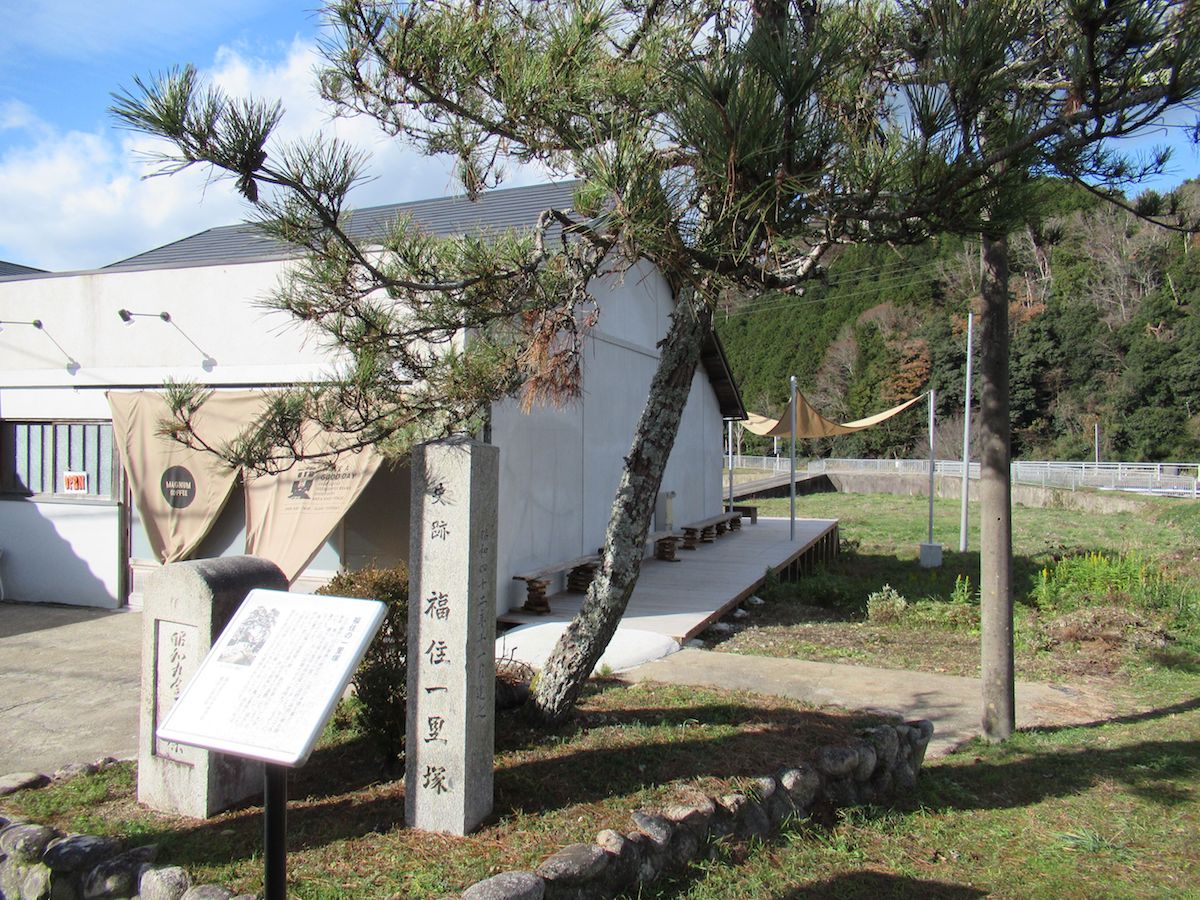
日本語 English 篠山藩では築城とともに、西京街道に沿って大手門を基点とし、一里ごとに土を盛り松を植えて標識とした。この福住の一里塚は三里目の一里塚である。今植えてある松の木は新しく植えられたものであり、街道沿いの宿場町福住の景観を今に伝えている。 所在地:福住 In the Sasayama Domain, along with constructing a castle, soil was piled up and a pine was planted every Japanese ri (approximately 3.9 km) as markers alongside Saikyo Road with the front gate of the castle being the base point. This Ichirizuka marker of Fukusumi is the one on the third ri. The pines planted now have been newly planted and convey the scenery of Fukusumi, the post town alongside the highway, to present day. Location:Fukusumi

日本語 English 能勢街道は「丹州街道(たんしゅうかいどう)」などとも呼ばれる旧街道で、現在の国道173号線とほぼ重なっており、その終着点がこの福住となっている。福住はこの南側から伸びる能勢街道と東西を貫く西京街道が交わっており、交通の要衝であったことがわかる。 所在地:福住 Nose Road is an old road that is also called "Tanshu Road," etc., and at present it is almost overlapping with National Route 173 and ends here in Fukusumi. This Nose Road that stretches from the south side and Saikyo Road that goes through east and west intersect at Fukusumi, and it can be seen that it was an important position for traffic. Location:Fukusumi
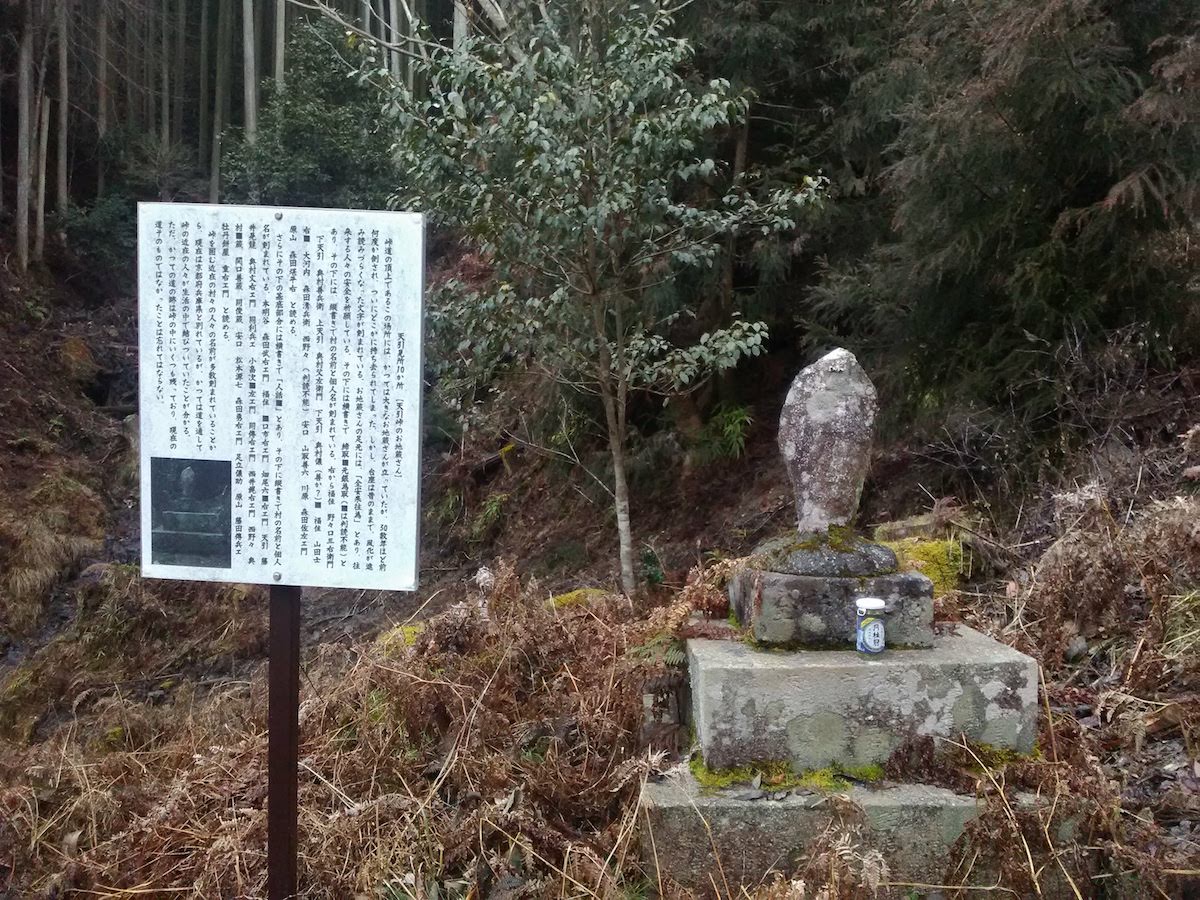
日本語 English 天引峠は京都と山陰地方を結ぶ道であり、福住地区へ入る東側の入り口であった。現在は天引トンネルが開通し、旧道には入れない。峠の上には交通安全を祈願した地蔵が建つ。かつては「ぼたもちや」という宿屋があり、旅人を泊めたり、ぼた餅を食べさせていたという。 所在地:西野々 Amabiki Mountain Pass is a road that connects Kyoto with the San'in Region and was the eastern entrance to enter the Fukusumi area. In present day, the Amabiki Tunnel has been opened, and the old road cannot be entered. A Jizo statue that prays for traffic safety stands on top of the pass. It was said that there was once an inn called "Botamochiya," which lodged travelers and fed them botamochi. Location:Nishinono
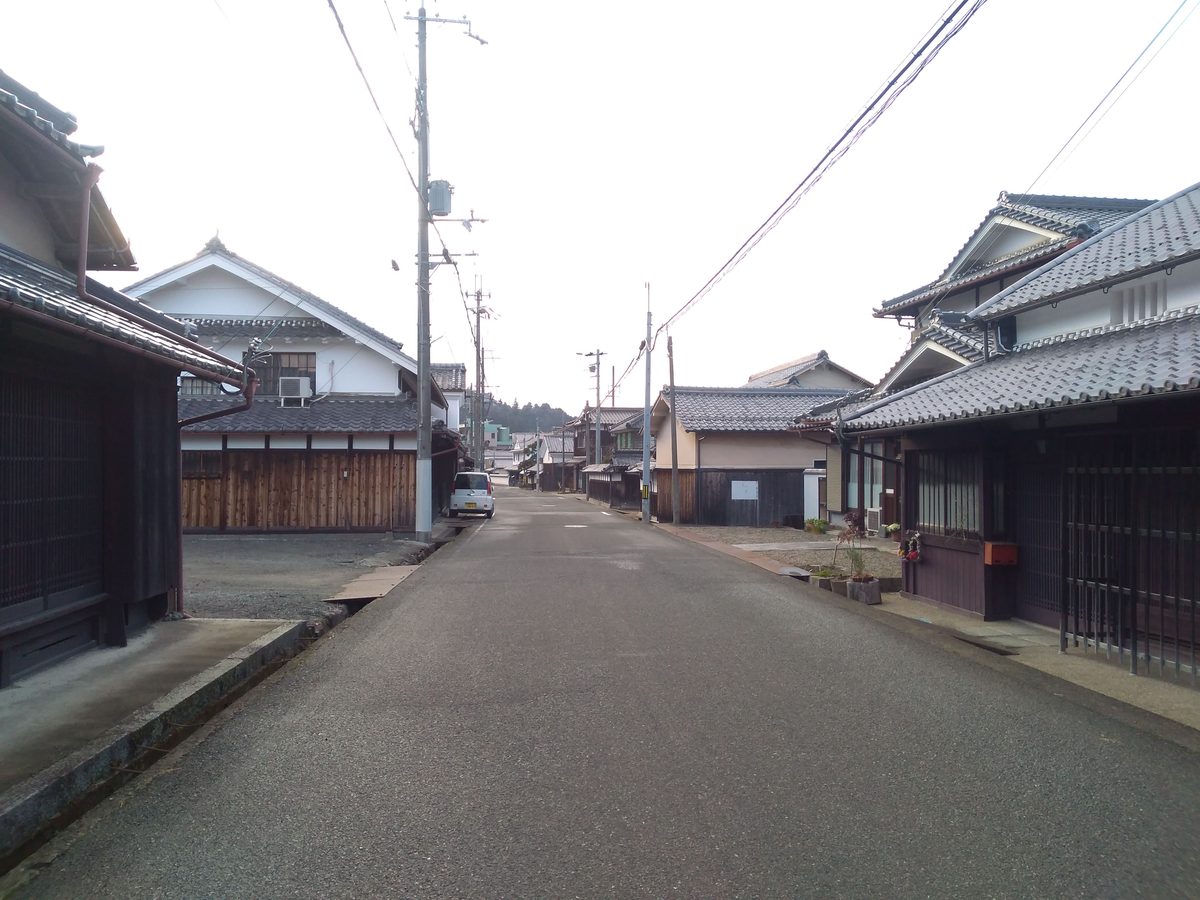
日本語 English 西京街道は「篠山街道」、「山陰道」、「山陰街道」、「京街道」などとも呼ばれる旧街道。多紀郡内(ほぼ現在の篠山市にあたる)の西京街道は、篠山城を起点として東に延びており、天引峠を越えて京都へ向かっている。江戸時代の福住地区は、この西京街道に位置する宿場町として栄えた。 所在地:福住 Saikyo Road is an old road that is also called "Sasayama Road," "San'in Path," "San'in Road," "Kyo Road," etc. The Saikyo Road in Taki County (which is almost where Sasayama City is now) stretches east with Sasayama Castle as the starting point and heads toward Kyoto over the Amabiki Mountain Pass. The Fukusumi area prospered as a post town located on Saikyo Road in the Edo period. Location:Fukusumi
 地名・祭礼
地名・祭礼
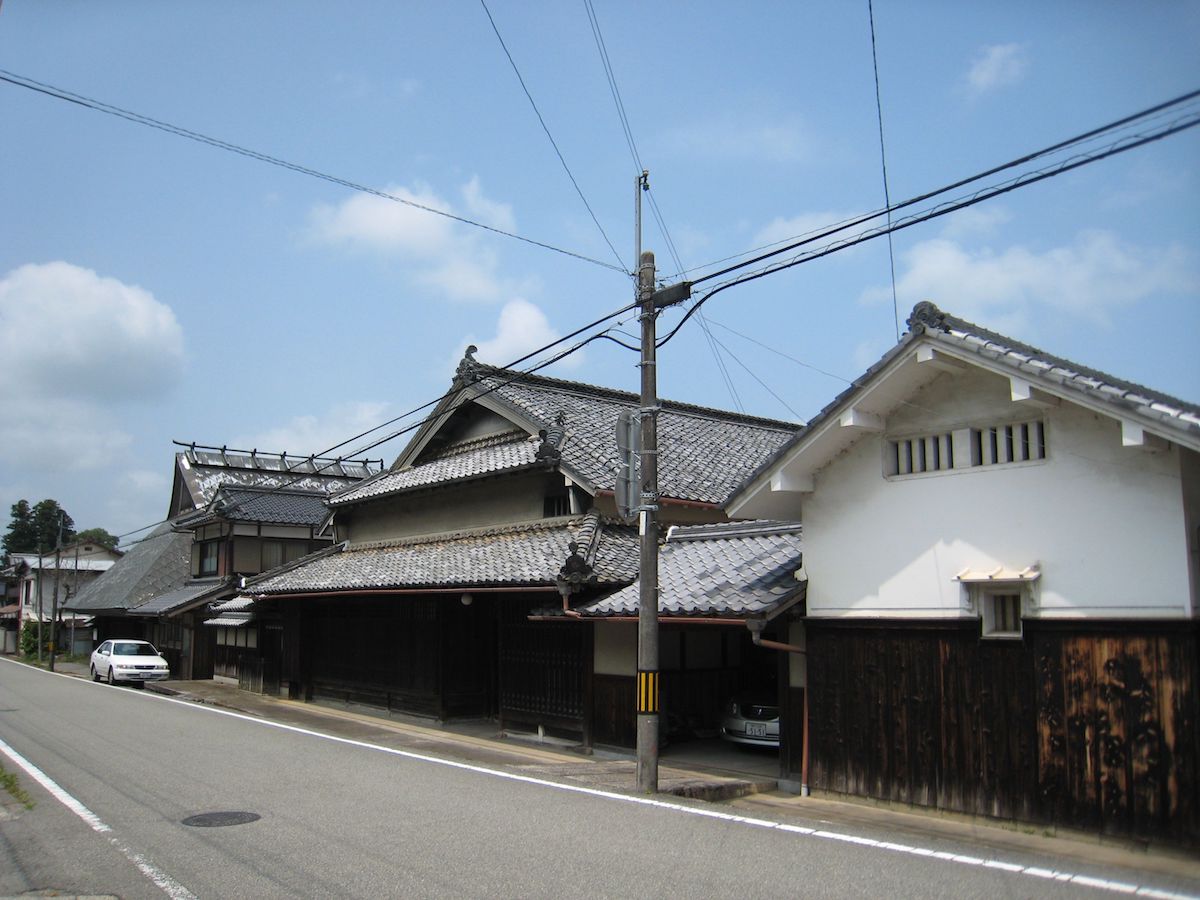
日本語 English 川原の地名はかつてこの地区が北側を流れる籾井川の川沿いにあったことに由来すると考えられている。民家が密集しておらず、道路から後退して主屋を配し、前庭や家の間に田畑が存在しているのが特徴である。大阪の住吉大社から分霊されたと伝えられる住吉神社はこの地区のシンボルとなっている。平成24年(2012)に川原を含める福住地区が国の重要伝統的建造物群保存地区に選定された。 〇川原の曳山「菊水山」 「菊水山」は住吉神社の祭礼である水無月祭の際に曳き出される曳山であり、見送り(曳山の後方を飾る懸装品)は浦島太郎である。屋形船を模した山車の形は住吉大神が海神であることを表し、巡行中の囃子は太鼓と半鐘で波の音を表現している。 所在地:川原 The name of Kawara (which can mean "river plain") is thought to have originated from the area once being alongside the Momii River that flows on the north side. Its characteristics are houses that are not closely grouped together, with main buildings being arranged back from the road, and fields existing between the front gardens and houses. Sumiyoshi Shrine, which is said to have had its deity divided from that of the Sumiyoshi Grand Shrine of Osaka, has become the symbol of this area. In the 24th year of the Heisei period (2012), the Fukusumi area including Kawara was selected as an Important Preservation District for Groups of Historic Buildings of the country. 〇The "Kikusui Float," the Hikiyama Float of Kawara The "Kikusui Float" is the hikiyama float that is pulled in the Minazuki Festival, which is a festival of Sumiyoshi Shrine, and the miokuri (the kesohin tapestry decorating the rear of the hikiyama float) is of Urashima Taro. The shape of the float that imitates a Yakatabune house boat expresses that Sumiyoshi no Okami is a sea deity, and the procession of musical accompaniments express the sound of waves with drums and fire bells. Location:Kawara
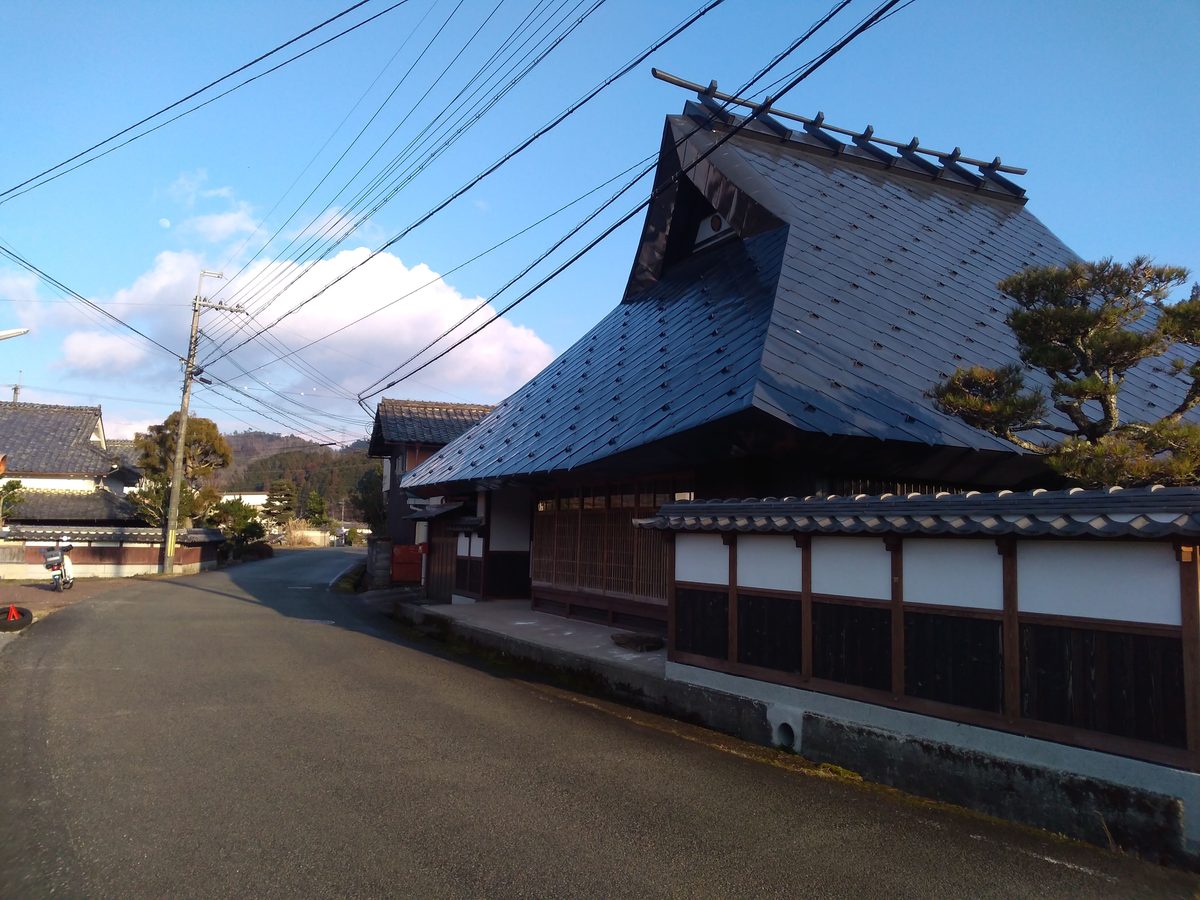
日本語 English 西野々の地名は桑田郡本梅村(現在の京都府亀岡市)の西にあったことに由来する。江戸時代には亀山藩領(現在の亀岡市)であった。 民家の間に田畑があり、1軒ごとの間が空いており、軒の間には田畑が広がっているのが特徴である。平成24年(2012)に西野々を含める福住地区が国の重要伝統的建造物群保存地区に選定された。 所在地:西野々 The name of Nishinono (which can mean "West Plains") originates from it being to the west of Honme Village, Kuwada County (now Kameoka City in Kyoto). In the Edo period, it was the Kameyama Domain (now Kameoka City). Its characteristics are fields that exist between the houses, with empty gaps between each house and fields spreading out between the houses. In the 24th year of the Heisei period (2012), the Fukusumi area including Nishinono was selected as an Important Preservation District for Groups of Historic Buildings of the country. Location:Nishinono
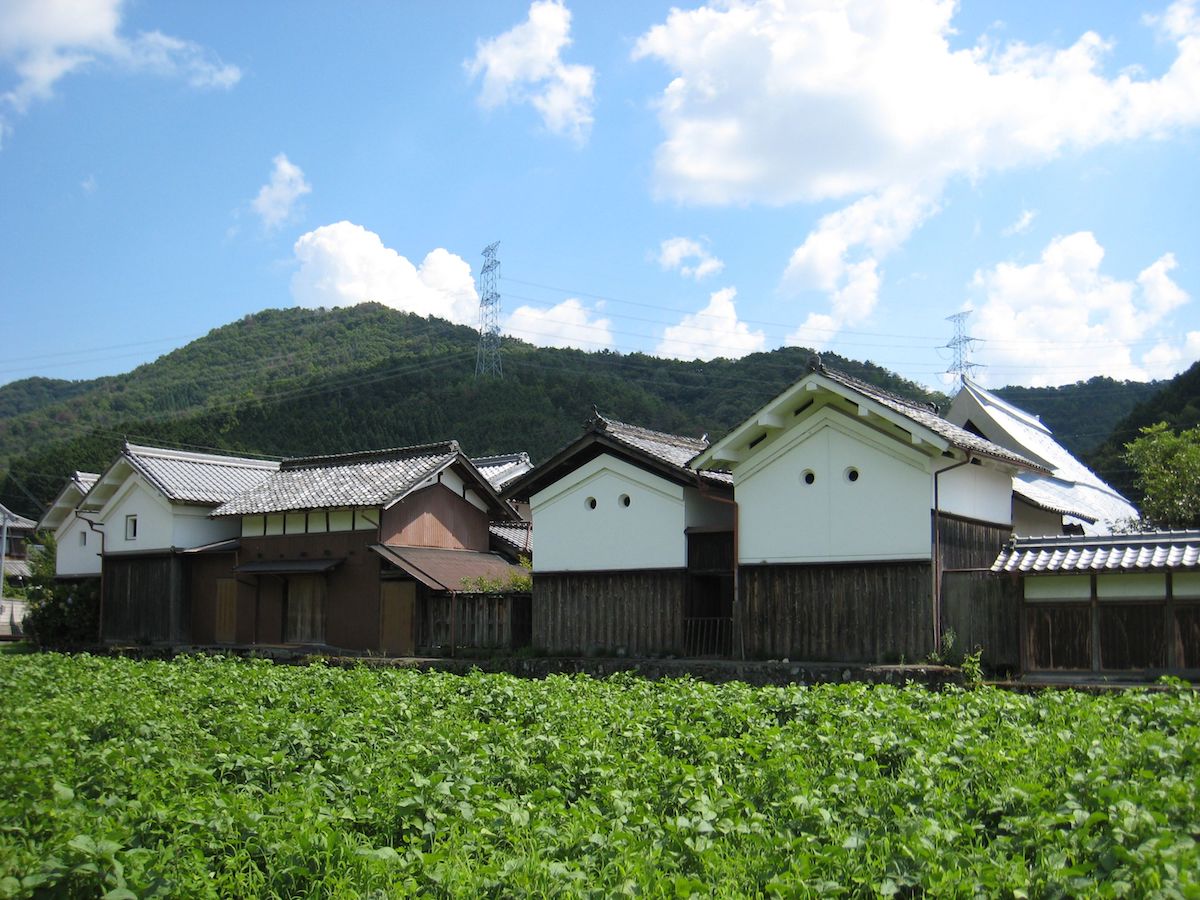
日本語 English 安口の地名はかつてこの地方でハダカスと呼ばれるオオサンショウウオが多く生息していたことに由来している。そのハダカスが鮟鱇(あんこう)に似ていたことから、安口の文字があてられた。江戸時代には亀山藩領(現在の亀岡市)であった。町家型の家屋は少なく、農村集落の特徴を色濃く残している。平成24年(2012)に安口を含める福住地区が国の重要伝統的建造物群保存地区に選定された。 江戸時代は亀山藩領であり篠山藩との境界をなしていた。 所在地:安口 The name of Hadakasu originated from the large number of Japanese giant salamanders that lived there, which were called hadakasu in this region. The kanji characters for the name, which can be pronounced as "anko," were placed from hadakasu being similar to anglerfish, which are also called "anko." In the Edo period, it was the Kameyama Domain (now Kameoka City). There are not many houses of the town house type, and characteristics of a rural community have been stongly left behind. In the 24th year of the Heisei period (2012), the Fukusumi area including Hadakasu was selected as an Important Preservation District for Groups of Historic Buildings of the country. In the Edo period, it was the Kameyama Domain and formed the boundary between it and the Sasayama Domain. Location:Hadakasu
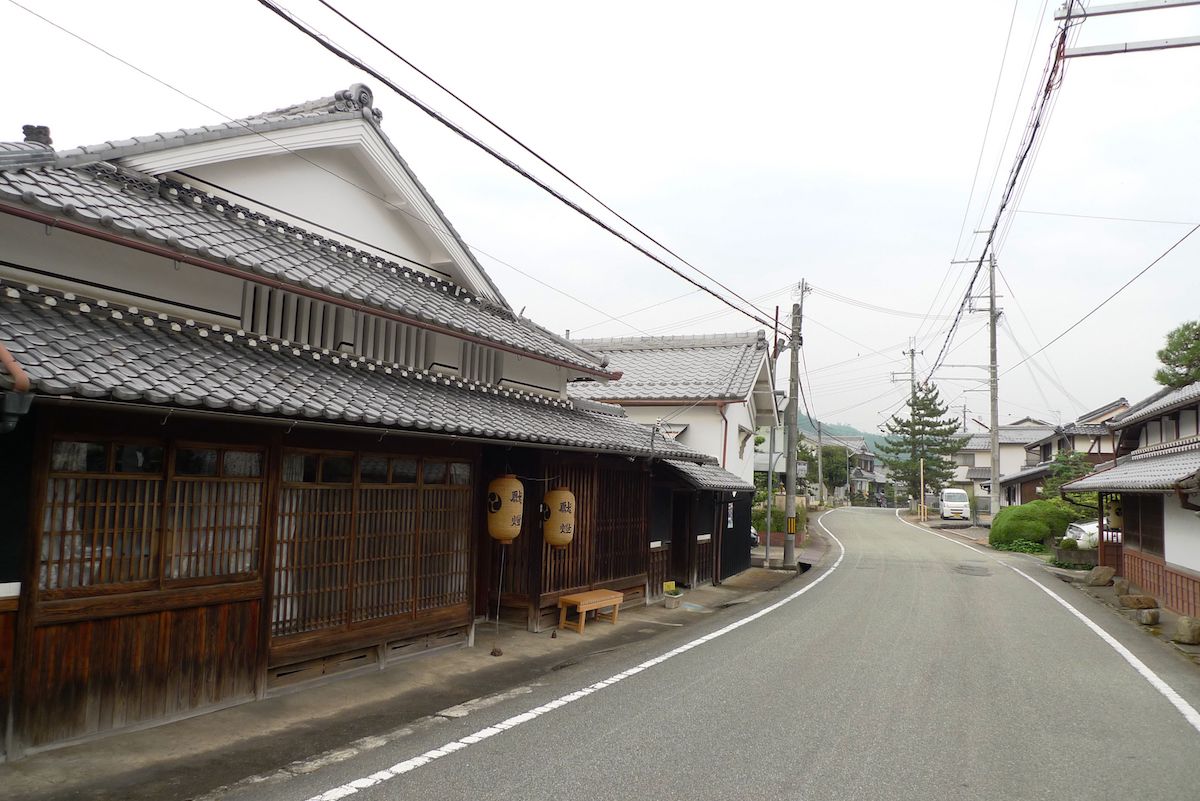
日本語 English 福住は古くは「福泉」とも称した。室町時代には「福住」の表記が記された史料が存在する。福住上は、妻入を中心とした伝統的な建物が多く残っており、一里松などとあわさった歴史的な景観を形成している。江戸時代には宿駅に指定され宿場町として栄えた。かつての宿場町の町並みが今に伝えられていることから、福住上を含む福住地区は平成24年(2012)に国の重要伝統的建造物群保存地区に選定された。 〇福住上の曳山「鶴壽山」 「鶴壽山」は住吉神社の祭礼である水無月祭の際に曳き出される曳山であり、見送り(曳山の後方を飾る懸装品)は鶴のものと龍のものがある。福住上の打込囃子(水無月祭で奏でられる囃子のこと)は鶴の巣籠りから巣立ちして羽ばたく姿を表現しているとされている。 所在地:福住上 Fukusumi was also referred to as "Fukuzumi" in olden times. There exist historical materials in the Muromachi period where the mention of "Fukusumi" is written. Many traditional buildings centered around the Tsumairi style have been left in Fukusumikami, and it forms a historical scenery where it is combined with Ichirimatsu pines, etc. In the Edo era, it was designated to be a post town and prospered. Due to the townscape of what used to be a post town being transmitted to present day, the Fukusumi area including Fukusumikami was selected as an Important Preservation District for Groups of Historic Buildings of the country in the 24th year of the Heisei period (2012). 〇The "Tsuruju Float," the Hikiyama Float of Fukusumikami The "Tsuruju Float" is a hikiyama float that is pulled in the Minazuki Festival, which is a festival of Sumiyoshi Shrine, and it has a miokuri (the kesohin tapestry decorating the rear of the hikiyama float) of a crane and a miokuri of a dragon. The Uchikomi Bayashi (the festival music played in the Minazuki Festival) of Fukusumikami is said to express the sight of a crane leaving its nest and taking flight. Location:Fukusumikami
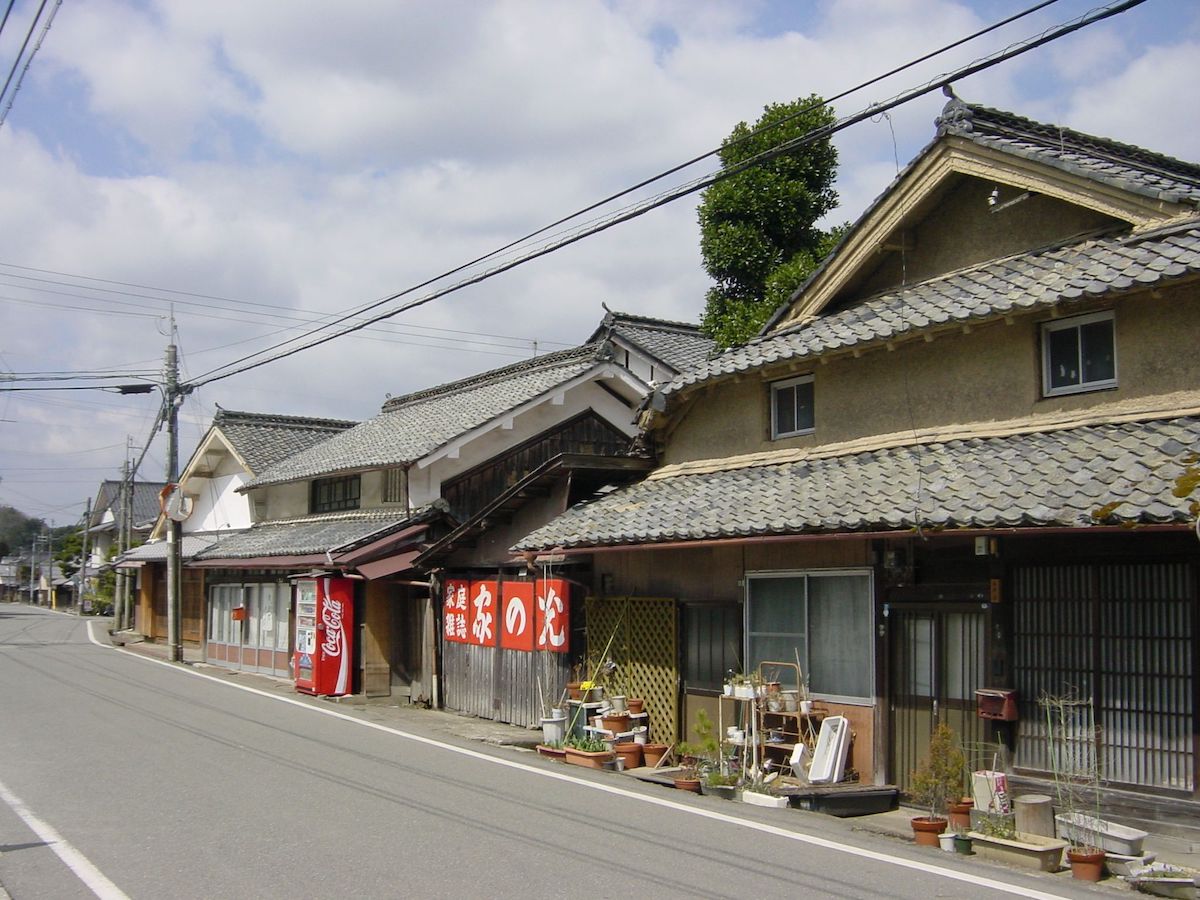
日本語 English 福住は古くは「福泉」とも称した。室町時代には「福住」の表記が記された史料が存在する。福住中には妻入を中心とした伝統的な建造物がまとまって存在しており、建物の脇を流れる水路や石積みと一体となり、歴史的な景観を形成している。江戸時代には宿駅に指定され、宿場町として栄えた。妻入住宅が数多く立ち並ぶ宿場町の面影を今に伝えられていることから、福住中を含む福住地区は平成24年(2012)に国の重要伝統的建造物群保存地区に選定された。 〇福住中の曳山 「獅子王山」 「獅子王山」は住吉神社の祭礼である水無月祭の際に曳き出される曳山である。見送り(曳山の後方を飾る懸装品)は金糸銀糸で表された迫力のある獅子で、夜空に映える蟹牡丹の提灯が美しい曳山である。 所在地:福住中 Fukusumi was also referred to as "Fukuizumi" in olden times. There exist historical materials in the Muromachi period where the mention of "Fukusumi" is written. There are groups of traditional buildings centered around the Tsumairi style in Fukusuminaka, and they come together with the waterways that flow at the sides of the buildings and with the stonework to form a historical scenery. In the Edo era, it was designated to be a post town and prospered. Due to it transmitting to the present day the traces of a post town with many Tsumairi style houses lined up together, the Fukusumi area including Fukusuminaka was selected as an Important Preservation District for Groups of Historic Buildings of the country in the 24th year of the Heisei period (2012). 〇The "Shishio Float," the Hikiyama Float of Fukusuminaka The "Shishio Float" is a hikiyama float pulled in the Minazuki Festival, which is a festival of Sumiyoshi Shrine. The miokuri (the kesohin tapestry decorating the rear of the hikiyama festival float) is of a powerful lion shown with gold and silver thread, and it is a hikiyama float with beautiful crab-shaped peony paper lanterns that glow in the night sky. Location:Fukusuminaka

日本語 English 福住は古くは「福泉」とも称した。室町時代には「福住」の表記が記された史料が存在する。福住下は、西京街道に沿って連なる宿場町福住の玄関口に位置し、江戸時代には宿駅に指定され、宿場町として栄えた。妻入住宅が数多く立ち並ぶ宿場町の面影を現在に伝えていることから、福住下を含める福住地区は、平成24年(2012)に国の重要伝統的建造物群保存地区に選定された。 〇福住下の曳山「亀甲山」 「亀甲山」は住吉神社の祭礼である水無月祭の際に曳き出される曳山で、見送り(曳山の後方を飾る懸装品)は亀に乗った浦島太郎である。亀のように不老長寿であって欲しいという願いと、住吉神社が海神であることを表しているとされている。制作は江戸時代の終わり頃とされ、くぎを一本も使わずに建造されていることから、当時の職人の高い技術がうかがえる。 所在地:福住下 Fukusumi was also referred to as "Fukuizumi" in olden times. There exist historical materials in the Muromachi period where the mention of "Fukusumi" is written. Fukusumishimo was located in the entrance of the post town, Fukusumi, which went alongside and connected with Saikyo Road, and in the Edo period, it was designated to be a post town and prospered. Due to it transmitting to the present day the traces of a post town with many Tsumairi style houses lined up together, the Fukusumi area including Fukusumishimo was selected as an Important Preservation District for Groups of Historic Buildings of the country in the 24th year of the Heisei period (2012). 〇The "Tortoise Shell Float," the Hikiyama Float of Fukusumishimo The "Tortoise Shell Float" is a hikiyama float that is pulled in the Minazuki Festival, which is a festival of the Sumiyoshi Shrine, and the miokuri (the kesohin tapestry decorating the rear of the hikiyama float) is of Urashima Taro riding a turtle. It is said to express the wish for perpetual youth and longevity like that of a tortoise and to express that Sumiyoshi shrine worships a sea deity. It is stated to have been made at around the end of the Edo period, and the high level of technique of the artisans at the time can be seen from it being built without using a single nail. Location:Fukusumishimo
水無月祭 (みなづきまつり)
地名・祭礼
 開く
開く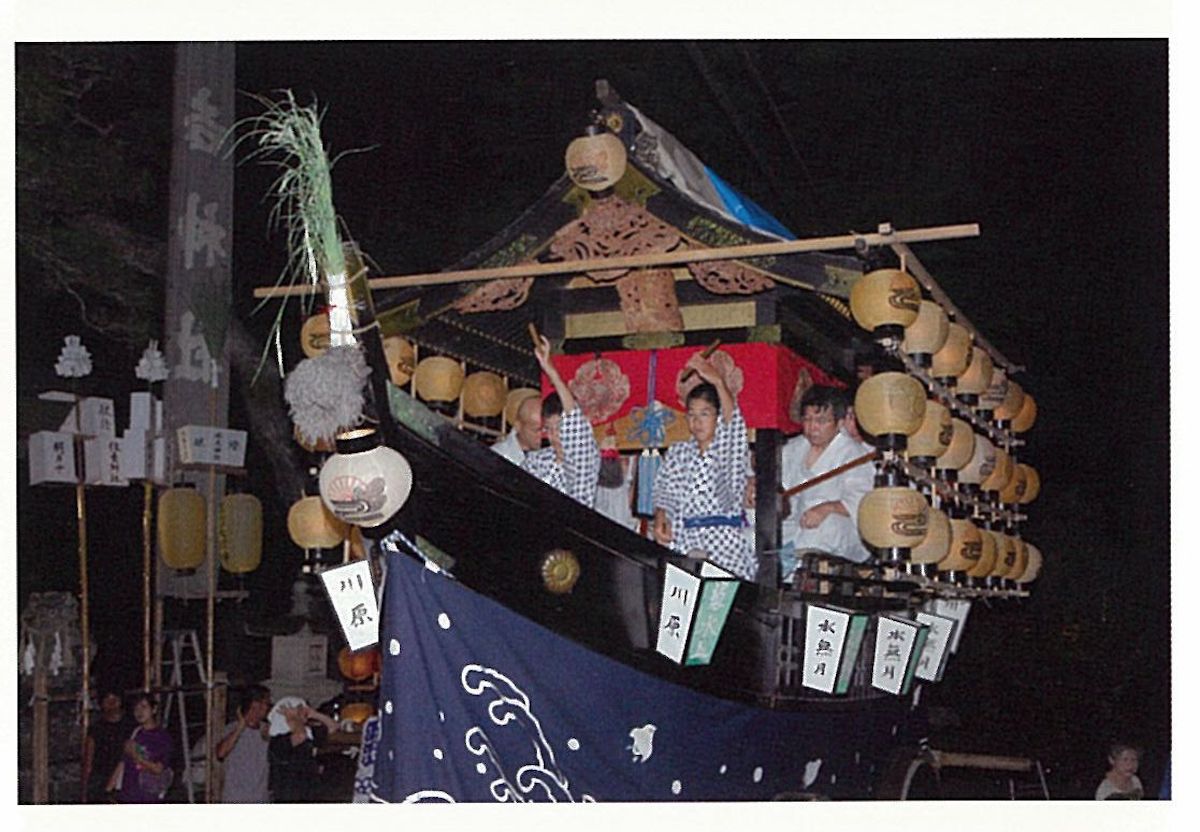
日本語 English 水無月祭は毎年7月末に執り行われる住吉神社の祭礼である。各集落(福住下、福住中、福住上、川原、本明谷)の5台の曳山が宮入りをすると、境内で「打込囃子」と呼ばれる囃子が競演される。 「打込囃子」を演奏する打込衆は15才頃から練習に取り組み、楽器一つを習得するのに3年程度の年数がかかるという。この打込囃子の競演が、住吉神社祭礼の見どころである(市指定無形民俗文化財)。 所在地:川原270 水無月祭の様子:https://videotube.sasayama.jp/dtl.php?VID=566 (リンク先:篠山市視聴覚ライブラリー) The Minazuki Festival is a festival of Sumiyoshi Shrine held every year at the end of July. When the five hikiyama floats of each village (Fukusumishimo, Fukusuminaka, Fukusumikami, Kawara, Honmyodani) have returned to the shrine (miyairi), a festival music called "Uchikomi Bayashi" is performed competitively in the shrine grounds. The people doing the uchikomi that perform the "Uchikomi Bayashi" work on practice from around fifteen years of age, and it is said that it takes up to three years to learn a single instrument. This competitive performance of Uchikomi Bayashi is the highlight of the Sumiyoshi Shrine Festival (city-designated intangible folk-cultural property). Location:Kawara 270 The State of the Minazuki Festival:https://videotube.sasayama.jp/dtl.php?VID=566 (Link: Sasayama City Audio-Visual Library)
 寺社
寺社
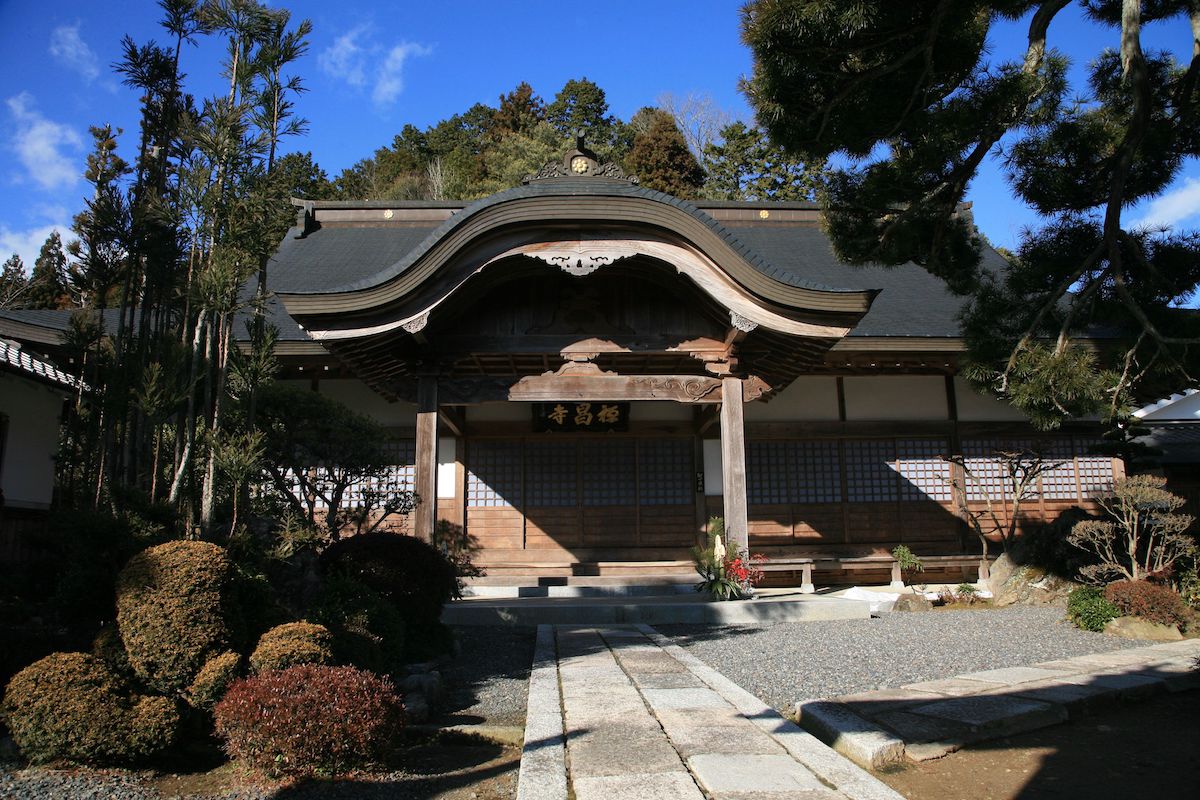
日本語 English 禅昌寺は天正年間に創建され、多紀郡(ほぼ現在の篠山市にあたる)を治めた戦国大名波多野秀治に仕えた籾井氏の祈願所であったと考えられる。天正7年(1579)に明智光秀の丹波攻めによって焼失した。寛永年間(1624~1643)に再建され、宝暦4年~安永年間(1754~1773) 所在地:福住274 Zensho-ji Temple was founded in the years of the Tensho era and is thought to have been a place of prayer of the Momii Clan that served Hideharu Hatano, the Sengoku daimyo who ruled Taki County (which is almost where Sasayama City is now). In the seventh year of the Tensho era (1579), it was burned down due to Mitsuhide Akechi's attack on Tanba. It was rebuilt in the years of the Kan'ei era (1624-1643) and in the years from the fourth year of the Horeki era to the years of the An'ei era (1754-1773). Location:Fukusumi 274
日本語 English 極楽寺は弘法大師(空海)を祀る大師堂が建つ寺院であり、かつては山科音頭による盆踊りが開かれ隣の京都から多くの人が参加したといわれている。大師堂に入る道の入口には大正12年(1923)に建てられた石標があり、「多紀八十八カ所奥ノ院弘法大師」と刻まれている。立ち入り禁止。 所在地:西野々302 Gokuraku-ji Temple is a Buddhist temple that enshrines Kobo Daishi (Kukai), and it is said that in the past, Bon dances by the Yamashina chorus were held and many people participated from neighboring Kyoto. The entrance of the path that goes into Daishido Hall has a stone marker that was placed in the 12th year of the Taisho period (1923), and on it is carved, "Kobo Daishi Inner Sanctuary in the Eighty-Eight Places of Taki." Access is prohibited. Location:Nishinono 302
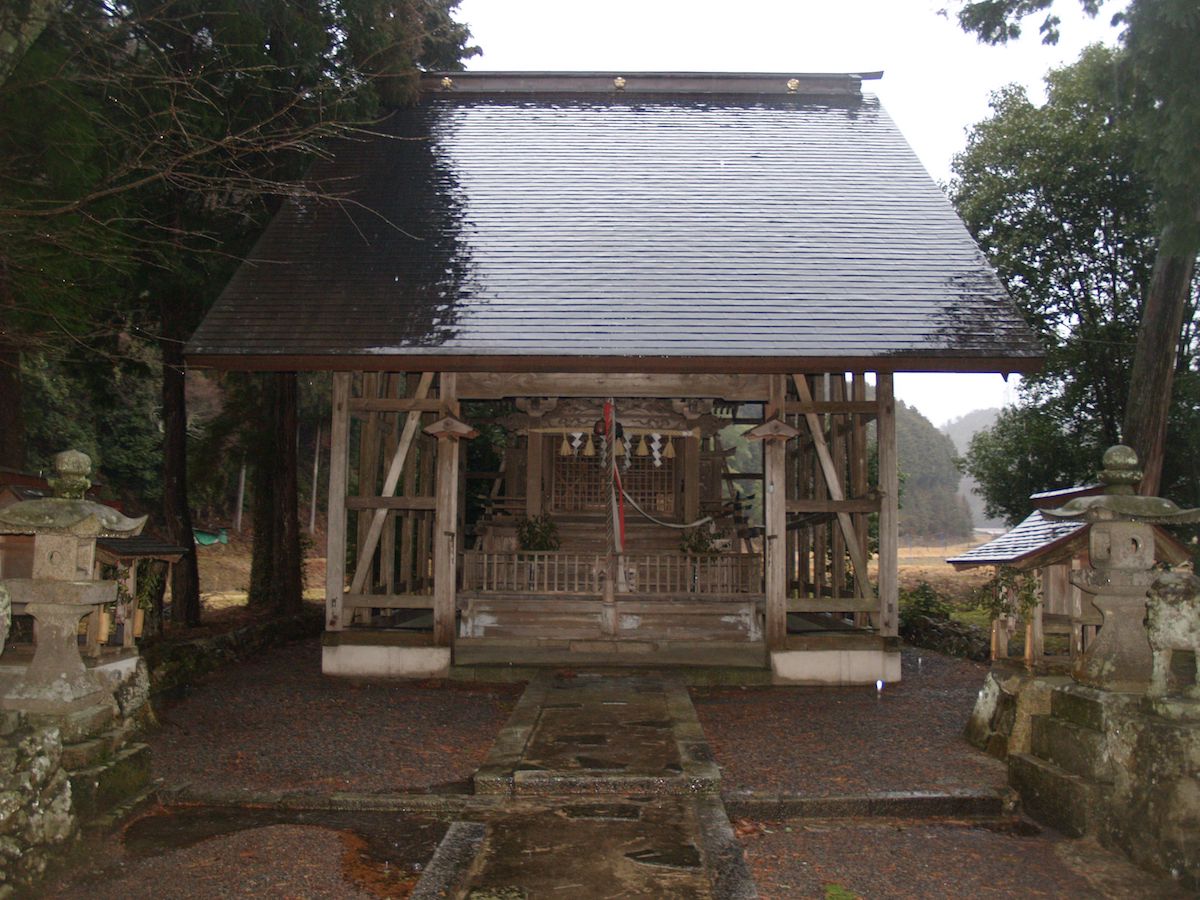
日本語 English 松森神社は約200年前に京都の北野神社の分社として造営された神社であり、菅原道真を祭神とする。祭儀は年1回執り行われる。明治8年(1876)から昭和39年(1964)まで福住小学校の分校があった場所でもある。大木がそびえる本殿の入り口が特徴的な神社である。 所在地:西野々541 Matsunomori Shrine is a shrine that was constructed around 200 hundred years ago as a branch shrine of Kitano Shrine of Kyoto, and it has Sugawara no Michizane as its enshrined deity. A ceremony is held once a year. It was also the place where there was a branch school of Fukusumi Elementary School from the eighth year of the Meiji period (1876) to the 39th year of the Showa period (1964). It is a shrine with a distinctive entrance to the main shrine with towering giant trees. Location:Nishinono 541

日本語 English 山神神社は大山祇神(おおやまづみかみ)を祀る神社であり、毎年1月9日に住民の安泰と五穀豊穣を祈願する例祭が執り行われている。大山祇神は日本神話に登場する神であり、その総本宮である大山祇神社は、現在の愛媛県今治市に位置する。一説では創建は仁徳天皇の時代にまでさかのぼるといわれている。大山祇神を祀る神社は日本全国に分布しており、この山神神社もその一つである。立ち入り禁止。 所在地:川原6 Yamagami Shrine is where Ooyama Zumikami is enshrined, and every year on January 9th, an annual festival praying for the security of the townspeople and for an abundant harvest is held. Ooyama Zumikami is a deity that appears in Japanese myth, and Yamagami Shrine is the deity's head shrine, and is located in what is now Imabari City, Ehime Prefecture. One theory states that its foundation goes back to the time period of Emperor Nintoku. Shrines that enshrine Ooyama Zumikami are distributed throughout the whole of Japan, and this Yamagami Shrine is one of them. Access is prohibited. Location:Kawara 6

日本語 English 御刀代神社は安閑天皇を主祭神とする神社で、年1回住民の安泰と五穀豊穣を祈願する例祭が催される。その名の通り、皇族の刀を祀っているといわれている。 昔、川原で病気が流行した時に、滋賀県の山王神社から分霊して祀ったところ、病気が治ったといわれている。地域からは「山王神社(さんのうじんじゃ)」と呼ばれて親しまれている。立ち入り禁止。 所在地:川原39 Mitoshiro Shrine is a shrine that has Emperor Ankan as its main enshrined deity, and an annual festival is held once a year to pray for the safety of the townspeople and for an abundant harvest. As its name suggests (the "to" in "Mitoshiro" means "sword"), it is said to enshrine the sword of the Imperial family. It is said that long ago when disease spread in Kawara, the disease was cured after dividing the deity from the Sanno Shrine in Shiga Prefecture and enshrining it. It is familiar to the local area, and the locals call it "Sanno Shrine." Access is prohibited. Location:Kawara 39
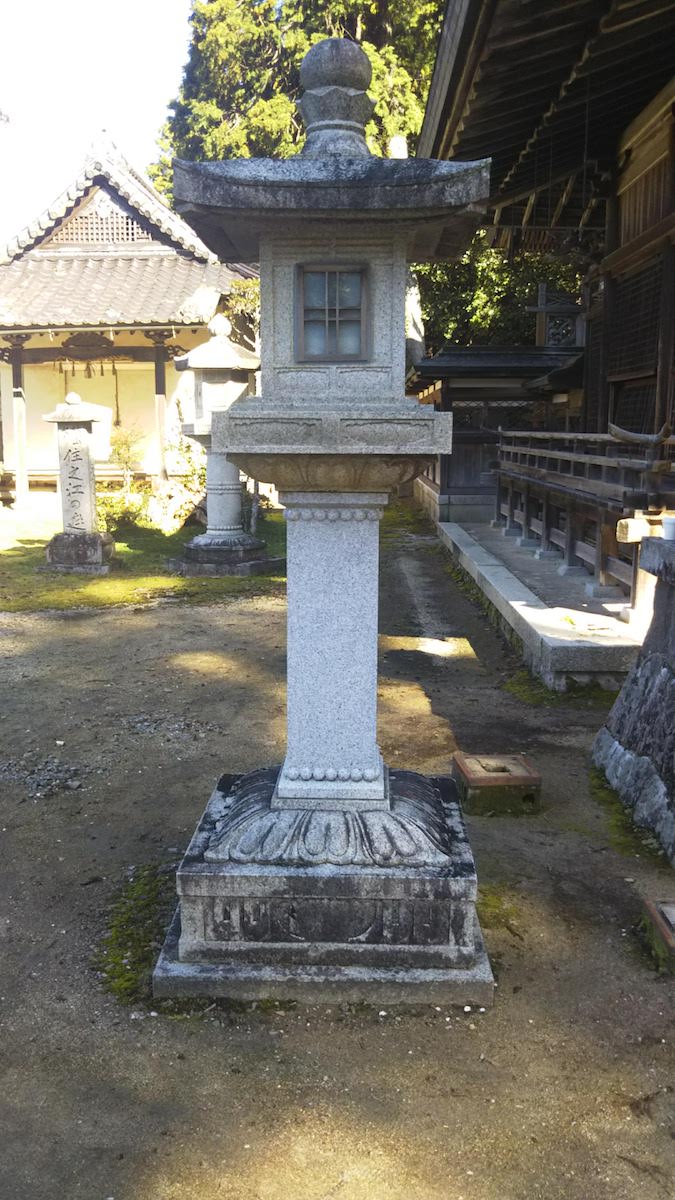
日本語 English 住吉神社は永保元年(1081)に丹波国司であった大江匡房(おおえのまさふさ)が大坂の住吉神社から分霊したと伝えられている。住吉大神は航海安全、農耕・産業、和歌の神として知られており、かつて、多紀郡(ほぼ現在の篠山市にあたる)を治めた戦国大名波多野秀治に仕えた籾井氏や歴代の篠山藩主など時の有力者の庇護を受けた。 (1)鐘楼 住吉神社の鐘楼は、寛文2年(1662)に篠山藩第4代藩主であった松平康信が寄進した。市内の鐘楼建築の中でも優れたものである(市指定文化財)。 (2)石灯籠 住吉神社の石灯籠は、住吉神社の拝殿前に4基据えられており、石造美術研究の第一人者である川勝政太郎の設計によるものである。鎌倉時代の様式を踏襲している。 所在地:川原270 Sumiyoshi Shrine is said to have had its deity divided from the Sumiyoshi Shrine in Osaka by Masafusa Ooeno, the provincial governor of Tanba Province, in the first year of the Eiho era (1081). Sumiyoshi no Ookami is known as a deity of sea voyage safety, agriculture and industry and waka poetry, and in the past, influential people of the time such as the Momii Clan that served Hideharu Hatano, the Sengoku daimyo who ruled Taki County (which is almost where Sasayama City is now), and the successive feudal lords of the Sasayama Domain received protection from the deity. (1)The Bell Tower The bell tower of Sumiyoshi Shrine was donated by Yasunobu Matsudaira, the fourth feudal lord of the Sasayama Domain, in the second year of the Kanbun era (1662). It is an excellent tower even among the bell tower buildings in the city (city-designated cultural property). (2)Stone Lanterns There are four stone lanterns of Sumiyoshi Shrine placed in front of the hall of worship, and they have been designed by Masataro Kawakatsu, a leading expert on stone art research. They follow the style of the Kamakura period. Location:Kawara 270
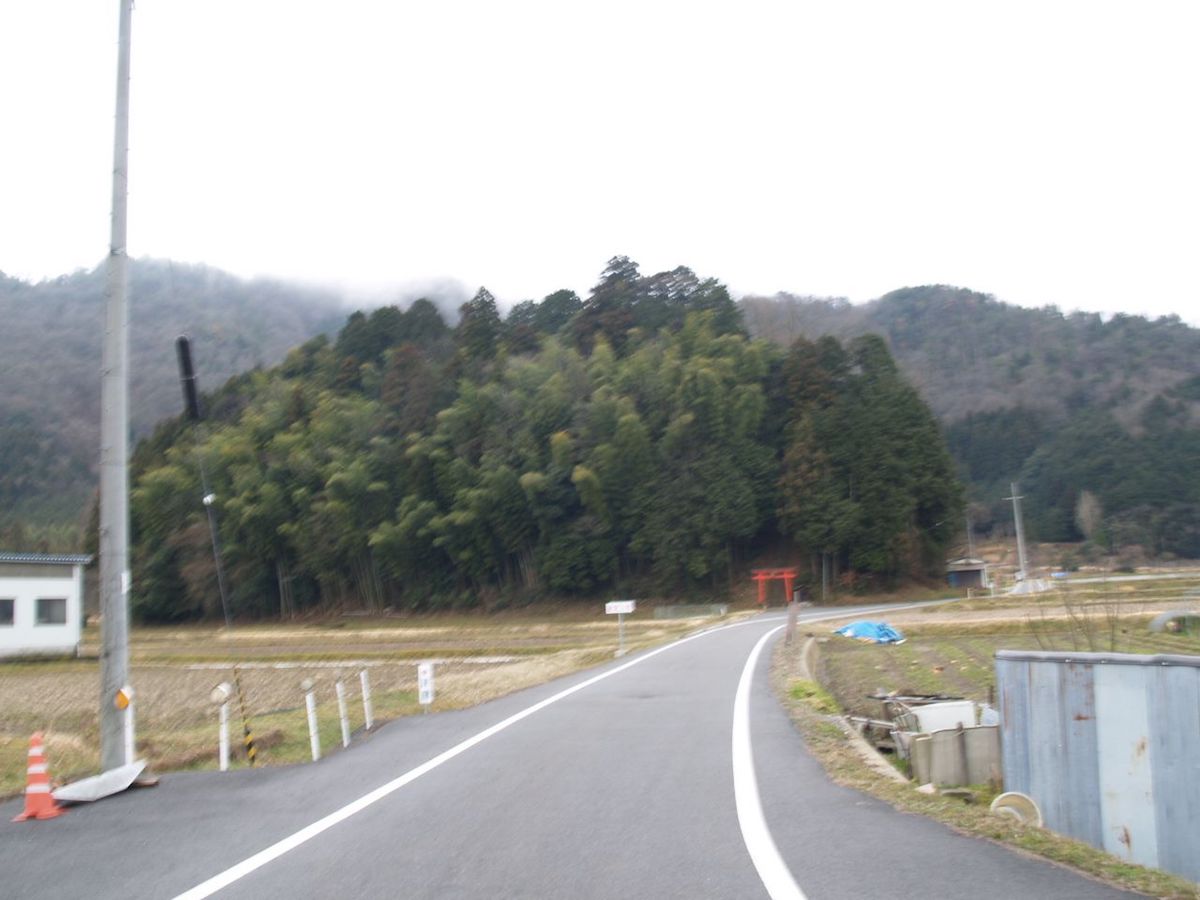
日本語 English 丸山稲荷神社は、文永年間(1521~26年)に京都の伏見稲荷から迎えられたと伝えられている。その後焼失して明治21年(1888)に再建された。小高い山の上にある社で、赤い鳥居が目印となっている。 所在地:福住上 Maruyama Inari Shrine has been said to have been invited from Fushimi Inari in Kyoto in the years of the Bun'ei era (1521-1526). After that, it was burned down and was rebuilt in the 21st year of the Meiji period (1888). It is a shrine on top of a small mountain with a red torii gate as a marker. Location:Fukusumikami
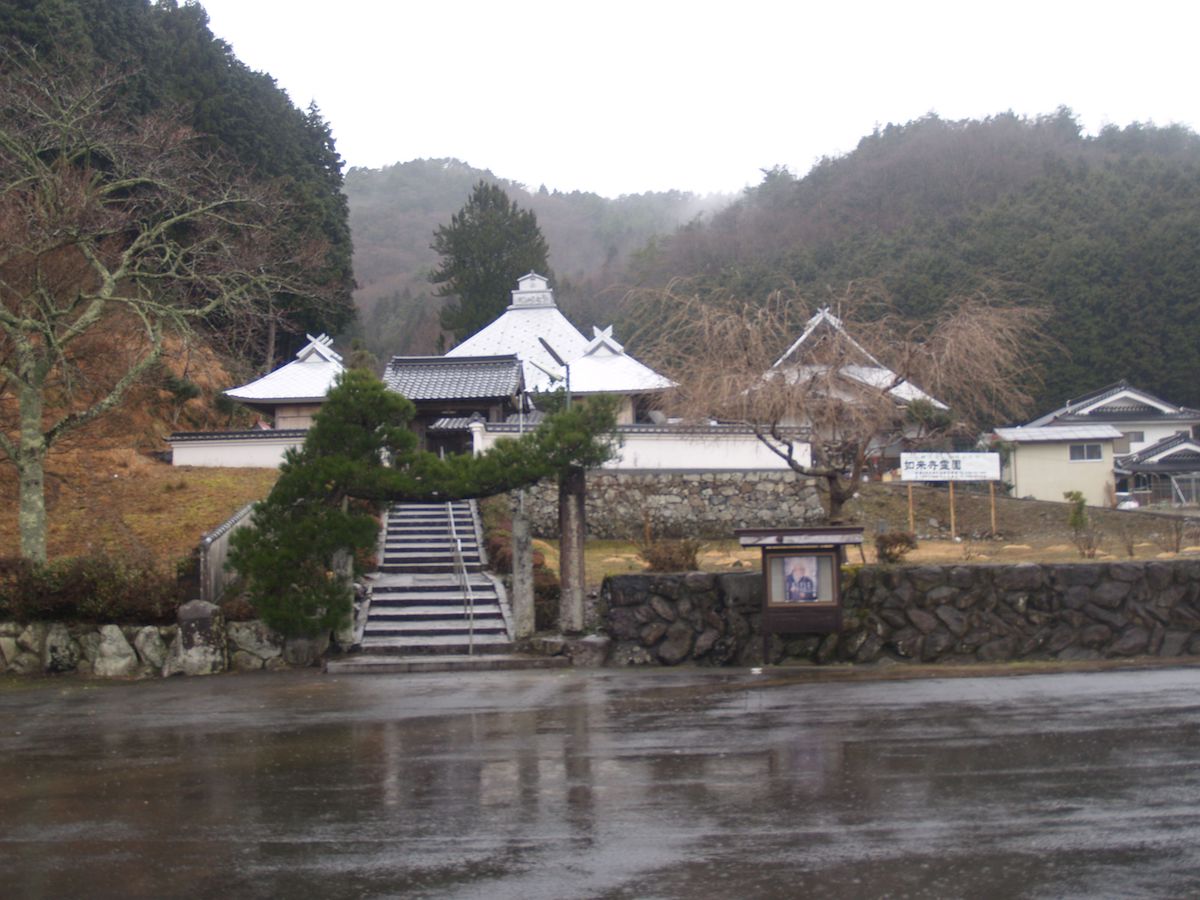
日本語 English 如来寺は永保2年(1082)に創建され、多紀郡(ほぼ現在の篠山市にあたる)を治めた戦国大名波多野秀治に仕えた籾井氏の祈願所となったが、天正6年(1578)に戦乱によって焼失した。その後、寛永2年(1625)に再建された。5月頃にはシャクヤクやボタンが美しく咲く。 所在地:福住607 Nyorai-ji Temple was founded in the second year of the Eiho era (1082), and it became a place of prayer of the Momii Clan which served Hideharu Hatano, the Sengoku daimyo who ruled Taki County (which is almost where Sasayama City is now), but it was burned down due to the disturbances of war in the sixth year of the Tensho era (1578). After that, it was rebuilt in the second year of the Kan'ei era (1625). At around May, the Chinese peonies and tree peonies bloom beautifully. Location:Fukusumi 607
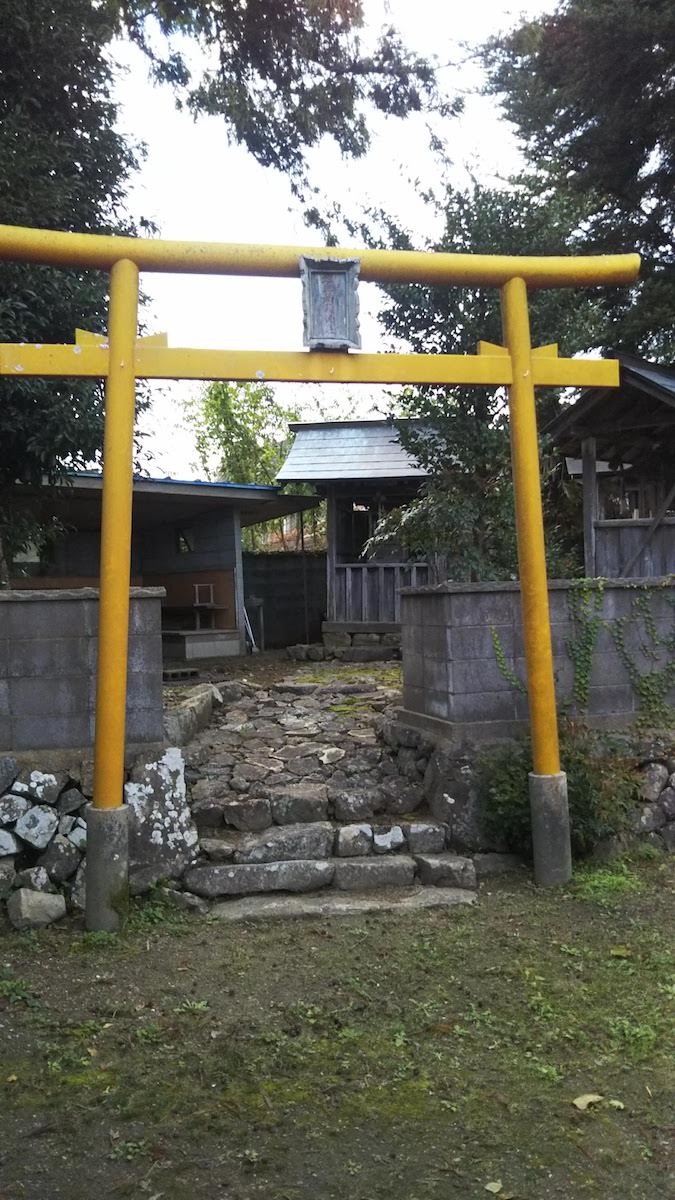
日本語 English 福住稲荷神社は宇賀魂命(うがのみのたま)を祭神とし、お火たきとと呼ばれる祭礼が年1回執り行われている。例祭の際には神主が同席して各戸の家が各々お赤飯とおあげをお供えする。黄色い鳥居が特徴的な神社である。 所在地:福住字地主188 Fukusumi Inari Shrine has Ugano Minotama as its enshrined deity, and a festival called Ohitaki is held once a year. At the time of the annual festival, the Shinto priests also attend and each house makes an offering of festive red rice and deep-fried tofu at their door. It is a shrine with a distinctive yellow toriii gate. Location:Fukusumi Jijishu 188
 史跡
史跡
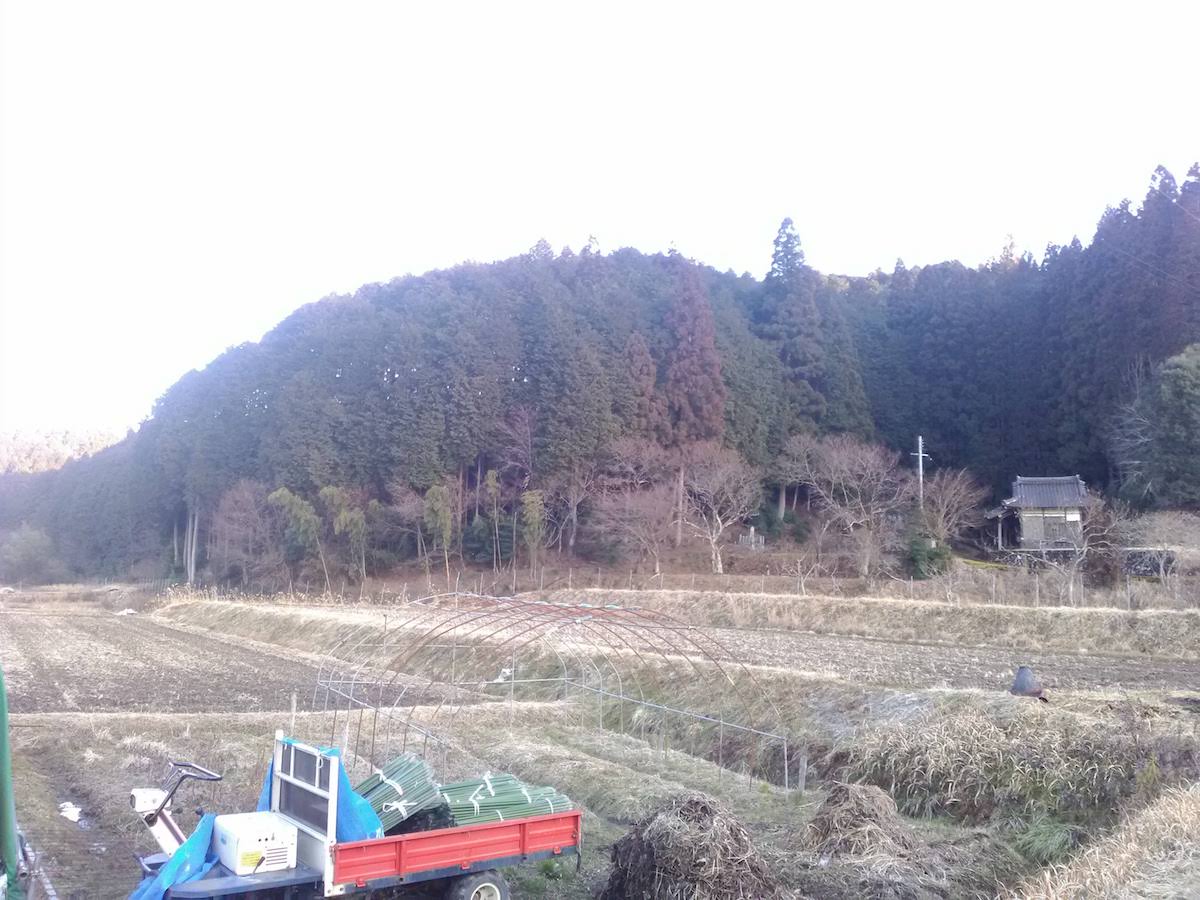
日本語 English 西野々館は、西野々砦とも呼ばれる多紀郡の最東端に位置する中世の城跡である。永禄年間(1558-70)に近江佐々木氏一族の西村氏が拠点にしたと伝えられている。 所在地:西野々 Nishinono Castle, also called Nishinono Fortress, refers to the ruins of a castle in the Middle Ages located in the most eastern edge of Taki County. It is said that the Nishimura Clan, a family of the Omi Sasaki Clan, had it as their base in the years of the Eiroku era (1558-1570). Location:Nishinono
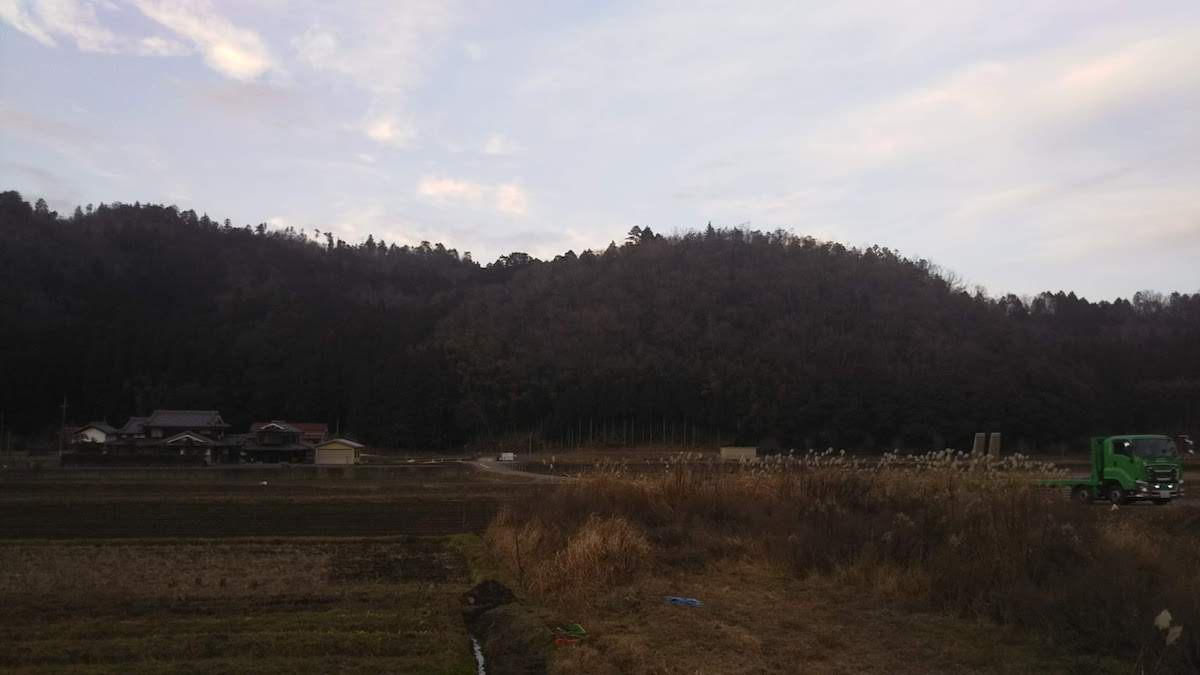
日本語 English 安口砦は戦国時代に籾井綱重が城主をつとめていた山城である。綱重の妻は多紀郡(ほぼ現在の篠山市にあたる)を治めた戦国大名波多野秀治の妹である。綱重は元亀年間(1570~73)に家督を息子の綱利に譲り、自身はそれまでの居城であった籾井城から安口城に移ったとされる。この城は織田氏の丹波攻略に備えて築かれたものだと考えられ、天正5年(1577)に侵攻してきた明智光秀によって落城させられた。なお、綱重と孫の太郎左衛門孝高は京都に逃れたと伝わっている。 所在地:安口 Hadakasu Fortress was a mountain castle where Tsunashige Momii was the castle lord in the Sengoku period. Tsunashige's wife was the younger sister of Hideharu Hatano, the Sengoku daimyo who ruled over Taki County (which is almost where Sasayama City is now). Tsunashige gave the family headship over to his son, Tsunatoshi, and moved from Momii Castle, which was where he had been up until that time, to Hadakasu Castle in the years of the Genki era (1570-1573). This castle was thought to have been constructed to be prepared for an invasion of Tamba by the Oda Clan, and it fell due to Mitsuhide Akechi invading in the fifth year of the Tensho era (1577). Furthermore, it is said that Tsunashige and his grandchild, Yoshitaka Tarozaemon, escaped to Kyoto. Location:Hadakasu
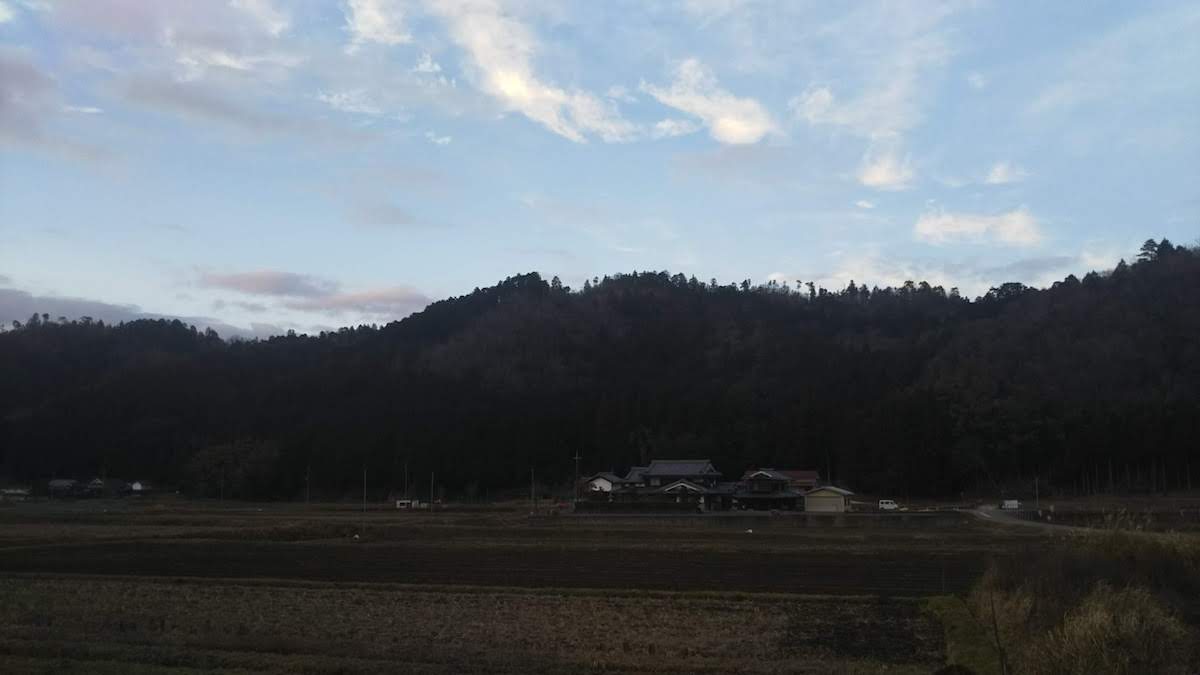
日本語 English 安口西砦は戦国時代に築かれた山城であり、城主は白石右近と伝えられているが、籾井氏とも関係があると考えられている。安口城の支城とされ、明智光秀の丹波攻めによって落城した。 所在地:川原 Hadakasu West Fortress was a mountain castle constructed in the Sengoku period, and it is said that the castle lord was Ukon Shiraishi, but it can also be thought to have had a relation with the Momii Clan as well. It was made a supporting castle of Hadakasu Castle and fell due to Mitsuhide Akechi attacking Tamba. Location:Kawara

日本語 English 籾井城は永正年間(1504~21)に籾井照綱によって築城された山城である。籾井氏は源氏を祖先とする近江佐々木氏を発祥とすると伝えられ、多紀郡(ほぼ現在の篠山市にあたる)を治めた戦国大名波多野氏に従っており、丹波の青鬼として恐れられたとされる。天正5年(1577)に明智光秀が丹波に侵攻した際に猛攻撃を受けて落城し、城主の籾井綱利は自害したと伝えられている。 所在地:本名谷 Momii Castle is a mountain castle that was constructed in the years of the Eisho era (1504-1521) by Terutsuna Momii. It is said that the Momii Clan has its origin in the Omi Sasaki Clan, which have the Minamoto Clan as their ancestor. They followed the Hatano Clan, the Sengoku daimyos that ruled Taki County (which is almost where Sasayama City is now), and it was said that they were feared as the blue demon of Tamba. The castle received a fierce attack when Mitsuhide Akechi invaded Tanba in the fifth year of the Tensho era (1577), and it is said that the castle lord, Momii Tsunatoshi committed suicide. Location:Honmyodani
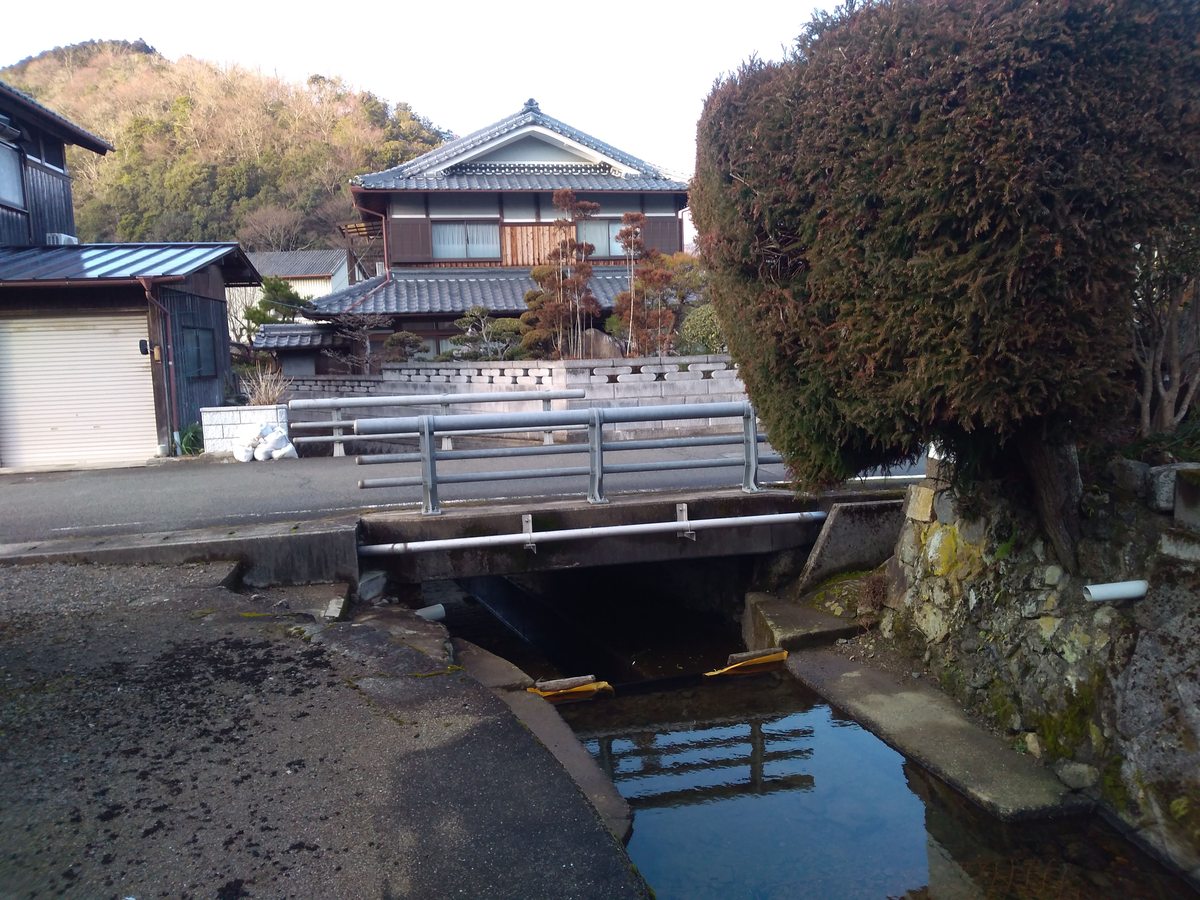
日本語 English 人々の往来を管理した関所の跡である。江戸時代の福住地区は篠山藩(現在の篠山市)と亀山藩(現在の亀岡市)に分かれており、藩を超えて往来する場合は関所を通過する必要があった。現在の安口東倶楽部の横を流れる小川は、その関所付近を流れていたことから関所川と呼ばれている。関所川にかかる橋は関所橋と呼ばれ、川と合わせて当時の関所の名残を今に伝えている。 所在地:安口 The ruins of a checkpoint (called a "sekisho") that managed the comings and goings of people. The Fukusumi area in the Edo period was divided into the Sasayama Domain (now Sasayama City) and the Kameyama Domain (now Kameoka City), and when going beyond the Domain and coming and going from it, there was a need to pass through the checkpoint. The small river that flows beside Hadakasu Higashi Kurabu at present is called Sekisho River as it used to flow near the checkpoint. The bridge that goes over Sekisho River is called Sekisho Bridge, and together with the river, transmits the traces of the checkpoint at that time to present day. Location:Hadakasu
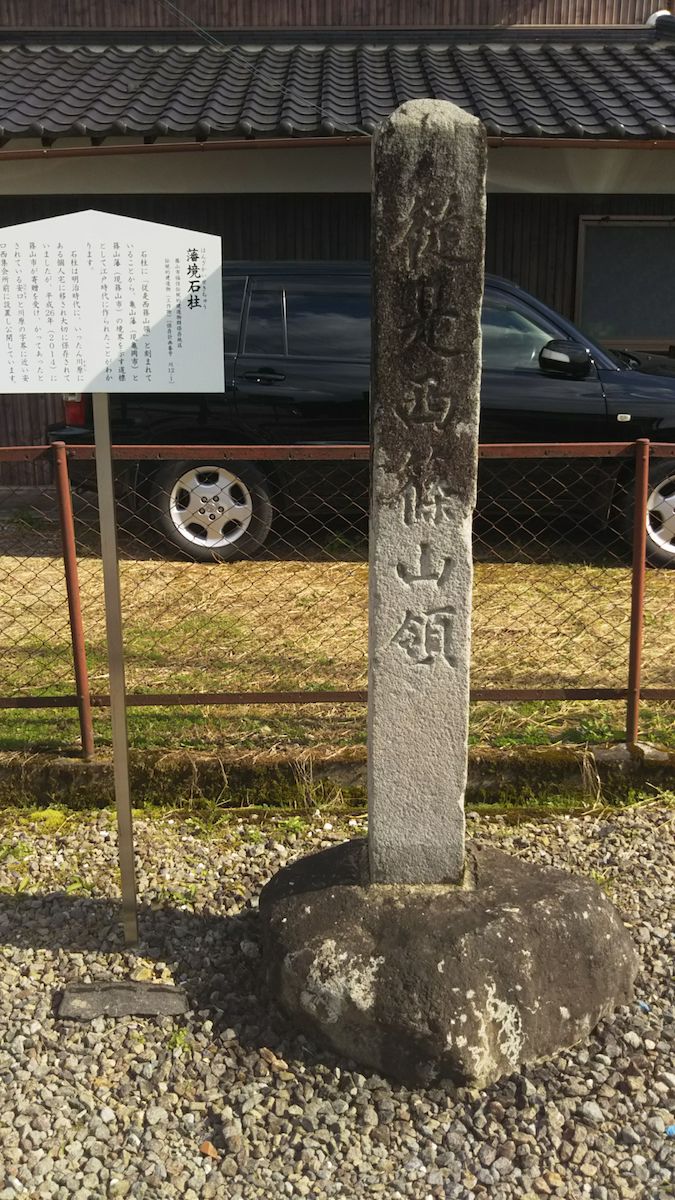
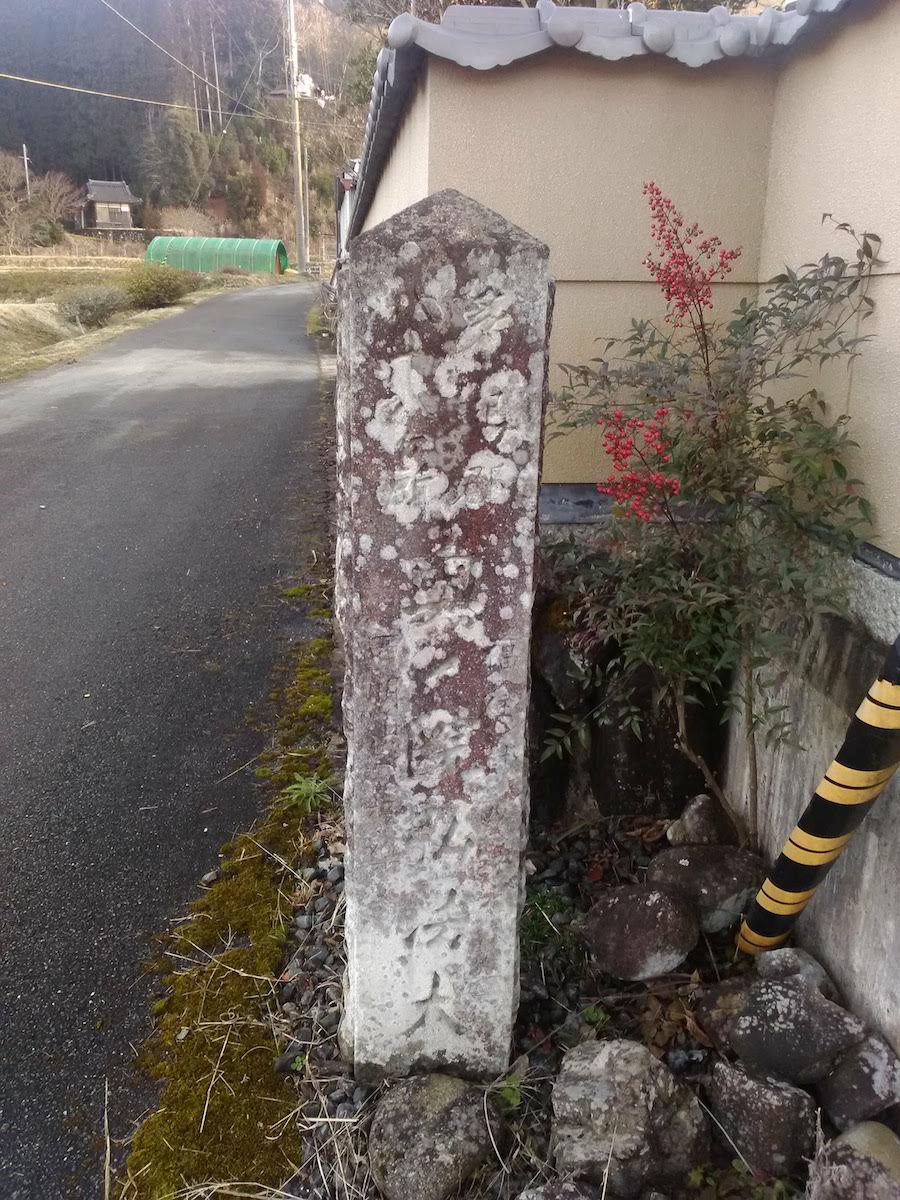
日本語 English かつて福住地区は篠山藩(現在の篠山市)と亀山藩(現在の亀岡市)に分かれており、現在の川原地区と安口地区がその境界であったと伝えられている。この石柱には「従是西篠山藩」と書かれており、境界を表す石柱であったと考えられる。 この石柱は江戸時代に作られたもので、個人の宅で保管されていた。平成26年(2014)に元々の藩境の場所とされる現在の場所に移された。 所在地:安口 The Fukusumi area was once divided into the Sasayama Domain (now Sasayama City) and the Kameyama Domain (now Kameoka City), and it is said that the present Kawara and Hadakasu areas were on their border. "From Here, It is the West Sasayama Domain" is written on this stone pillar, and it is thought that it was a stone pillar that showed the border. This stone pillar was made in the Edo period and was stored in an individual's house. It was moved to its present location, which was stated to be the original location of the Domain border, in the 26th year of the Heisei period (2014). Location:Hadakasu
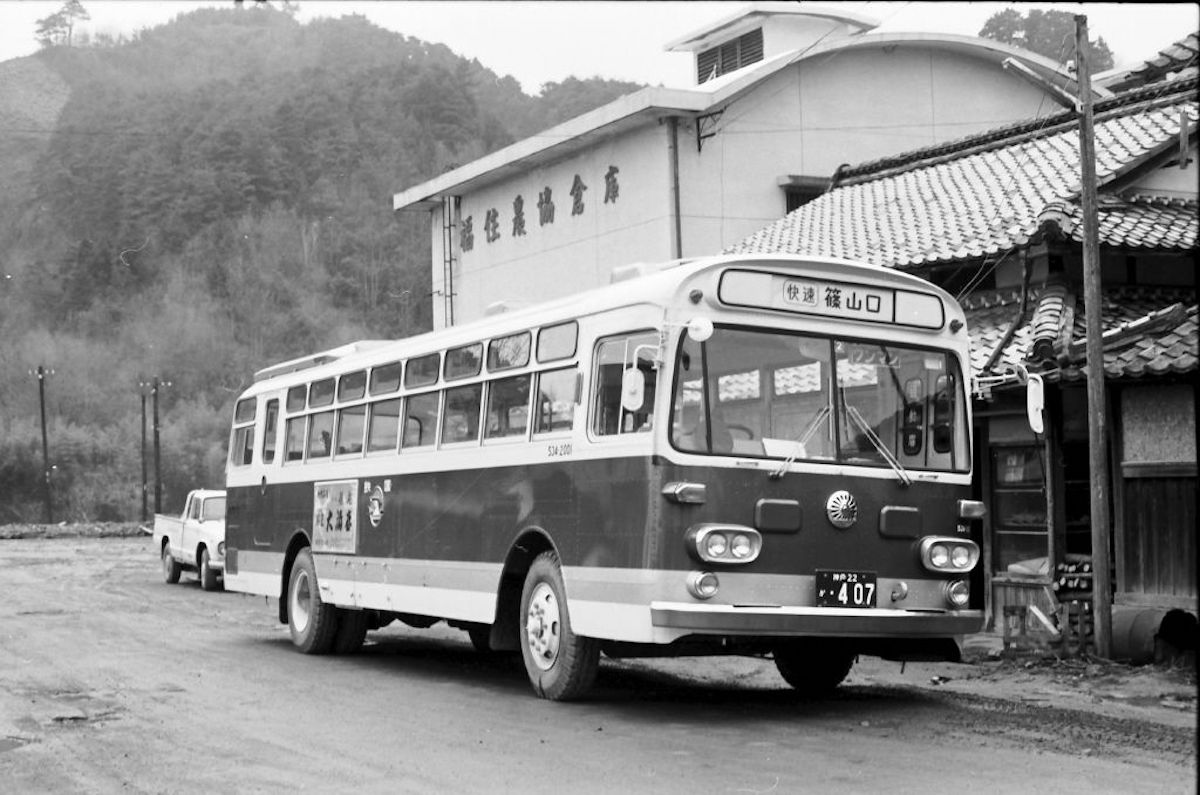
日本語 English 旧国鉄福住駅は、昭和19年(1944)から昭和47年(1972)まで運行していた国鉄篠山線の終点駅である。 篠山線は鉄道黎明期には現在の園部駅(現京都府南丹市園部町)から篠山までを結ぶ計画であり、福住をはじめとする周辺の地域を中心に誘致運動が展開されていた。そして、国策線として、戦時中の昭和19年(1944)に福住の本名谷から採掘されたマンガンなどの戦争で使用する資源を運ぶために現在のJR篠山口から福住までを結ぶ篠山線が開通した。 戦後も通勤通学に利用されていたが、旧国鉄の赤字ローカル線を整理する方針によって昭和47年(1972)に廃線となった。 所在地:福住 廃線の日の篠山線の様子:https://videotube.sasayama.jp/dtl.php?VID=34 (リンク先:篠山市視聴覚ライブラリー) The Old Japanese National Railways Fukusumi Station was the final station of the Japanese National Railways Sasayama Line that operated from the 19th year of the Showa period (1944) to the 47th year of the Showa period (1972). In the dawn of the railways, the Sasayama line was planned to connect from what is now Sonobe Station (the present Sonobecho of Nantan City in Kyoto) to Sasayama, and activities to invite and attract people were developed in the surrounding regions including Fukusumi. Then, during the war in the 19th year of the Showa period (1944), the Sasayama line that connected from what is now JR Sasayamaguchi to Fukusmi was opened as a national policy line in order to carry resources used in the war such as manganese mined out of Honmyodani in Fukusumi. Even after the war, it was used to commute to work and school, but through the policy of organizing unremunerative local lines of the old Japanese National Railways, the line was discontinued in the 47th year of the Showa period (1972). Location:Fukusumi The state of the Sasayama line on the day it was discontinued:https://videotube.sasayama.jp/dtl.php?VID=34 (Link: Sasayama City Audio-Visual Library)

日本語 English 本陣は江戸時代の参勤交代の時に大名が宿泊した場所で、ここには本陣として使われた荻田六左衛門の邸宅があった。現在は旧福住小学校が建ち、その敷地内にはここが本陣であったことを示す石標がある。 所在地:福住342 A Honjin was a place where daimyo lodged in when they did Sankin-kotai (a policy where daimyo had to alternate living in their Domain and in Edo for a year) in the Edo period, and the house of Rokuzaemon Ogita, which was used as a Honjin, used to be here. At present, the old Fukusumi Elementary School stands there, and there is a stone marker in that site showing that this place used to be a Honjin. Location:Fukusumi 342
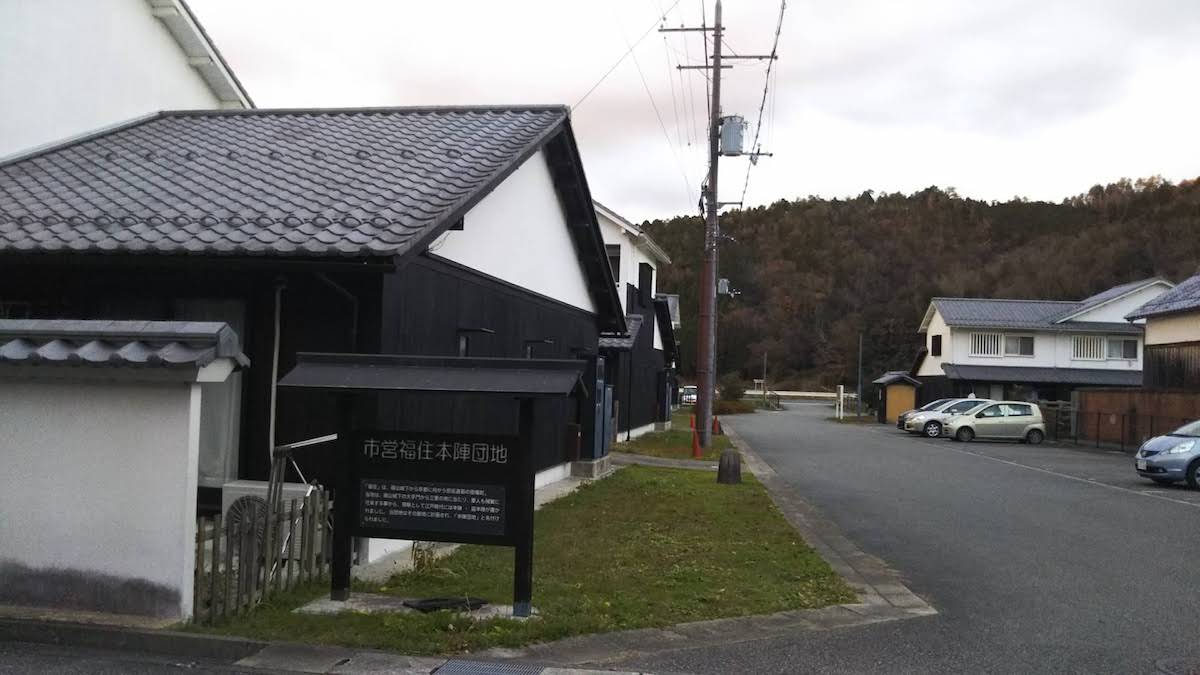
日本語 English 脇本陣は本陣(江戸時代の参勤交代の時に大名が宿泊した場所)だけでは宿泊場所が足りないに使わわれた。ここにはその脇本陣として使われた山田嘉衛門の邸宅があった。山田邸は本陣としても使われたことがあり、文化11年(1814)に測量の旅で福住を訪れた伊能忠敬や、慶応4年(1868)に山陰鎮撫使として出陣した西園寺公望が山田邸を本陣として使用したとされている。現在は市営福住本陣団地が建っている。 所在地:福住388-2 A Waki-Honjin was used when lodging places were not enough with just a Honjin (a place where daimyo lodged in when doing Sankin-kotai, the policy where daimyo had to alternate living in their Domain and in Edo for a year). Here, there used to be the house of Kaemon Yamada, which was used as a Waki-Honjin. There were also times when the Yamada house was used as a Honjin, and it is said that it was used as a Honjin in the 11th year of the Bunka era by Tadataka Ino, who visited Fukusumi on a journey of surveying the area, and in the fourth year of the Keicho era (1868) by Kinmochi Saionji, who went to battle as a chinbushi official of San'in. At present, the Municipal Fukusumi Honjin Complex stands there. Location:Fukusumi 388-2
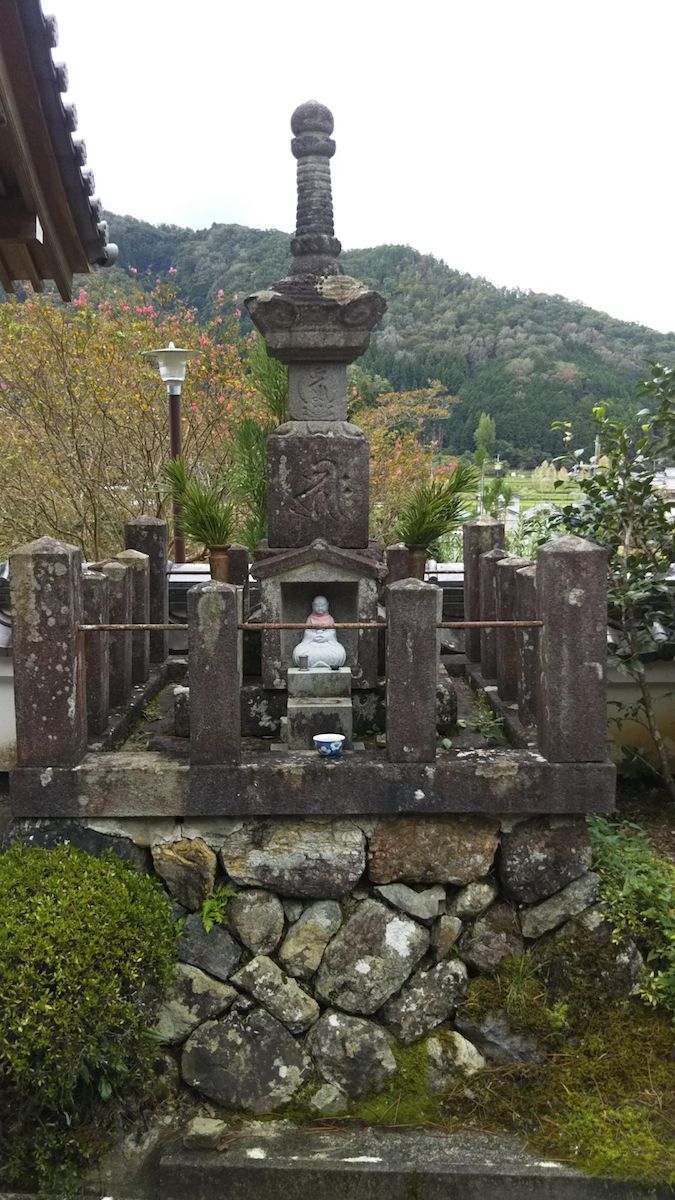
日本語 English 江戸時代中期に庄屋の白井半左衛門という人物が、火事の際の防火と灌漑のために小溝を掘る計画を実行した。しかし、藩に無断で計画を実行した責を問われ死罪となった。その後、福住で火事が頻発し、その火事の時に白馬に乗った半左衛門の姿を見たという人が相次いだ。そこで半左衛門の霊を慰めるために供養塔が建てられた。毎年11月28日に供養塔の前で供養行事が行われている。 所在地:福住274 In the middle of the Edo period, a village headman known as Hanzaemon Shirai carried out a plan to dig small ditches for fireproofing and irrigation during fires. However, he was blamed for carrying out a plan without permission in the Domain, and was given the death sentence. After that, fires frequently occurred in Fukusumi, and people one after another stated that they saw the figure of Hanzaemon riding a white horse during those fires. And so, a memorial tower to comfort Hanzaemon's ghost was built. Every year on November 28th, a memorial service is held in front of the memorial tower. Location:Fukusumi 274
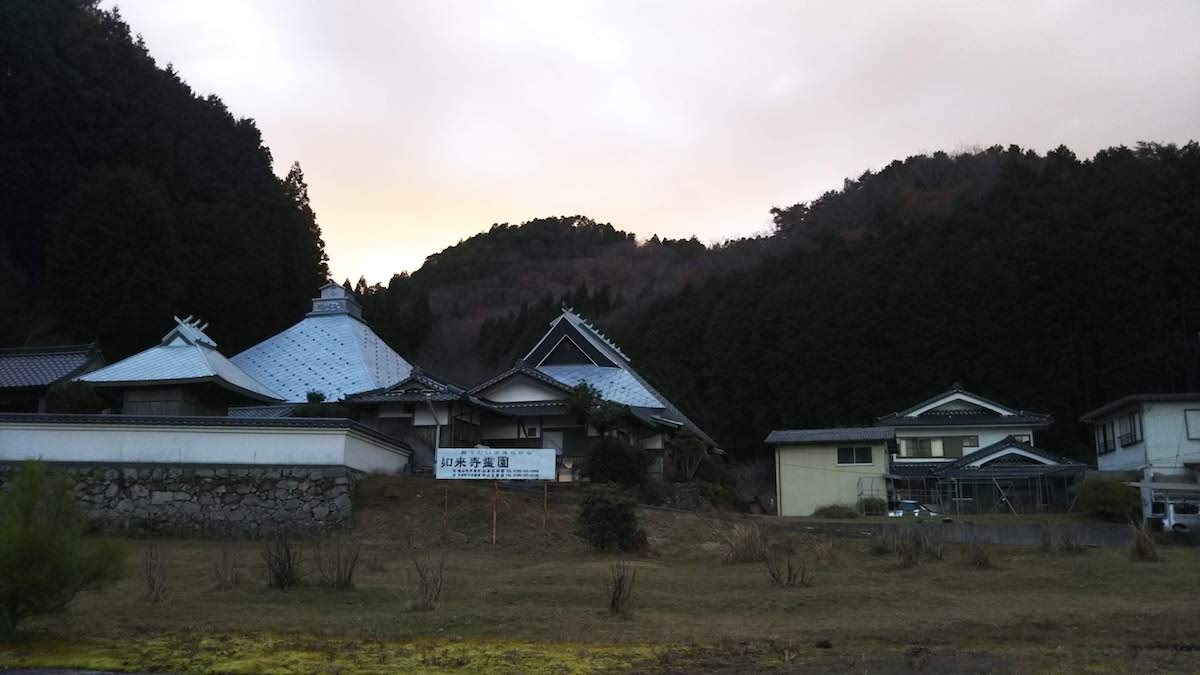
日本語 English 仁木城は、室町時代に西京街道と能勢街道の合流地点である交通の要衝であった福住の桂山に築かれた山城である。城主の仁木氏は室町幕府の将軍家である足利氏の一族であり、多紀郡東部を治めたと考えられている。現在城の遺構はほとんど残されておらず、「仁入道(にんにゅうどう)」という坪名が残されているのみである。麓にある如来寺の山門はこの仁木城の城門と礎石を移築したものと伝えられている。 所在地:福住 Niki Castle is a mountain castle built on Katsurayama Mountain of Fukusumi, which is a town that was an important position of traffic, being the merging point of Saikyo Road and Nose Road in the Muromachi period. The lord of the castle, the Niki Clan, was a family of the Ashikaga Clan, the Shogun family of the Muromachi Shogunate, and it is thought that they ruled the eastern part of Taki County. At present, almost no relics of the castle remain, and only a small area name known as, "Ninnyudo" is left. It is said that the main temple gate of Nyorai-ji Temple at the base of the mountain is made from removing and rebuilding the castle gate and foundation stones of Niki Castle. Location:Fukusumi
 名勝
名勝
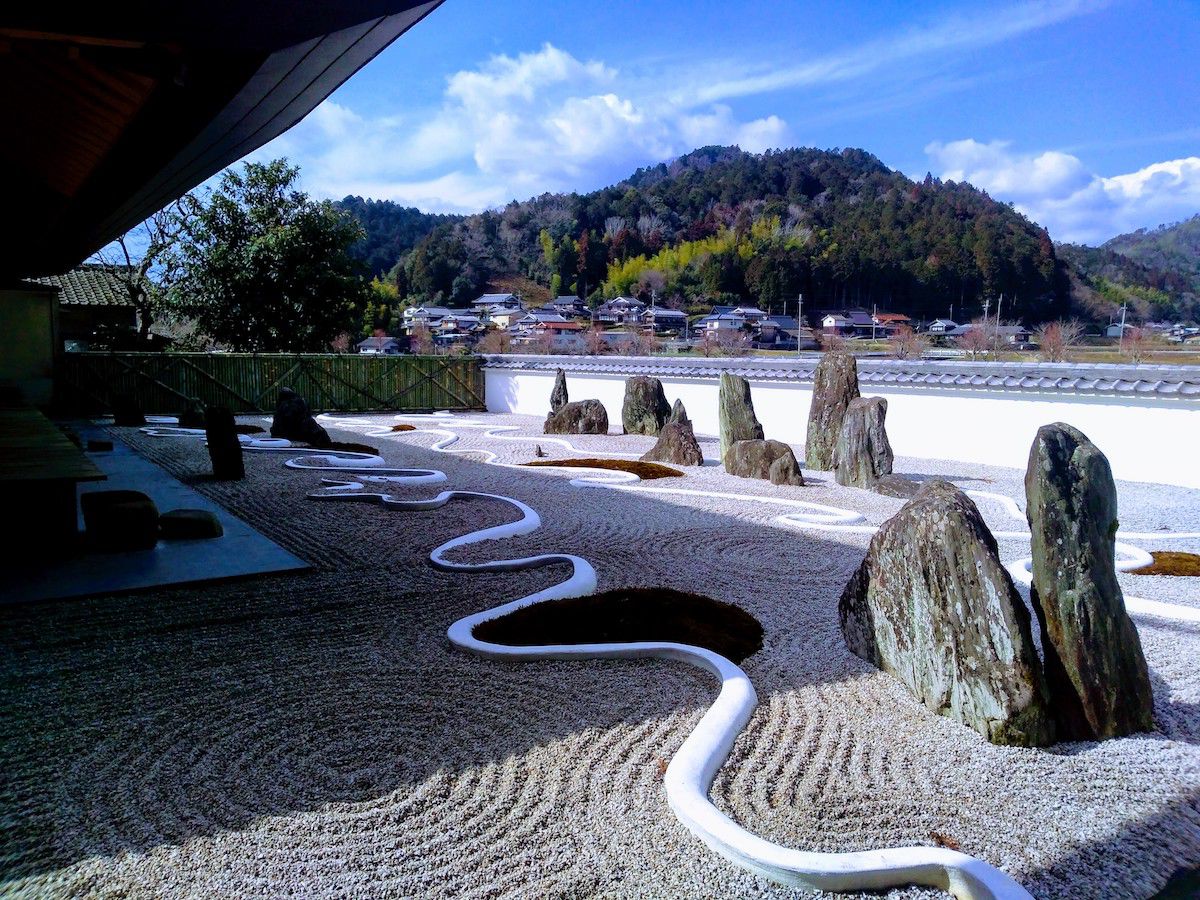
日本語 English 住之江の庭は昭和41年(1966)に日本を代表する名作庭家である重森三玲(しげもりみれい)によって作庭された庭である。この庭は住吉神社が海神であることから、住吉の海景や波うつ景観をテーマに作庭されている。特徴的な石組は蓬莱島(ほうらいじま:古代中国で仙人が住むといわれた場所)を表しており、庭を横切る三本の白いうねりは波を表現している。竹垣は網干垣(あぼしがき)と呼ばれるもので、漁師が海辺で網を干している情景を抽象的に竹垣としてデザインしたものである。 重森は数多くの庭を作庭してきたが、この庭を自分でも納得のできる庭であると高く評価していたといい、近代の枯山水庭園としては、屈指の名園であるといえる。 所在地:川原270 Suminoe no Niwa is a garden created in the 41st year of the Showa period (1966) by a famous landscape gardener who represented Japan, Mirei Shigemori. This garden was created with the theme of the scenery of waves and the seascape of Sumiyoshi, as the Sumiyoshi Shrine was for a sea deity. The distinctive arrangement of stones expresses Horaijima (a place where a wizard was said to live in ancient China), and the three undulations going across the garden express waves. The bamboo fence is called an "aboshi fence" and abstractly designs the scene of fishermen hanging nets to dry on the seaside as a bamboo fence. Shigemori created many gardens, but he said that he highly evaluated this garden as one that even he himself could agree with, and it can be said to be one of the best famous gardens in terms of modern dry landscape gardens. Location:Kawara 270